
Virology General characteristics Viruses are capable of infecting
Virology
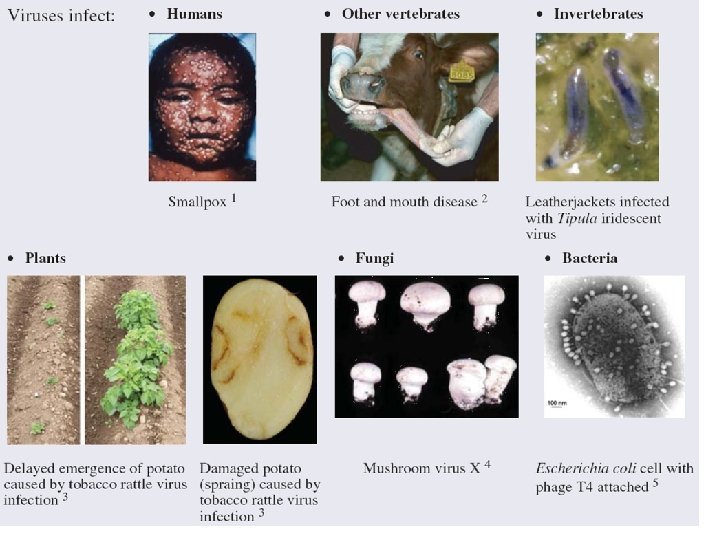
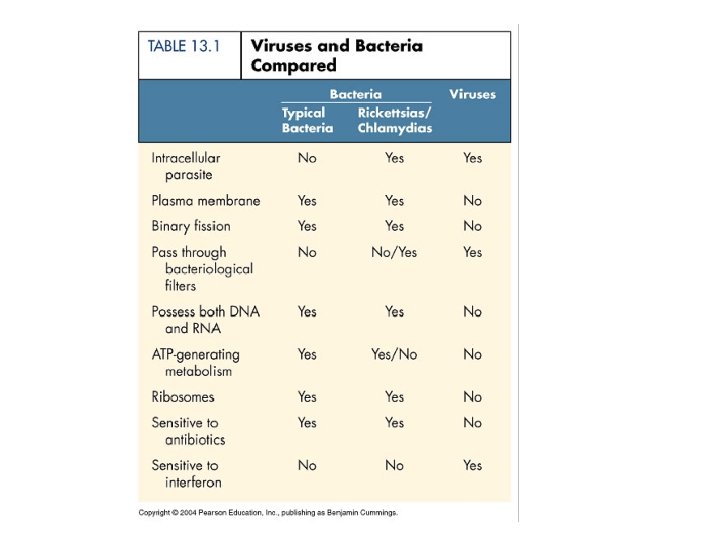
General characteristics • Viruses are capable of infecting all forms of life and cause disease Vertebrates, prokaryotes, fungi, algae • Most abundant form of life – Bacteriophages are extremely abundant – Estimated 1031 tailed bacteriophages • Excellent molecular biology tools
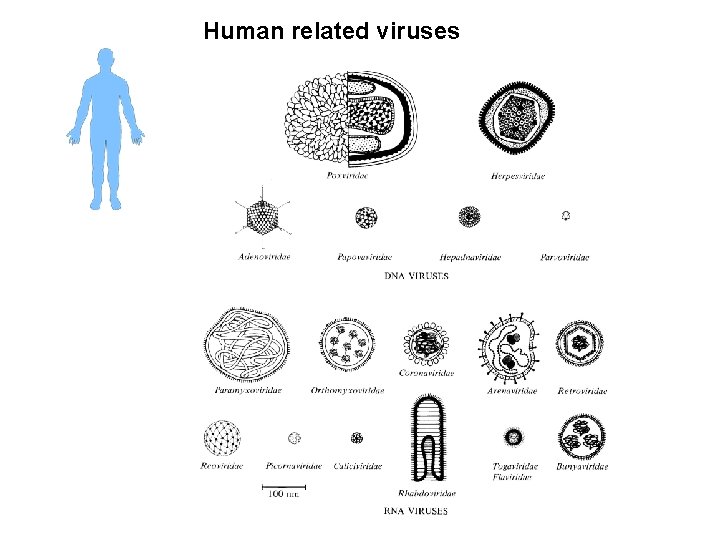
Human related viruses
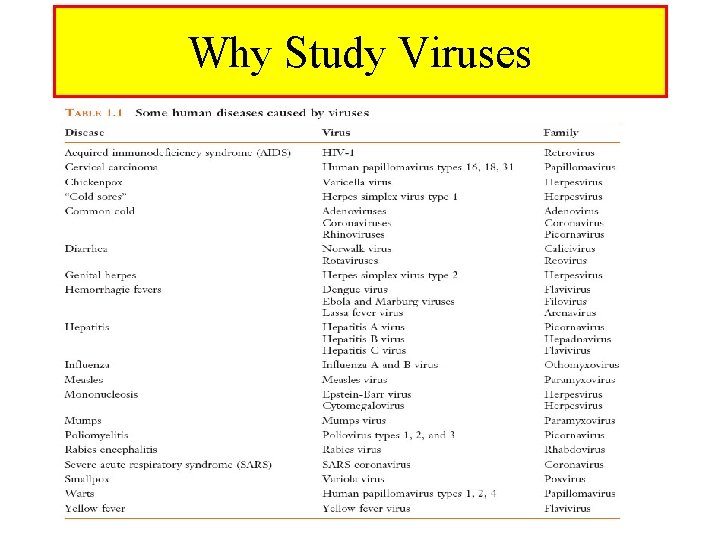
Why Study Viruses
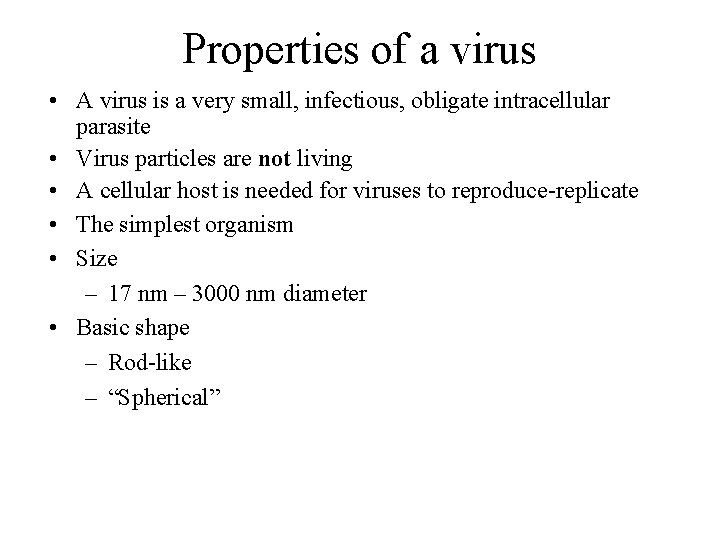
Properties of a virus • A virus is a very small, infectious, obligate intracellular parasite • Virus particles are not living • A cellular host is needed for viruses to reproduce-replicate • The simplest organism • Size – 17 nm – 3000 nm diameter • Basic shape – Rod-like – “Spherical”
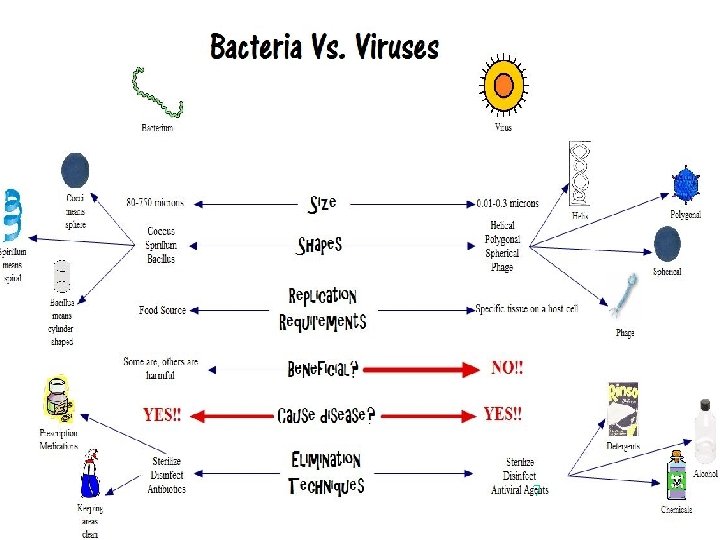
7
1. Genome formed by only one of the RNA or DNA 2. Capsid consisting of structural proteins 3. Envelope ? ? 1, 2 and 3. Infectious virus particles is called VIRION
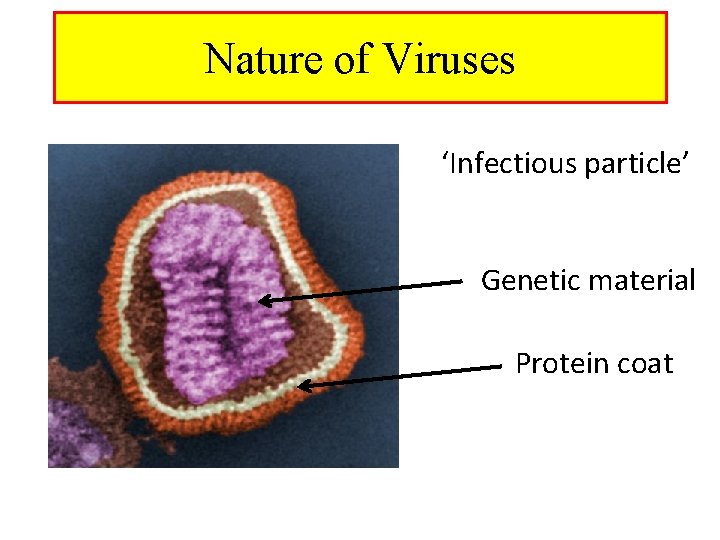
Nature of Viruses ‘Infectious particle’ Genetic material Protein coat
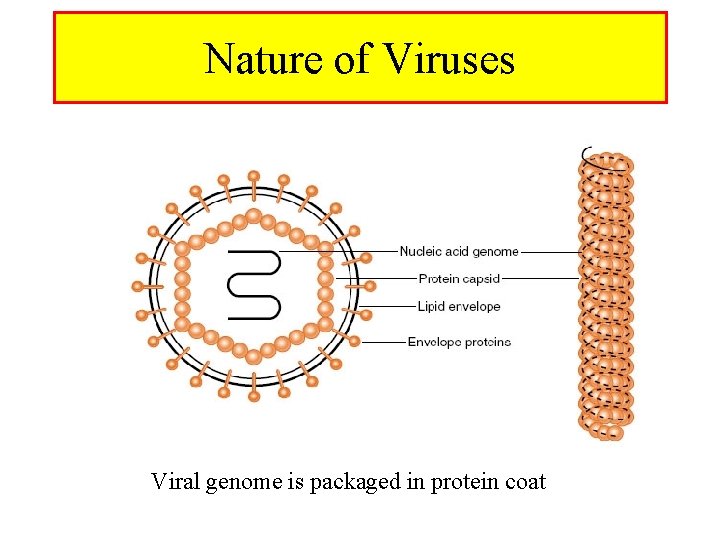
Nature of Viruses Viral genome is packaged in protein coat
• Virion can sometimes contain enzyme (protein) • RNA or DNA + capsid + enzyme = nucleocapsid • Nucleocapsid + envelope = enveloped virus • May grouped as enveloped and nonenveloped viruses

Basic virus structure
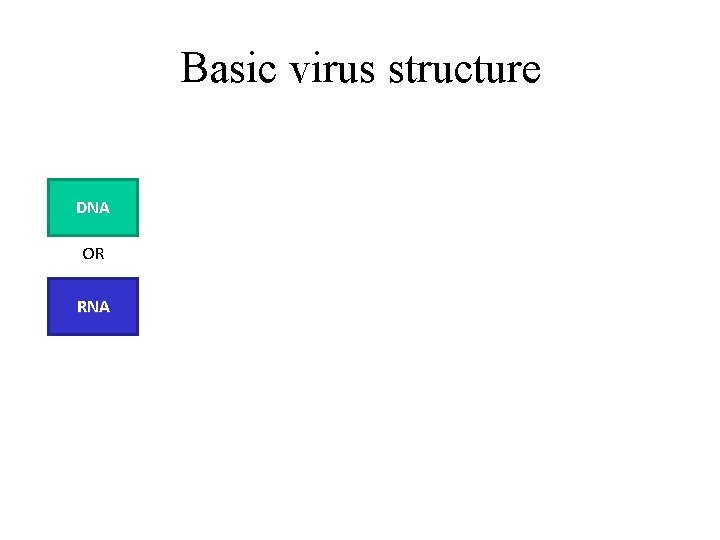
Basic virus structure DNA OR RNA
Basic virus structure DNA OR RNA +
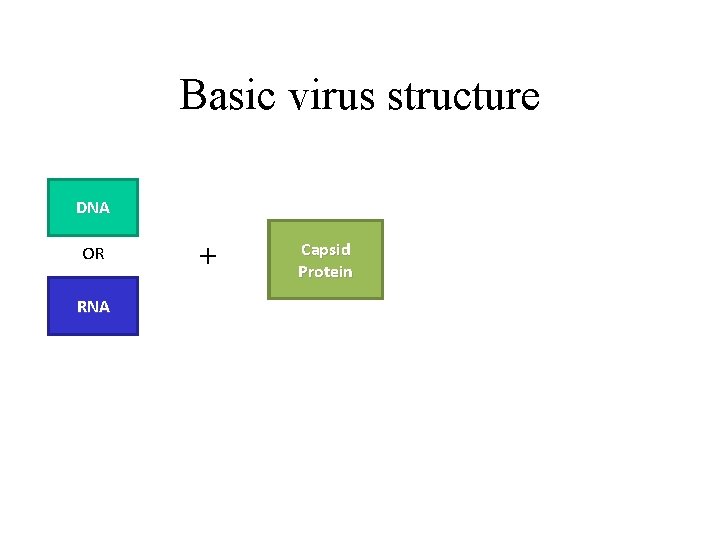
Basic virus structure DNA OR RNA + Capsid Protein
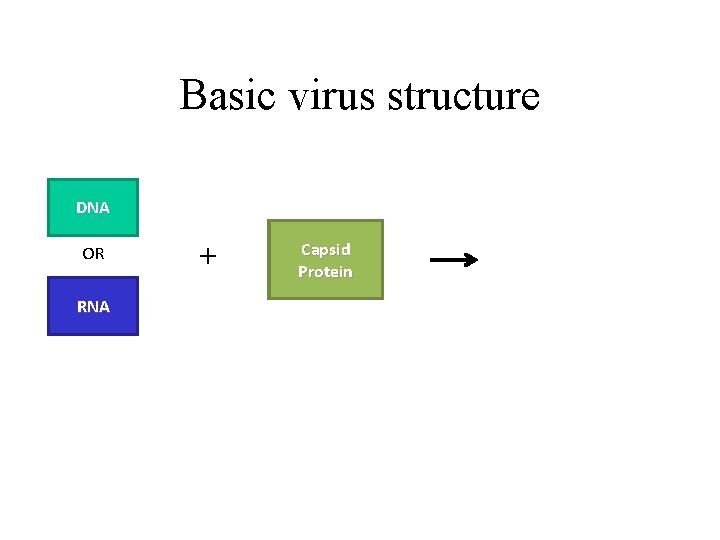
Basic virus structure DNA OR RNA + Capsid Protein
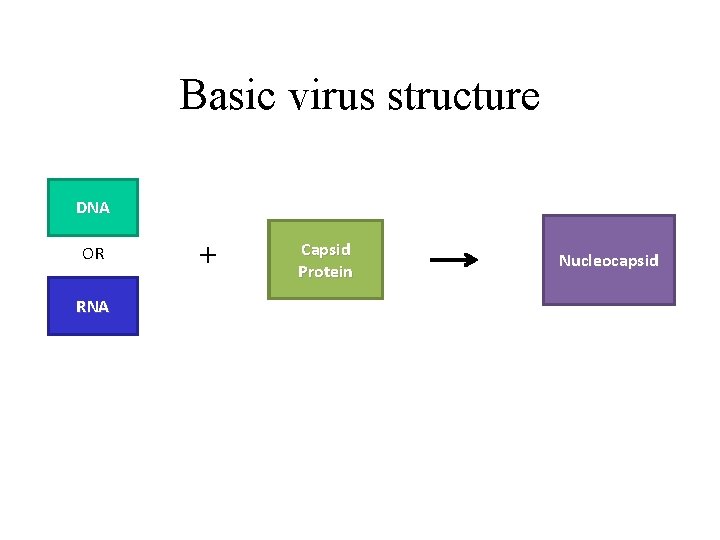
Basic virus structure DNA OR RNA + Capsid Protein Nucleocapsid
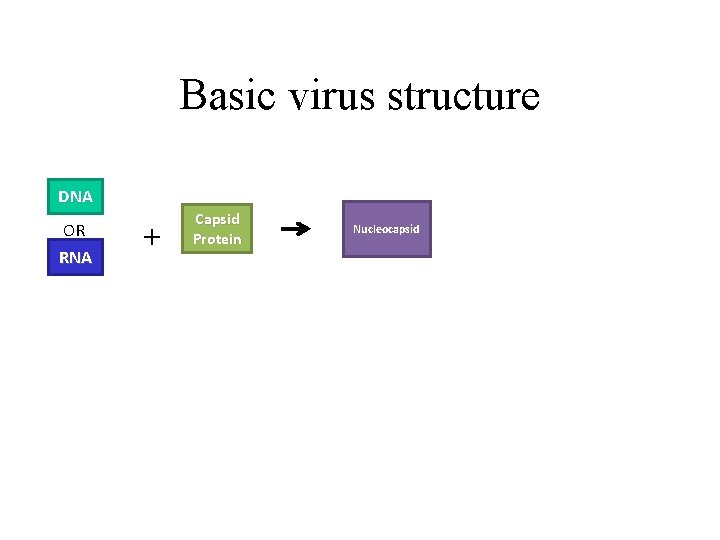
Basic virus structure DNA OR RNA + Capsid Protein Nucleocapsid
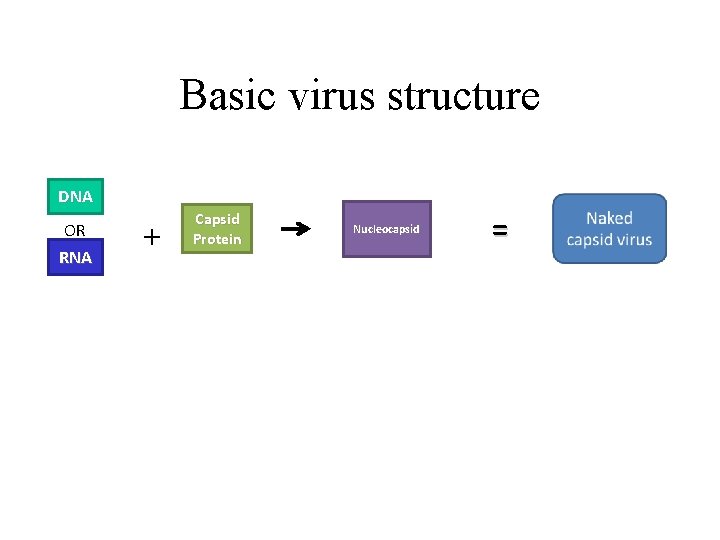
Basic virus structure DNA OR RNA + Capsid Protein Nucleocapsid =
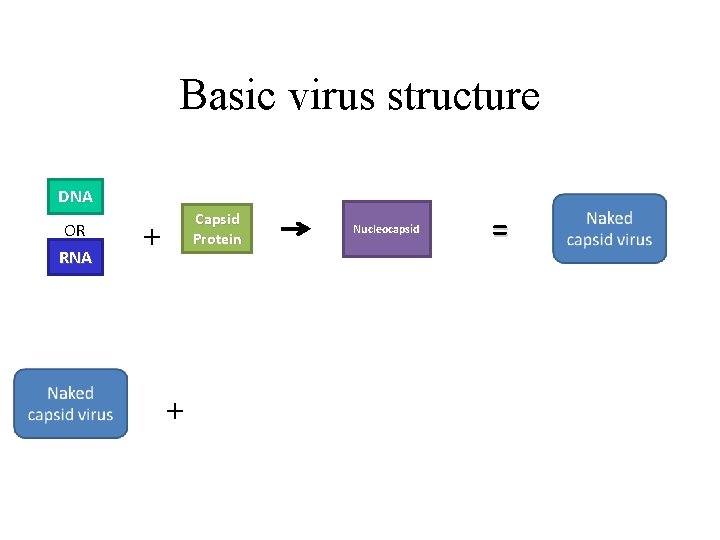
Basic virus structure DNA OR RNA Capsid Protein + + Nucleocapsid =
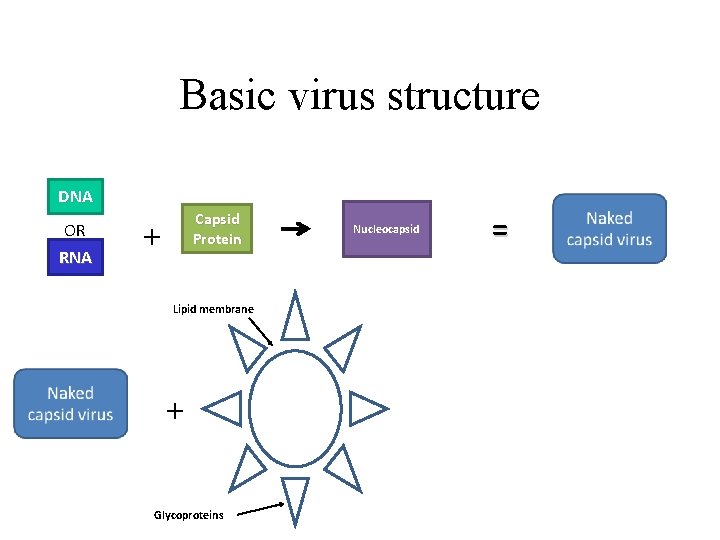
Basic virus structure DNA OR RNA Capsid Protein + Lipid membrane + Glycoproteins Nucleocapsid =
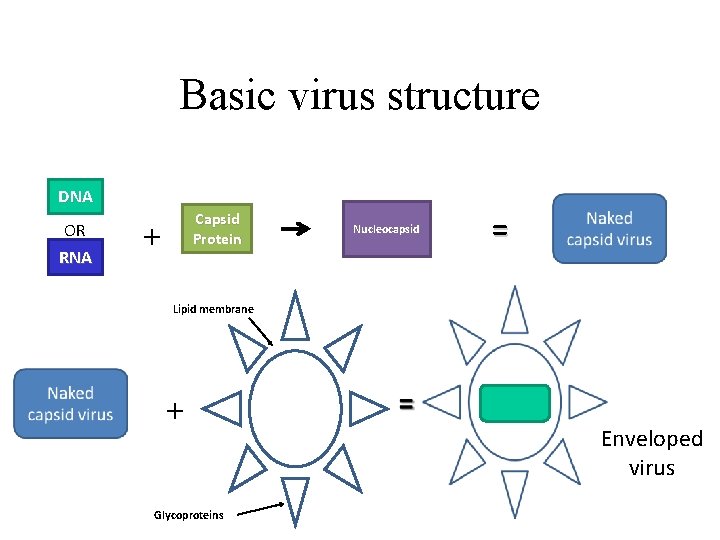
Basic virus structure DNA OR RNA Capsid Protein + Nucleocapsid = Lipid membrane + Glycoproteins Enveloped virus
• Contains RNA or DNA • DO NOT exist at the same time • They are called RNA or DNA viruses and can be grouped
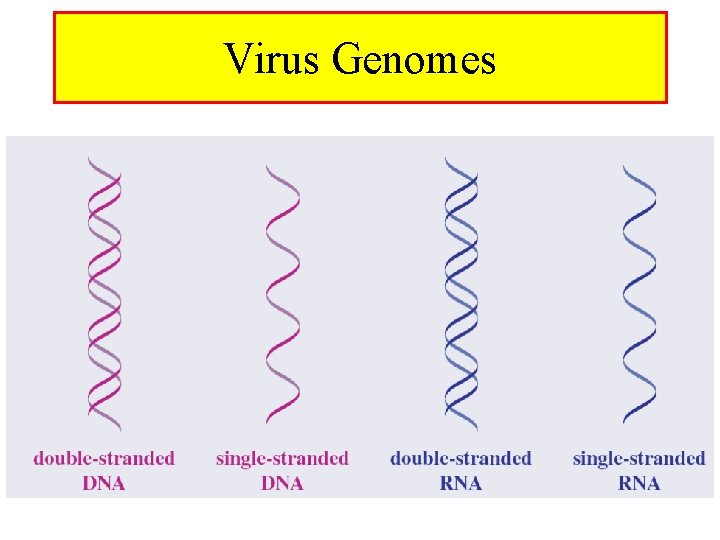
Virus Genomes
• Can be single-stranded RNA or single-stranded DNA • Parvovirus is a single-stranded DNA virus. All other DNA viruses are all double-stranded • Can be double-stranded RNA or double-stranded DNA • Reoviruses are the only RNA viruses that contain double strands. All others are single-stranded • Can be linear or annular • The genome can be multi-segmented, only in RNA viruses
• In single-stranded RNA viruses, if RNA acts as m. RNA, it is called (+) stranded RNA virus. • In single-stranded RNA viruses, if the RNA does not function as m. RNA, it is called (-) stranded RNA virus.
• All viruses, except for retroviruses, are haploid, that is, a single copy of the genome is present in the virus particle. • Retroviruses contain two copies of RNA
DNA Viruses • Double strand (only parvoviruses contain single strand DNA) • Linear structure (only papovavirus is circular and Hep. B is partially circular)
RNA Viruses • Single strand (Reoviruses are double strand only) • Some segmented (segmented) • Reovirus 10 segments • 8 segments of influenza • Retrovirus 2 equal genomes
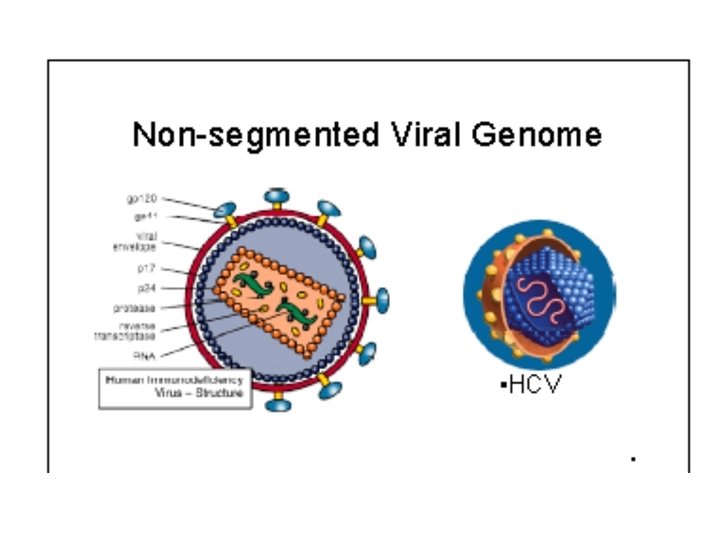
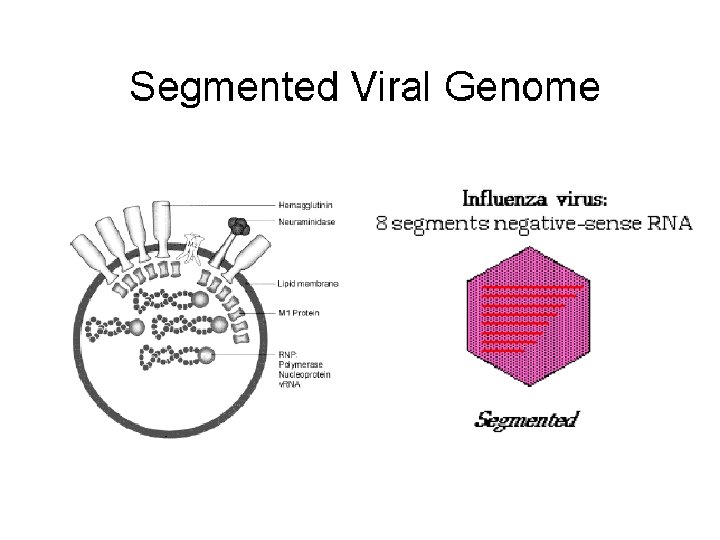
Viruses are classified by the following characteristics: – Type of genetic material – Capsid shape – Number of capsomeres – Size of capsid – Presence or absence of envelope – Host infected – Type of disease produced – Target cell – Immunological properties
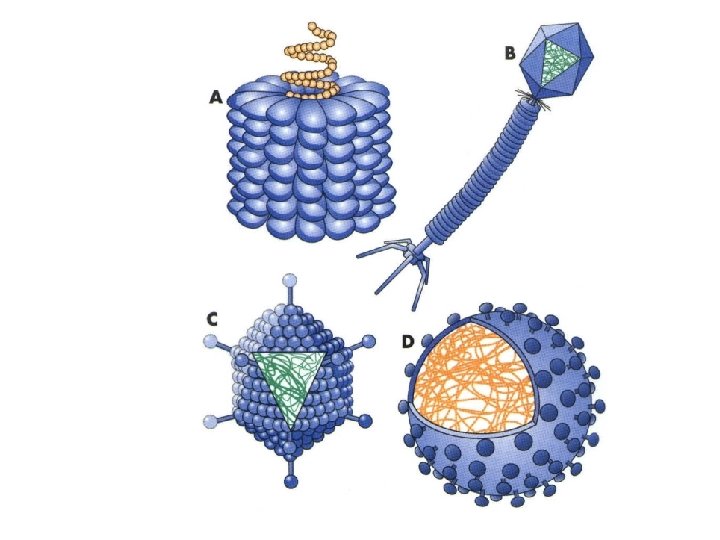
Nucleocapsid • The capsid consists of protein subunits called capsomeres. • Capsomeres consist of assembled polypeptide units • The manner in which the capsomers are arranged determines the geometric structure of the virus. • Made of many identical protein subunits • Symmetrically organized • 50% of weight • Enveloped or non-enveloped
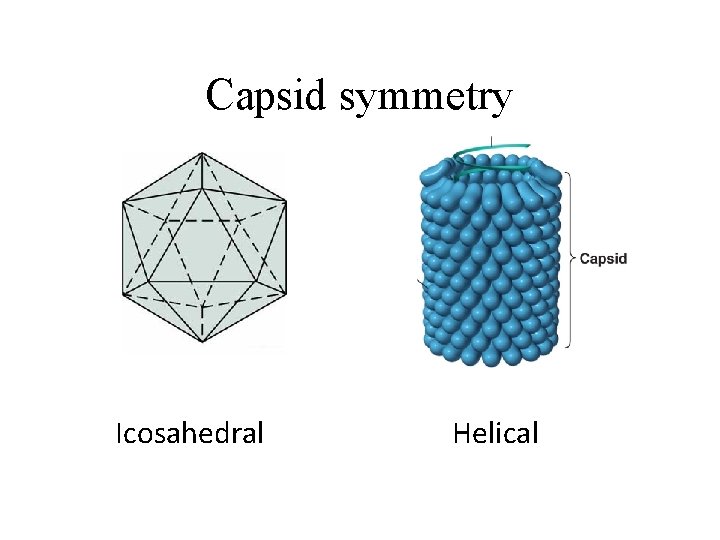
Capsid symmetry Icosahedral Helical
Capsit may be icosahedral (cubic) or helical • In viruses with icohohedaral symmetry, capsid occurs independently of virus genome. For this reason, viruses with icosahedral symmetry may have empty particles without genome. • In helical symmetrical viruses, protein subunits are an interaction that occurs at certain intervals in the viral genome. • Therefore, no empty particles are formed in helical viruses.

External capsid proteins • Protects the virus genome • It forms the antigenic structure of the virus. • Provides specific binding to cells by acting as receptors.
Atypical virus-like agents • Defective viruses: – Measles virus - Sub-acute sclerosing panencephalitis (SSPE) – Rubella virus -progressive rubella panencephalitis (PRP) • Psödoviron: • Viroids: • Prion:
Defective viruses • The absence of a segment of the viral genome. • They do not replicate alone • For replication, a similar virus must be present in the cell.
• Psödoviron: – placement of cell DNA in the capsid instead of the viral genome – They can infect cells but cannot replicate and proliferate. • Viroids: – structures consisting of a single annular RNA without a sheath (capsule). – They do not encode protein – Their relevance with disease is unknown • Prion: – They are infectious particles that do not contain nucleic acid and are composed solely of proteins. (Mad cow disease, Kuru, Creutzfeld-Jakob disease)
Viruses And Molecular Biology • Study of small DNA viruses led to discovery of promoters for eukaryotic RNA polymerases • Study of cancer producing viruses led to discovery of many cellular oncogenes • RNA splicing in eukaryotic cells was discovered by studying m. RNA from DNA viruses • Understanding of cellular DNA replication was facilitated by studying phages and DNA viral replication
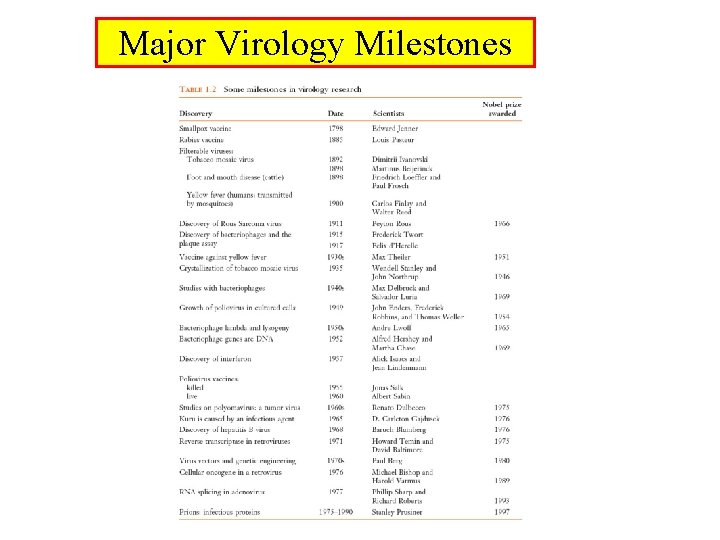
Major Virology Milestones
Major Virology Milestones • “Phage” group made significant discoveries/contributions to the field of molecular biology • Bacteriophages hold promise as antibiotics • Particularly in antibiotic resistant bacteria • Immune reaction to phages remains a serious obstacle • Study of tumor viruses let to a clearer understanding of cancer
Viruses As Vectors • Viruses can be engineered to carry exogenous genes • The exogenous genes can be inserted in the host’s genome • When utilizing a virus to insert genes into a host, we refer to that virus as a Vector Virus • Vector virus hold promise as therapeutic agents • Immune response remains an issue
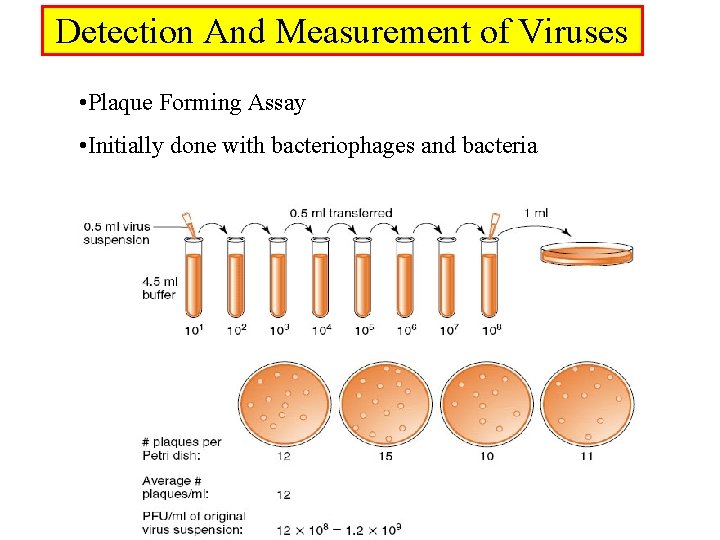
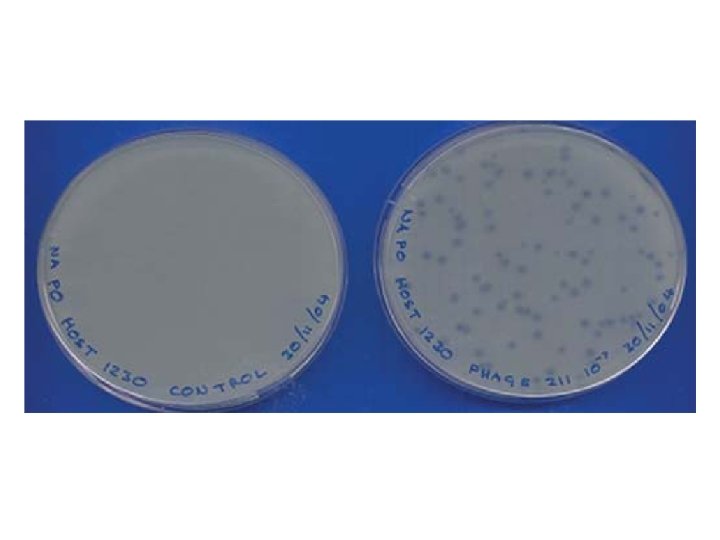
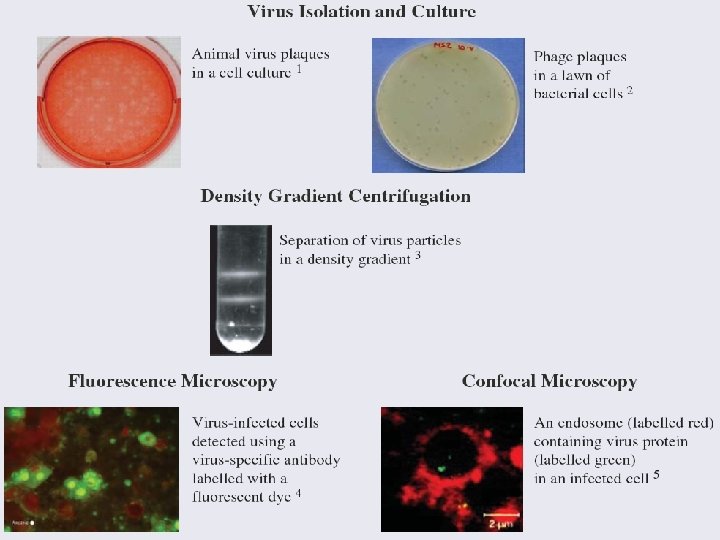
Detection And Measurement of Viruses • Plaque Forming Assay • Initially done with bacteriophages and bacteria
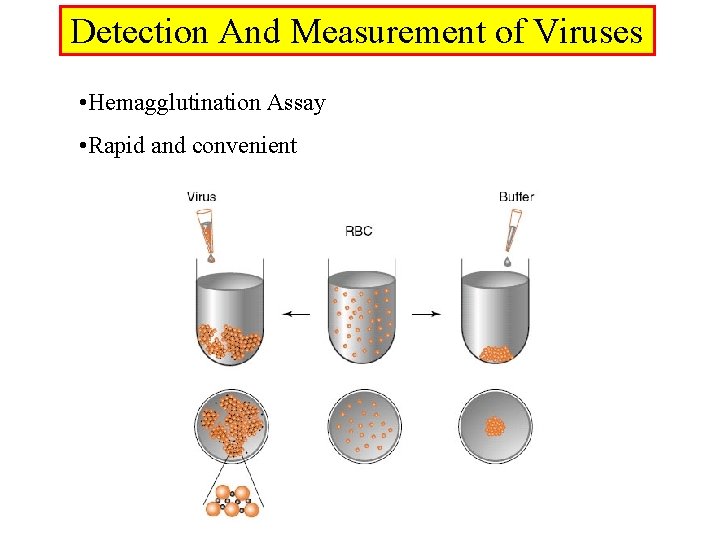
Detection And Measurement of Viruses • Hemagglutination Assay • Rapid and convenient
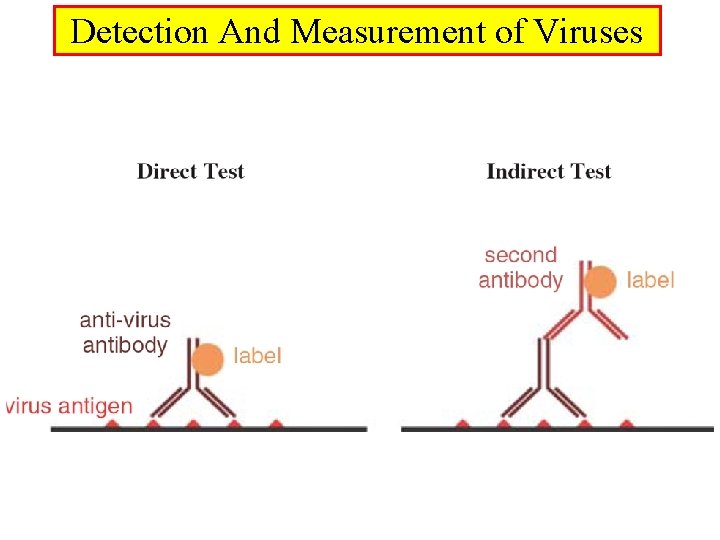
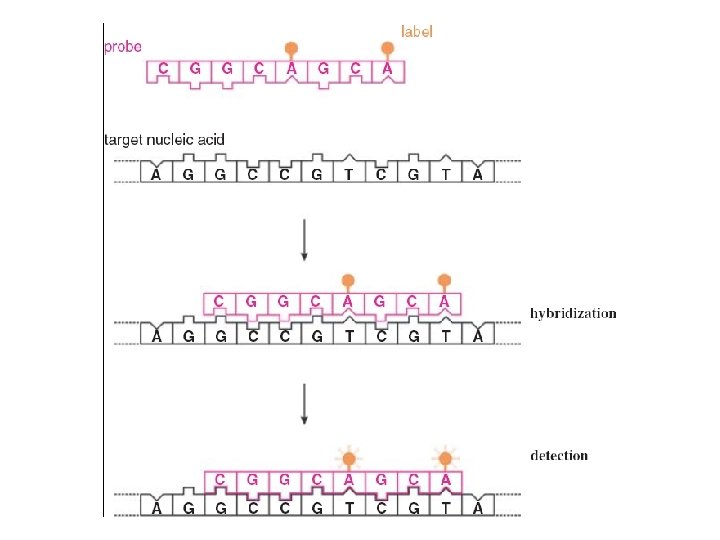
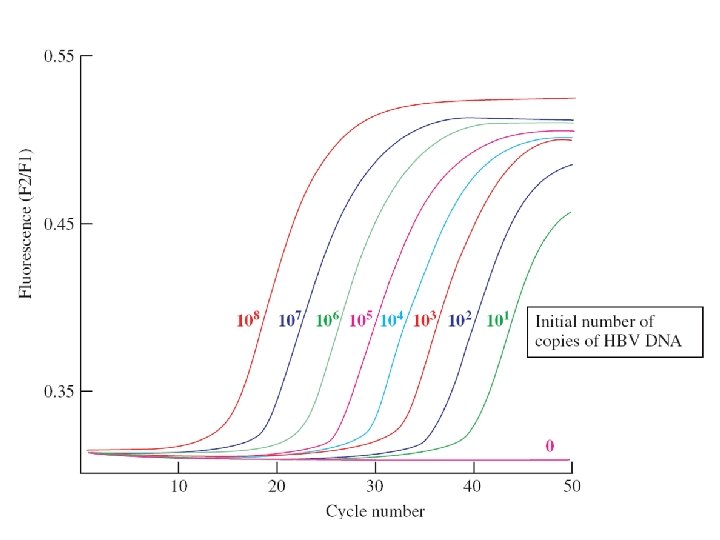
Detection And Measurement of Viruses
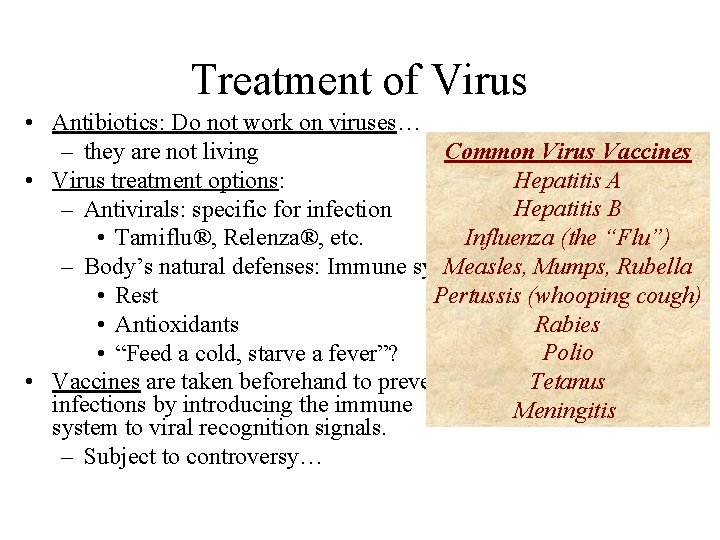
Treatment of Virus • Antibiotics: Do not work on viruses… Common Virus Vaccines – they are not living Hepatitis A • Virus treatment options: Hepatitis B – Antivirals: specific for infection Influenza (the “Flu”) • Tamiflu®, Relenza®, etc. Measles, Mumps, Rubella – Body’s natural defenses: Immune system Pertussis (whooping cough) • Rest Rabies • Antioxidants Polio • “Feed a cold, starve a fever”? Tetanus • Vaccines are taken beforehand to prevent infections by introducing the immune Meningitis system to viral recognition signals. – Subject to controversy…

Viral replication • Replication of virus is very complicated process • Viruses never reproduce by division • They are replicated by a process in which all components of virus are produced separately and are assembled into intact virons. • For replication of virus host is necessary • Visuses are host specific • Host may be a bacteria, plant or an animal
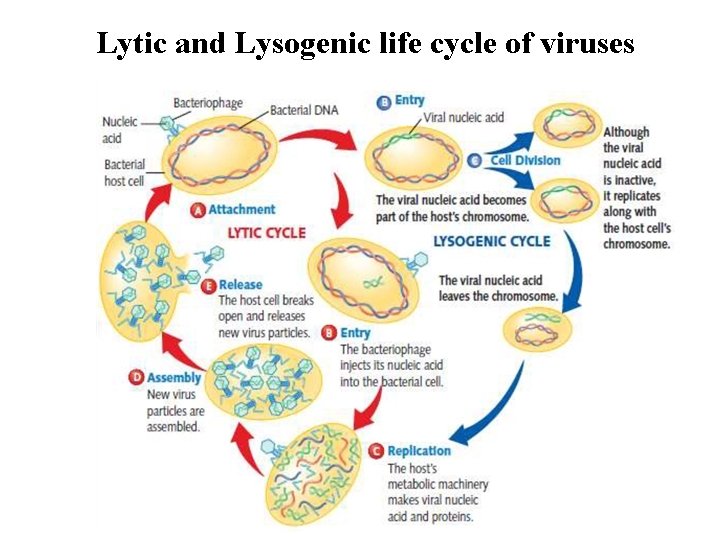
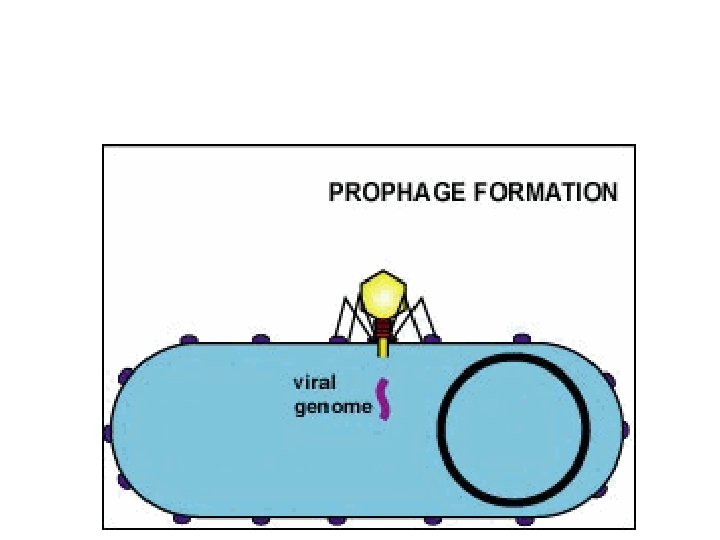
Viral Reproduction • Viruses must have a living host cell to reproduce – Example: Bacteriophages infect bacteria – Example: Herpes Simplex 1 infects lip cells • Virus insert their genetic information inside the host cell and use the host cell to make more virus particles. • This process is broken down into 2 pathways. – The Lytic & Lysogenic Pathways of Viral 57 Infections.
Viral Replication • Lytic cycle – Viral DNA is injected into host cell • Contains instructions needed to make more viruses – Host cell replicates viral DNA and makes the viral capsids (protein coats) – New viruses are assembled inside host cell – Cell bursts open releasing new viruses 58
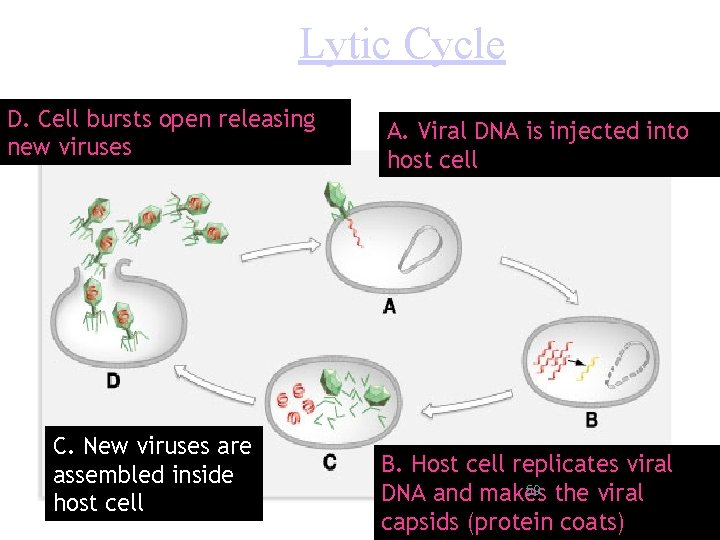
Lytic Cycle D. Cell bursts open releasing new viruses C. New viruses are assembled inside host cell Lytic Cycle A. Viral DNA is injected into host cell B. Host cell replicates viral 59 the viral DNA and makes capsids (protein coats)
Viral Replication • Lysogenic cycle – Viral DNA is injected into the host cell – Viral DNA inserts itself into the host’s DNA – Remains inactive for days, months, or years – As the cell reproduces, more cells are produced that have the viral DNA in them – Eventually, when the conditions are favorable (like when your immune system is weakened) the virus will enter the lytic cycle 60
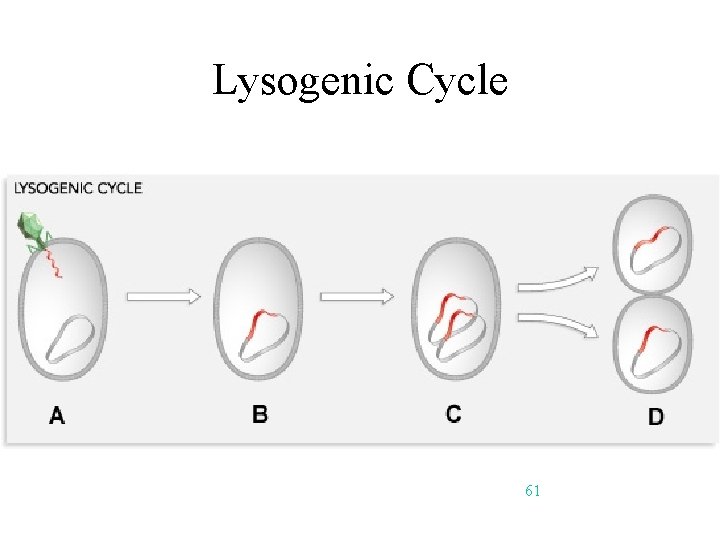
Lysogenic Cycle 61
• There are 2 types of life cycle commonly seen in visuses They are i] Lytic Cycle ii] Lysogenic Cycle
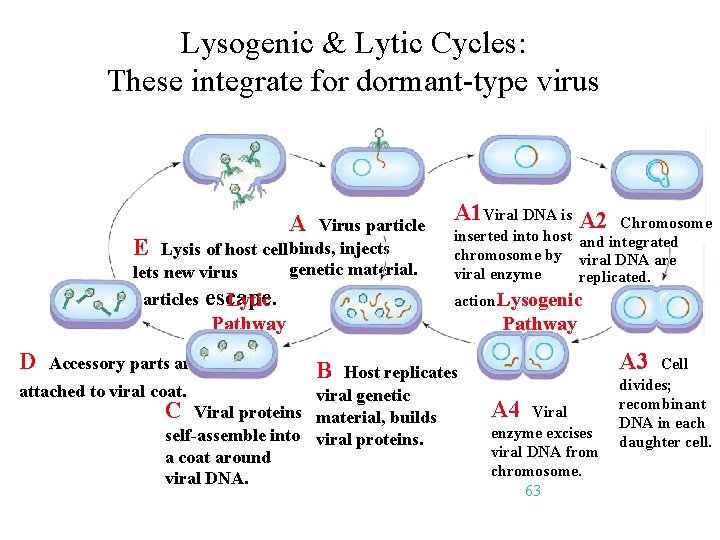
Lysogenic & Lytic Cycles: These integrate for dormant-type virus A Virus particle E Lysis of host cell binds, injects genetic material. lets new virus particles escape. Lytic A 1 Viral DNA is A 2 Chromosome inserted into host and integrated chromosome by viral DNA are viral enzyme replicated. action. Lysogenic Pathway D Accessory parts are Pathway A 3 B Host replicates attached to viral coat. viral genetic C Viral proteins material, builds self-assemble into viral proteins. a coat around viral DNA. A 4 Viral enzyme excises viral DNA from chromosome. 63 Cell divides; recombinant DNA in each daughter cell.
Lytic and Lysogenic life cycle of viruses
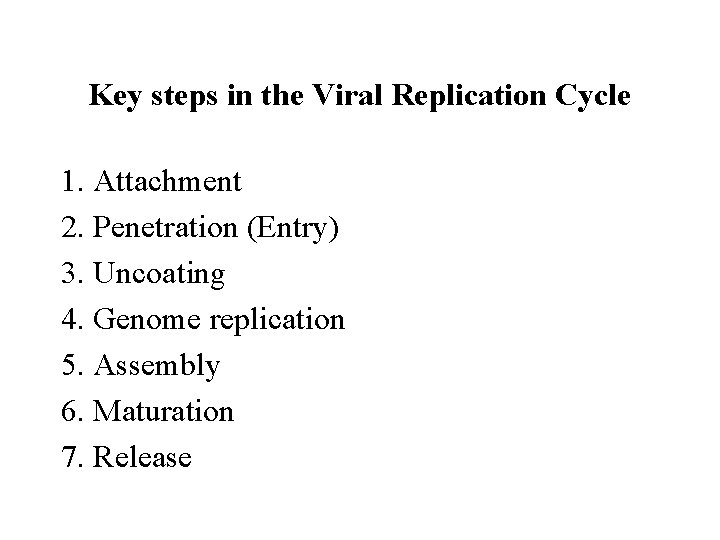
Key steps in the Viral Replication Cycle 1. Attachment 2. Penetration (Entry) 3. Uncoating 4. Genome replication 5. Assembly 6. Maturation 7. Release
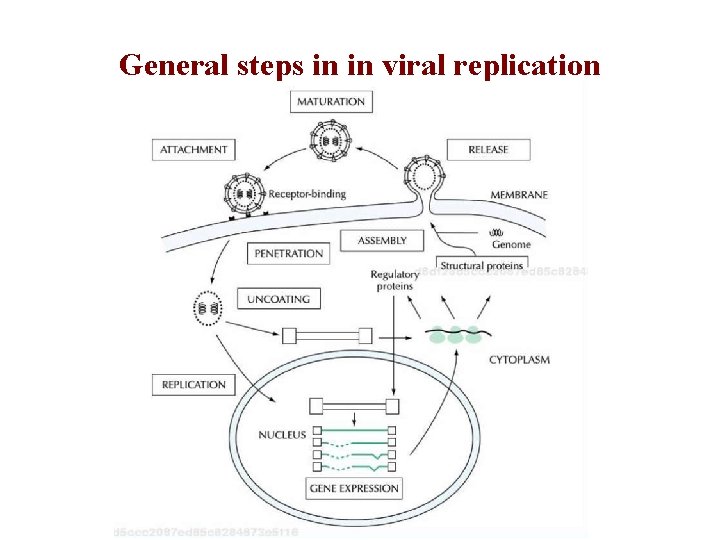
General steps in in viral replication
1. Attachment: • Virus are host specific and enters into the host or target cell • This event is electrostatic, does not require any cellular or metabolic energy • Virus exhibits cellular tropism • Virus has host range and it may be narrow or broad – Rabies virus is an example for broad range virus – HIV is an example for broad range virus Virus Cell type HIV- T lymphocytes, macrophages Rabies- Muscle, neurons Hepatitis A, B, C -Liver(hepatocytes)
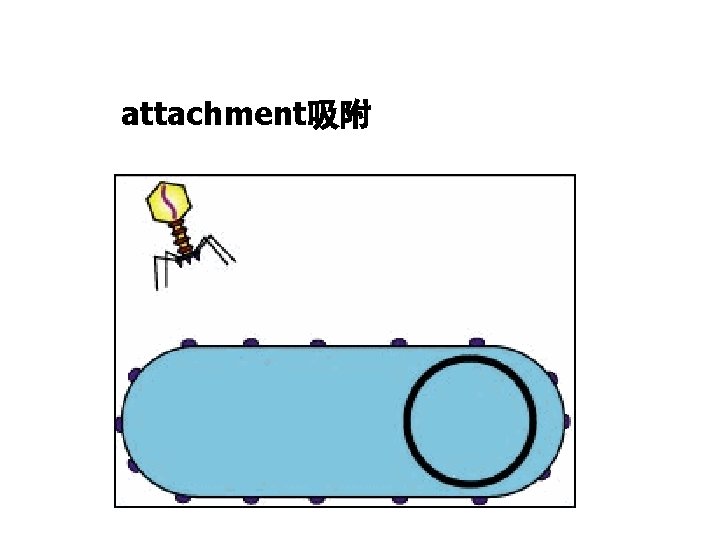
attachment吸附
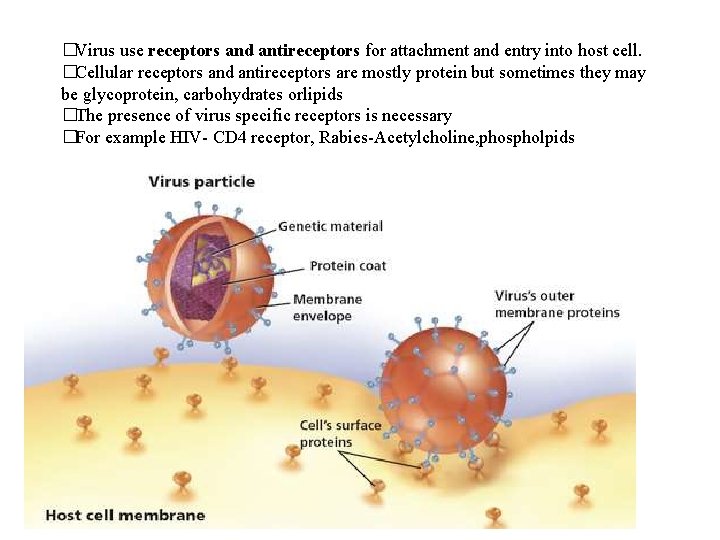
�Virus use receptors and antireceptors for attachment and entry into host cell. �Cellular receptors and antireceptors are mostly protein but sometimes they may be glycoprotein, carbohydrates orlipids �The presence of virus specific receptors is necessary �For example HIV- CD 4 receptor, Rabies-Acetylcholine, phospholpids
![2) Penetration [entry] • Penetration is energy dependent process • Virus may penetrate into](http://slidetodoc.com/presentation_image_h2/13e8fd4af45d40cb4ed0e9b979a8e8bf/image-70.jpg "2) Penetration [entry] • Penetration is energy dependent process • Virus may penetrate into")
2) Penetration [entry] • Penetration is energy dependent process • Virus may penetrate into host by 1. Endocytosis 2. Translocation 3. Fusion
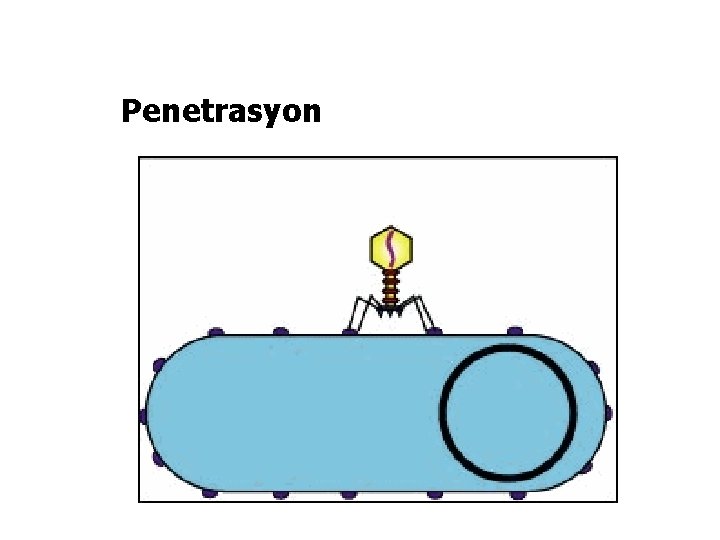
Penetrasyon
3)Uncoating: • Refers to the removal capsid (uncoating), there by releasing the genome into host cell • The virus genome is transported to the site where transcription/replication can begin • In some there is no degradation of capsid as capsid proteins play a role in viral transcription and replication
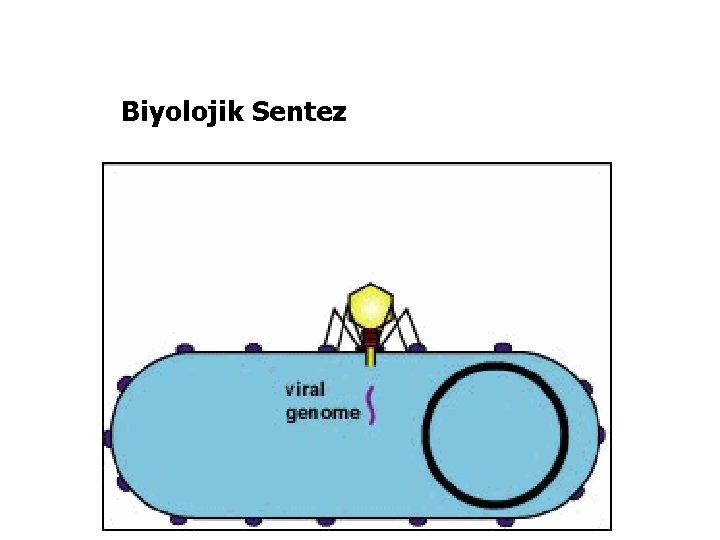
Biyolojik Sentez
4) Genome replication: • Viral genetic material or genome is multiplied within the host • Simultaneously viral structural proteins like capsids • are synthesised • Type of genetic material varies from virus to virus • With respect to this all viruses are divided into seven groups by Dr. David Baltimor in 1971 • Dr. David Baltimor shared “NOBLE PRIZE “with • Renato Dulbecco, Howard Martin Temin in 1975 for their work on "interaction between tumour viruses and the genetic material of the cell"
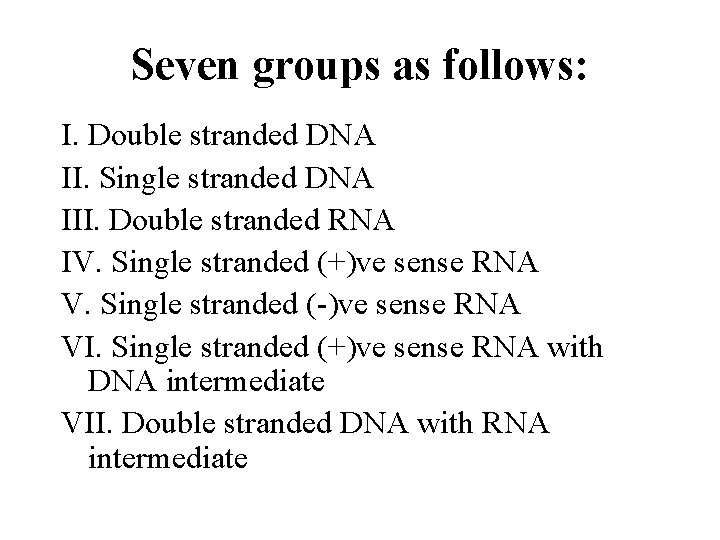
Seven groups as follows: I. Double stranded DNA II. Single stranded DNA III. Double stranded RNA IV. Single stranded (+)ve sense RNA V. Single stranded (-)ve sense RNA VI. Single stranded (+)ve sense RNA with DNA intermediate VII. Double stranded DNA with RNA intermediate
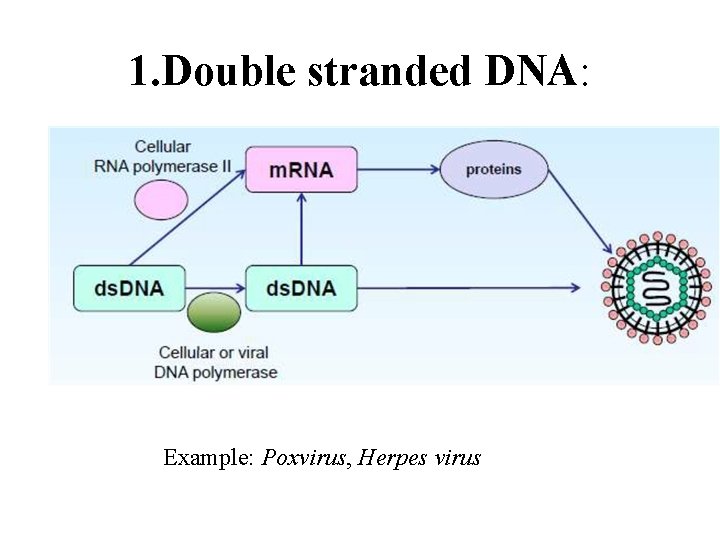
1. Double stranded DNA: Example: Poxvirus, Herpes virus
• The DNA polymerase enzyme of Poxvirus and Hepatitis B virus is found in the virion. • Other DNA viruses express DNA polymerase from its genome or use host cell DNA polymerase • Thus, the genome of DNA viruses other than Poxvirus and Hepatitis B viruses is infectious in itself.
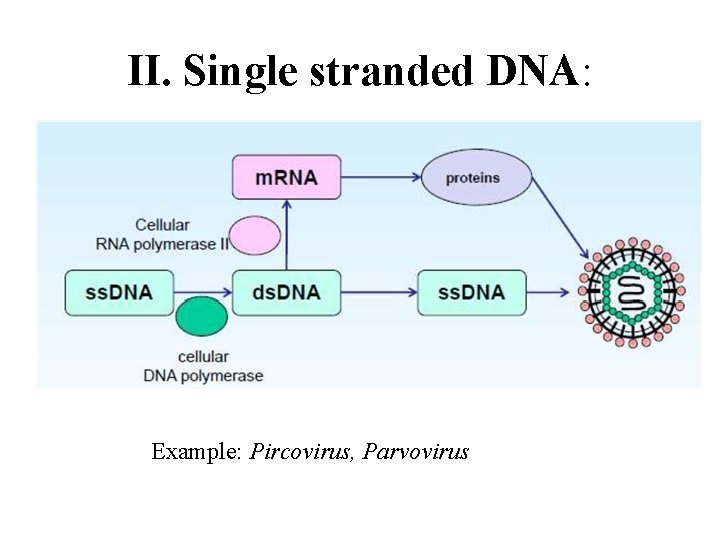
II. Single stranded DNA: Example: Pircovirus, Parvovirus
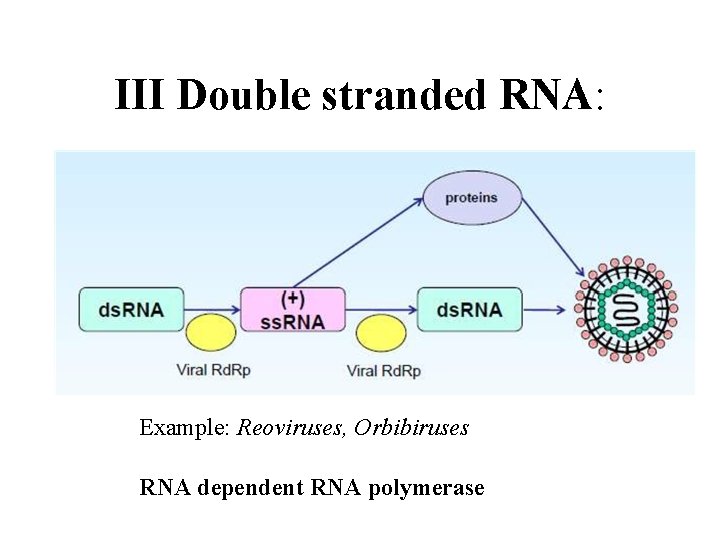
III Double stranded RNA: Example: Reoviruses, Orbibiruses RNA dependent RNA polymerase
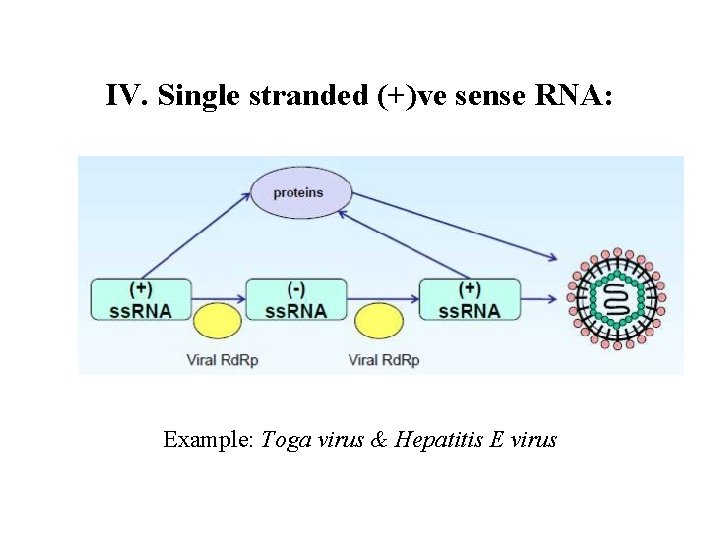
IV. Single stranded (+)ve sense RNA: Example: Toga virus & Hepatitis E virus
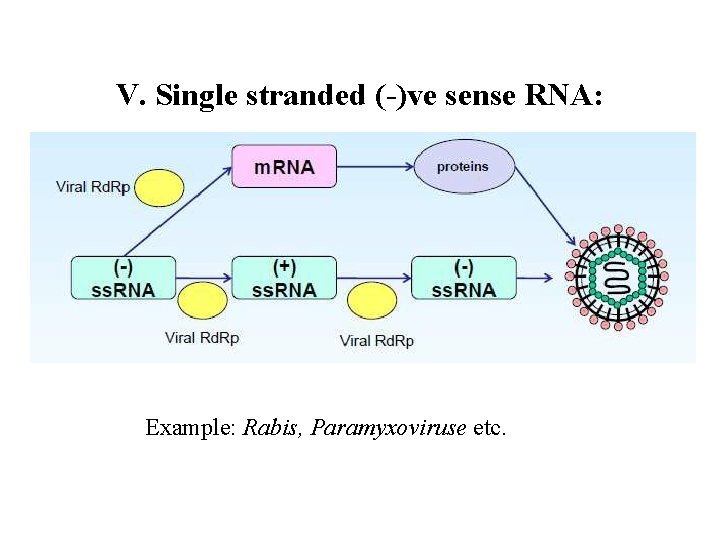
V. Single stranded (-)ve sense RNA: Example: Rabis, Paramyxoviruse etc.
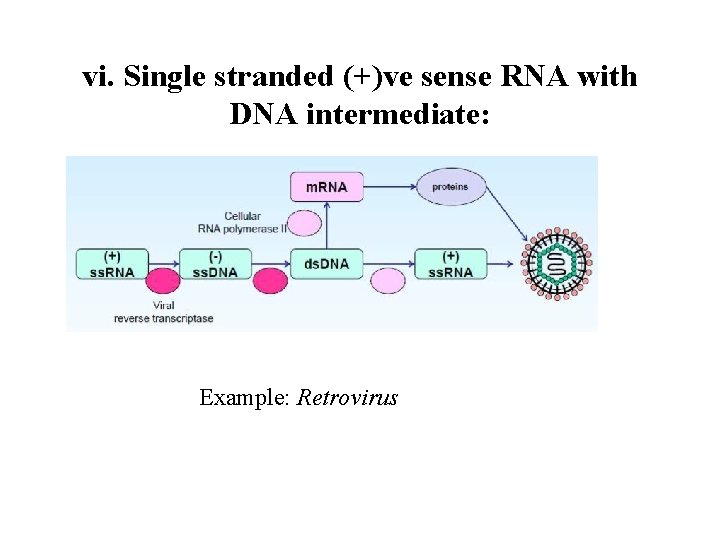
vi. Single stranded (+)ve sense RNA with DNA intermediate: Example: Retrovirus
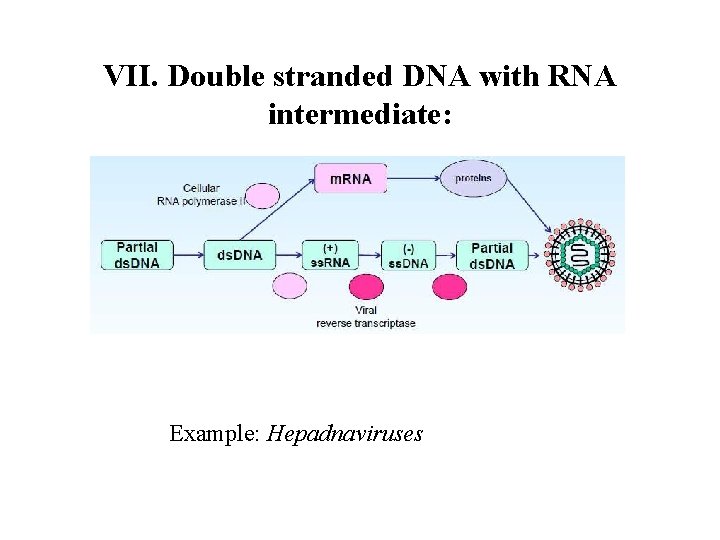
VII. Double stranded DNA with RNA intermediate: Example: Hepadnaviruses
5)Assembly: • Involves the collection of all components • necessary formation of viron • It takes place at a particular site in the cell For example in pox viruses assembly occurs in the cytoplasm; in adenovirus it occurs in nucleus.
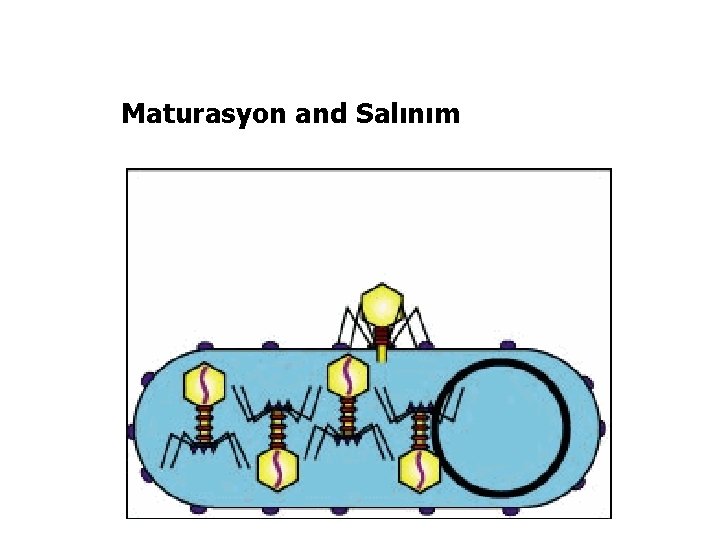
Maturasyon and Salınım
6) Maturation: �Maturation is the stage of life cycle at which the virus become infectious �It involves structural change in virus particles �For some viruses maturation occurs only after release of viurs particle from the cell
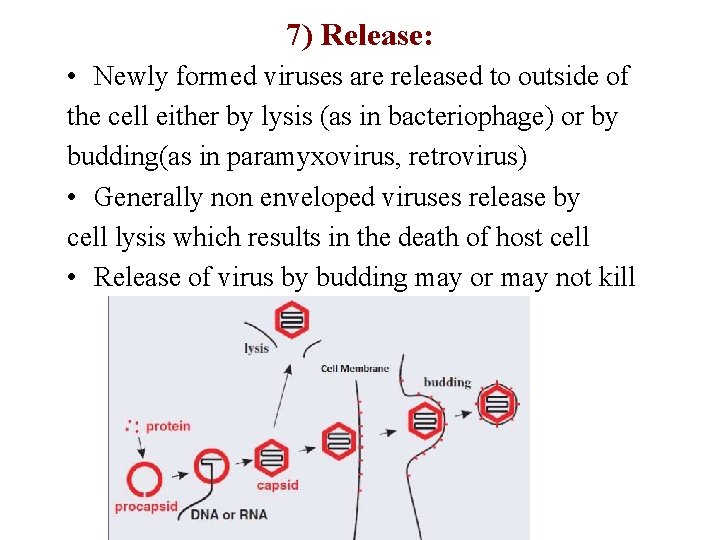
7) Release: • Newly formed viruses are released to outside of the cell either by lysis (as in bacteriophage) or by budding(as in paramyxovirus, retrovirus) • Generally non enveloped viruses release by cell lysis which results in the death of host cell • Release of virus by budding may or may not kill
Mutations
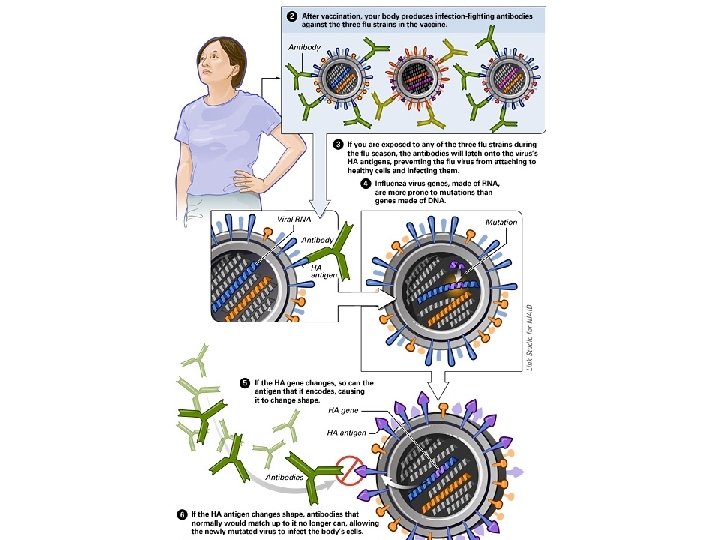
Antigenic Drift • a new antigenic feature of a virus as a result of mutations. • Causes epidemics – seasonal cold • Viruses that undergo antigenic alteration may escape infection from the host's immune response in previously immunized hosts.
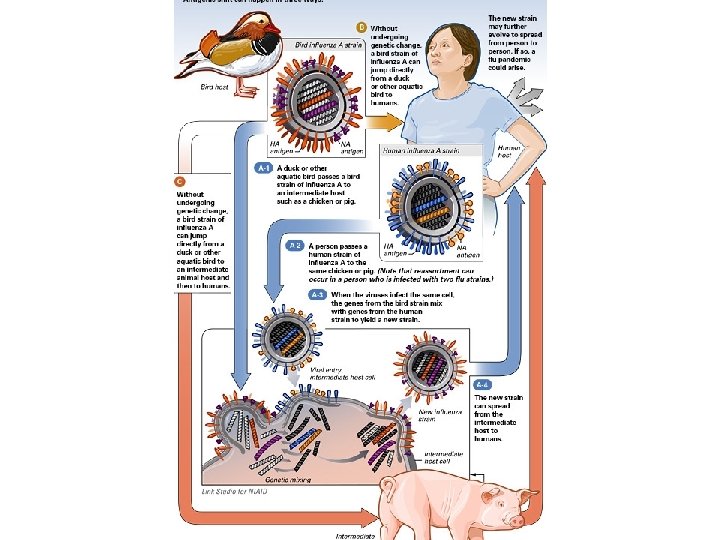
Recombination: • It occurs most often in double-stranded DNA viruses. • In segmented viruses such as reovirus and influenza viruses, recombination occurs by rearranging genome fragments rather than cross-exchanges between genomes. • This form of recombination is called reassorment.
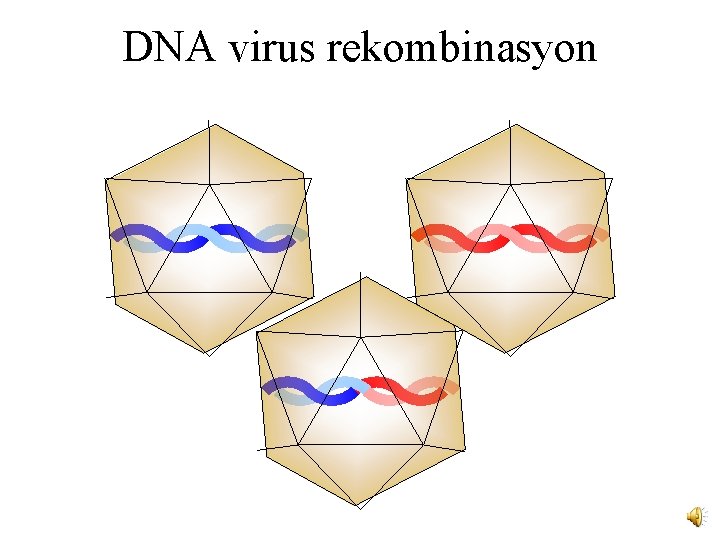
DNA virus rekombinasyon
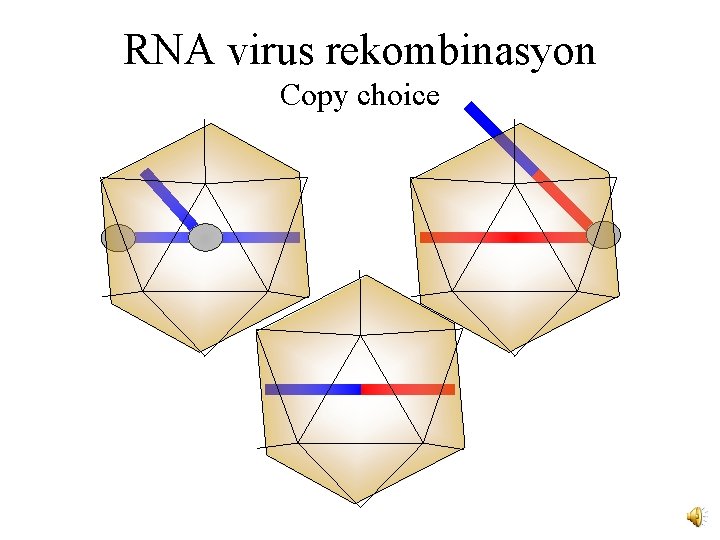
RNA virus rekombinasyon Copy choice
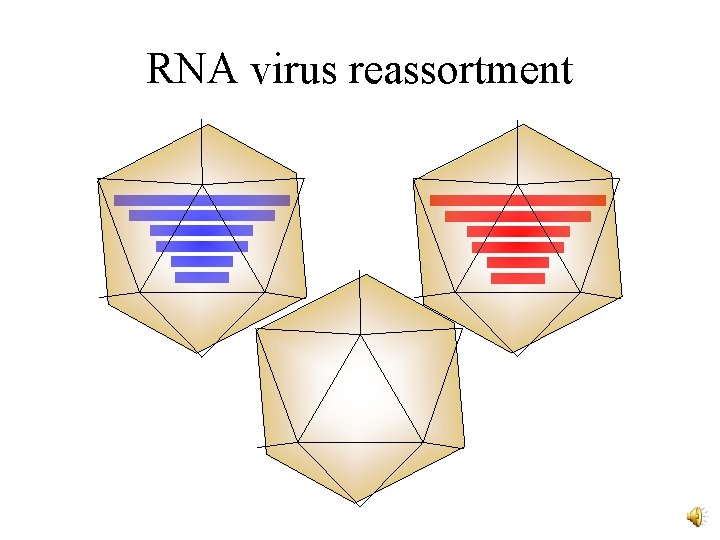
RNA virus reassortment
Antigenic shift • It is the formation of a new type of virus through the reassorment of segments. • Causes pandemics • Influenza A virus has 8 segments. • Human Inf A and bird Inf A are likely to combine 256 genes
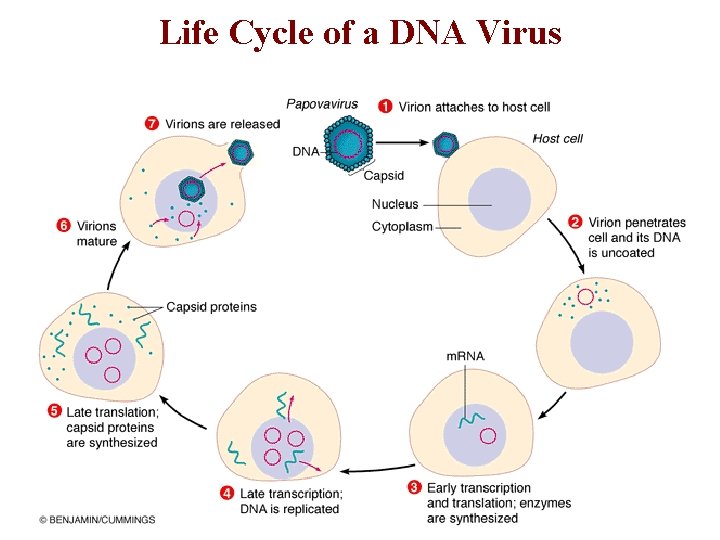
Life Cycle of a DNA Virus
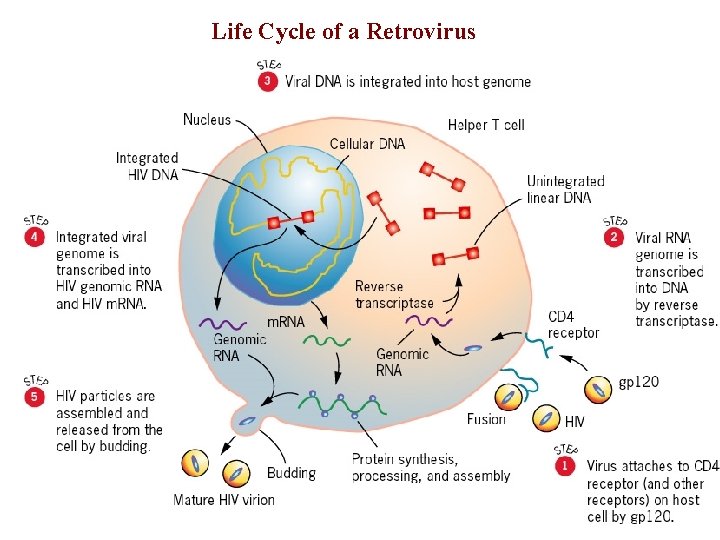
Life Cycle of a Retrovirus
- Slides: 99