
Viral tropisms 1 2 3 4 Cell tropism

- Slides: 24
Viral tropisms 1. 2. 3. 4. Cell tropism Tissue tropism Organ tropism Species tropism
Impact of tropism 1. Transmission. 2. Replication. 3. Pathogenesis.
Tropism requirements 1. 2. 3. 4. Appropriate receptors on cells for attachment and entry. Cells must be permissive for all steps in replication. Access to tissue, organ. The virus may need to evade host innate and adaptive immunity.
Determinants of Retroviral Tropism 1. Any stage of the replication cycle that requires host proteins. ---envelope/ receptor interactions. ---promoter sequences adapt for optimal transcription. 2. Whether a host cell event is required. ---many retroviruses require cell division. 3. Host immunity ---host antibodies may select for variants that are neutralization resistant. Immunoprivileged sites may select for other variants. ---intrinsic restriction factors; HG
HIV receptors and tropism ---All HIV strains bind CD 4. ---a second receptor or coreceptor is needed to confer infection. ---Coreceptors are members of the chemokine receptor family.
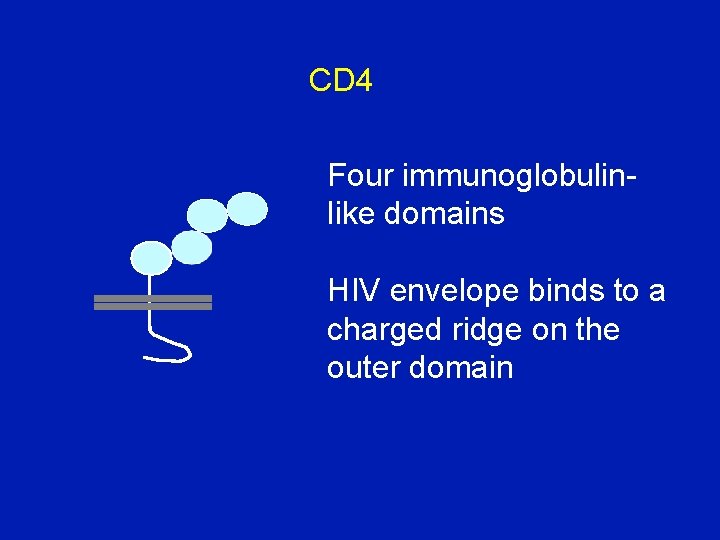
CD 4 Four immunoglobulinlike domains HIV envelope binds to a charged ridge on the outer domain
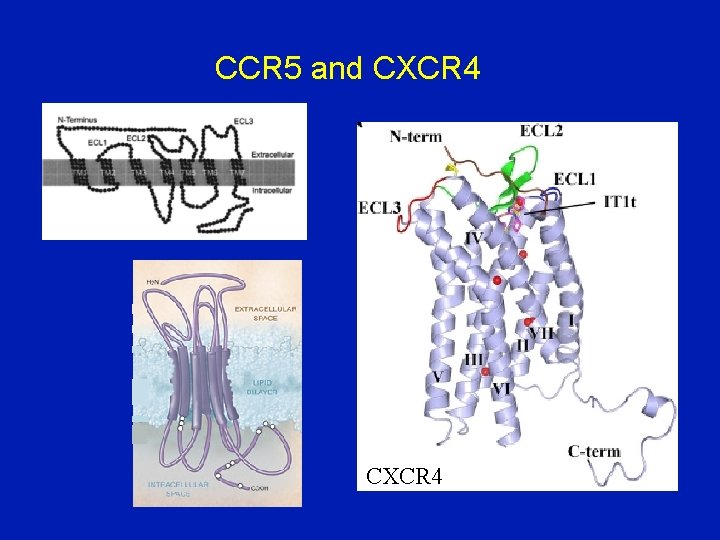
CCR 5 and CXCR 4
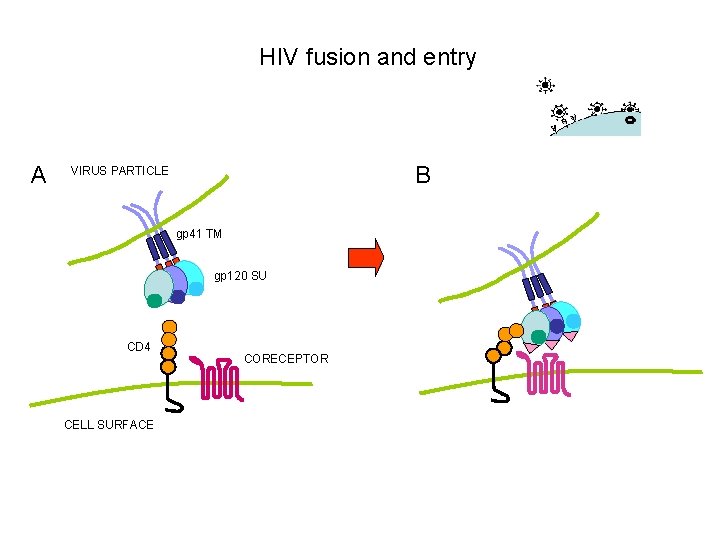
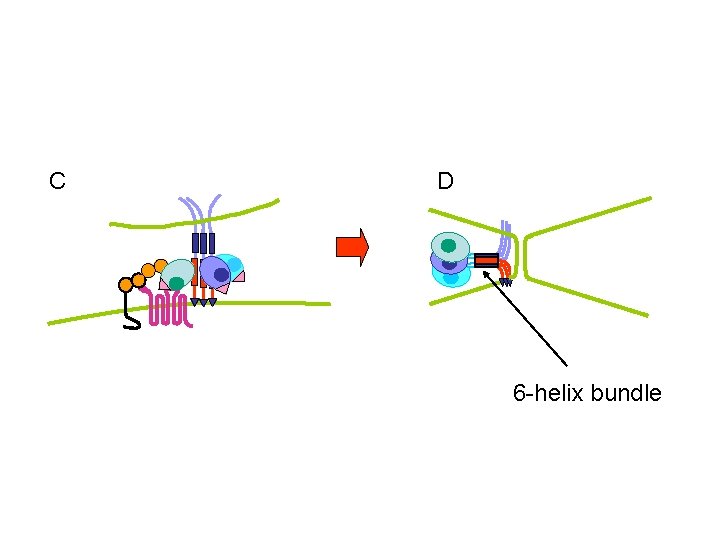
HIV fusion and entry A B VIRUS PARTICLE gp 41 TM gp 120 SU CD 4 CELL SURFACE CORECEPTOR
C D 6 -helix bundle
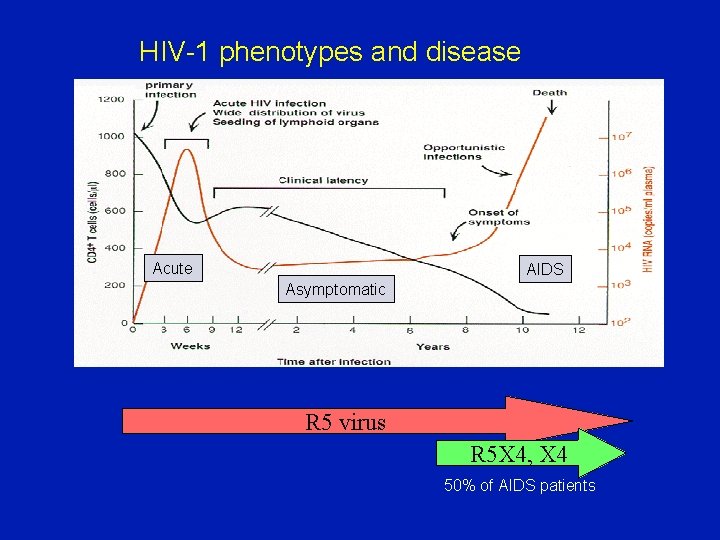
HIV-1 phenotypes and disease Acute AIDS Asymptomatic R 5 virus R 5 X 4, X 4 50% of AIDS patients
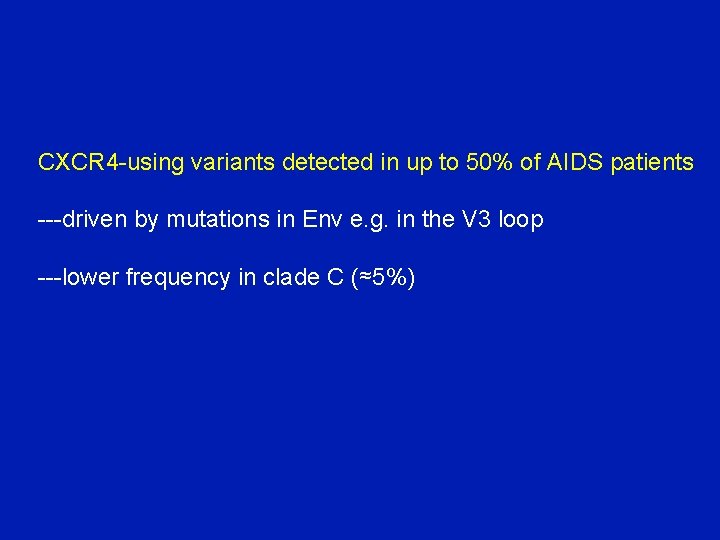
CXCR 4 -using variants detected in up to 50% of AIDS patients ---driven by mutations in Env e. g. in the V 3 loop ---lower frequency in clade C (≈5%)
HIV tropism HIV infects CD 4+ cells. These include: T-cells macrophages dendritic cells
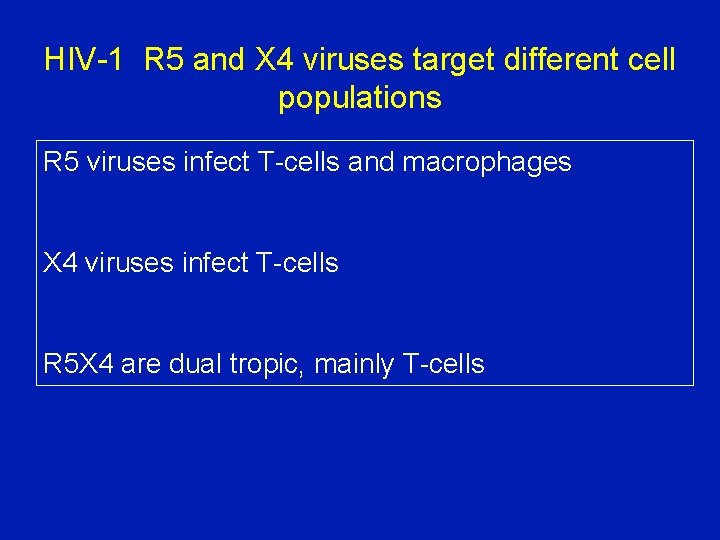
HIV-1 R 5 and X 4 viruses target different cell populations R 5 viruses infect T-cells and macrophages X 4 viruses infect T-cells R 5 X 4 are dual tropic, mainly T-cells
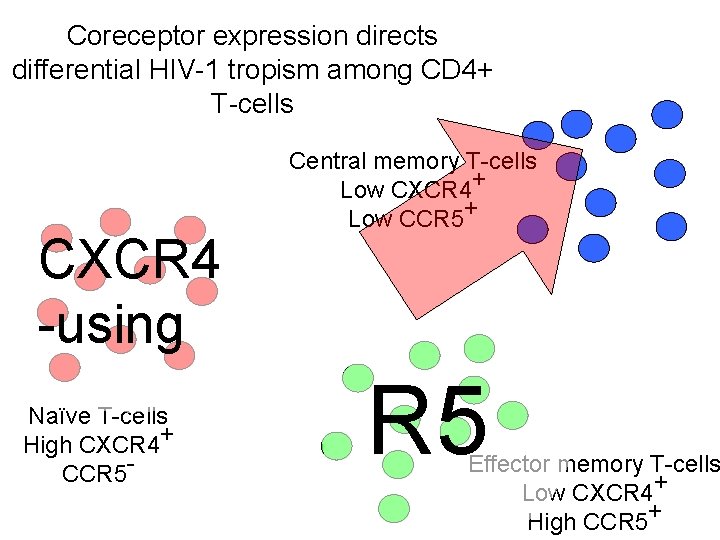
Coreceptor expression directs differential HIV-1 tropism among CD 4+ T-cells CXCR 4 -using Naïve T-cells High CXCR 4+ CCR 5 - Central memory T-cells Low CXCR 4+ Low CCR 5+ R 5 Effector memory T-cells Low CXCR 4+ High CCR 5+
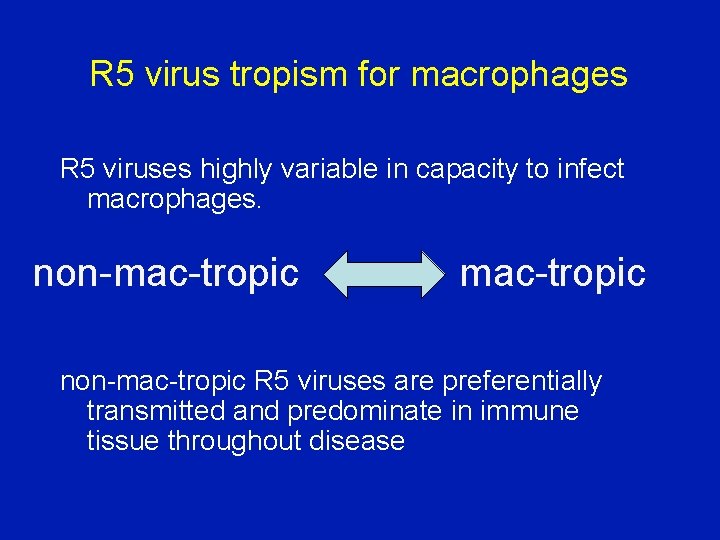
R 5 virus tropism for macrophages R 5 viruses highly variable in capacity to infect macrophages. non-mac-tropic R 5 viruses are preferentially transmitted and predominate in immune tissue throughout disease
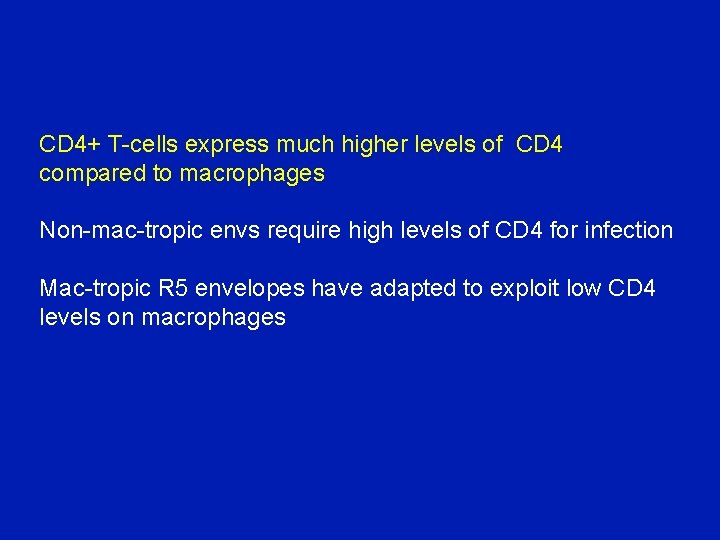
CD 4+ T-cells express much higher levels of CD 4 compared to macrophages Non-mac-tropic envs require high levels of CD 4 for infection Mac-tropic R 5 envelopes have adapted to exploit low CD 4 levels on macrophages
HIV-1 R 5 viruses with different tropisms target different tissues ---Non-mac-tropic R 5 predominate in immune tissue and periphery ---Mac-tropic R 5 predominate in the brain
HIV in the brain About 30% AIDS patients suffer severe neurological disorders known as HIV-associated dementia (HAD). Infected infants develop HAD earlier and more frequently.
HIV in the brain ---HIV enters the brain early after infection. ---Difficult to detect during the asymptomatic phase. ---Extensive replication usually observed late on in HAD subjects. ---macrophages, microglia are the main cells targeted. ---mac-tropic R 5 viruses predominate in the brain.
The brain is protected by the blood brain barrier which usually excludes immunoglobulin ---very different environment compared to immune tissue where HIV targets mainly T-cells and is bombarded by neutralizing antibodies
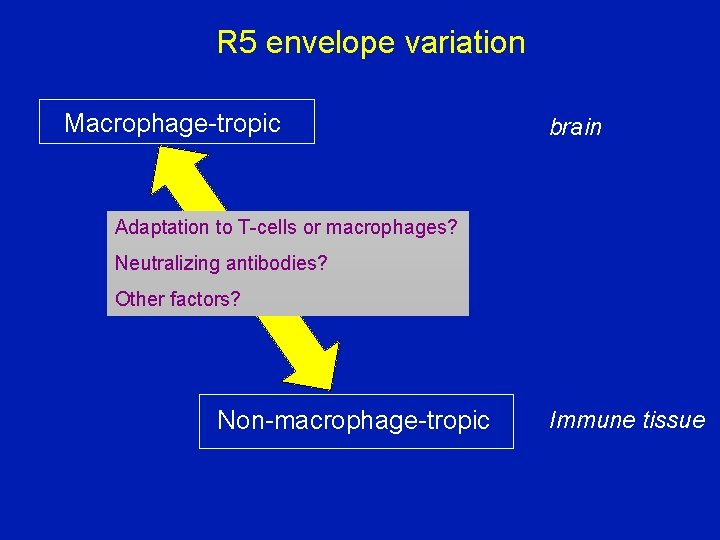
R 5 envelope variation Macrophage-tropic brain Adaptation to T-cells or macrophages? Neutralizing antibodies? Other factors? Non-macrophage-tropic Immune tissue
Selection pressures for non-mac-tropic R 5 Envs 1. T-cell tropism? BUT mac-tropic R 5 Envs mediate T-cell infection at least as well as non-mac-tropic Envs 2. Neutralizing antibodies? BUT R 5 viruses in the acute phase are non-mac-tropic when there are no antibodies 3. Other mechanisms? Non-mac-tropic R 5 Envs need high CD 4. ---precludes infection of dendritic cells
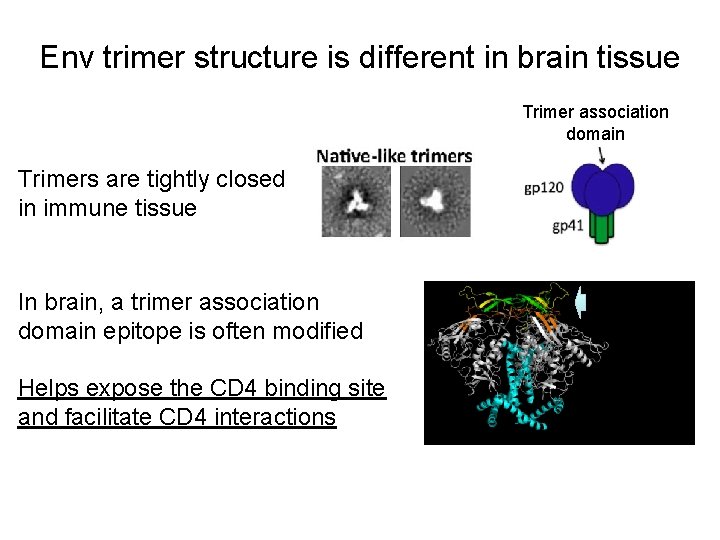
Env trimer structure is different in brain tissue Trimer association domain Trimers are tightly closed in immune tissue In brain, a trimer association domain epitope is often modified TAD Helps expose the CD 4 binding site and facilitate CD 4 interactions V 1 loop yellow V 2 loop green V 3 loop orange
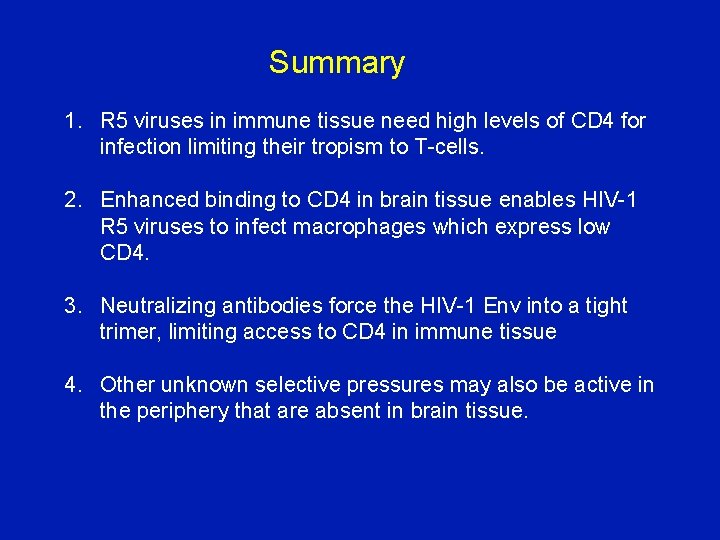
Summary 1. R 5 viruses in immune tissue need high levels of CD 4 for infection limiting their tropism to T-cells. 2. Enhanced binding to CD 4 in brain tissue enables HIV-1 R 5 viruses to infect macrophages which express low CD 4. 3. Neutralizing antibodies force the HIV-1 Env into a tight trimer, limiting access to CD 4 in immune tissue 4. Other unknown selective pressures may also be active in the periphery that are absent in brain tissue.