
Viral STDs Herpes viral ulcerative STD Genital Warts
- Slides: 26
• Viral STDs – Herpes (viral ulcerative STD) – Genital Warts – AIDS • Protozoal STD – Trichomoniasis
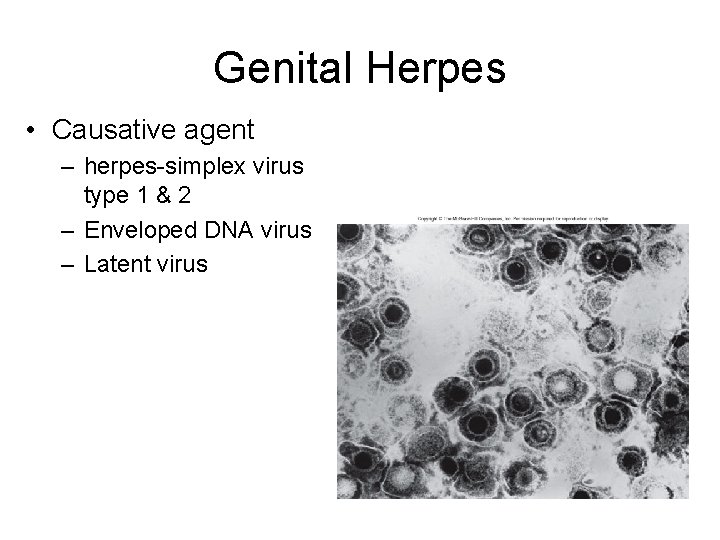
Genital Herpes • Causative agent – herpes-simplex virus type 1 & 2 – Enveloped DNA virus – Latent virus
• Signs & Symptoms – Genital itching and burning, fever, myalgia and malaise – Numerous fluid filled blisters on genitals • Burst and form lesions – Lesions heal spontaneously • Most patients will have recurrence
• Enveloped virus fuses with host cell membrane – Genome enters cell and begins replication – Viruses are released by budding and cell lysis • Blisters form when epithelial cells are killed – Rupture to produce painful ulcerations – Releases millions of viral particles
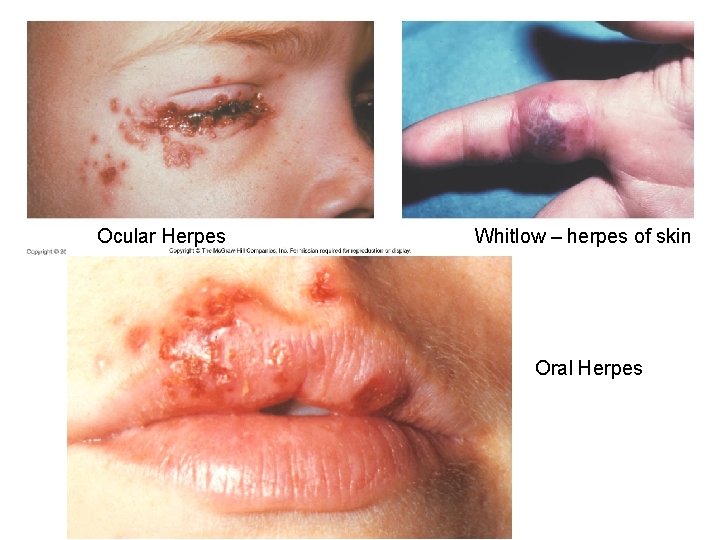
Ocular Herpes Whitlow – herpes of skin Oral Herpes
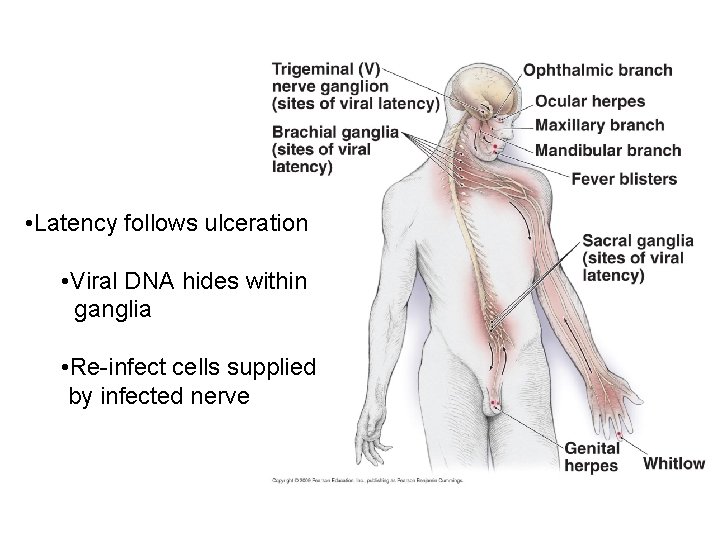
• Latency follows ulceration • Viral DNA hides within ganglia • Re-infect cells supplied by infected nerve
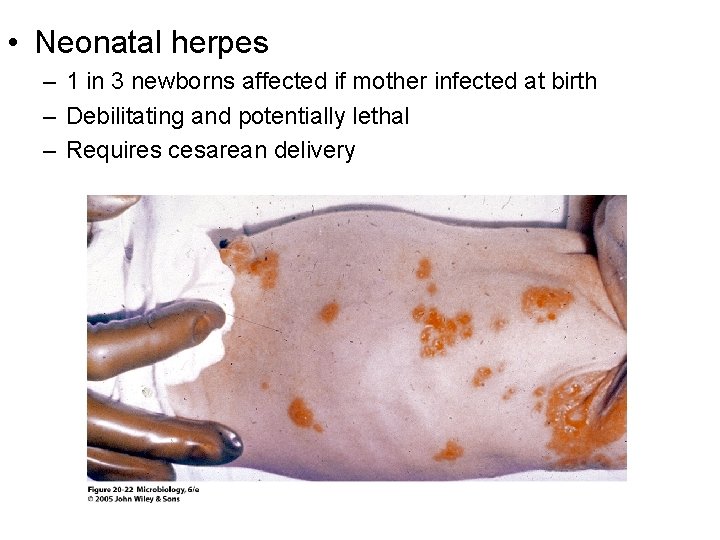
• Neonatal herpes – 1 in 3 newborns affected if mother infected at birth – Debilitating and potentially lethal – Requires cesarean delivery
• Epidemiology – – 4 billion infected worldwide No animal reservoir Non-sexual transmission may occur Transmission most likely occurs during first days illness • Transmission can happen in absence of symptoms
• Treatment – There is no cure for genital herpes • Once infected there is lifelong risk of transmission – Acyclovir and derivatives reduce severity – Condoms may not be effective in prevention!!!
Genital Warts (papillomas) • Causative agent: Human papillomaviruses – 30 different HPV strains cause warts – Most common STD in US
• Warts on genitals, vagina and cervix – Slight pain or itching may occur – May form condylomata acuminata • Warts typically not dangerous – HPV linked to 99% of cervical cancers – May also cause anal, penile, vaginal and oral cancers
• HPV infects approximately 20 million people in the United States – ~ 6. 2 million new cases each year • Pap smears don’t detect HPV only abnormal cells – DNA test is available that detects all 13 strains linked to cervical cancer
• Not prevented by condoms!!! • New vaccine currently available – Gardasil • Treatment: – Removal of warts by freezing, laser or acid – Typically reoccur
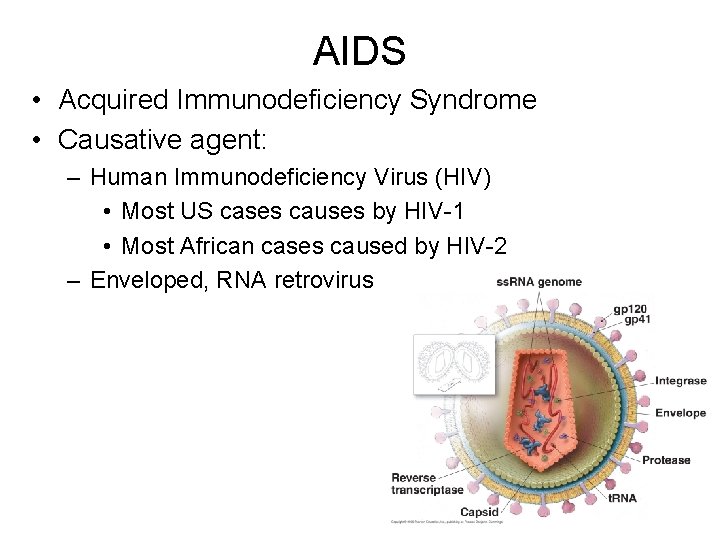
AIDS • Acquired Immunodeficiency Syndrome • Causative agent: – Human Immunodeficiency Virus (HIV) • Most US cases causes by HIV-1 • Most African cases caused by HIV-2 – Enveloped, RNA retrovirus
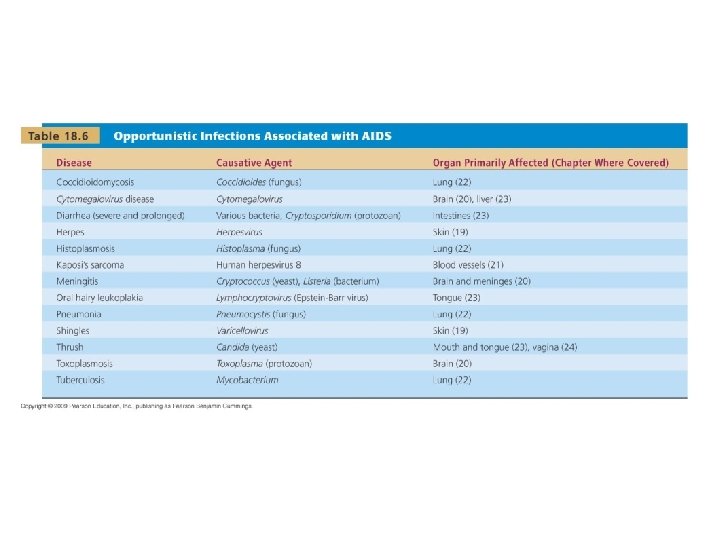
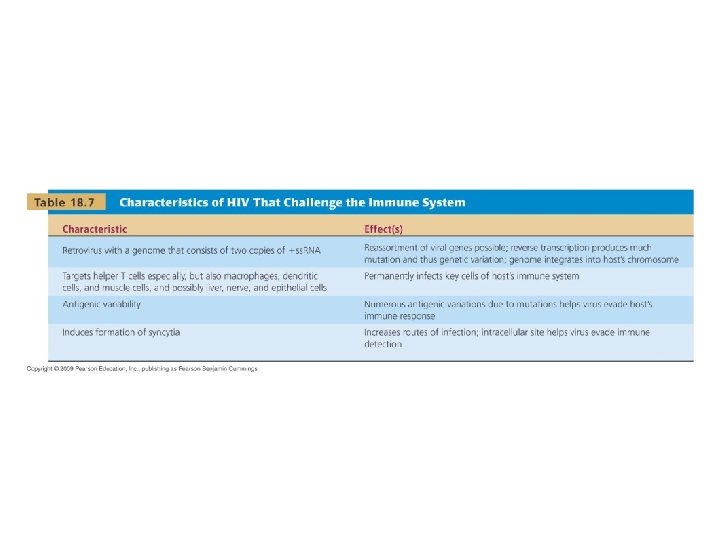
• Signs & Symptoms (of HIV disease): – Fever; head and muscle aches; enlarged lymph nodes; rash – Some individuals are asymptomatic for years • AIDS is characterized by the presence of several opportunistic or rare infections and a T cell count of lower than 200/µl
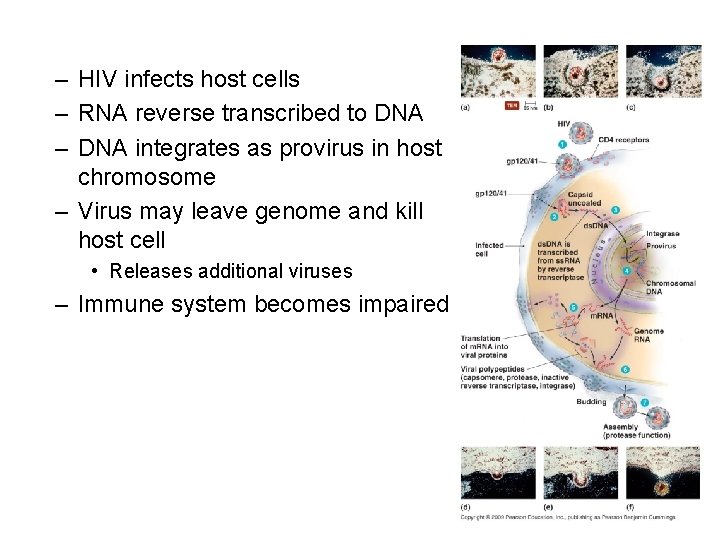
– HIV infects host cells – RNA reverse transcribed to DNA – DNA integrates as provirus in host chromosome – Virus may leave genome and kill host cell • Releases additional viruses – Immune system becomes impaired
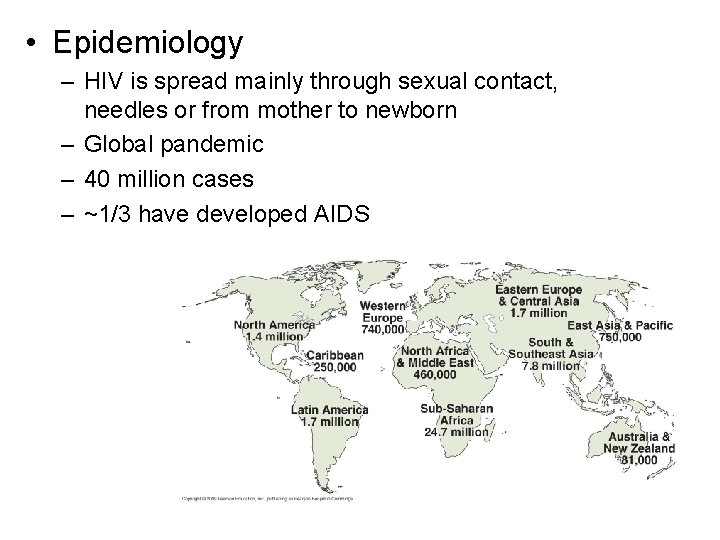
• Epidemiology – HIV is spread mainly through sexual contact, needles or from mother to newborn – Global pandemic – 40 million cases – ~1/3 have developed AIDS
• Prevention: – No vaccine available – Interruption of mother to child transmission via chemotherapy – Needle exchange programs – Educational programs targeting at risk populations – Treatment of other STDs to lessen risk
• Treatment: – Designed to block replication and release of virus • Generally with cocktail of medication (HAART) • Include reverse transcriptase inhibitors; protease inhibitors; and nucleotide analogs
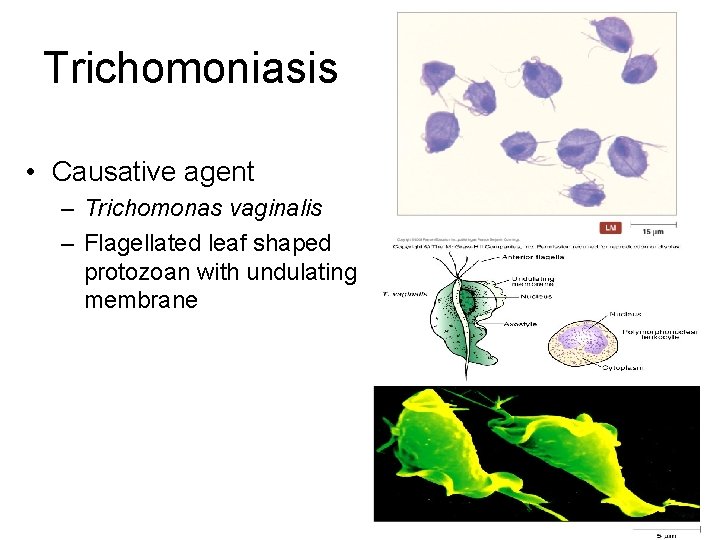
Trichomoniasis • Causative agent – Trichomonas vaginalis – Flagellated leaf shaped protozoan with undulating membrane
• Signs & Symptoms – Most women symptomatic • Itching of vulva and inner thighs • Itching and burning of the vagina • Frothy, odorous yellowish-green vaginal discharge – Most men are asymptomatic • penile discharge, pain on urination, tender testes or prostatitis
• Pathogenesis – No encysted stage so it can’t survive in environment – Reproduces at p. H of 5 -6 – Reddening and swelling of vagina attributed to trauma of moving protozoan – Frothy discharge most likely due to gas production by organism
• Epidemiology – Humans are the only known host – Worldwide distribution • 170 new cases worldwide annually • 7. 5 million in US – Most common curable STD in women – Transmission usually sexual contact; fomites; newborns infected in birth canal
• Treatment – Single dose of metronidazole – Both partners should be treated to prevent reinfection – Vinegar douche for pregnant or nursing women