
VIRAL SKIN CONDITIONS THE MULAS MANSA SCHOOL OF
- Slides: 35
VIRAL SKIN CONDITIONS THE MULAS MANSA SCHOOL OF NURSING “FOR EVERY CLOUD THERE IS A SILVER LINE”
Herpes zoster (shingles/zona) Definition; is a viral disease characterised by a painful skin rash with blisters in a limited area on one side of the body, often in a stripe. It is caused by the varicella zoster virus that has become latent in the nerve cell bodies following chicken pox.
HERPES- CONTD • Incidence; on a yearly basis, through out the world, the incident rates ranges from 1. 2 to 3. 4 cases per 1, 000 healthy individuals, increasing to 3. 9 – 11. 8 per year per 1, 000 individuals among those older than 65 years.
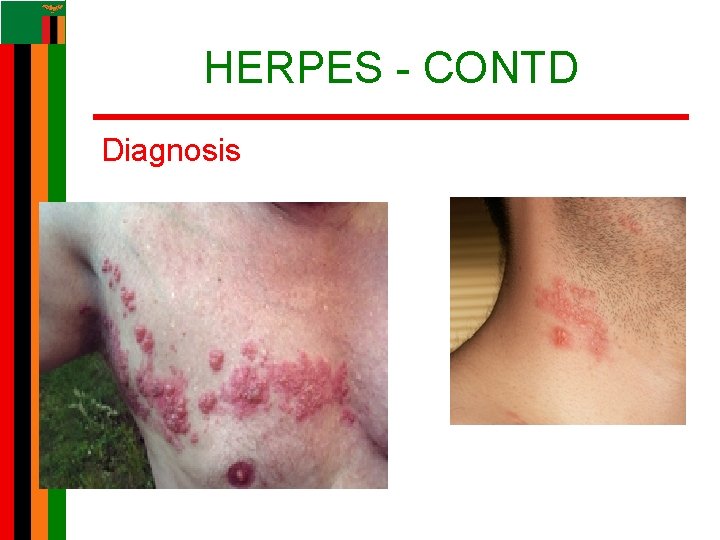
HERPES -CONTD • Clinical manifestations Earliest symptoms are non – specific and include; headache, fever, malaise Later; sensation of burning pain, itching, hyperesthesia In most cases after 1 -2 days or as long as 3 weeks – appearance of characteristic rash. (the pain and rash most commonly occurs on the torso, but can appear on the face, eyes, or other parts of the body.
HERPES - CONTD Diagnosis
HERPES - CONTD • Appearnce of the characteristic rash • Tsanck smear diagnoses acute herpes virus infection. • Lab tests – VZV – specific Ig. M antibody in blood • Lymph collected from blister examined with electron microscope for viral particles.
HERPES -CONTD • Treatment Aims; to limit the severity and duration of pain, shorten the duration of shingles episode and reduce complications. • Analgesics; severe pain – use morphine, topical lidocaine and topical lotions containing calamine can be used on rash/blister for soothing. • Steroids; oral corticosteroids.
HERPES - CONTD • Complications Secondary bacterial infection
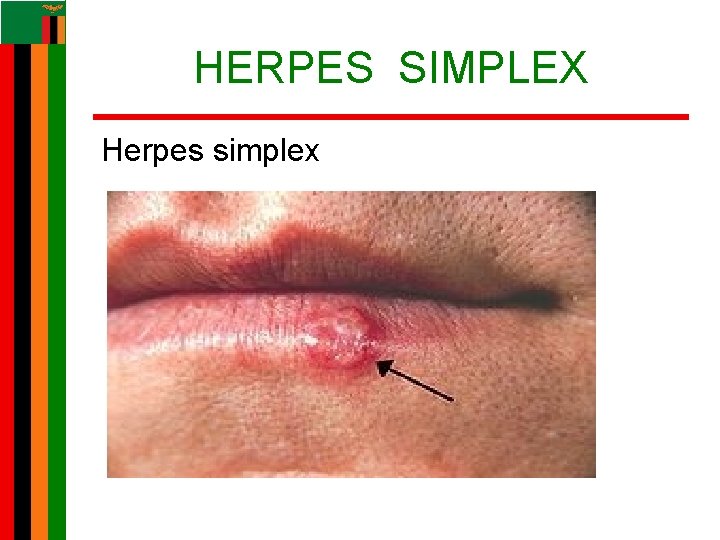
HERPES SIMPLEX Herpes simplex
H. SIMPLEX- CONTD • Is a viral disease caused by both herpes simple virus type 1 and type 2 • Transmitted by direct contact with a lesion or the body fluid of an infected person, transmission also occurs through skin to skin contact during period of asymptomatic shedding.
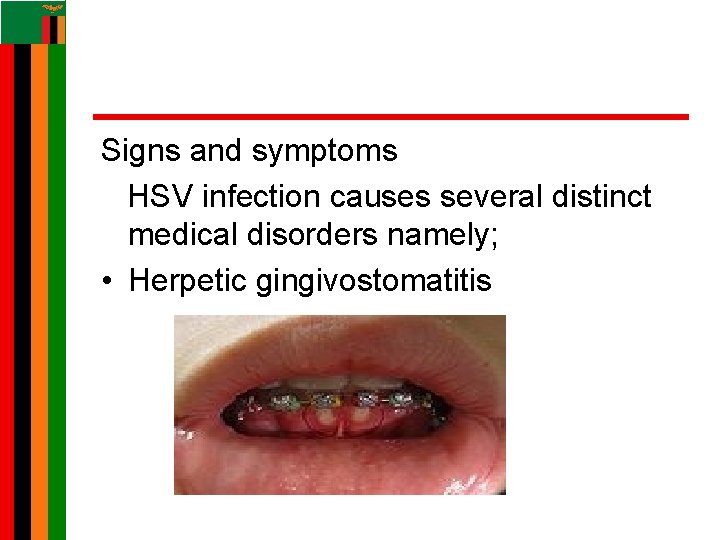
Signs and symptoms HSV infection causes several distinct medical disorders namely; • Herpetic gingivostomatitis
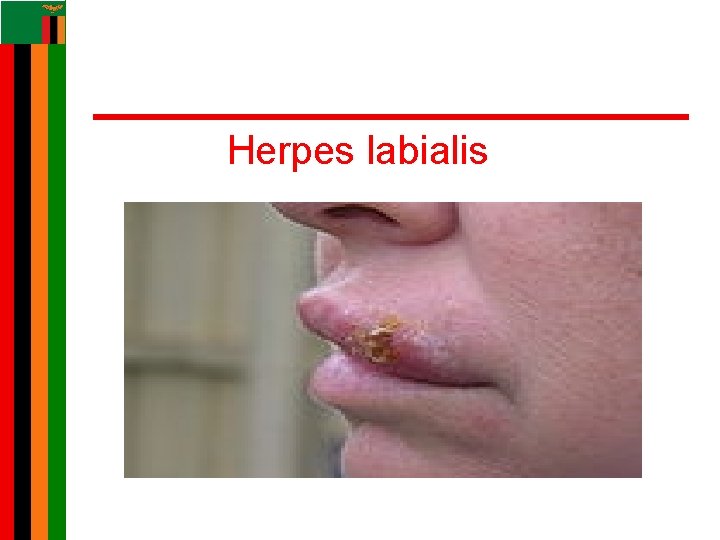
Herpes labialis
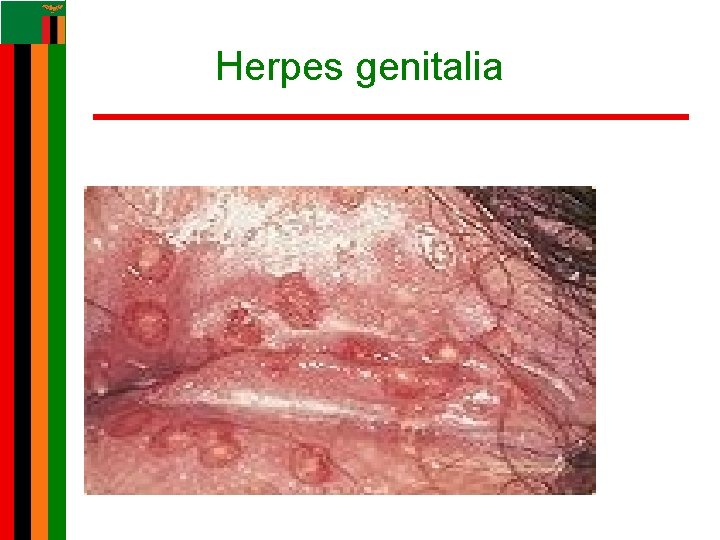
Herpes genitalia
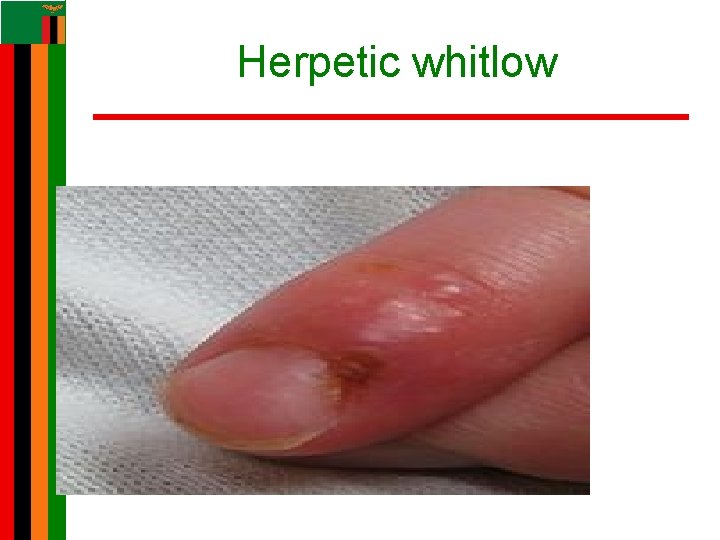
Herpetic whitlow
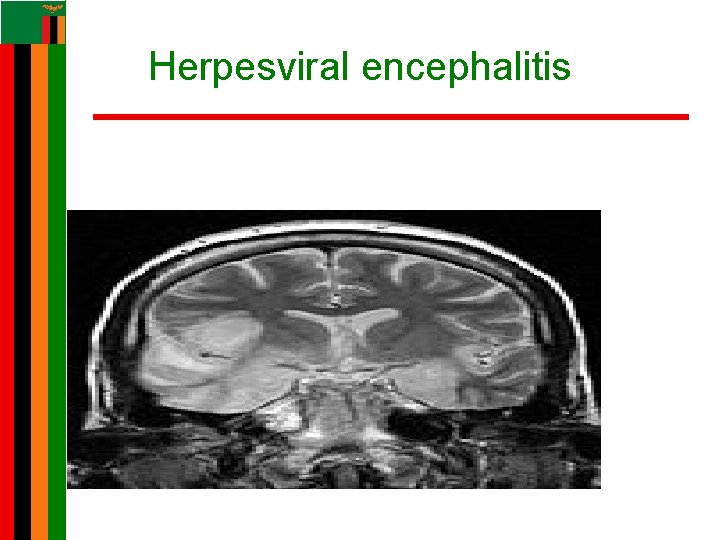
Herpesviral encephalitis
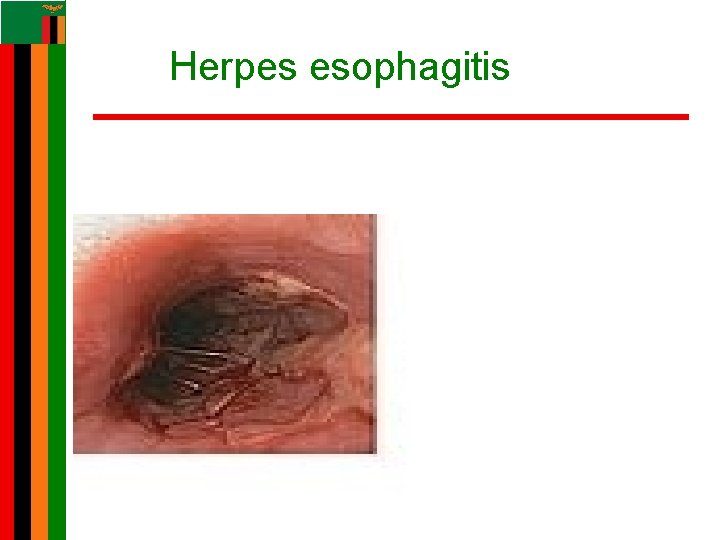
Herpes esophagitis
OTHER HERPES CONDITIONS Others include; • Herpes gladiatorum • Herpetic conjuctivitis • Herpes viral meningitis etc
Diagnosis • Herpes is contracted through direct contact with an active lesion or body fluid of an infected person. • Herpes transmission occurs between discordant partners; a person with a history of infection (HSV seropositve) can pass the virus to an HVS seronegative person. The only way to contract HSV 2 is through skin to skin contact with an infected individual.
DIAGNOSIS -CONTD • Primary orofacial – clinical examinations • Lab test – culture of the virus, direct fluorescent antibody studies, skin biopsy and polymerase chain reaction to test for presence of viral DNA • Serological tests to HSV
Prevention and treatment • There is no method to eradicate herpes virus from the body, but antiviral medications can reduce the frequency, duration and severity of outbreaks. Eg acyclovir • Analgesics to reduce pain and fever. • Topical anesthetic treatments like lidocaine to relieve itching and pain. • Condoms and vaccine (herpevac).
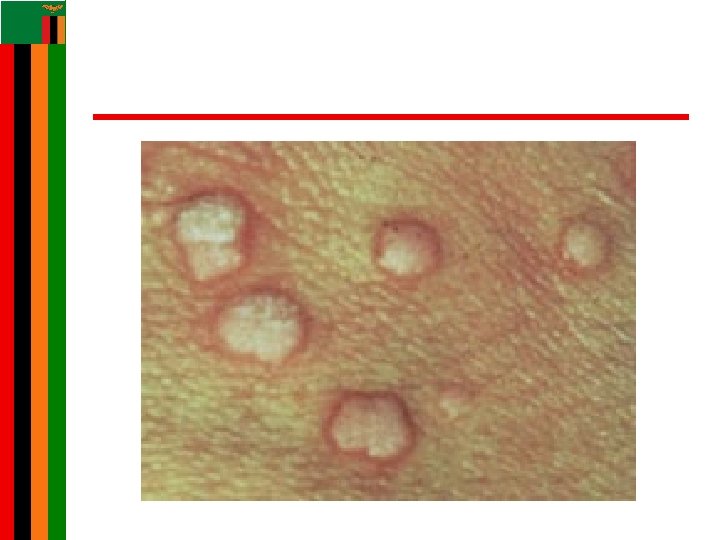
Molluscum contagiosum (MC) • Def; is a viral infection of the skin or occasionally of the mucous membranes. It is caused by a DNA poxvirus called molluscum contagiosum virus. • Among the four types MCV 1 – 4, MCV -1 is most prevalent and MCV -2 is seen in adults and is often sexually transmitted.
Molluscum contagiosum (MC)
Molluscum contagiosum- CONTD Incidence • Common in children, sexually active adults and the immunodeficient • Transimission includes sexual contact, touching and scratching the bumps and the scratching the skin. Handling of formites like towels
Diagnosis/Treatment On clinical appearance and excision biopsy Treatment Not necessary, depend on location and number of lesions. However, treatment is sought for the following reasons: • Medical issues ü bleeding ü Secondary infections ü Itching and discomfort ü Potential scarring ü Chronic keratoconjuctivitis • Social reasons ü Cosmetic, embarrassment, social exclusion and fear of transmission to others.
TREATMENT- CONTD • Cryotherapy; kill infected cells by freezing. • Astrngents applied to surface to destroy successive layers. • Systermic treatment; cimetidine or griseofulvin
Common warts(verruca vulgaris) • Common warts are benign noncancerous skin growths of the top layer of skin and mucous membranes. They are skin coloured, rough to the touch, dome-shaped, and usually grow around the nails, on fingers or the back of hands.
Causes • Human papilloma virus (HPV). More than 100 strains have been identified, and at least 60 are known to cause warts. Specifically, types 1, 2, 4, 27, and 29 are the most frequent HPV strains to infect people and cause a wart to develop.
Causes • HPV strikes where the skin is broken, for example cuts and scratches or where fingernails have been bitten and skin has been damaged in the process. Warts can spread from person to person and from one part of the body to the other. For these reasons doctors recommend that if you touch a wart you should wash your hands immediately.
Symptoms • HPV causes unusual growth of cells at the base of the outer layer of skin. Contrary to popular belief common warts do not have deep roots; they stay on the surface of the skin, and are completely harmless. • Scientists believe that there are several reasons why some individuals are affected by warts, and others remain trouble free. These include: the type and strength of the viral strain, the health of the exposed person, and the strength of an individual’s immune response.
Symptoms • Common warts appear mostly on the hands and feet and are round, raised growths. They are more common in young adults and children. A common wart can range in size from a pinhead to 10 mm.
Symptoms • Common warts are painless with one exception. If the wart develops on the bottom of the foot (known as a plantar wart), then the pressure of walking on the wart causes it to grow inward instead of outward and they are often quite painful.
Symptoms • Other than plantar warts, common warts rarely cause any other problems except for being an eyesore, especially for the people that are suffering with the common wart
Treatment • There is no overnight cure. One treatment option is to ignore them. Warts eventually go away, though this may sometimes take years for the immune system to get rid of them. If you can’t bear to see common warts on any part of your body then over the counter ointments, plasters, and patches may work. • Combination therapies are known to have reasonable success rates, where two or more agents are applied. freeze common warts with liquid nitrogen or zap them with electricity or laser light.
THE END THANK YOU! THE MULAS MANSA SCHOOL OF NURSING 35