
VIOLENCE AND SUBSTANCE ABUSE AT A CAPE TOWN
VIOLENCE AND SUBSTANCE ABUSE AT A CAPE TOWN TRAUMA CENTRE Astrid Leusink , Andrew Nicol, Katherine Sorsdahl, Ross Hoffman, James Burger, Sean Tromp, Patricia Leighton, Robyn Richmond Cathy Ward, Richard Matzopoulos, Pradeep Navsaria, Dan Stein, Guy Lamb. Funded from a research grant from SAVI
Introduction • Violence and associated injuries second leading cause of death in SA • Alcohol and drugs major risk factor – One of highest levels of alcohol consumption per capita in the world – 1/3 rd population abuse alcohol regularly – 66% of grades 8 -10 drink alcohol
Introduction • Study in Cape Town in 2000 – 60% of patients treated for injury tested positive for alcohol – ¼ could be classified as alcohol dependent – Prior to surge in methamphetamine (“tik”) • Alcohol abuse estimated to cost the country around R 9 billion per annum
Introduction • Address linkages between alcohol/drug use and trauma • Drug usage patterns among violence cases presenting to Trauma Centres – assists in planning and implementation of suitable interventions
Introduction “What are the current patterns of alcohol and drug abuse in patients presenting after interpersonal violence. ”
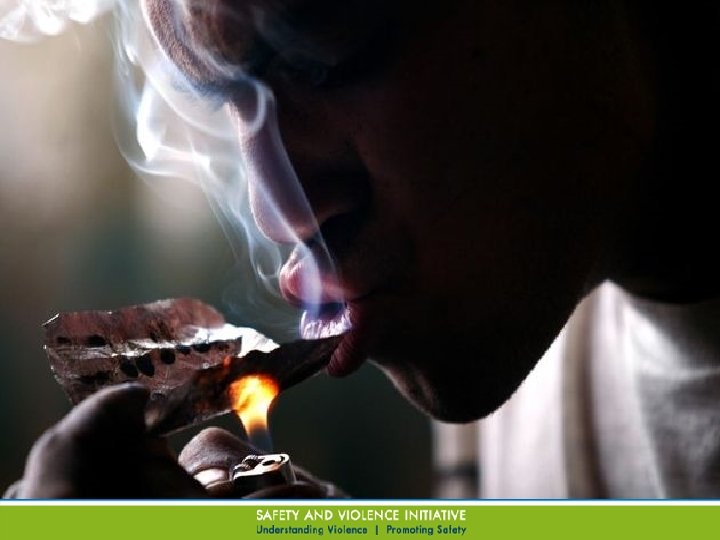
Tik (Crystal Meth)
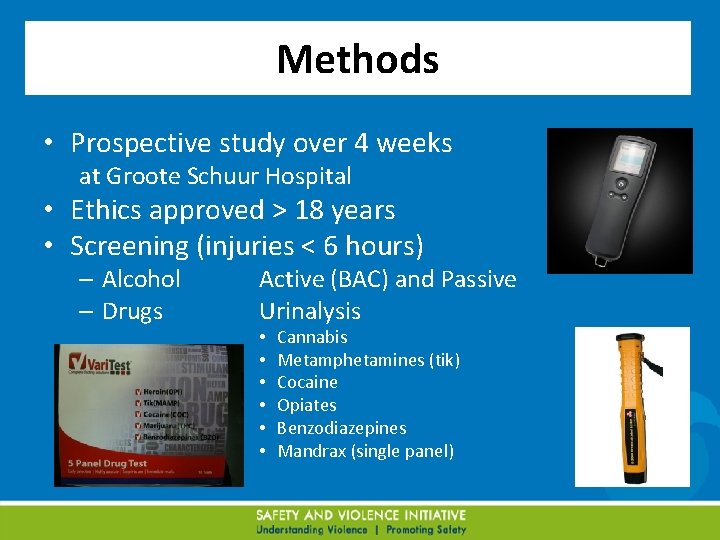
Methods • Prospective study over 4 weeks at Groote Schuur Hospital • Ethics approved > 18 years • Screening (injuries < 6 hours) – Alcohol – Drugs Active (BAC) and Passive Urinalysis • • • Cannabis Metamphetamines (tik) Cocaine Opiates Benzodiazepines Mandrax (single panel)
Methods • Medically administered opiates or benzodiazepines excluded from analysis • Patient demographics, personal information and injury details recorded • Patients positive for drugs or alcohol – Referred to Cape Town Drug Counselling Centre
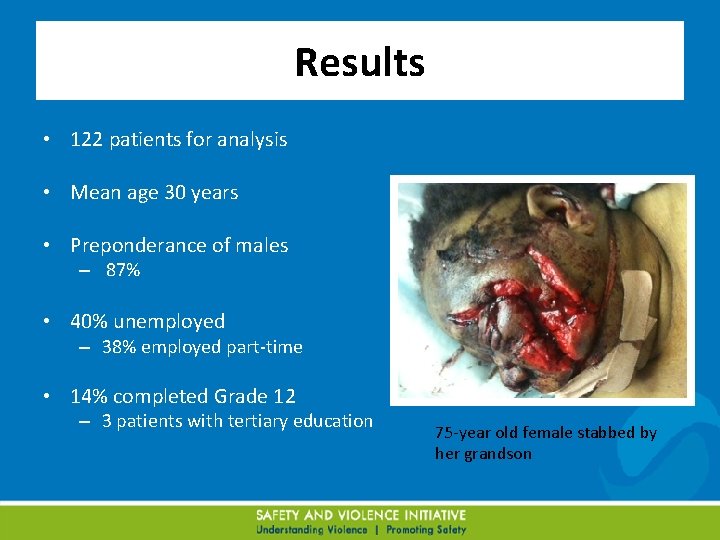
Results • 122 patients for analysis • Mean age 30 years • Preponderance of males – 87% • 40% unemployed – 38% employed part-time • 14% completed Grade 12 – 3 patients with tertiary education 75 -year old female stabbed by her grandson
Results • 55% of incidents occurred in the street – 6% in bar or shebeen • Athlone and Philippi – 15% of incidents combined • Most injuries occurred predominantly on Saturdays and Sundays – Most injuries between 16 h 01 to 04 h 00 – Peak between 20 h 01 and midnight
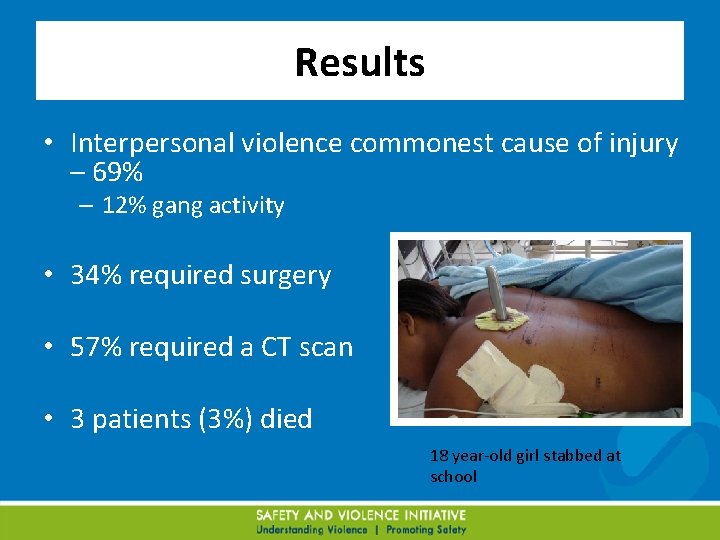
Results • Interpersonal violence commonest cause of injury – 69% – 12% gang activity • 34% required surgery • 57% required a CT scan • 3 patients (3%) died 18 year-old girl stabbed at school
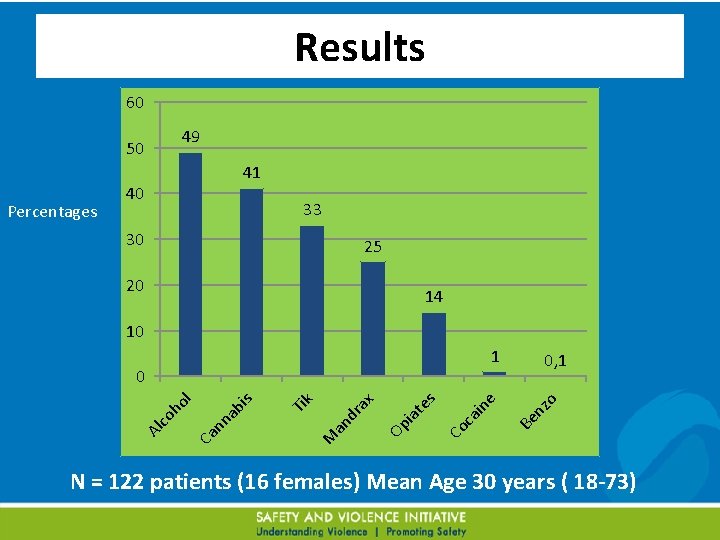
Results 60 49 50 Percentages 41 40 33 30 25 20 14 10 1 o nz Be e ca in Co te s ia Op ax dr M an Ti k na bi Ca n Al co ho l s 0 0, 1 N = 122 patients (16 females) Mean Age 30 years ( 18 -73)
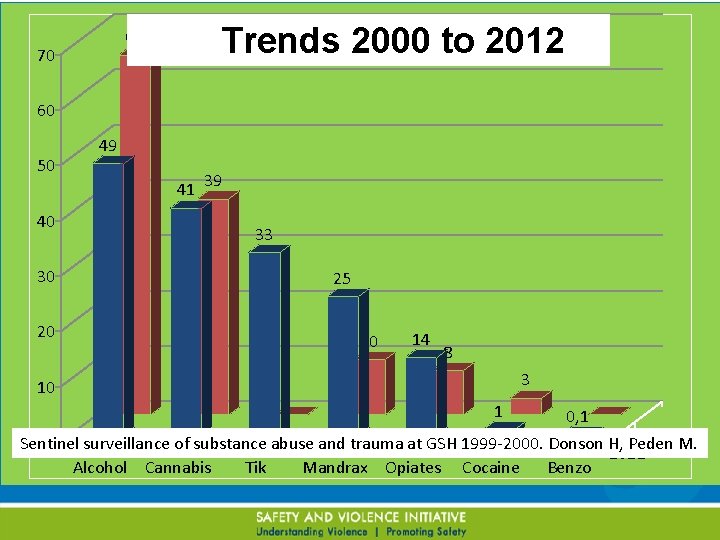
65 70 Trends 2000 to 2012 Results 60 50 40 30 20 49 41 39 33 25 10 14 8 3 10 1 0, 1 0 0 2000 0 Sentinel surveillance of substance abuse and trauma at GSH 1999 -2000. Donson H, Peden M. 2012 Alcohol Cannabis Tik Mandrax Opiates Cocaine Benzo
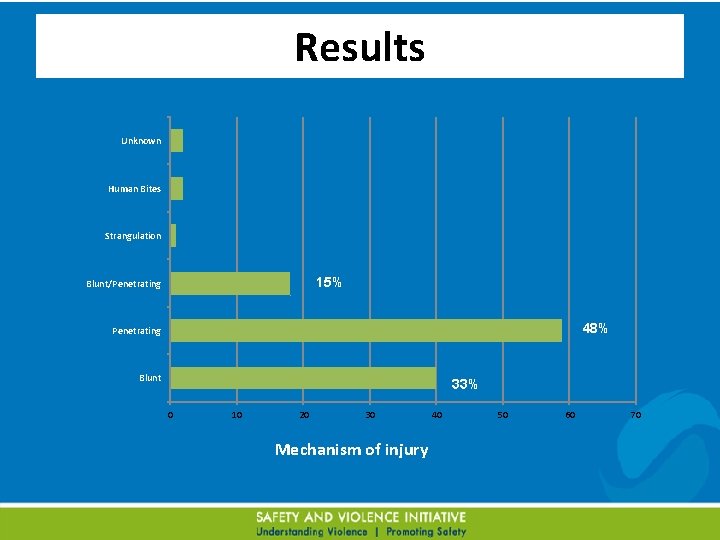
Results Unknown Human Bites Strangulation 15% Blunt/Penetrating 48% Penetrating Blunt 33% 0 10 20 30 Mechanism of injury 40 50 60 70
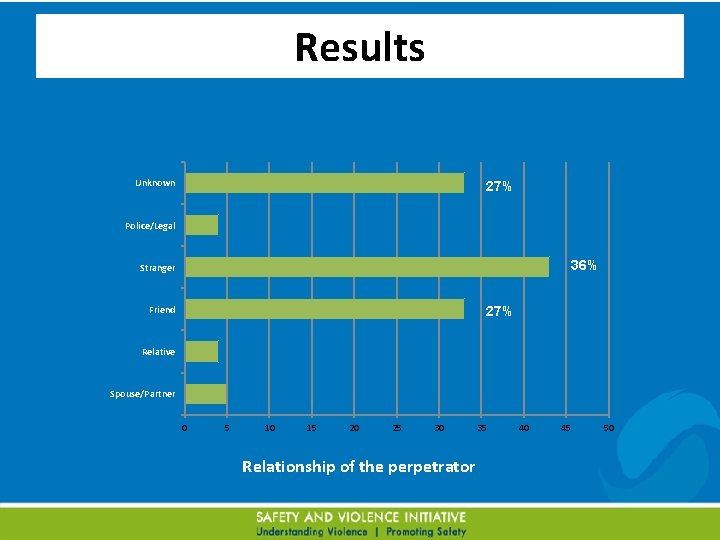
Results Unknown 27% Police/Legal 36% Stranger 27% Friend Relative Spouse/Partner 0 5 10 15 20 25 30 Relationship of the perpetrator 35 40 45 50
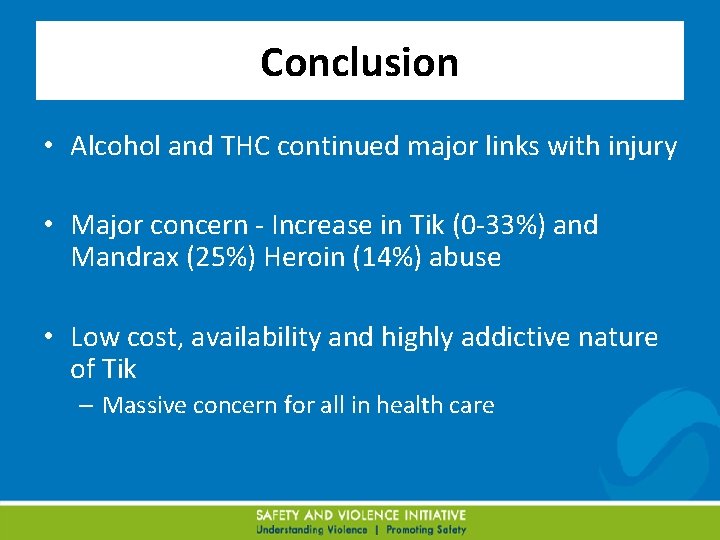
Conclusion • Alcohol and THC continued major links with injury • Major concern - Increase in Tik (0 -33%) and Mandrax (25%) Heroin (14%) abuse • Low cost, availability and highly addictive nature of Tik – Massive concern for all in health care
Conclusion • Potential for prevention of large number of injuries with identification and control of alcohol and drug abuse • Mandatory alcohol and drug screening after injury at Level 1 Trauma Centres in SA • System in place for effective intervention – Screening and Brief Intervention (SBI) – Recommended by SAVI
Thank you
- Slides: 18