
Violation of principles AO Trauma Advanced Principles Course
- Slides: 46
Violation of principles AO Trauma Advanced Principles Course
Learning objectives • Realize that principles are there to be followed • Recognize pitfalls when applying the right principles to wrong indications and vice versa • Appreciate that complications often are a result of lack of planning, lack of knowledge, and lack of skill
The most dangerous surgeon is the one who has returned from an AO course, with limited supervision
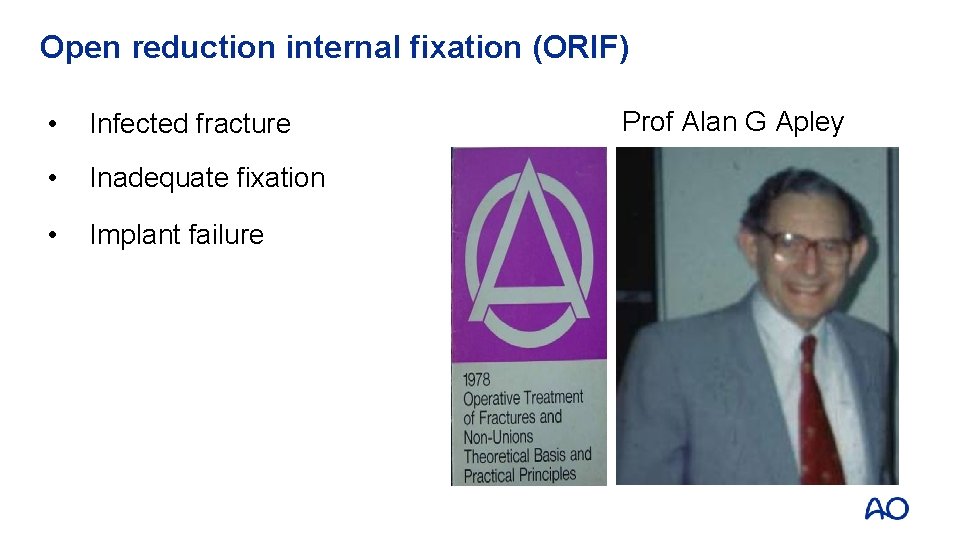
Open reduction internal fixation (ORIF) • Infected fracture • Inadequate fixation • Implant failure Prof Alan G Apley
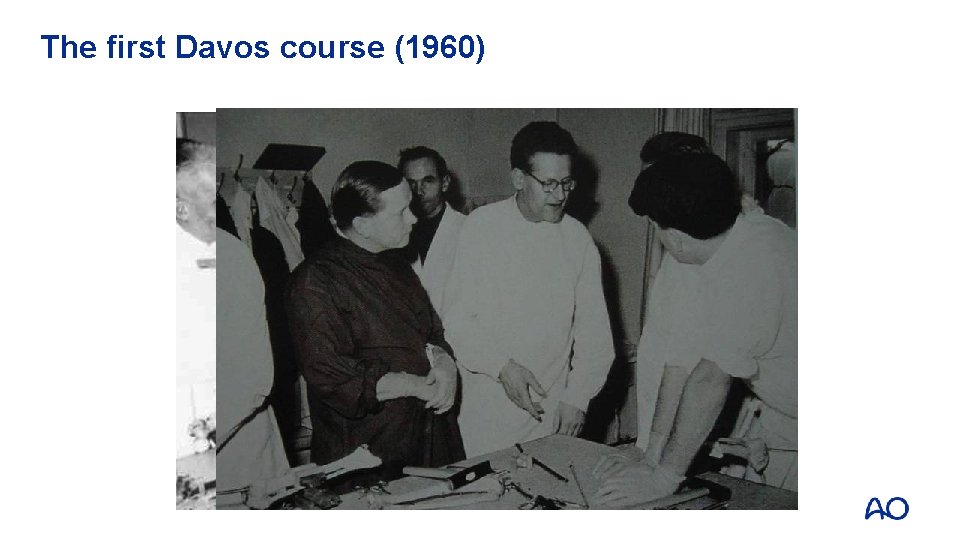
The first Davos course (1960)
AO International (AOI) 1972 Worldwide activities ines l r i l. A a n tio a n r te n I AO
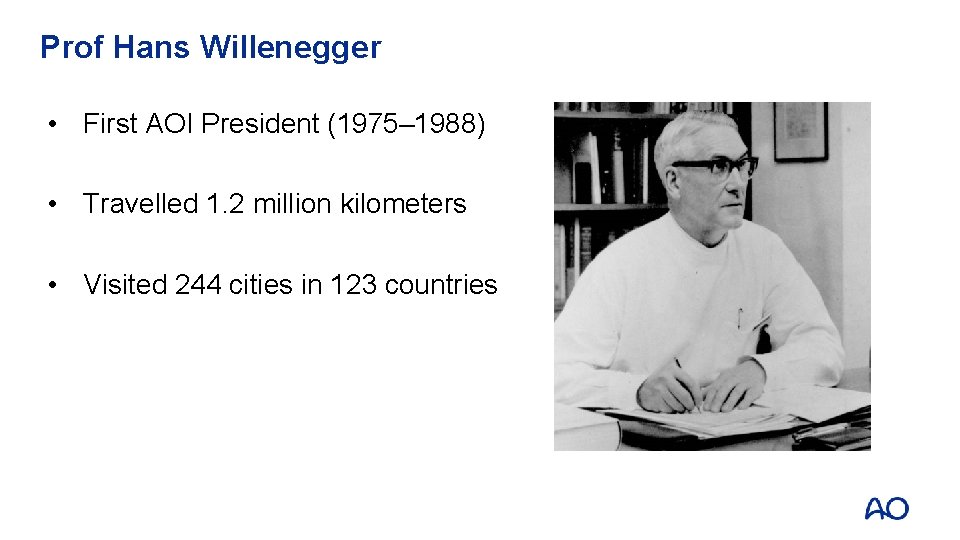
Prof Hans Willenegger • First AOI President (1975– 1988) • Travelled 1. 2 million kilometers • Visited 244 cities in 123 countries
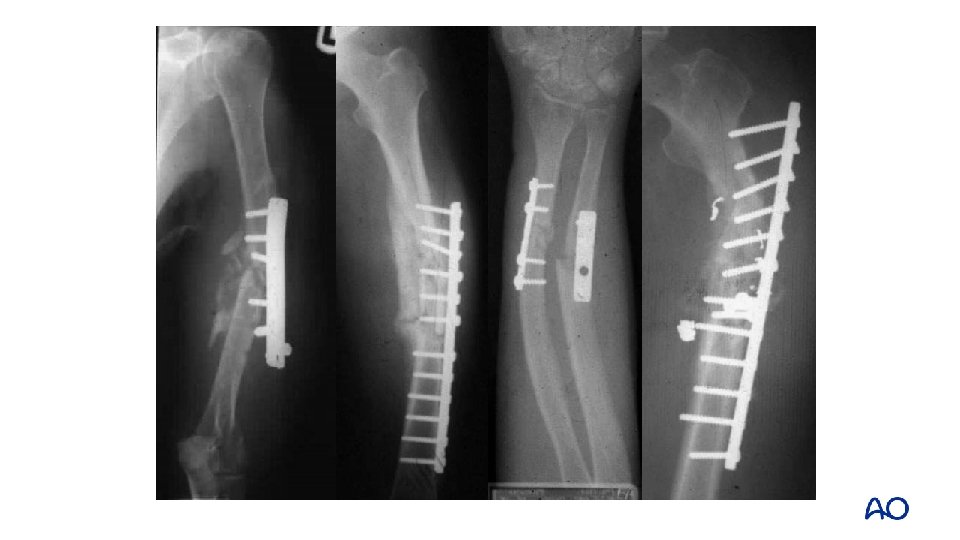
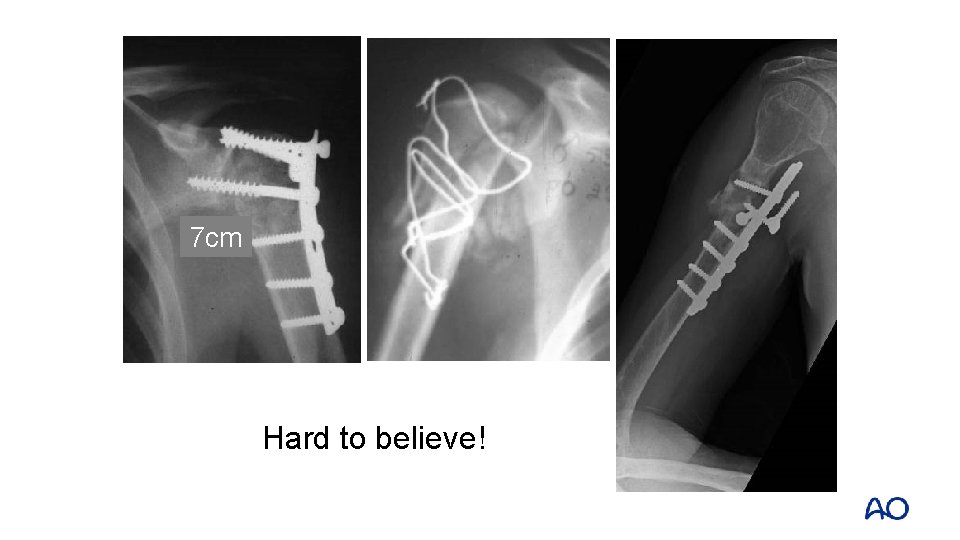
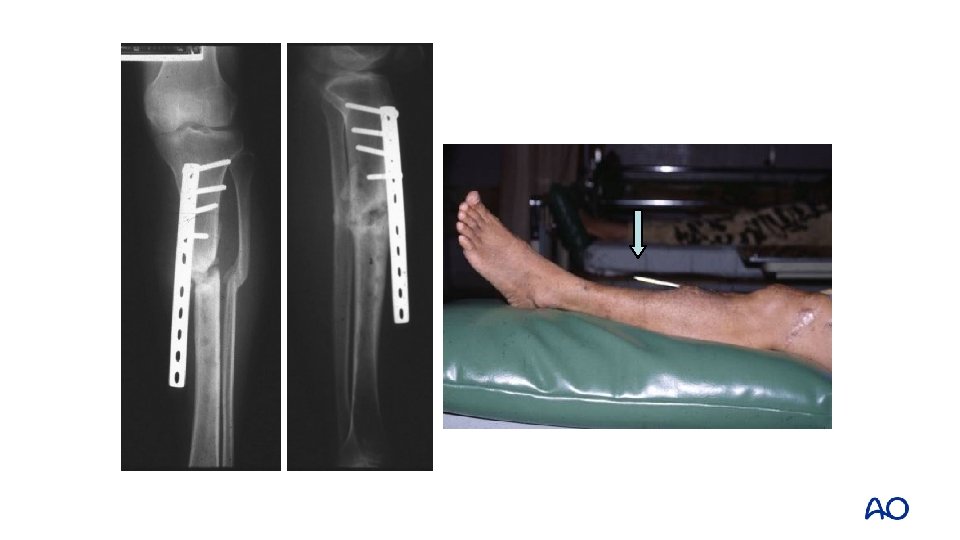
In spite of the world-class education provided by AO, there are still many complications
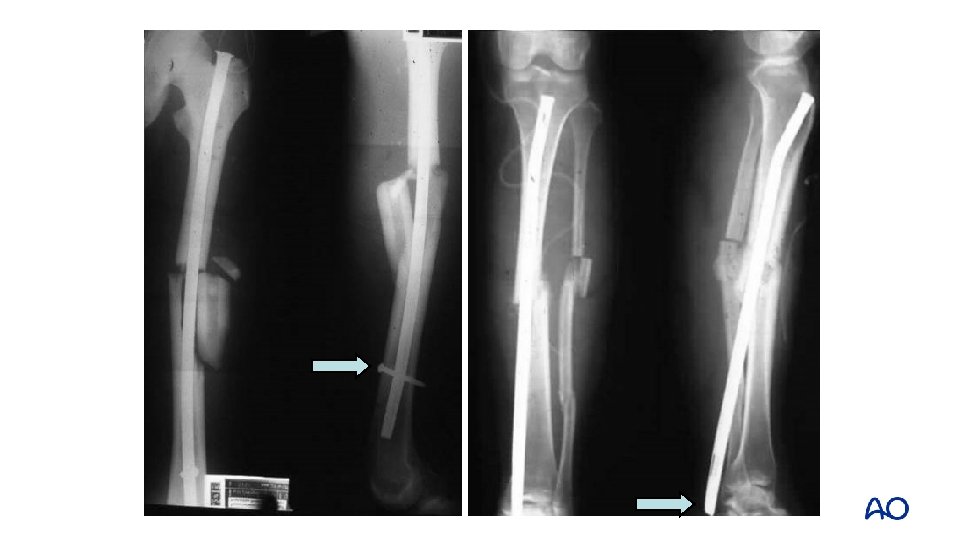
7 cm Hard to believe!
What went wrong? These complications resulted from surgeons who used AO implants without applying the AO principles
Failure of understanding • Stability • Reduction • Soft-tissue handling • Surgical technique
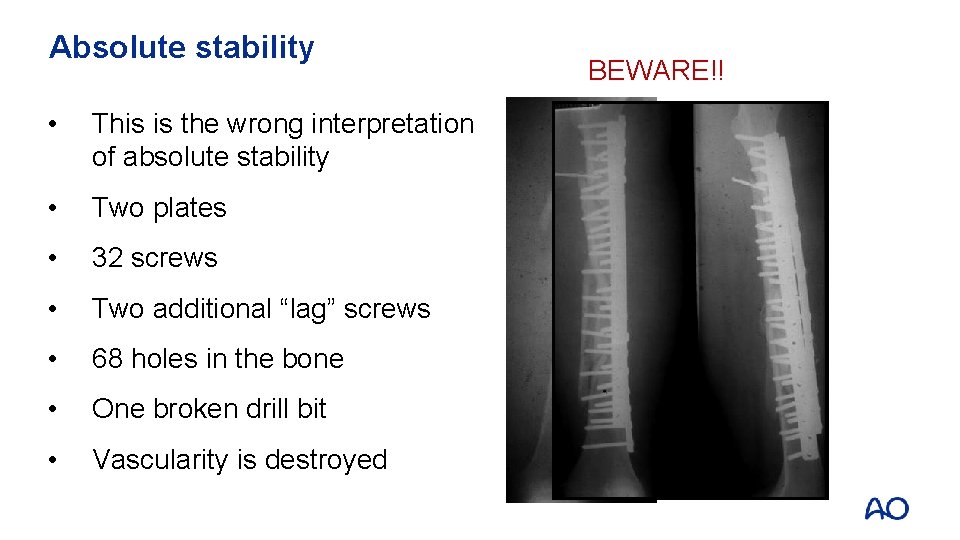
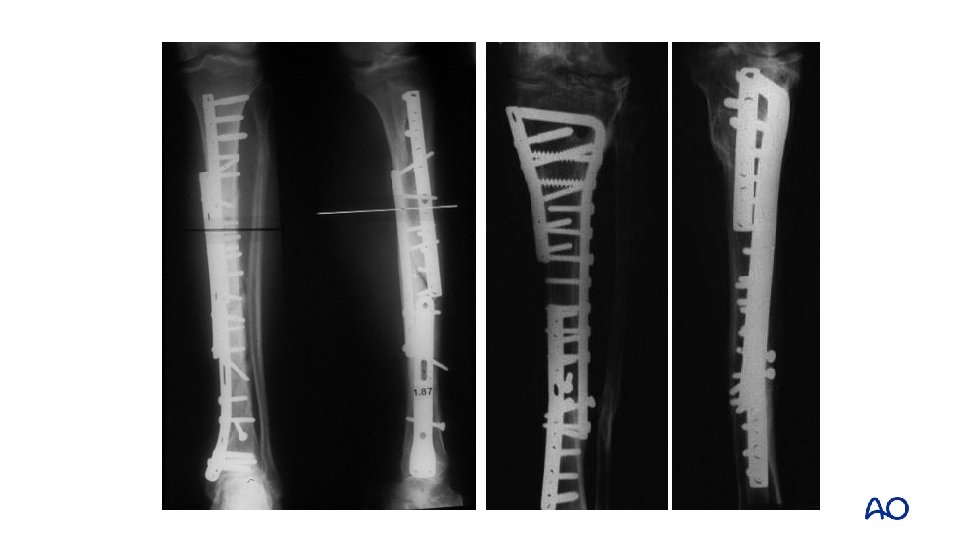
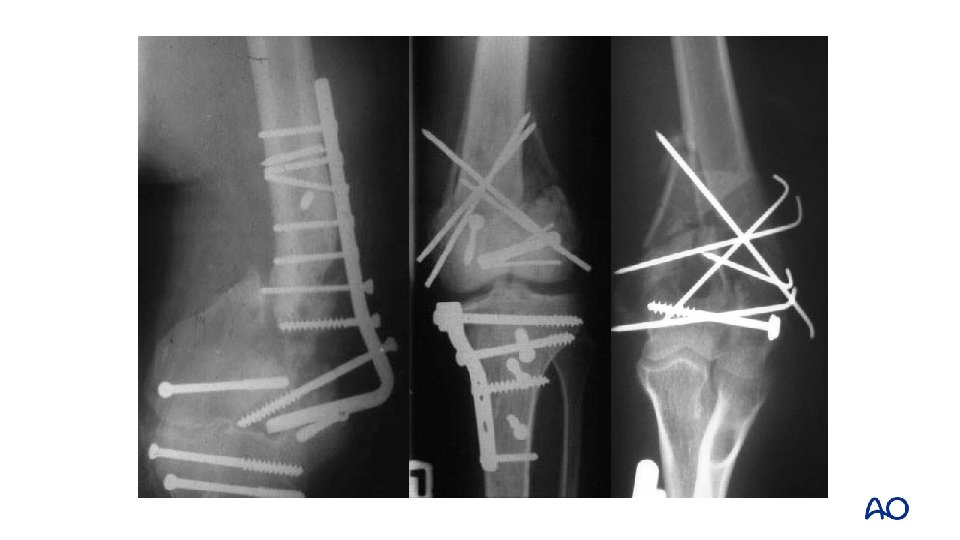
Absolute stability • This is the wrong interpretation of absolute stability • Two plates • 32 screws • Two additional “lag” screws • 68 holes in the bone • One broken drill bit • Vascularity is destroyed BEWARE!!
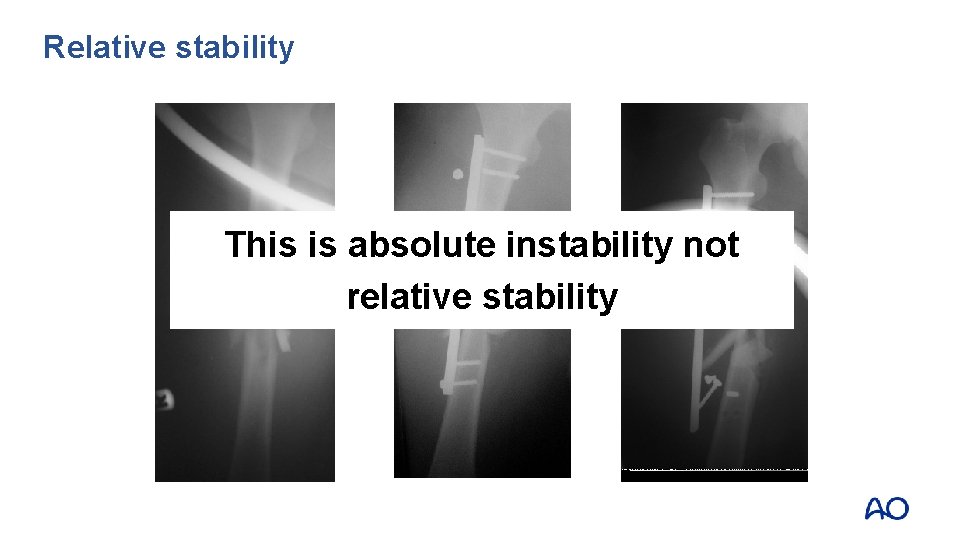
Relative stability This is absolute instability not relative stability
Failure of understanding • Stability • Reduction • Soft-tissue handling • Surgical technique
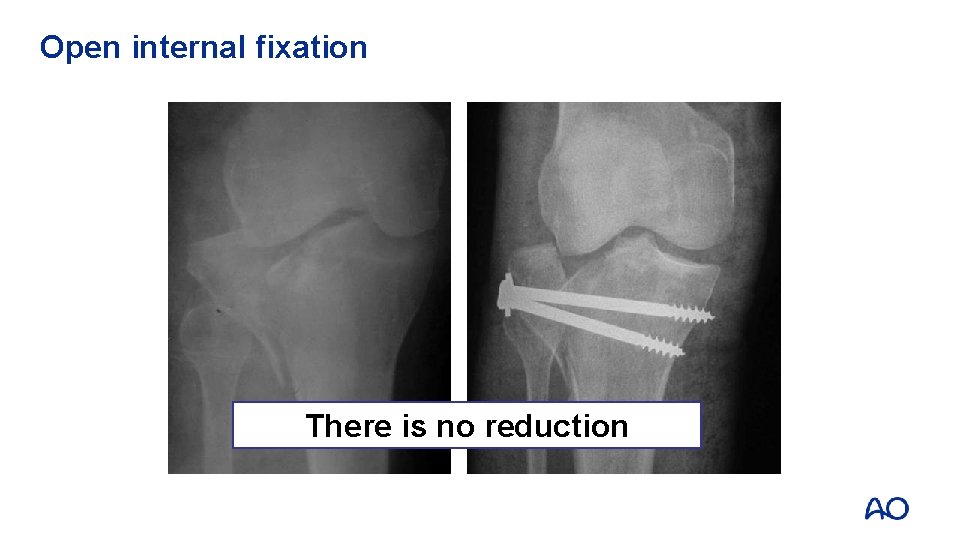
Open internal fixation There is no reduction
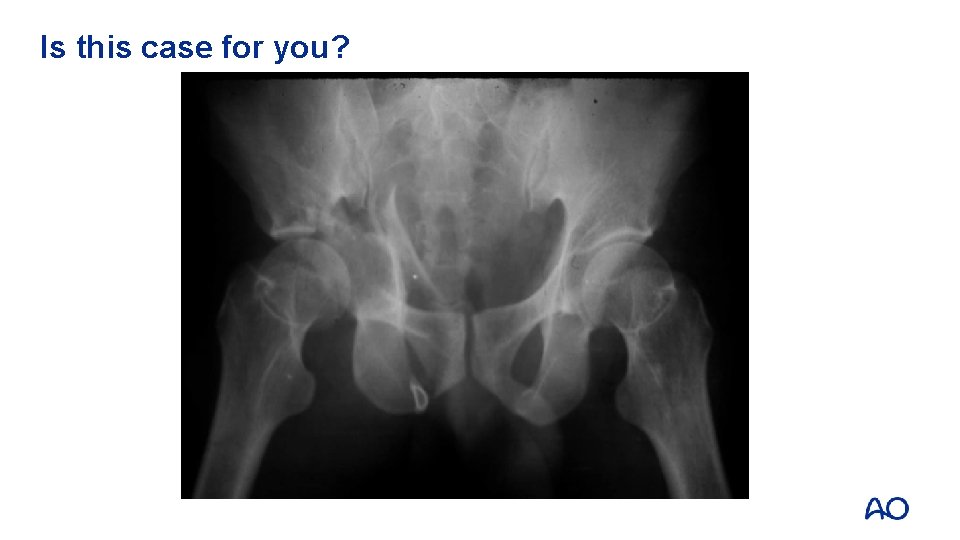
Is this case for you?
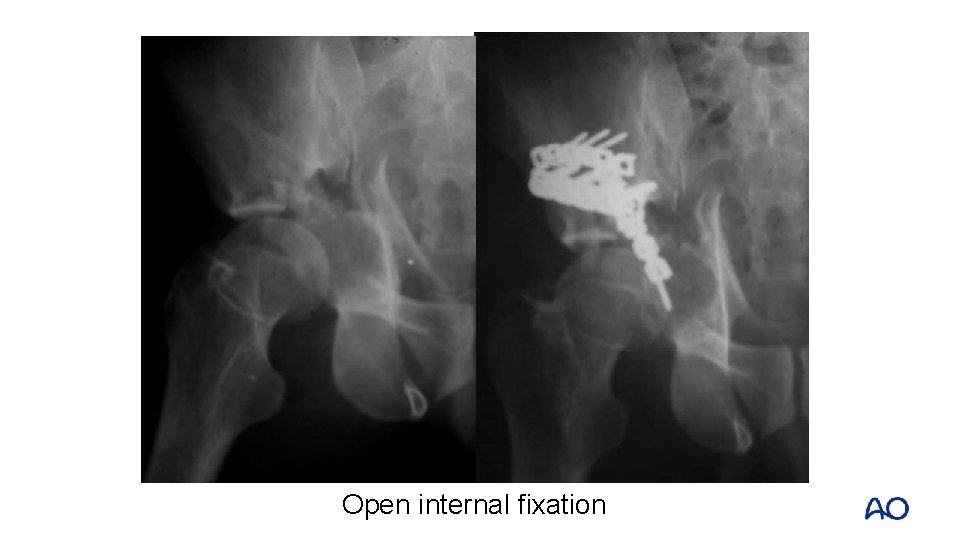
Open internal fixation
For this surgeon, income is more important than outcome
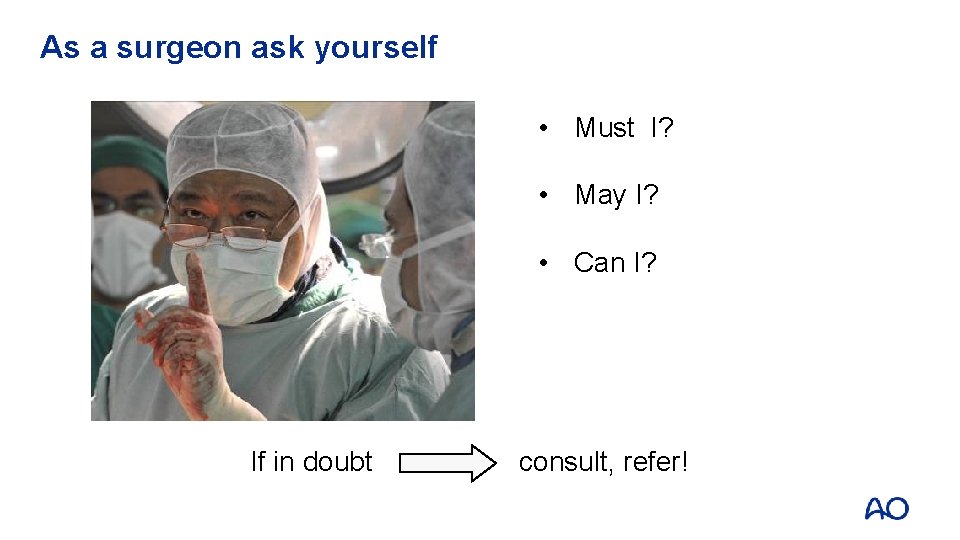
As a surgeon ask yourself • Must I? • May I? • Can I? If in doubt consult, refer!
Whatever you decide to do, you must treat the patient the same way as you want to be treated
Failure of understanding • Stability • Reduction • Soft-tissue handling • Surgical technique
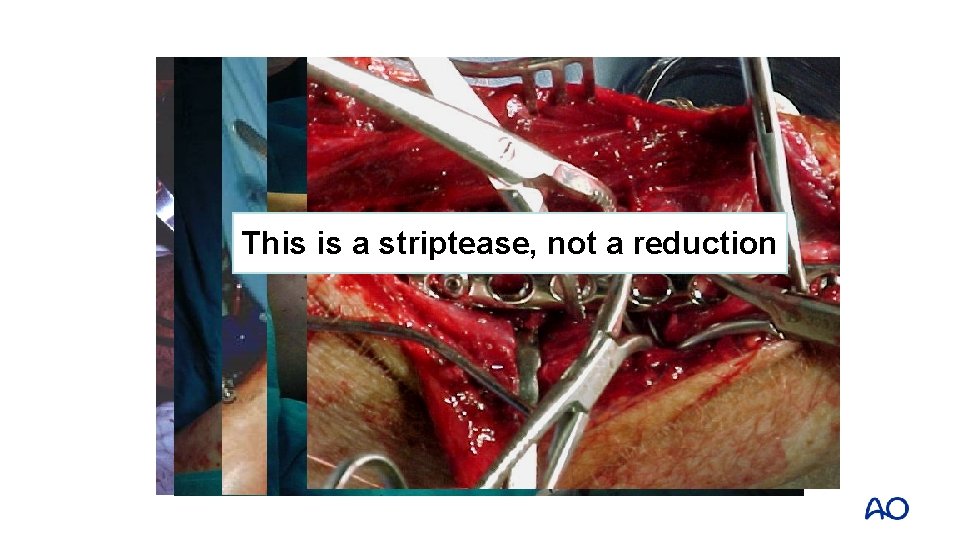
This is a striptease, not a reduction
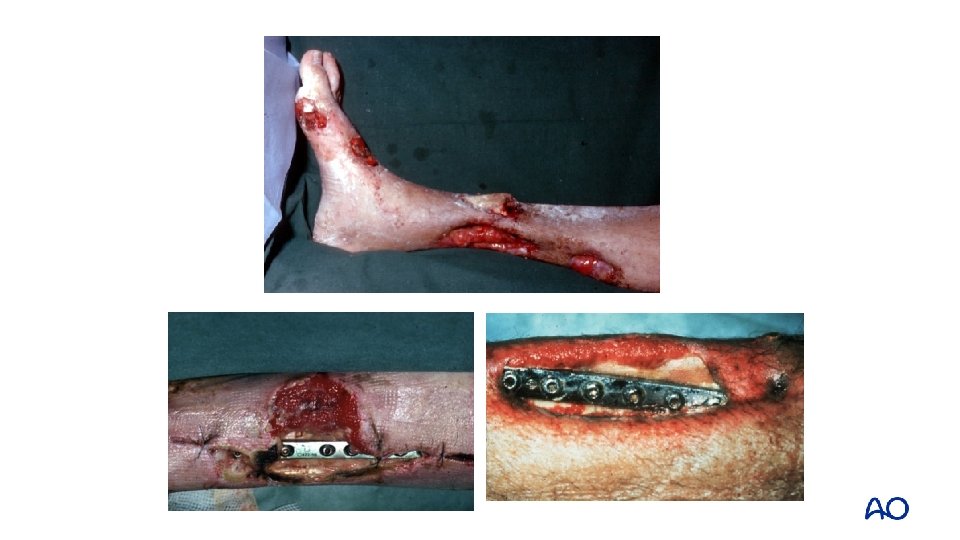
Failure to respect soft tissues
Failure of understanding • Stability • Reduction • Soft-tissue handling • Surgical technique
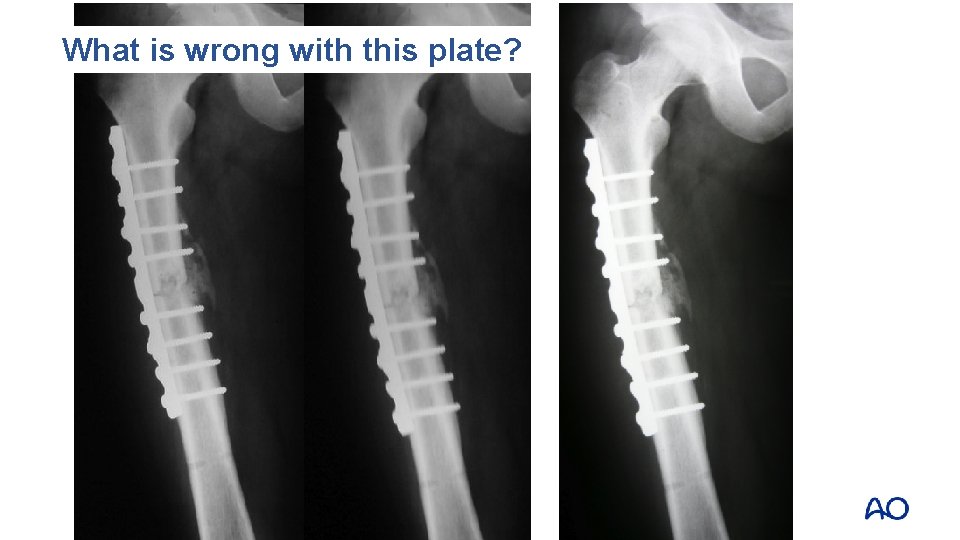
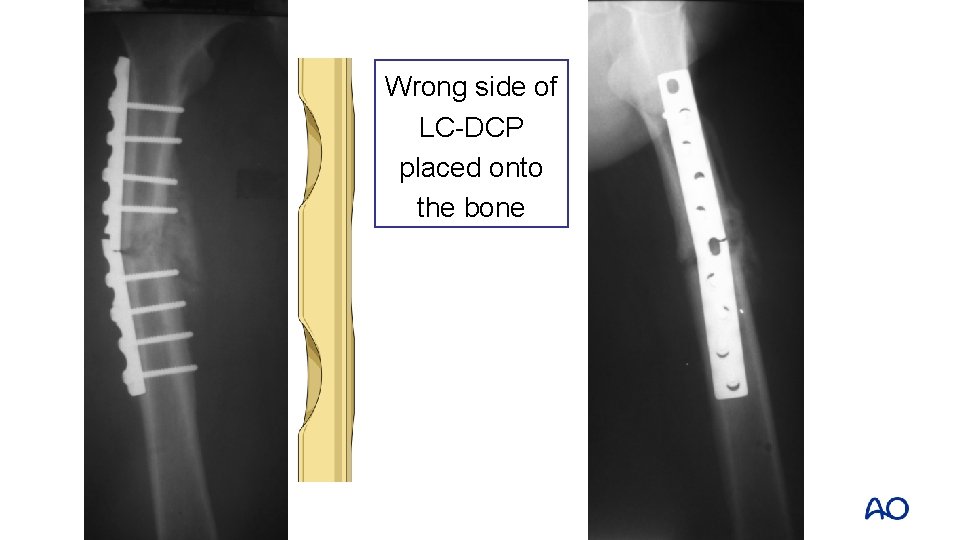
What is wrong with this plate?
Wrong side of LC-DCP placed onto the bone
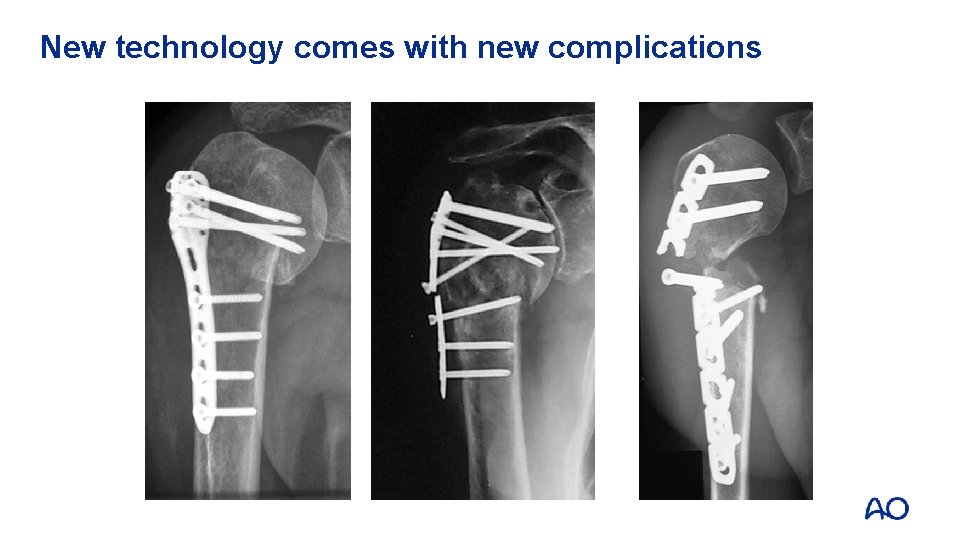
New technology comes with new complications
Surgeons love to call these complications implant failures • Do not blame the implants • Blame yourself
“The implants are always guilty” Surgeons were less likely to rate complications as severe and more likely to rate them as related to implants
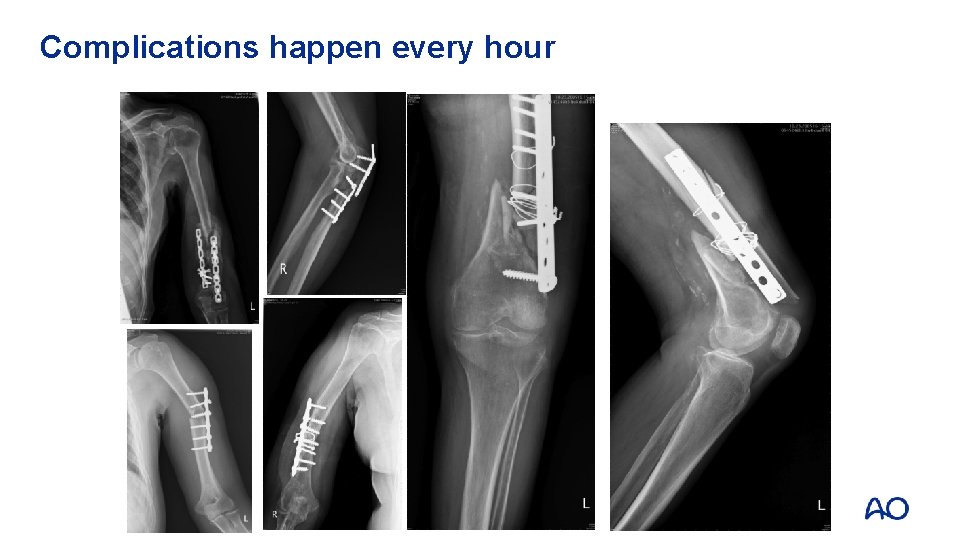
Complications happen every hour
How about the surgeon? • Does he realize that something is wrong? • Does he accept that he did something wrong? • Does he know why and how it went wrong? • Does he understand how to correct it? • Has he learned how not to repeat it again?
Examples of poor behavior • Focuses on the surgical procedure without adequate consideration of nonsurgical options • Chooses most aggressive procedure without regard for the condition of the patient • Performs surgery prematurely without proper planning and chooses inappropriate implants • Does not discuss any decision with the patient
Examples of poor behavior • Fails to appreciate that underperformance of surgery will directly impact patient safety and outcomes • Blames others for poor outcomes when clearly it was their own fault • Makes no comparisons of their work to others’ results or agreed standards • Never learns to improve performance
Surgeons must be big enough to admit their mistakes, smart enough to learn from them, and strong enough to correct them. Wise enough not to repeat them
Failure is the opportunity to begin again, more intelligently. – Henry Ford
Why are you here? • To learn more • To have better judgment • To do right the first time • To make correct decisions • To improve surgical technique • To become a safe surgeon
Why are all the faculty here? We owe it to our Founding Fathers and mentors
AO believes that good education will reduce complications
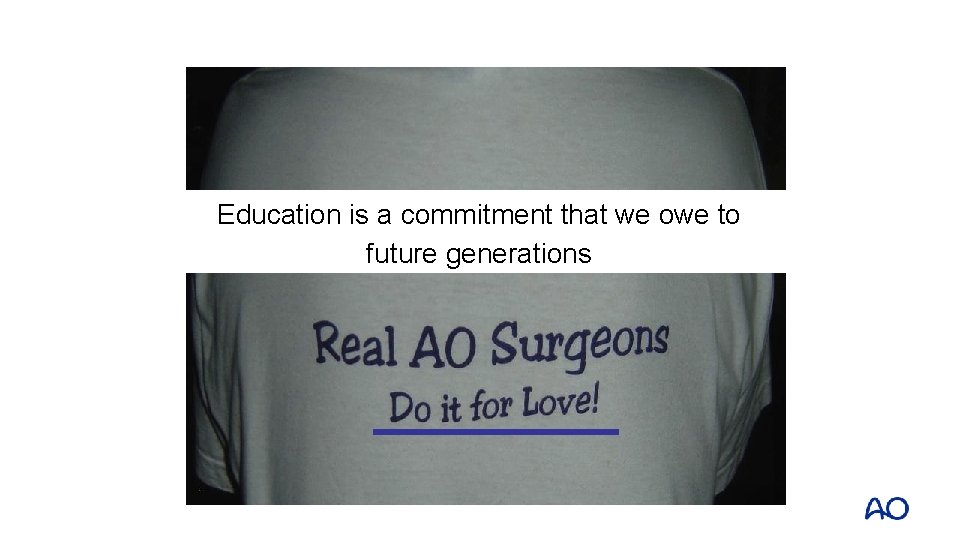
AO Spirit Education is a commitment that we owe to future generations
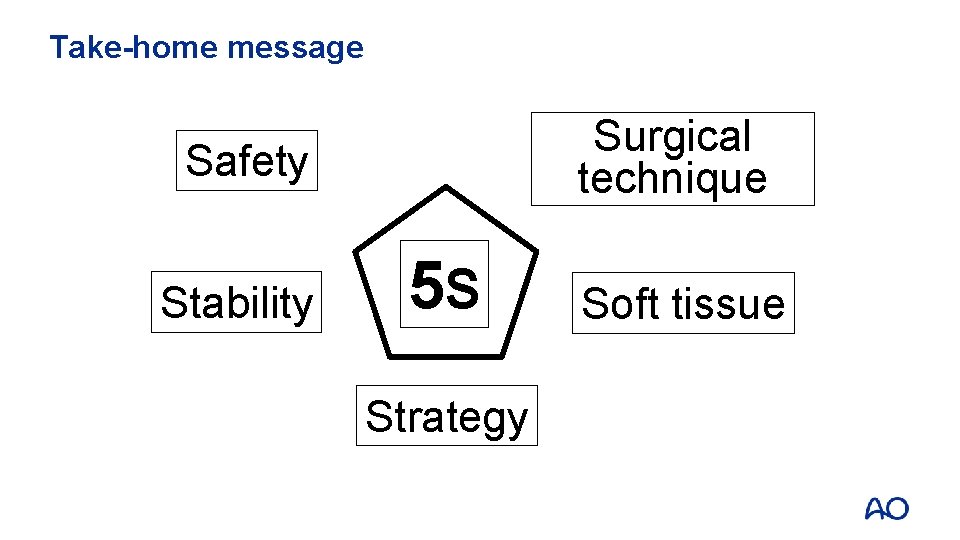
Take-home message Surgical technique Safety Stability 5 S Strategy Soft tissue