
VII Perception Sensation raw material for perception started



- Slides: 41
VII. Perception
• Sensation: - “raw” material for perception - started at “entry level”, data driven “bottom-up processing” • Perception: “top-down processing” - concept driven, use preexisting knowledge to interpret information.
VII. PERCEPTION • Recall – we are bombarded with possible “energy” from environment. . . • A. To what sensations do we attend? • In order to perceive something, we must attend or pay attention to it (consciousness). Selective Attention: • Ability to focus awareness on a single stimulus to the exclusion of other stimuli. (We focus our awareness on only a limited aspect of all that we are capable of experiencing. )
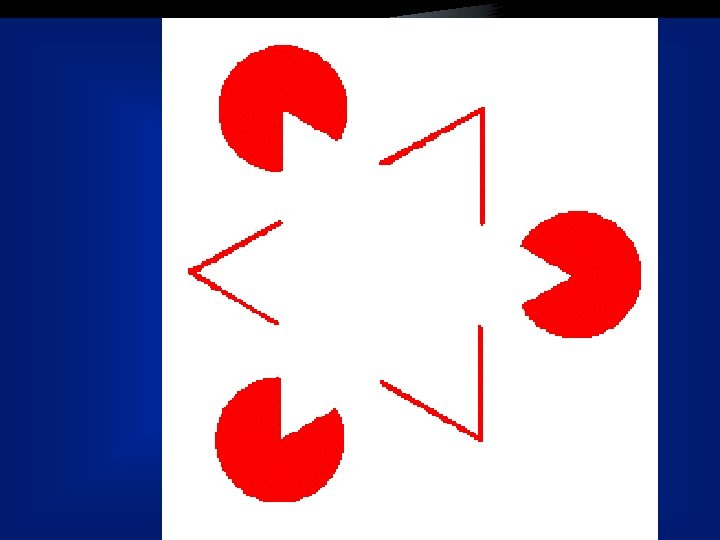
B. How do we organize stimuli? • We tend to organize stimuli into “wholes”. • Origin: Gestalt Psychology – “Gestalt”: means “whole” or “form” in German. • Proposed nervous system is predisposed to respond to patterns in stimuli according to certain rules. • “Whole is different from its parts” • Example from video – wooden “triangle”
C. FORM PERCEPTION • One of these basic rules. . . • 1. Figure vs. Ground – To see an image, need to be able to distinguish between figure and ground. – Sometimes, they can be reversible. – But, at one time, we can focus on only one or other.
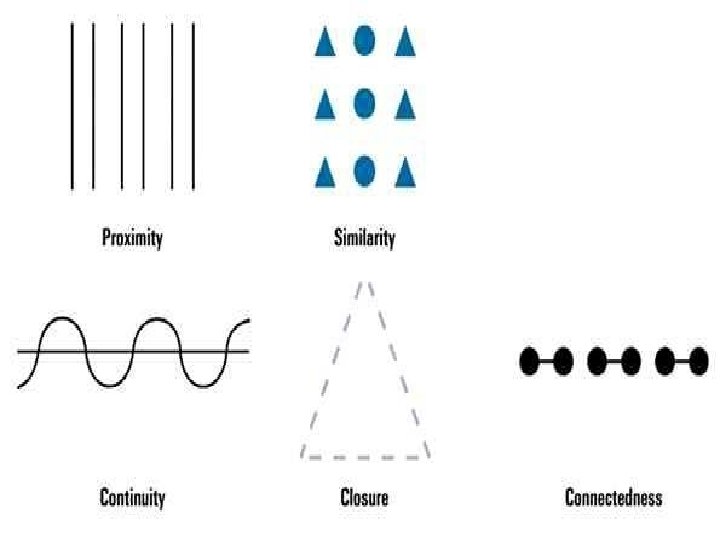
C. FORM PERCEPTION • What stimuli are grouped together? • 2. Grouping - We automatically imply order by grouping things together according to certain rules.
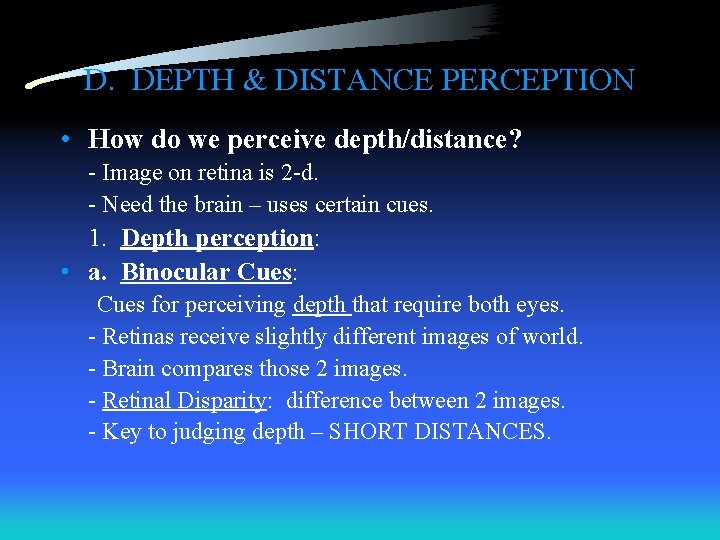
D. DEPTH & DISTANCE PERCEPTION • How do we perceive depth/distance? - Image on retina is 2 -d. - Need the brain – uses certain cues. 1. Depth perception: • a. Binocular Cues: Cues for perceiving depth that require both eyes. - Retinas receive slightly different images of world. - Brain compares those 2 images. - Retinal Disparity: difference between 2 images. - Key to judging depth – SHORT DISTANCES.
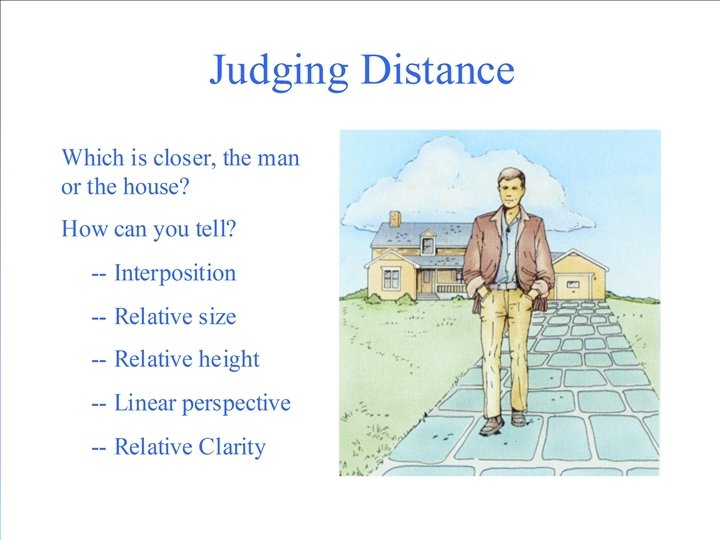
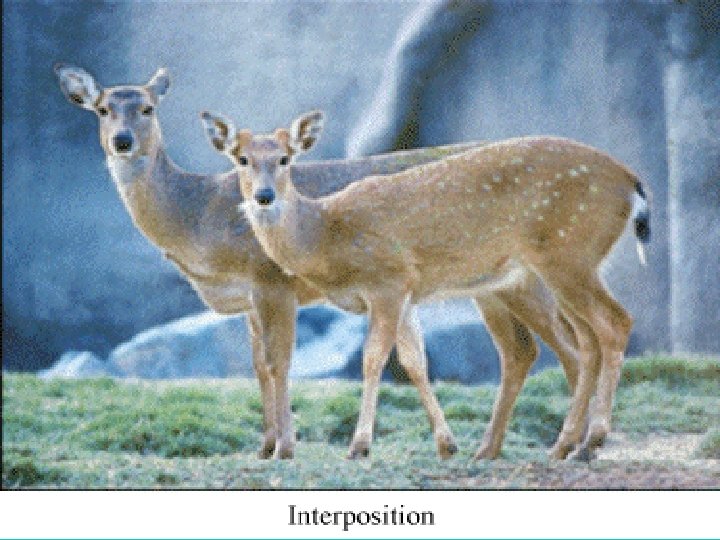
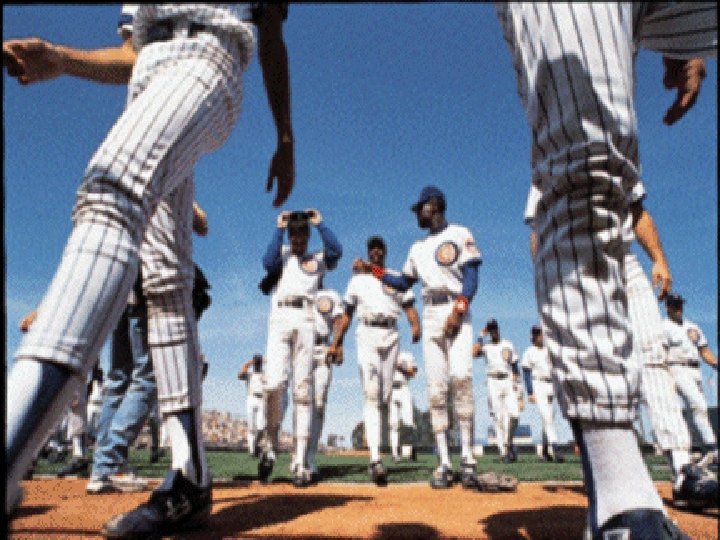
D. DEPTH OR DISTANCE PERCEPTION • But, when at a distance, there is very little retinal disparity. • 2. Distance perception • a. Monocular Cues for distance that require one eye. Example from video.
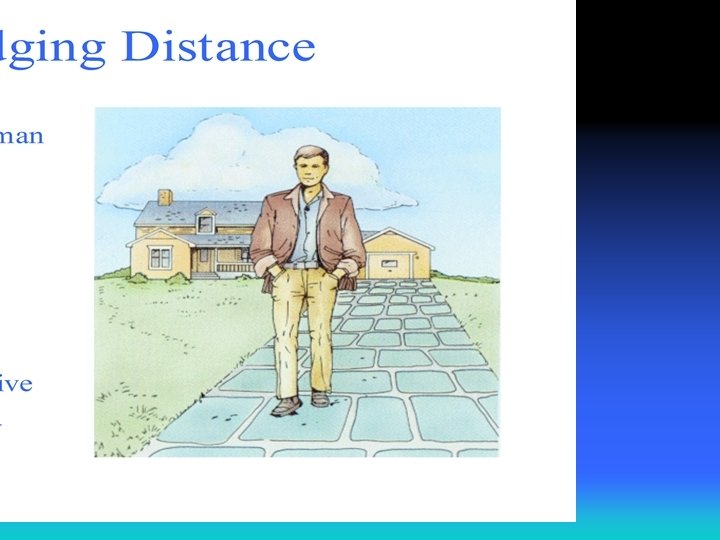
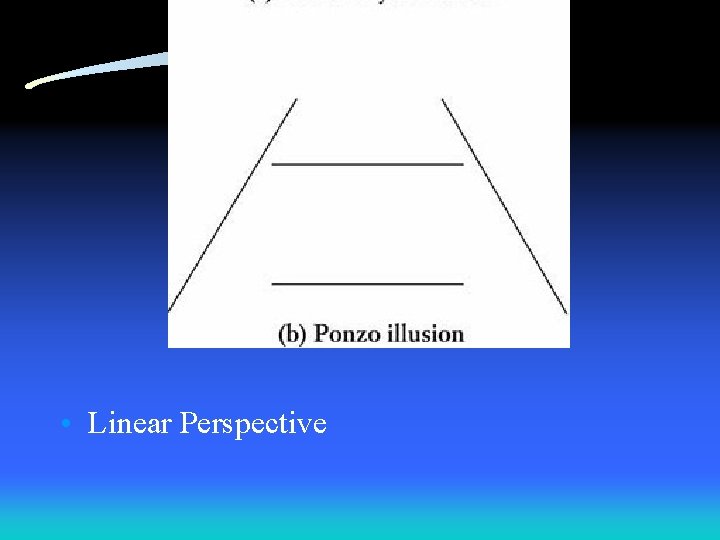
• Linear Perspective
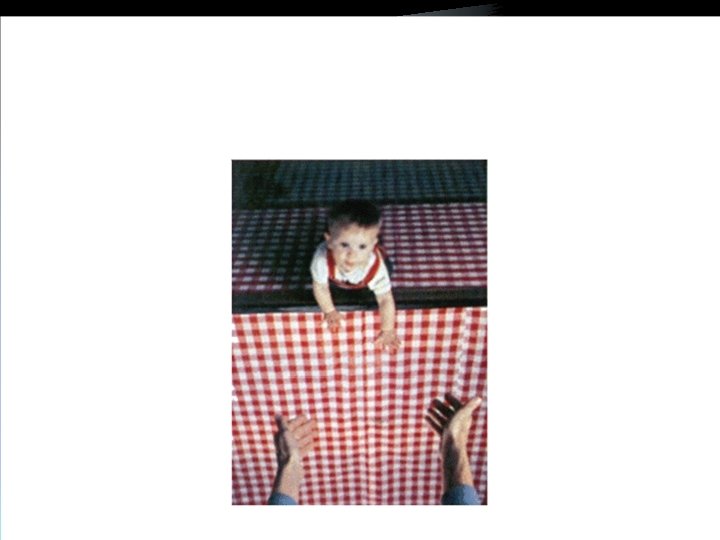
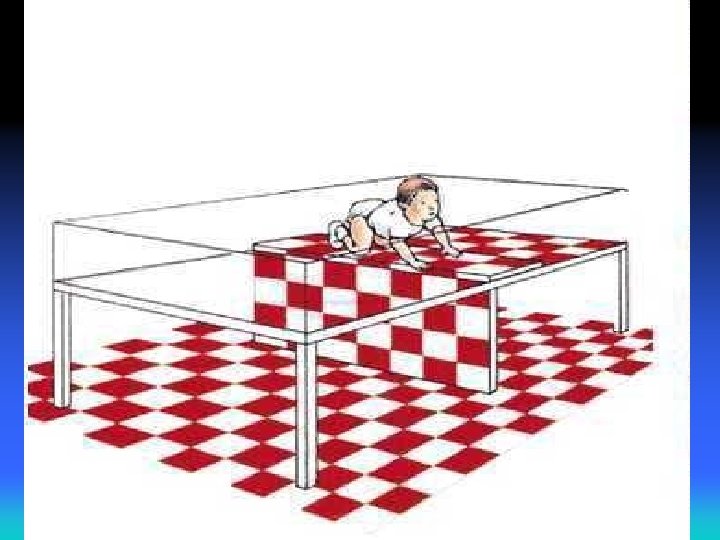
D. DEPTH OR DISTANCE PERCEPTION • 3. Nature or nurture? – When would ability to perceive depth be important in terms of development? – Gibson & Walk (1960): • “Visual Cliff” Experiments – But, is evidence for nurture also. • “Use it or lose it”
E. MOTION PERCEPTION • Another possible innate ability. • Speculated to have evolved more for survival than other types of perception. Why? • Brain makes sense of cues: – Shrinking objects are retreating. – Enlarging objects are approaching.
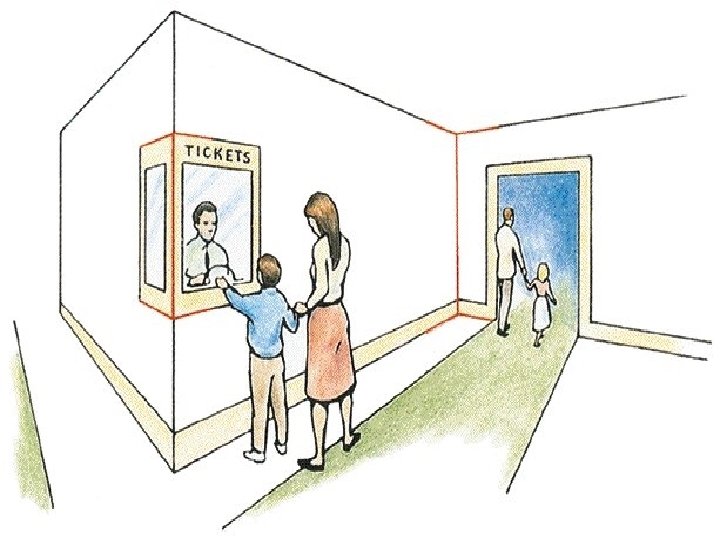
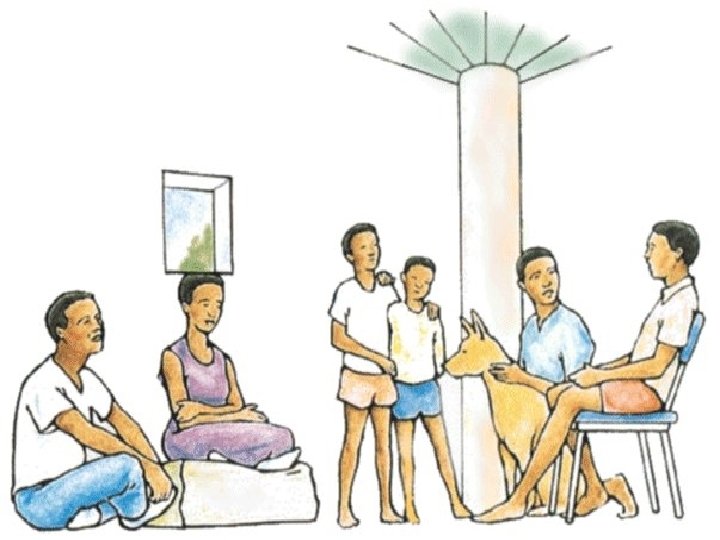
Perceptual Constancy • Perceptual constancy: We perceive objects as unchanging even though the stimuli we receive about those objects change. – Importance of experience and expectations? – babies vs. Pygmies
• Connecting the cues. . – Distance – Size – Motion – Perceptual Constancy
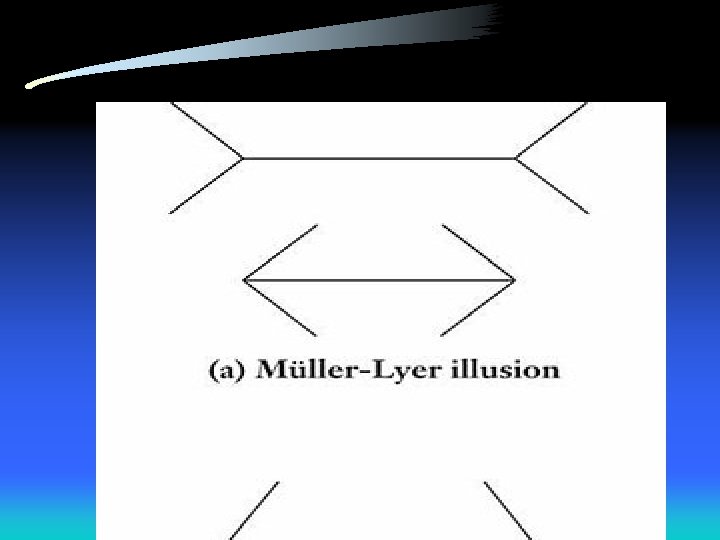
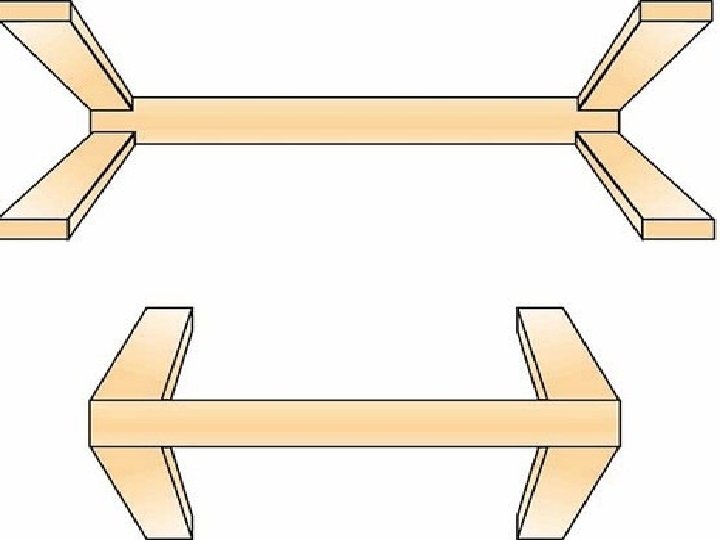
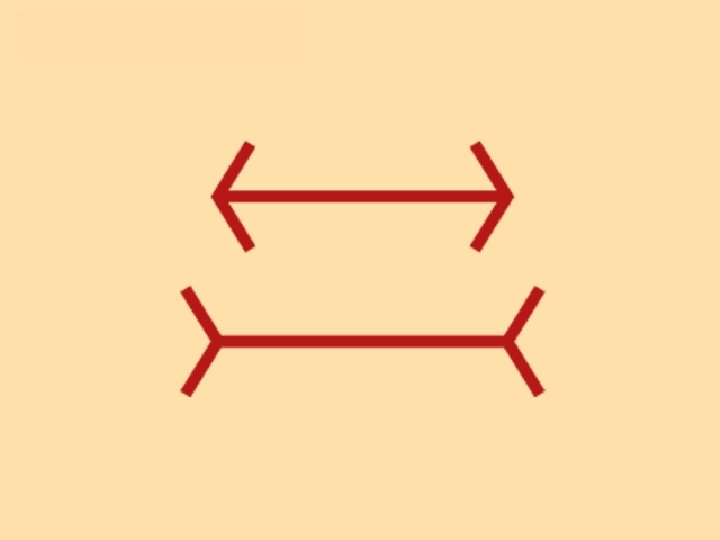
• Insert slide of Muller-Lyers Illusion
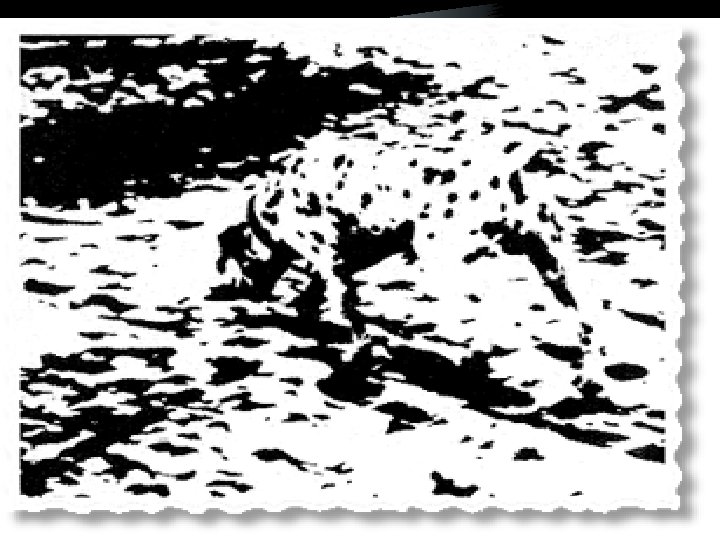
INTERPRETATION IN PERCEPTION • Folk, croak, soak. . . • 1. Perceptual Set: A mental predisposition to perceive one thing and not another. - Power of our expectations, predisposition – particularly when interpreting ambiguous stimuli.
• 2. Review – importance of expectations – Efficiency – Can not resist imposing patterns on unpatterned stimuli (“gestalt”). – When we see a pattern, difficult to see a different pattern. – Even if we formed an incorrect image, difficult to form a correct one.
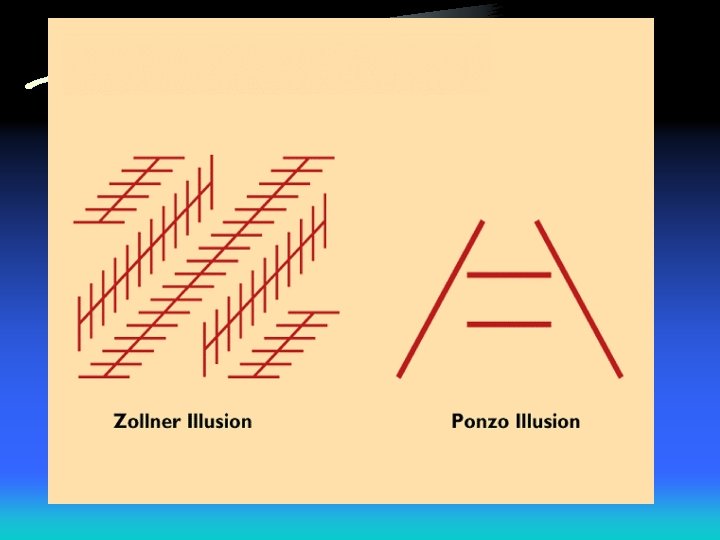
• 3. Where do our expectations (schemas) come from? – a. Experience – b. Culture • Vulnerability to illusions
G. INTERPRETATION AND PERCEPTION c. Context - Context Effects: We often discern the meaning of something by using the context in which it is placed. - rat/man study - Kulechov effect Importance of EXPECTATIONS
G. Interpretation in Perception • How adaptive is our ability to interpret and organize stimuli into perceptions? • 4. Perceptual Adaptation: In vision, the ability to adjust to an artificially displaced or even inverted visual field.
Conclusions • Perception: The top-down part of understanding environment and processing information. Brain interprets and organizes information. – Amazing feats of grouping stimuli & using cues. • But that can also cause illusions. . . – Individual differences based on experience and expectations. • All of these rely on taking in physical energy from environment – sensations. • Assumption: our experiences are tied to actual, physical events occurring in environment. . see text
H. Perception without Sensation? • • • ESP -Extrasensory perception: Perception without sensory input. Types of ESP: Telepathy, Clairvoyance, Precognition More than ½ Americans believe in some type of ESP. • Parapsychologists: • Psychologists who study psychic phenomena through case studies and experiments.
H. Perception without Sensation? • Rhine’s Research • Conclusion about ESP: • No sound evidence for para-psychological phenomena • No single individual who can demonstrate psychic powers to independent investigators •
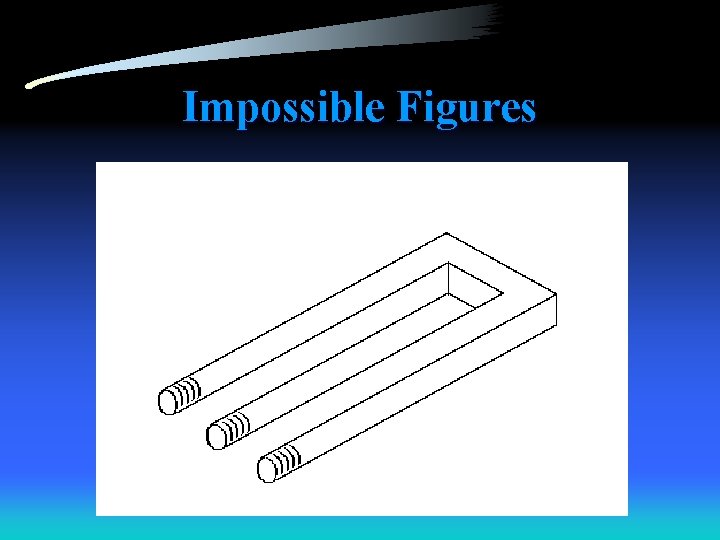
Impossible Figures
• Example: • Cocktail Party Effect: The ability to selectively attend to one voice among many.