
VII Earthquakes A B C D E Introduction
VII. Earthquakes A. B. C. D. E. Introduction Source of seismic energy Propagation of seismic energy Recording earthquakes Magnitude scales
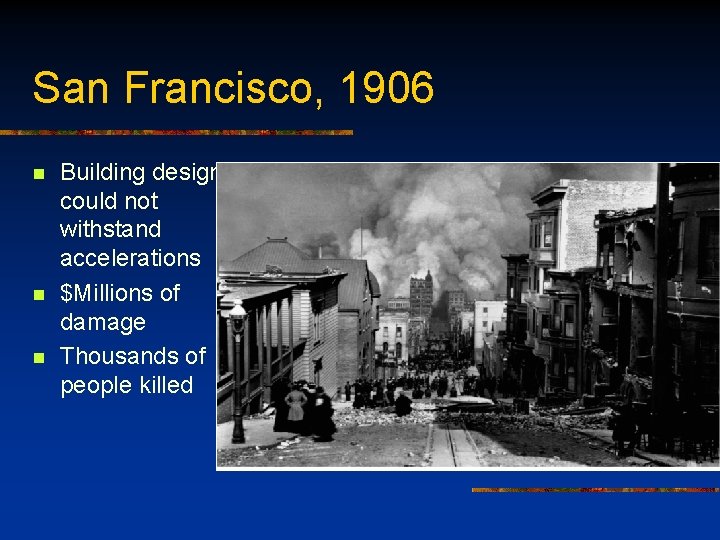
San Francisco, 1906 n n n Building design could not withstand accelerations $Millions of damage Thousands of people killed
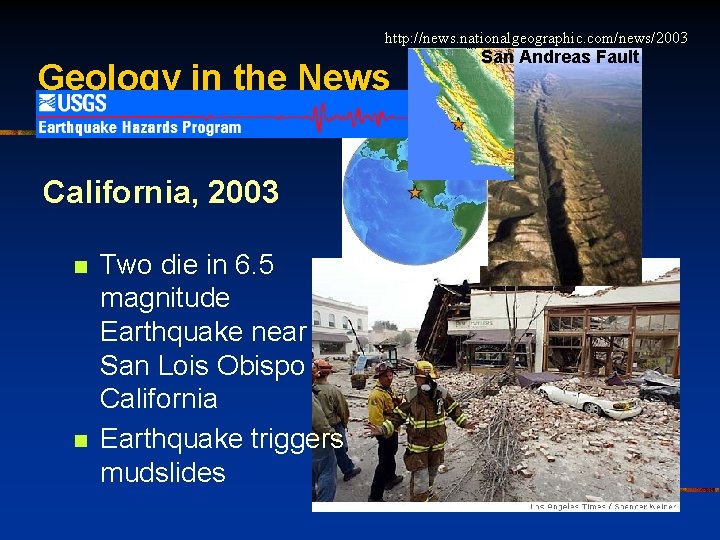
http: //news. nationalgeographic. com/news/2003 Geology in the News California, 2003 n n Two die in 6. 5 magnitude Earthquake near San Lois Obispo California Earthquake triggers mudslides San Andreas Fault
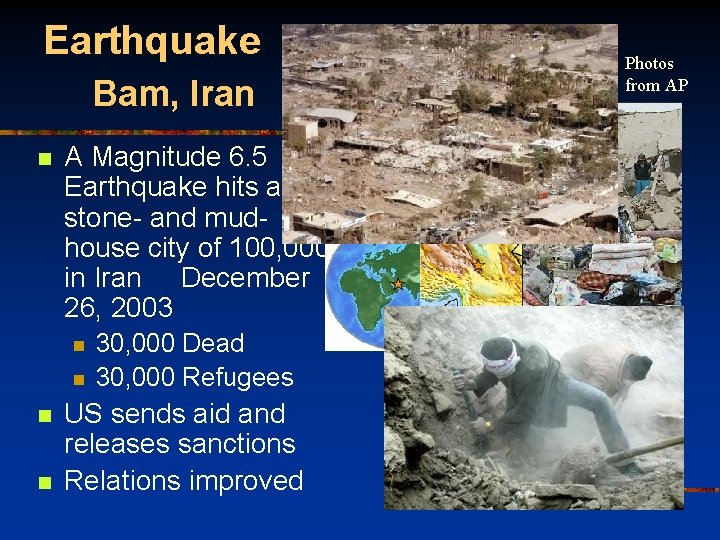
Earthquake Bam, Iran n A Magnitude 6. 5 Earthquake hits a stone- and mudhouse city of 100, 000 in Iran December 26, 2003 n n 30, 000 Dead 30, 000 Refugees US sends aid and releases sanctions Relations improved Photos from AP
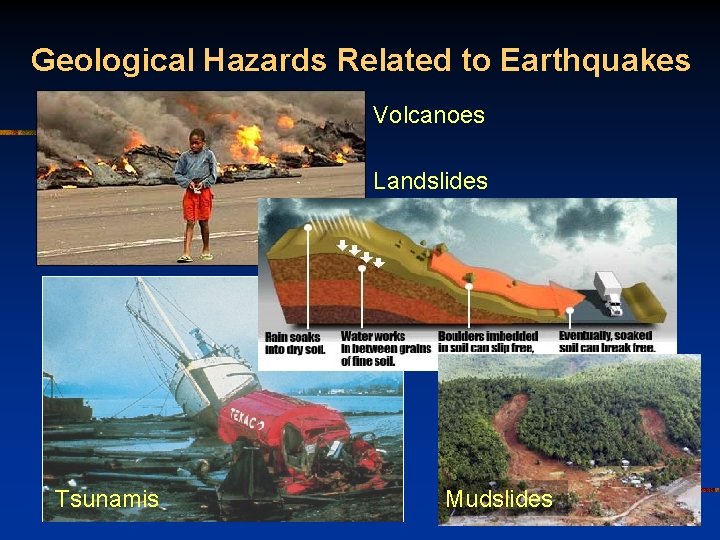
Geological Hazards Related to Earthquakes Volcanoes Landslides Tsunamis Mudslides
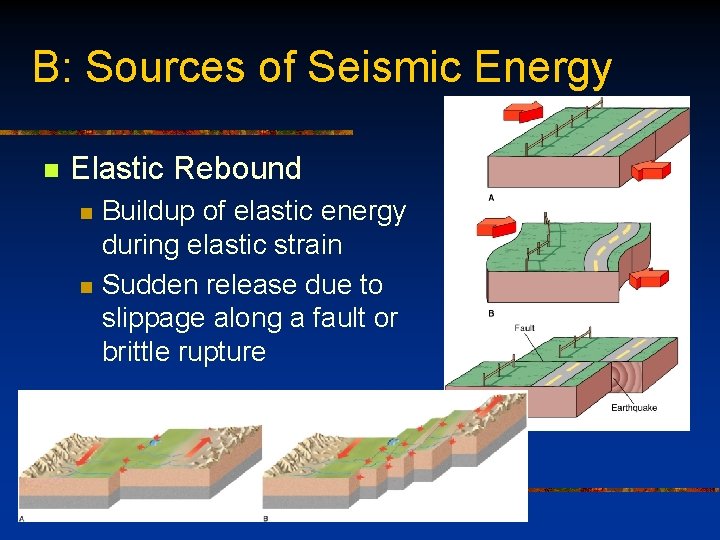
B: Sources of Seismic Energy n Elastic Rebound n n Buildup of elastic energy during elastic strain Sudden release due to slippage along a fault or brittle rupture
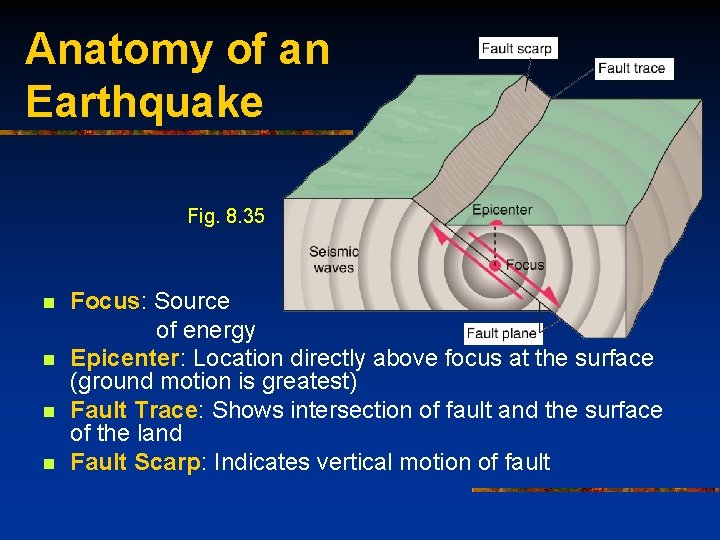
Anatomy of an Earthquake Fig. 8. 35 n n Focus: Source of energy Epicenter: Location directly above focus at the surface (ground motion is greatest) Fault Trace: Shows intersection of fault and the surface of the land Fault Scarp: Indicates vertical motion of fault
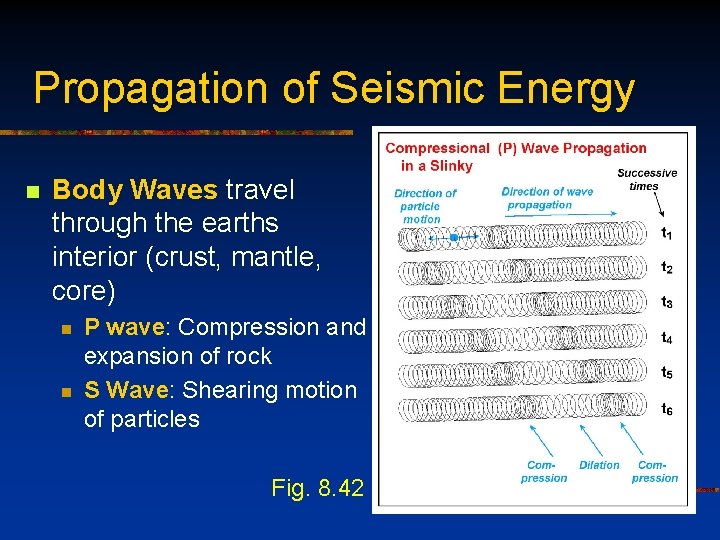
Propagation of Seismic Energy n Body Waves travel through the earths interior (crust, mantle, core) n n P wave: Compression and expansion of rock S Wave: Shearing motion of particles Fig. 8. 42
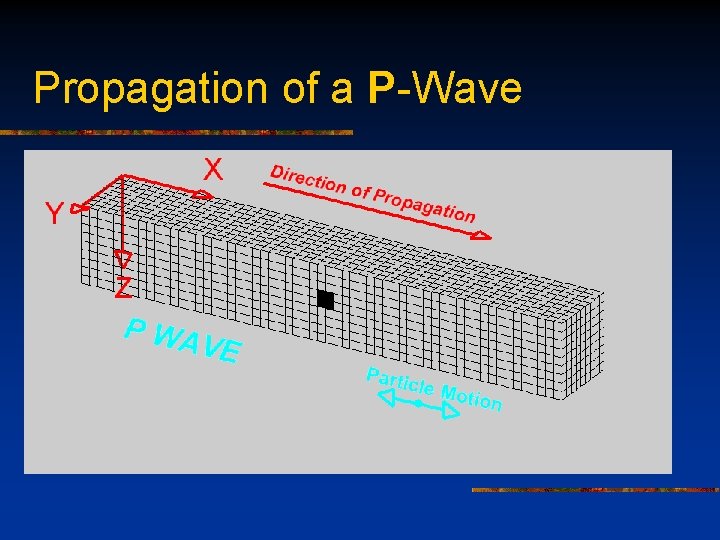
Propagation of a P-Wave
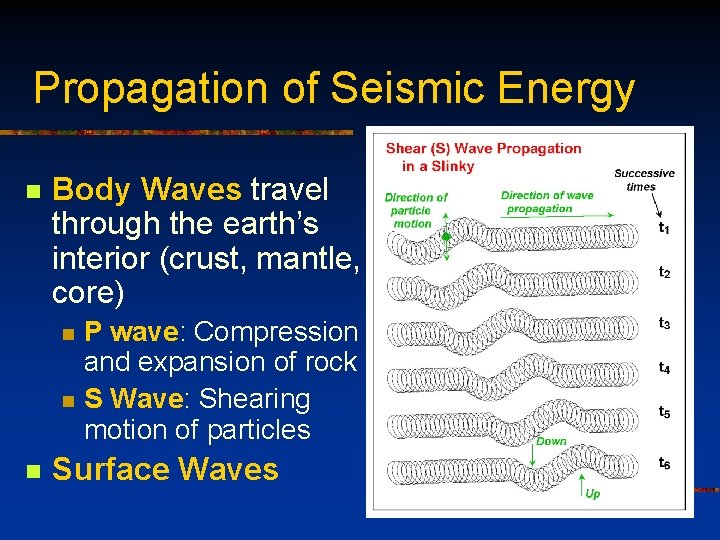
Propagation of Seismic Energy n Body Waves travel through the earth’s interior (crust, mantle, core) n n n P wave: Compression and expansion of rock S Wave: Shearing motion of particles Surface Waves
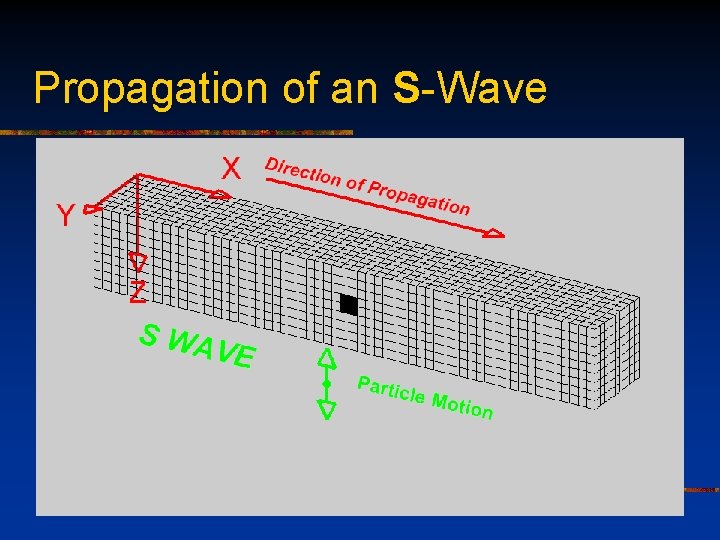
Propagation of an S-Wave
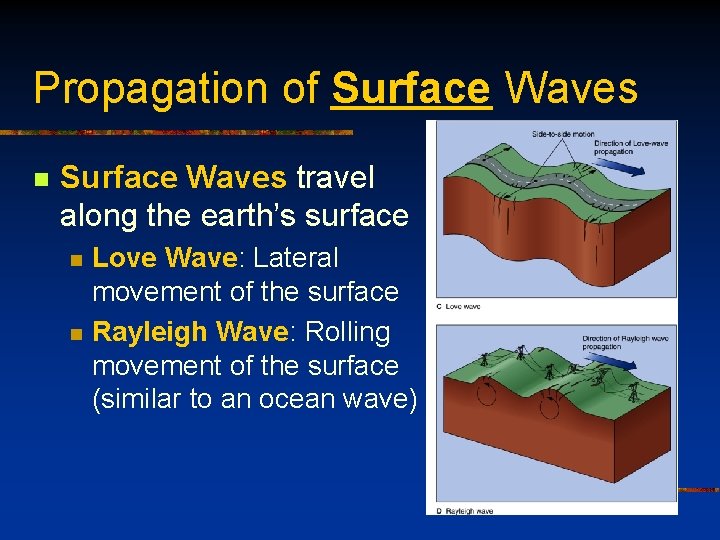
Propagation of Surface Waves n Surface Waves travel along the earth’s surface n n Love Wave: Lateral movement of the surface Rayleigh Wave: Rolling movement of the surface (similar to an ocean wave)
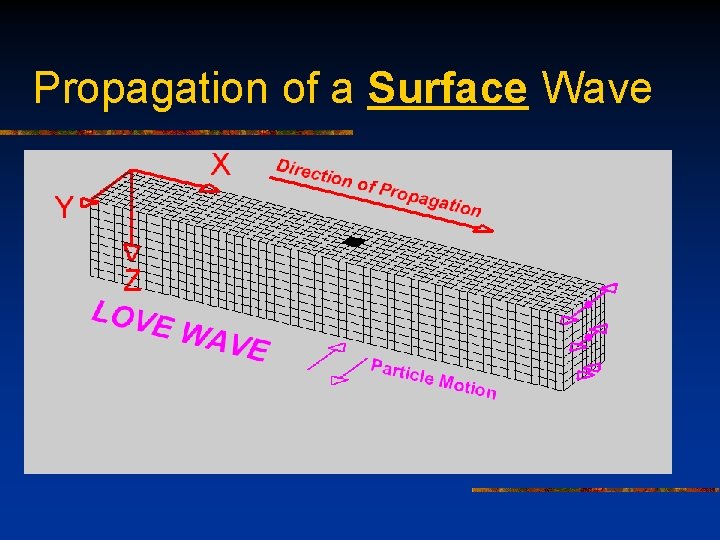
Propagation of a Surface Wave
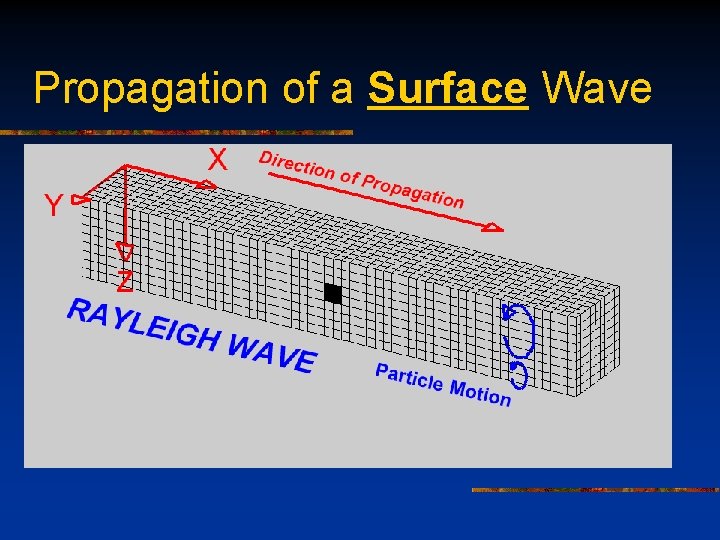
Propagation of a Surface Wave
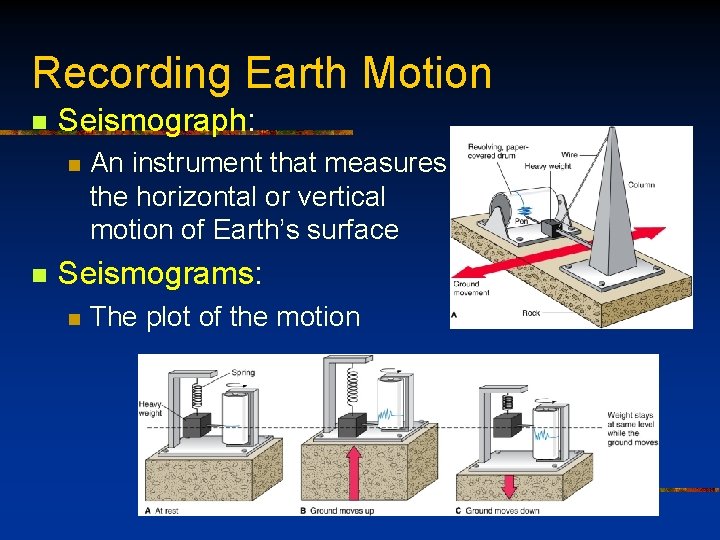
Recording Earth Motion n Seismograph: n n An instrument that measures the horizontal or vertical motion of Earth’s surface Seismograms: n The plot of the motion
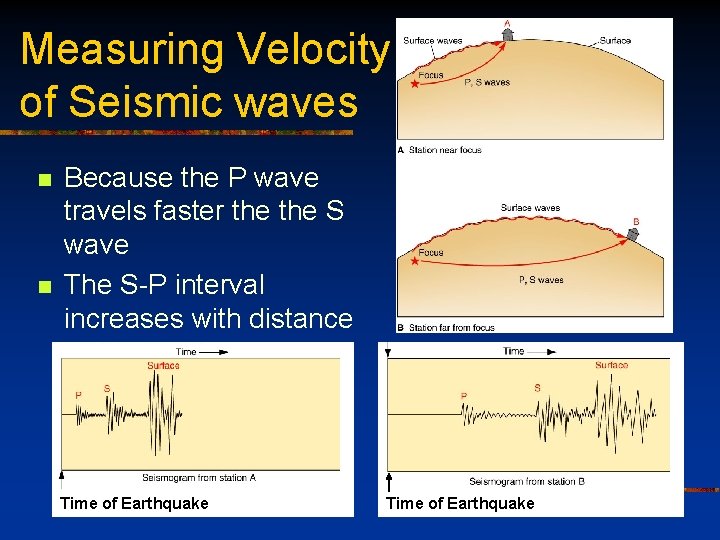
Measuring Velocity of Seismic waves n n Because the P wave travels faster the S wave The S-P interval increases with distance Time of Earthquake
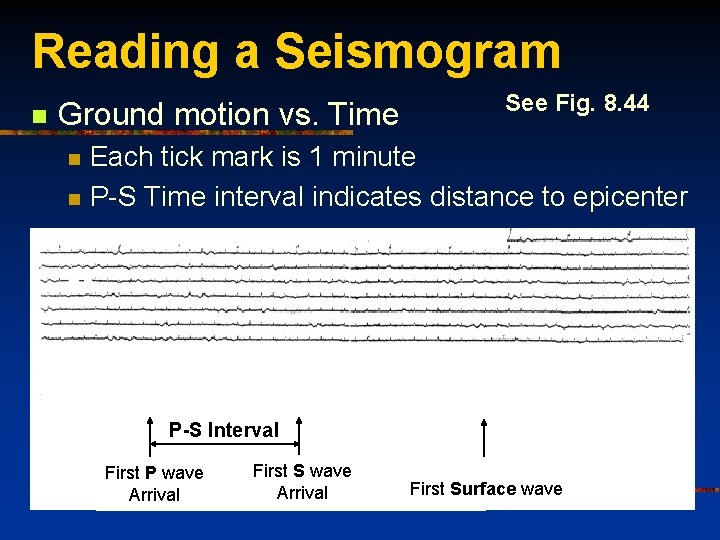
Reading a Seismogram n Ground motion vs. Time n n See Fig. 8. 44 Each tick mark is 1 minute P-S Time interval indicates distance to epicenter P-S Interval First P wave Arrival First Surface wave
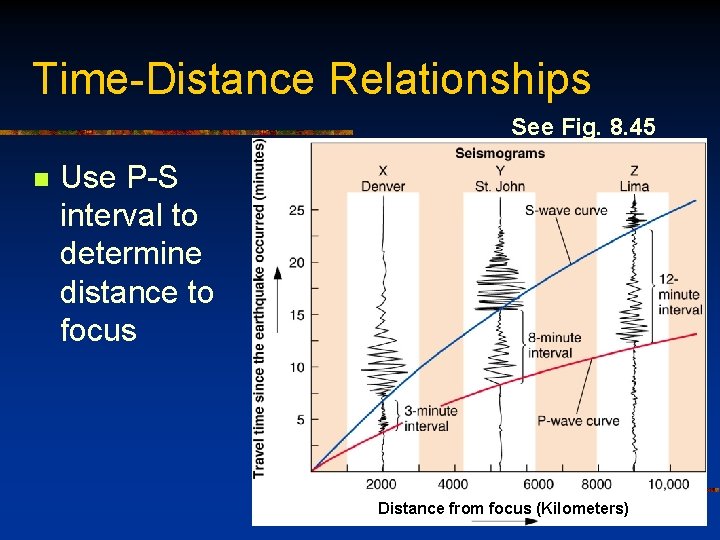
Time-Distance Relationships See Fig. 8. 45 n Use P-S interval to determine distance to focus Distance from focus (Kilometers)
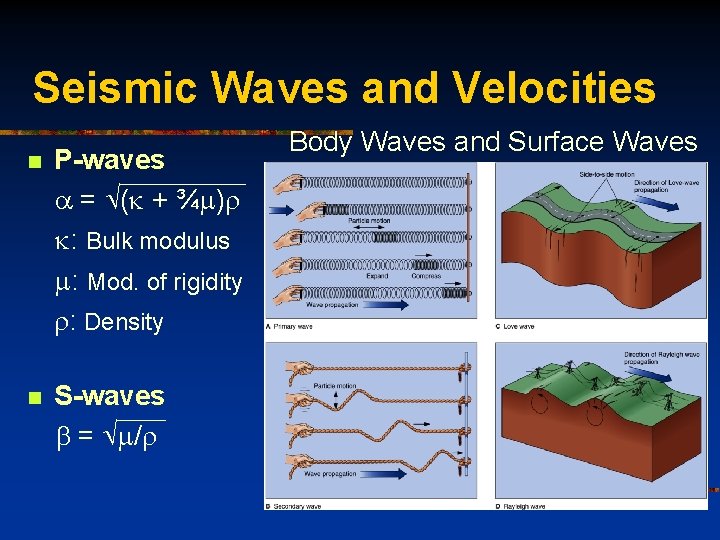
Seismic Waves and Velocities n P-waves a = (k + ¾m)r k: Bulk modulus m: Mod. of rigidity r: Density n S-waves b = m/r Body Waves and Surface Waves
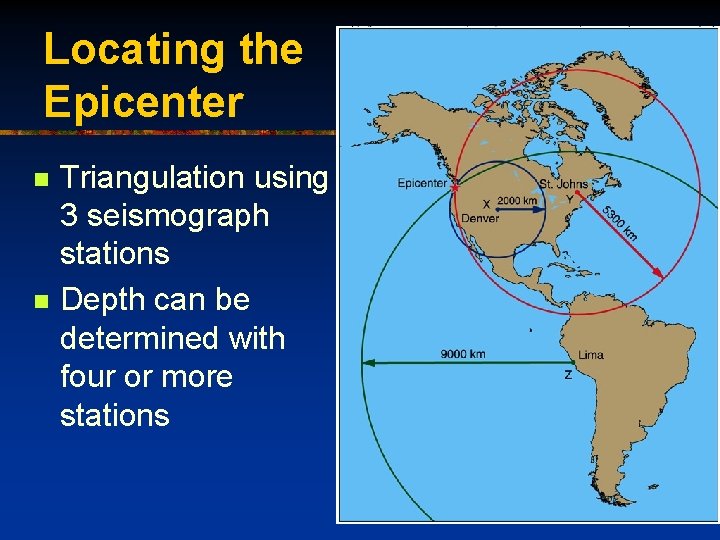
Locating the Epicenter n n Triangulation using 3 seismograph stations Depth can be determined with four or more stations
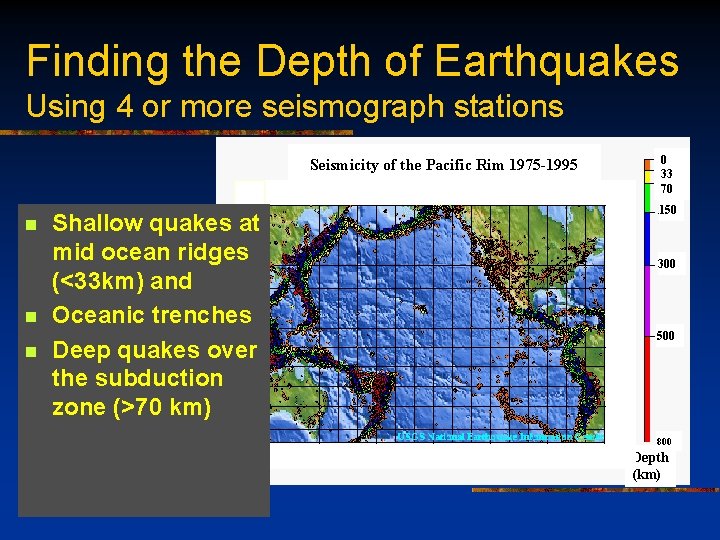
Finding the Depth of Earthquakes Using 4 or more seismograph stations Seismicity of the Pacific Rim 1975 -1995 n n n Shallow quakes at mid ocean ridges (<33 km) and Oceanic trenches Deep quakes over the subduction zone (>70 km) 0 33 70 150 300 500 800 Depth (km)
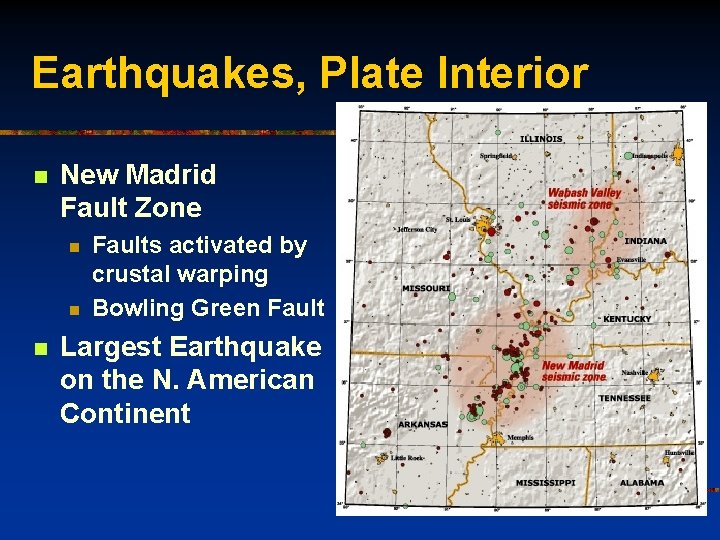
Earthquakes, Plate Interior n New Madrid Fault Zone n n n Faults activated by crustal warping Bowling Green Fault Largest Earthquake on the N. American Continent
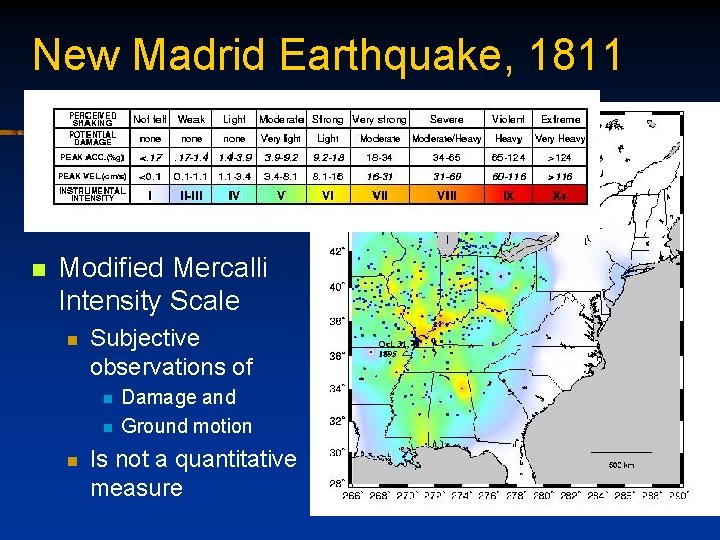
New Madrid Earthquake, 1811 n Modified Mercalli Intensity Scale n Subjective observations of n n n Damage and Ground motion Is not a quantitative measure
Earthquake Intensity Scales n Modified Mercalli Scale n Subjective observations of Damage and n Ground motion n Is not a quantitative measure Richter Scale n n n Indicates Ground Motion Amplitude Logarithmic (e. g. , 6 is ten times stronger than 5) Does not directly indicate energy or destruction
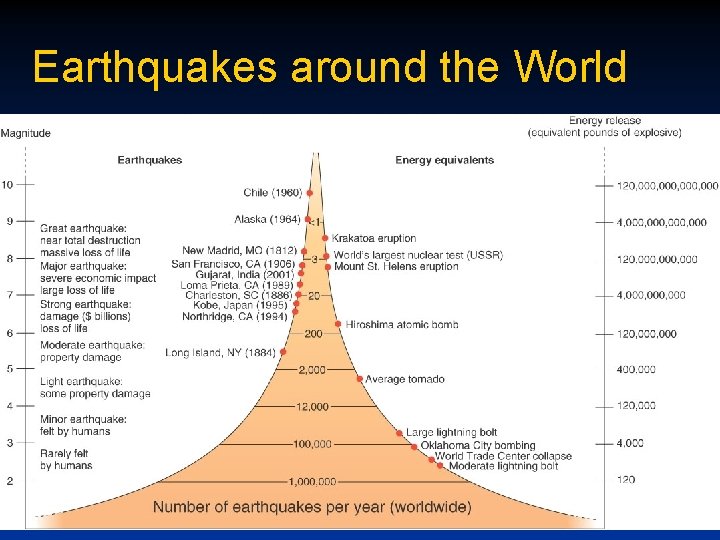
Earthquakes around the World
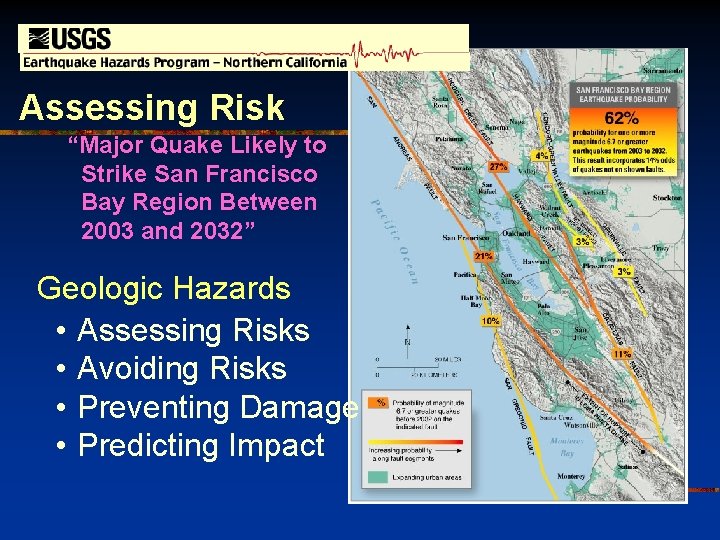
Assessing Risk “Major Quake Likely to Strike San Francisco Bay Region Between 2003 and 2032” Geologic Hazards • Assessing Risks • Avoiding Risks • Preventing Damage • Predicting Impact
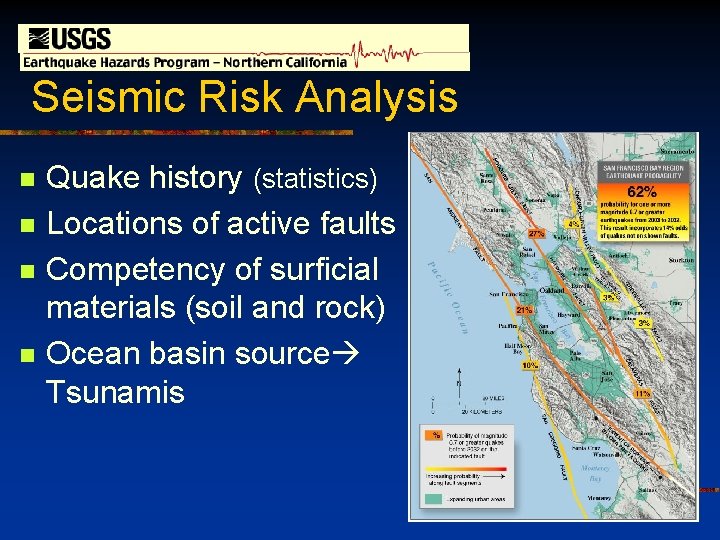
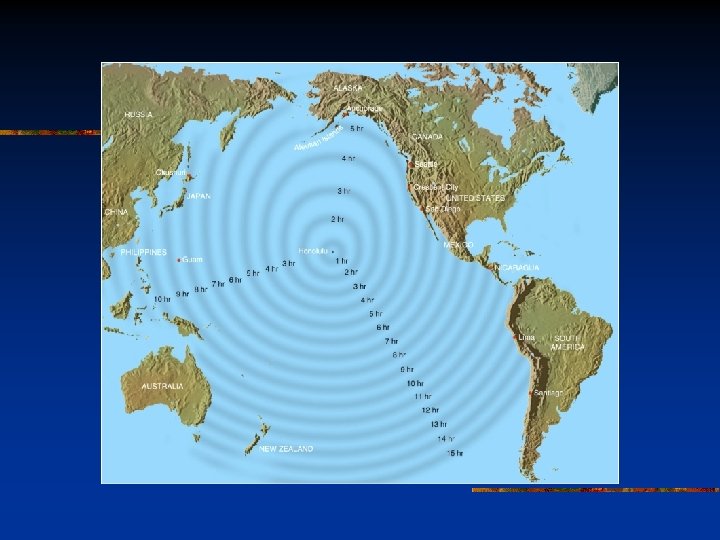
Seismic Risk Analysis n n Quake history (statistics) Locations of active faults Competency of surficial materials (soil and rock) Ocean basin source Tsunamis
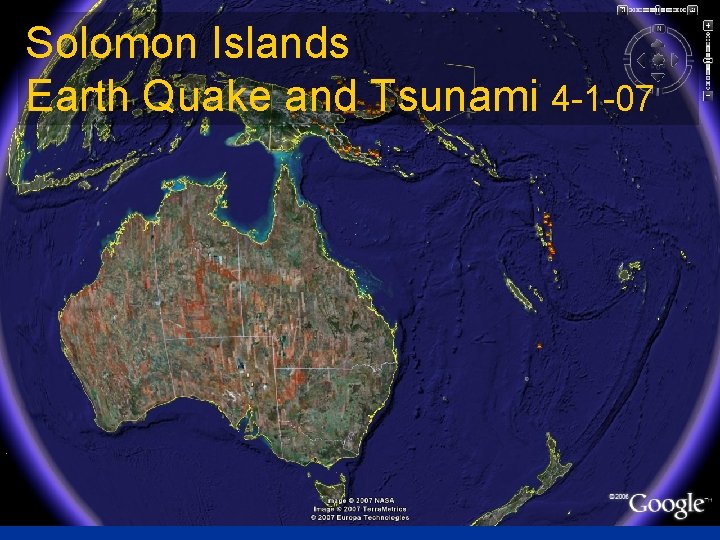
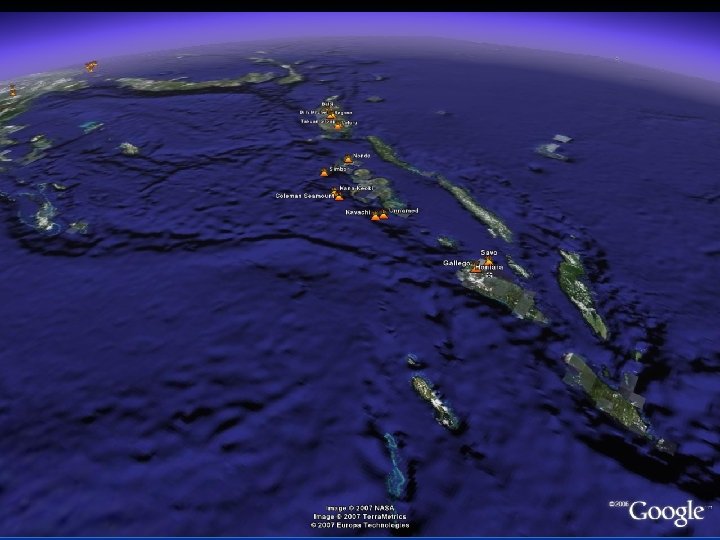
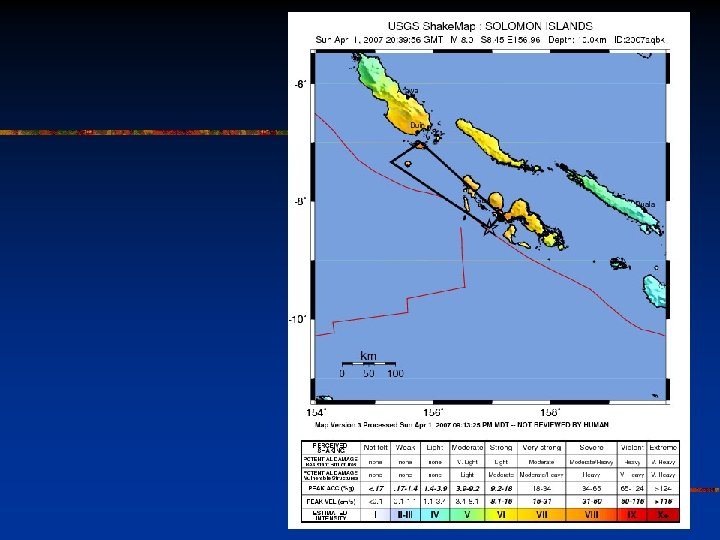
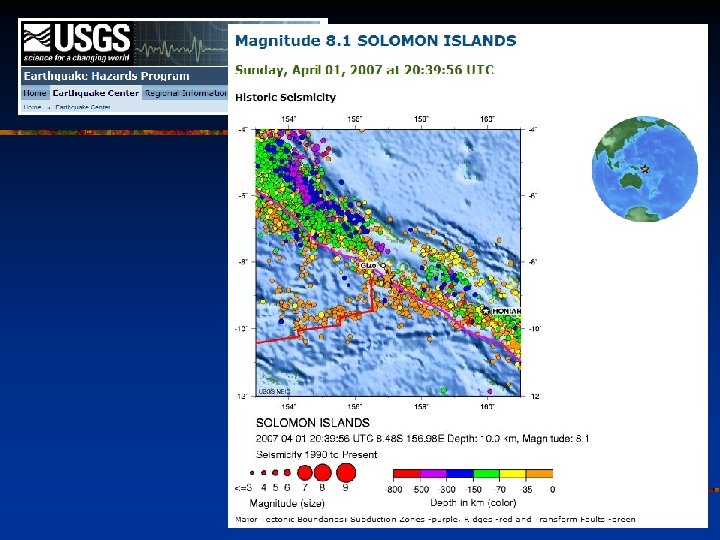
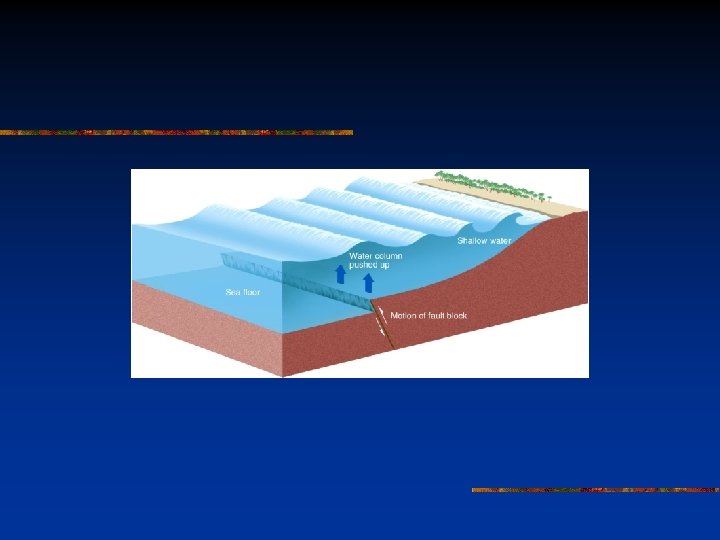
Solomon Islands Earth Quake and Tsunami 4 -1 -07
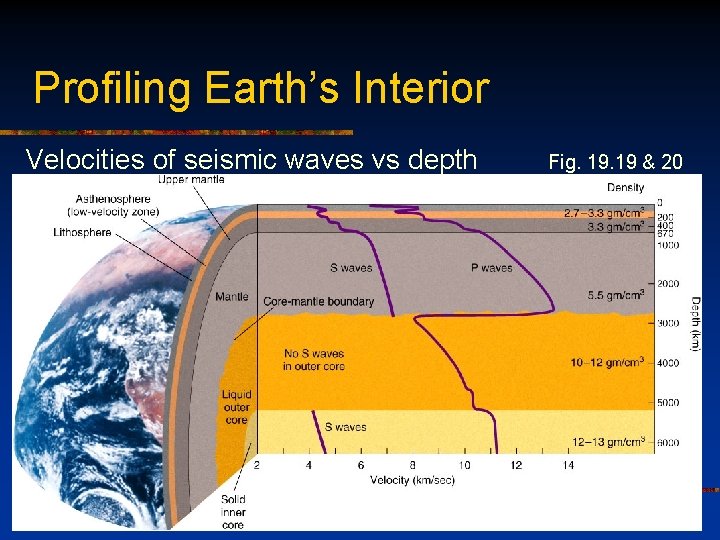
Profiling Earth’s Interior Velocities of seismic waves vs depth Fig. 19 & 20
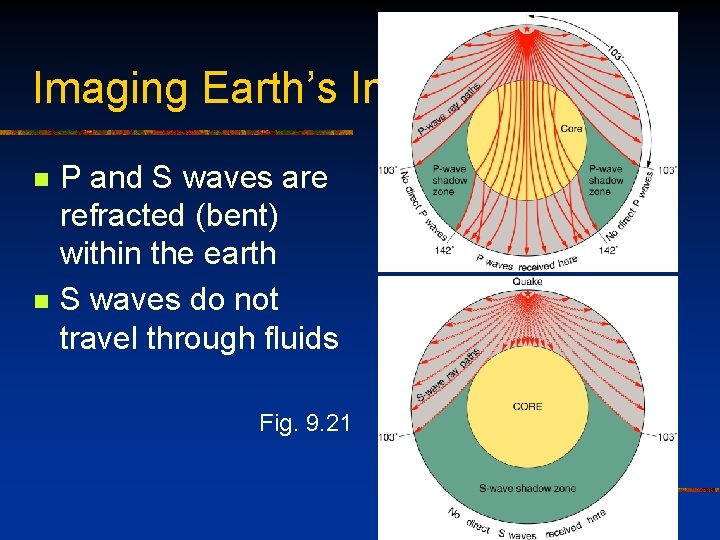
Imaging Earth’s Interior n n P and S waves are refracted (bent) within the earth S waves do not travel through fluids Fig. 9. 21
- Slides: 35