
Vietnam Soviet supported North communist Ho Chi Minh
- Slides: 19
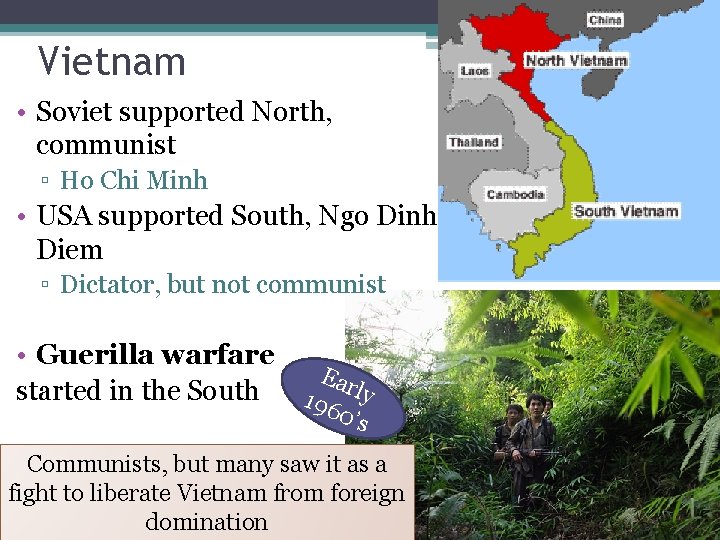
Vietnam • Soviet supported North, communist ▫ Ho Chi Minh • USA supported South, Ngo Dinh Diem ▫ Dictator, but not communist • Guerilla warfare Ear started in the South 196 ly 0’s Communists, but many saw it as a fight to liberate Vietnam from foreign domination
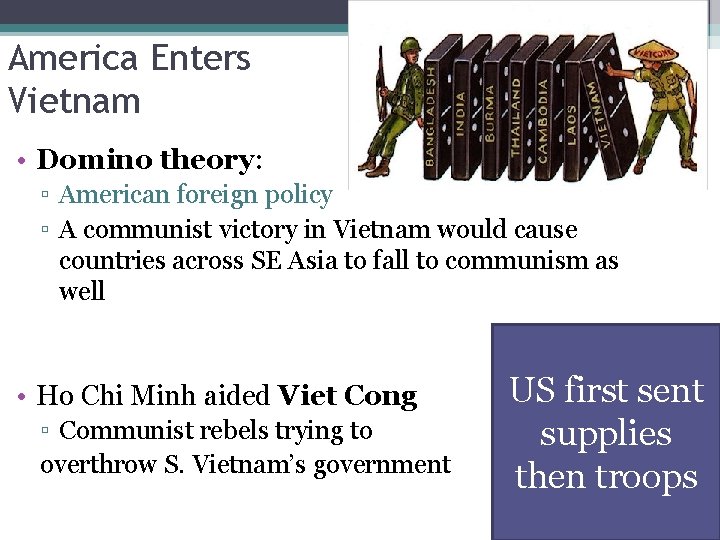
America Enters Vietnam • Domino theory: ▫ American foreign policy ▫ A communist victory in Vietnam would cause countries across SE Asia to fall to communism as well
America Enters Vietnam • Domino theory: ▫ American foreign policy ▫ A communist victory in Vietnam would cause countries across SE Asia to fall to communism as well • Ho Chi Minh aided Viet Cong ▫ Communist rebels trying to overthrow S. Vietnam’s government US first sent supplies then troops
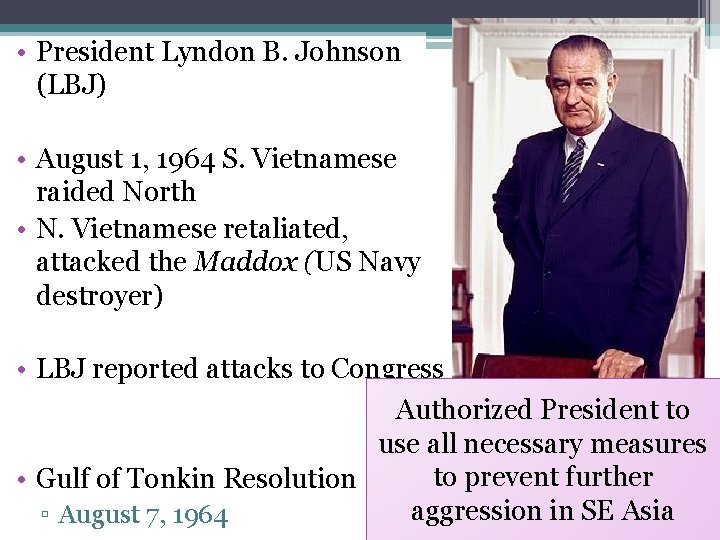
• President Lyndon B. Johnson (LBJ) • August 1, 1964 S. Vietnamese raided North • N. Vietnamese retaliated, attacked the Maddox (US Navy destroyer) • LBJ reported attacks to Congress Authorized President to use all necessary measures to prevent further • Gulf of Tonkin Resolution aggression in SE Asia ▫ August 7, 1964
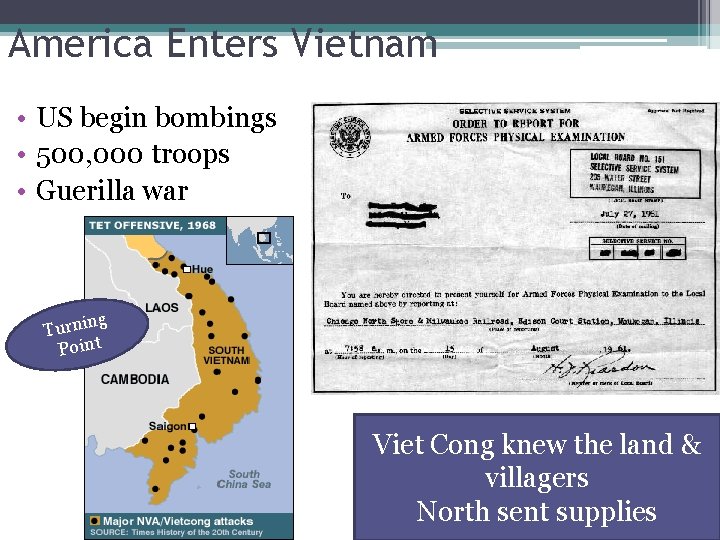
America Enters Vietnam • US begin bombings • 500, 000 troops • Guerilla war ng Turni Point Viet Cong knew the land & villagers North sent supplies
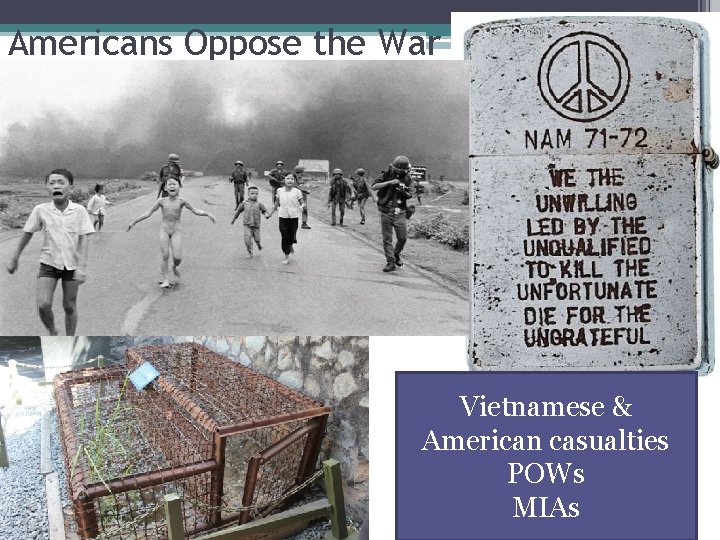
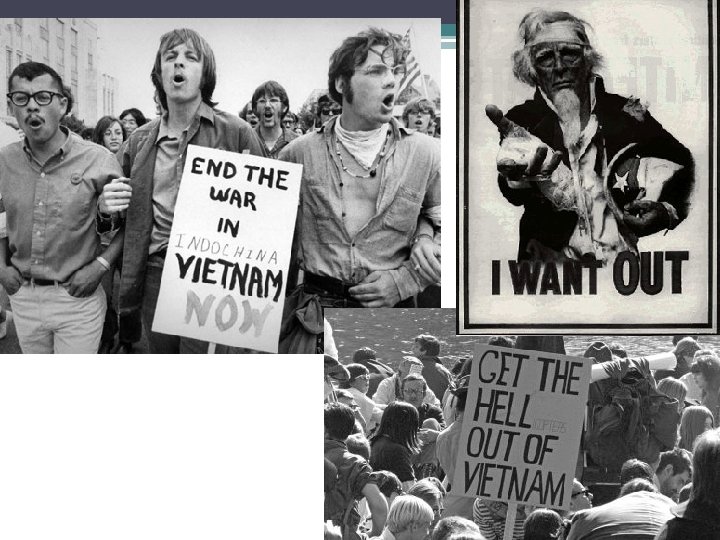
Americans Oppose the War Vietnamese & American casualties POWs MIAs
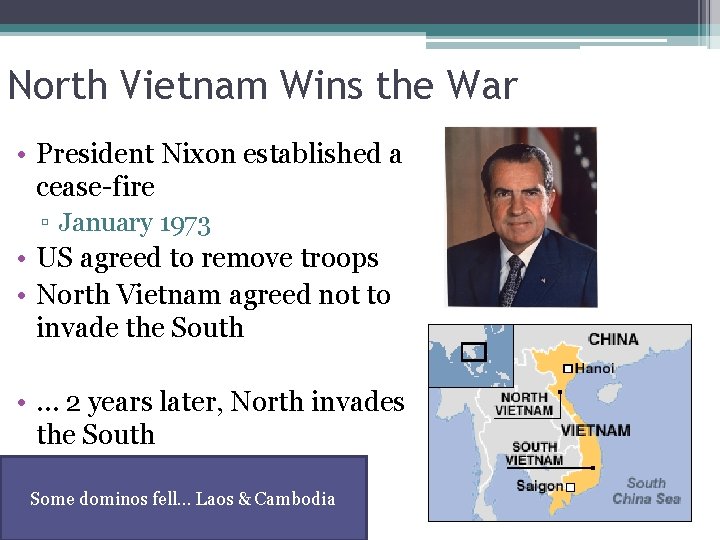
North Vietnam Wins the War • President Nixon established a cease-fire ▫ January 1973 • US agreed to remove troops • North Vietnam agreed not to invade the South • … 2 years later, North invades the South Some dominos fell… Laos & Cambodia
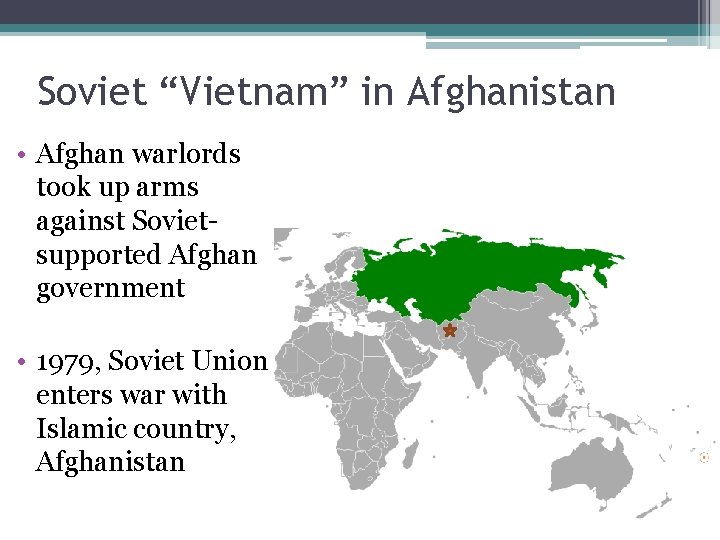
Soviet “Vietnam” in Afghanistan • Afghan warlords took up arms against Sovietsupported Afghan government • 1979, Soviet Union enters war with Islamic country, Afghanistan
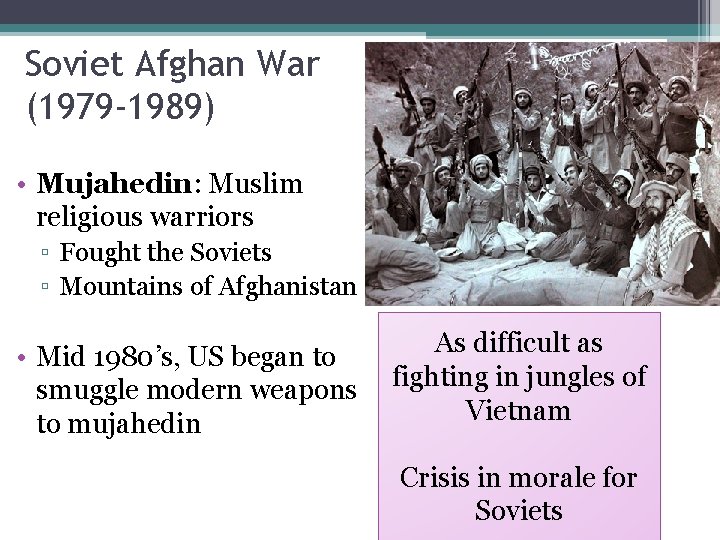
Soviet Afghan War (1979 -1989) • Mujahedin: Muslim religious warriors ▫ Fought the Soviets ▫ Mountains of Afghanistan • Mid 1980’s, US began to smuggle modern weapons to mujahedin As difficult as fighting in jungles of Vietnam Crisis in morale for Soviets
End of Cold War • Command economy ▫ Inefficiency & waste ▫ Low wages & life time job security • Western boom • Soviet stagnation Soviets envied the prosperity of the West ▫ Unproductive agriculture ▫ Consumer goods were inferior, luxury goods were rare ▫ Couldn’t keep up with arms race
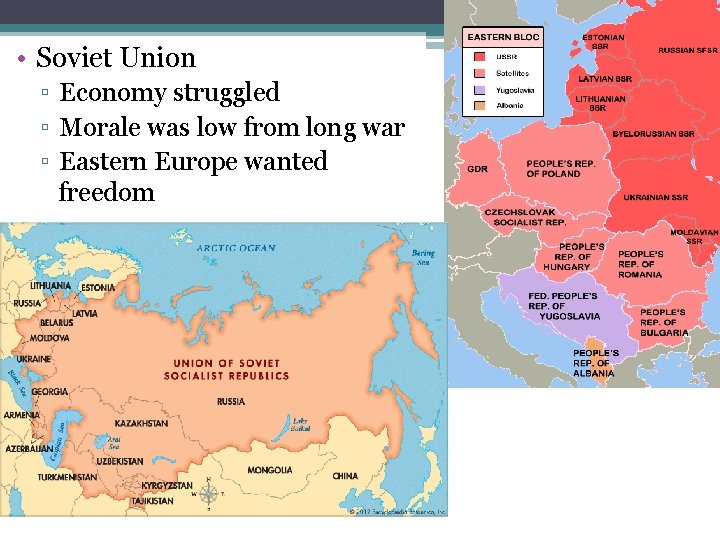
• Soviet Union ▫ Economy struggled ▫ Morale was low from long war ▫ Eastern Europe wanted freedom
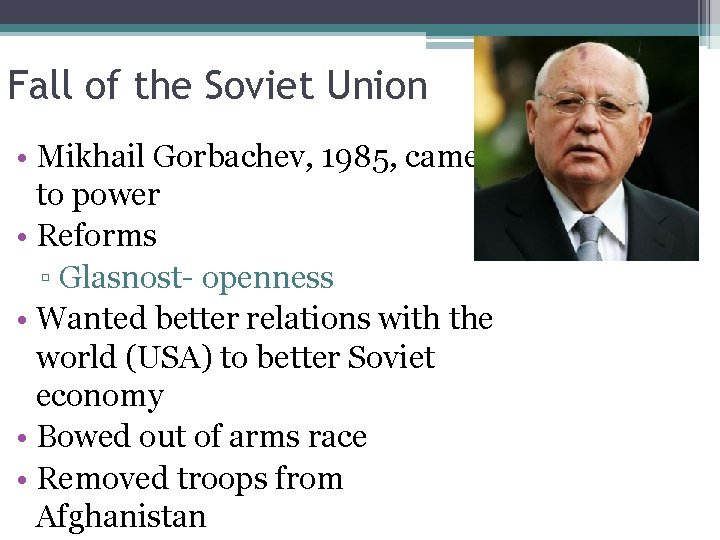
Fall of the Soviet Union • Mikhail Gorbachev, 1985, came to power • Reforms ▫ Glasnost- openness • Wanted better relations with the world (USA) to better Soviet economy • Bowed out of arms race • Removed troops from Afghanistan
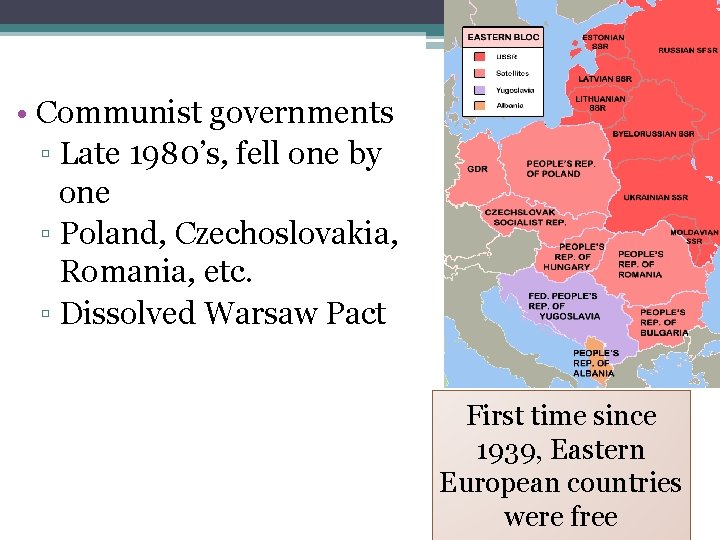
• Communist governments ▫ Late 1980’s, fell one by one ▫ Poland, Czechoslovakia, Romania, etc. ▫ Dissolved Warsaw Pact First time since 1939, Eastern European countries were free
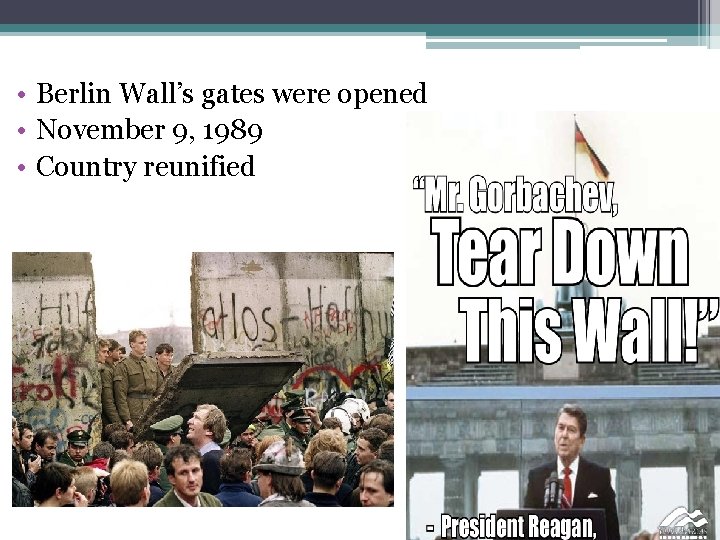
• Berlin Wall’s gates were opened • November 9, 1989 • Country reunified
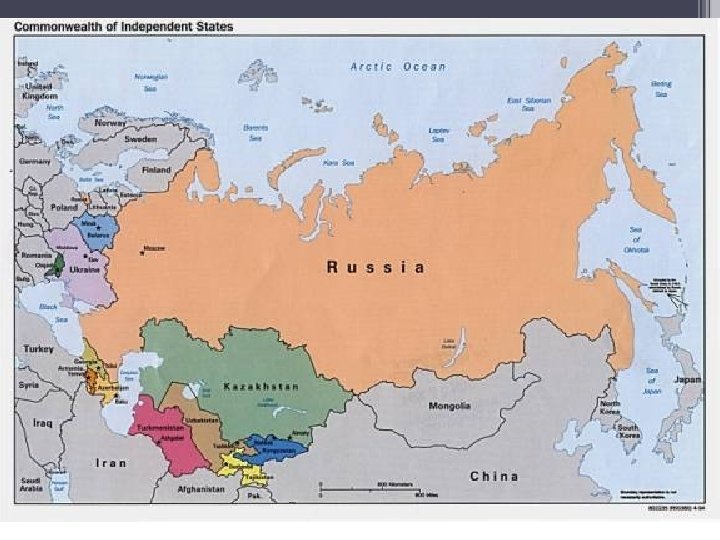
Fall of the Soviet Union • December 25, 1991 ▫ Gorbachev resigns ▫ Ukraine, the Russian Federation, Belarus, Armenia, Azerbaijan, Kazakhstan, Kyrgyzstan, Moldova, Turkmenistan, Tajikistan and Uzbekistan declared they were no longer a part of the Soviet Union ▫ Peaceful end to long & terrifying Cold War
Communism Around the World • China opened economy to capitalism ▫ Economic boom ▫ But no political reform • Vietnam ▫ Opened itself to the world ▫ Started diplomatic relations with USA • North Korea ▫ Rigid totalitarianism, Isolation • Cuba ▫ Economy deteriorated ▫ Many thought communism wouldn’t outlive its founder, Fidel Castro
• United States emerged as sole superpower • Americans seemed unsure of the new role as “the world’s policeman” • Protector of freedom, but no rival threat • What do you think America’s military role in the world should be?