
VIDYARTHI VIKAS VIDYALAY MOHITYANCHE VADGAON Std Eight Sub
VIDYARTHI VIKAS VIDYALAY, MOHITYANCHE VADGAON Std Eight Sub Science PRESENTED BYSHRI. LOKHANDE. A. A Sub Science Std Eight Chap Stars and our solar system
VIDYARTHI VIKAS VIDYALAY, MOHITYANCHE VADGAON Std Eight Sub Science CHAPTER NO. 1 STARS AND OUR SOLAR SYSTEM Sub Science Std Eight Chap Stars and our solar system
INDEX: 1. 1 1. 2 1. 3 1. 4 1. 5 1. 6 1. 7 1. 8 1. 9 1. 10 1. 11 1. 12 1. 13 1. 14 1. 15 1. 16 The moon Phases of moon Constillations Our solar system The sun Mercury Venus Earth Mars Jupiter Saturn and it’s rings Uranus and Neptune Comets Artificial Sattelites Aryabhatta Sattelites Uses of Sattelites
THE MOON Sub Science Std Eight Chap Stars and our solar system
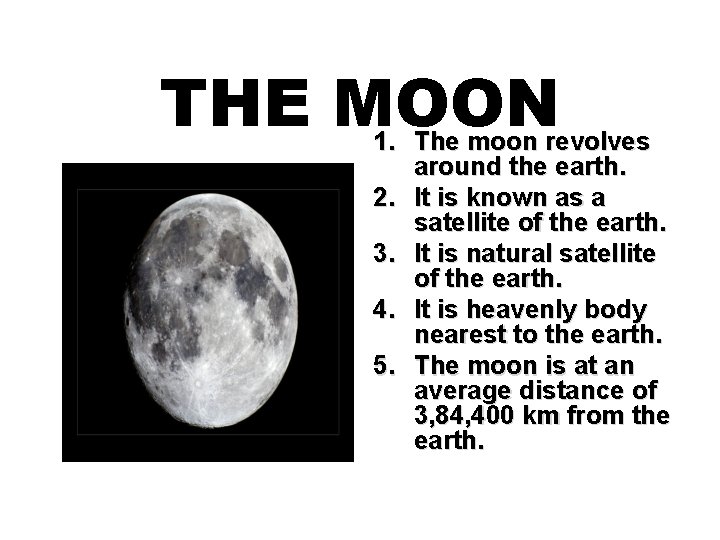
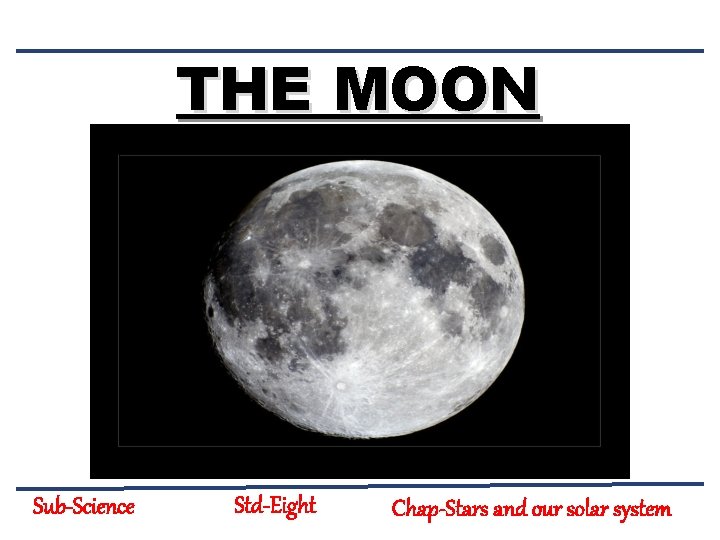
THE MOON 1. 2. 3. 4. 5. The moon revolves around the earth. It is known as a satellite of the earth. It is natural satellite of the earth. It is heavenly body nearest to the earth. The moon is at an average distance of 3, 84, 400 km from the earth.
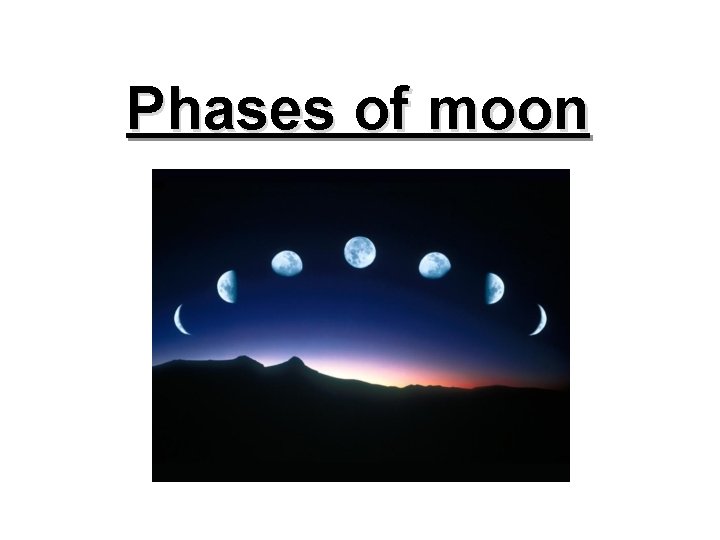
Phases of moon
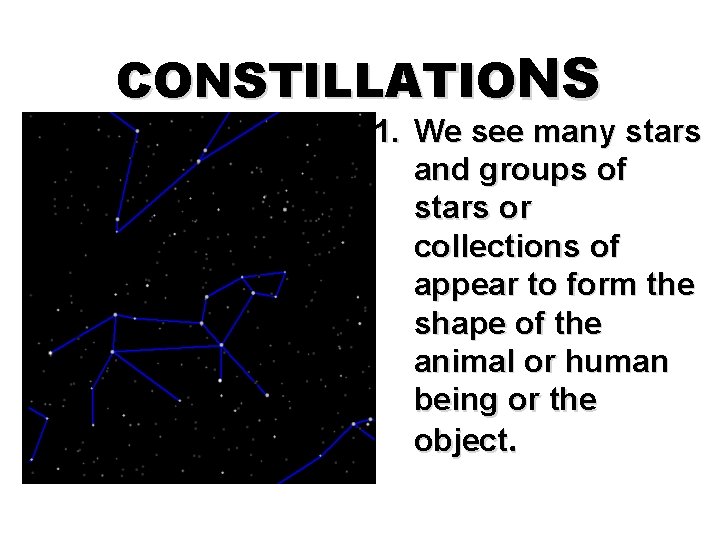
CONSTILLATIONS 1. We see many stars and groups of stars or collections of appear to form the shape of the animal or human being or the object.
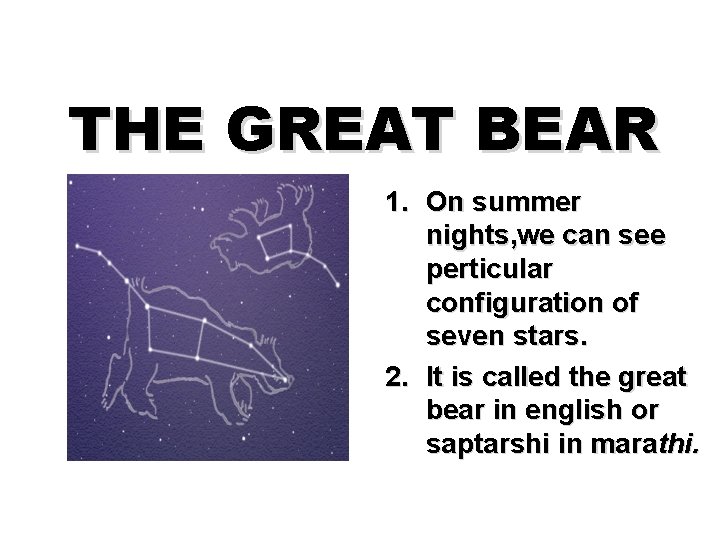
THE GREAT BEAR 1. On summer nights, we can see perticular configuration of seven stars. 2. It is called the great bear in english or saptarshi in marathi.
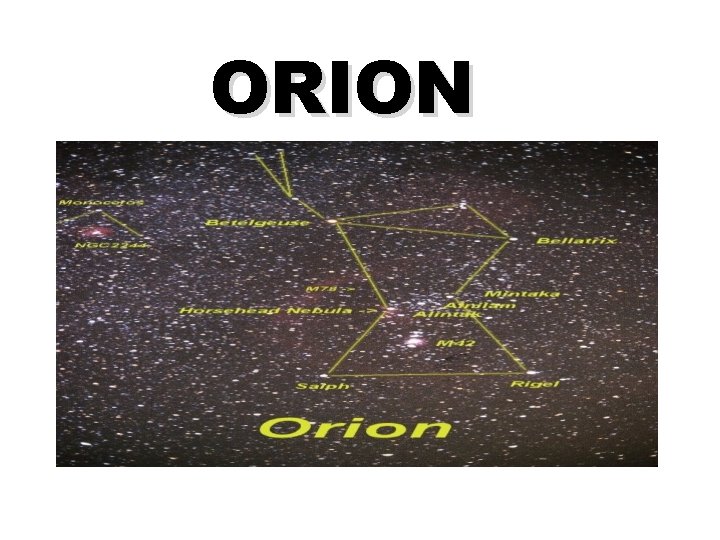
ORION
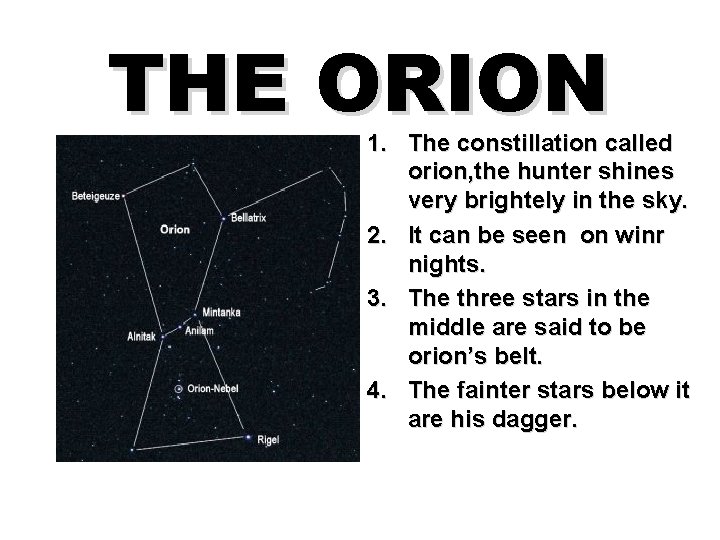
THE ORION 1. The constillation called orion, the hunter shines very brightely in the sky. 2. It can be seen on winr nights. 3. The three stars in the middle are said to be orion’s belt. 4. The fainter stars below it are his dagger.
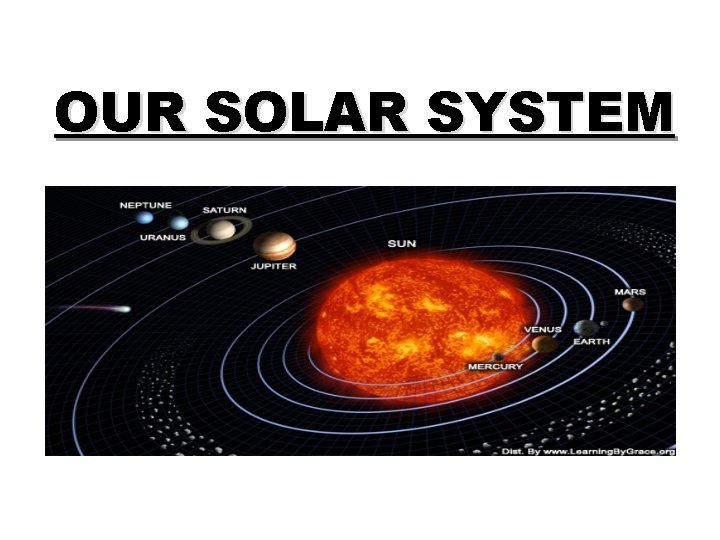
OUR SOLAR SYSTEM
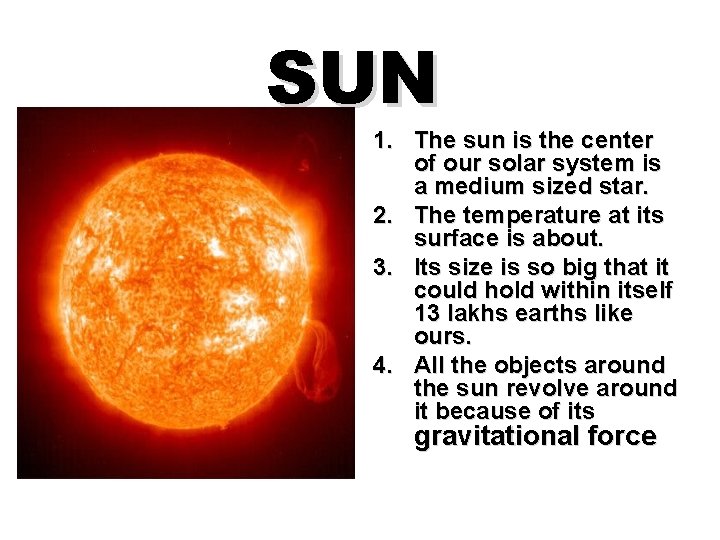
SUN 1. The sun is the center of our solar system is a medium sized star. 2. The temperature at its surface is about. 3. Its size is so big that it could hold within itself 13 lakhs earths like ours. 4. All the objects around the sun revolve around it because of its gravitational force
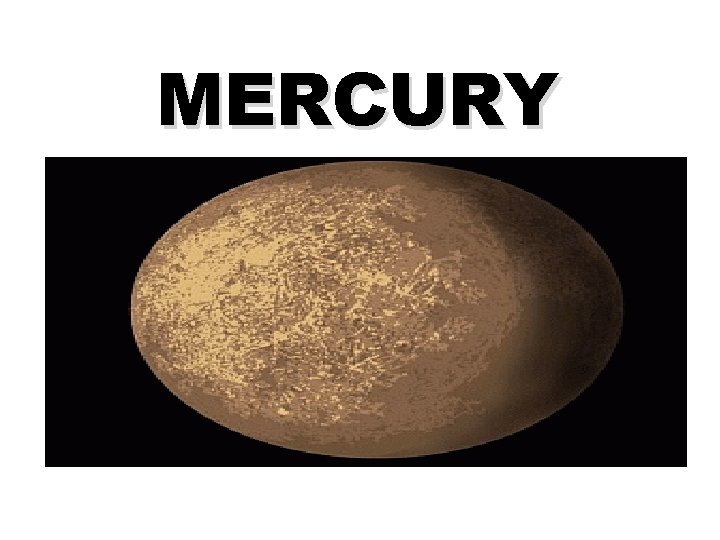
MERCURY
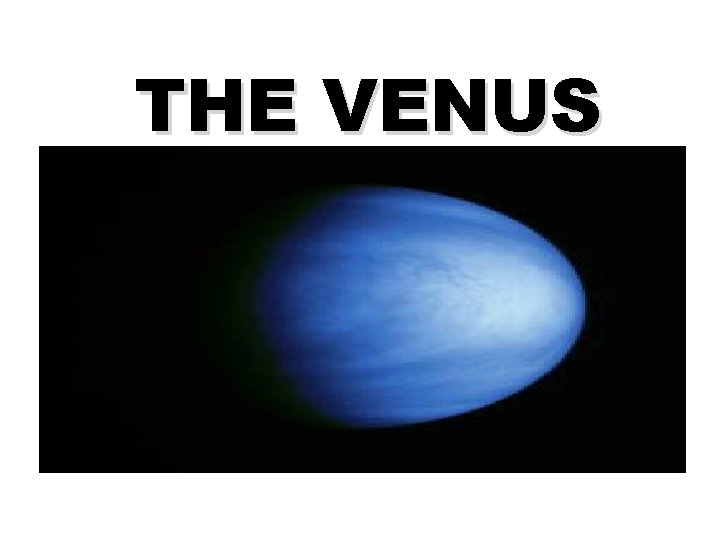
THE VENUS
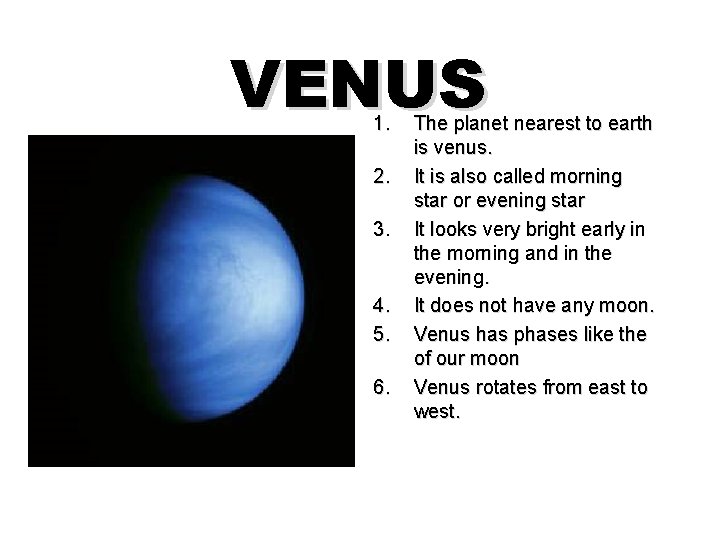
VENUS 1. 2. 3. 4. 5. 6. The planet nearest to earth is venus. It is also called morning star or evening star It looks very bright early in the morning and in the evening. It does not have any moon. Venus has phases like the of our moon Venus rotates from east to west.
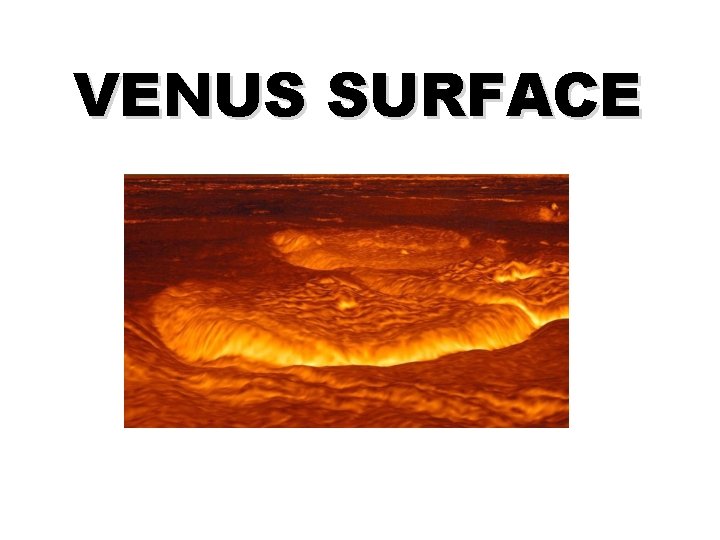
VENUS SURFACE
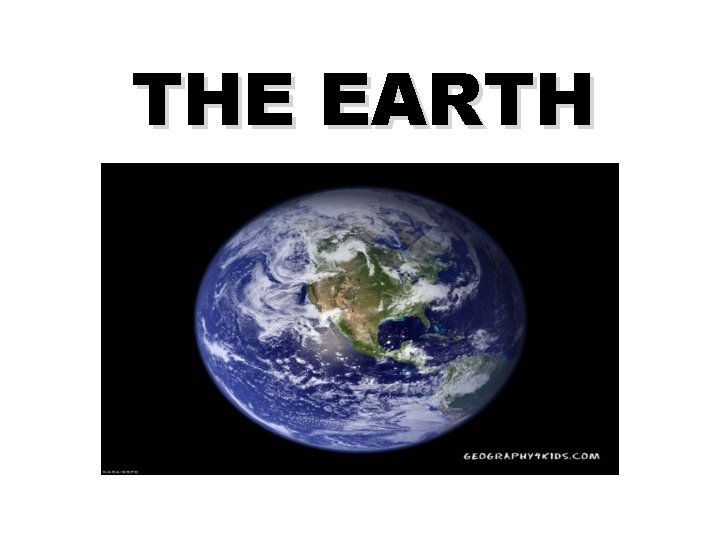
THE EARTH
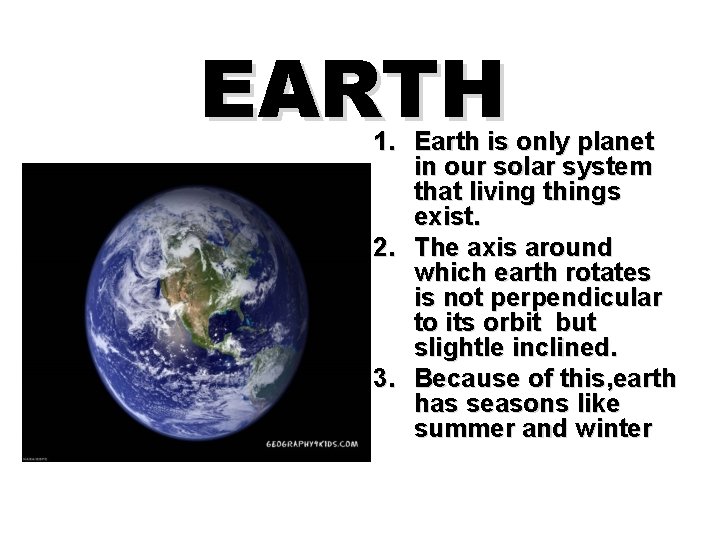
EARTH 1. Earth is only planet in our solar system that living things exist. 2. The axis around which earth rotates is not perpendicular to its orbit but slightle inclined. 3. Because of this, earth has seasons like summer and winter
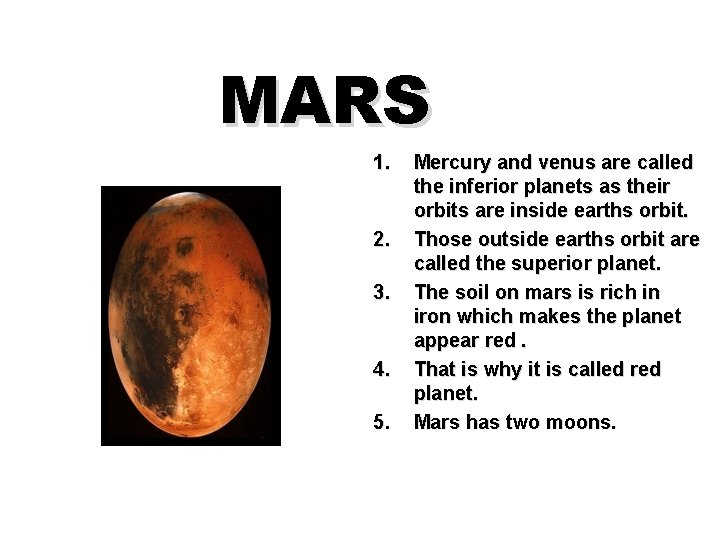
MARS 1. 2. 3. 4. 5. Mercury and venus are called the inferior planets as their orbits are inside earths orbit. Those outside earths orbit are called the superior planet. The soil on mars is rich in iron which makes the planet appear red. That is why it is called red planet. Mars has two moons.
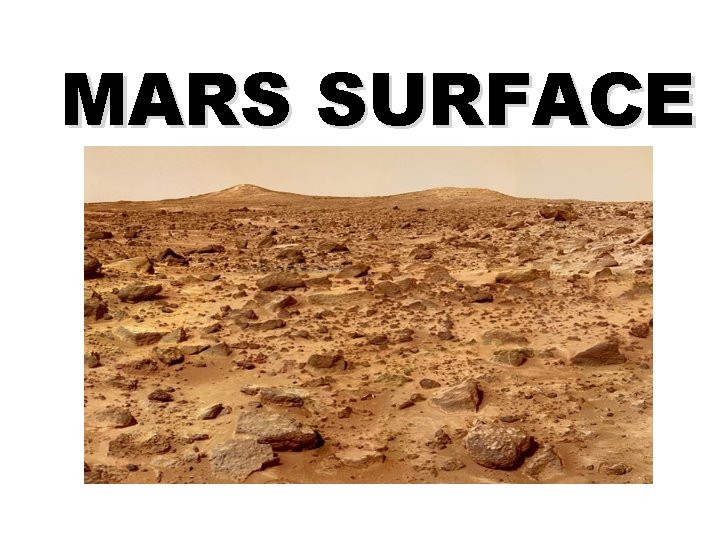
MARS SURFACE
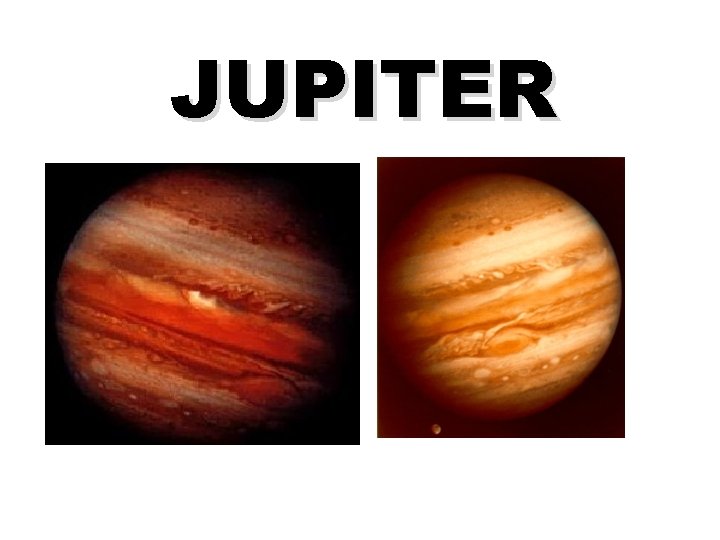
JUPITER
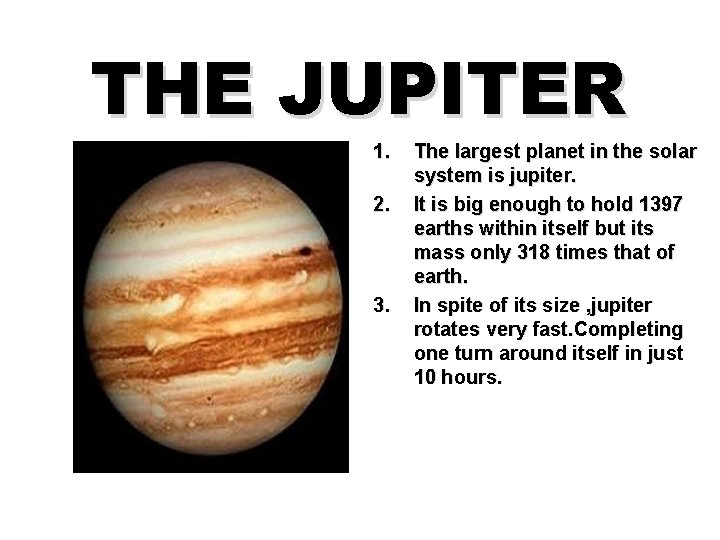
THE JUPITER 1. 2. 3. The largest planet in the solar system is jupiter. It is big enough to hold 1397 earths within itself but its mass only 318 times that of earth. In spite of its size , jupiter rotates very fast. Completing one turn around itself in just 10 hours.
Jupiter has 63 satellites but we can see only four of them by means of a telescope.
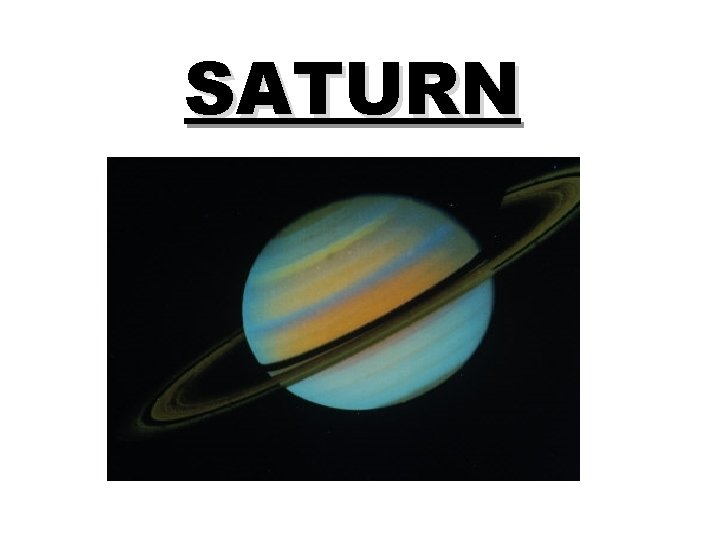
SATURN
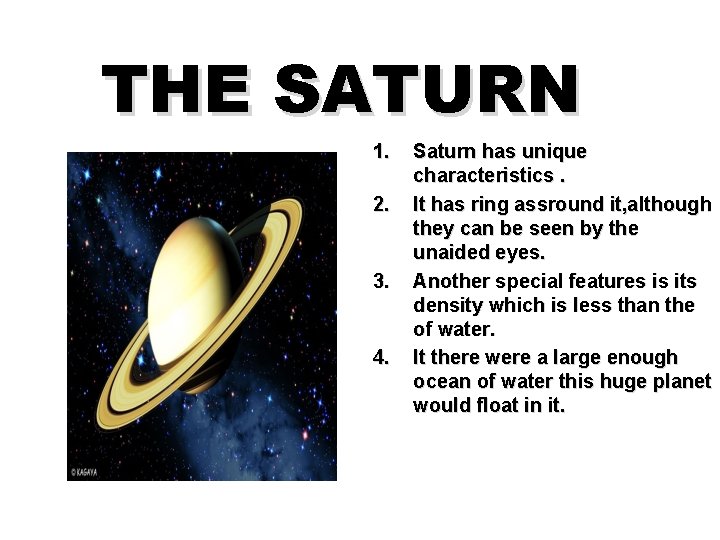
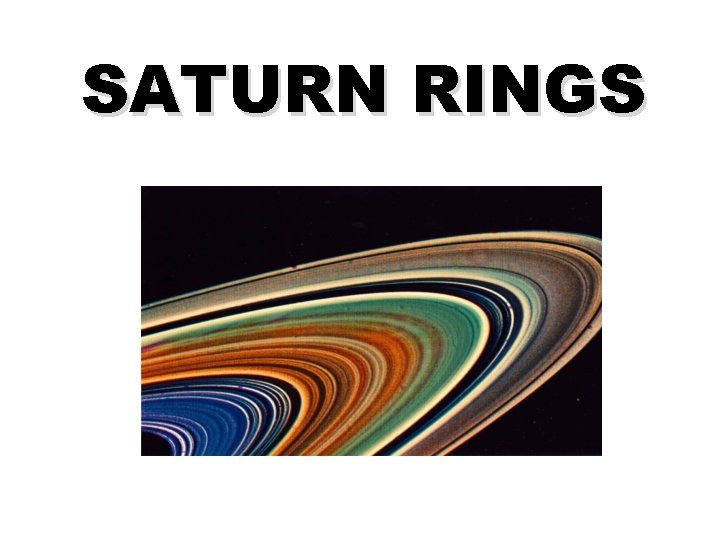
THE SATURN 1. 2. 3. 4. Saturn has unique characteristics. It has ring assround it, although they can be seen by the unaided eyes. Another special features is its density which is less than the of water. It there were a large enough ocean of water this huge planet would float in it.
SATURN RINGS
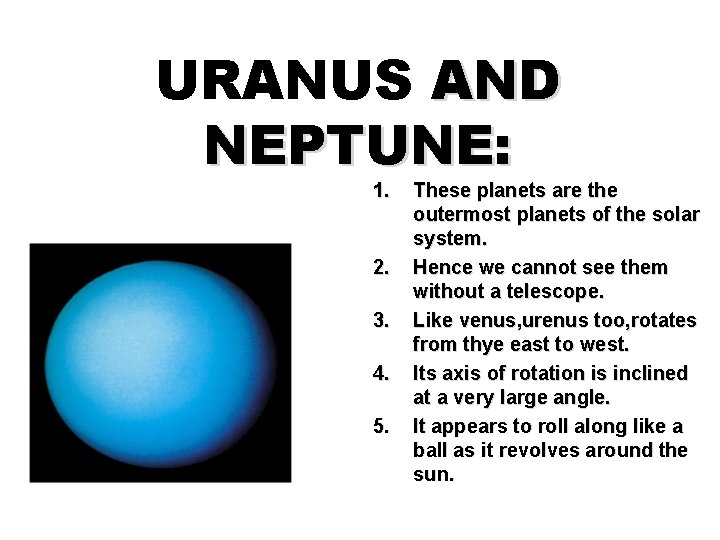
URANUS AND NEPTUNE: 1. 2. 3. 4. 5. These planets are the outermost planets of the solar system. Hence we cannot see them without a telescope. Like venus, urenus too, rotates from thye east to west. Its axis of rotation is inclined at a very large angle. It appears to roll along like a ball as it revolves around the sun.
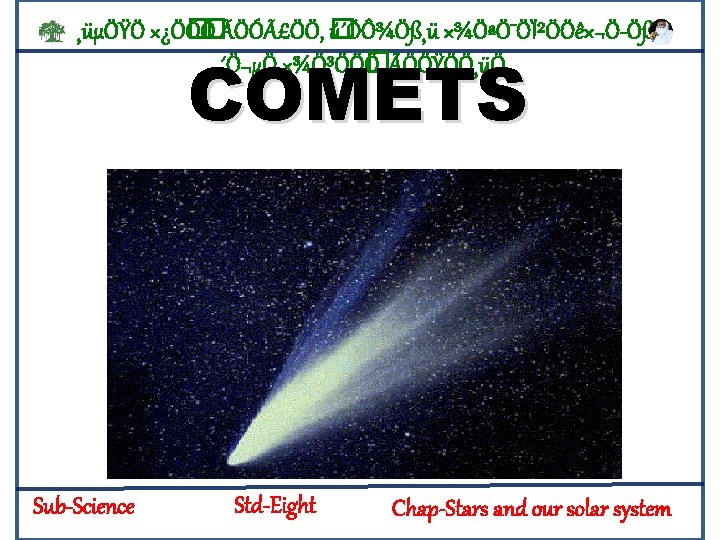
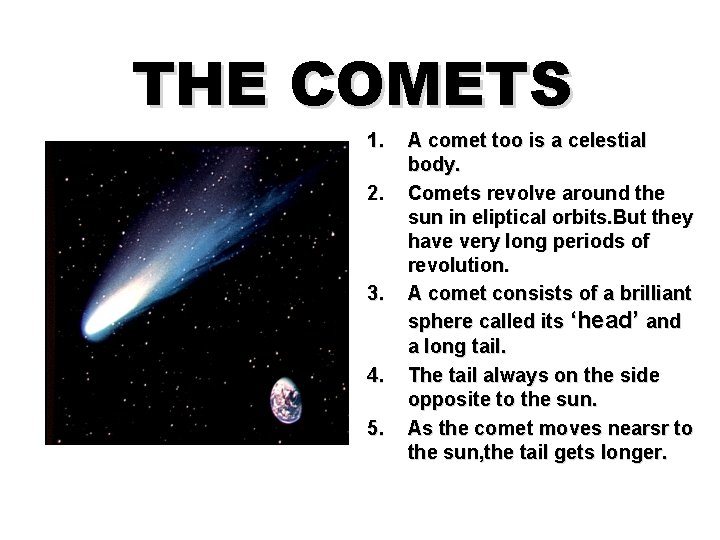
THE COMETS 1. 2. 3. 4. 5. A comet too is a celestial body. Comets revolve around the sun in eliptical orbits. But they have very long periods of revolution. A comet consists of a brilliant sphere called its ‘head’ and a long tail. The tail always on the side opposite to the sun. As the comet moves nearsr to the sun, the tail gets longer.
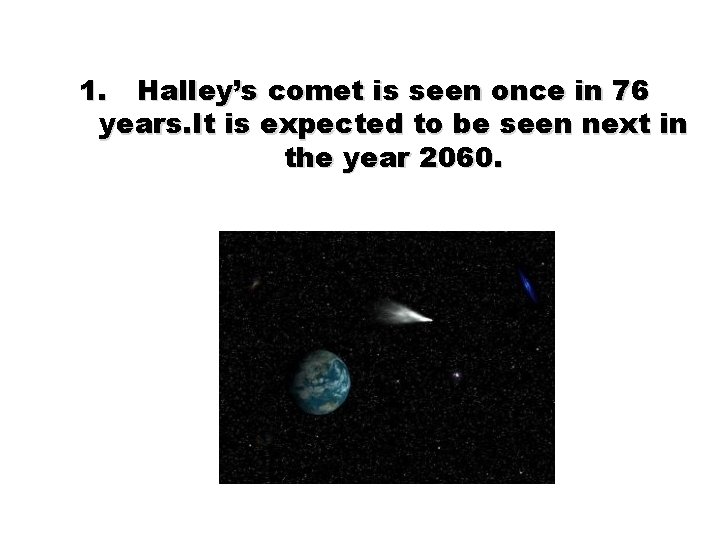
1. Halley’s comet is seen once in 76 years. It is expected to be seen next in the year 2060.
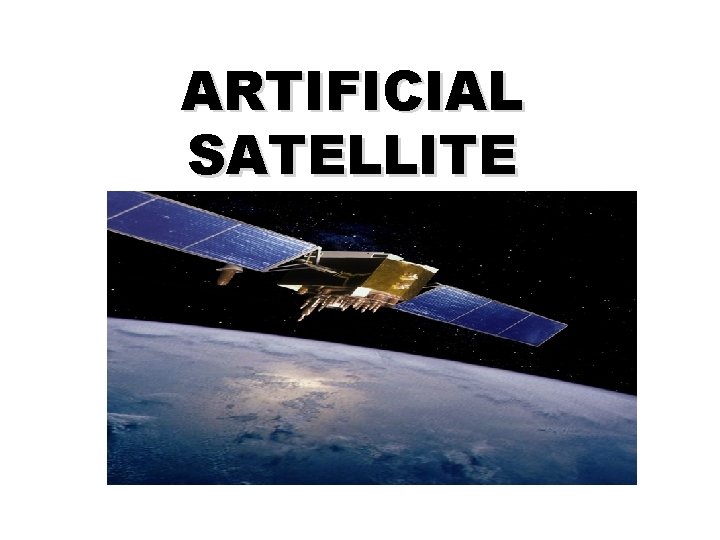
ARTIFICIAL SATELLITE
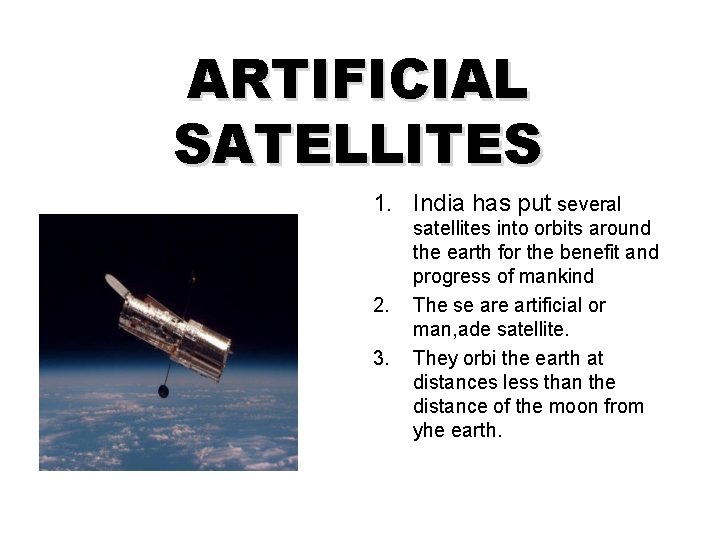
ARTIFICIAL SATELLITES 1. India has put several 2. 3. satellites into orbits around the earth for the benefit and progress of mankind The se artificial or man, ade satellite. They orbi the earth at distances less than the distance of the moon from yhe earth.
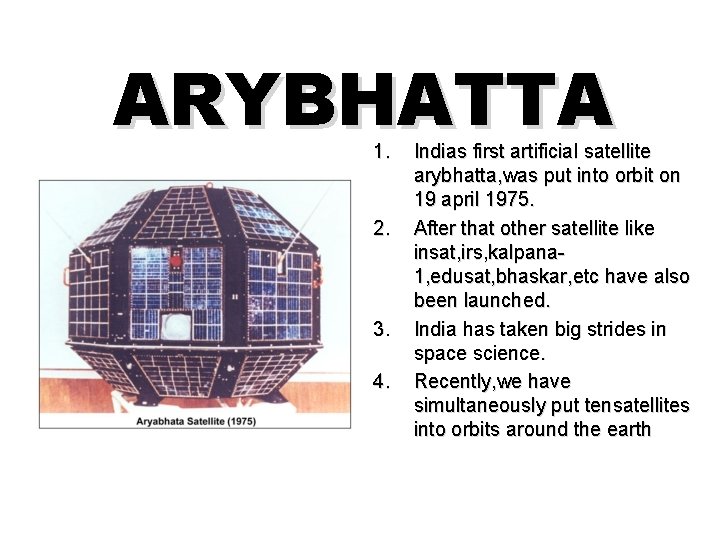
ARYBHATTA 1. 2. 3. 4. Indias first artificial satellite arybhatta, was put into orbit on 19 april 1975. After that other satellite like insat, irs, kalpana 1, edusat, bhaskar, etc have also been launched. India has taken big strides in space science. Recently, we have simultaneously put tensatellites into orbits around the earth
- Slides: 33