
Video Remote Interpreter Devices Project A Video Remote

- Slides: 46
Video Remote Interpreter Devices Project
�A- Video Remote Interpreter Overview �B-Background on Hospital A and current state of interpretation services �C- Software Components & Hardware Components �D- Placement and number of input-output devices �E- Implementation Plan �F- Education Plan �G- Evaluation Plan �H- Potential Issues/ Solutions Contents
�Patients with limited English proficiency (LEP) face unique challenges when navigating an English language-based healthcare system (Freeman, 2015; Ramos et al. , 2014) -Decreased access to health care -Decreased quality of care -Reduced bond with care providers -Decreased satisfaction, due to miscommunications (Access Alliance, 2009; Freeman, 2015; Ramos et al. , 2014) Overview: Video Remote Interpreter (VRI)
�Resulting in: ◦ Increased medical errors ◦ Decreased provision of evidence-based medical care ◦ Increased health care costs & ◦ Poor patient outcomes (Ramos et al. , 2014) Overview: Video Remote Interpreter (VRI)
� Poor experiences undermine principles of Canadian healthcare system, which stresses access to quality health care for all. Critically important that patients able to access information in language can understand. (Access Alliance, 2009) � Through implementation of video remote interpretation (VRI) project, access to professional interpretation services will be available 24/7, including American Sign Language. Ensures accurate medical vocabulary used, patient privacy maintained, medical errors are reduced- overall improving patient outcomes. (Ramos et al. , 2014) Overview: Video Remote Interpreter (VRI)
� Located in a primarily English speaking region of Canada � 300 inpatient beds, >100, 000 Emergency Department visits/year � Serves as community referral centre for the region � Busy ambulatory care clinic � Patients see different specialists and specialty departments (e. g. physio or occupational therapy) � Most hospital staff identify English as their primary and only language � 2% identify proficiency in French and less than 0. 5% identifying proficiency in another language Background on Hospital A
• Many newcomers to region in last several years, bringing many different languages and cultures. • French, Spanish, Arabic, Hindi and Mandarin most commonly interpreted languages at Hospital A. • Implementation of VRI devices is a valuable project in order to meet Hospital A’s identified vision and values
Our Vision Exceptional Care. Strong Partnerships. Healthy Communities. Our Values We CARE. We LEAD. � Collaboration Accountability Respect Excellence � Lead by Example Empower Achieve Results Develop Others Hospital A Vision and Values
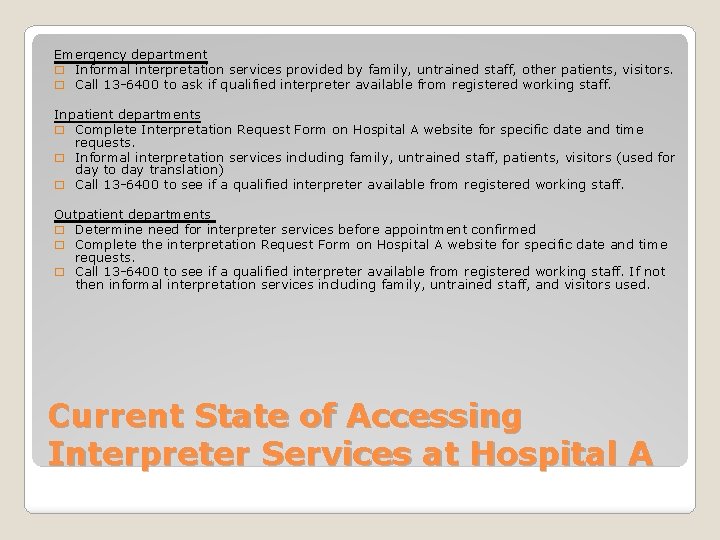
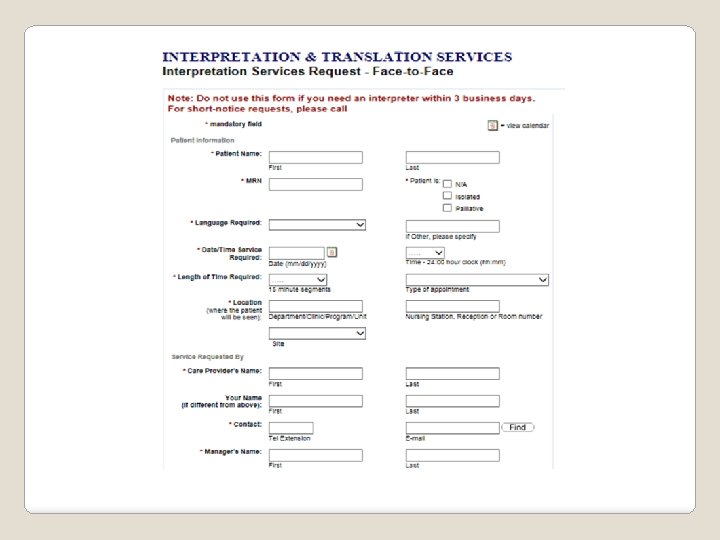
Emergency department � Informal interpretation services provided by family, untrained staff, other patients, visitors. � Call 13 -6400 to ask if qualified interpreter available from registered working staff. Inpatient departments � Complete Interpretation Request Form on Hospital A website for specific date and time requests. � Informal interpretation services including family, untrained staff, patients, visitors (used for day to day translation) � Call 13 -6400 to see if a qualified interpreter available from registered working staff. Outpatient departments � Determine need for interpreter services before appointment confirmed � Complete the interpretation Request Form on Hospital A website for specific date and time requests. � Call 13 -6400 to see if a qualified interpreter available from registered working staff. If not then informal interpretation services including family, untrained staff, and visitors used. Current State of Accessing Interpreter Services at Hospital A
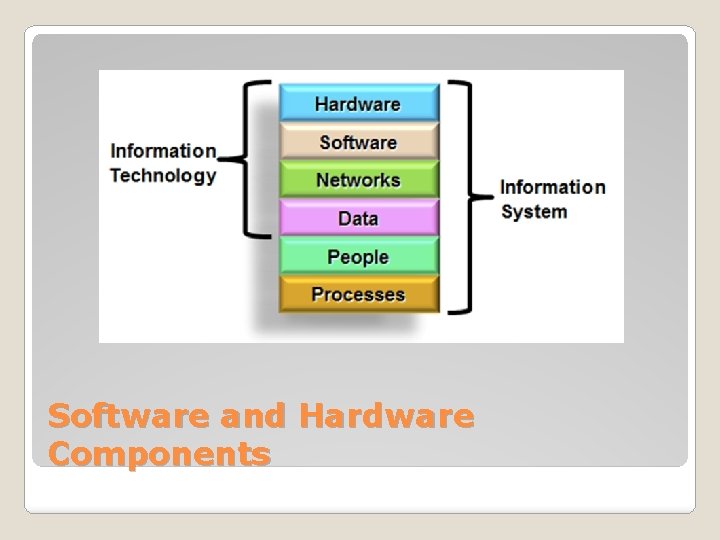
Software and Hardware Components
�VRI is a web based solution. The only software required is a web browser. Software
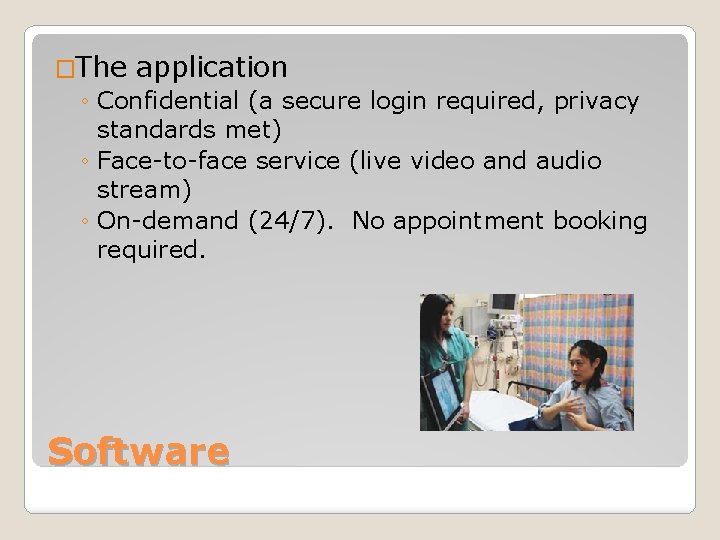
�The application ◦ Confidential (a secure login required, privacy standards met) ◦ Face-to-face service (live video and audio stream) ◦ On-demand (24/7). No appointment booking required. Software
�Central Processing Unit (CPU) ◦ 64 bit, dual processor, hex-core, 2. 26 gigahertz (or higher) ◦ 32 gigabytes of memory (at a minimum) Hardware
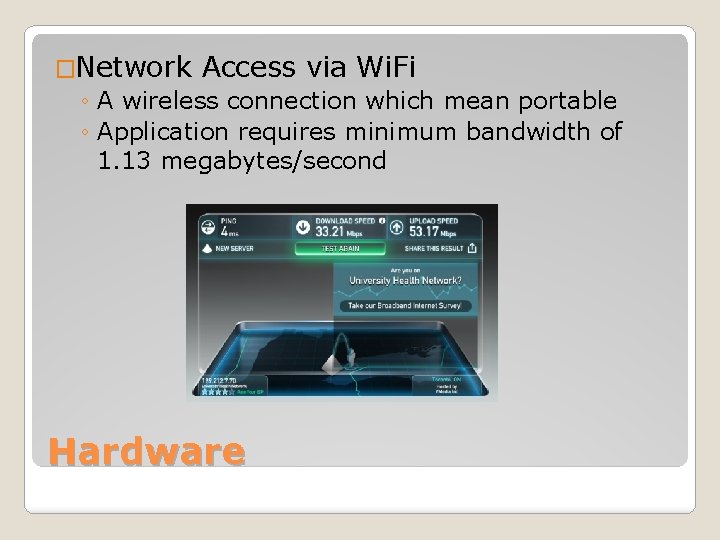
�Network Access via Wi. Fi ◦ A wireless connection which mean portable ◦ Application requires minimum bandwidth of 1. 13 megabytes/second Hardware
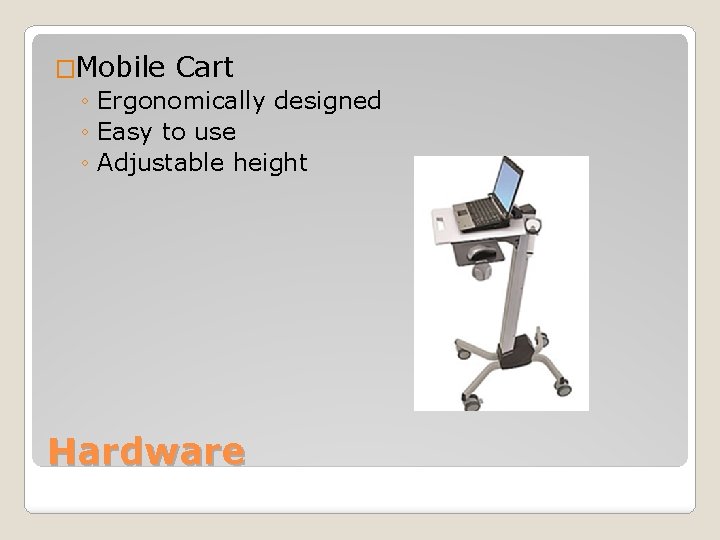
�Mobile Cart ◦ Ergonomically designed ◦ Easy to use ◦ Adjustable height Hardware
Device Placement and Requirements
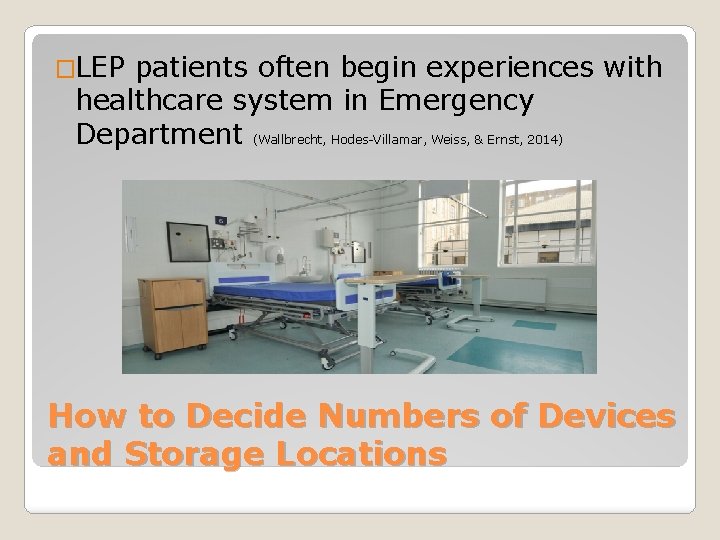
�LEP patients often begin experiences with healthcare system in Emergency Department (Wallbrecht, Hodes-Villamar, Weiss, & Ernst, 2014) How to Decide Numbers of Devices and Storage Locations
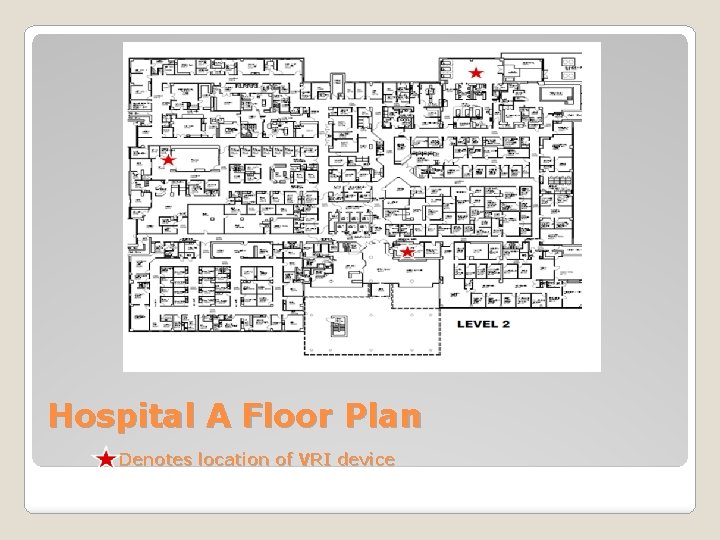
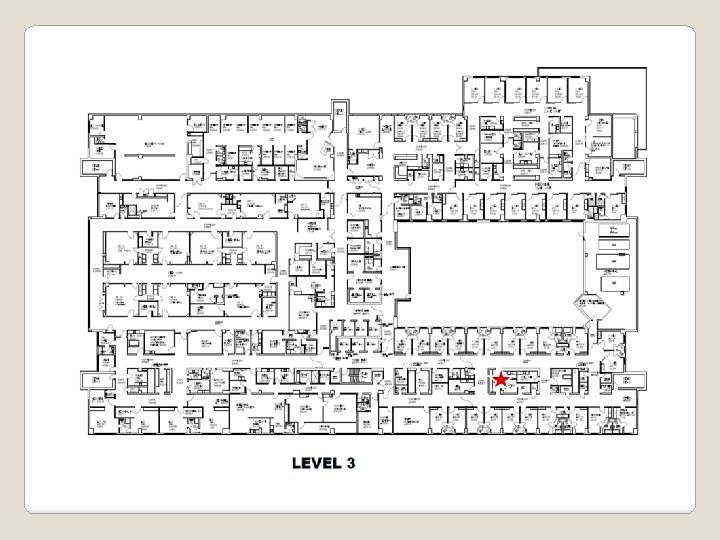
� LEP patients often spread out in hospital. Decision made to store devices in high-use units, geographically distanced from each other. Allows all clinical staff to be able to access a device close to their work area. � Total of four mobile VRI devices purchased. ◦ stored in Emergency Department, inpatient unit, ambulatory care clinic and welcome centre in hospital lobby � Devices may be accessed by any clinical staff member and taken to required location VRI Devices Numbers and Locations
Hospital A Floor Plan Denotes location of VRI device
�Devices run wirelessly and will be supported on current hospital wireless network ◦ 2. 0 Mps bandwidths on a Cisco router Needs of VRI Devices
Implementation Plan
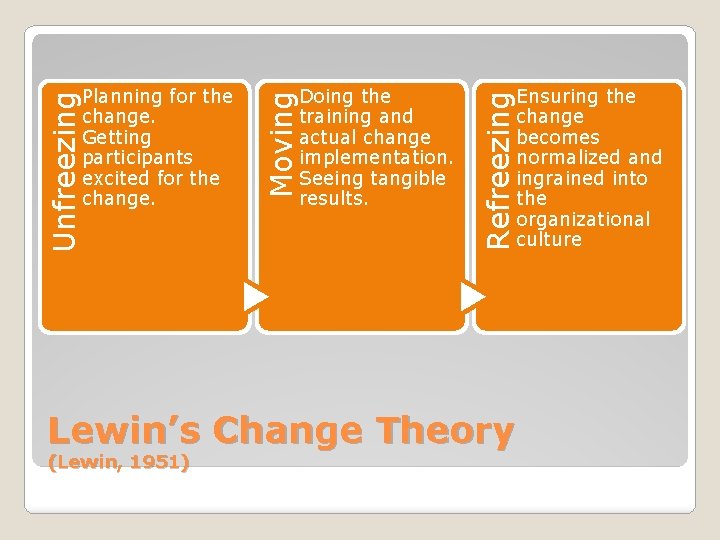
�Lewin’s change theory serves as a framework for project implementation due to its adaptability to informatics projects (Kaminski, 2011). Applying Lewin’s Change Theory to Project Implementation
Doing the training and actual change implementation. Seeing tangible results. Refreezing Moving Unfreezing Planning for the change. Getting participants excited for the change. Ensuring the change becomes normalized and ingrained into the organizational culture Lewin’s Change Theory (Lewin, 1951)
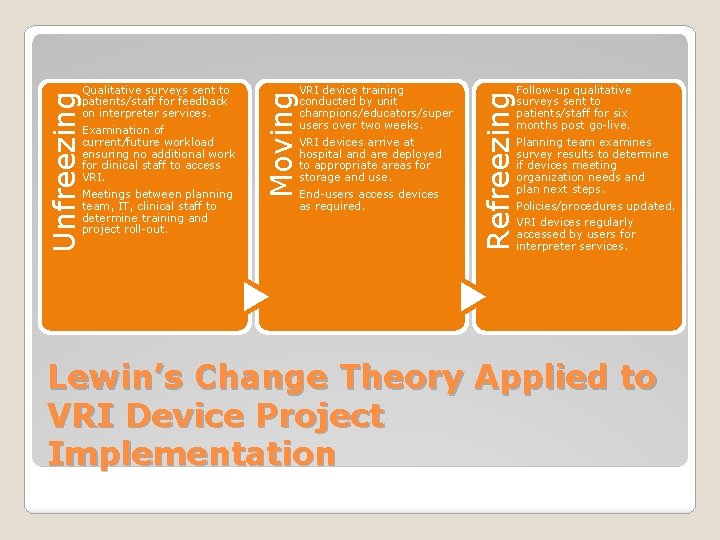
VRI device training conducted by unit champions/educators/super users over two weeks. VRI devices arrive at hospital and are deployed to appropriate areas for storage and use. End-users access devices as required. Refreezing Moving Unfreezing Qualitative surveys sent to patients/staff for feedback on interpreter services. Examination of current/future workload ensuring no additional work for clinical staff to access VRI. Meetings between planning team, IT, clinical staff to determine training and project roll-out. Follow-up qualitative surveys sent to patients/staff for six months post go-live. Planning team examines survey results to determine if devices meeting organization needs and plan next steps. Policies/procedures updated. VRI devices regularly accessed by users for interpreter services. Lewin’s Change Theory Applied to VRI Device Project Implementation
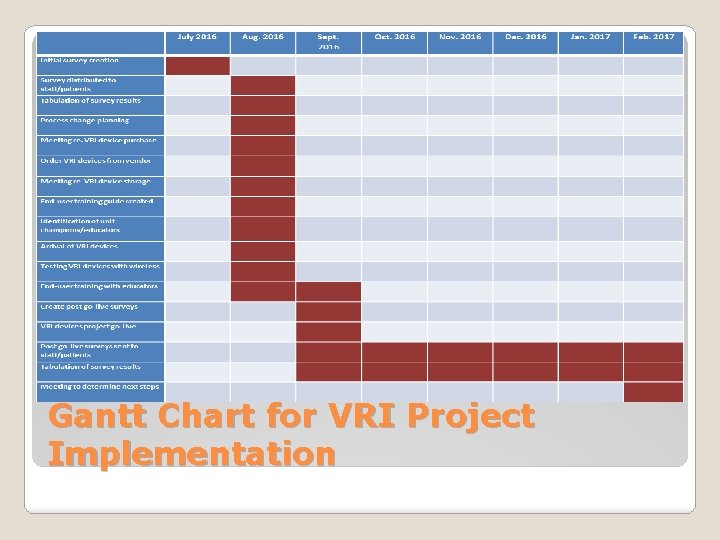
Gantt Chart for VRI Project Implementation
Through the utilization of Lewin’s change theory and moving carefully through the phases of change, project success is ensured and end-users are more likely to smoothly adapt to the transition (Kaminski, 2011).
Education and Training
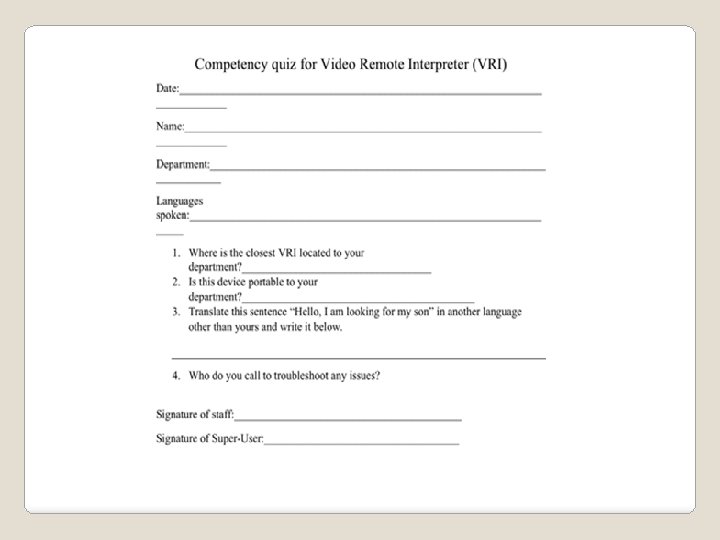
�Educational model ◦ Train the trainer �Identify Team ◦ Educators as champions ◦ Identify super-users on each unit �Training and Support ◦ Educators train super-users ◦ Super-users train staff �Resources ◦ Super-users on the units ◦ Training guide accessible online and with the VRI Education and Training
Including Cost-Benefit Evaluation Plan
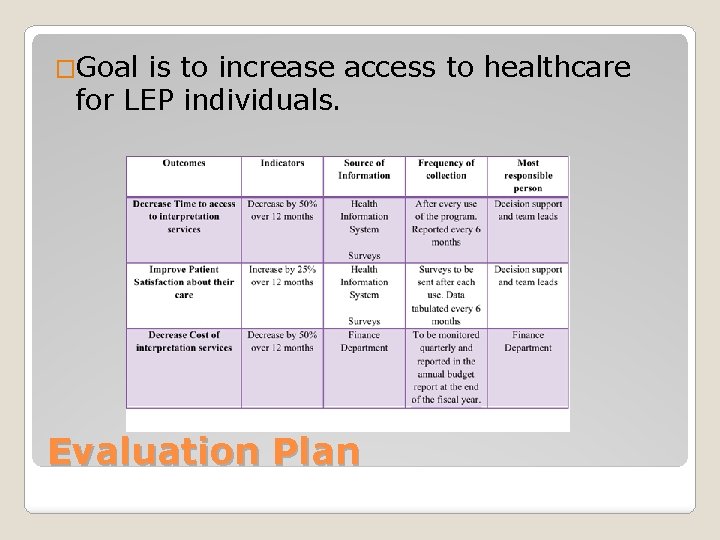
�Goal is to increase access to healthcare for LEP individuals. Evaluation Plan
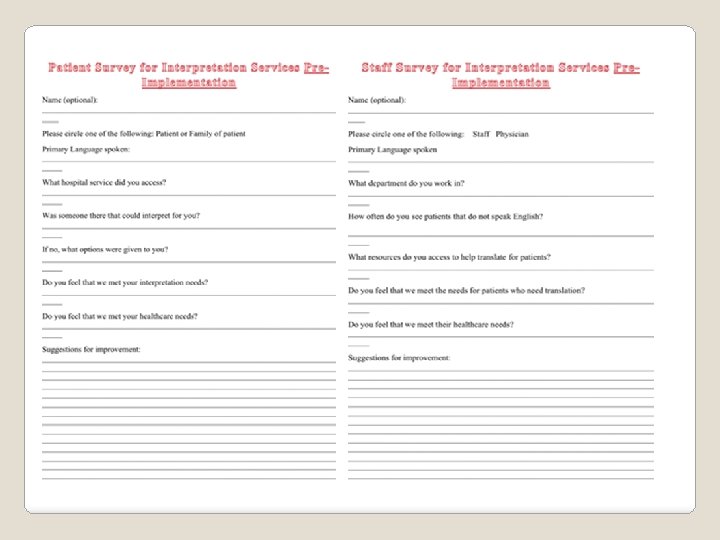
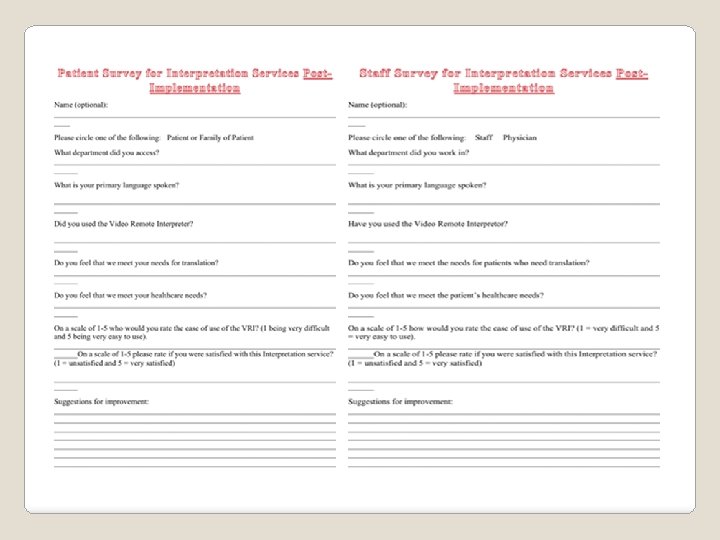
� Pre-implementation qualitative surveys to be sent out to determine the need and identify gaps in translation using current systems. ◦ Survey sent to patients in their identified primary language. Evaluation Plan
� Post-implementation qualitative surveys given out to staff and patients to determine improvement in services and decrease in communication gaps using VRI. Evaluation Plan
Little research available on cost to healthcare system when interpretation services not adequately provided (Access Alliance, 2009). However, quality of care for patient and increased patient satisfaction scores are priceless. Cost Benefit Analysis
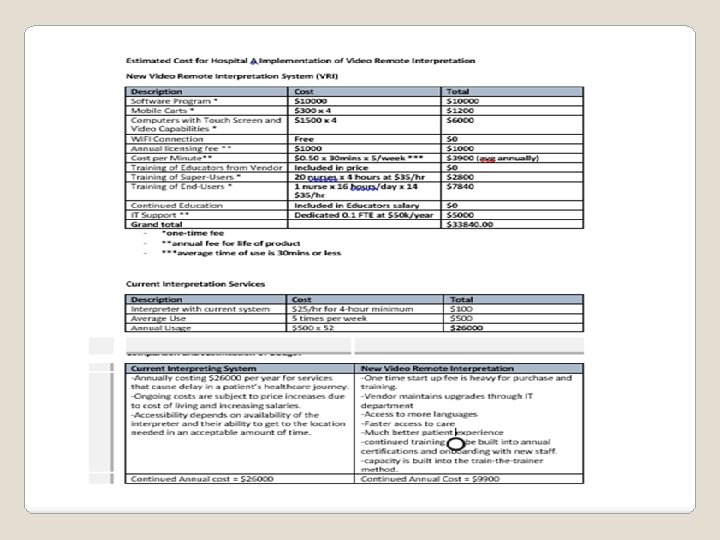
�Initial start up costs of $28 K for training and equipment would quickly be equalized by the savings of $16 K annually for the life of the software. �Costs for initial training would be a one time fee as continued training would be rolled into regular annual recertification planning. Cost-Benefit Analysis
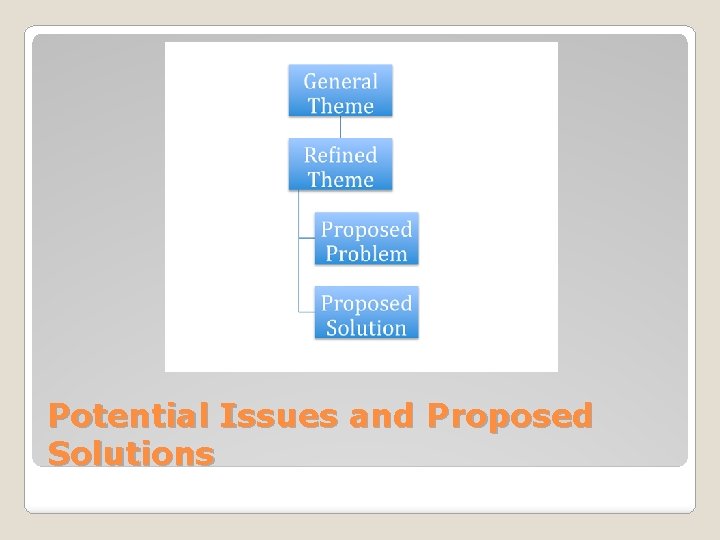
Potential Issues and Proposed Solutions
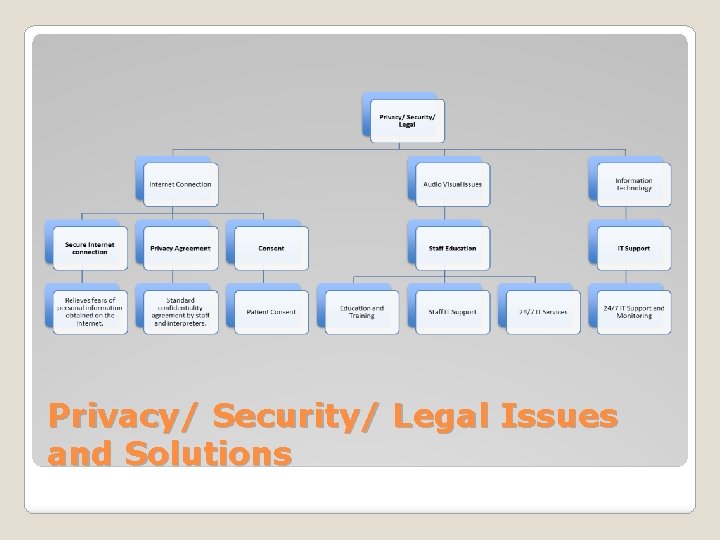
Privacy/ Security/ Legal Issues and Solutions
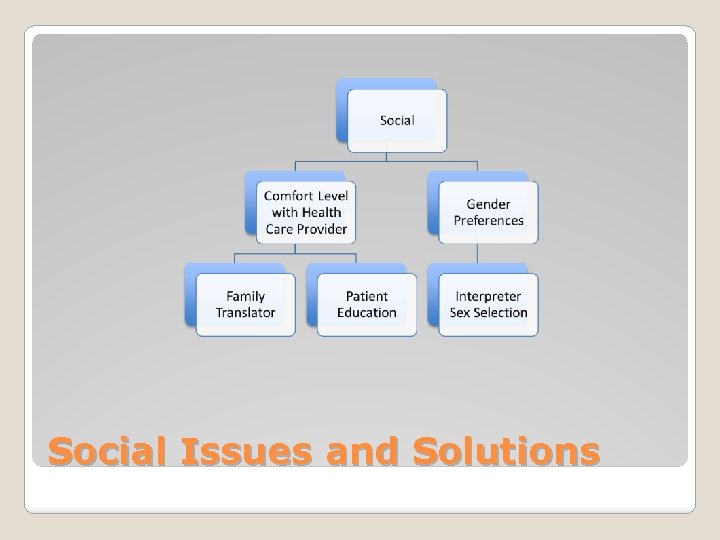
Social Issues and Solutions
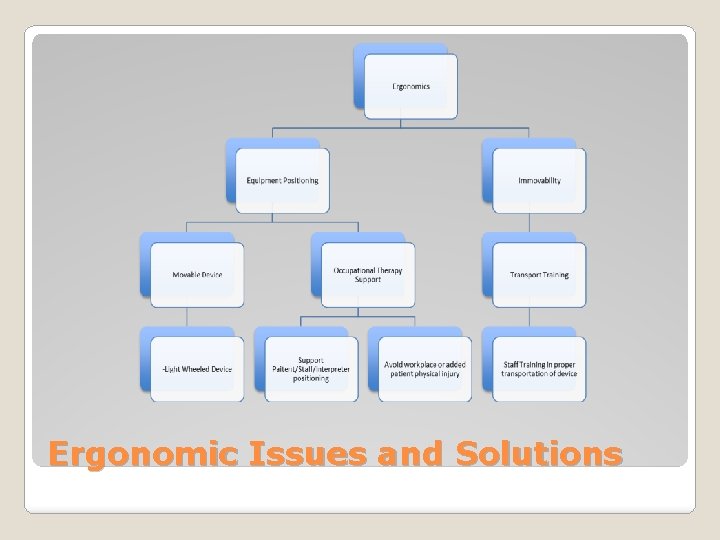
Ergonomic Issues and Solutions
Thank You!
Access Alliance, (2009). Literature review: Costs of not providing interpretation in health care (Access Alliance Publication LR 004). Retrieved from http: //accessalliance. ca/wpcontent/uploads/2015/03/Lit_Review_Cost_of_Not_Providing_Interpretation. pdf Freeman, R. R. (2015). Primary care for limited English-speaking patients and parents. Journal of the American Association of Nurse Practitioners, 27, 167 -176. doi: 10. 1002/23276924. 12148 Kaminski, J. (2011). Theory applied to informatics – Lewin’s change theory. Canadian Journal of Nursing Informatics, 6 (1), 1 -5. Retrieved from http: //cjni. net/journal/? p=1210 Lewin, K. (1951). Field theory in social science; selected theoretical papers. New York, NY: Harper & Row. Ramos, R. , Davis, J. L. , Antolino, P. , Sanz, M. , Grant, C. G. , & Green, B. L. (2014). Language and communication services: a cancer centre perspective. Diversity and Equality in Health and Care, 11, 71 -80. Wallbrecht, J. , Hodes-Villamar, L. , Weiss, S. , & Ernst, A. A. (2014). No difference in emergency department length of stay for patients with limited proficiency in English. Southern Medical Journal, 107(1), 1 -5. doi: 10. 1097/SMJ. 000000037 References