
Video Identification of Nest Predators of Groundnesting Forest

- Slides: 17
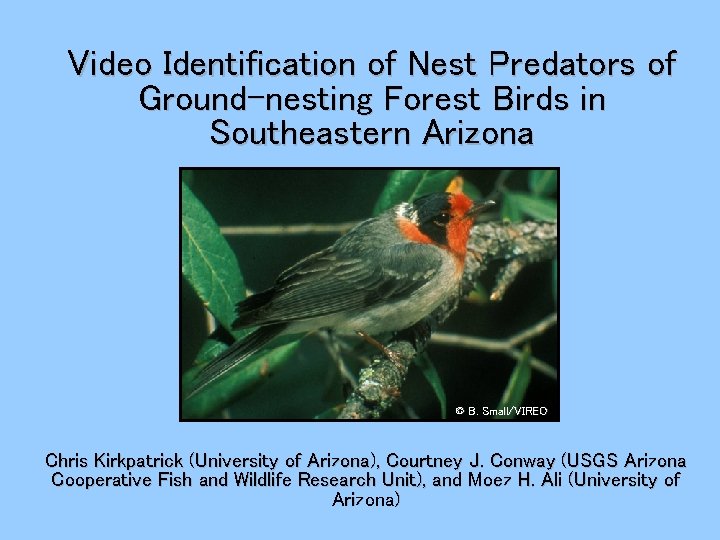
Video Identification of Nest Predators of Ground-nesting Forest Birds in Southeastern Arizona © B. Small/VIREO Chris Kirkpatrick (University of Arizona), Courtney J. Conway (USGS Arizona Cooperative Fish and Wildlife Research Unit), and Moez H. Ali (University of Arizona)
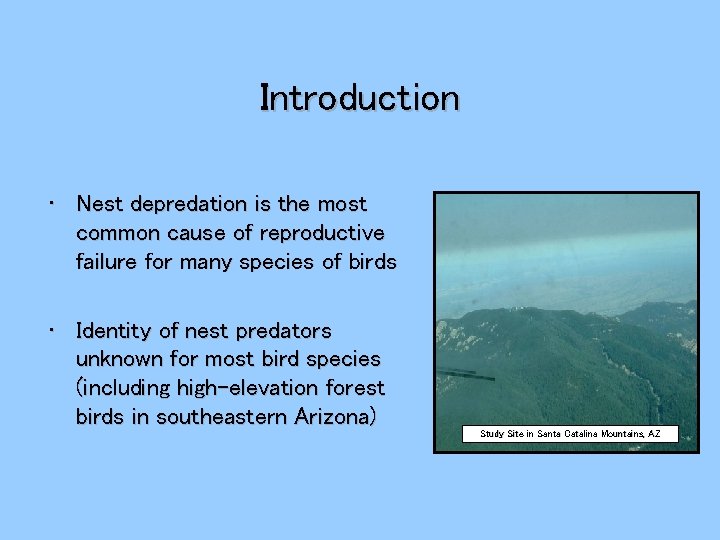
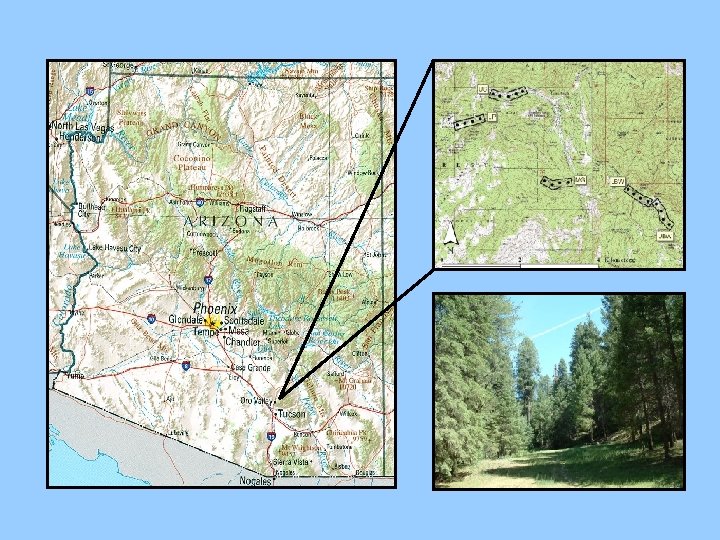
Introduction • Nest depredation is the most common cause of reproductive failure for many species of birds • Identity of nest predators unknown for most bird species (including high-elevation forest birds in southeastern Arizona) Study Site in Santa Catalina Mountains, AZ
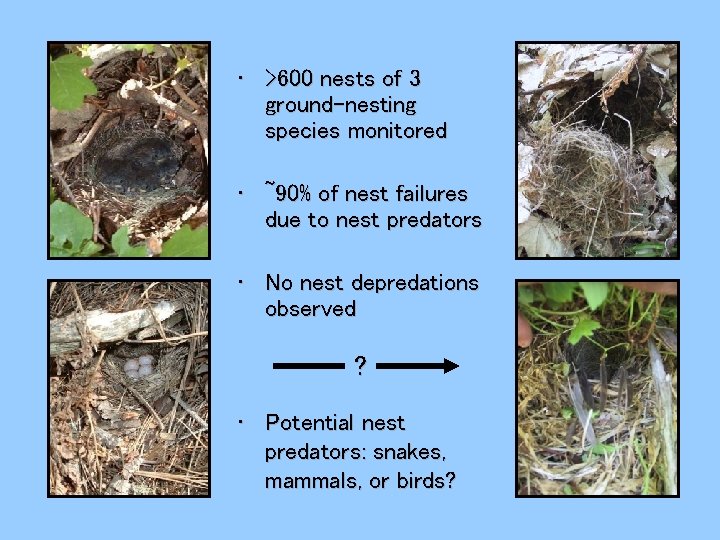
• >600 nests of 3 ground-nesting species monitored • ~90% of nest failures due to nest predators • No nest depredations observed ? • Potential nest predators: snakes, mammals, or birds?
Study Objectives Placed video cameras at 22 nests of ground-nesting bird species to: • Identify common nest predator species • Determine relative frequency with which predator species depredate nests • Assess whether appearance of nest remains can be used to identify common nest predators
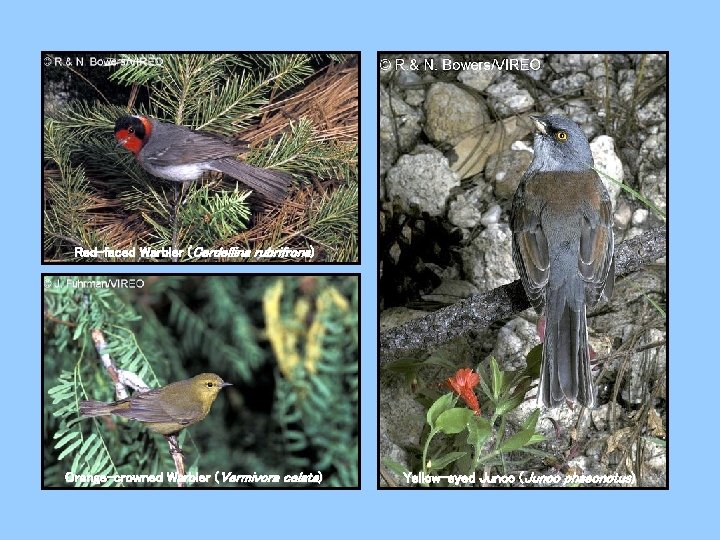
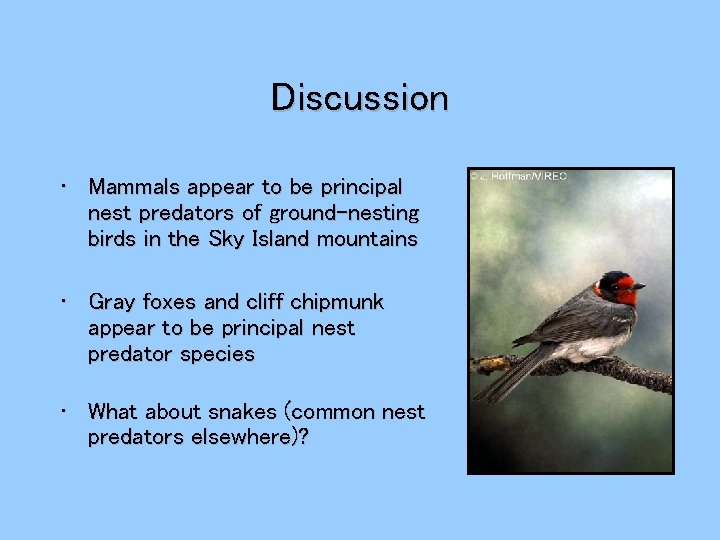
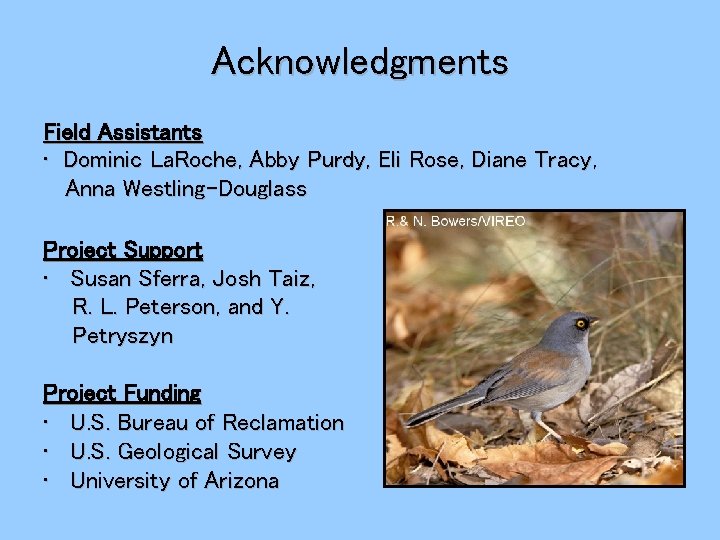
Red-faced Warbler (Cardellina rubrifrons) Orange-crowned Warbler (Vermivora celata) Yellow-eyed Junco (Junco phaeonotus)
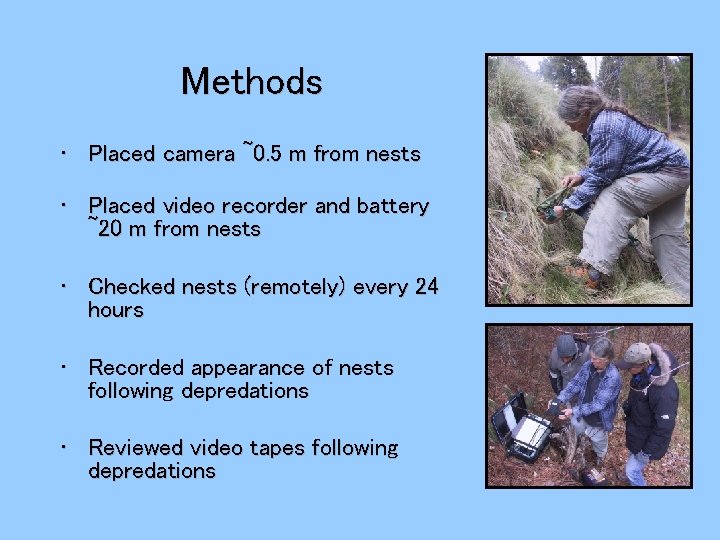
Methods • Placed camera ~0. 5 m from nests • Placed video recorder and battery ~20 m from nests • Checked nests (remotely) every 24 hours • Recorded appearance of nests following depredations • Reviewed video tapes following depredations
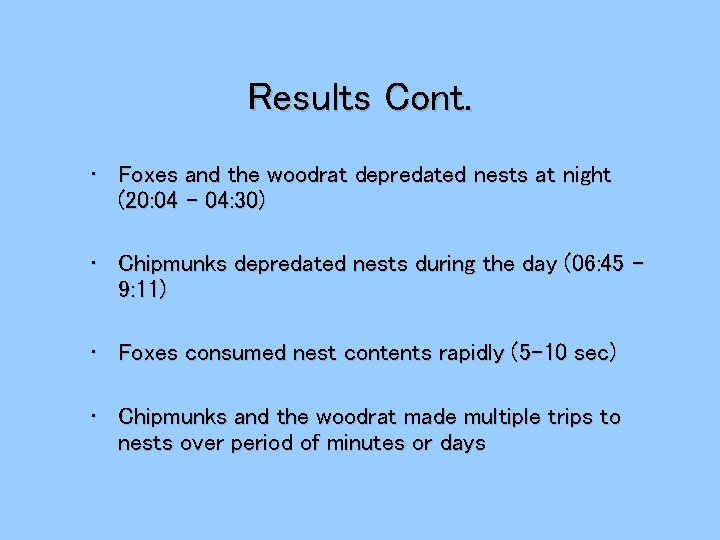
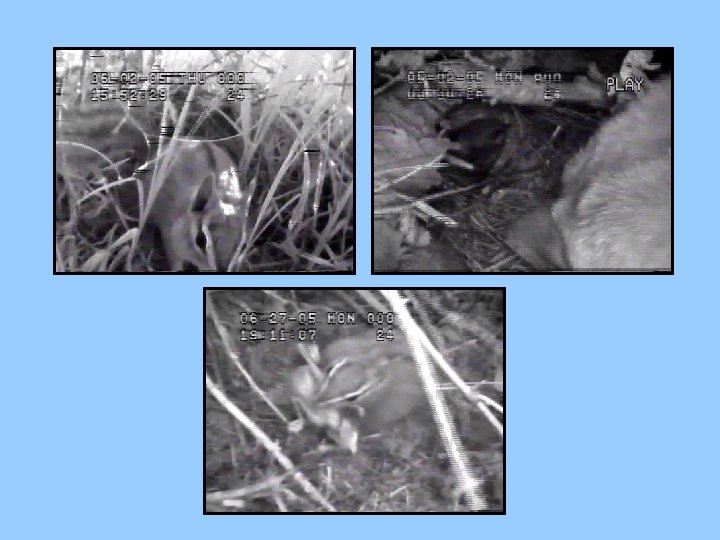
Results • 13 of 22 nests depredated (nesting success = 39% for camera nests, 34% for non-camera nests) • 8 nests depredated by gray foxes (Urocyon cinereoargenteus) • 5 nests depredated by cliff chipmunks (Tamias dorsalis ) • 1 nest depredated by Mexican woodrat (Neotoma mexicana)
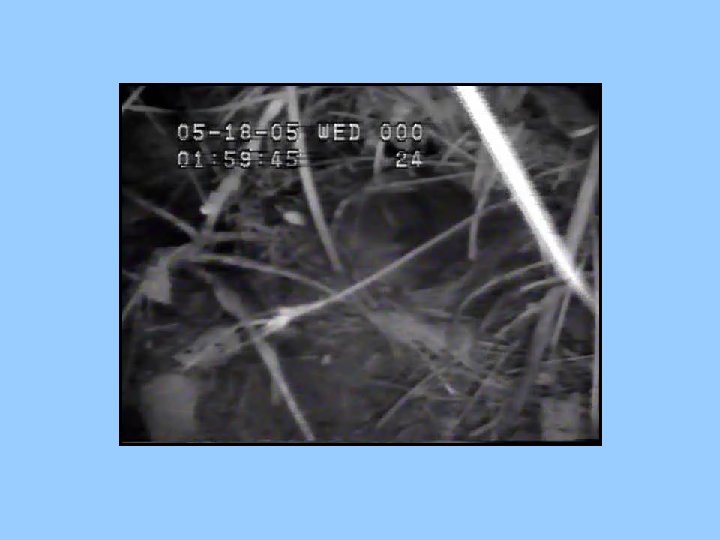
Results Cont. • Foxes and the woodrat depredated nests at night (20: 04 - 04: 30) • Chipmunks depredated nests during the day (06: 45 9: 11) • Foxes consumed nest contents rapidly (5 -10 sec) • Chipmunks and the woodrat made multiple trips to nests over period of minutes or days
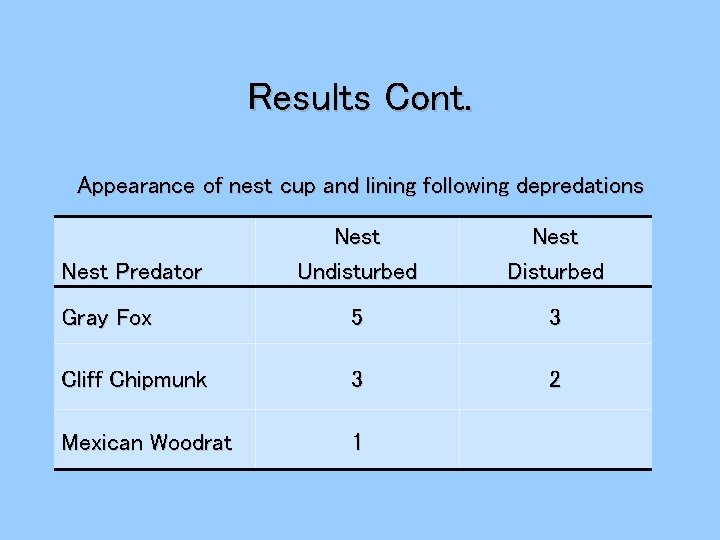
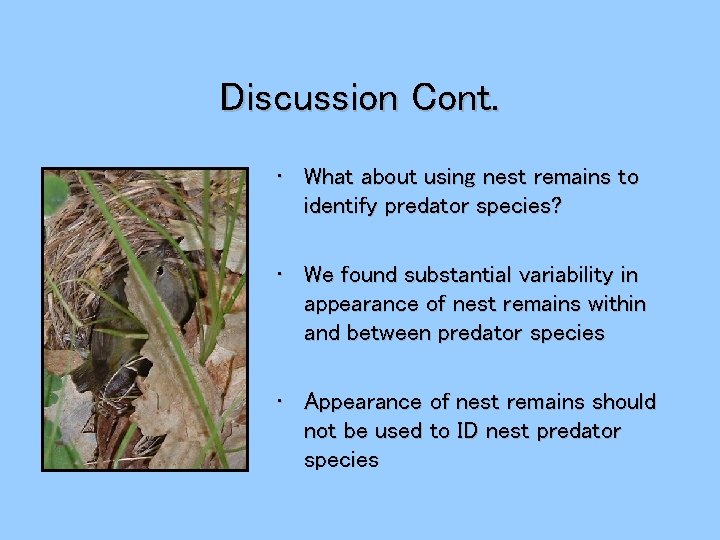
Results Cont. Appearance of nest cup and lining following depredations Nest Undisturbed Nest Disturbed Gray Fox 5 3 Cliff Chipmunk 3 2 Mexican Woodrat 1 Nest Predator
Discussion • Mammals appear to be principal nest predators of ground-nesting birds in the Sky Island mountains • Gray foxes and cliff chipmunk appear to be principal nest predator species • What about snakes (common nest predators elsewhere)?
Discussion Cont. • What about using nest remains to identify predator species? • We found substantial variability in appearance of nest remains within and between predator species • Appearance of nest remains should not be used to ID nest predator species
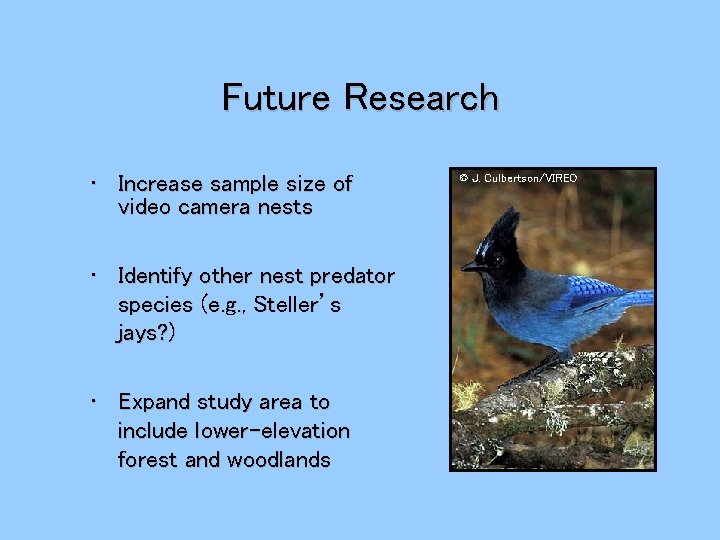
Future Research • Increase sample size of video camera nests • Identify other nest predator species (e. g. , Steller’s jays? ) • Expand study area to include lower-elevation forest and woodlands © J. Culbertson/VIREO
Acknowledgments Field Assistants • Dominic La. Roche, Abby Purdy, Eli Rose, Diane Tracy, Anna Westling-Douglass Project Support • Susan Sferra, Josh Taiz, R. L. Peterson, and Y. Petryszyn Project Funding • U. S. Bureau of Reclamation • U. S. Geological Survey • University of Arizona