
VIDEO 3 CRITICAL THINKING Bennett Goldberg Kathryn Spilios
VIDEO 3: CRITICAL THINKING Bennett Goldberg Kathryn Spilios Boston University
CRITICAL THINKING
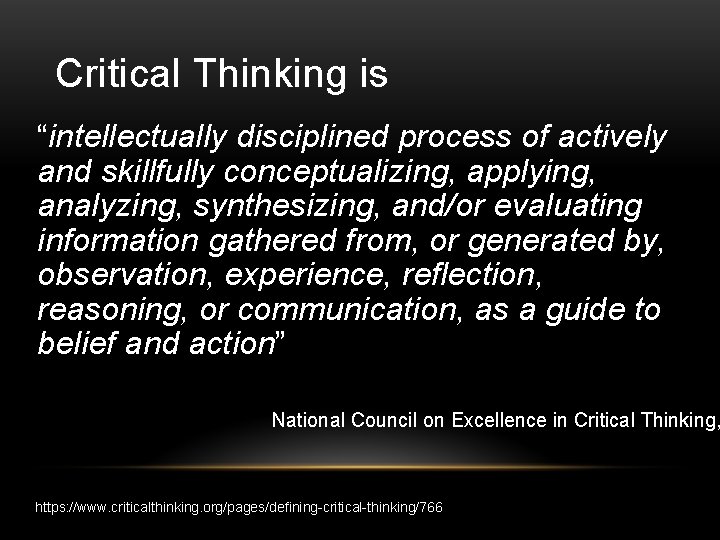
Critical Thinking is “intellectually disciplined process of actively and skillfully conceptualizing, applying, analyzing, synthesizing, and/or evaluating information gathered from, or generated by, observation, experience, reflection, reasoning, or communication, as a guide to belief and action” National Council on Excellence in Critical Thinking, https: //www. criticalthinking. org/pages/defining-critical-thinking/766
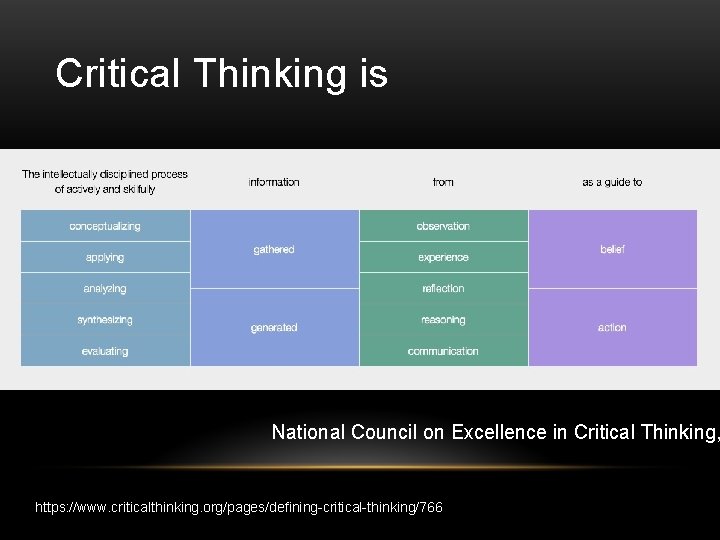
Critical Thinking is National Council on Excellence in Critical Thinking, https: //www. criticalthinking. org/pages/defining-critical-thinking/766

Critical Thinking Entails examination of those structures or elements of thought implicit in all reasoning: • purpose, problem, or question-at-issue • assumptions; concepts; and frame of reference • empirical grounding; • reasoning leading to conclusions; • implications and consequences; • objections from alternative viewpoints; https: //www. criticalthinking. org/pages/defining-critical-thinking/766
Critical Thinking – a Family of Modes of Thought: https: //www. criticalthinking. org/pages/defining-critical-thinking/766
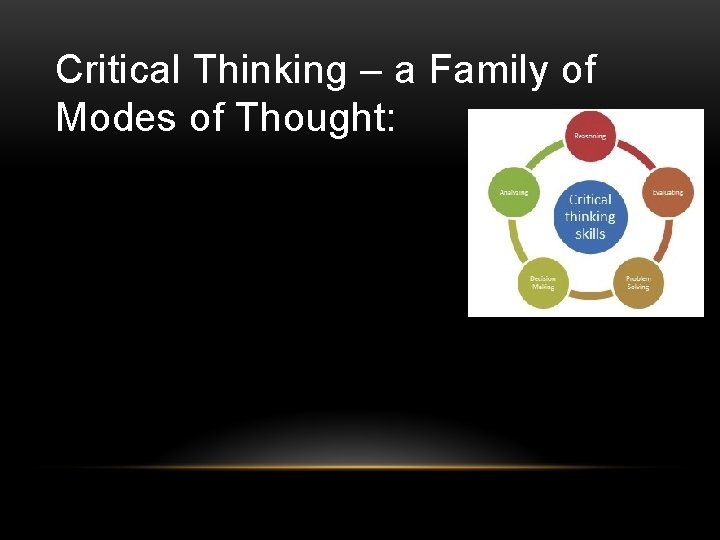
Critical Thinking – a Family of Modes of Thought:
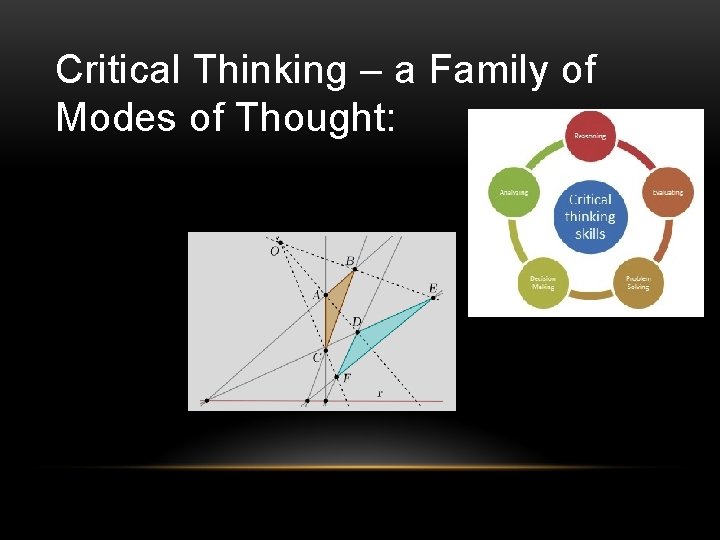
Critical Thinking – a Family of Modes of Thought:
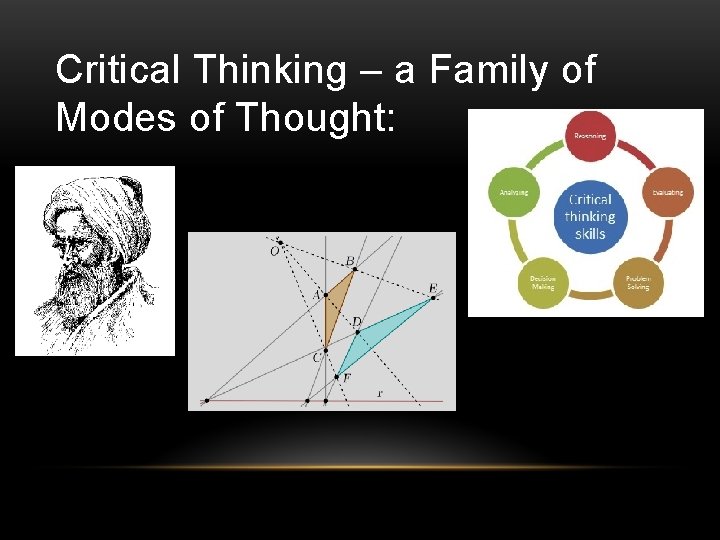
Critical Thinking – a Family of Modes of Thought:
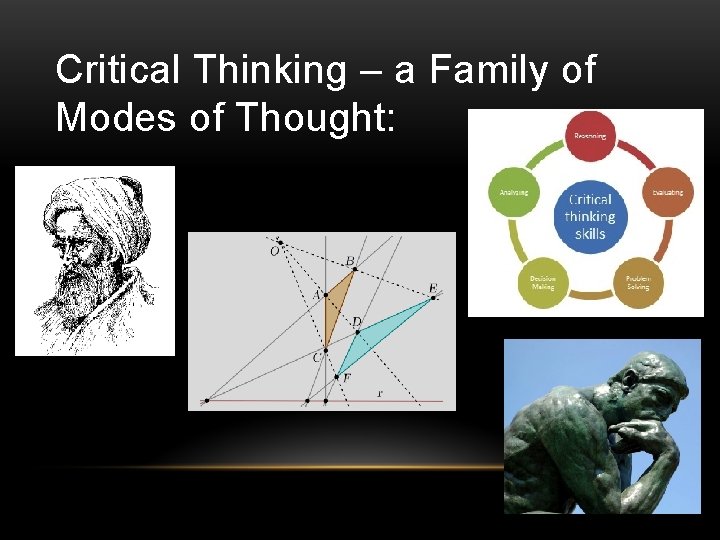
Critical Thinking – a Family of Modes of Thought:
Critical Thinking – two components 1. A set of information and belief generating and processing skills, and 2. The habit, based on intellectual commitment, of using those skills to guide behavior. https: //www. criticalthinking. org/pages/defining-critical-thinking/766
Critical Thinking – two components 1. A set of information and belief generating and processing skills, and 2. The habit, based on intellectual commitment, of using those skills to guide behavior. Critical thinking is not: • the mere acquisition and retention of information alone, • the mere possession of a set of skills, and • the mere use of those skills without acceptance of their results. https: //www. criticalthinking. org/pages/defining-critical-thinking/766
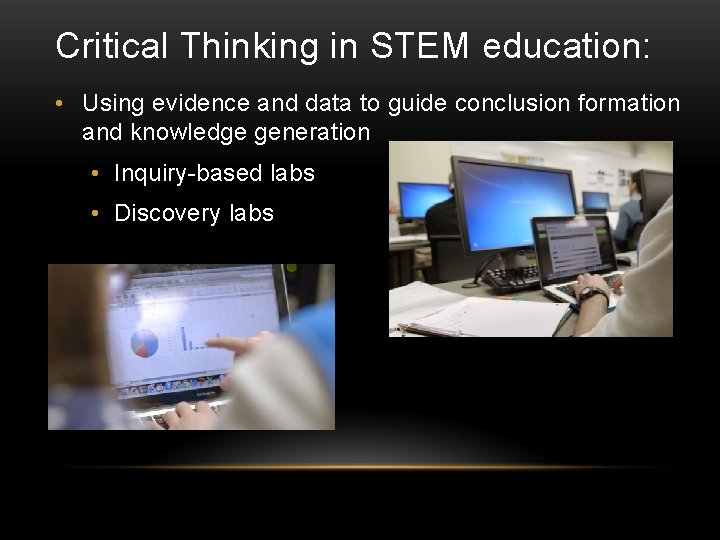
Critical Thinking in STEM education: • Using evidence and data to guide conclusion formation and knowledge generation • Inquiry-based labs • Discovery labs
Critical Thinking in STEM education: • Using data to guide conclusion formation and knowledge generation • Inquiry-based labs • Discovery labs • The cycle of scientific inquiry • Project-based learning
- Slides: 14