
Victorian Working Childrenclick the star If you were

- Slides: 11
Victorian Working Childrenclick the star
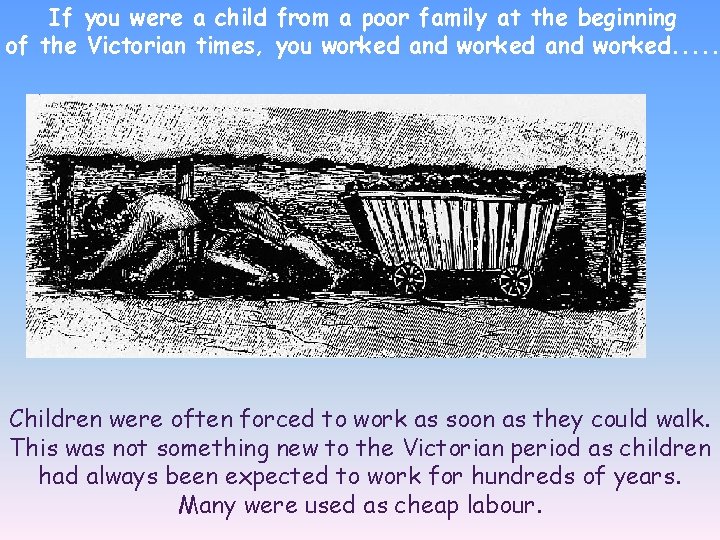
If you were a child from a poor family at the beginning of the Victorian times, you worked and worked. . . Children were often forced to work as soon as they could walk. This was not something new to the Victorian period as children had always been expected to work for hundreds of years. Many were used as cheap labour.
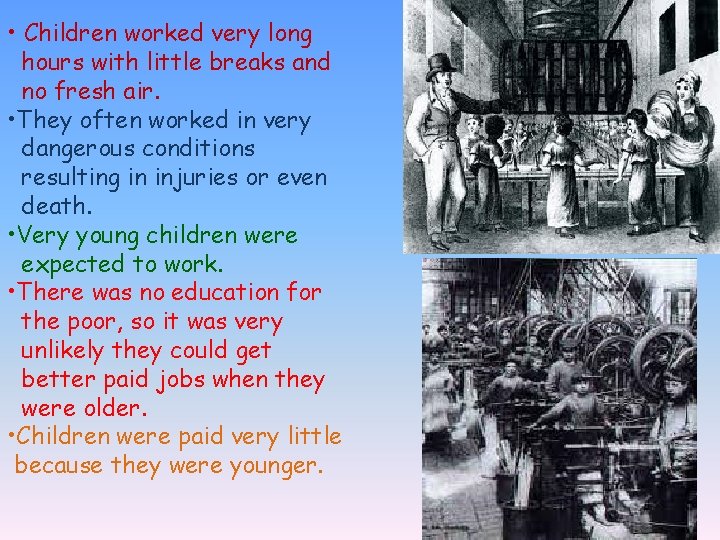
• Children worked very long hours with little breaks and no fresh air. • They often worked in very dangerous conditions resulting in injuries or even death. • Very young children were expected to work. • There was no education for the poor, so it was very unlikely they could get better paid jobs when they were older. • Children were paid very little because they were younger.
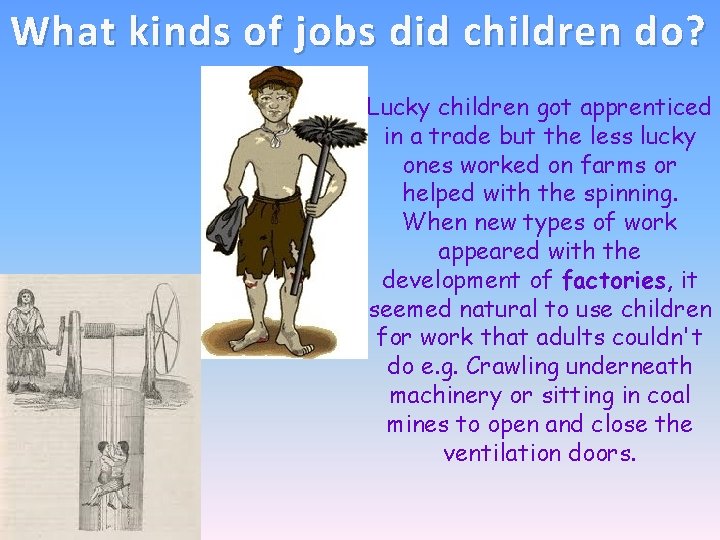
What kinds of jobs did children do? Lucky children got apprenticed in a trade but the less lucky ones worked on farms or helped with the spinning. When new types of work appeared with the development of factories, it seemed natural to use children for work that adults couldn't do e. g. Crawling underneath machinery or sitting in coal mines to open and close the ventilation doors.
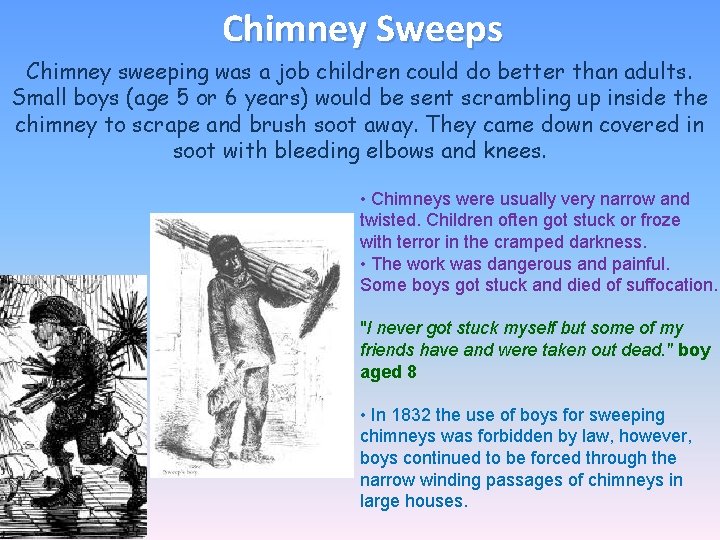
Chimney Sweeps Chimney sweeping was a job children could do better than adults. Small boys (age 5 or 6 years) would be sent scrambling up inside the chimney to scrape and brush soot away. They came down covered in soot with bleeding elbows and knees. • Chimneys were usually very narrow and twisted. Children often got stuck or froze with terror in the cramped darkness. • The work was dangerous and painful. Some boys got stuck and died of suffocation. "I never got stuck myself but some of my friends have and were taken out dead. " boy aged 8 • In 1832 the use of boys for sweeping chimneys was forbidden by law, however, boys continued to be forced through the narrow winding passages of chimneys in large houses.
Factory Workers Children worked long hours and sometimes had to carry out some dangerous jobs working in factories "I start work promptly at 5 am in the morning and work all day till 9 pm at night. That’s 16 hours! We are not allowed to talk, sit or look out of the window whilst we work. The only day off from work I get is on Sundays, when we have to go to church. " Girl aged 9 1844 – Factory Act – Stopped children between 8 and 12 from working more than 6 and a half hours a day. 1878 – Factory and Workshop Act – Children under 10 were banned from working in factories. In the mills children were made to clean machines while they kept running and there were many accidents. Many children lost fingers in the machinery and some were killed.
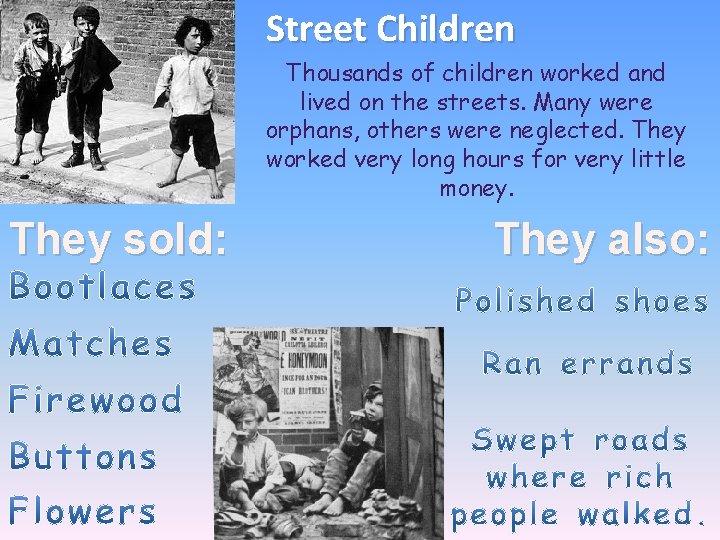
Street Children Thousands of children worked and lived on the streets. Many were orphans, others were neglected. They worked very long hours for very little money. They sold: They also:
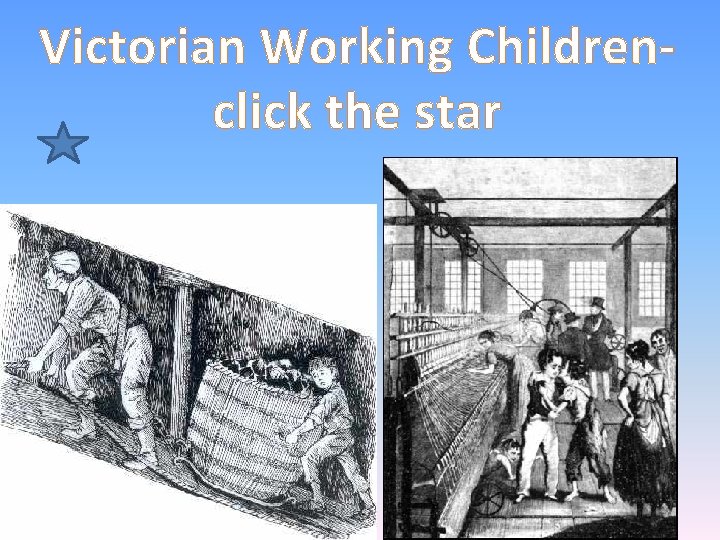
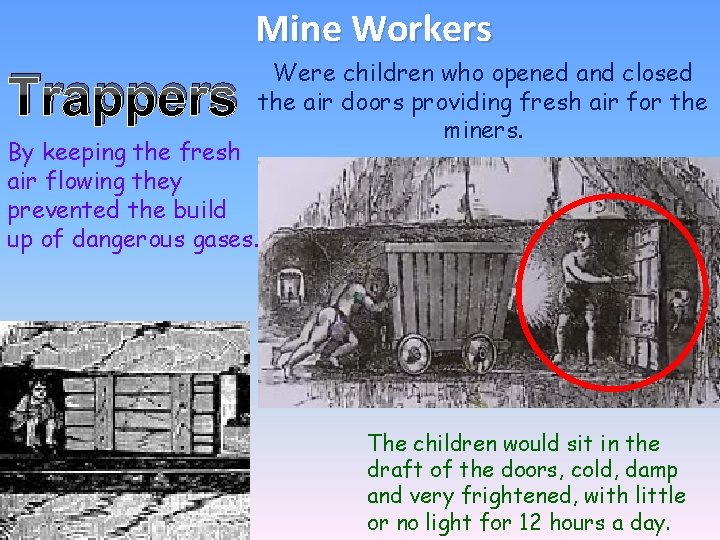
Mine Workers Trappers Were children who opened and closed the air doors providing fresh air for the miners. By keeping the fresh air flowing they prevented the build up of dangerous gases. The children would sit in the draft of the doors, cold, damp and very frightened, with little or no light for 12 hours a day.
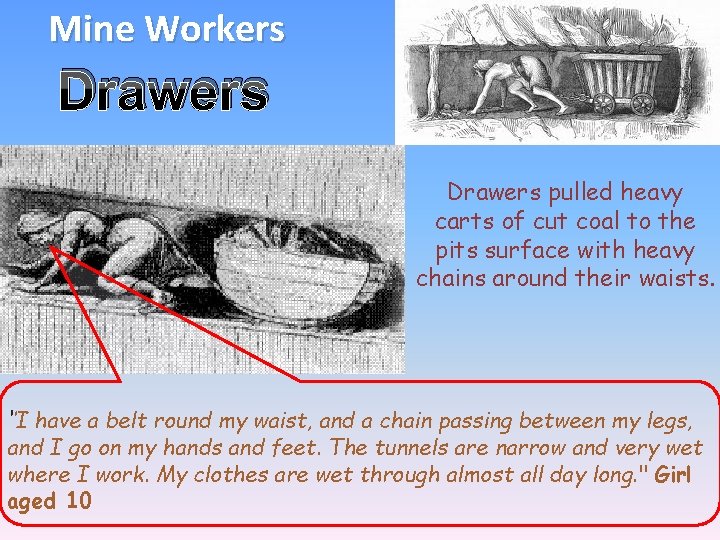
Mine Workers Drawers pulled heavy carts of cut coal to the pits surface with heavy chains around their waists. ‘’I have a belt round my waist, and a chain passing between my legs, and I go on my hands and feet. The tunnels are narrow and very wet where I work. My clothes are wet through almost all day long. " Girl aged 10
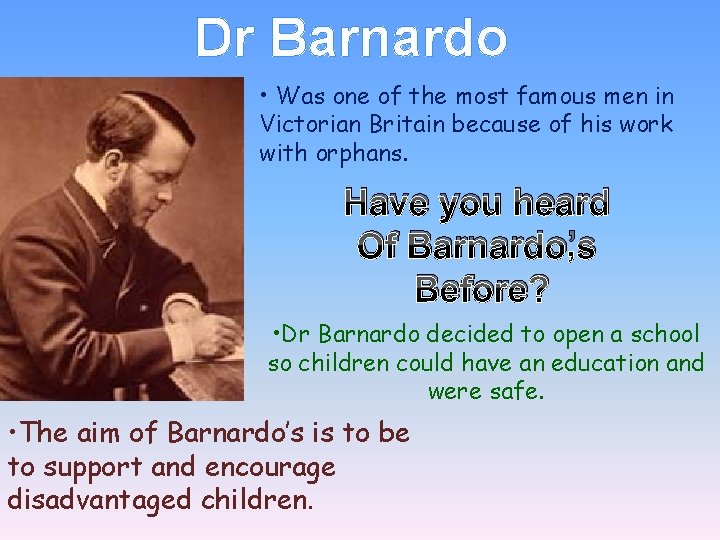
Dr Barnardo • Was one of the most famous men in Victorian Britain because of his work with orphans. Have you heard Of Barnardo’s Before? • Dr Barnardo decided to open a school so children could have an education and were safe. • The aim of Barnardo’s is to be to support and encourage disadvantaged children.
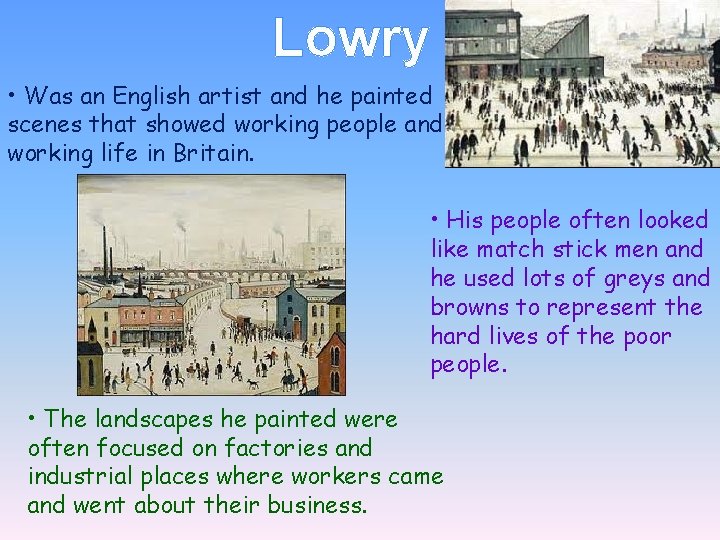
Lowry • Was an English artist and he painted scenes that showed working people and working life in Britain. • His people often looked like match stick men and he used lots of greys and browns to represent the hard lives of the poor people. • The landscapes he painted were often focused on factories and industrial places where workers came and went about their business.