
victorian transmission system access arrangement revision proposal Public
victorian transmission system access arrangement revision proposal Public forum 1 February 2017 Alex Curran Regulatory Manager
overview revision proposal key themes components of revenue building blocks demand, cost allocation and pricing bill impacts consumer engagement 2

revision proposal key themes 16/09/2021 3
revision proposal key themes • Responsiveness to customer demand − • • Investments for the future − Future growth through Western Outer Ring Main easement purchase − Safety and integrity spending Possible changes to the policy environment − • Significant new gas flows north to NSW and Queensland New market structures under policy consideration Consistency with current arrangements − Consistency in tariff structure and how costs are allocated to tariffs 4
components of revenue building blocks 16/09/2021
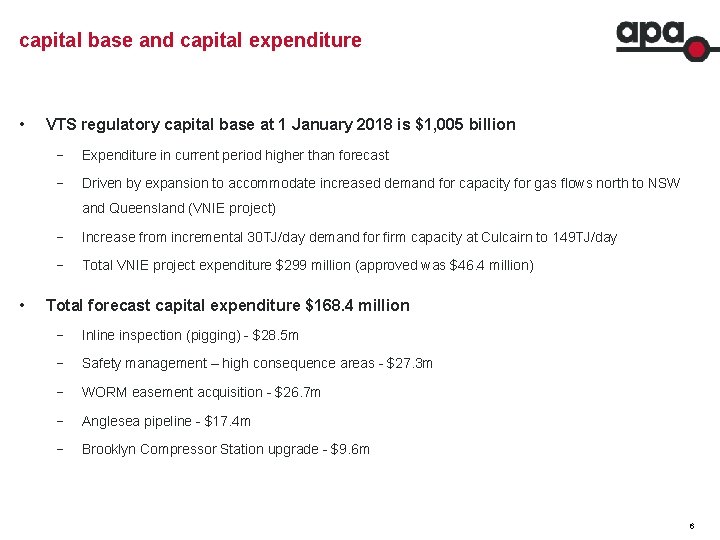
capital base and capital expenditure • VTS regulatory capital base at 1 January 2018 is $1, 005 billion − Expenditure in current period higher than forecast − Driven by expansion to accommodate increased demand for capacity for gas flows north to NSW and Queensland (VNIE project) • − Increase from incremental 30 TJ/day demand for firm capacity at Culcairn to 149 TJ/day − Total VNIE project expenditure $299 million (approved was $46. 4 million) Total forecast capital expenditure $168. 4 million − Inline inspection (pigging) - $28. 5 m − Safety management – high consequence areas - $27. 3 m − WORM easement acquisition - $26. 7 m − Anglesea pipeline - $17. 4 m − Brooklyn Compressor Station upgrade - $9. 6 m 6
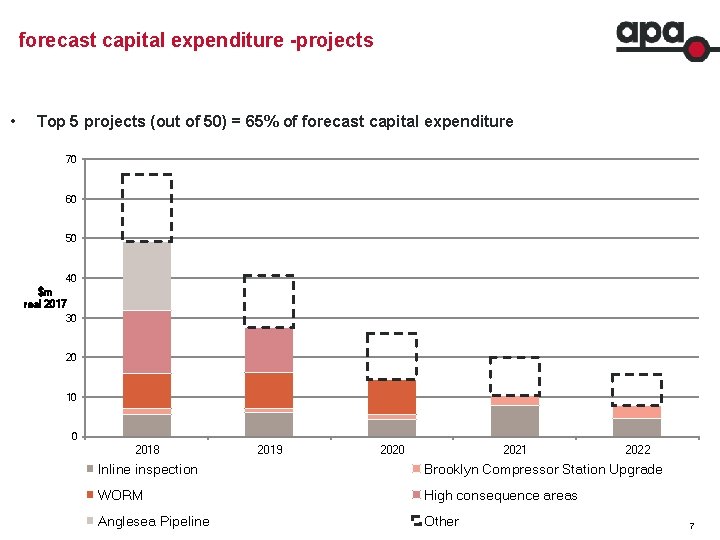
forecast capital expenditure -projects • Top 5 projects (out of 50) = 65% of forecast capital expenditure 70 60 50 40 $m real 2017 30 20 10 0 2018 2019 2020 2021 2022 Inline inspection Brooklyn Compressor Station Upgrade WORM High consequence areas Anglesea Pipeline Other 7
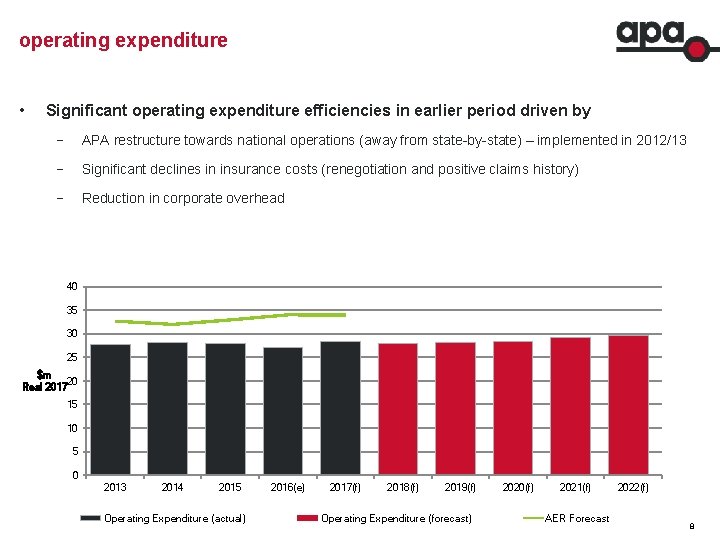
operating expenditure • Significant operating expenditure efficiencies in earlier period driven by − APA restructure towards national operations (away from state-by-state) – implemented in 2012/13 − Significant declines in insurance costs (renegotiation and positive claims history) − Reduction in corporate overhead 40 35 30 25 $m 20 Real 2017 15 10 5 0 2013 2014 2015 Operating Expenditure (actual) 2016(e) 2017(f) 2018(f) 2019(f) Operating Expenditure (forecast) 2020(f) 2021(f) AER Forecast 2022(f) 8
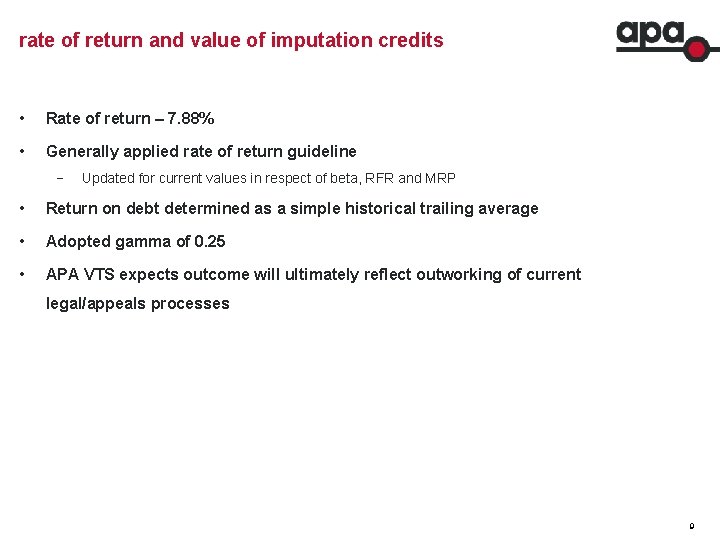
rate of return and value of imputation credits • Rate of return – 7. 88% • Generally applied rate of return guideline − Updated for current values in respect of beta, RFR and MRP • Return on debt determined as a simple historical trailing average • Adopted gamma of 0. 25 • APA VTS expects outcome will ultimately reflect outworking of current legal/appeals processes 9
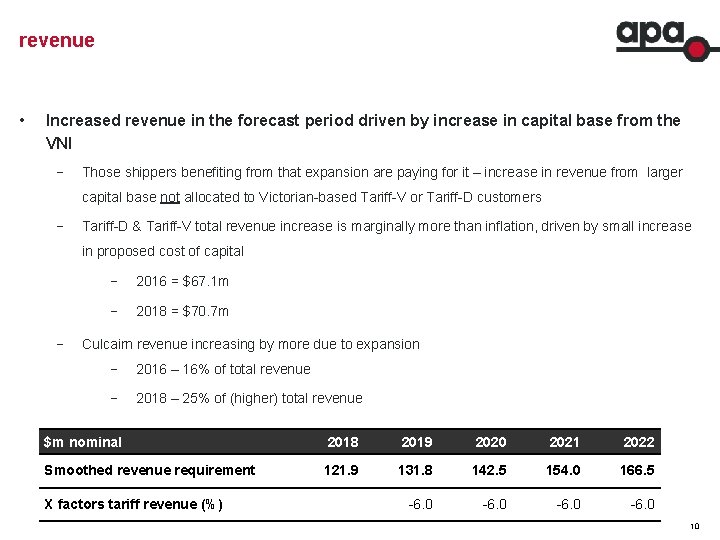
revenue • Increased revenue in the forecast period driven by increase in capital base from the VNI − Those shippers benefiting from that expansion are paying for it – increase in revenue from larger capital base not allocated to Victorian-based Tariff-V or Tariff-D customers − Tariff-D & Tariff-V total revenue increase is marginally more than inflation, driven by small increase in proposed cost of capital − − 2016 = $67. 1 m − 2018 = $70. 7 m Culcairn revenue increasing by more due to expansion − 2016 – 16% of total revenue − 2018 – 25% of (higher) total revenue $m nominal 2018 2019 2020 2021 2022 Smoothed revenue requirement 121. 9 131. 8 142. 5 154. 0 166. 5 -6. 0 X factors tariff revenue (%) 10

demand, cost allocation and pricing 16/09/2021 11
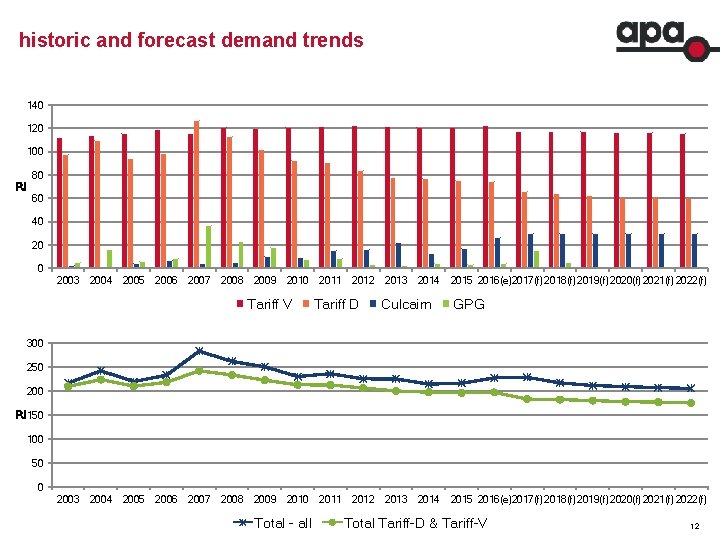
historic and forecast demand trends 140 120 100 80 PJ 60 40 2003 2004 2005 2006 2007 2008 2009 2010 Tariff V 2011 2012 Tariff D 2013 2014 Culcairn 2015 2016(e)2017(f) 2018(f) 2019(f) 2020(f) 2021(f) 2022(f) GPG 300 250 200 PJ 150 100 50 0 2003 2004 2005 2006 2007 2008 2009 2010 Total - all 2011 2012 2013 2014 2015 2016(e)2017(f) 2018(f) 2019(f) 2020(f) 2021(f) 2022(f) Total Tariff-D & Tariff-V 12
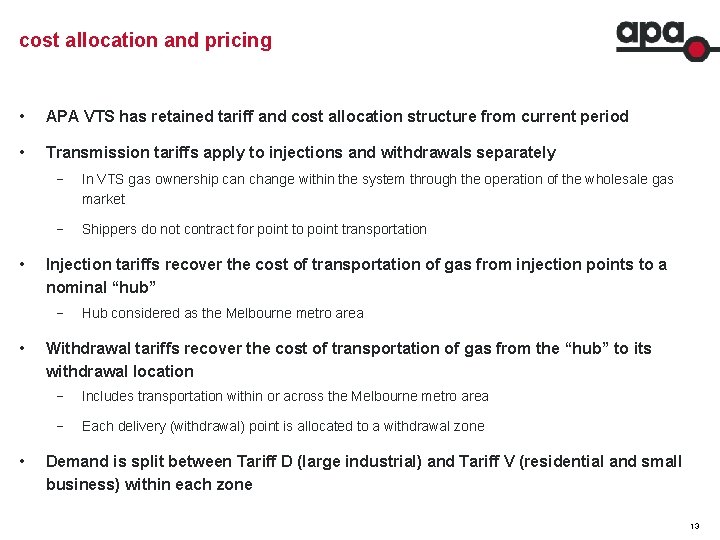
cost allocation and pricing • APA VTS has retained tariff and cost allocation structure from current period • Transmission tariffs apply to injections and withdrawals separately • − In VTS gas ownership can change within the system through the operation of the wholesale gas market − Shippers do not contract for point to point transportation Injection tariffs recover the cost of transportation of gas from injection points to a nominal “hub” − • • Hub considered as the Melbourne metro area Withdrawal tariffs recover the cost of transportation of gas from the “hub” to its withdrawal location − Includes transportation within or across the Melbourne metro area − Each delivery (withdrawal) point is allocated to a withdrawal zone Demand is split between Tariff D (large industrial) and Tariff V (residential and small business) within each zone 13
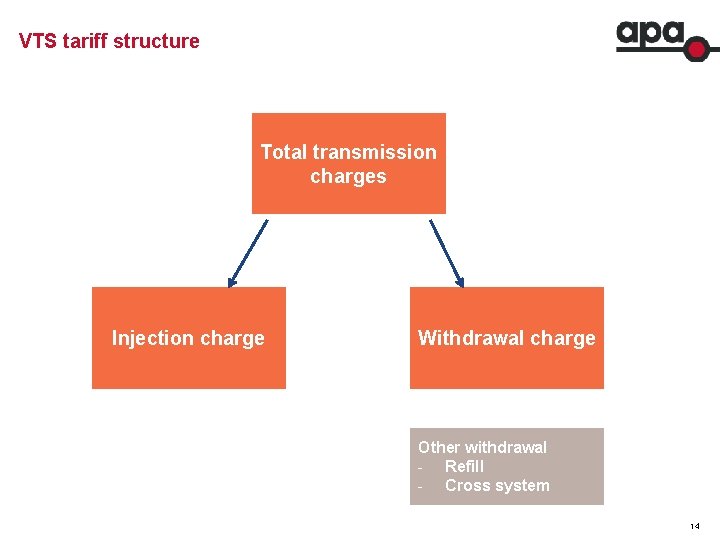
VTS tariff structure Total transmission charges Injection charge Withdrawal charge Other withdrawal - Refill - Cross system 14
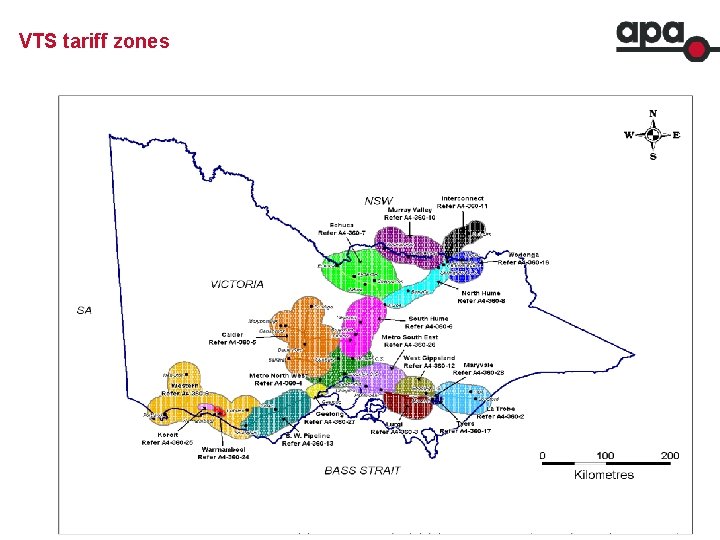
VTS tariff zones 15
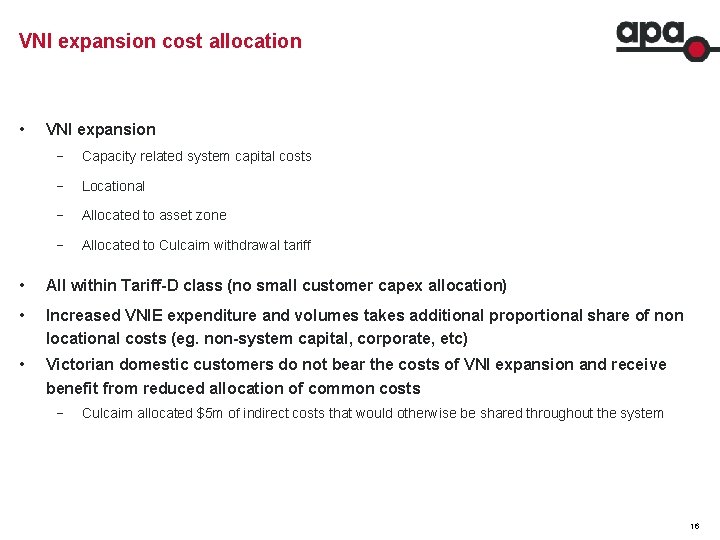
VNI expansion cost allocation • VNI expansion − Capacity related system capital costs − Locational − Allocated to asset zone − Allocated to Culcairn withdrawal tariff • All within Tariff-D class (no small customer capex allocation) • Increased VNIE expenditure and volumes takes additional proportional share of non locational costs (eg. non-system capital, corporate, etc) • Victorian domestic customers do not bear the costs of VNI expansion and receive benefit from reduced allocation of common costs − Culcairn allocated $5 m of indirect costs that would otherwise be shared throughout the system 16
tariff/bill impacts 16/09/2021
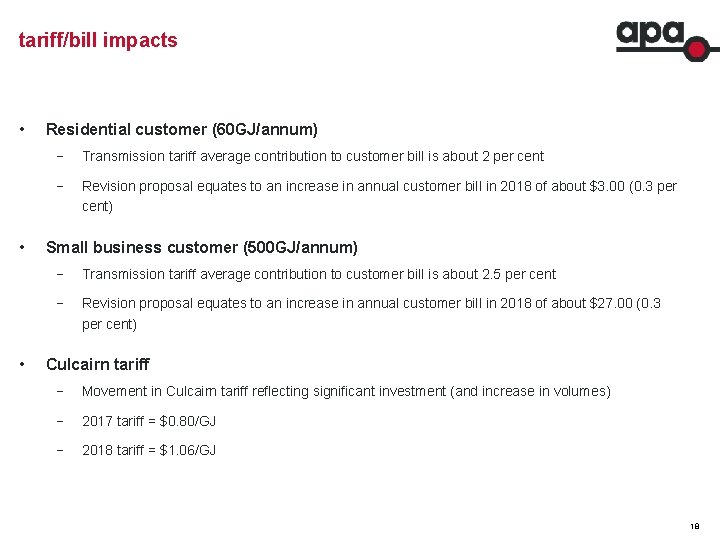
tariff/bill impacts • • • Residential customer (60 GJ/annum) − Transmission tariff average contribution to customer bill is about 2 per cent − Revision proposal equates to an increase in annual customer bill in 2018 of about $3. 00 (0. 3 per cent) Small business customer (500 GJ/annum) − Transmission tariff average contribution to customer bill is about 2. 5 per cent − Revision proposal equates to an increase in annual customer bill in 2018 of about $27. 00 (0. 3 per cent) Culcairn tariff − Movement in Culcairn tariff reflecting significant investment (and increase in volumes) − 2017 tariff = $0. 80/GJ − 2018 tariff = $1. 06/GJ 18
consumer engagement 16/09/2021 19
transmission customers & relationships • Transmission businesses have direct and ongoing relationships with users of the system − • • Areas of ongoing engagement − Direct account management – relationship management and understanding − Capacity development through open seasons − New capacity requirements are discussed in detail and (for contract-carriage pipelines) secured by contract − Day-to-day operation of the system through nominations, scheduling, planned maintenance, operational requirements − Information sharing and engagement − Development of new services Small end users − • Direct transmission customers are retailers (small and large), producers, large industrial customers, gas-powered generators Scope for development through education and information sharing Other stakeholders – landholders 20
For further information contact: Alex Curran Regulatory Manager 02 9275 0020 alexandra. curran@apa. com. au Or visit the APA website at: www. apa. com. au 21
- Slides: 21