
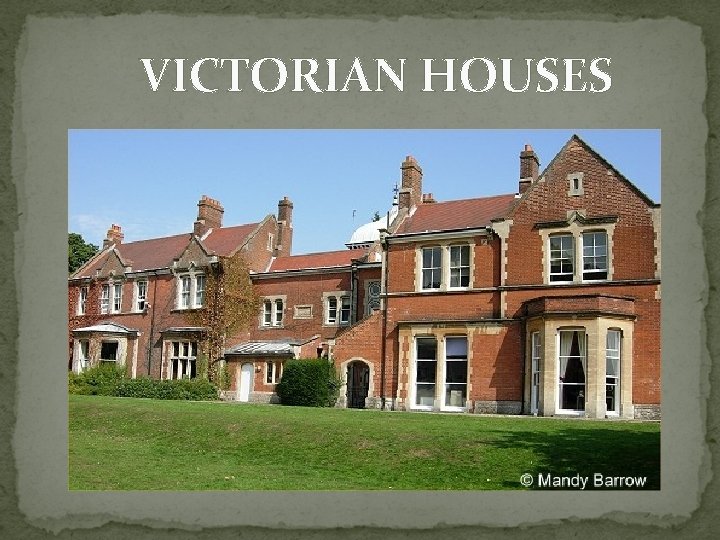
VICTORIAN HOUSES Changes Many social and technological changes
- Slides: 25
VICTORIAN HOUSES
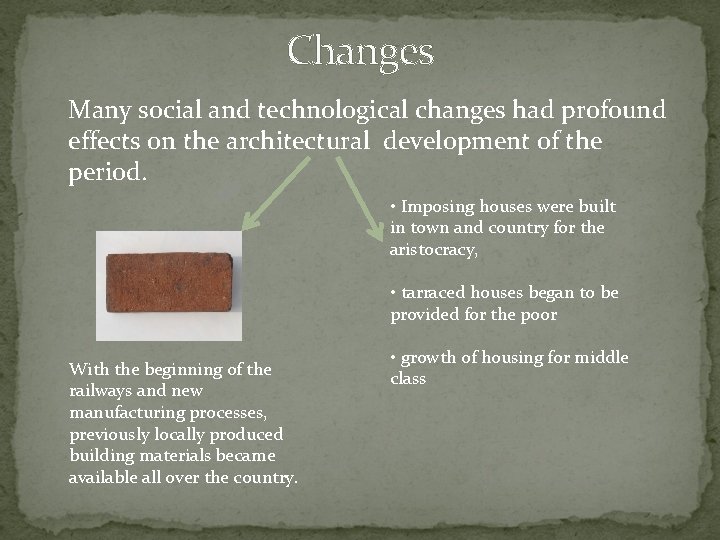
Changes Many social and technological changes had profound effects on the architectural development of the period. • Imposing houses were built in town and country for the aristocracy, • tarraced houses began to be provided for the poor With the beginning of the railways and new manufacturing processes, previously locally produced building materials became available all over the country. • growth of housing for middle class
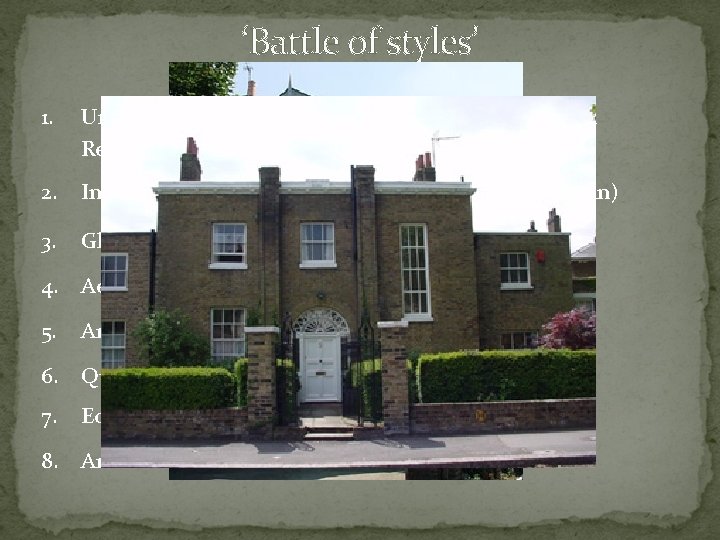
‘Battle of styles’ 1. Untill the 1850 s, the classical style of the Georgian and Regency periods continued to be fashionable 2. Inspiration came frm Italy and Italianet houses (Roman) 3. Ghotic Revival (mostly 1855 -1875) 4. Aesthetic style 5. Arts and Crafts Movement (1867 – 1900 s) 6. Queen Anne Revival style (1860 -1900) 7. Eclectic style (1860 -1890) 8. Art Nouveau (late 1880 s- early 1900 s)
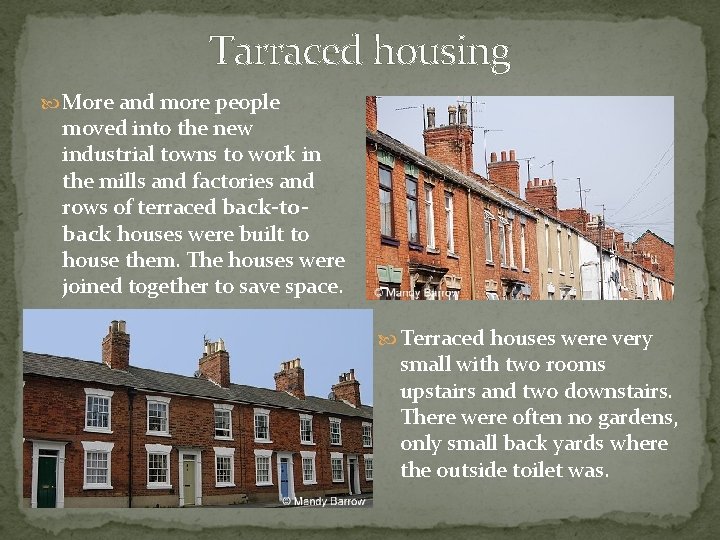
Tarraced housing More and more people moved into the new industrial towns to work in the mills and factories and rows of terraced back-toback houses were built to house them. The houses were joined together to save space. Terraced houses were very small with two rooms upstairs and two downstairs. There were often no gardens, only small back yards where the outside toilet was.
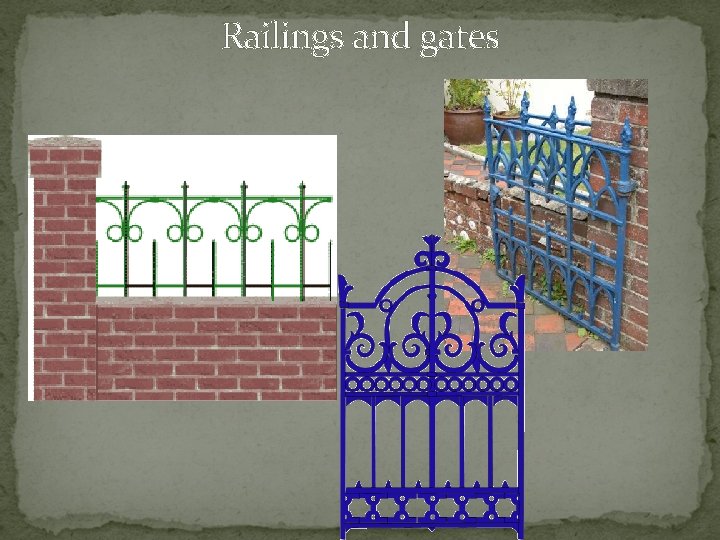
Railings and gates
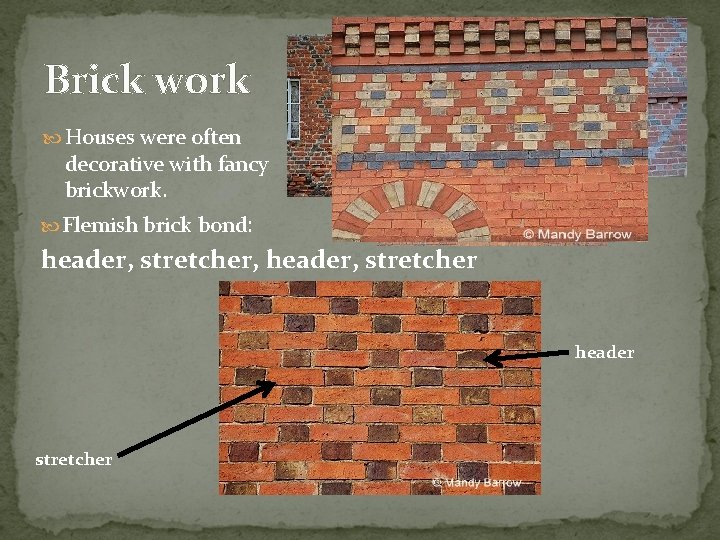
Brick work Houses were often decorative with fancy brickwork. Flemish brick bond: header, stretcher, header, stretcher header stretcher
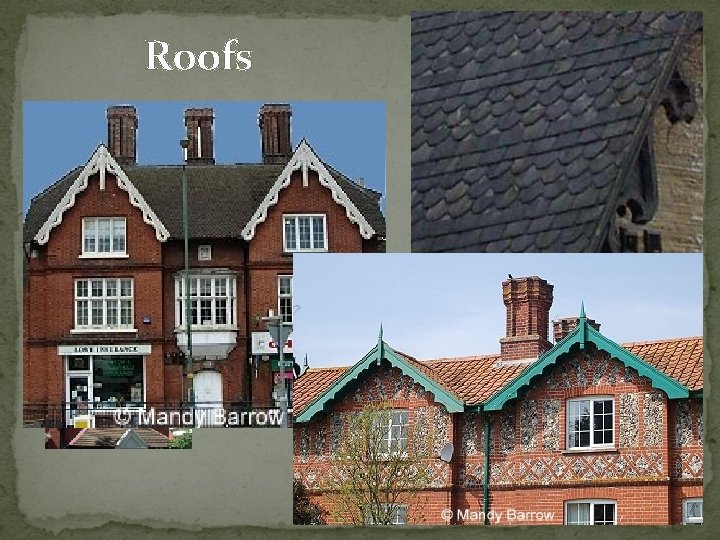
Roofs
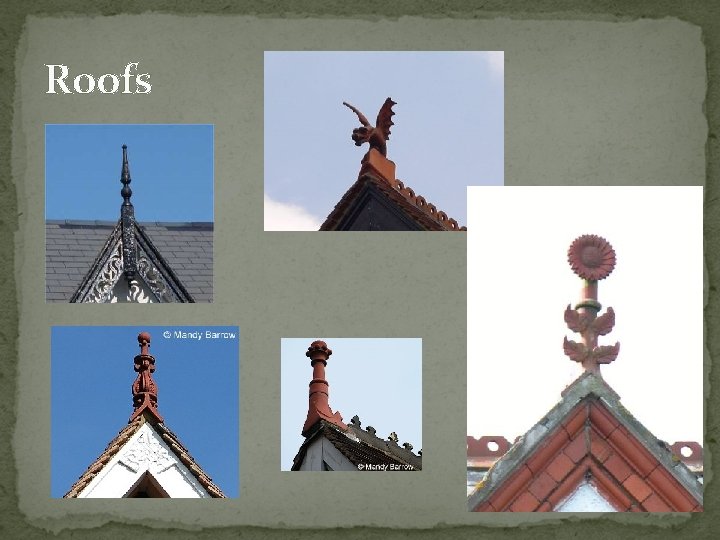
Roofs
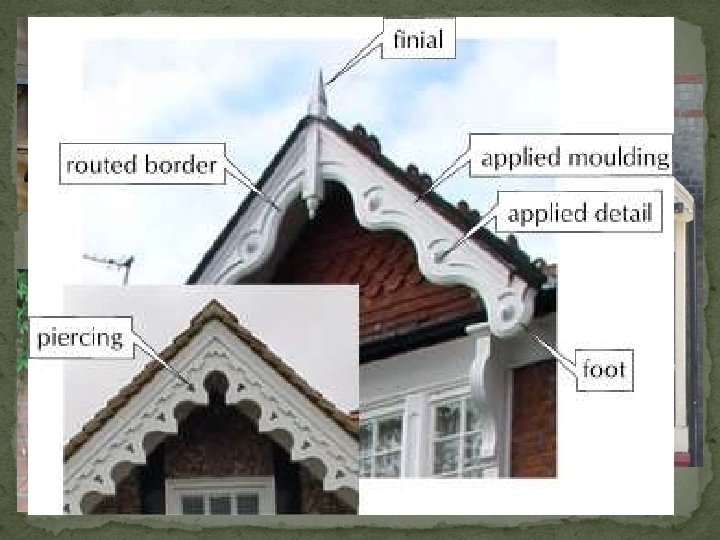
Porches and gables
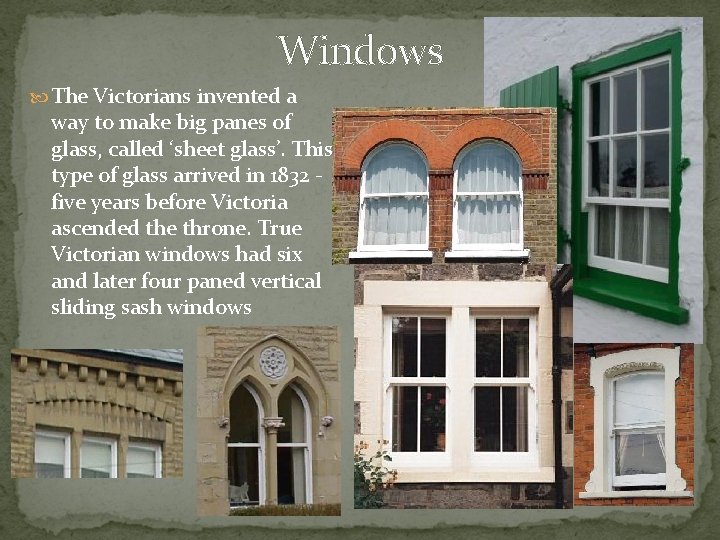
Windows The Victorians invented a way to make big panes of glass, called ‘sheet glass’. This type of glass arrived in 1832 five years before Victoria ascended the throne. True Victorian windows had six and later four paned vertical sliding sash windows
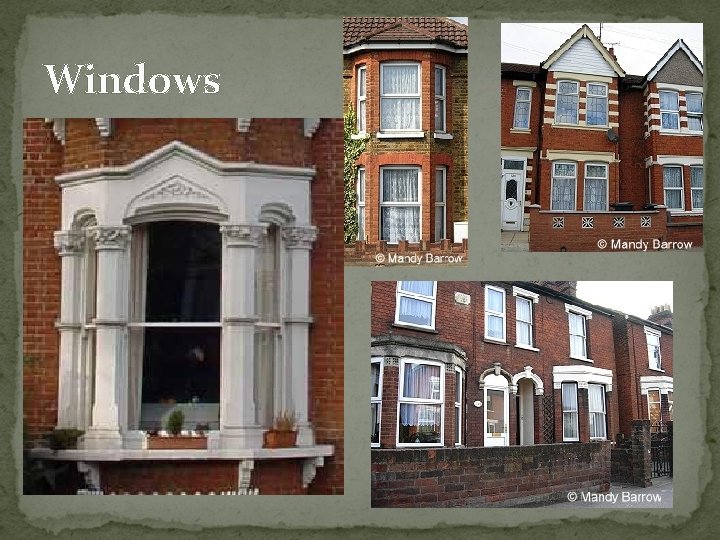
Windows Bay Windows (windows that projects, normally with flat front and slant sides) were very fashionable in Victorian times. Typical Victorian bay windows are three sided. The ground floor bay window often had its own slate roof, or it might continue into a first-floor bay, again topped with an individual roof.
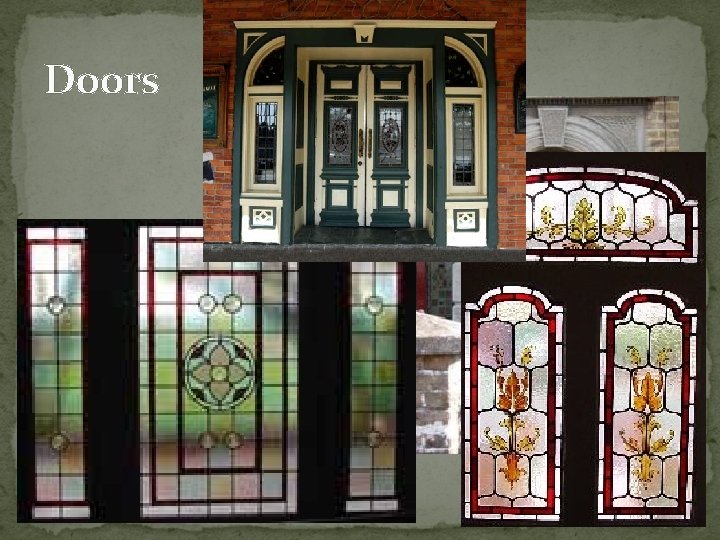
Doors
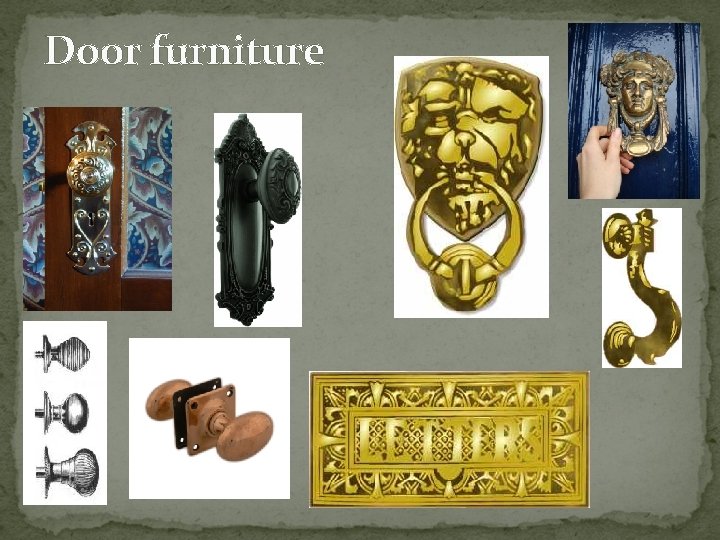
Door furniture
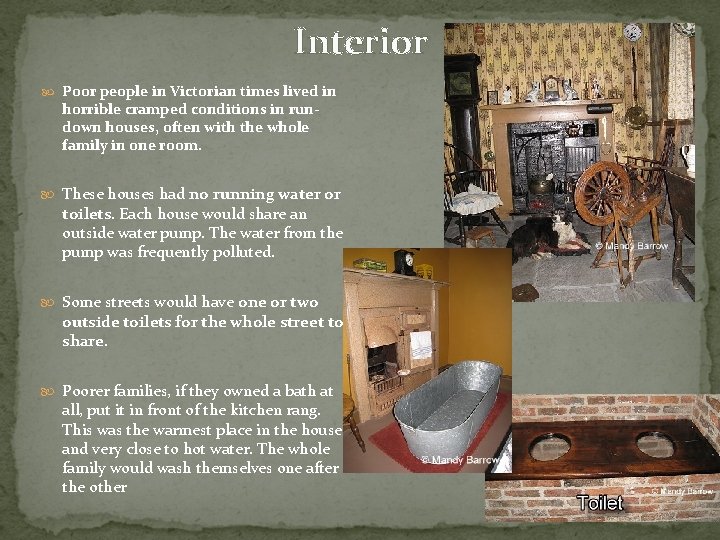
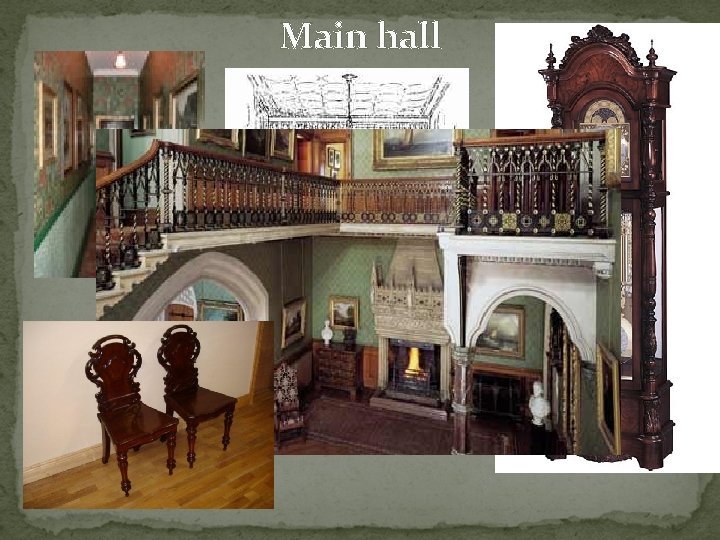
Interior Poor people in Victorian times lived in horrible cramped conditions in rundown houses, often with the whole family in one room. These houses had no running water or toilets. Each house would share an outside water pump. The water from the pump was frequently polluted. Some streets would have one or two outside toilets for the whole street to share. Poorer families, if they owned a bath at all, put it in front of the kitchen rang. This was the warmest place in the house and very close to hot water. The whole family would wash themselves one after the other
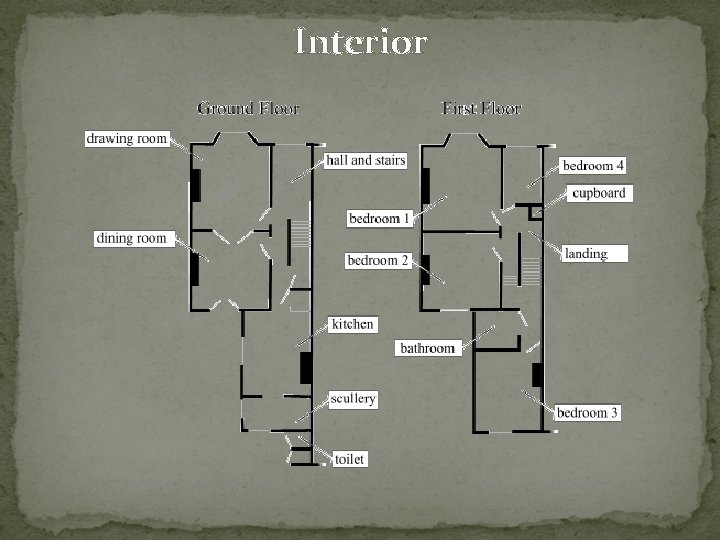
Interior
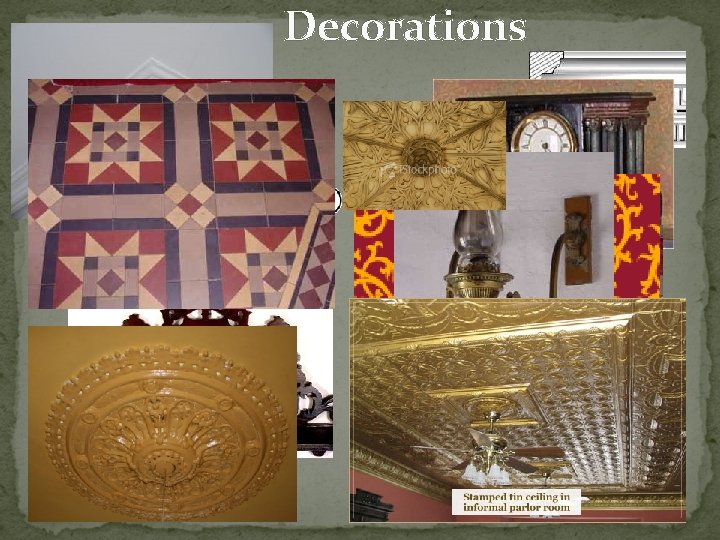
Decorations
Main hall
Drawing room
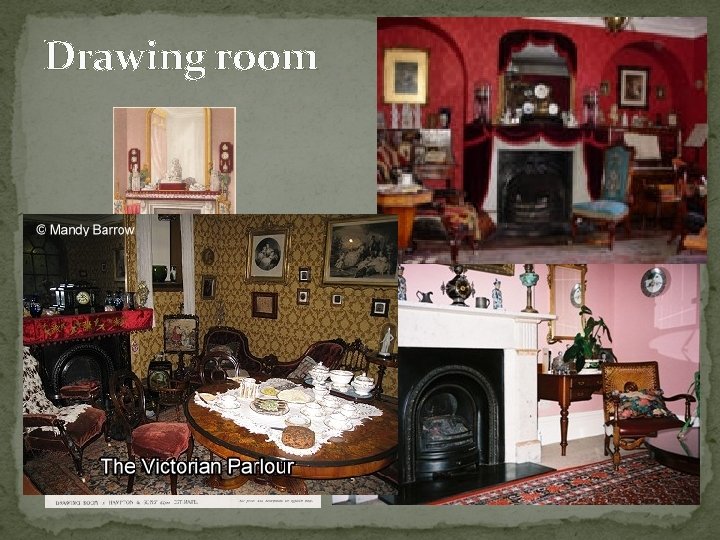
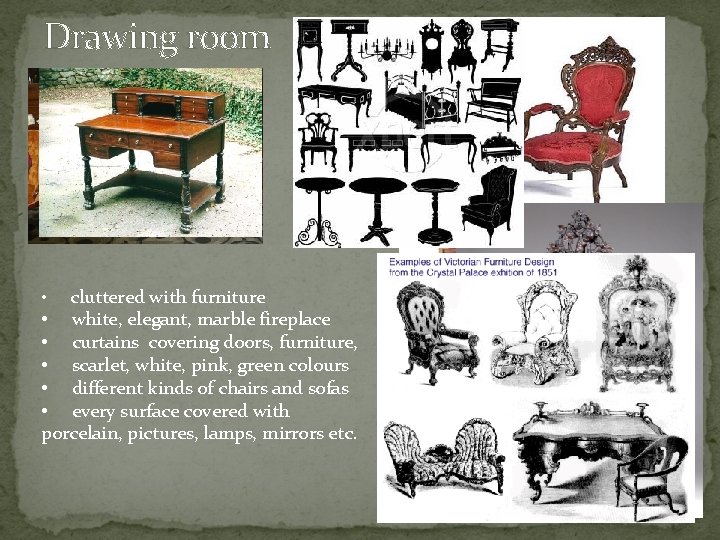
Drawing room cluttered with furniture • white, elegant, marble fireplace • curtains covering doors, furniture, • scarlet, white, pink, green colours • different kinds of chairs and sofas • every surface covered with porcelain, pictures, lamps, mirrors etc. •
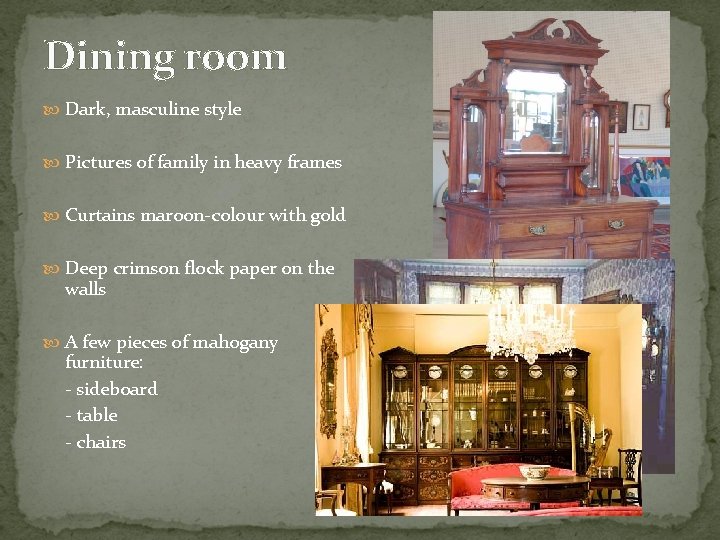
Dining room Dark, masculine style Pictures of family in heavy frames Curtains maroon-colour with gold Deep crimson flock paper on the walls A few pieces of mahogany furniture: - sideboard - table - chairs
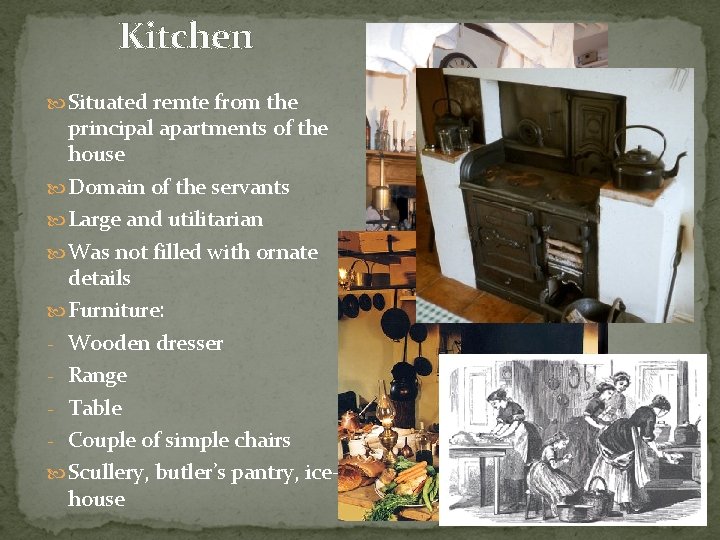
Kitchen Situated remte from the principal apartments of the house Domain of the servants Large and utilitarian Was not filled with ornate details Furniture: - Wooden dresser - Range - Table - Couple of simple chairs Scullery, butler’s pantry, icehouse
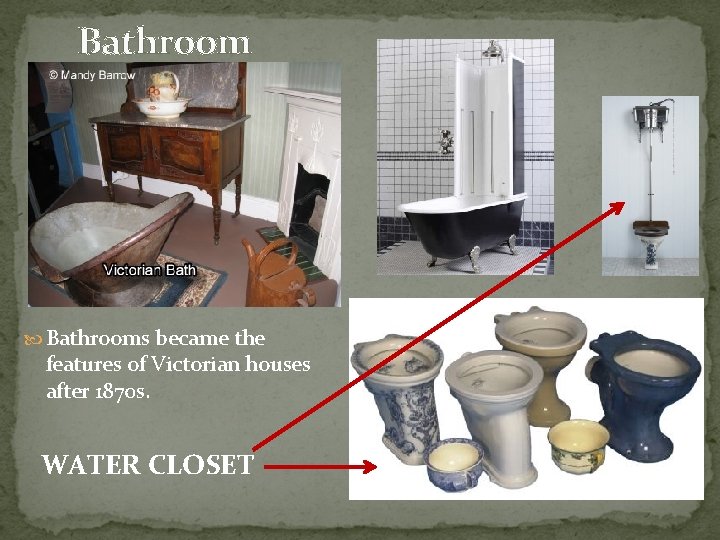
Bathroom Bathrooms became the features of Victorian houses after 1870 s. WATER CLOSET
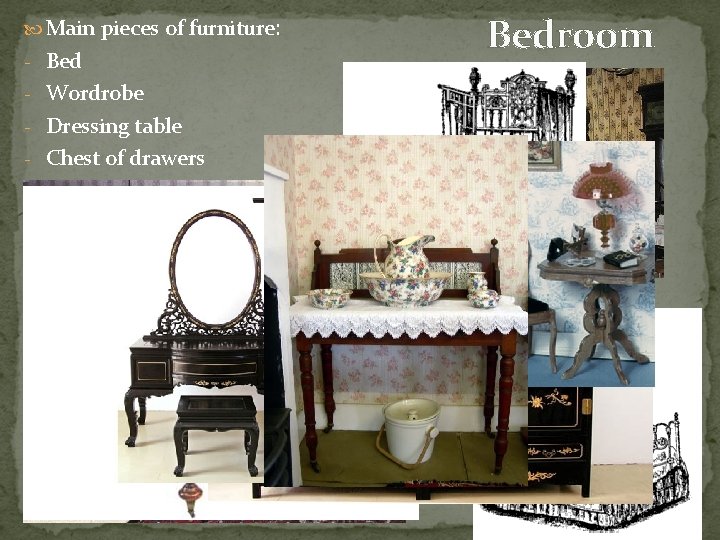
Main pieces of furniture: - Bed - Wordrobe - Dressing table - Chest of drawers Bedroom
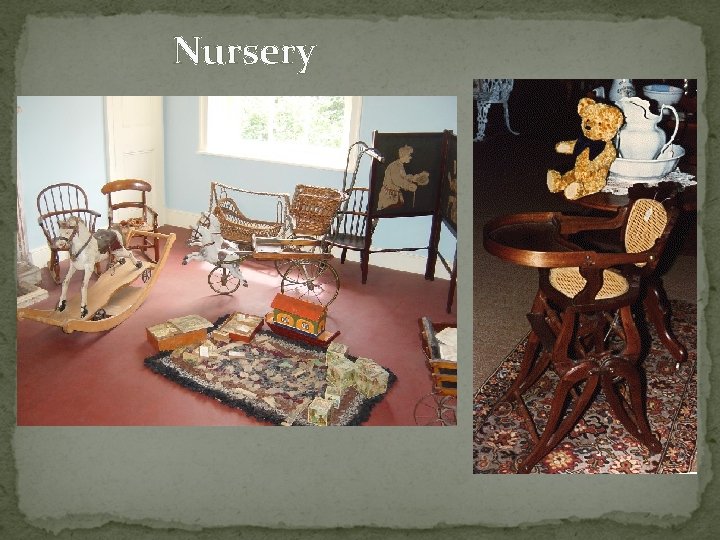
Nursery
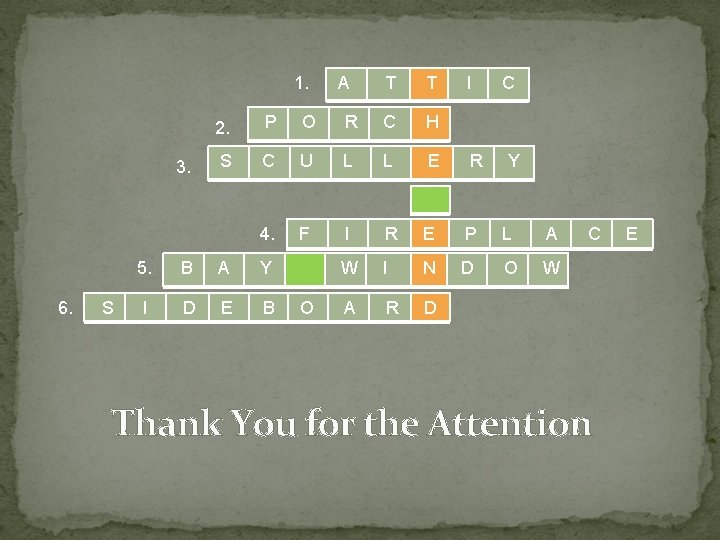
1. 3. 6. S A T T I C 2. P O R C H S C U L L E R 4. F I R E P L A W I N D O W A R D 5. B A Y I D E B O Y C Thank You for the Attention E