
VICTORIAN CULTURE QUEEN VICTORIA Victorian Age 1837 1901


- Slides: 13
VICTORIAN CULTURE
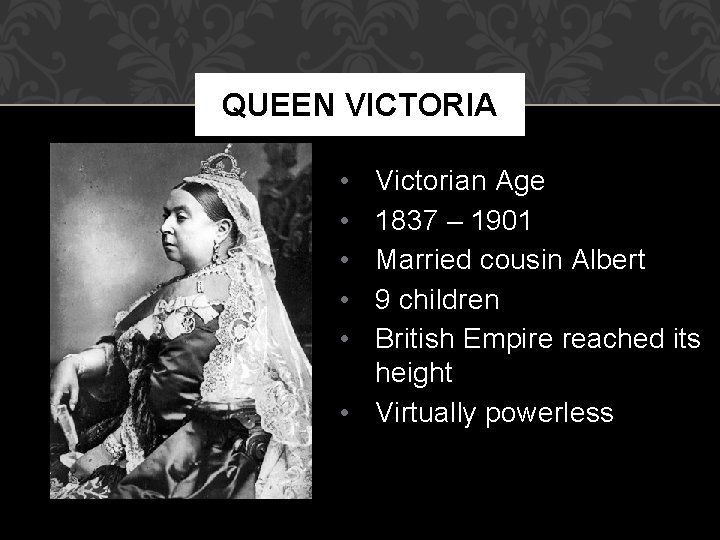
QUEEN VICTORIA • • • Victorian Age 1837 – 1901 Married cousin Albert 9 children British Empire reached its height • Virtually powerless
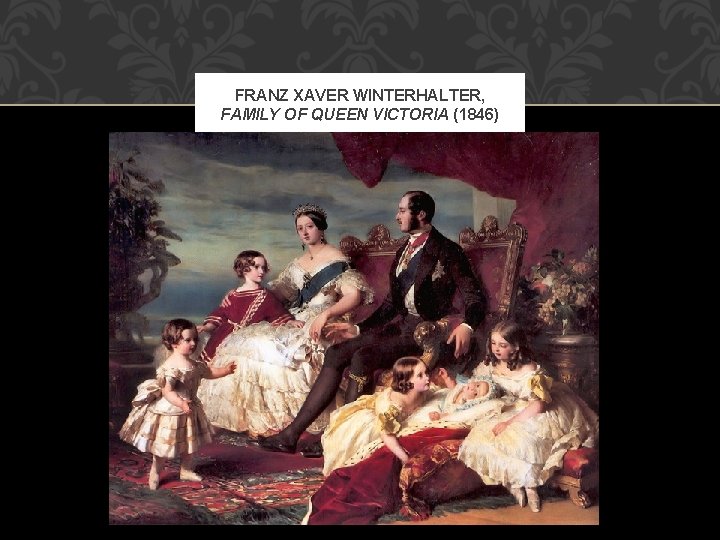
FRANZ XAVER WINTERHALTER, FAMILY OF QUEEN VICTORIA (1846)
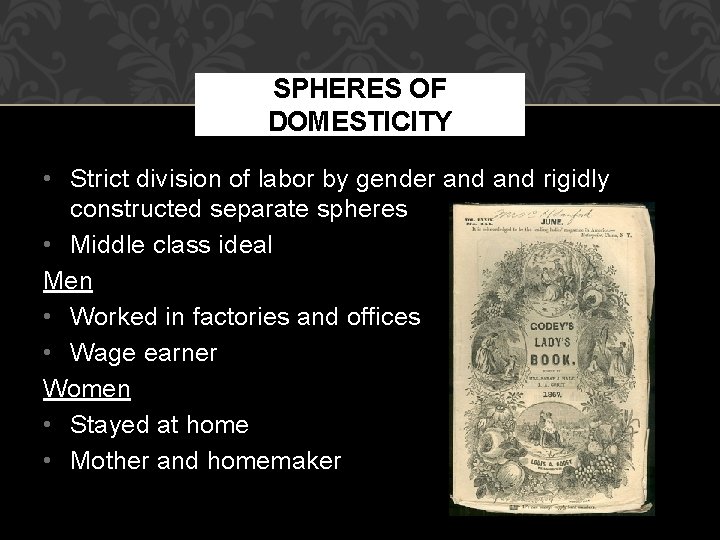
SPHERES OF DOMESTICITY • Strict division of labor by gender and rigidly constructed separate spheres • Middle class ideal Men • Worked in factories and offices • Wage earner Women • Stayed at home • Mother and homemaker
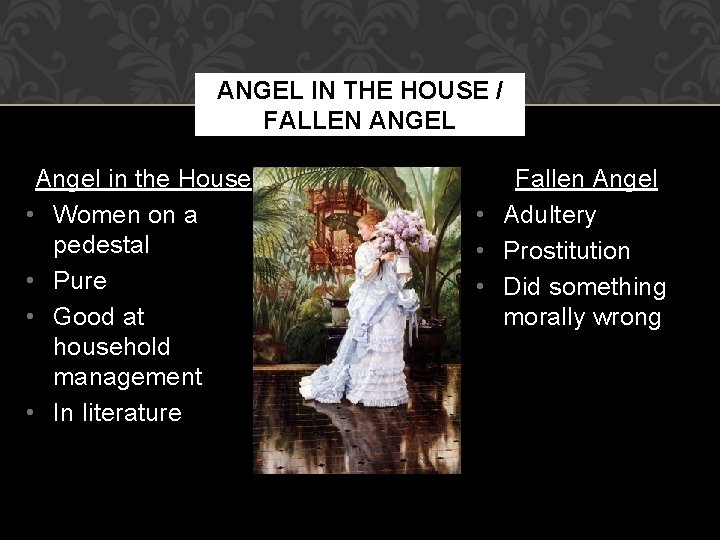
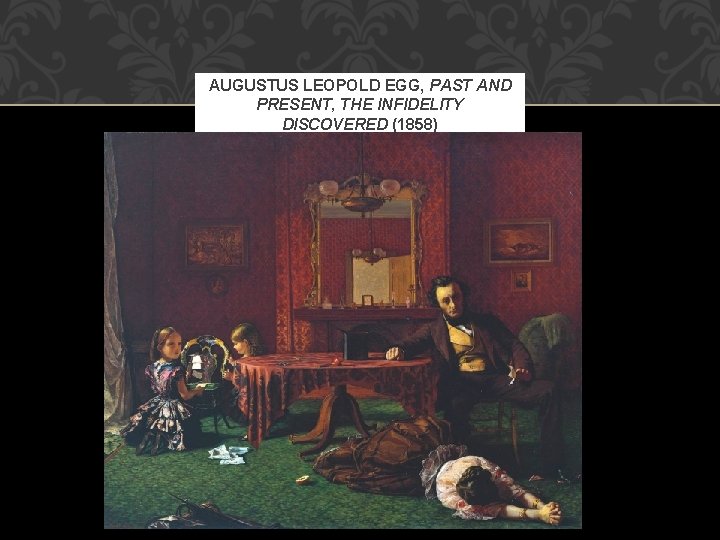
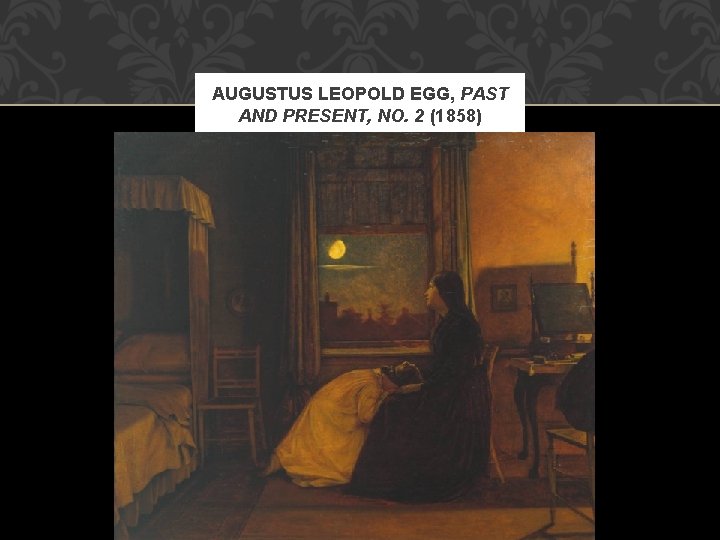
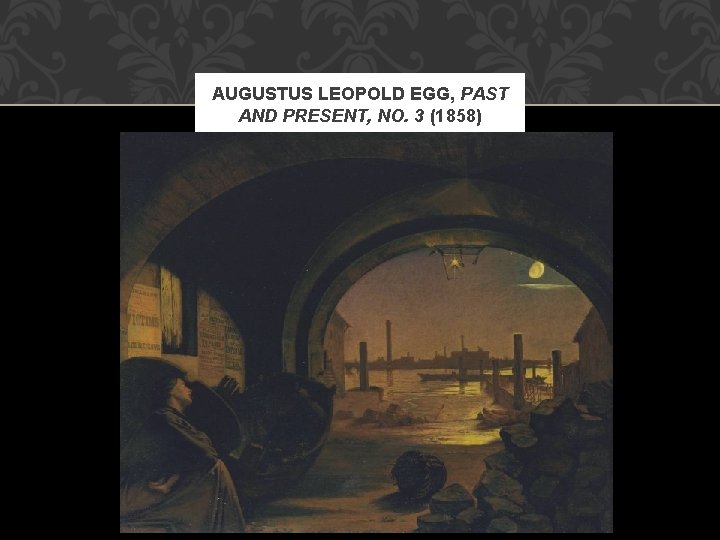
ANGEL IN THE HOUSE / FALLEN ANGEL Angel in the House • Women on a pedestal • Pure • Good at household management • In literature Fallen Angel • Adultery • Prostitution • Did something morally wrong
VICTORIAN FASHION • Rational Dress Society • Dark and sober tones • White was flirtatious • Corset and crinoline • Fainting and illness
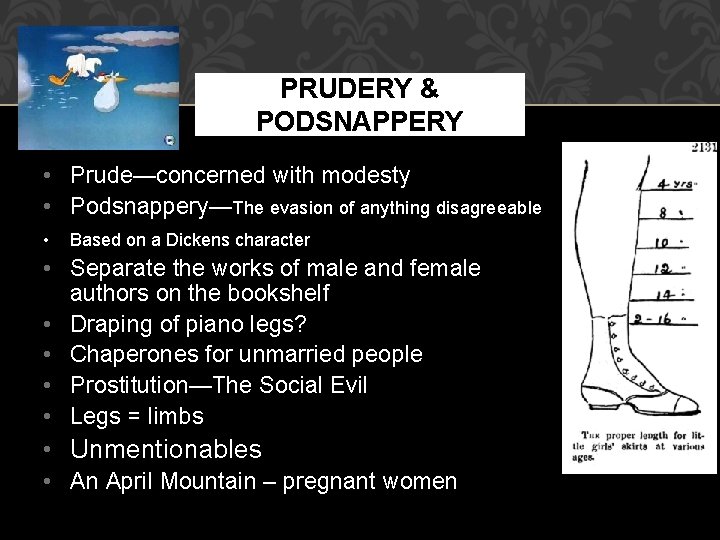
PRUDERY & PODSNAPPERY • Prude—concerned with modesty • Podsnappery—The evasion of anything disagreeable • Based on a Dickens character • Separate the works of male and female authors on the bookshelf • Draping of piano legs? • Chaperones for unmarried people • Prostitution—The Social Evil • Legs = limbs • Unmentionables • An April Mountain – pregnant women
VICTORIAN MANNERS • • • A Proper Gentlemen Lets a lady walk or ride along the wall Never speaks to a lady unless she speaks to him first Precedes a lady walking upstairs and follows one walking downstairs Takes the backwardfacing seat in a carriage and gets out first to help a lady dismount Never smokes in a lady’s • • A Proper Lady Never walks alone or unchaperoned if she is unmarried and under 30 Does not go alone to make a social call on a man Never wears pearls or diamonds in the morning Never dances more than three dances with the same partner
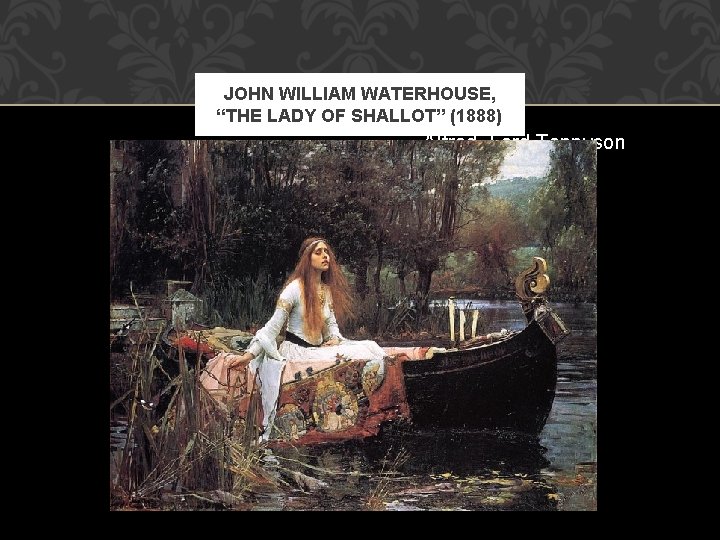
JOHN WILLIAM WATERHOUSE, “THE LADY OF SHALLOT” (1888) Alfred, Lord Tennyson
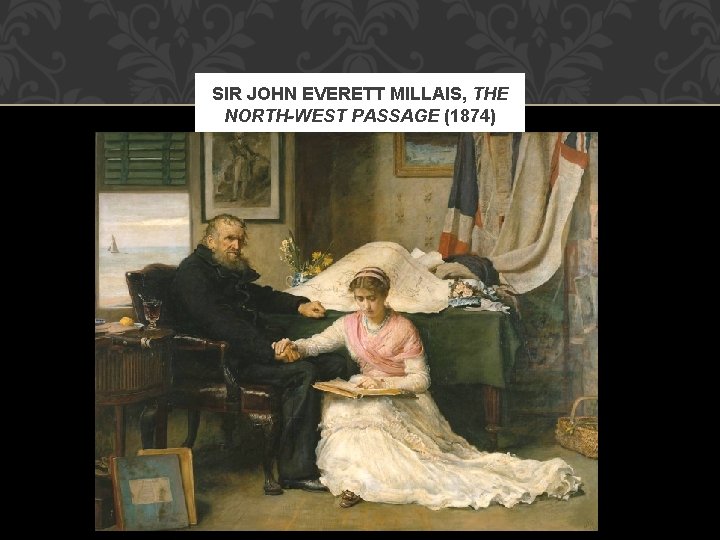
SIR JOHN EVERETT MILLAIS, THE NORTH-WEST PASSAGE (1874)
AUGUSTUS LEOPOLD EGG, PAST AND PRESENT, THE INFIDELITY DISCOVERED (1858)
AUGUSTUS LEOPOLD EGG, PAST AND PRESENT, NO. 2 (1858)
AUGUSTUS LEOPOLD EGG, PAST AND PRESENT, NO. 3 (1858)