
Victims and Victimology Level of Victimization Profile of
- Slides: 20
Victims and Victimology Level of Victimization Profile of a “Crime Victim” Theories of Victimization Effects of Victimization 1
The Emergence of Victimology l l Until the 1960 s, offenders were studied almost exclusively What changed? l From the Liberal Perspective l l “From the Conservative Perspective l l Feminist Movement (rape, intimate violence) Law and Order” concerns (Dirty Harry) The NCVS 2
Defining “Crime Victims” l Focus almost exclusively on “Street” crimes l l NCVS Can we generalize what we know about street crime to white collar crime (e. g. , Enron Victims)? 3
Profile of Victims l l Where do crimes tend to take place? Who tends to be victimized? l Age, Race, Gender, Social Class l Victim-Offender relationships l NOTE: THERE TEND TO BE EXCEPTIONS BASED ON TYPE OF CRIME 4
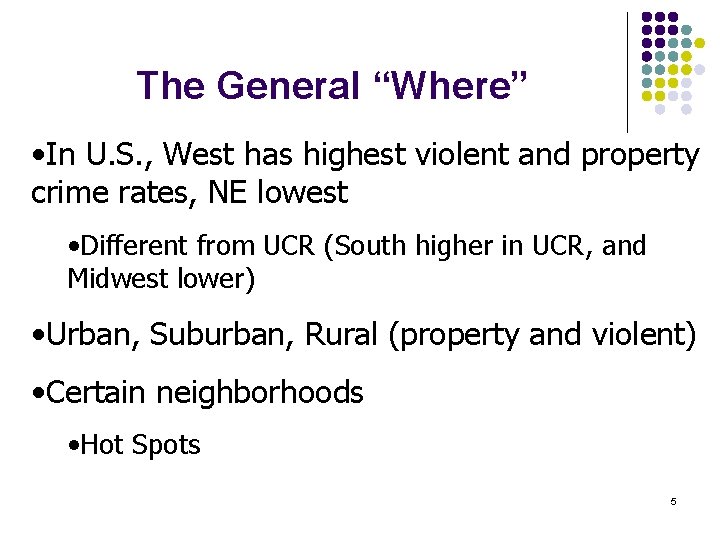
The General “Where” • In U. S. , West has highest violent and property crime rates, NE lowest • Different from UCR (South higher in UCR, and Midwest lower) • Urban, Suburban, Rural (property and violent) • Certain neighborhoods • Hot Spots 5
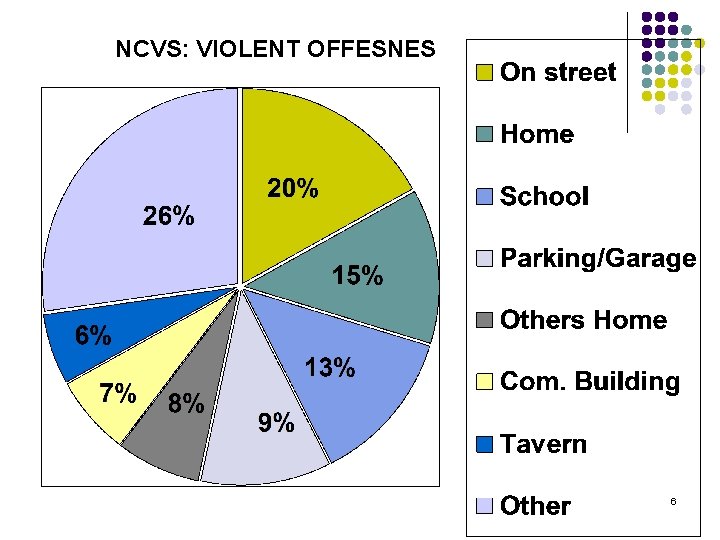
NCVS: VIOLENT OFFESNES 6
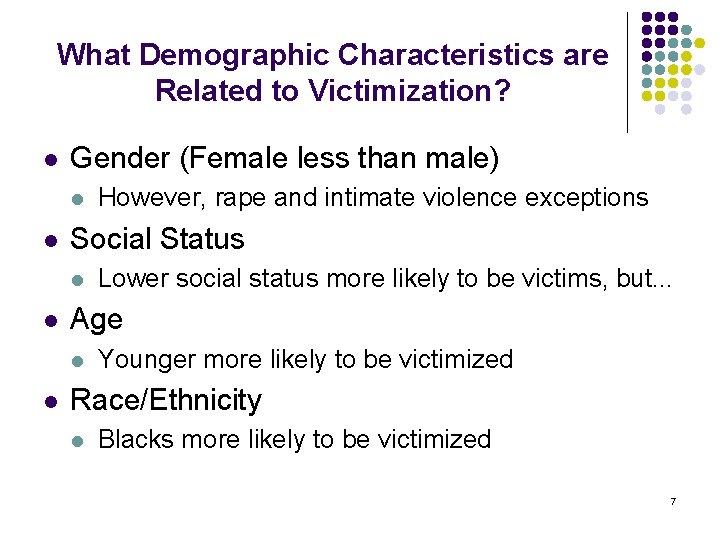
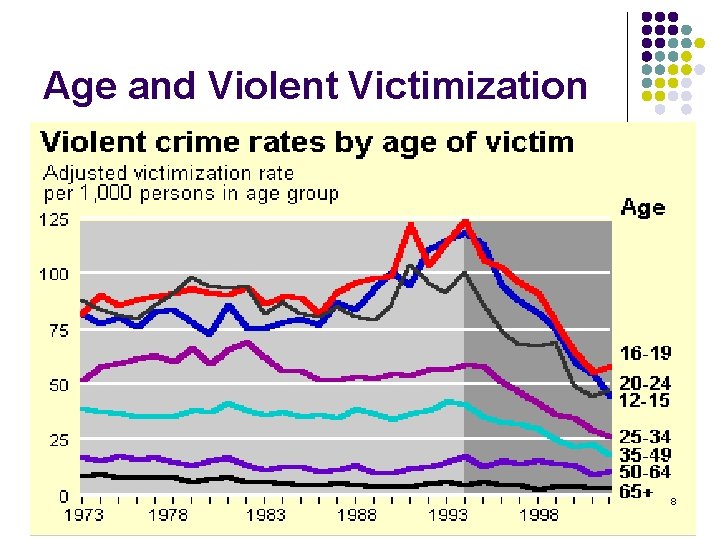
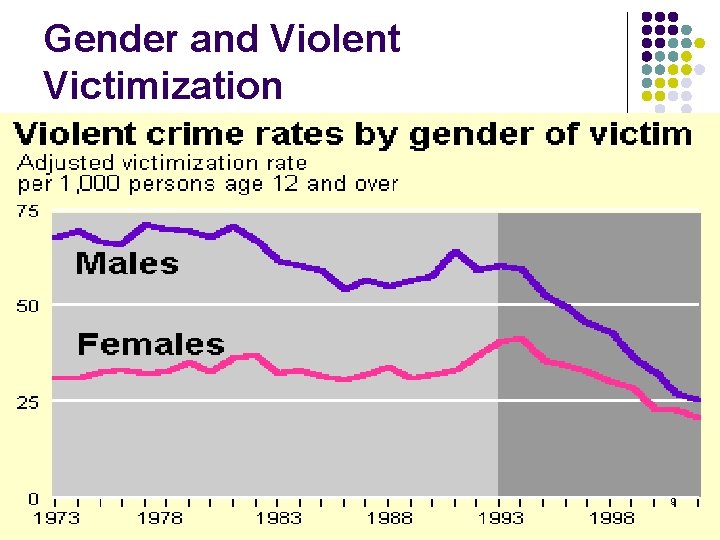
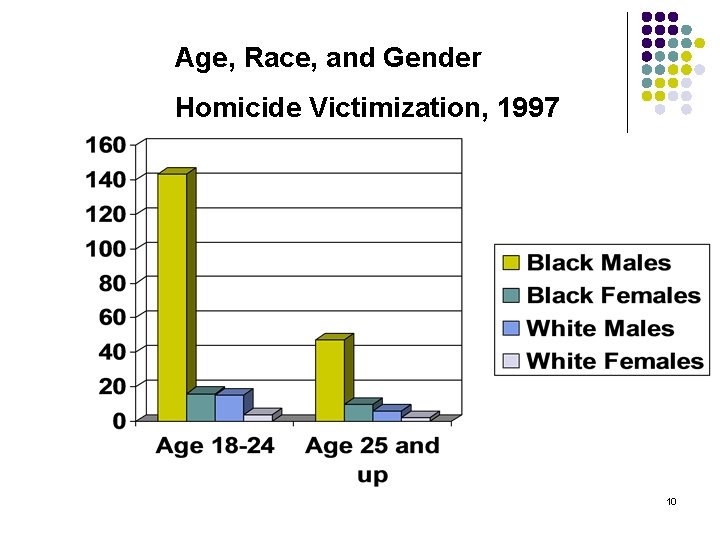
What Demographic Characteristics are Related to Victimization? l Gender (Female less than male) l l Social Status l l Lower social status more likely to be victims, but. . . Age l l However, rape and intimate violence exceptions Younger more likely to be victimized Race/Ethnicity l Blacks more likely to be victimized 7
Age and Violent Victimization 8
Gender and Violent Victimization 9
Age, Race, and Gender Homicide Victimization, 1997 10
Victim-Offender Relationships l Crime tends to be intra-racial rather than inter -racial l l Myth of Black crimes against whites In violent crimes, the victim is at least “well known” to the offender in 40% of the cases. l Much less often in property cases 11
Theories of Victimization l Explain who gets victimized and/or why l l Lifestyle Theories/Routine Activities Theory Deviant Lifestyles (Equivalence Hypothesis) Physical Proximity Victim Precipitation 12
Lifestyle Theories l To predict “direct predatory crime” l Routine Activities Theory: The convergence in time and space of: l l l Motivated Offenders Suitable Targets Lack of Capable Guardianship 13
Deviant Lifestyle l The Equivalence Hypothesis l Offenders and Victims are the same “group” of folks harming each other l l Chance of being murdered greater for youths who are members of gangs College students more vulnerable to victimization if they report smoking weed and threatening others 14
Physical Proximity l Live in or near a “high crime” area l Independent of “lifestyle” 15
Victim Precipitation? l Active (e. g. , take the first swing) vs. Passive l l l Wolfgang homicide study Rape? Difference between empirical documentation and normative statements l Empirical facts do not “excuse” or justify 16
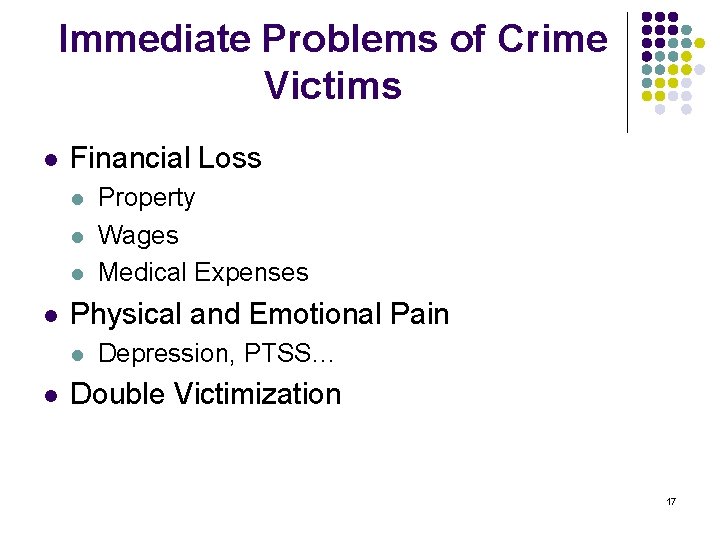
Immediate Problems of Crime Victims l Financial Loss l l Physical and Emotional Pain l l Property Wages Medical Expenses Depression, PTSS… Double Victimization 17
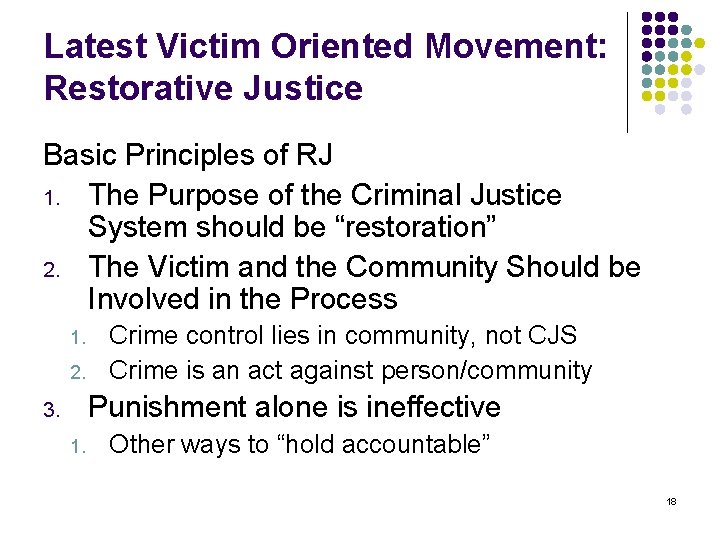
Latest Victim Oriented Movement: Restorative Justice Basic Principles of RJ 1. The Purpose of the Criminal Justice System should be “restoration” 2. The Victim and the Community Should be Involved in the Process 1. 2. Crime control lies in community, not CJS Crime is an act against person/community Punishment alone is ineffective 3. 1. Other ways to “hold accountable” 18
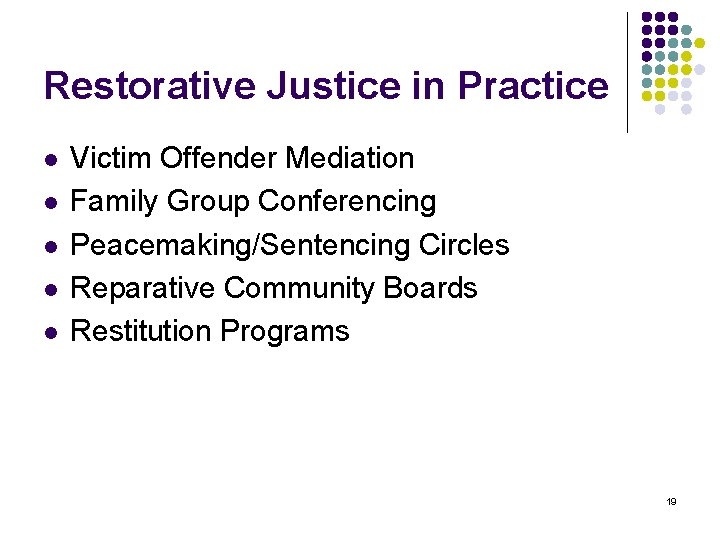
Restorative Justice in Practice l l l Victim Offender Mediation Family Group Conferencing Peacemaking/Sentencing Circles Reparative Community Boards Restitution Programs 19
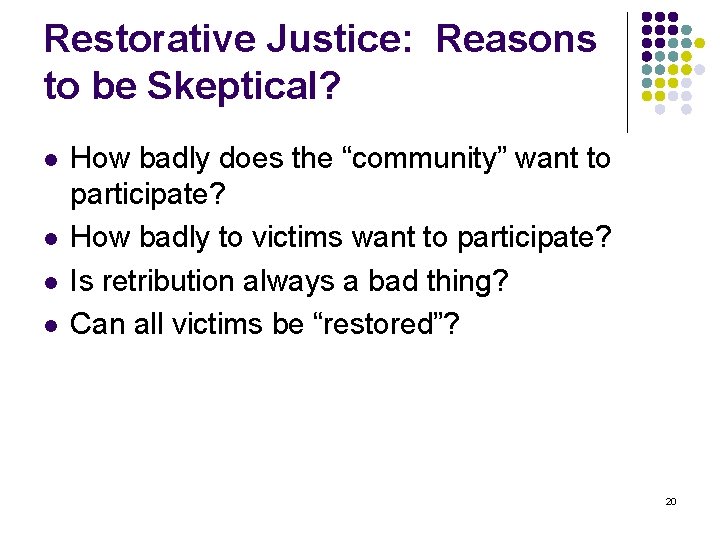
Restorative Justice: Reasons to be Skeptical? l l How badly does the “community” want to participate? How badly to victims want to participate? Is retribution always a bad thing? Can all victims be “restored”? 20