
Vicky Ferguson Chief Executive Officer Glads House 2015
- Slides: 27
Vicky Ferguson, Chief Executive Officer, Glad’s House
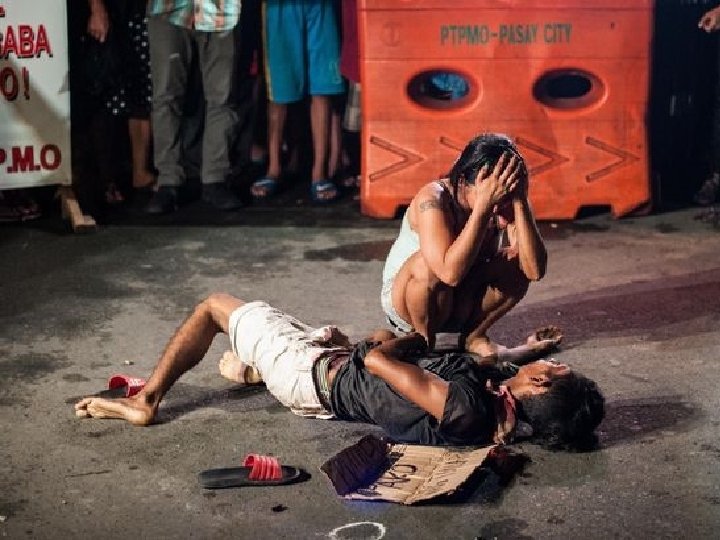
2015 World Drug Use Report by United Nations Office on Drugs and Crime Estimated that a total of 246 million people - slightly over 5% of those aged 15 to 64 years worldwide - used an illicit drug in 2013. Some 27 million people are problem drug users, almost half of whom are people who inject drugs (PWID). An estimated 1. 65 million of people who inject drugs were living with HIV in 2013. Men are three times more likely than women to use cannabis, cocaine and amphetamines, while women are more likely to misuse prescription opioids and tranquillizers. 187, 100 drug-related deaths in 2013
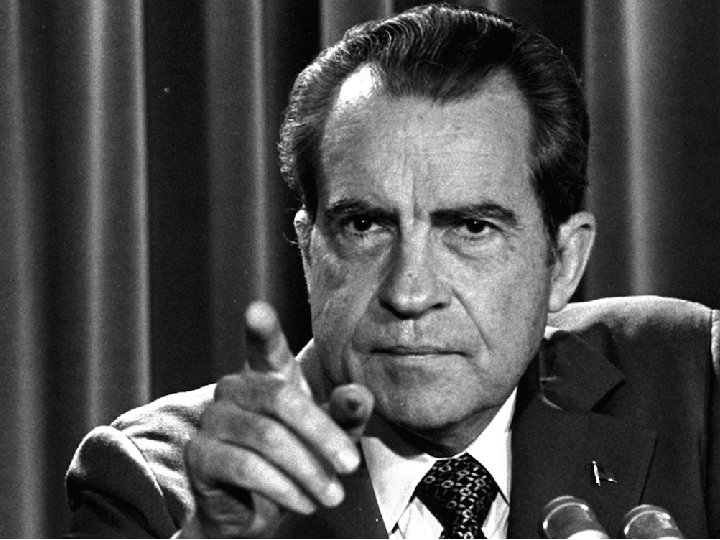
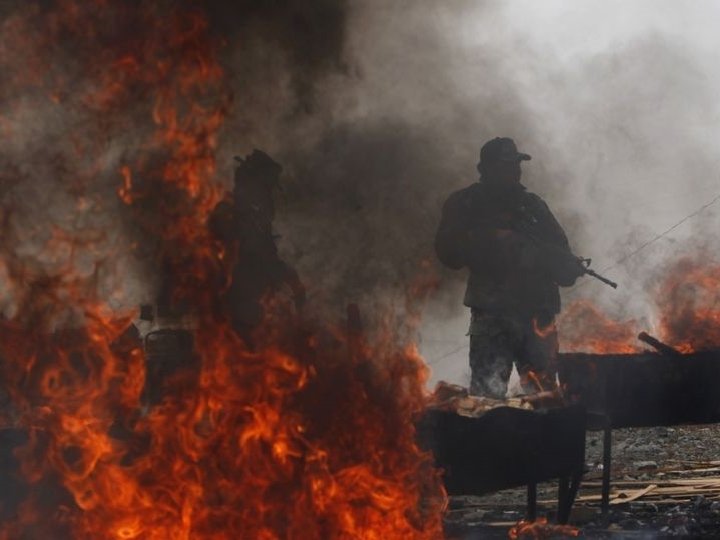
Harm Reduction Harm reduction is about saving lives! BUT many countries still do not provide harm reduction services and global funding for it amounts to just $160 million – only 7 per cent of what is needed! By contrast, each year governments spend over $100 billion waging the War On Drugs
What do I mean when I say Harm Reduction? Harm Reduction is policies, programmes and practices that aim primarily to reduce the adverse health, social and economic consequences of the use psychoactive drugs. Harm Reduction targets causes of risks and harms. Harm Reduction includes interventions to address the specific risks and harms. Harm Reduction considers factors which may increase vulnerability (age, gender) Harm reduction practitioners acknowledge the significance of any positive change that individuals make in their lives. Harm reduction interventions are facilitative rather than coercive, and are grounded in the needs of individuals Harm reduction services are designed to meet people’s needs where they currently are in their lives. Small gains for many people have more benefit for a community than heroic gains achieved for a select few. People are much more likely to take multiple tiny steps rather than one or two huge steps
Dignity and compassion Harm reduction practitioners accept people as they are and avoid being judgemental. Harm reduction practitioners oppose the deliberate stigmatisation of people who use drugs. Terminology and language should always convey respect and tolerance. Universality and interdependence of rights Human rights apply to everyone. People who use drugs do not forfeit their human rights. Harm reduction opposes the deliberate hurts and harms inflicted on people who use drugs in the name of drug control and drug prevention, and promotes responses to drug use that respect and protect fundamental human rights. Challenging policies and practices that maximise harm Harm reduction policies and practice must support individuals in changing their behaviour. But it is also essential to challenge the international and national laws and policies that create risky drug using environments and contribute to drug related harms. Transparency, accountability and participation Practitioners and decision makers are accountable for their interventions and decisions, and for their successes and failures. Harm reduction principles encourage open dialogue, consultation and debate.
All professionals working with young people are involved within the tiered model Tier 1 OR Universal • Ensures universal access and continuity of care to all young people. A • Aims to identify and screen those who are vulnerable to substance misuse and identify those to refer on. • Identification of risks or child protection issues Tier 2 OR Targeted • Youth orientated services, offered by practitioners with some drug and alcohol experience and youth specialist knowledge. • Aim and purpose of this tier is to be concerned with reduction of risks and vulnerabilities and maintenance of young people in mainstream services.
Tier 3 OR Specialist • Work with complex cases requiring multidisciplinary team work. • Deal with complex and often multiple needs of the C/YP and not just with the particular substance misuse. • Includes substitute prescribing. • Work towards reintegrating and including the child in their family, community, school or place of work. Tier 4 OR Inpatient • Provides very specialist forms of intervention for drug users with complex care needs. • For a very small number of people, there is a need for intensive Interventions. This could include short-term substitute prescribing, detoxification and places away from home. • Care away from home might be offered such as residential units, enhanced fostering, and supported hostels.
http: //www. protectingchildren. org. uk/cptopics/child-themes/child-substance-misuse/ Substance Misuse and Child Protection Substance misuse among children can amount to a child protection issue in a number of ways. If a parent or carer is not addressing a child or young person’s drug misuse then they may not be adequately protecting them from harm. A child may also be misusing substances because he has or is suffering physical or mental harm as a result of neglect or abuse from parents or carers. Actual physical harm is likely to ne caused by a child or young person misusing drugs or alcohol SUBSTANCE MISUSE IS NEARLY ALWAYS LIKELY TO BE LINKED TO AN UNDERLYING CAUSE
http: //www. nta. nhs. uk/young-people. aspx “Very few young people develop dependency. Those who use drugs or alcohol problematically are likely to be vulnerable and experiencing a range of problems, of which substance misuse is one. This means that the commissioning and delivery of specialist drug and alcohol interventions for young people should take place within the wider children and young people’s agenda. The aim is that all needs are met, rather than addressing substance misuse in isolation; and that intervention is successful before problematic use becomes entrenched. Young people and their needs differ from adults: The majority of young people accessing specialist drug and alcohol interventions have problems with alcohol (37%) and cannabis (53%), requiring psychosocial, harm reduction and family interventions, rather than treatment for addiction, which most adults but only a small minority of young people require. Most young people need to engage with specialist drug and alcohol interventions for a short period of time, often weeks, before continuing with further support elsewhere, within an integrated young people’s care plan.
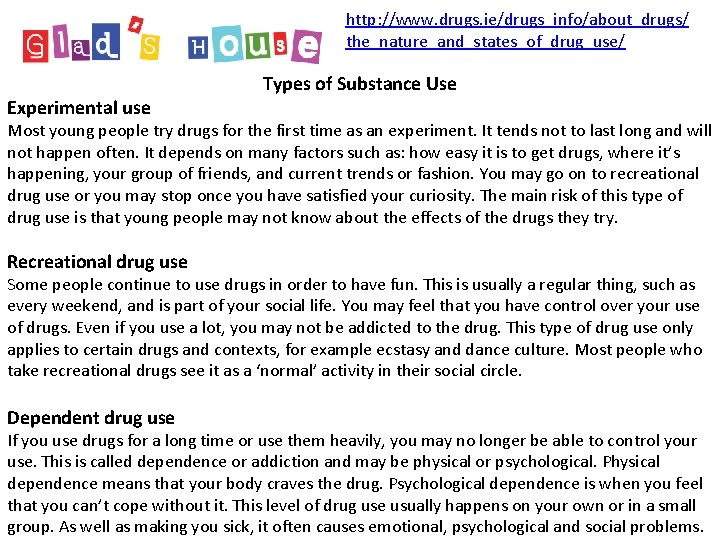
http: //www. drugs. ie/drugs_info/about_drugs/ the_nature_and_states_of_drug_use/ Experimental use Types of Substance Use Most young people try drugs for the first time as an experiment. It tends not to last long and will not happen often. It depends on many factors such as: how easy it is to get drugs, where it’s happening, your group of friends, and current trends or fashion. You may go on to recreational drug use or you may stop once you have satisfied your curiosity. The main risk of this type of drug use is that young people may not know about the effects of the drugs they try. Recreational drug use Some people continue to use drugs in order to have fun. This is usually a regular thing, such as every weekend, and is part of your social life. You may feel that you have control over your use of drugs. Even if you use a lot, you may not be addicted to the drug. This type of drug use only applies to certain drugs and contexts, for example ecstasy and dance culture. Most people who take recreational drugs see it as a ‘normal’ activity in their social circle. Dependent drug use If you use drugs for a long time or use them heavily, you may no longer be able to control your use. This is called dependence or addiction and may be physical or psychological. Physical dependence means that your body craves the drug. Psychological dependence is when you feel that you can’t cope without it. This level of drug use usually happens on your own or in a small group. As well as making you sick, it often causes emotional, psychological and social problems.
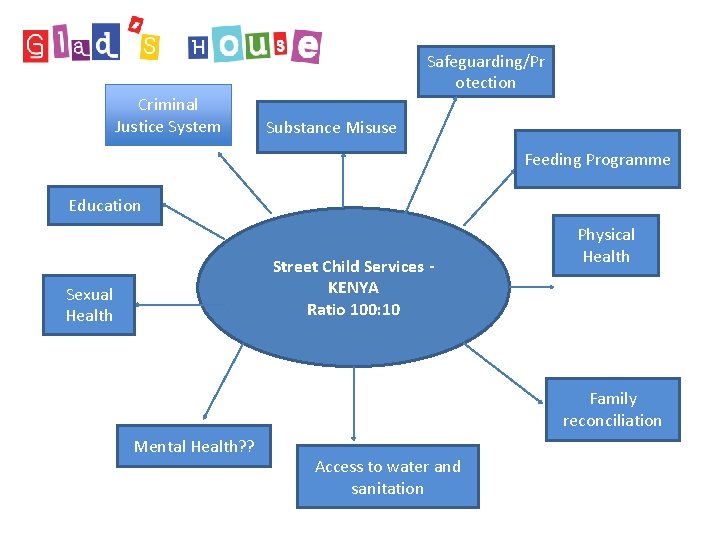
Criminal Justice System Safeguarding/Pr otection Substance Misuse Feeding Programme Education Street Child Services KENYA Ratio 100: 10 Sexual Health Physical Health Family reconciliation Mental Health? ? Access to water and sanitation
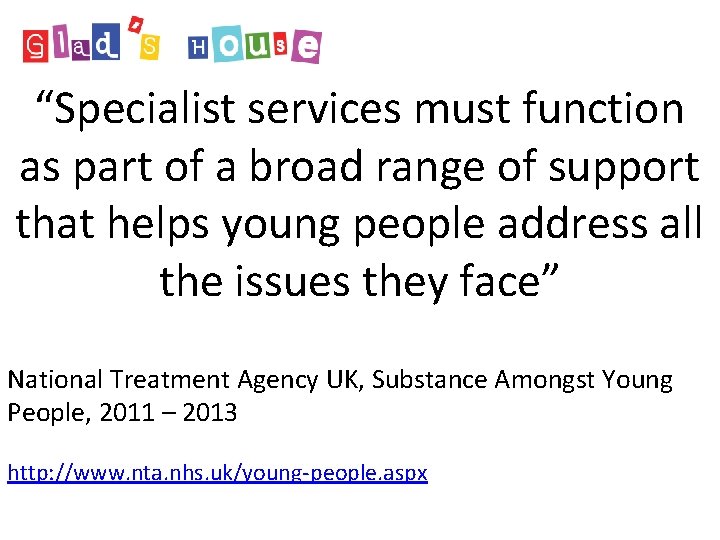
“Specialist services must function as part of a broad range of support that helps young people address all the issues they face” National Treatment Agency UK, Substance Amongst Young People, 2011 – 2013 http: //www. nta. nhs. uk/young-people. aspx
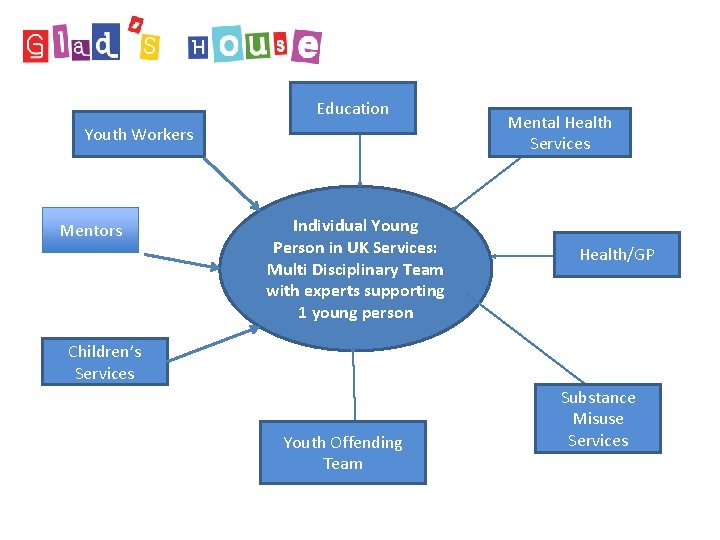
Education Youth Workers Mentors Individual Young Person in UK Services: Multi Disciplinary Team with experts supporting 1 young person Mental Health Services Health/GP Children’s Services Youth Offending Team Substance Misuse Services
http: //www. globalcommissionondrugs. org/ http: //supportdontpunish. org/ http: //www. inpud. net/ https: //www. hri. global/ https: //www. hit. org. uk/ https: //www. acast. com/saywhytodrugs/ http: //www. drugwise. org. uk/
QUESTIONS? Vicky@gladshouse. com 07747801159 @vicky_ferguson
Mary is 16 years old and is street homeless. She has been street homeless for 6 months after the relationship with her mother broke down. Mary has learning difficulties and is estranger from her father. It is suspected that Mary’s father is also her grandfather but that suspicion is not confirmed. Mary self harms regularly, has previously seen a therapist but is not currently being supported for any mental health issues. Mary has been injecting heroin into her groin (she started her injecting practice in her groin) for roughly 3 months. Mary has been introduced to commercial sex work by her dealer and peers who score off the same dealer.
Sarah is 17. She is street homeless and has two children, both who have been taken into care. Sarah is estranged from her family Sarah is using glue and cannabis daily and cocaine and alcohol occasionally Sarah was sexually abused from a very young age, both of her children were conceived through being sexually abused. Sarah has complex mental health issues, you suspect PTSD and depression, but these are undiagnosed. Last year Sarah had an unsuccessful Suicide Attempt. Sarah’s behaviour is chaotic and she often doesn’t attend appointments with staff. She is now engaged in commercial sex work and disappears for a couple of weeks at a time. When she does show up to appointments, she engages well and is open and honest about her substance misuse and other aspects of her life. She has often expressed that you are the only organisation she trusts.
Stuart is 17 years old and street homeless due to a family breakdown. Stuart is smoking cannabis daily and drinking heavily. On assessment Stuart is open and honest about his usage and is smoking about 1/8 th a day and is drinking roughly between 60 – 80 units a week. Stuart has not drunk since the previous night and is displaying no signs of a dangerous alcohol withdrawal. During assessment Stuart talks a lot about issues with his family, how much he misses them but how he feels they have totally given up on him. He feels incredibly isolated and you have concerns about his mental health. He also shares that he is self harming. He has no suicidal ideations.
David is 16 years old. He is street homeless. David became a Looked After Child when he was 9 years old when his family deemed his ‘too challenging’. He remained in Government Care until he was 14 years old when he ran away. During his time in Care his family made no effort improve their relationship and they never visited him. David talks about this often. David became street homeless at 14 and began smoking cannabis heavily – he states he currently smokes between 10 – 20 joints a day depending on money. He occasionally uses other drugs but only recreationally. David is open and honest but clearly struggles with self esteem issues and on assessment discusses how he has thought about suicide before but never acted on it. He shares he feels he has no place in the world and believes he never will.
In Groups… Discuss next steps in your organisation to improve your responses to substance misuse… Key areas of development Partners needed Knowledge needed