
Vibrio cholerae Dr Jyotsna Agarwal Dept Microbiology Cholera
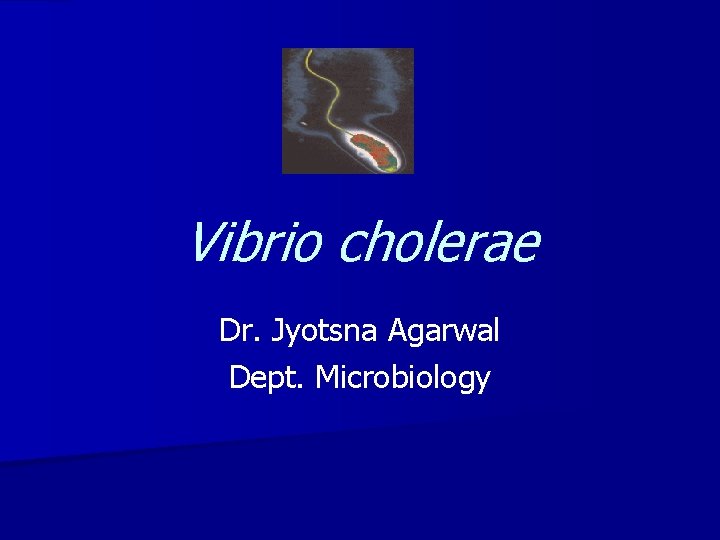
Vibrio cholerae Dr. Jyotsna Agarwal Dept. Microbiology
Cholera: Introduction n Transmitted to humans via contaminated food and water n Part of normal flora of brackish water and estuaries

Epidemiology of Vibrio cholerae Cholera recognized for more than two millennia with sporadic disease and epidemics Ø Endemic in communities with poor sanitation Ø Seven pandemics (possible beginning of 8 th) since 1817 Ø Human carriers and environmental reservoirs Ø
Historical Perspective: n 1817 -1820 First Pandemic spread out of India to Europe spread from India -> Middle East (reaching Turkey & Persia) -> Far East (Singapore, Japan, Philippines) n 1829 -1851 Second pandemic Entered US through NY and New Orleans -> proceeded through entire country
Historical Perspective: Identification n 1854 - Filippo Pacini identified curved or comma shaped bacterium associated with this disease, which he called Vibrio cholerae n 1883 - Rober Koch isolated the bacteria
Historical Perspective: n 1854 - John Snow hypothesized water as primary reservoir for transmission – Broad Street pump incident – 56 deaths in 2 days
Recent Cholera Pandemics 7 th pandemic: · · V. cholerae O 1 biotype El Tor Began in Asia in 1961 8 th pandemic (? ? ) · · V. cholerae O 139 Bengal Began in India in 1992 and spread to Asia, Europe and U. S.
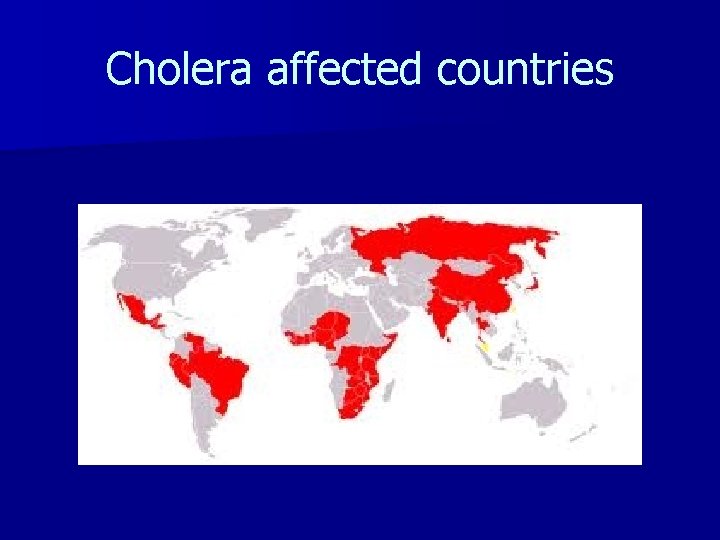
Cholera affected countries
General Characteristics of Vibrio Similarities to Enterobacteriaceae · Gram-negative · Facultative anaerobes · Fermentative bacilli Ø Differences from Enterobacteriaceae · Polar flagella · Oxidase positive Ø
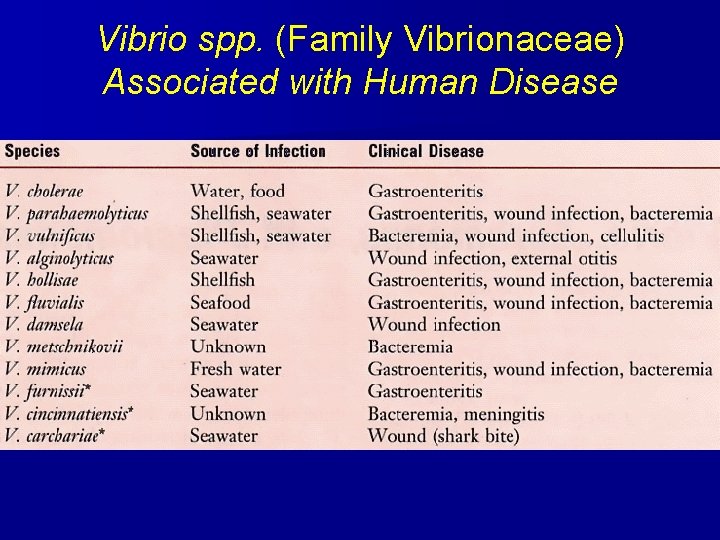
Vibrio spp. (Family Vibrionaceae) Associated with Human Disease
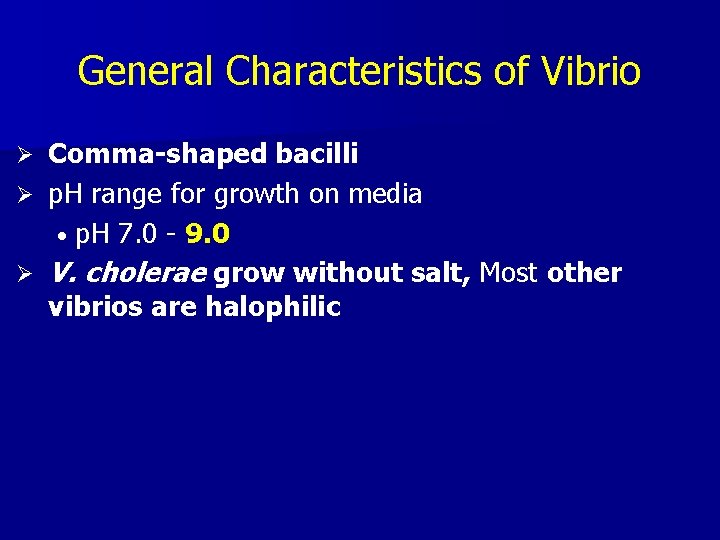
General Characteristics of Vibrio Comma-shaped bacilli Ø p. H range for growth on media · p. H 7. 0 - 9. 0 Ø V. cholerae grow without salt, Most other vibrios are halophilic Ø
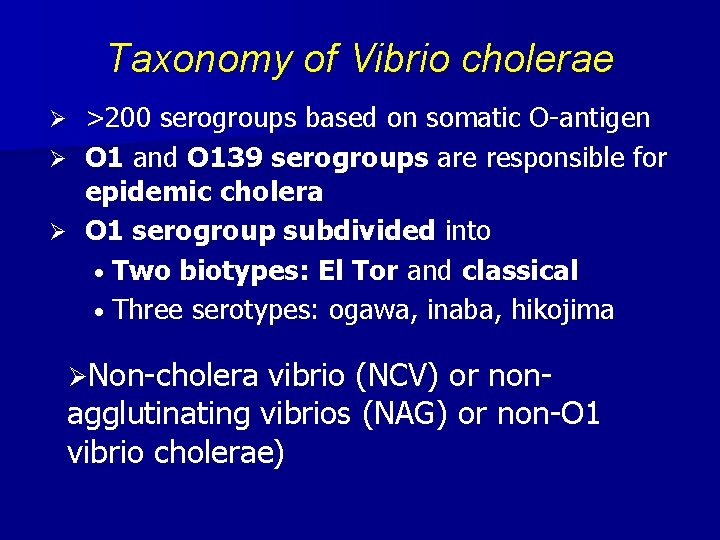
Taxonomy of Vibrio cholerae >200 serogroups based on somatic O-antigen Ø O 1 and O 139 serogroups are responsible for epidemic cholera Ø O 1 serogroup subdivided into · Two biotypes: El Tor and classical · Three serotypes: ogawa, inaba, hikojima Ø ØNon-cholera vibrio (NCV) or nonagglutinating vibrios (NAG) or non-O 1 vibrio cholerae)
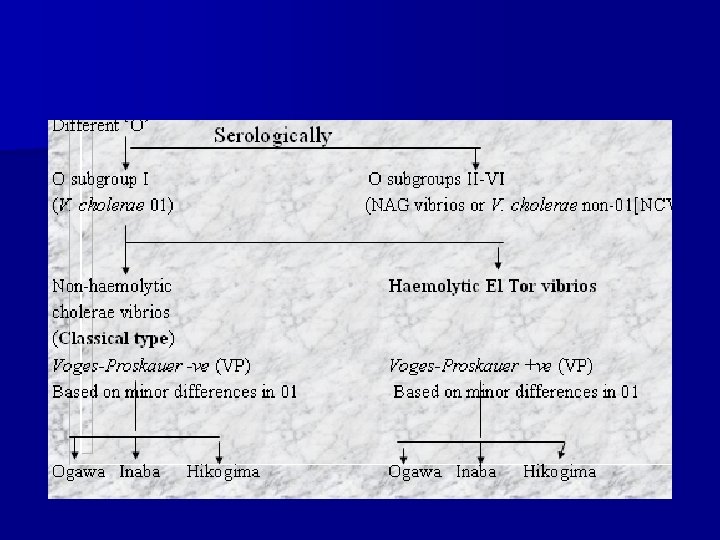
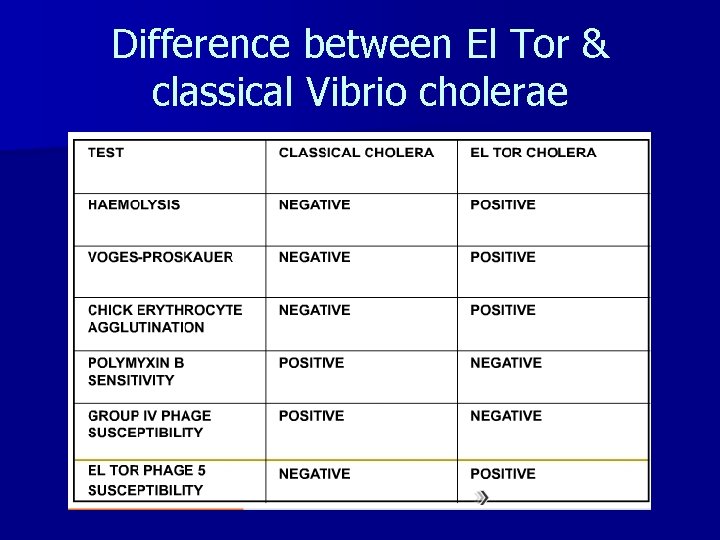
Difference between El Tor & classical Vibrio cholerae
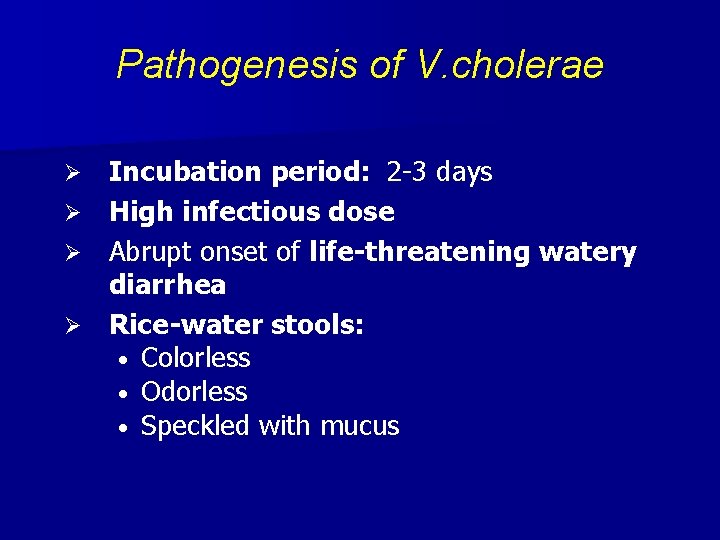
Pathogenesis of V. cholerae Incubation period: 2 -3 days Ø High infectious dose Ø Abrupt onset of life-threatening watery diarrhea Ø Rice-water stools: · Colorless · Odorless · Speckled with mucus Ø
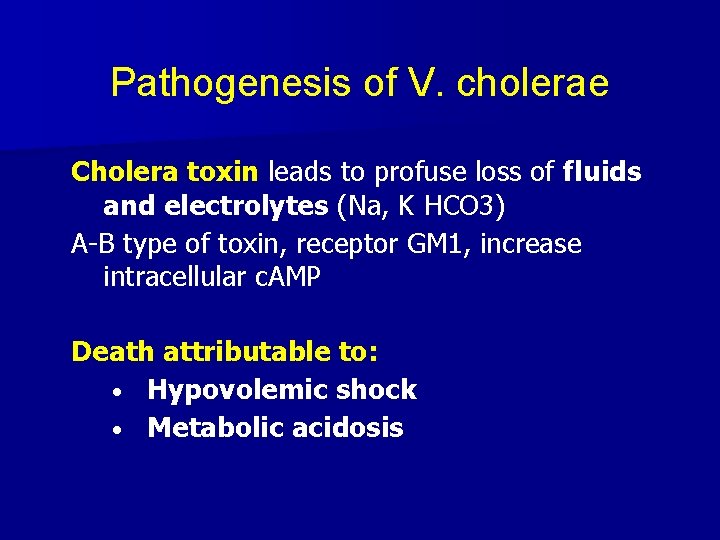
Pathogenesis of V. cholerae Cholera toxin leads to profuse loss of fluids and electrolytes (Na, K HCO 3) A-B type of toxin, receptor GM 1, increase intracellular c. AMP Death attributable to: · Hypovolemic shock · Metabolic acidosis
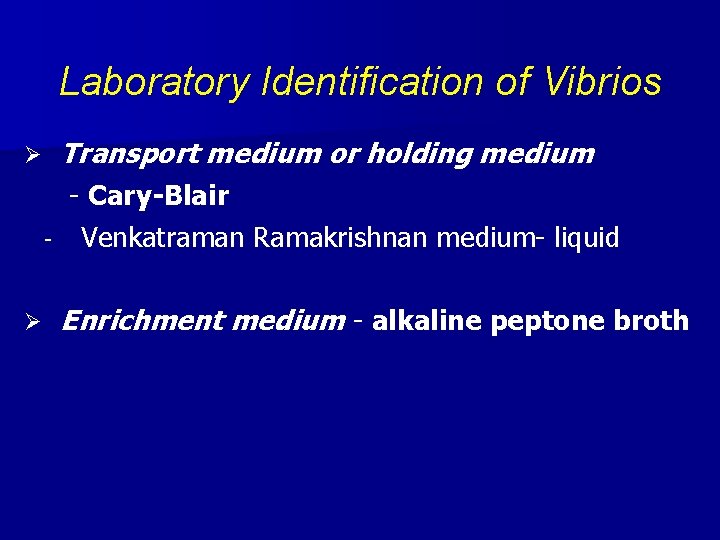
Laboratory Identification of Vibrios Ø Transport medium or holding medium - Cary-Blair - Venkatraman Ramakrishnan medium- liquid Ø Enrichment medium - alkaline peptone broth
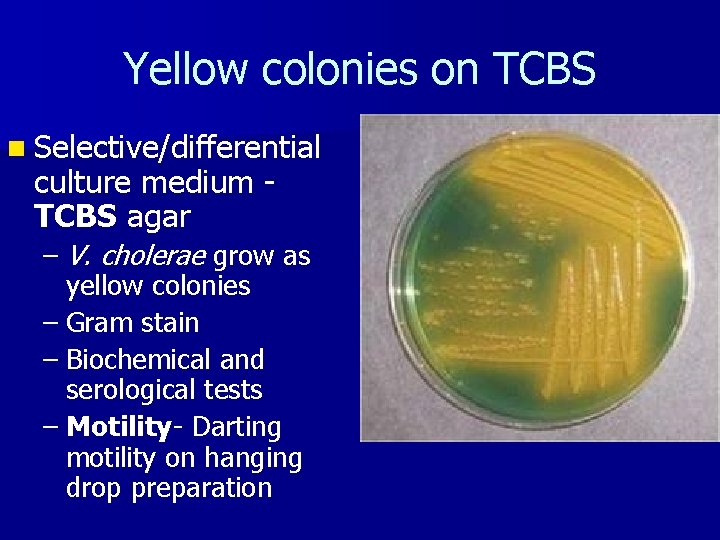
Yellow colonies on TCBS n Selective/differential culture medium TCBS agar – V. cholerae grow as yellow colonies – Gram stain – Biochemical and serological tests – Motility- Darting motility on hanging drop preparation
Treatment & Prevention of cholera Untreated: 60% fatality Treated: <1% fatality Rehydration & supportive therapy · Oral · Intravenous Ø Doxycycline or tetracycline Ø Ø Ø Water purification, sanitation & sewage treatment Ø Vaccines Ø
Summary n General characters of vibrio, history n Vibrio cholerae n Cholera: mode of spread, clinical features n Laboratory diagnosis n Treatment/prevention
- Slides: 20