
Vibrio Cholera Michelle Ross Kristin Roman Risa Siegel
Vibrio Cholera Michelle Ross, Kristin Roman, Risa Siegel

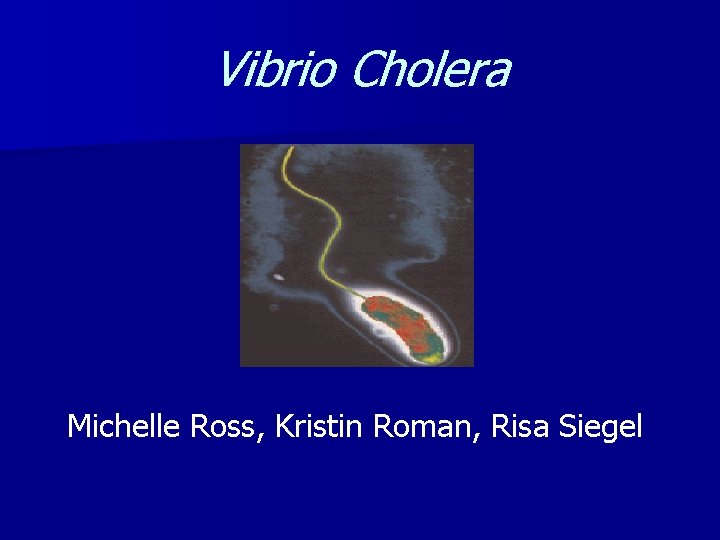
Cholera: Introduction n Transmitted to humans via contaminated food and water n 1 of 3 diseases requiring WHO notification n Part of normal flora of brackish water and estuaries
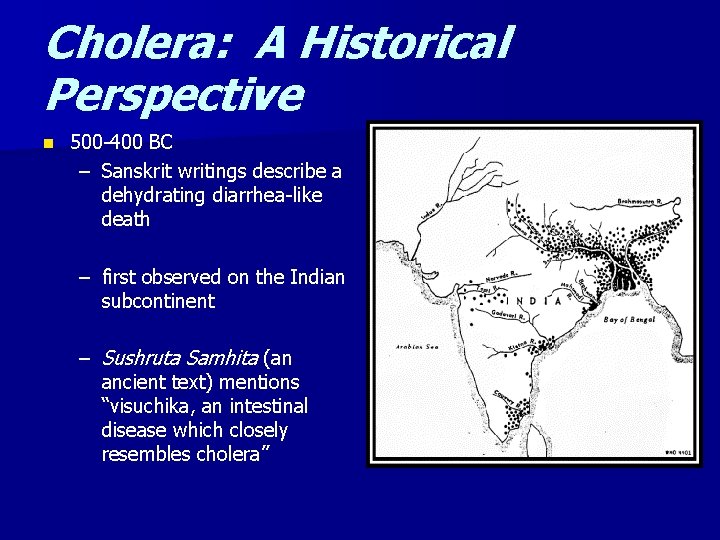
Cholera: A Historical Perspective n 500 -400 BC – Sanskrit writings describe a dehydrating diarrhea-like death – first observed on the Indian subcontinent – Sushruta Samhita (an ancient text) mentions “visuchika, an intestinal disease which closely resembles cholera”
Cholera: A Historical Perspective n 500 BC – Hippocrates and Areatus of Capdadocia mention cholera-like disease in their medical writings n 900 AD – Rhazes, Islamic physician, describes cholera -like illness referring to it as heyda (Arabic)
Cholera: A Historical Perspective n 1563 – first recorded cholera epidemic n 1643 – used term “trousse-galant” and “flux de ventre” to describe severe diarrheal illness n 1649 – sporadic but very severe form of cholera
Cholera: A Historical Perspective n n 1658 – Brazil – cholera-like illness 1665 – Ghent - cholera-like illness 1781 – division of Bengal troops infected heading to Calcutta 1787 -1796 – Outbreak in Vellore and Arcot (1787 -1789) -> Ganjam (1790) -> Malabar and Coromandel (1796)
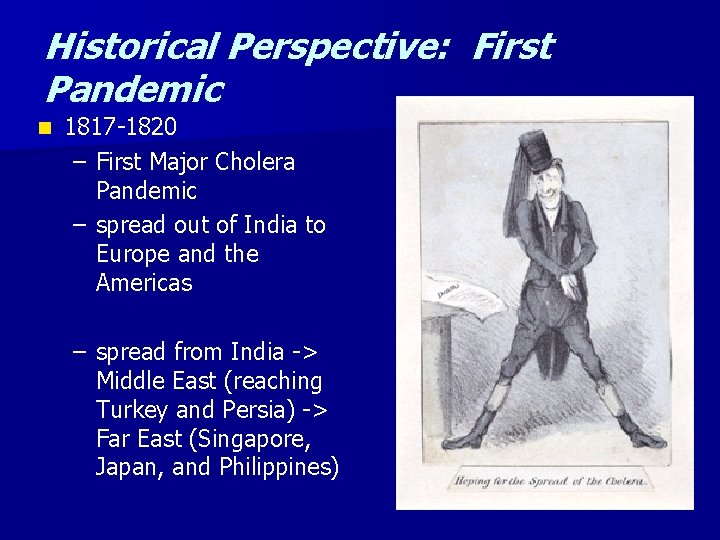
Historical Perspective: First Pandemic n 1817 -1820 – First Major Cholera Pandemic – spread out of India to Europe and the Americas – spread from India -> Middle East (reaching Turkey and Persia) -> Far East (Singapore, Japan, and Philippines)
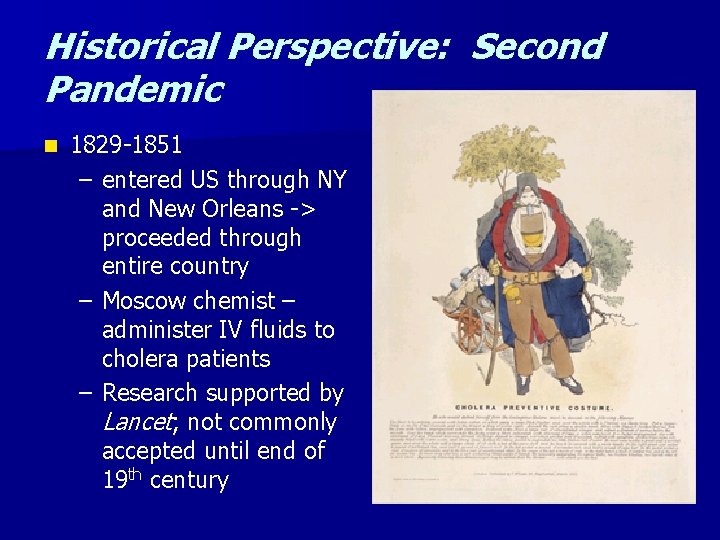
Historical Perspective: Second Pandemic n 1829 -1851 – entered US through NY and New Orleans -> proceeded through entire country – Moscow chemist – administer IV fluids to cholera patients – Research supported by Lancet; not commonly accepted until end of 19 th century
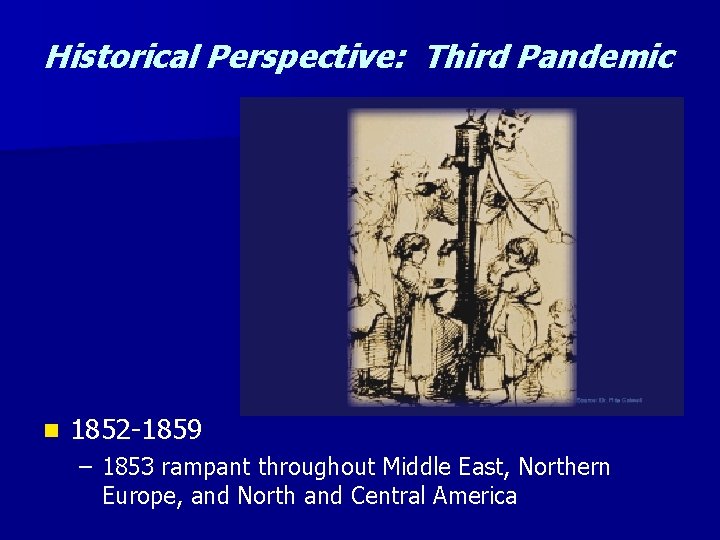
Historical Perspective: Third Pandemic n 1852 -1859 – 1853 rampant throughout Middle East, Northern Europe, and North and Central America
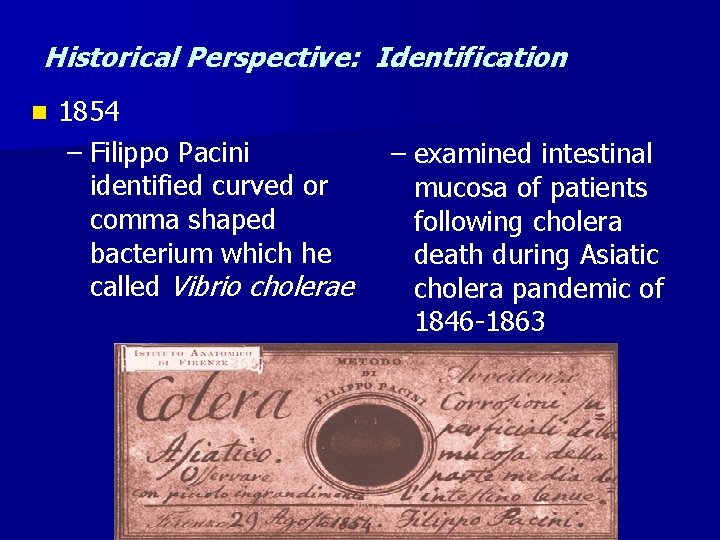
Historical Perspective: Identification n 1854 – Filippo Pacini identified curved or comma shaped bacterium which he called Vibrio cholerae – examined intestinal mucosa of patients following cholera death during Asiatic cholera pandemic of 1846 -1863
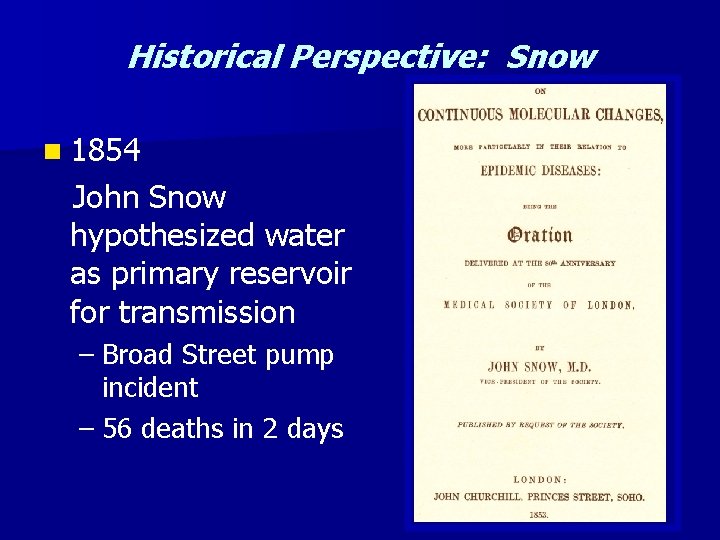
Historical Perspective: Snow n 1854 John Snow hypothesized water as primary reservoir for transmission – Broad Street pump incident – 56 deaths in 2 days
- Slides: 11