
Vibrio 1 Characteristics Gramnegative highly motile curved rods
Vibrio 1

Characteristics • Gram-negative, highly motile curved rods, polar flagella • Oxidase-positive • Facultative anaerobic • Tolerant to alkali but not to acid 2
• Pathogens of humans – V. cholerae – V. parahaemolyticus 3
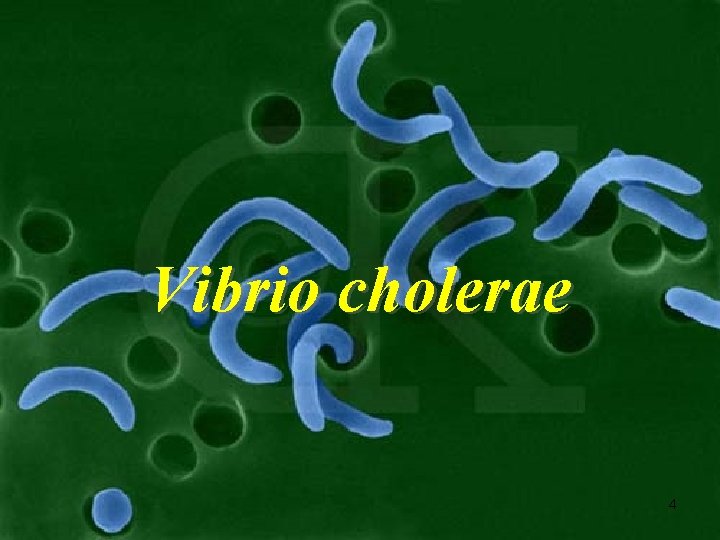
Vibrio cholerae 4
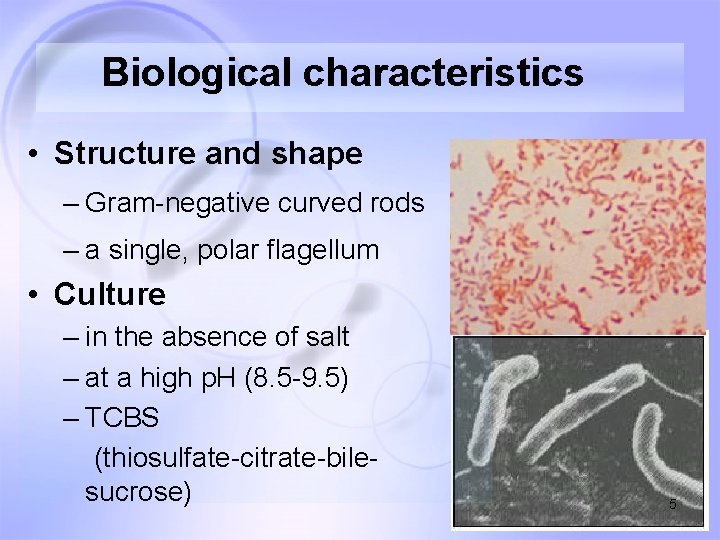
Biological characteristics • Structure and shape – Gram-negative curved rods – a single, polar flagellum • Culture – in the absence of salt – at a high p. H (8. 5 -9. 5) – TCBS (thiosulfate-citrate-bilesucrose) 5
Biological characteristics • Antigenic structure and classification H antigen: non-specific O antigen: 155 serogroups V. Cholerae serogroups O 139 V. Cholerae serogroups non-O 1/non-O 139 6
Biological characteristics • Antigenic strcture and classification 2 biotypes (O 1): classic biotype El Tor biotype 3 serotypes (O 1): Ogawa(AB) Inaba(AC) Hikojima(ABC) 7
History Epidemic: a disease occurring in an unusually high number of individuals in a population at the same time. Pandemic: a worldwide epidemic. Endemic: a disease that always presents in low members in a particular community Sporadic: a disease that occurs occasionally, usually affecting one person. 7 pandemics (since 1817) the former 6 pandemics → classical strains (O 1) the latter 1 pandemic → El Tor strains (O 1): began in 1961 in Asia. a recent epidemic (in 1992 in India) → V. Cholerae O 139→ cholera-like symptoms. 8
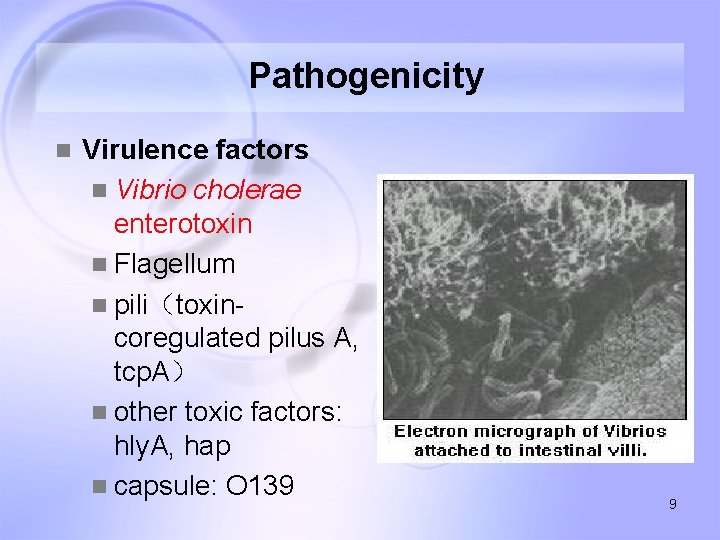
Pathogenicity n Virulence factors n Vibrio cholerae enterotoxin n Flagellum n pili(toxincoregulated pilus A, tcp. A) n other toxic factors: hly. A, hap n capsule: O 139 9
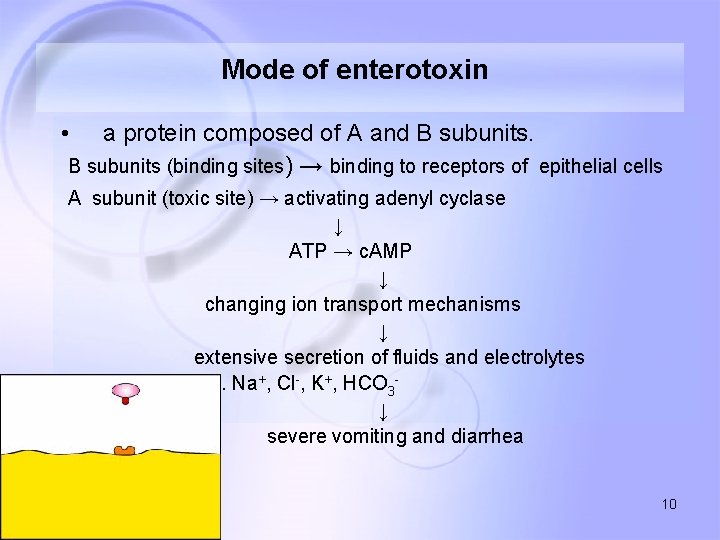
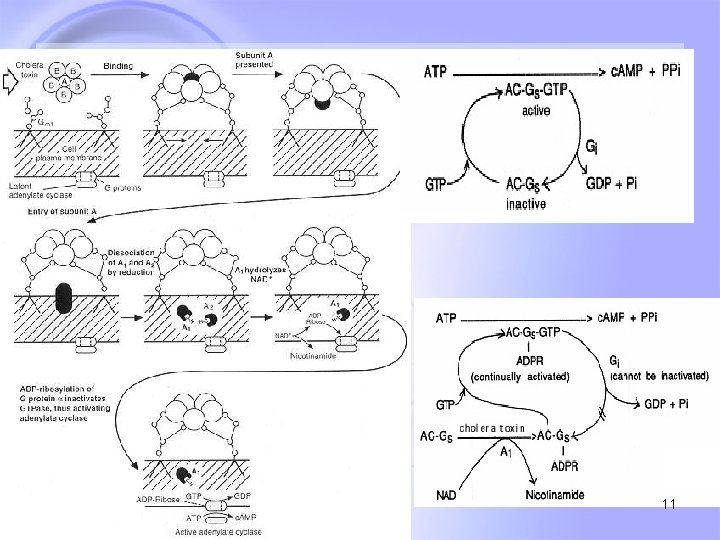
Mode of enterotoxin • a protein composed of A and B subunits (binding sites) → binding to receptors of epithelial cells A subunit (toxic site) → activating adenyl cyclase ↓ ATP → c. AMP ↓ changing ion transport mechanisms ↓ extensive secretion of fluids and electrolytes ie. Na+, Cl-, K+, HCO 3↓ severe vomiting and diarrhea 10
11
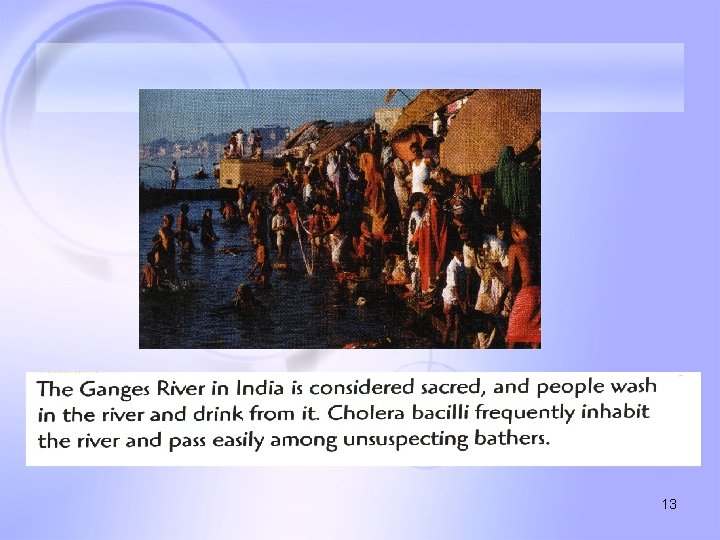
Pathogenicity • Disease: Cholera – human is the only host – Source of infection : (O 1, O 139) ingestion of the contaminated food and water – 1010 bacteria → mouth → stomach → small intestine → enterotoxin 12
13
Pathogenicity – Incubation period: 2 -3 days. – Manifestation: severe vomiting, rice-water diarrhea, and dehydration. – Death rate: renal failure, metabolic acidosis, shock. – non-O 1 strains: symptoms similar to those of O 1 strains, but less severe; often sporadic not 14 pandemic or epidemic.
Immunity • HI SIg. A antibodies vibriocidal antibodies antitoxin antibodies • Permanent 15
Control • Prevention improvement of sanitation vaccine: limited or no effective • Treatment water and electrolyte replacement antimicrobial agents 16
V. parahaemolyticus 17
Characteristics • a marine vibrio • culture - grow best concentration condition. under high salt 18
Pathogenicity • Virulence factor – hemolysins • hemolyze the human and rabbit erythrocytes -kanagawa test 神奈川�象 : differentiates pathogenic strains from nonpathogenic strains 19
Pathogenicity • Disease – Gastroenteritis (food poisoning) – Transmission ingestion of potential contaminated seafood – Manifestations watery diarrhea, abdominal cramps, nausea, and vomiting. 20
Treatment – in mild infections self-limited disease – in severe infections antibiotics, fluid and electrolytes replacement 21
- Slides: 21