
Vibrational Analysis of Baseball Bats Mechanical Vibrations EM
Vibrational Analysis of Baseball Bats Mechanical Vibrations EM 406 11/11/15 Alec Mc. Nally Ben Qualters Drew Schnitz

Map Setup Data Collection Analysis and Results

Experimental Procedure 12 Test Setup Details Analysis Settings Measurement Points 120 Frequency Range 0 -2000 Hz Accelerometers +Y and +Z Windowing None Averages 5 Physical Test Settings 1 Hammer Tip Metal/Nylon Test Points 12

Impact testing resulted in the following time history. Red accelerometer 2 graph Green hammer tip graph Force Input Accelerometer 1 (Y-direction) Accelerometer 2 (Z-direction)

A reciprocity test was conducted and found to be successful. Metal Bat Reciprocity Test

Peaks were picked from the CMIF graphs in order to identify frequencies where modes occur Need graph of CMIF for +z direction, also circle the peaks used with a red circle. CMIF for +Y direction CMIF for +Z direction

Coherence and FRF behaved as expected Coherence metal FRF metal Coherence wood FRF wood
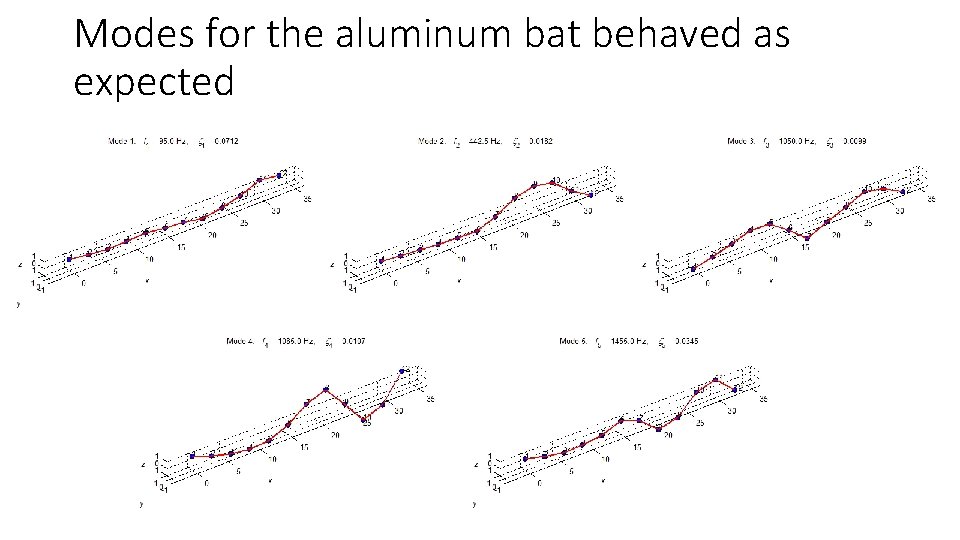
Modes for the aluminum bat behaved as expected
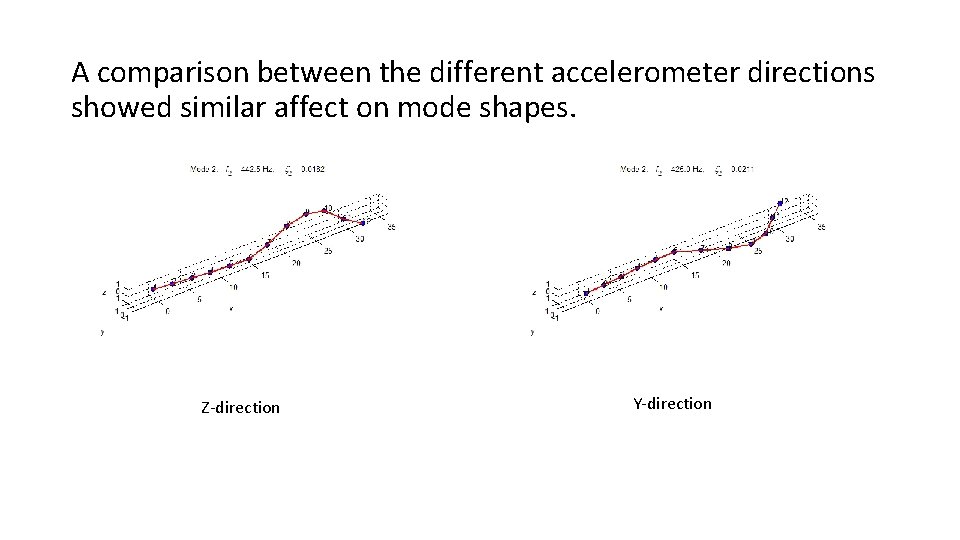
A comparison between the different accelerometer directions showed similar affect on mode shapes. Z-direction Y-direction
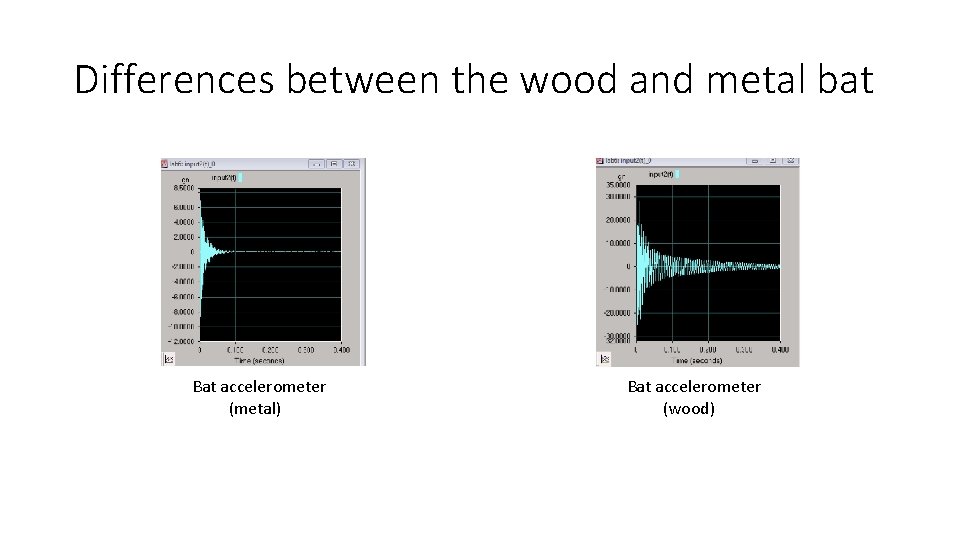
Differences between the wood and metal bat Bat accelerometer (metal) Bat accelerometer (wood)
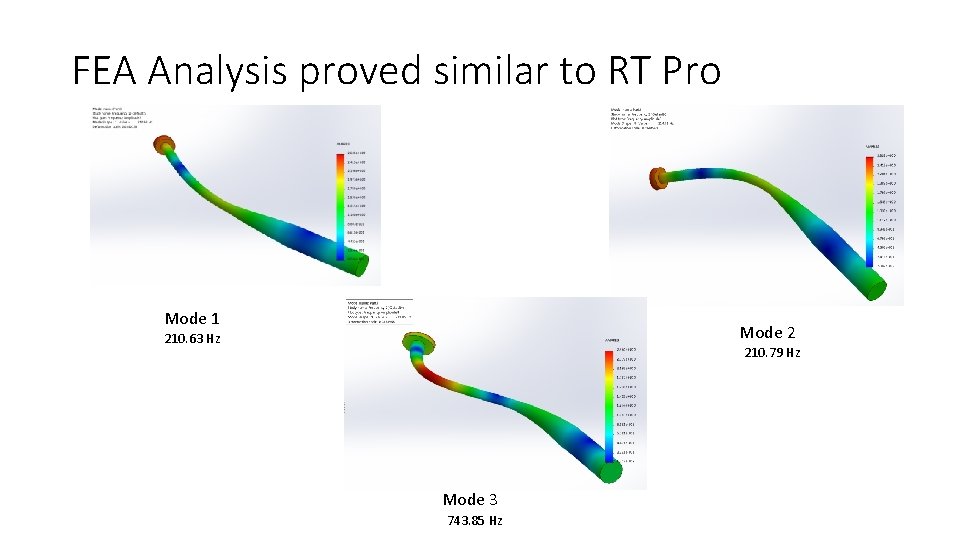
FEA Analysis proved similar to RT Pro Mode 1 Mode 2 210. 63 Hz 210. 79 Hz Mode 3 743. 85 Hz
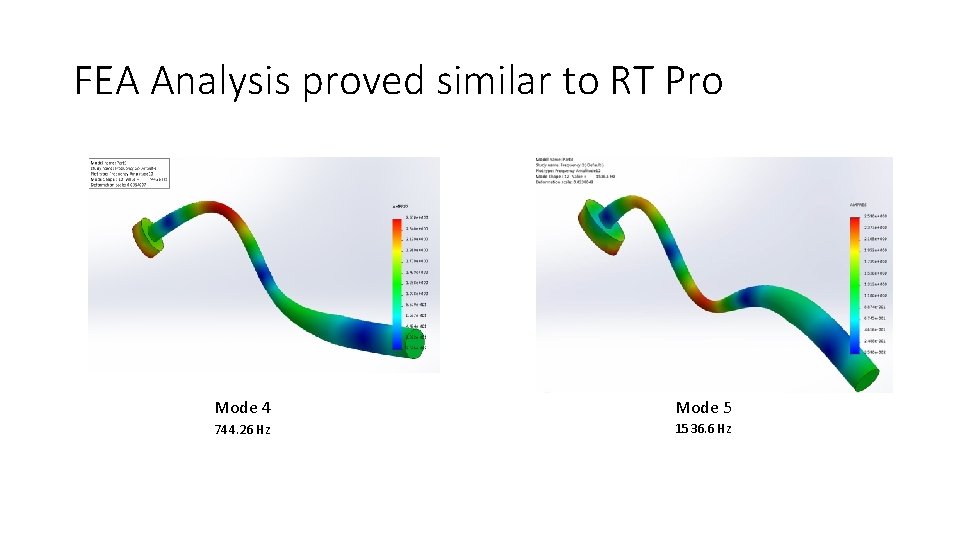
FEA Analysis proved similar to RT Pro Mode 4 Mode 5 744. 26 Hz 1536. 6 Hz

Problems Encountered
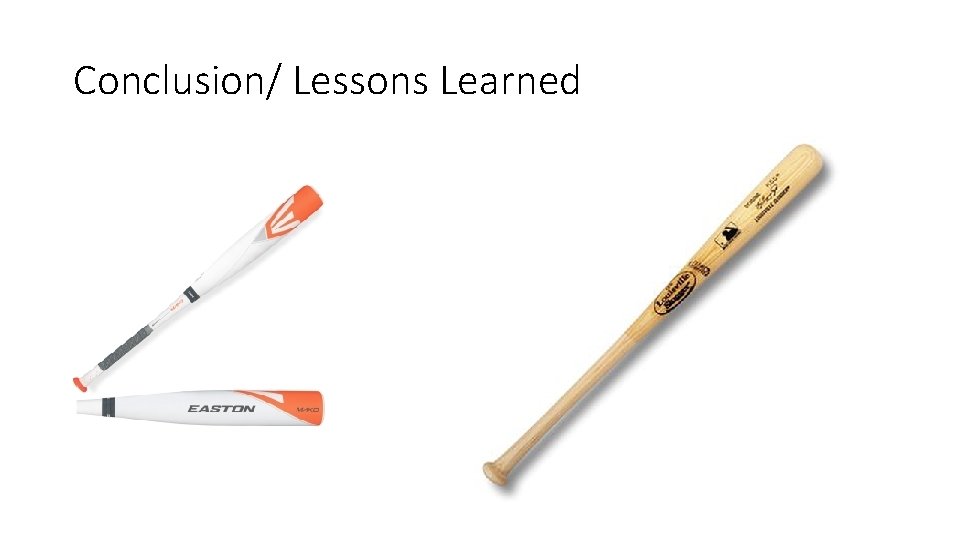
Conclusion/ Lessons Learned
- Slides: 14