
VEYLDF Module 3 Decision making Effective Practice Principles
- Slides: 36
VEYLDF: Module 3 Decision making: Effective Practice Principles
Module 3: Effective Practice Principles Outline Introduction Overview of VEYLDF Professional Support Program Reflection on Module 2 Practice Principles for Learning and Development in the VEYLDF Effective Practice Pronciples Break Integrated Teaching and Learning Approaches Conclusion
Module 3: Effective Practice Principles Outcomes Gain an understanding of the characteristics of the VEYLDF Effective Practice Principles by exploring: Equity and Diversity Cultural Competence Respectful relationships and responsive engagement Learning Communities Learning Environments Integrated Teaching and Learning Approaches
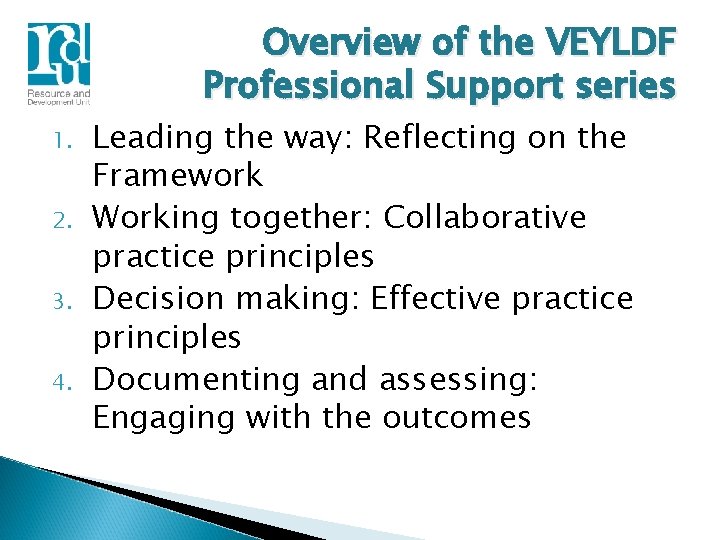
Overview of the VEYLDF Professional Support series 1. 2. 3. 4. Leading the way: Reflecting on the Framework Working together: Collaborative practice principles Decision making: Effective practice principles Documenting and assessing: Engaging with the outcomes
Module 3: Effective Practice Principles Reflection on Module 2 Group discussion What messages or ideas have stayed with you from Module 2? What action have you taken as a result of your participation? What questions have arisen for you and your team/colleagues?
Module 3: Effective Practice Principles Overview of the VEY Collaborative 1. family-centred practice 2. partnerships with professionals 3. high expectations for every child Effective 4. equity and diversity 5. respectful relationships and responsive engagement 6. integrated teaching and learning approaches 7. assessment for learning and development Reflective 8. reflective practice.
Module 3: Effective Practice Principles Equity and Diversity Children’s personal, family and cultural histories shape their learning and development. Children learn when early childhood professionals respect their diversity and provide them with the best support, opportunities and experiences. (VEYLDF p 11. )
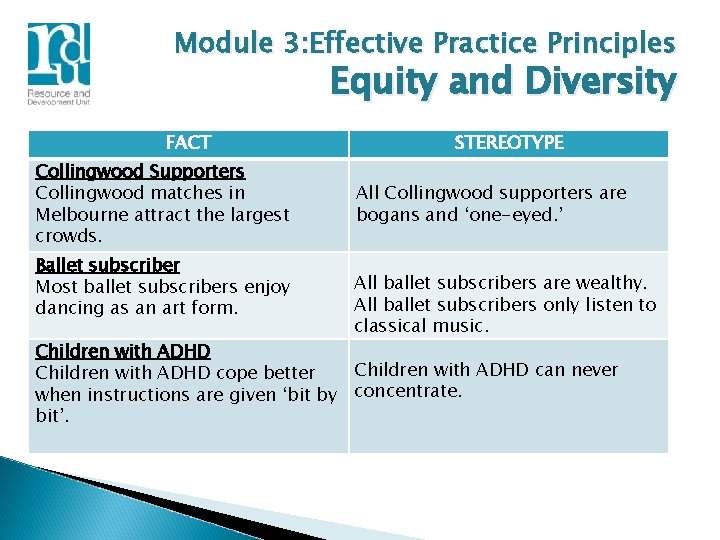
Module 3: Effective Practice Principles Stereotypes and Facts Stereotypes Over-generalisations about an individual or a group of people using fixed, unexamined and pre-conceived ideas. Stereotypes are often limiting and negative Facts Valid assumptions about an individual or a group of people based on factual information
Module 3: Effective Practice Principles Equity and Diversity FACT Collingwood Supporters Collingwood matches in Melbourne attract the largest crowds. Ballet subscriber Most ballet subscribers enjoy dancing as an art form. STEREOTYPE All Collingwood supporters are bogans and ‘one-eyed. ’ All ballet subscribers are wealthy. All ballet subscribers only listen to classical music. Children with ADHD can never Children with ADHD cope better when instructions are given ‘bit by concentrate. bit’.
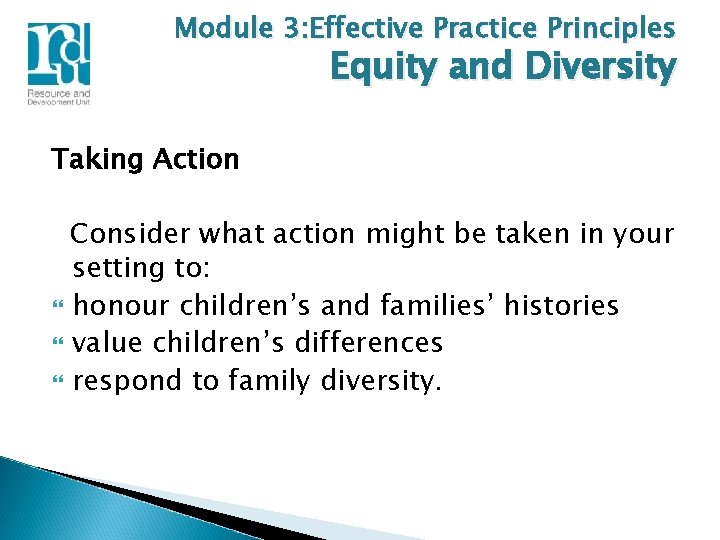
Module 3: Effective Practice Principles Equity and Diversity Taking Action Consider what action might be taken in your setting to: honour children’s and families’ histories value children’s differences respond to family diversity.
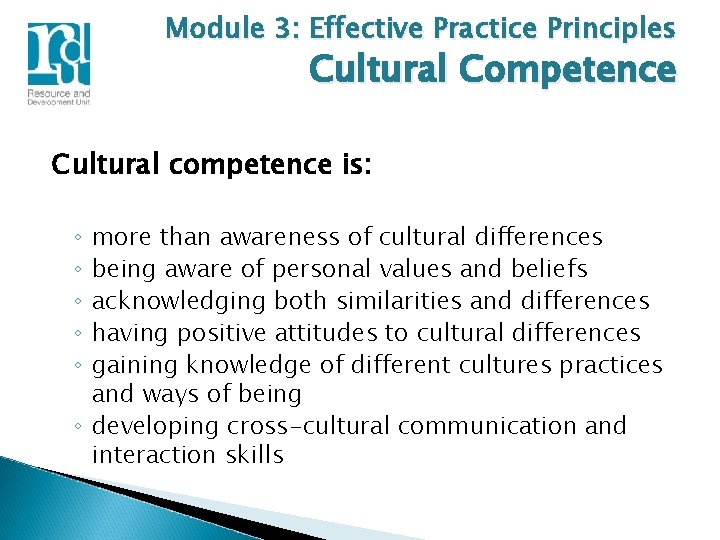
Module 3: Effective Practice Principles Cultural Competence Cultural competence is: more than awareness of cultural differences being aware of personal values and beliefs acknowledging both similarities and differences having positive attitudes to cultural differences gaining knowledge of different cultures practices and ways of being ◦ developing cross-cultural communication and interaction skills ◦ ◦ ◦
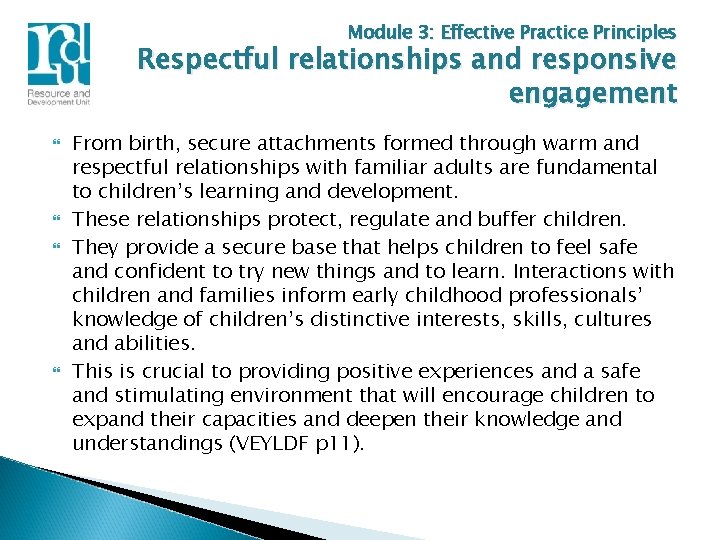
Module 3: Effective Practice Principles Respectful relationships and responsive engagement From birth, secure attachments formed through warm and respectful relationships with familiar adults are fundamental to children’s learning and development. These relationships protect, regulate and buffer children. They provide a secure base that helps children to feel safe and confident to try new things and to learn. Interactions with children and families inform early childhood professionals’ knowledge of children’s distinctive interests, skills, cultures and abilities. This is crucial to providing positive experiences and a safe and stimulating environment that will encourage children to expand their capacities and deepen their knowledge and understandings (VEYLDF p 11).
Module 3: Effective Practice Principles Respectful relationships and responsive engagement Relationships are central to learning. Relationships are not merely warm fuzzy ‘blankets’ that surround children. Relationships support learning by promoting the sharing of expertise, skills and knowledge and allowing for different viewpoints and questions as well as the generation of new ideas and solutions to problems or challenges. Relationships contribute to the development of children’s identity and sense of self (Outcome 1). One of the ways that relationships support learning is by providing a secure foundation for children to take risks and to engage with others as they learn new skills and understandings (Outcome 4).
Module 3: Effective Practice Principles Learning Communities Learning communities are places where: children, families and professionals are encouraged to be active decision makers who question, challenge and make choices professionals feel valued and are actively supported to increase their skills and knowledge professionals are accountable to all stakeholders
Module 3: Effective Practice Principles Learning Communities families are encouraged to be advocates for their children and to share their understanding of their children’s learning with professionals children are supported to co-construct learning with adults or peers inclusive practices promote a strong sense of belonging. (Adapted from Whalley, M. (2008), Involving Parents in their Children’s Learning (2 nd ed. ), London, Paul Chapman Publishing)
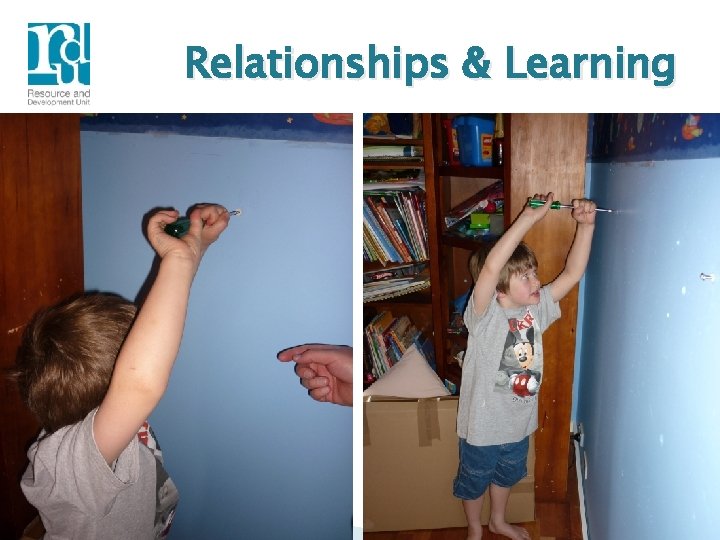
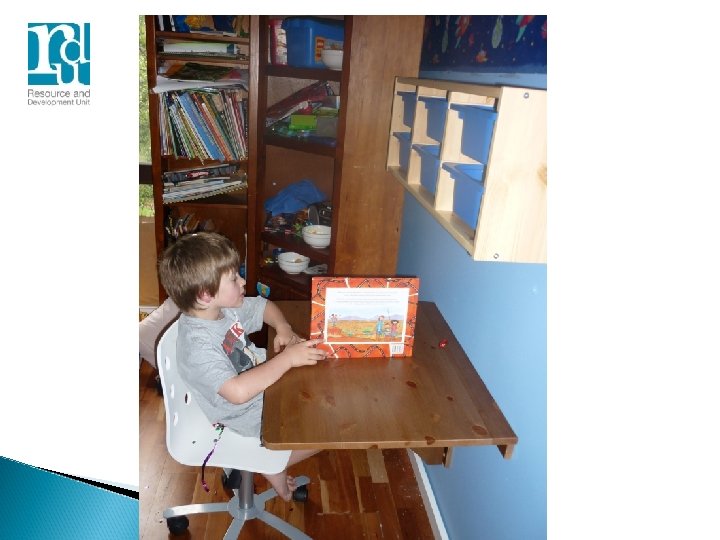
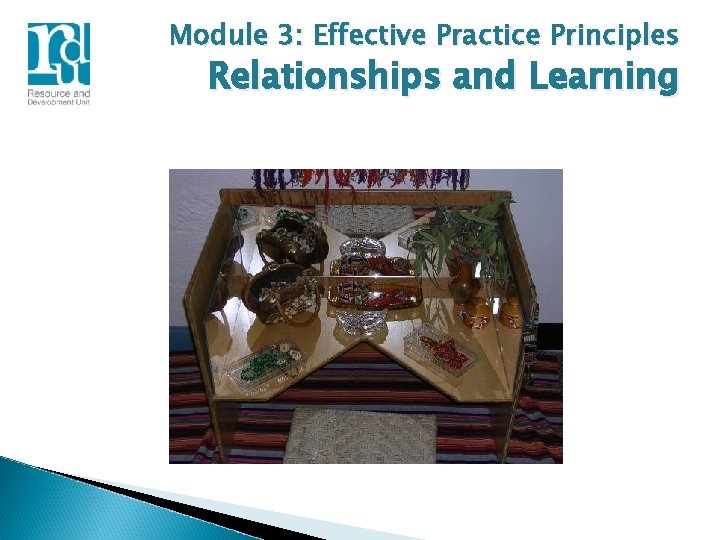
Relationships & Learning
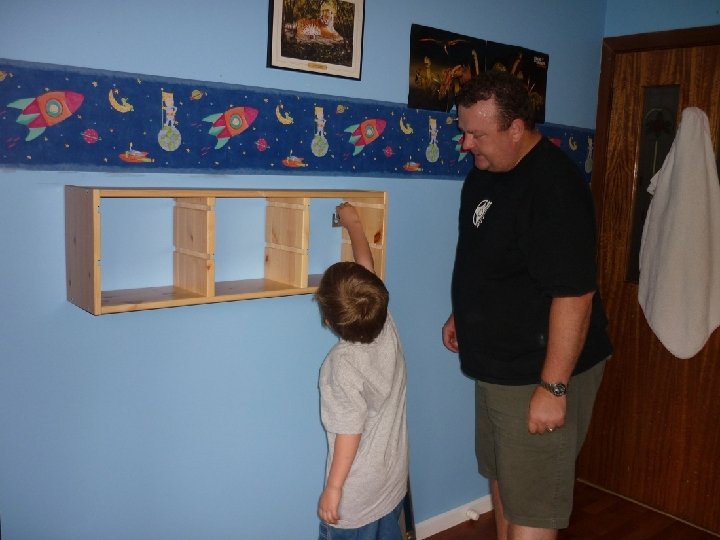
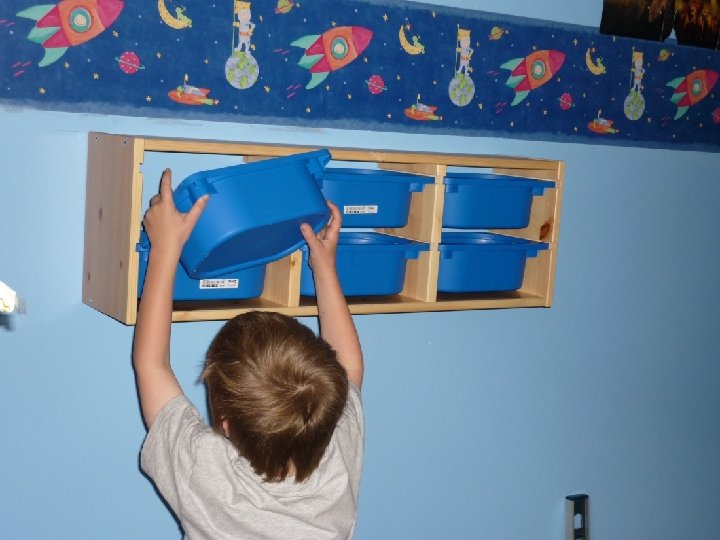
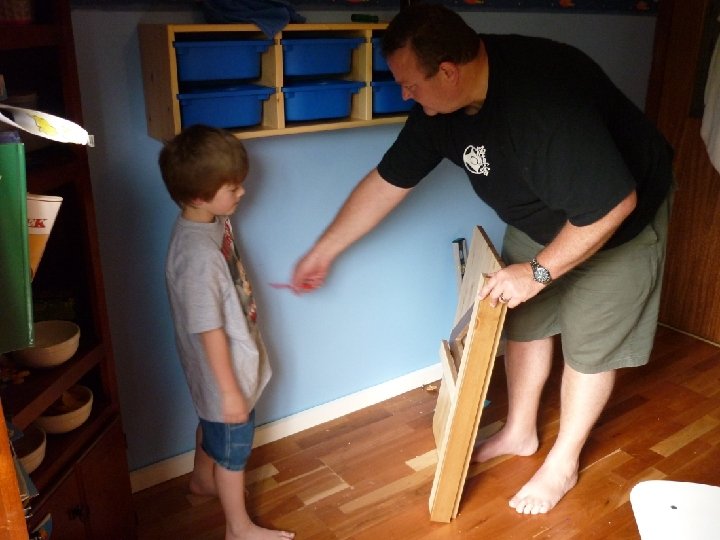
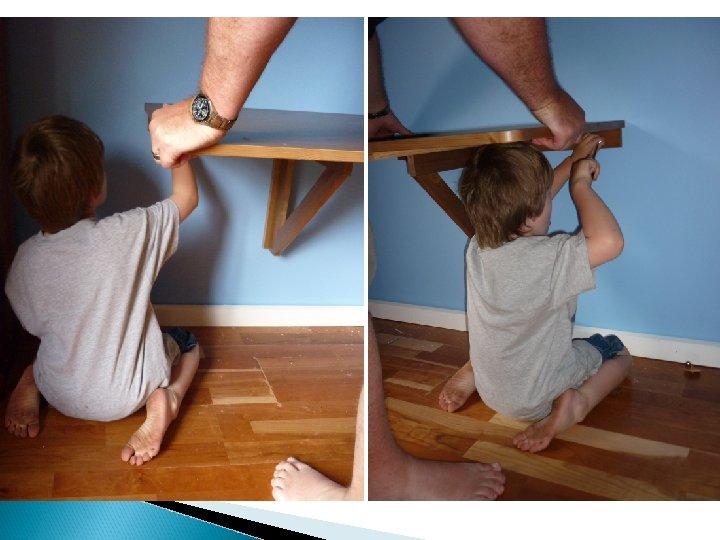
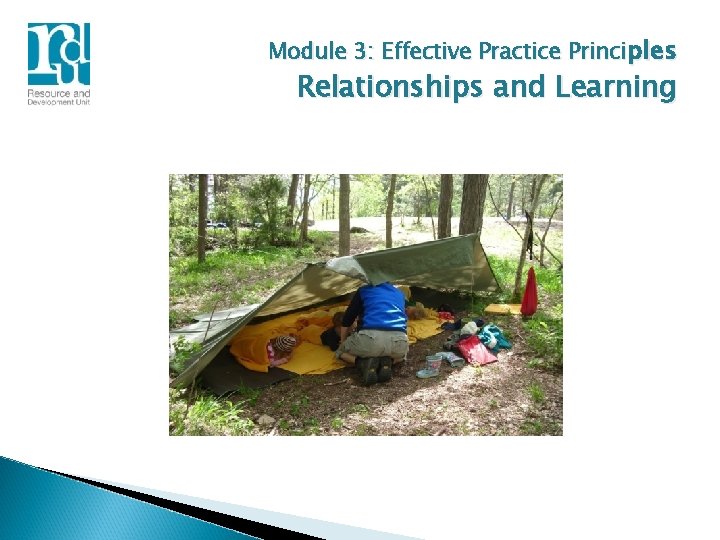
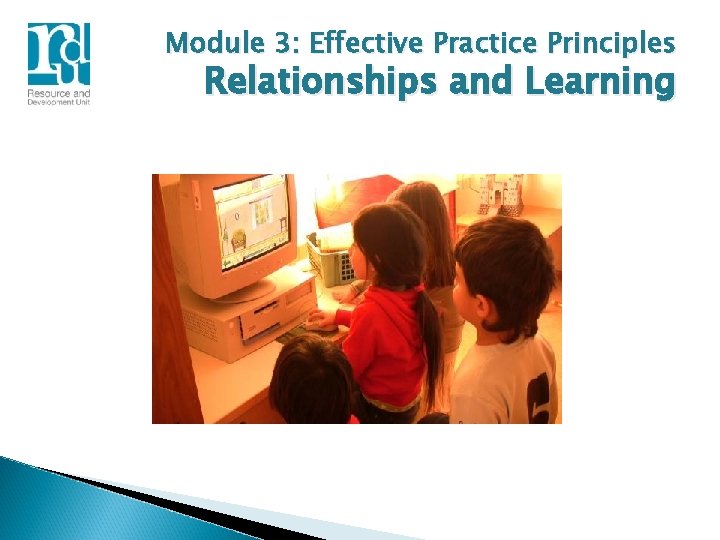
Module 3: Effective Practice Principles Relationships and learning Thinking about relationships and learning What do you notice about the series of images? What do the images tell you about the connection between relationships and learning? What are the key features of this learning experience? What different ‘teaching’ roles does Darryl use in these images? How is Dylan learning as he participates in this experience? What is Dylan learning through his participation in this experience?
Module 3: Effective Practice Principles Relationships and Learning
Module 3: Effective Practice Principles Relationships and Learning
Module 3: Effective Practice Principles Relationships and Learning
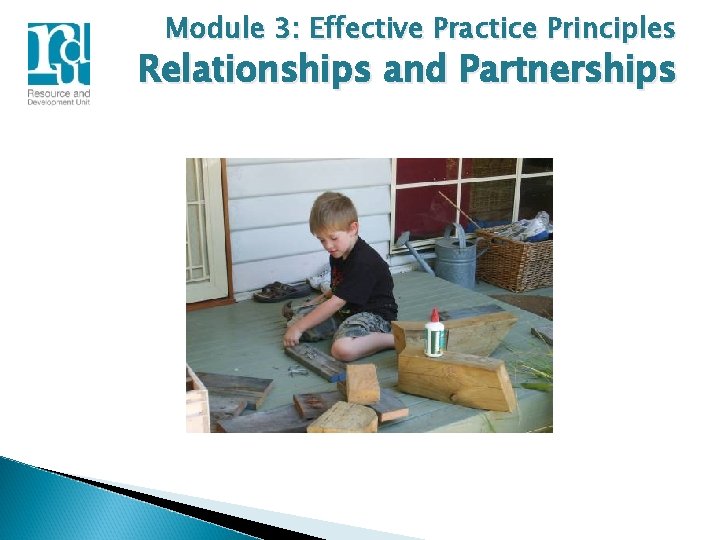
Module 3: Effective Practice Principles Relationships and Partnerships
Module 3: Effective Practice Principles Environments: reflect and enrich the lives of children, families and communities respond to children’s interests, strengths and needs are flexible cater for different learning capacities and styles invite children and families to contribute ideas and to ask questions promote opportunities for sustained shared thinking and collaborative learning support choices welcome everyone and promote wellbeing and security stimulate and sustain learning. (EYLF, p. 15)
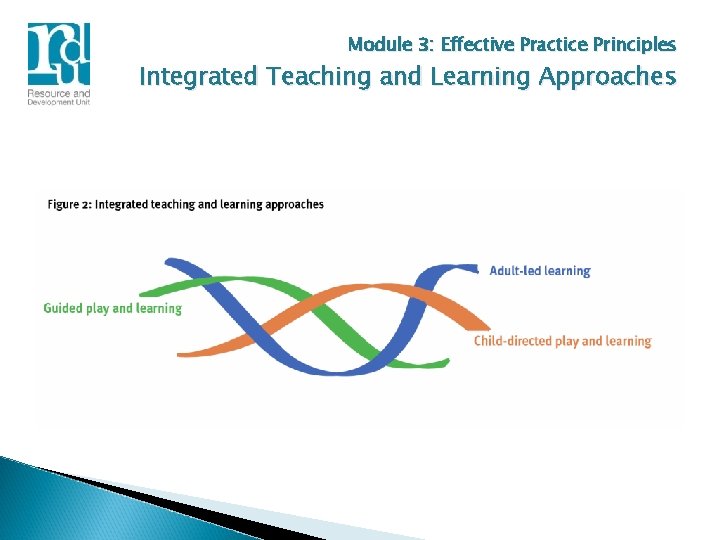
Module 3: Effective Practice Principles Integrated Teaching and Learning Approaches Play Play is a right for children under the UN Convention on the Rights of the Child. The focus is mostly on learning through play – ‘play is the work of children’ – rather than on teaching through play. Play is often a ‘taken-for-granted’ practice in early childhood settings. The role of play in children’s learning is often misunderstood and under-appreciated. Early childhood professionals often lack the ability to explain to others the value of play for learning and as a tool for teaching. Play can be one of the most effective ways for children to make progress and demonstrate their learning across the five Learning Outcomes. Children’s play is not always ‘nice’. For example, children can be excluded from, discriminated in, or treated unfairly in play.
Module 3: Effective Practice Principles Integrated Teaching and Learning Approaches
Module 3: Effective Practice Principles Integrated teaching and learning Both adult-led and child-led learning are important. A balance between child- and adult-initiated learning can be achieved. The best learning experiences are characterised by shifting between the adult leading and the child leading with the adult sustaining the child’s engagement. Children’s continued engagement and interest in the learning experience is an indicator that the balance between the two is right. The professional has to make ongoing judgements about when to lead, when to follow, when and how to extend the learning and when to stand back and observe.
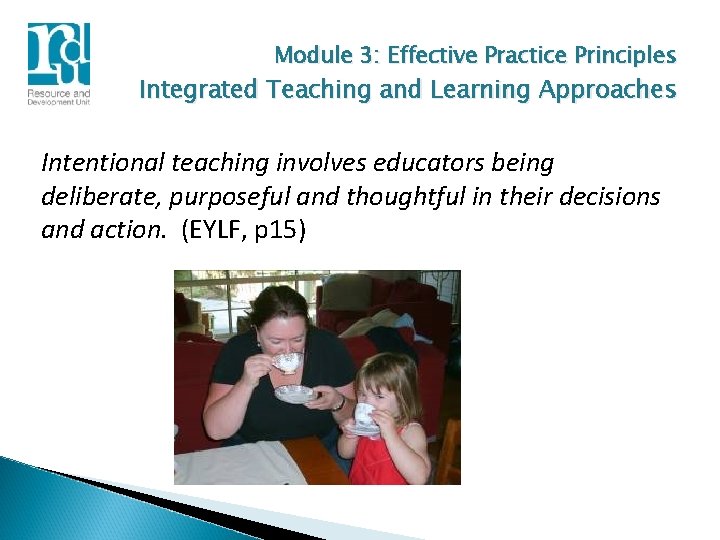
Module 3: Effective Practice Principles Integrated Teaching and Learning Approaches Intentional teaching involves educators being deliberate, purposeful and thoughtful in their decisions and action. (EYLF, p 15)
Module 3: Effective Practice Principles Integrated Teaching and Learning Approaches Deliberate teaching can include: direct instruction (hand washing, crossing the street, art techniques) modelling and demonstrating suggesting an action or solution speculating-‘Do you think. . . ? ’ making links to previous learning-‘Remember when we. . . ? ’ setting up environments to encourage exploration, creativity and play sustaining children’s thinking and interactions asking open-ended questions-‘How did you. . . ? ’ conversations and discussion that extend children’s thinking showing quiet interest as you observe and listen carefully.
Module 3: Effective Practice Principles Integrated Teaching and Learning Approaches Purposeful teaching and learning can include: planning relevant learning experiences which respond to and reflect the contexts of children’s lives and their communities making decisions about what’s worth children knowing taking into account the Practice Principles, pedagogy and Learning Outcomes in the VEYLDF and the EYLF responding to children’s diverse ways of learning and demonstrating that learning.
Module 3: Effective Practice Principles Integrated Teaching and Learning Approaches Thoughtful teaching and learning is: based on critical reflection on practice and research evidence a process of gathering and interpreting information about children’s learning, interests, strengths and needs to inform planning for learning. This process includes children, families and other professionals.
Module 3: Effective Practice Principles Integrated Teaching and Learning Approaches Discuss the concepts of deliberate, purposeful and thoughtful teaching. What do these terms mean? Identify an example of each one.
Action Plans All training under the auspices of CCC/PSC is focused on supporting positive changes in practice as a result of participant attendance. Action plans support this process of change and will be integral to each Module and to supporting changes or transformations in practice Please take time to identify at least two points of action to take back to your service to reflect upon with your colleagues