
Veterinary Waste Disposal Disposal of Waste Anyone who
- Slides: 17
Veterinary Waste Disposal
Disposal of Waste • Anyone who produces, imports, keeps, stores, transports, treats or disposes of waste must take all reasonable steps to ensure that waste is managed properly. • This duty of care is imposed under section 34 of the Environmental Protection Act 1990. • A breach of the duty of care could lead to a penalty of up to £ 5, 000 if convicted in the Magistrates Court or an unlimited fine if convicted in the Crown Court
• Waste is defined in the Environment Act 1995 as: • ‘Any substance or object which the holder discards or intends to, or is required to discard (Environmental Protection Act 1990)
• The veterinary practice will be required to perform procedures and protocols to prevent risk to staff and members of the public • The Environmental Protection Act 1990 states ‘ all establishments are responsible for their own waste’. This act was amended in 1992 to include ‘duty of care for controlled waste’. This means that there is a responsibility for disposing waste made by a business, and this is the responsibility of the employer. • This waste should also be segregated and easily identified • This waste should be in a secured area outside the company
• http: //www. bva. co. uk/uploaded. Files/BVA_Go od_practice_guide_to_handling_veterinary_w aste_in_England_Wales. pdf
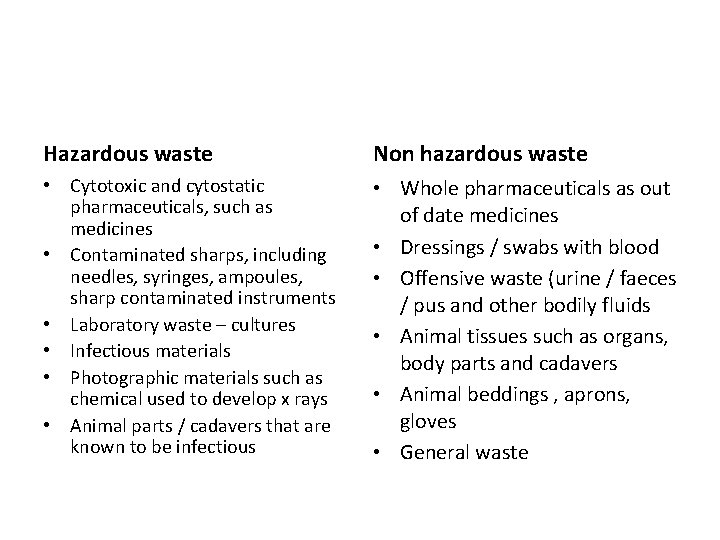
Hazardous waste Non hazardous waste • Cytotoxic and cytostatic pharmaceuticals, such as medicines • Contaminated sharps, including needles, syringes, ampoules, sharp contaminated instruments • Laboratory waste – cultures • Infectious materials • Photographic materials such as chemical used to develop x rays • Animal parts / cadavers that are known to be infectious • Whole pharmaceuticals as out of date medicines • Dressings / swabs with blood • Offensive waste (urine / faeces / pus and other bodily fluids • Animal tissues such as organs, body parts and cadavers • Animal beddings , aprons, gloves • General waste
Types of waste within the veterinary practice • Name types of waste you would find within the veterinary practice
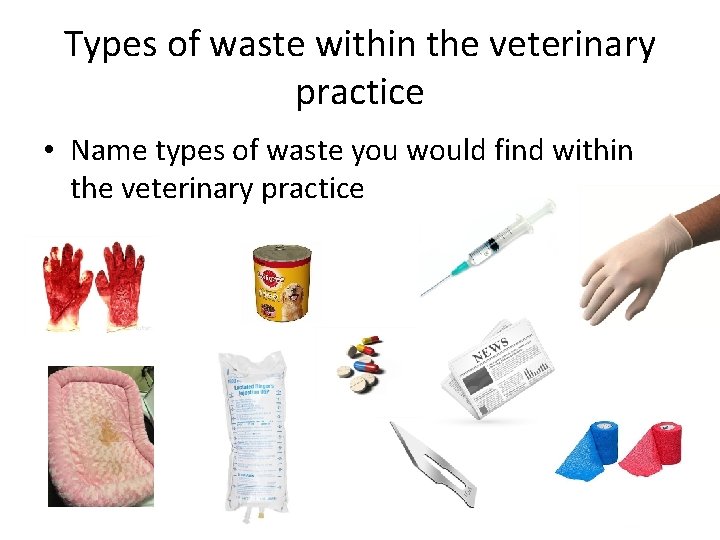
Types of waste within the veterinary practice • Name types of waste you would find within the veterinary practice
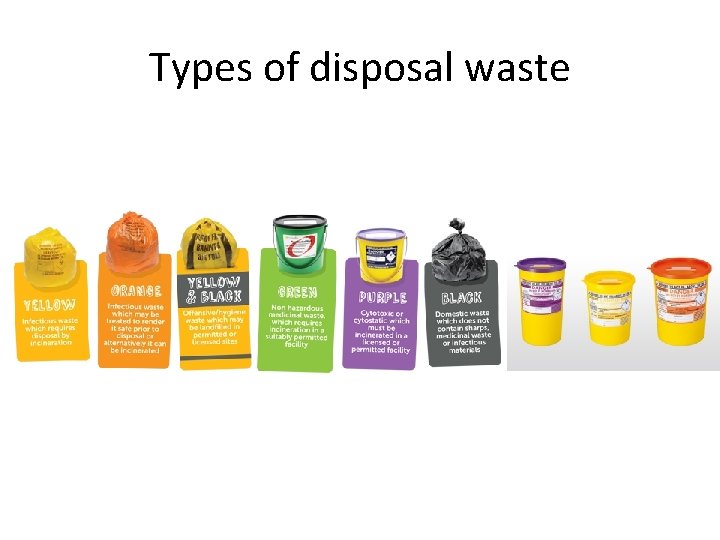
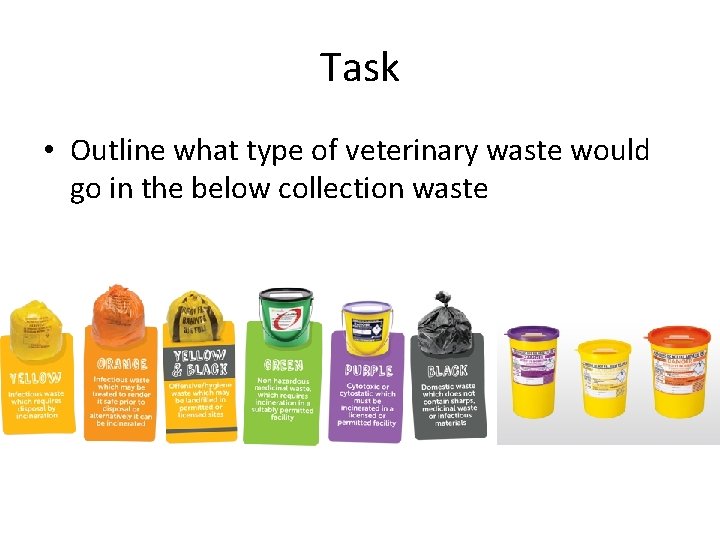
Types of disposal waste
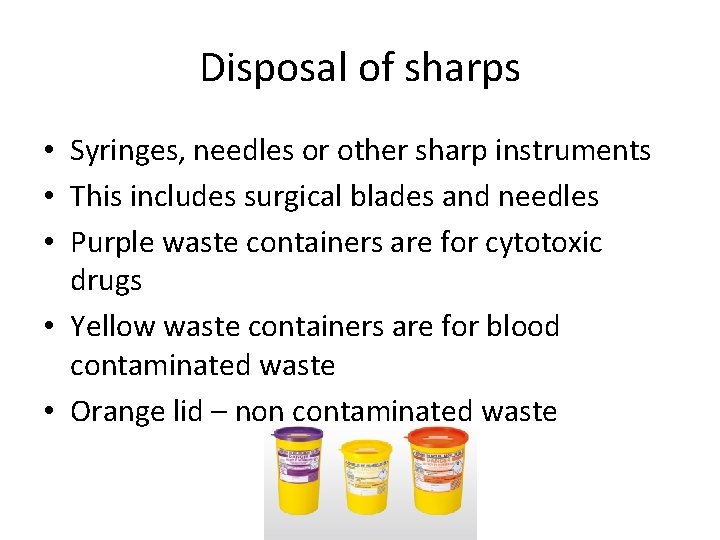
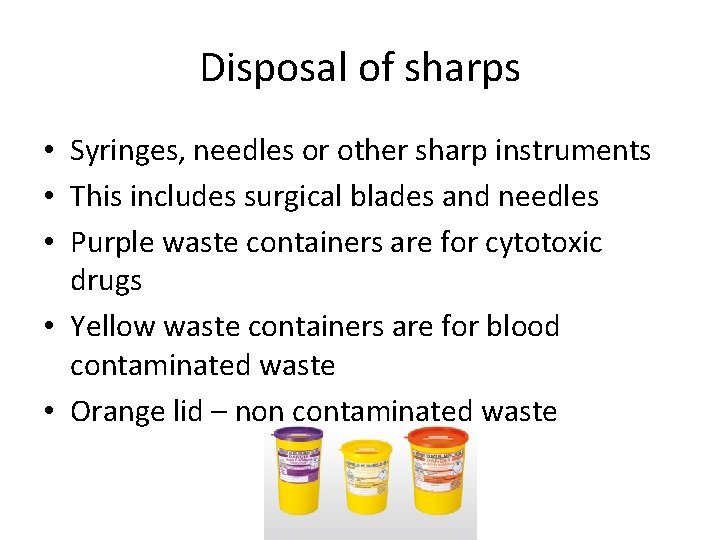
Disposal of sharps • Syringes, needles or other sharp instruments • This includes surgical blades and needles • Purple waste containers are for cytotoxic drugs • Yellow waste containers are for blood contaminated waste • Orange lid – non contaminated waste
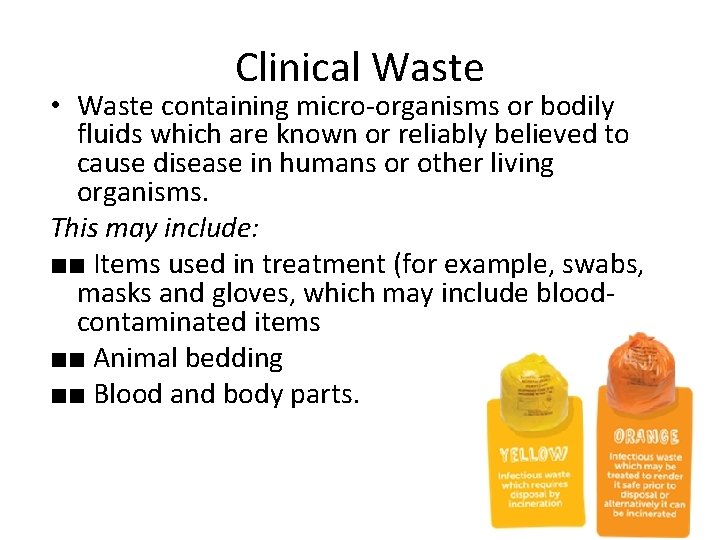
Clinical Waste • Waste containing micro-organisms or bodily fluids which are known or reliably believed to cause disease in humans or other living organisms. This may include: ■■ Items used in treatment (for example, swabs, masks and gloves, which may include bloodcontaminated items ■■ Animal bedding ■■ Blood and body parts.
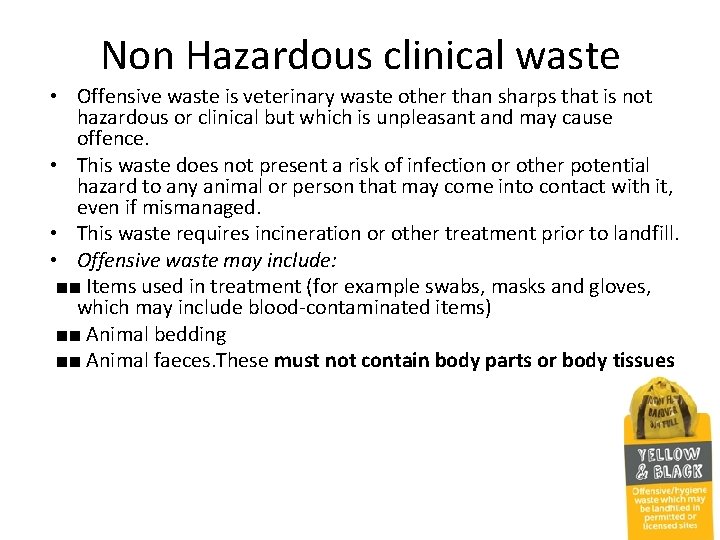
Non Hazardous clinical waste • Offensive waste is veterinary waste other than sharps that is not hazardous or clinical but which is unpleasant and may cause offence. • This waste does not present a risk of infection or other potential hazard to any animal or person that may come into contact with it, even if mismanaged. • This waste requires incineration or other treatment prior to landfill. • Offensive waste may include: ■■ Items used in treatment (for example swabs, masks and gloves, which may include blood-contaminated items) ■■ Animal bedding ■■ Animal faeces. These must not contain body parts or body tissues
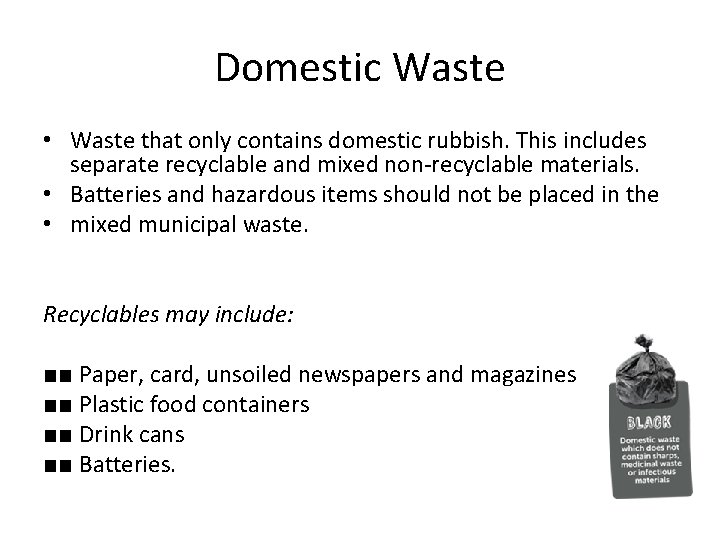
Domestic Waste • Waste that only contains domestic rubbish. This includes separate recyclable and mixed non-recyclable materials. • Batteries and hazardous items should not be placed in the • mixed municipal waste. Recyclables may include: ■■ Paper, card, unsoiled newspapers and magazines ■■ Plastic food containers ■■ Drink cans ■■ Batteries.
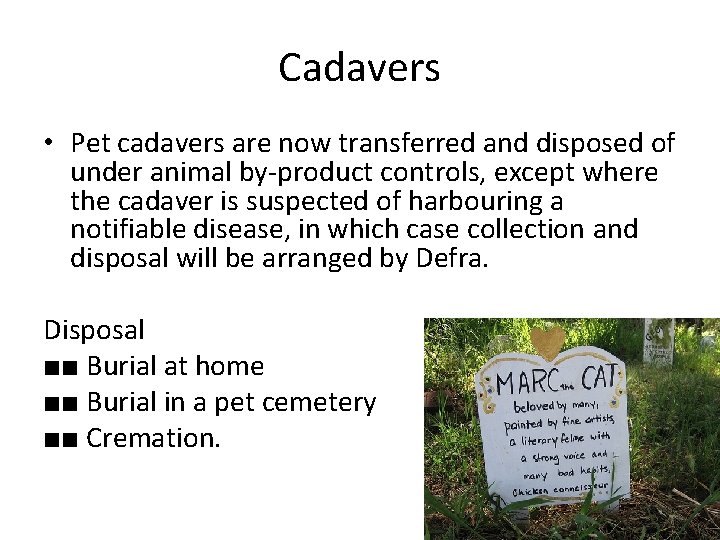
Cadavers • Pet cadavers are now transferred and disposed of under animal by-product controls, except where the cadaver is suspected of harbouring a notifiable disease, in which case collection and disposal will be arranged by Defra. Disposal ■■ Burial at home ■■ Burial in a pet cemetery ■■ Cremation.
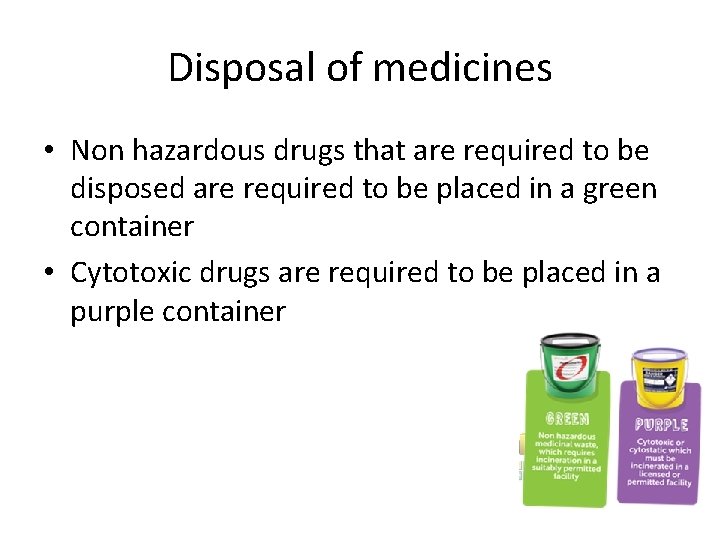
Disposal of medicines • Non hazardous drugs that are required to be disposed are required to be placed in a green container • Cytotoxic drugs are required to be placed in a purple container
Disposal of sharps • Syringes, needles or other sharp instruments • This includes surgical blades and needles • Purple waste containers are for cytotoxic drugs • Yellow waste containers are for blood contaminated waste • Orange lid – non contaminated waste
Task • Outline what type of veterinary waste would go in the below collection waste