
Veterinary Microbiology Unit1 Plasmids and Antibiotic resistance Dr
Veterinary Microbiology (Unit-1) Plasmids and Antibiotic resistance Dr. Savita Kumari Assistant Professor-cum-Jr. Scientist Department of Veterinary Microbiology Bihar Veterinary College, BASU, Patna
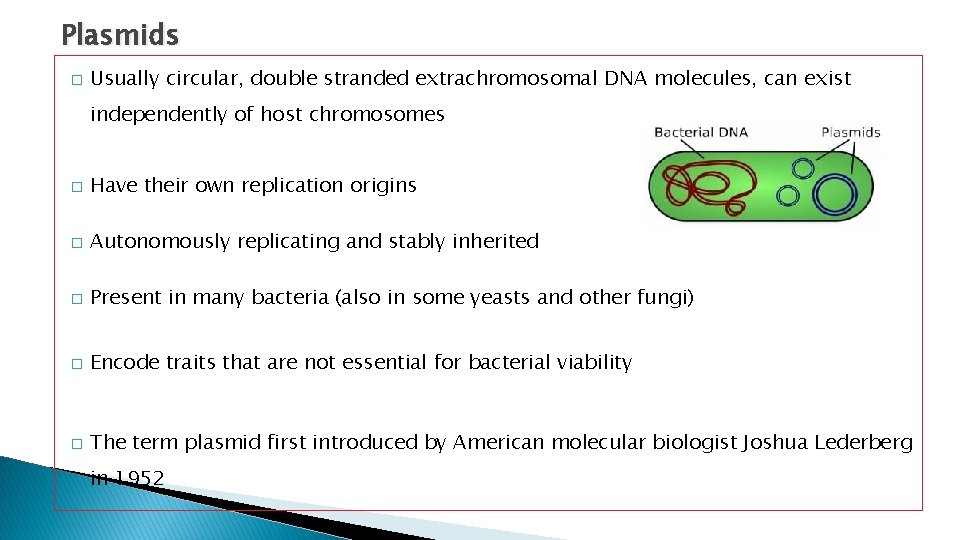
Plasmids � Usually circular, double stranded extrachromosomal DNA molecules, can exist independently of host chromosomes � Have their own replication origins � Autonomously replicating and stably inherited � Present in many bacteria (also in some yeasts and other fungi) � Encode traits that are not essential for bacterial viability � The term plasmid first introduced by American molecular biologist Joshua Lederberg in 1952
. . � � � Plasmids and bacterial chromosomes separate replicons Replicon- DNA molecule or sequence, has replication origin, capable of being replicated Usually much smaller than bacterial chromosome (< 5 to > several 100 kbp) � As large as 2 million base pairs in some bacteria � Present in both Gram-positive and Gram-negative bacteria � Relatively few genes, generally less than 30 � Genetic information not essential to host, bacteria lacking them usually function normally
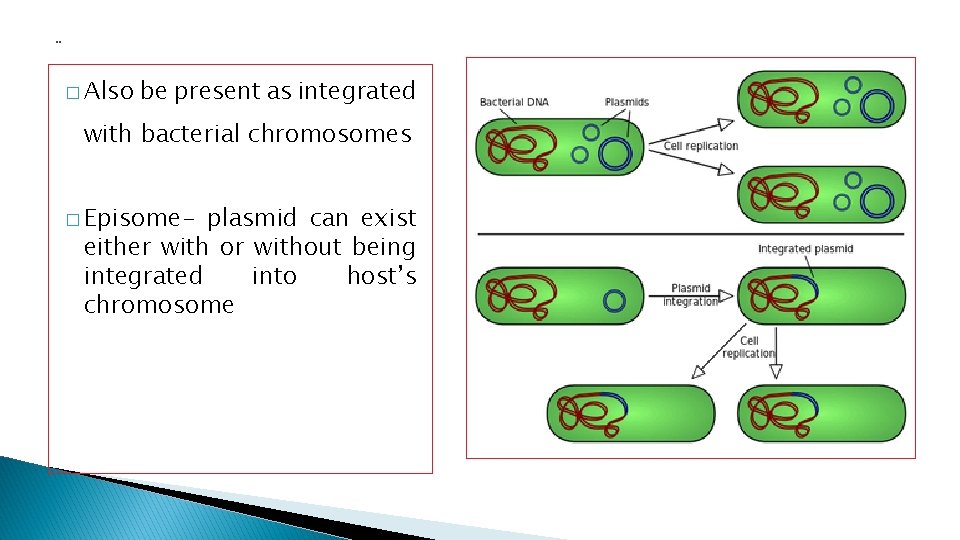
. . � Also be present as integrated with bacterial chromosomes � Episome- plasmid can exist either with or without being integrated into host’s chromosome
. . � Single-copy plasmids produce only one copy per host cell � Multicopy plasmids- 40 or more per cell � Curing-plasmids can be eliminated from host Cells � Spontaneous � or induced by treatments that inhibit plasmid replication while not affecting host cell reproduction � Some commonly used curing treatments: v Acridine mutagens v UV and ionizing radiation v Thymine starvation v Growth above optimal temperatures
Types of plasmids Transmissibility of plasmids: Transmissible/ conjugative plasmids: � Transferred from cell to cell by conjugation � Large plasmids � � Contain genes responsible for synthesis of sex pilus and enzymes required for processing transfer of genetic material Usually, one to three copies present in a cell Non-transmissible/ non-conjugative plasmids: � Cannot be transferred from cell to cell � Small � Have high copy numbers (typically 10– 60 per chromosome)
Fertility plasmids/F-plasmids/ F factor � Contain transfer (tra) genes- genetic materials through conjugation � Conjugative plasmids � Genes for production of sex pilus, enzymes required for conjugation � Also � contains genes involved in their own transfer Episomes � Bacteria having F-plasmid: F positive (F+), function as donors � Bacteria without it : F negative (F–), behave as recipients
F factor � plays a major role in conjugation in E. coli , first described � About 100 kilobases long information for plasmid transfer in tra operon, at least 28 genes � Most � Several � assist segments- insertion sequences plasmid integration into the host cell chromosome

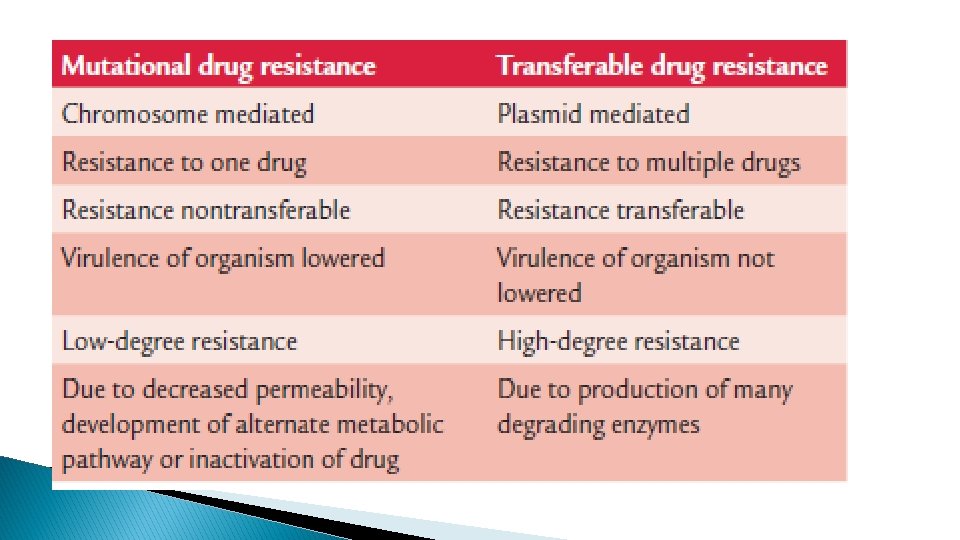
R factor/Resistance factors/ Resistance plasmids � Conjugative � Two plasmids components of R factor : resistance transfer factor (RTF) and resistant determinant (r) � RTF - conjugational transfer, required for transfer of the plasmid between bacteria � r-determinant carries genes conferring antibiotic resistance
Functions of R factor: � Spread of multiple-drug resistance among bacteria � Carry genes for a variety of enzymes that can destroy antibiotics and modify membrane transport system � May carry one or more antibiotic resistance gene � Resistance � May to more than one type of antibiotics also carry genes for resistance to metal ions � Carry resistance to certain bacteriophages by coding for the enzymes, e. g. , restriction endonucleases that degrade the DNA of the infecting bacteriophages
Colicinogenic (Col) factor /Col Plasmids � Competitive advantage � Bacteriocins- � Bacterial proteins that destroy other bacteria � Usually act only against closely related strains � host unaffected by the bacteriocin it produces � kill cells by forming channels in plasma membrane � Degrade DNA and RNA � Attack peptidoglycan and weaken the cell wall
. . � Col plasmids- genes for synthesis of bacteriocins � large self-transmissible plasmids, or small nonconjugative, but mobilizable � Colicin directed against E. coli � Similar plasmids carry genes for bacteriocins against other species � Diphthericin- by Corynebacterium diphtheria � Pyocins- by Pseudomonas aeruginosa � Some Col plasmids are conjugative and also can carry resistance genes
Virulence Plasmids � make their hosts more pathogenic � bacterium better able to resist host defense or to produce toxins � help bacteria infect humans, animals Adhesive fimbriae in E. coli � carry genes for virulence on plasmids e. g. Bacillus anthracis- Toxin, capsule Clostridium tetani- Tetanus toxin � usually large, low copy elements � usually transmitted between hosts by conjugation
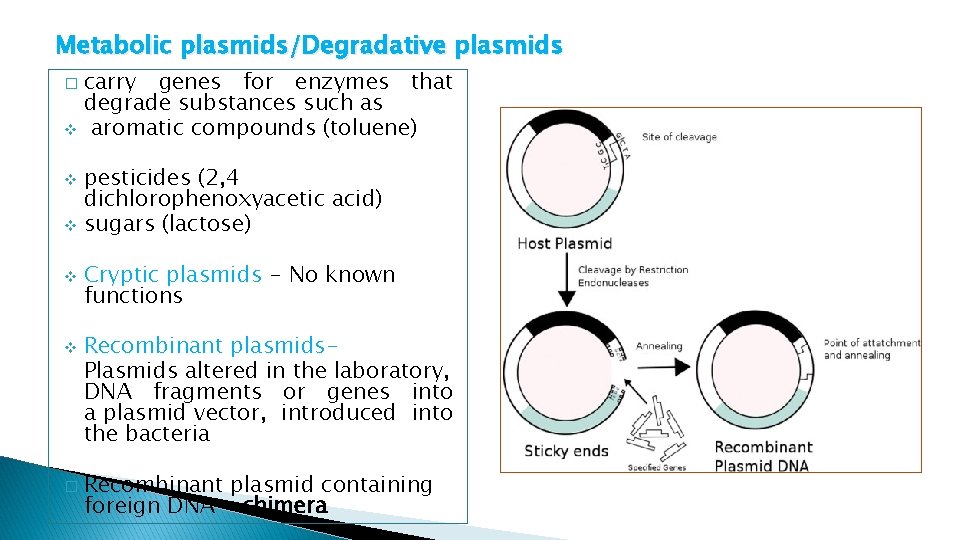
Metabolic plasmids/Degradative plasmids carry genes for enzymes that degrade substances such as v aromatic compounds (toluene) � pesticides (2, 4 dichlorophenoxyacetic acid) v sugars (lactose) v v v � Cryptic plasmids - No known functions Recombinant plasmids. Plasmids altered in the laboratory, DNA fragments or genes into a plasmid vector, introduced into the bacteria Recombinant plasmid containing foreign DNA - chimera
Functions of plasmids: � Survival of the organism � Many plasmids control medically important properties of pathogenic bacteria v resistance to one or several antibiotics v production of toxins v synthesis of cell surface structures required for adherence or colonization � Plasmids used in genetic engineering - vectors v Used to amplify, or produce many copies of certain genes � To make large amounts of proteins � Gene therapy
Antibiotic Resistance . . Antibiotic • chemical substances, produced by various microorganisms • Antimicrobial substance active against bacteria • used to prevent and treat bacterial infections Antibiotic resistance • occurs when bacteria change in response to use of antibiotics • survive and reproduce in the presence of antibiotic doses that were previously thought effective against them
Mechanisms of Antibiotic Resistance � � � Production of enzymes Inactivate antibiotics Enzyme Beta-lactamase destroys penicillins and cephalosporins by splitting the Beta-lactam ring of drug Enzymatic alteration of the target site Synthesis of modified targets against which the antibiotic has no effect Alteration of permeability of cell wall by changing their permeability to the drug- effective intracellular concentration of antibiotic not achieved inside bacterial cell � � � Alteration of metabolic pathways that bypasses the reaction inhibited by the drug Efflux pumps resistance to many groups of antibiotics including aminoglycosides, quinolones etc.
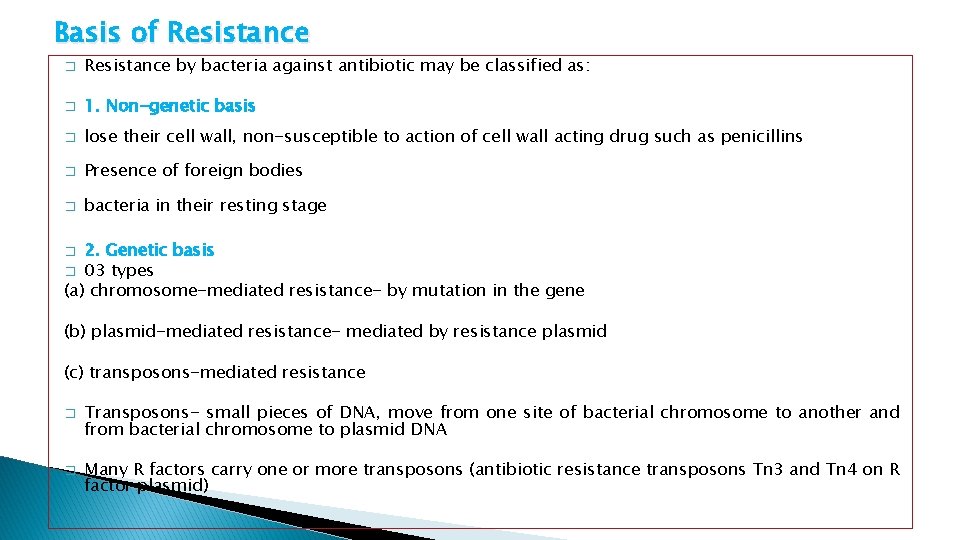
Basis of Resistance � Resistance by bacteria against antibiotic may be classified as: � 1. Non-genetic basis � lose their cell wall, non-susceptible to action of cell wall acting drug such as penicillins � Presence of foreign bodies � bacteria in their resting stage 2. Genetic basis � 03 types (a) chromosome-mediated resistance- by mutation in the gene � (b) plasmid-mediated resistance- mediated by resistance plasmid (c) transposons-mediated resistance � � Transposons- small pieces of DNA, move from one site of bacterial chromosome to another and from bacterial chromosome to plasmid DNA Many R factors carry one or more transposons (antibiotic resistance transposons Tn 3 and Tn 4 on R factor plasmid)
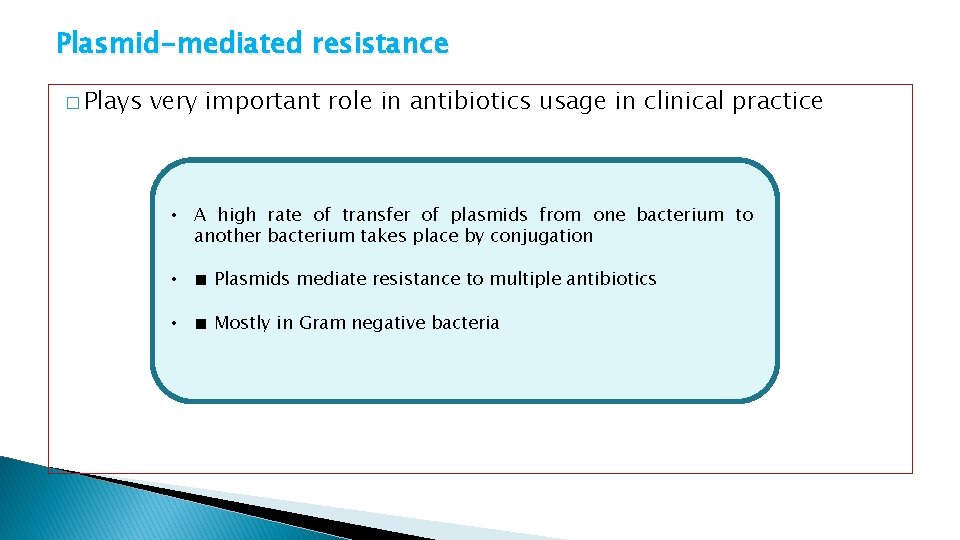
Plasmid-mediated resistance � Plays very important role in antibiotics usage in clinical practice • A high rate of transfer of plasmids from one bacterium to another bacterium takes place by conjugation • ■ Plasmids mediate resistance to multiple antibiotics • ■ Mostly in Gram negative bacteria
- Slides: 20