
Veterinary forensic investigation THIS PRESENTATION IS SUPPORTED BY
Veterinary forensic investigation THIS PRESENTATION IS SUPPORTED BY VFU IVA PROJECT NO. 2019 FVHE/2380/63

The content of presentation Forensic investigation Primary crime scene analysis Collection of evidence Secondary crime scene analysis Veterinary toxicology DNA analysis
Forensic investigation Investigations can generally be divided into primary and secondary crime scene analysis Primary crime scene analysis - crime scene investigation, victims, recognition and evidence collection, photo documentation Secondary crime scene analysis - takes place outside the crime scene, may include analysis of crime scene traces, laboratory techniques, necropsy and various
Role of an animal Due to the investigation, the animal may be at the scene: 1. a victim - most often (violence, neglect, generally abuse) 2. a suspect - predator, dog attacks on man… 3. a witnesses - keeping physical evidence in hair, claws, mouth. . . The theory says that if a victim meets a suspect at the scene, and the witnesses leave a mark on each meeting, therefore, even without verbal communication, the animal can testify in the form of preserving physical evidence in the fur… (the body of the dog may be indicative of the presence of the dog at the site)
Primary crime scene analysis - crime scene investigation Different types of crime scene, sometimes livestock, sometimes wild, sometimes pets Sometimes the investigation takes place on the farm, sometimes at the owner's home, sometimes in the shelter The investigator must have the experience to be able to identify possible evidence at any crime scene, be able to document, collect and transport
Crime Scene - First Steps of Investigation The first person to arrive at the crime scene is likely to be a policeman or official veterinarian He / she should assess the risk to himself / herself and other people or animals He should write down the remarks he gives to the investigator: his name, office, date and time of reporting suspicion (a phone call from neighbors), time of arrival at the crime scene, outdoor conditions (weather at that time) and observation results - mainly transient events (the presence of wild animals at the crime scene, which at the time of the arrival of the investigators may no longer be at the scene, the sound of animals, the smell) Any further investigation of the crime scene should be entrusted to specialists in order not to destroy the evidence
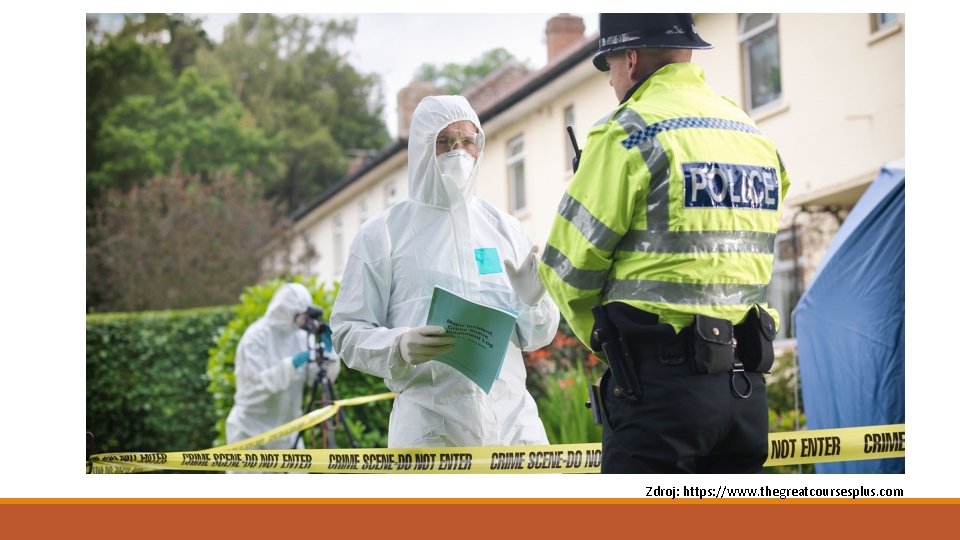
Crime Scene - First Steps of Investigation After an assessment of the safety at the crime scene for the person calling the investigator, for other people, for animals, it is possible to request the arrival of the emergency services and private veterinarians at the crime scene He should secure the crime scene until the official investigator arrives The delimitation of the crime scene may be by means of tapes guarded by police officers, police cars, or the delimitation of the crime scene may be given by the nature of the crime scene (eg. apartment, residence, limited area)
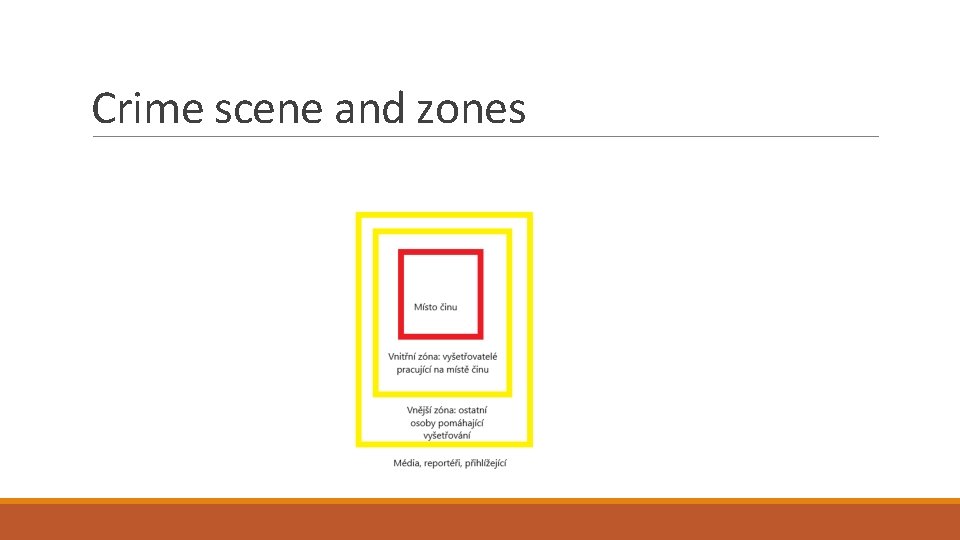
Crime scene and zones
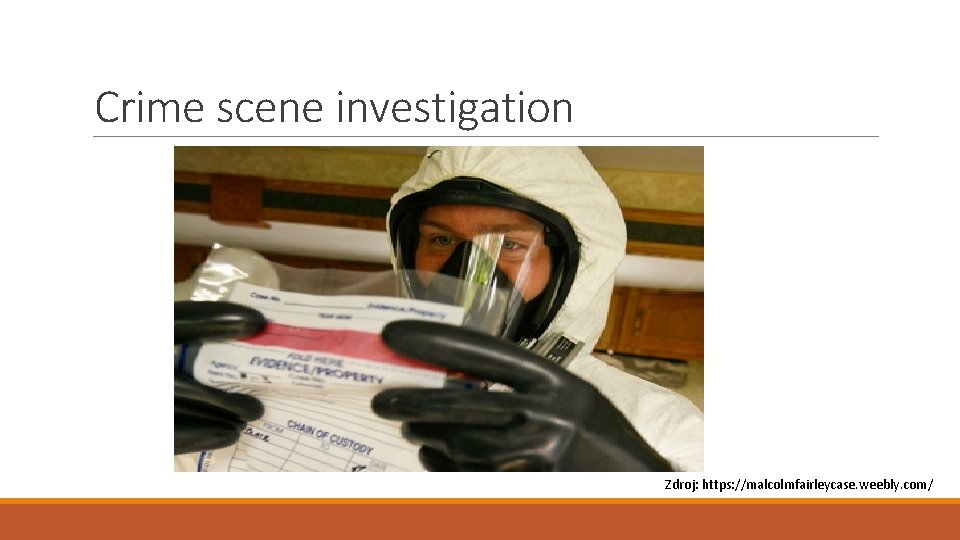
Crime Scene - First Steps of Investigation Every time there is an animal or more animals in the crime scene, the crime scene can be very chaotic and will require some investigator skills Nevertheless, the crime scene should not be viewed differently than the crime scene involving only humans Procedures and methods of investigation in veterinary forensic science are taken from human forensic science and its investigation, extended by animal specificities Whether it is a crime scene involving animals or humans, investigator protection comes first Personal protective equipment such as gloves, masks, and protective clothing help to protect investigators at the scene
Zdroj: https: //www. thegreatcoursesplus. com
Crime scene Protective equipment also prevents contamination and degradation of evidence at the scene It is also necessary to change the protective equipment depending on the manner and nature of the samples to be analyzed (eg. biological material, etc. ) Sometimes it is necessary to summon humane specialists or vice versa for veterinary forensic investigators to participate in the investigation of a crime committed against humans
Crime scene investigation Zdroj: https: //malcolmfairleycase. weebly. com/
Crime Scene - First Steps of Investigation The investigator should establish the procedures and methodology of the investigation before entering the crime scene Investigation methods should be as effective as possible and effectively document, collect and preserve evidence at the scene The aim of the investigation methodology is to obtain the best evidence for later analysis The model scheme of the procedure at the crime scene investigation is typically: clockwise, counter, grid, spiral In the scheme, it is necessary to determine the start and end points of the crime scene
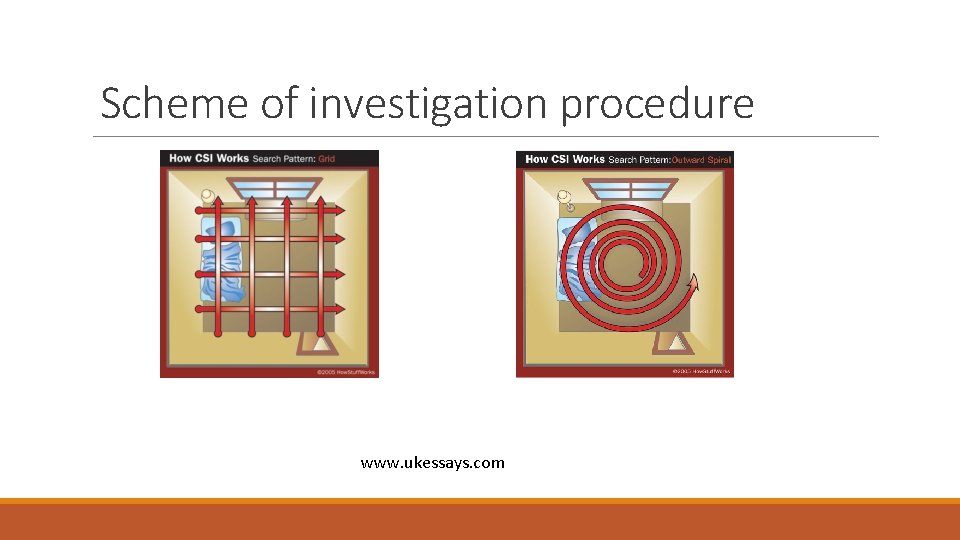
Scheme of investigation procedure www. ukessays. com
Crime scene investigation All of these procedures can normally be used at various crime scenes, but not at all There also less common practices, such as GPS coordination, which is better suited for largescale crime scenes The crime scene, which contains special evidence and traces, requires the investigator to choose an effective way of mapping the crime scene (for example, in the case of an animal injury that leaves blood traces, it is better to choose a tracking scheme that allows analysis around the traces left)
Crime scene investigation Prior to the investigation, the investigator should assess the scene, the security, the content of the scene by going through the scene and noting everything he or she observes. Everything is recorded and according to the notes will be chosen an effective way to investigate the crime scene Notes may include: crime scene property, building, crime scene sides (sides may be marked by compass orientation or by the letters "A" on the front of the building and gradually along the sides to back) A light source inspects the crime scene and the dark corners of the crime scene before investigating
Crime scene investigation While browsing the scene, some signs of animal neglect (starvation, dehydration, drug problems, too small collars…) as well as other forms of animal cruelty, signs of attack or fighting between animals may be observed Passing the crime scene should result in recording environmental conditions, availability of food, water, medicines and the presence of animal injuries Evidence should also be recorded that could quickly perish or disappear (whine, lamentation of animals, odor, presence of other wild animals, etc. )
Crime scene investigation Further evidence must be documented with photographs or video from the crime scene At the same time, ensure witnesses, suspects or victims, if possible Examples of the most common evidence at the scene: firearms, knives, body scratches, body wounds, prescription medications, medical reports, medication prescriptions, excessive money at crime scene, presence of body fluids on walls or floor, presence of flammable substances, fingerprints, shoe prints, animal footprints … After examining the scene, the investigator may reconsider the investigation procedure Everything should be documented
Documentation on crime scene Comments/notes Photo Video Draw / diagram
Documentation - notes Notes can be simple or detailed if necessary Handwritten or completed in a pre-printed form Basic notes of each investigation: Date and time of notification Identification of the notifier and his personal data The address of the crime scene Time of arrival at the crime scene Description of the crime scene Components and bodies involved in the investigation Case number List of interrogated persons at the crime scene and contacts List of evidence collected at the scene and time of collection Time to complete the investigation Matters for further investigation
Weather data Temperature (indoor and outdoor) + several measurements differently around the room / area, around the body, around animals, at the animal body level - yes / no, setting Heating settings Always record the outdoor temperature
Documentation: photographs and videos A simple way to record crime scene details and investigations Necessary to use a photo tag with the information provided for investigation such as time, date, case number, location, photographer identification Take more general photos of the surroundings, crime scenes in general, details, evidence with the meter included to record the size of the object Always basic photos of the scene + video from the crime scene Video environment and animals He also records limp, weakness, injuries, vocalization… Practice: digital camera, SD card, video camera
Crime scene diagram Graphic illustration of crime scene It contains information about the environment, the location of victims, the location of blood traces, the location of important things at the crime scene – eg. the presence of weapons or traces, or other evidence that is undergoing further analysis Complemented by verbal description
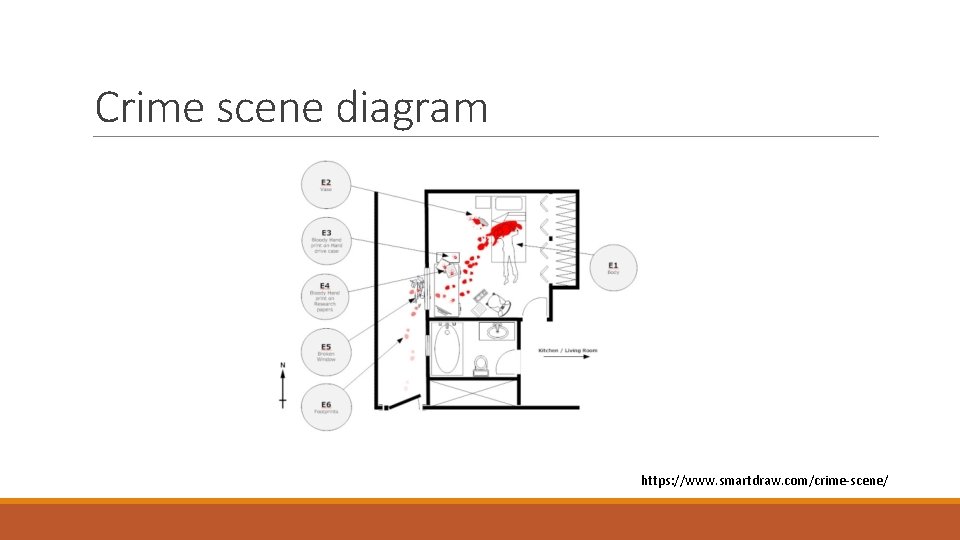
Crime scene diagram https: //www. smartdraw. com/crime-scene/
Investigation of crime scene 3 important things: Recognition of evidence Provision of evidence Preservation of evidence Macro and micro crime scene Macro: location, surroundings Micro: body, tracks
Recognizing and collection of evidence The crime scene is chaotic, complexity and systematic evaluation is required The need to collect evidence that guarantees further analysis Fridge / freezer to store evidence Document availability and condition of food and water Measure water level Ask the owner if present: typical food Is animal tied? The length of the rope, weigh the chain Body fluids - what, quantity, samples
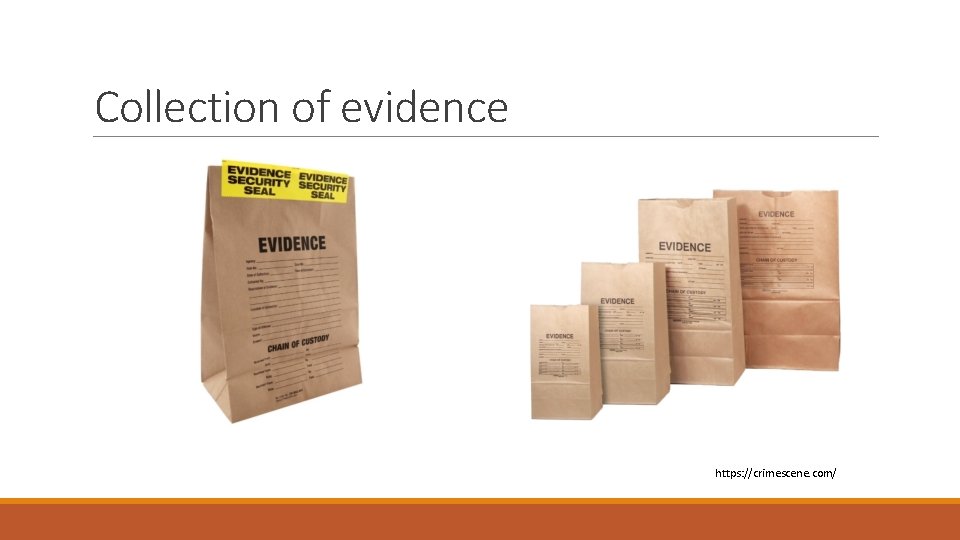
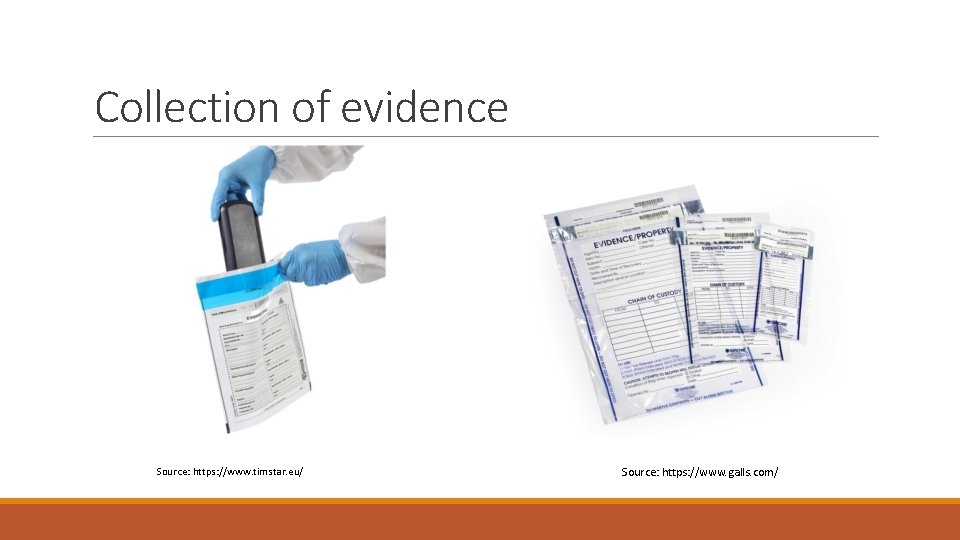
Collection of evidence Proof = everything from crime scene, samples, photos, SD cards, animals Equipment for gathering evidence from the animal and the scene is important Examination of the animal with a UV lamp to detect fluids, foreign hair and hair, fibers Magnifier to search for small evidence Plastic tweezers for collecting and destroying evidence For the collection of evidence it is better to have paper envelopes and bags (preventing the destruction of proof by moisture) Marking on the outside - indelible labels, good holding
Collection of evidence If the evidence is wet, it can be transported for analysis in a plastic container for 2 hours When taking smears from evidence, use one sterile at least Start with a sterile swab, then moistened in saline, then a dry swab All evidence packaged, labeled, date, time, brief description, initials of the person collecting the evidence
Collection of evidence https: //crimescene. com/
Collection of evidence Source: https: //www. timstar. eu/ Source: https: //www. galls. com/
Collection of evidence and forensic examination Examination of all animals before transport Measure rectal temperature in deceased animals and again an hour later Entomology! Collection of eggs, larvae and adults Record the position of the animal (shadow, direct sun, rigor stage) Place paper bags on the limbs (evidence from the toes) Wrap the bodies in a white sheet and place them in a plastic transport bag Forensic examination of the clinical condition is described in more detail in the first presentation of the IVA project
Animal as an evidence Accidental and non-accidental injuries The most significant for animal cruelty are repeated injuries Multiple injuries, different stages of healing, history of injuries at the vet What is suspicious: inexplicable symptoms, accidents, multiple animals in the owner's record, mostly seen only once, often adopted from shelters, their animals often "run away„ More about the animal as evidence in Presentation No. 1 of the IVA project
Blood mark analysis Blood traces can indicate body position, crime, abuse, attacker movements, victim movements Document the presence and absence of blood photos Measure the amount, distance of splashes between each other, from the ground, from the body, Measure the length of the drops of blood - what shape they are, in what direction they are
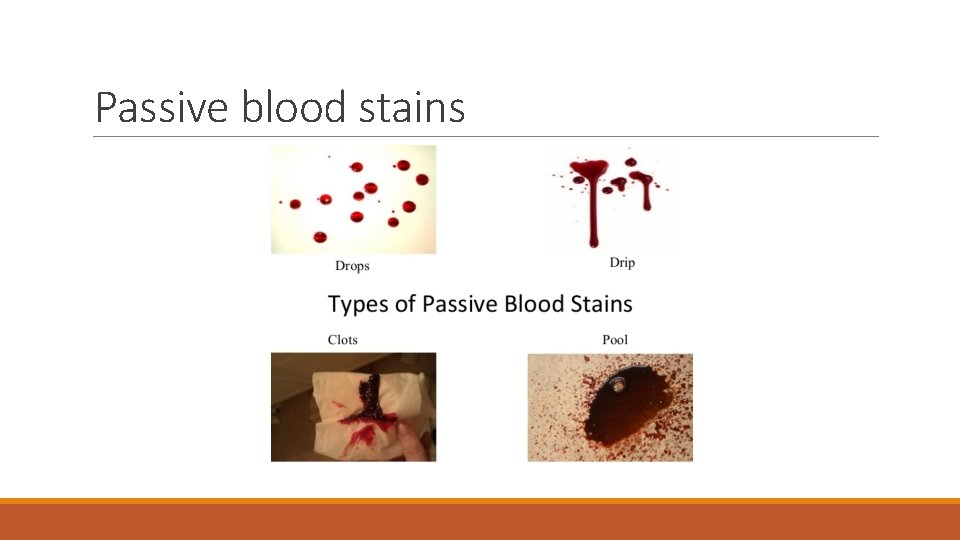
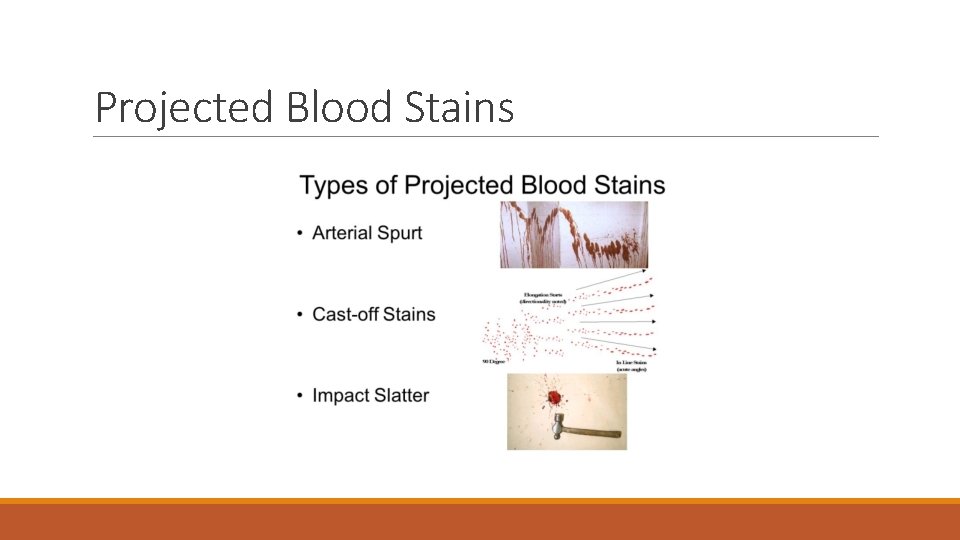
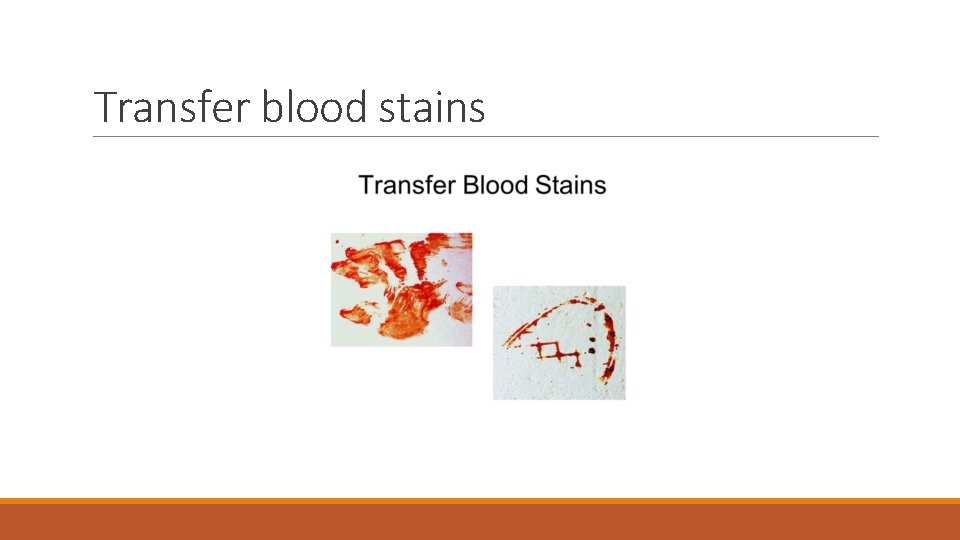
Evaluation of blood marks Passive blood stains - created by gravity: drops, drop shapes, puddles Projection blood spots - "splashes" - caused by force on the blood source - small, medium, large impact, ejection, arterial bleeding, expiratory bleeding - nostrils ejection, etc. Transferred blood traces - mazan, blood smudges, footsteps. .
Passive blood stains
Projected Blood Stains
Transfer blood stains
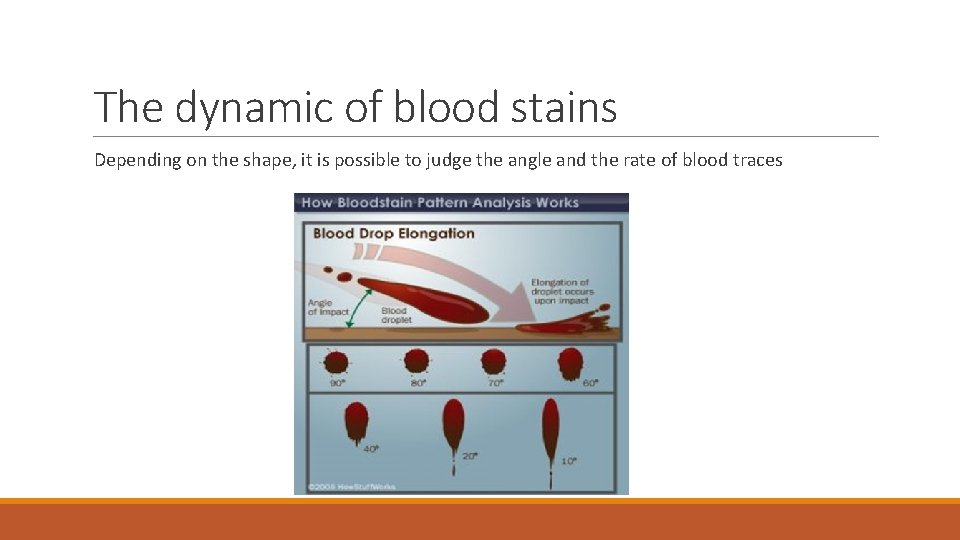
The dynamic of blood stains Depending on the shape, it is possible to judge the angle and the rate of blood traces
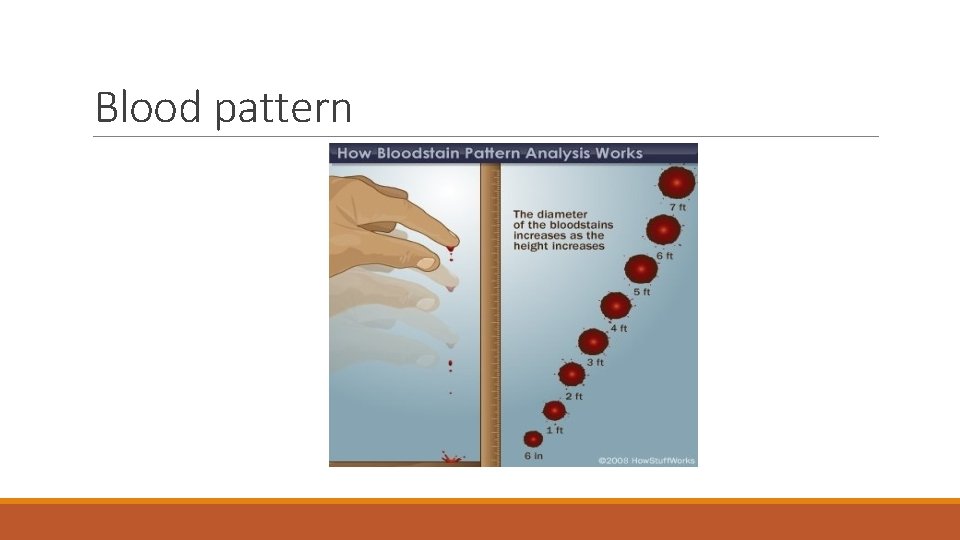
Blood pattern
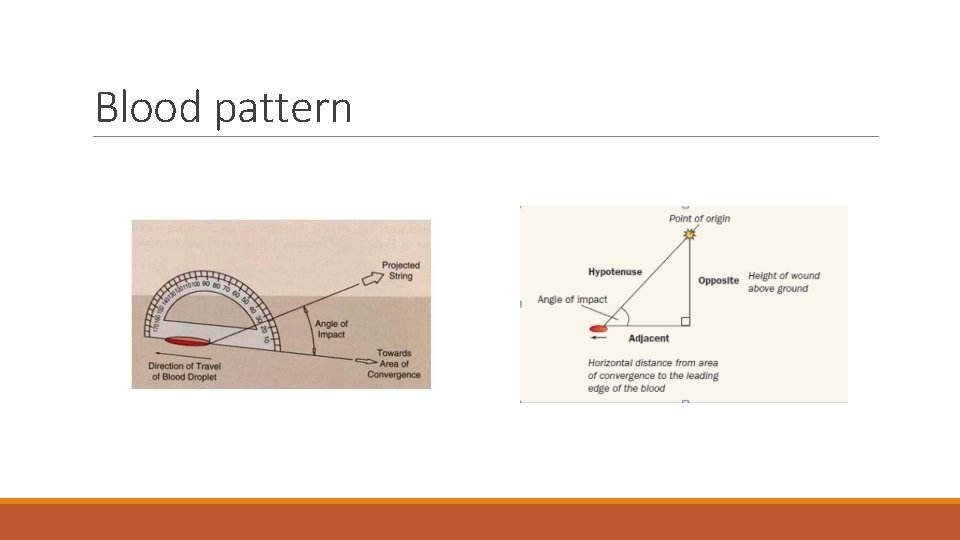
Blood pattern
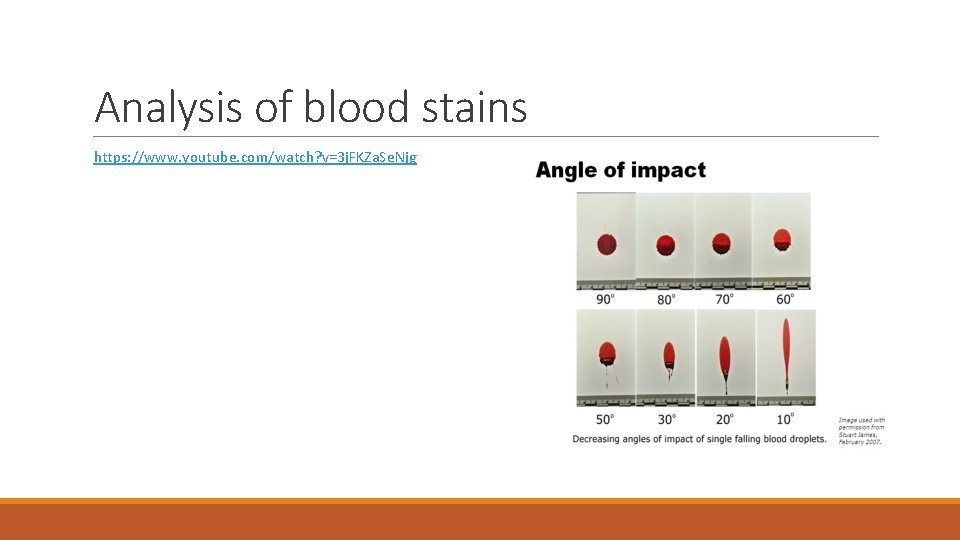
Analysis of blood stains https: //www. youtube. com/watch? v=3 j. FKZa. Se. Njg

Video about blood stains https: //slideplayer. com/slide/9366431/
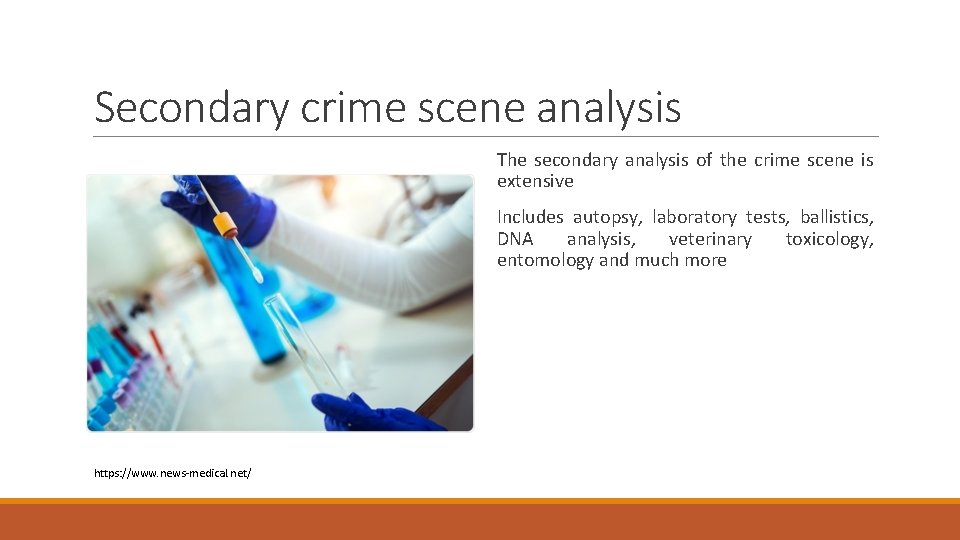
Secondary crime scene analysis The secondary analysis of the crime scene is extensive Includes autopsy, laboratory tests, ballistics, DNA analysis, veterinary toxicology, entomology and much more https: //www. news-medical. net/
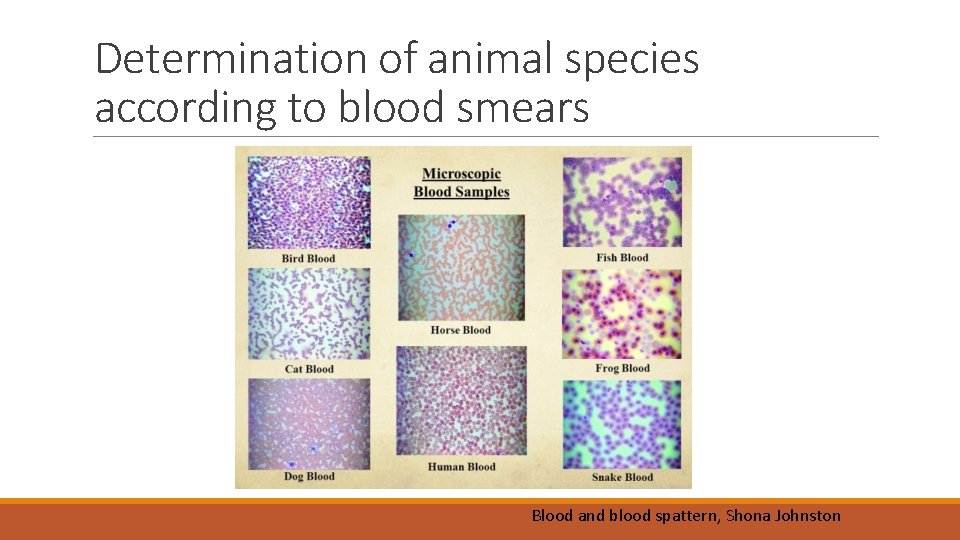
Determination of animal species according to blood smears Blood and blood spattern, Shona Johnston
DNA Analysis Forensic analysis of animal DNA For the purposes of molecular-genetic research, almost all kinds of biological traces found in forensic practice can be used. It is important that nuclei of cells containing DNA molecules appear in these traces. If the assured biological traces do not contain nuclei, molecular-genetic investigation cannot be performed. The most commonly used biological traces include blood, saliva, ejaculate, hair and hair with roots, bones, tissue fragments, peeled skin particles, and more.
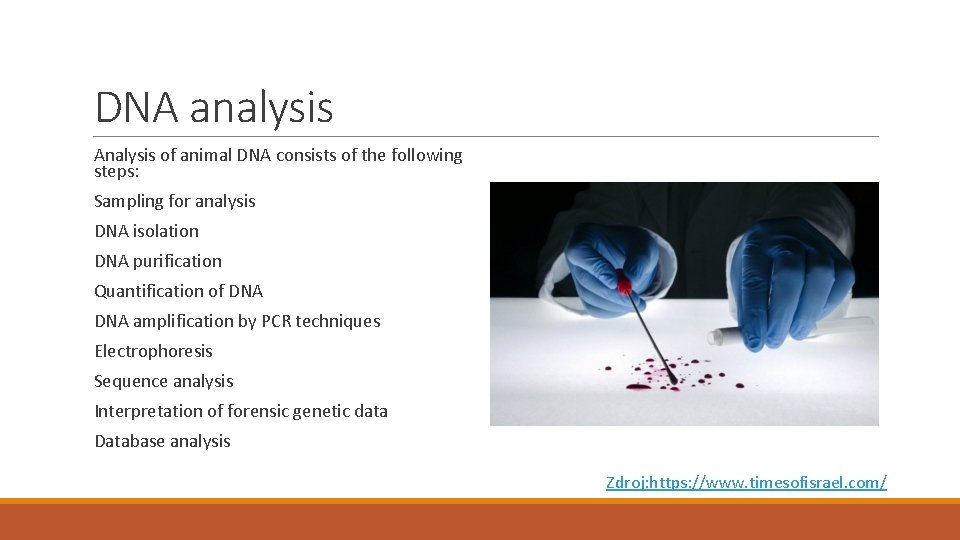
DNA analysis Analysis of animal DNA consists of the following steps: Sampling for analysis DNA isolation DNA purification Quantification of DNA amplification by PCR techniques Electrophoresis Sequence analysis Interpretation of forensic genetic data Database analysis Zdroj: https: //www. timesofisrael. com/
Veterinary toxicology is a discipline dealing with the determination of chemicals, toxins and poisons that can penetrate the animal body. Not all poisonings are intentional, some are after accidental exposure to poison, the forensic investigator must be able to recognize accidental intoxication from intentional poisoning. Examination of the animal and investigation at the scene will indicate what intoxication is suspected. When investigating, emphasize personal safety, use protective equipment whenever poisoning is suspected Toxicology and pharmacology are the basis for understanding how xenobiotics (poisons, toxins and drugs) can enter, distribute and excrete from the body. Poisons are substances derived from chemicals or or produced synthetically from natural substances. Toxins are biologically derived substances and can occur in nature.
Veterinary toxicology Clinical symptoms present in the patient are essential guidelines for determining or eliminating possible causes of animal poisoning. Understanding the symptoms and preliminary exclusion or suspicion of a particular toxin / poison / drug will allow subsequent specific analysis of the sample (evidence). Scientists, veterinarians and toxicologists are qualified to assess physiological, pathological, laboratory and histopathological evidence from victims of poisoning. Toxicological examination may be a part of the investigation of criminal, civil and insurance proceedings. These may include assessments of competition between animal races, accidental or unauthorized use of drugs in animals, deliberate poisoning in animal competitions, inadvertent ingestion of poisonous plants, agro terrorist activities, and more.
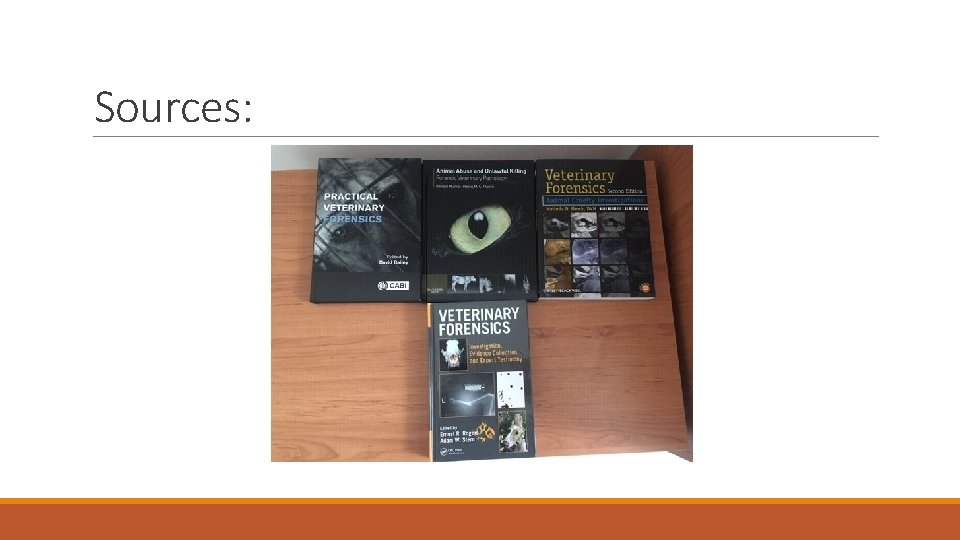
Sources:
- Slides: 49