
VETERANS TREATMENT COURT The Kansas City VA Medical

- Slides: 26
VETERANS’ TREATMENT COURT The Kansas City VA Medical Center And Kansas City, Missouri Municipal Court
Mission Statement The mission of the Kansas City Municipal Veterans’ Treatment Court is to offer treatment and services which address the issues of substance abuse, mental health, and other barriers to leading law abiding, productive lives within our community. We will reduce drug and alcohol abuse, lower recidivism rates, and lessen the financial impact on our community through providing comprehensive treatment services and helping our veterans regain their wholeness within the country they have defended.
Goals of Veterans’ Treatment Court (VTC) Protect the Public Reduce participant contact with the criminal justice system Reduce the cost associated with criminal case processing and rearrest Reduce homelessness Connect Veterans to VA services. Introduce participants to an ongoing process of recovery designed to help them become stable, employed and substance abuse free while continuing mental health care
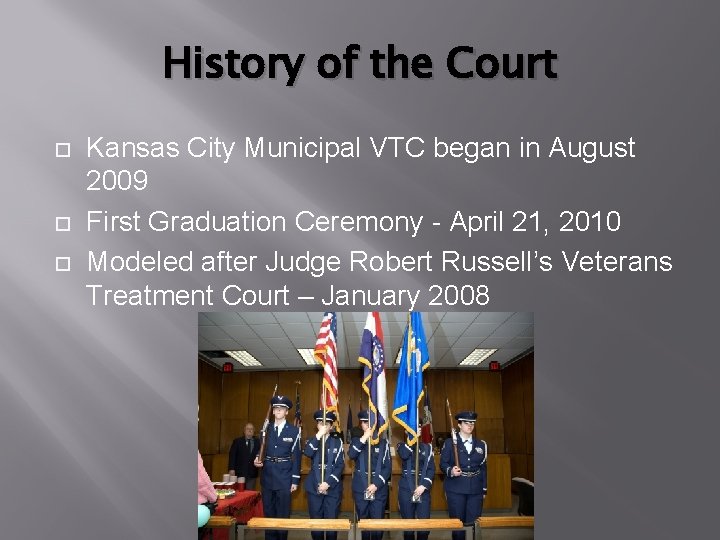
History of the Court Kansas City Municipal VTC began in August 2009 First Graduation Ceremony - April 21, 2010 Modeled after Judge Robert Russell’s Veterans Treatment Court – January 2008
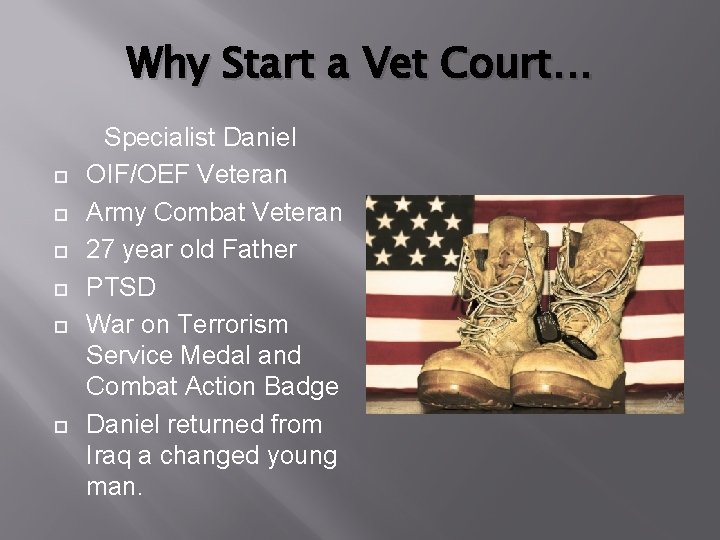
Why Start a Vet Court… Specialist Daniel OIF/OEF Veteran Army Combat Veteran 27 year old Father PTSD War on Terrorism Service Medal and Combat Action Badge Daniel returned from Iraq a changed young man.
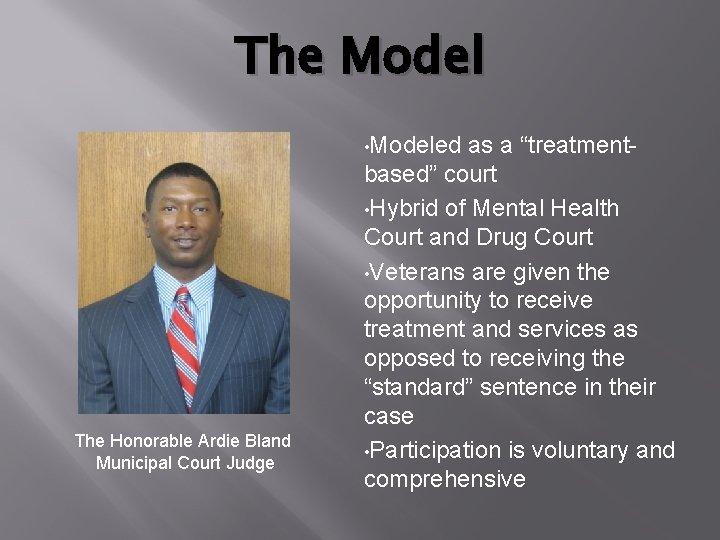
The Model • Modeled The Honorable Ardie Bland Municipal Court Judge as a “treatmentbased” court • Hybrid of Mental Health Court and Drug Court • Veterans are given the opportunity to receive treatment and services as opposed to receiving the “standard” sentence in their case • Participation is voluntary and comprehensive
Key Players on the Vet Court Team � Law Enforcement Officers � Judge Ardie Bland � Veteran Justice Outreach Coordinator � Prosecuting Attorney � Legal Aid � Probation � Mentor Coordinator � Volunteer Mentors-Veterans
Collaborative Effort Department of Veteran Affairs Department of Benefit Administration Prosecuting Attorney Legal Aid Mentors Volunteer Attorneys Task Force – Committees Jails Other Treatment Courts Law Enforcement Probation
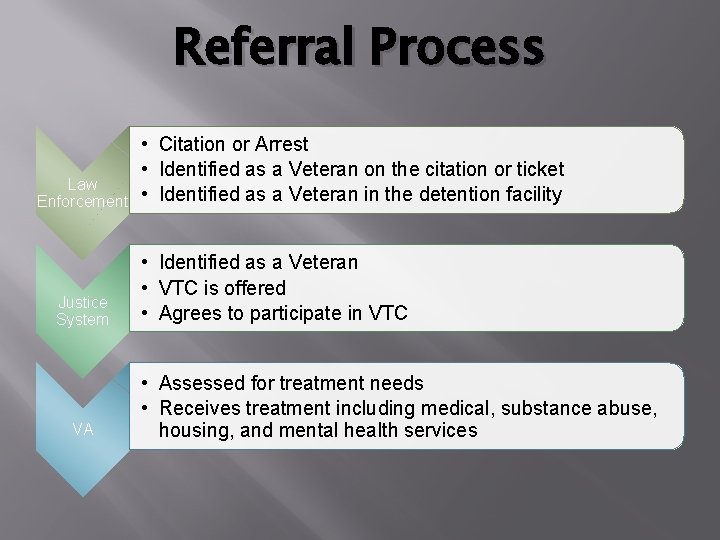
Referral Process Law Enforcement Justice System VA • Citation or Arrest • Identified as a Veteran on the citation or ticket • Identified as a Veteran in the detention facility • Identified as a Veteran • VTC is offered • Agrees to participate in VTC • Assessed for treatment needs • Receives treatment including medical, substance abuse, housing, and mental health services
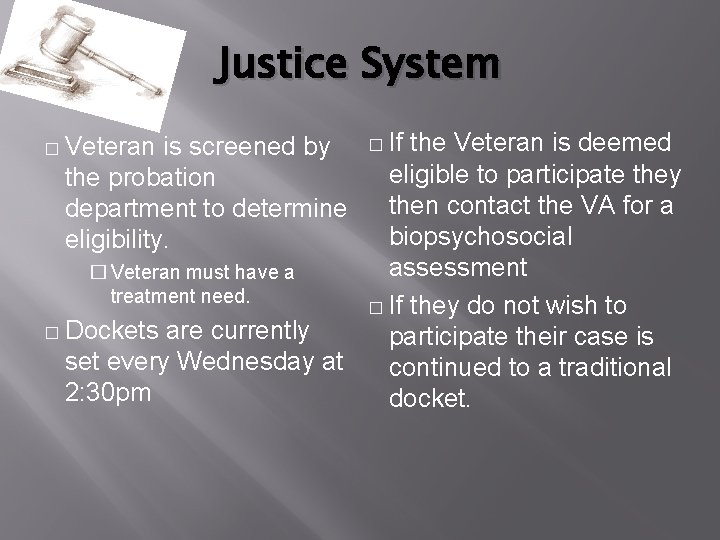
Justice System the Veteran is deemed eligible to participate they then contact the VA for a biopsychosocial assessment � Veteran must have a treatment need. � If they do not wish to � Dockets are currently participate their case is set every Wednesday at continued to a traditional 2: 30 pm docket. � Veteran is screened by the probation department to determine eligibility. � If
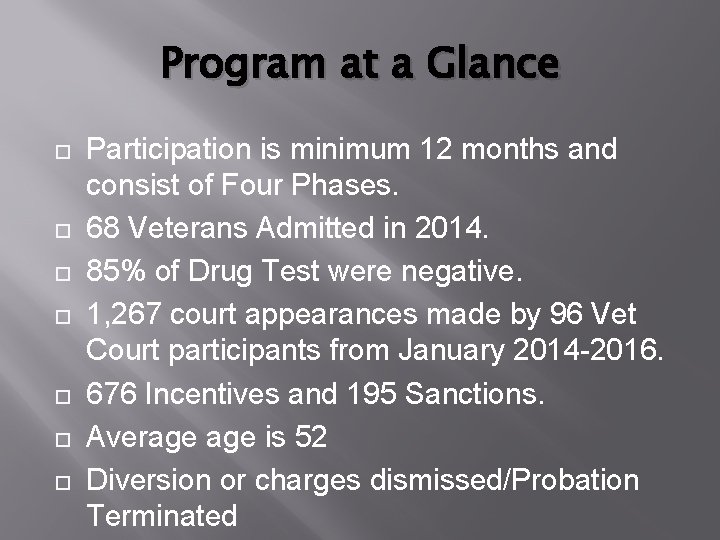
Program at a Glance Participation is minimum 12 months and consist of Four Phases. 68 Veterans Admitted in 2014. 85% of Drug Test were negative. 1, 267 court appearances made by 96 Vet Court participants from January 2014 -2016. 676 Incentives and 195 Sanctions. Average is 52 Diversion or charges dismissed/Probation Terminated
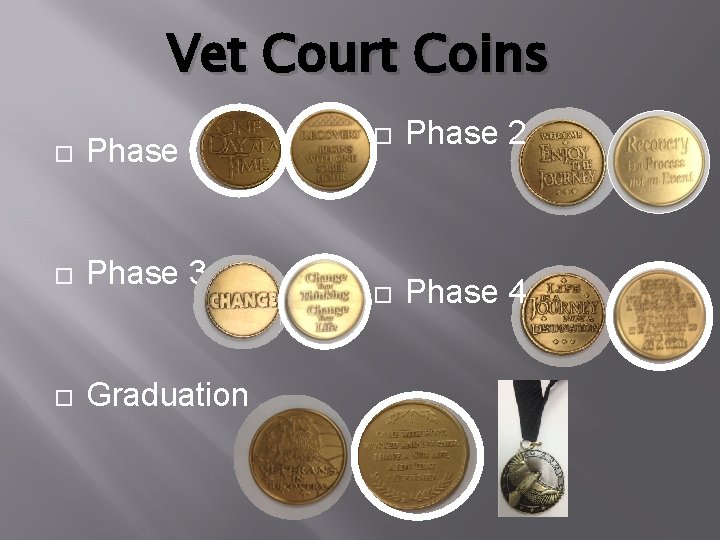
Vet Court Coins Phase 1 Phase 3 Graduation Phase 2 Phase 4
Never Give Up, Meet Vets Where They Are Michael Vietnam Veteran Numerous contact with Law Enforcement Homeless Co-Occurring Multiple Attempts at engagement/treatment Successfully graduated from Vet Court in 2015
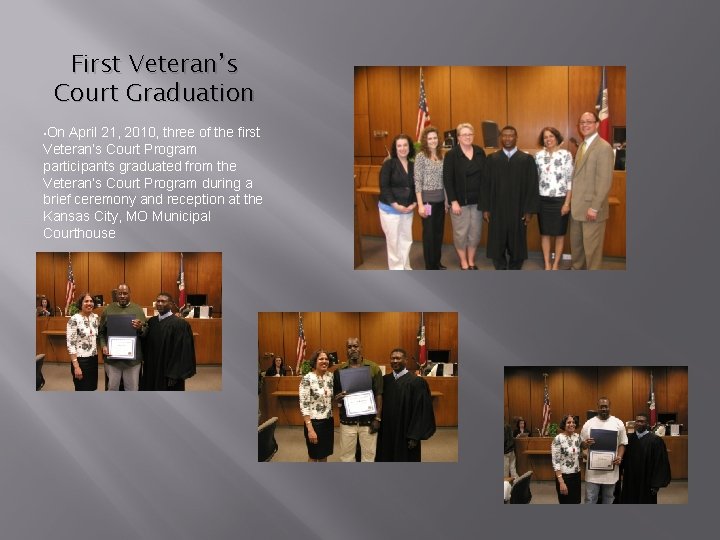
First Veteran’s Court Graduation • On April 21, 2010, three of the first Veteran’s Court Program participants graduated from the Veteran’s Court Program during a brief ceremony and reception at the Kansas City, MO Municipal Courthouse
Lessons Learned Develop MOU Develop Aftercare Plan Revise Mentor and Participant Handbooks Annually Develop plan for grief counseling. Staff Development
Where are we now? • • Currently have 20 participants. Grant to assist veterans with barriers to housing or treatment. Continued focus on The Mayors Challenge to End Veteran Homelessness. Continued enhancement for programming available at the VA. • Strength at Home programs. • Batterers Intervention specific to Veterans
What’s Next? Continue to gather metrics and data. Utilize NADCP best practices. Evaluate program guidelines to make improvements as necessary. Continue to understand the individual needs of Veterans and work to find resources to address those needs. Provide Training to mentors and increase Mentor Capacity.
WHY IS VET COURT SO SUCCESSFUL?
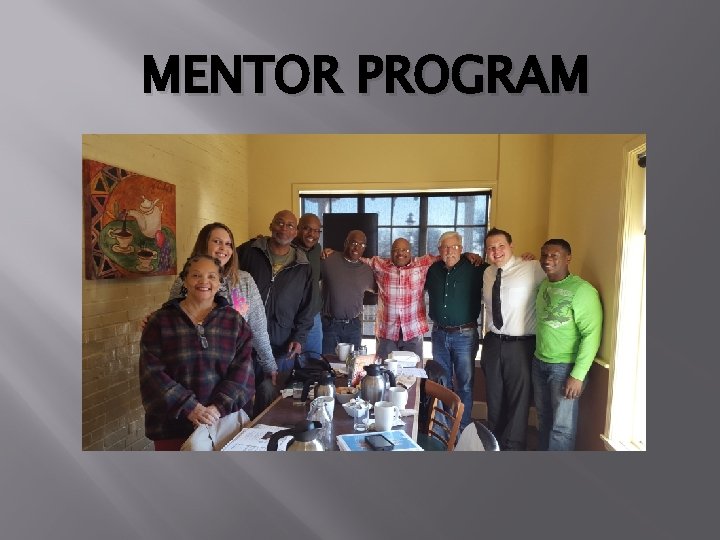
MENTOR PROGRAM
Mission Statement The Mission of the Veterans’ Mentoring Program is to make certain to the best of our abilities that no one is left behind. We will find them, offer them assistance, assess their needs, and help them solve their problems. We will support the veteran through their readjustment to civilian life, assist the veteran navigate through the court, treatment, and VA systems, and act as a mentor, advocate and ally.
Mentor Coordinator Roles and Responsibilities Recruit and train volunteer Veterans’ Court mentors Assist in the retention of volunteer mentors Organize and conduct training for volunteer mentors. Assist in supervision of mentors Assist in the development of specialized training projects for the program Perform all other duties as assigned by Justice Outreach Coordinator and the Judge
Volunteer Mentor Roles and Responsibilities Attend court sessions when scheduled Participate in and lead mentoring sessions with veterans when assigned by the Judge Be supportive and understanding of the difficulties veterans face Assist the veterans as much as possible to resolve their concerns around the court procedures as well as interactions with the Veteran’s Administration system Be supportive and helpful to the other mentors within the program
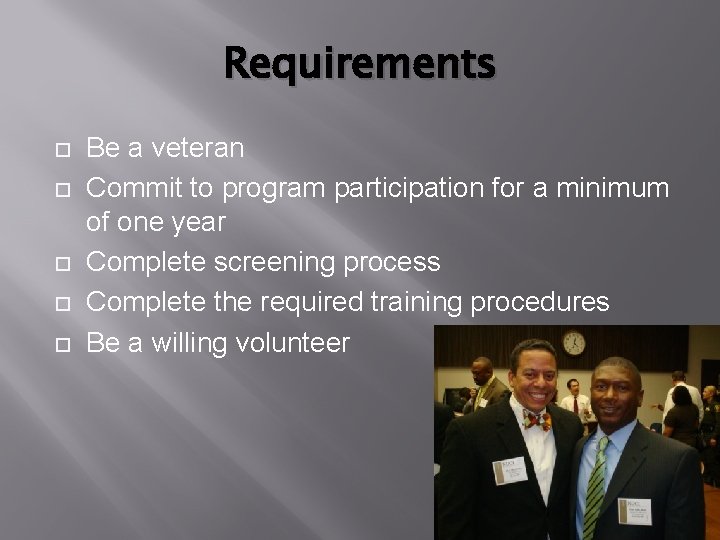
Requirements Be a veteran Commit to program participation for a minimum of one year Complete screening process Complete the required training procedures Be a willing volunteer
Additional Resources Veteran Volunteer Attorney Program (Vet. Vap) � Volunteer Attorneys (both Veterans and non-Veterans) � Law firms providing pro-bono legal services � Have attorneys in Kansas and Missouri � To date have assisted over 57 veterans � Stand Down �Veteran Justice Outreach Coordinator � �Assists with identifying justice involved Veterans and linking to appropriate treatment services
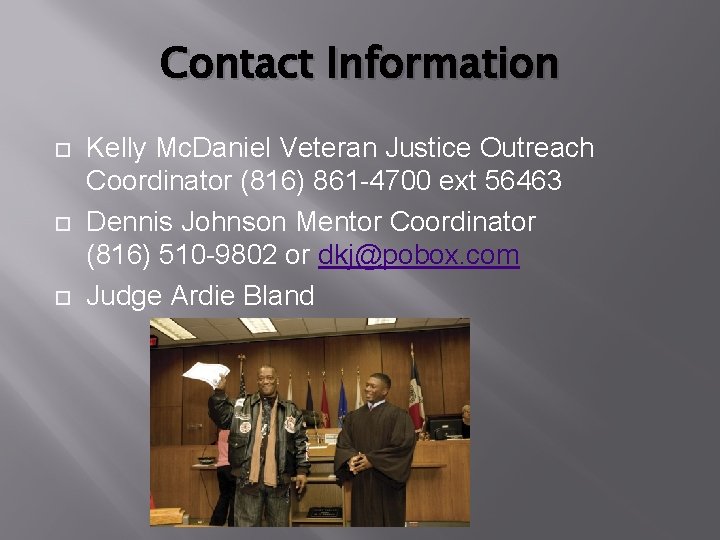
Contact Information Kelly Mc. Daniel Veteran Justice Outreach Coordinator (816) 861 -4700 ext 56463 Dennis Johnson Mentor Coordinator (816) 510 -9802 or dkj@pobox. com Judge Ardie Bland
Questions