
Vertigo Dr Abdulrahman Alsanosi Associate professor King Saud

Vertigo Dr. Abdulrahman Alsanosi Associate professor King Saud University Otolaryngology consultant Otologist , Neurotologist &Skull Base Surgeon King Abdulaziz University Hospital / KFMC

What are the components of balance system ?
» Inner ear (3 semicicular canals and otolith organ ) » Cerebellum » Vision (VOR) » Proprioceptive

How does balance system work ?
Physiology Function of vestibular system: » Transform of the forces associate with head acceleration and gravity into a biological signals that the brain can use to develop subjective awareness of head position in space (orientation) » produce motor reflexes that will maintain posture and ocular stability
It is not surprisingly that vestibular lesion cause: » Imbalance » posture and gait imbalance » visual distortion (oscillopsia ).
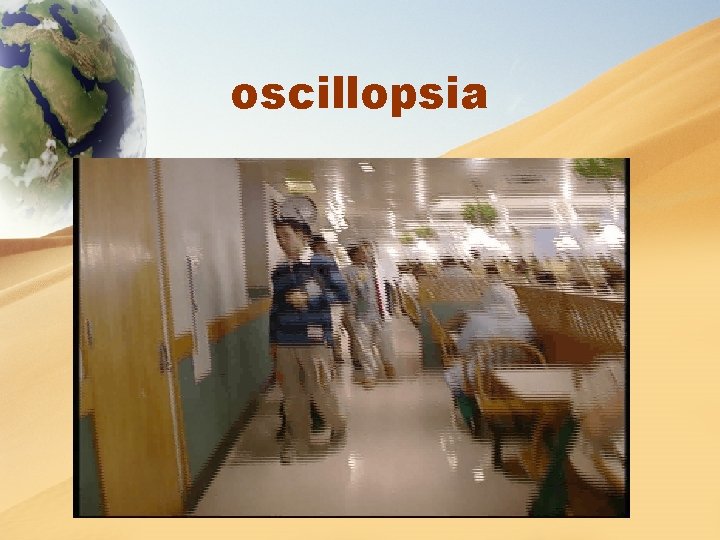
oscillopsia

What is vertigo?
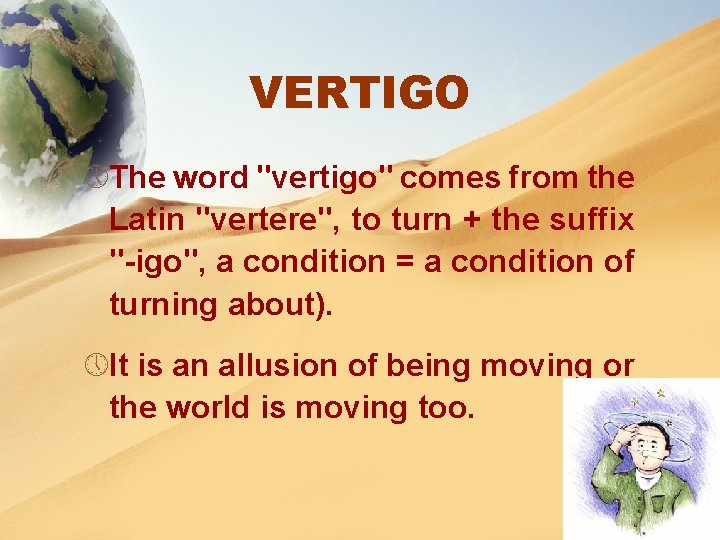
VERTIGO » The word "vertigo" comes from the Latin "vertere", to turn + the suffix "-igo", a condition = a condition of turning about). » It is an allusion of being moving or the world is moving too.
What is nystagmus ?
What are the questions to ask in history ? » Onset » Frequency » Duration » Associated auditory symptoms » Aggrevating and relieving factors » Ear disease or ear surgery » Trauma » Migraine » Ototoxic drug intake
Differential diagnosis A) peripheral vestibular loss B) central vestibular loss
What are the causes of peripheral vestibular loss ?
peripheral vestibular loss » Vestibular neuritis » Benign paroxysmal positional vertigo ( BPPV) » Meneires disease (Endolymphatic hydrop )
Vestibular neuritis » Viral infection of vestibular organ » Affect all ages but rare in childern » Affected patient presents acutely with nystagmous , vertigo and nausea &vomiting spontaneous » Patient requires only symptomatic treatment » It takes 3 weeks to recover from vestibular neuritis
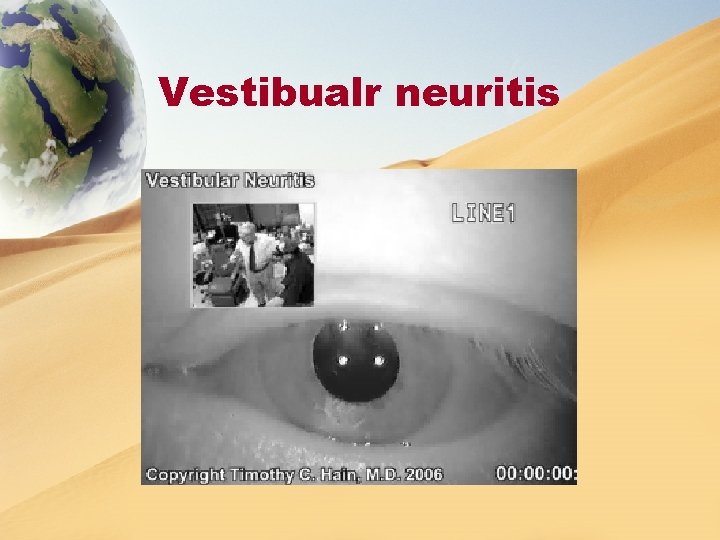
Vestibualr neuritis
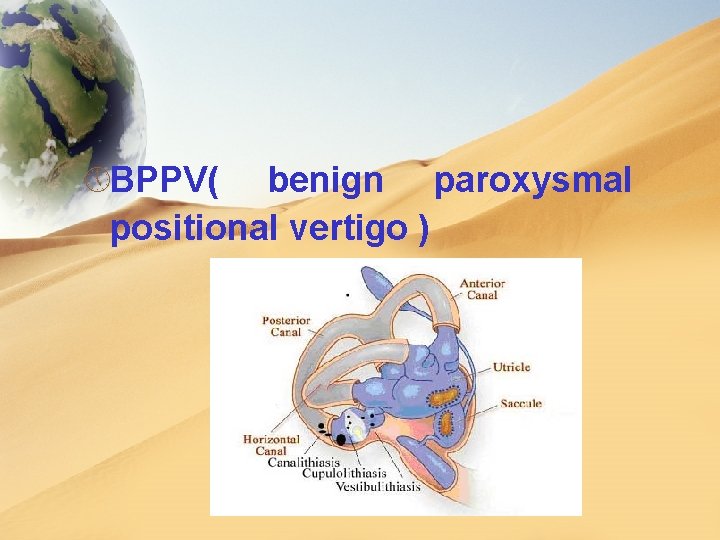
» BPPV( benign paroxysmal positional vertigo )
BPPV » The most common cause of vertigo in patient > 40 years » Repeated attacks of vertigo usually of short duration less than a minute. » Provoked by certain positions (rolling in beds, looking up , and head rotations) » Not associated impairment with any hearing
BPPV Diagnosis » History » Dix-Halpike maneuver
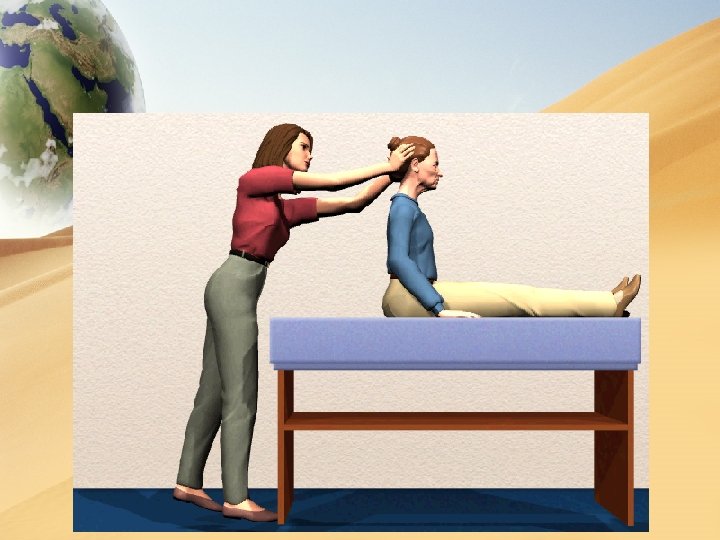
Treatment Epley maneuver

Video
Endolymphatic hydrop (Meneire’s disease) Pathophysiology : » Unknown etiology » ↑ ↓production of fluid within inner compartment
» vertigo (minutes to hours ) » Low frequency fluctuating SNHL » Tinnitus and fullness in the ear. » In 10 - 20% of cases the disease later involves the opposite ear
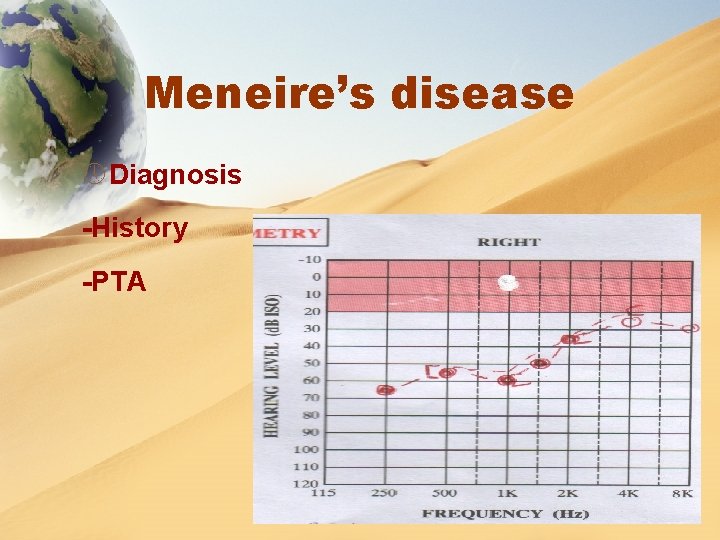
Meneire’s disease » Diagnosis -History -PTA
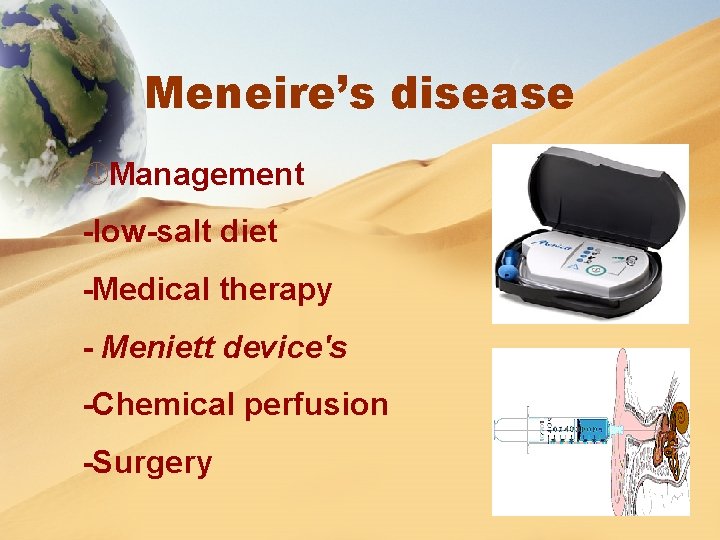
Meneire’s disease » Management -low-salt diet -Medical therapy - Meniett device's -Chemical perfusion -Surgery
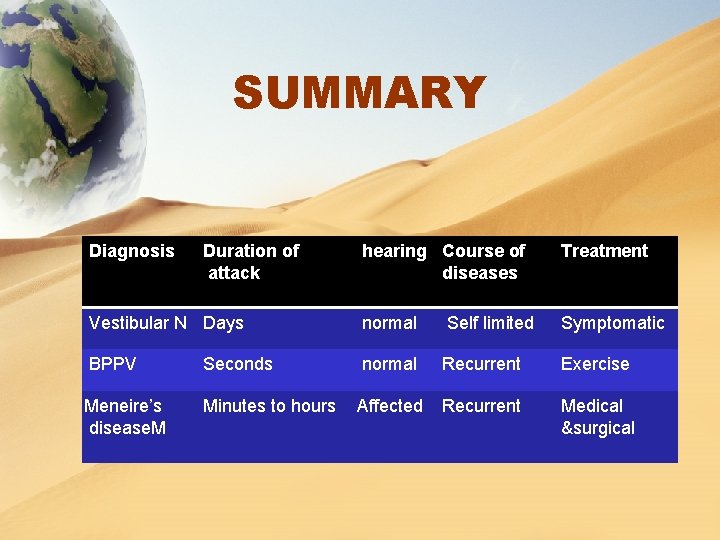
SUMMARY Diagnosis Duration of attack hearing Course of diseases Treatment Vestibular N Days normal Self limited Symptomatic BPPV Seconds normal Recurrent Exercise Meneire’s disease. M Minutes to hours Affected Recurrent Medical &surgical
What are the causes of central ?
» CVA (Cerebero vascular accident) » Brain tumor ( acoustic neuroma ) » Multiple sclerosis
CVA » Elderly patient with chronic disease like (DM , HTN) with sudden attack of vertigo +neurological symptoms
Acoustic tumor » Benign tumor » Arise from vestibular devision of VIII Clinical presenatation: » Unilateral tinnitus » Hearing loss » Dizziness
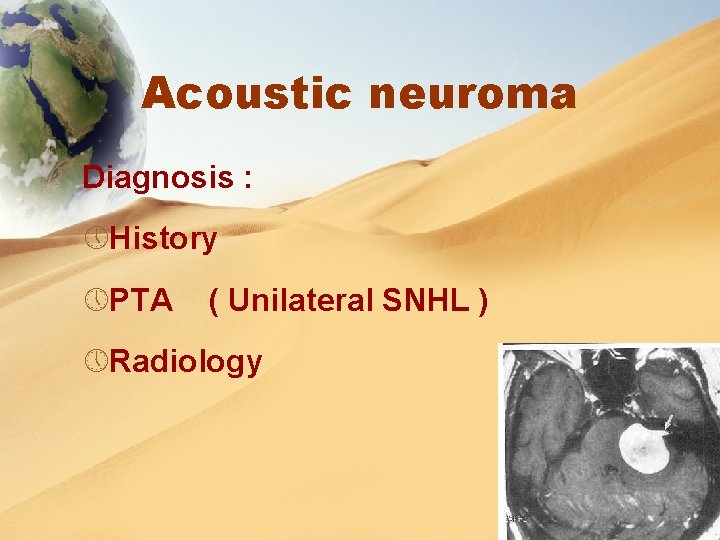
Acoustic neuroma Diagnosis : » History » PTA ( Unilateral SNHL ) » Radiology
diagnosis History is the most important key to diagnosis for a dizzy patient.

Investiagtions » PTA » CLORIC TEST » ENG » CT SCAN » MRI

Take away message
Thank you
- Slides: 36