
Vertical Wind Patterns in NYC Built Environment Wind
Vertical Wind Patterns in NYC Built Environment: Wind LIDAR Observations Mark Joseph Campmier 1*, Aris Fernandez 23 , Yonghua Wu 2 , Fred Moshary 123, Mark Arend 23 1 Environmental Engineering Program, CUNY CCNY, New York, NY 10031 2 NOAA Cooperative Remote Sensing Science and Technology Center, CUNY CCNY, New York, NY 10031 3 Electical Engineering Department, CUNY CCNY, New York, NY 10031 *mcampmi 000@citymail. cuny. edu
Overview I. Motivation II. Objectives III. Background IV. Procedure V. Results VI. Conclusions
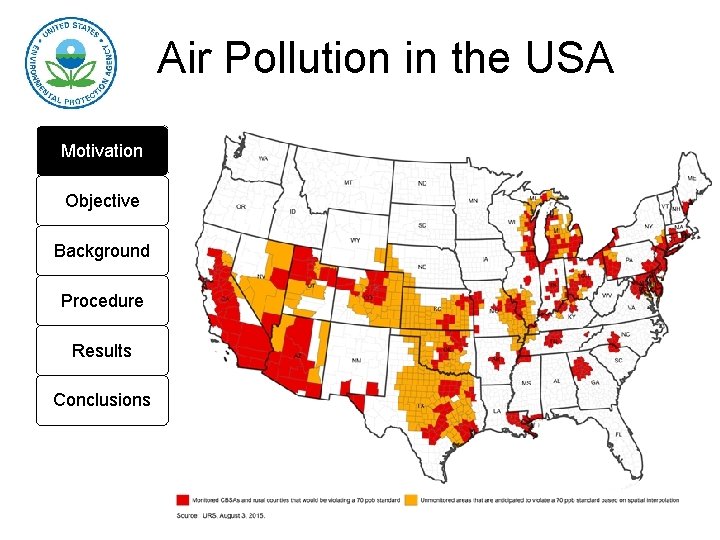
Air Pollution in the USA Motivation Objective Background Procedure Results Conclusions
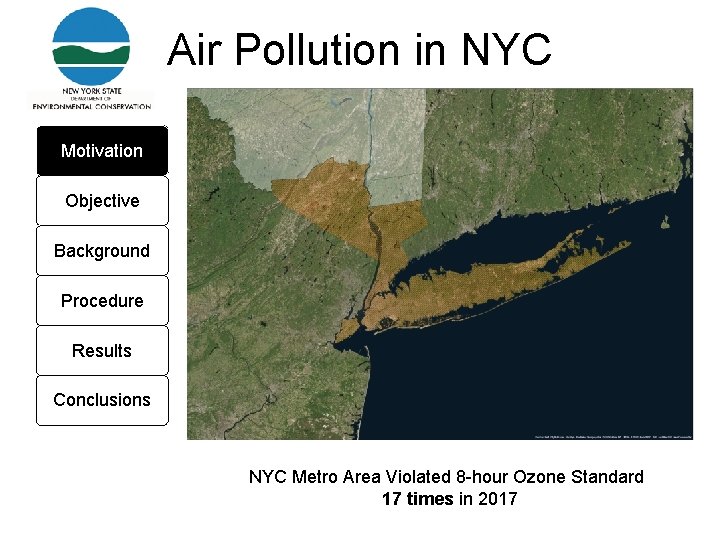
Air Pollution in NYC Motivation Objective Background Procedure Results Conclusions NYC Metro Area Violated 8 -hour Ozone Standard 17 times in 2017
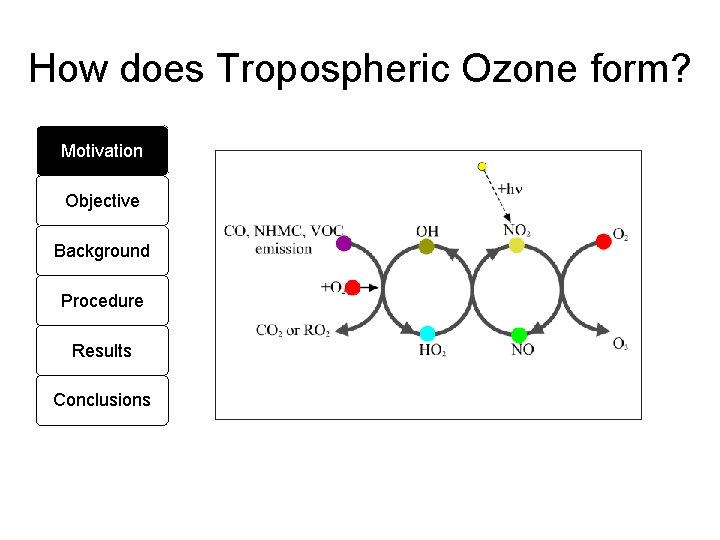
How does Tropospheric Ozone form? Motivation Objective Background Procedure Results Conclusions
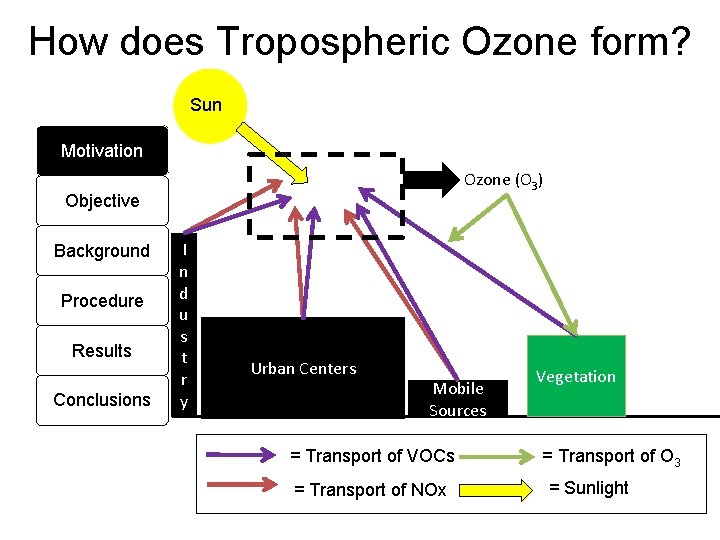
How does Tropospheric Ozone form? Sun Motivation Ozone (O 3) Objective Background Procedure Results Conclusions I n d u s t r y Urban Centers Mobile Sources = Transport of VOCs = Transport of NOx Vegetation = Transport of O 3 = Sunlight
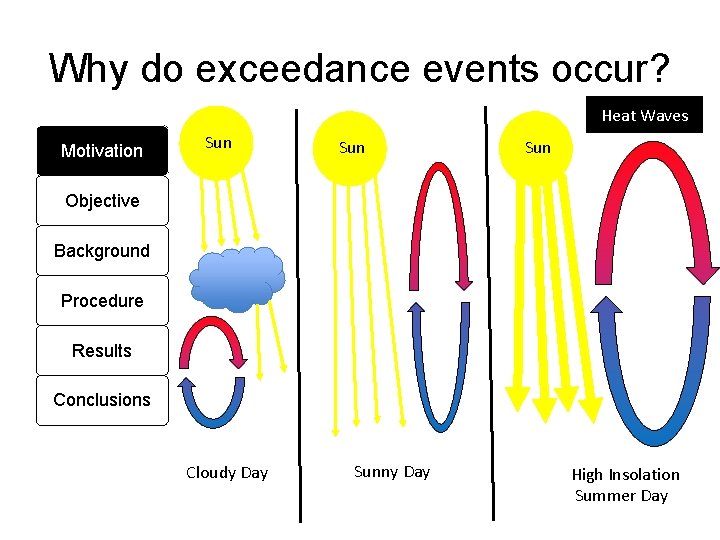
Why do exceedance events occur? Heat Waves Motivation Sun Sun Objective Background Procedure Results Conclusions Cloudy Day Sunny Day High Insolation Summer Day
Tying it all together Motivation Objective Background Procedure Results Conclusions Air pollution – specifically ozone - is a challenge across the United States. The megacity of New York is especially challenged because of complex urban-costal interactions. Ozone formation is mechanistically tied to insolation, and is directly and indirectly enhanced by heat wave events. Therefore, if the convective activity, and other air movements in NYC can be measured, ozone formation can be understood in real time, and even predicted through forward modeling based on records.
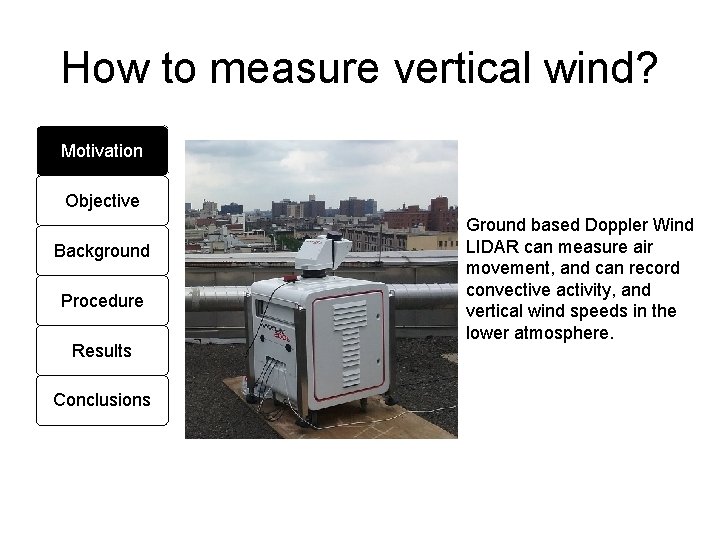
How to measure vertical wind? Motivation Objective Background Procedure Results Conclusions Ground based Doppler Wind LIDAR can measure air movement, and can record convective activity, and vertical wind speeds in the lower atmosphere.
Objectives Motivation Objective Background Procedure Results Track the role of heat waves in ozone formation in NYC through the use a variety of scan strategies: 1. Use a synergistic remote sensing approach centered on applications of laser radar to measure vertical wind speed – especially strong downdrafts. Conclusions 2. Measure horizontal wind speeds to track how primary pollutants and ozone can be dispersed through the local environment.
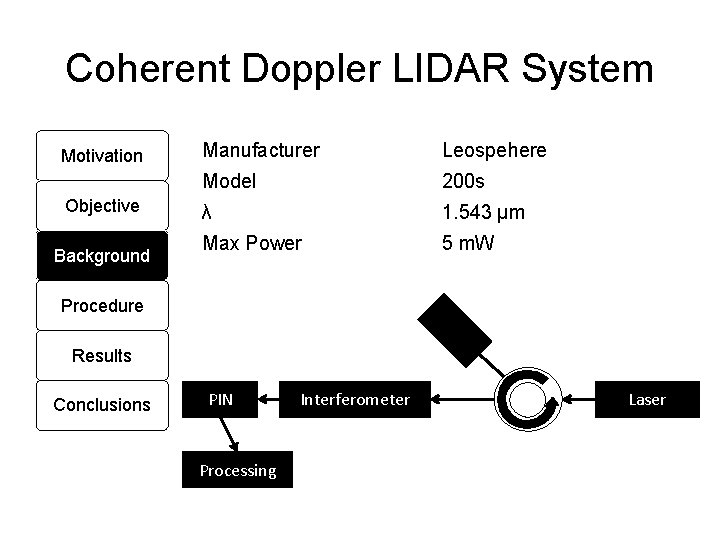
Coherent Doppler LIDAR System Motivation Objective Background Manufacturer Leospehere Model 200 s λ 1. 543 μm Max Power 5 m. W Procedure Results Conclusions PIN Processing Interferometer Laser
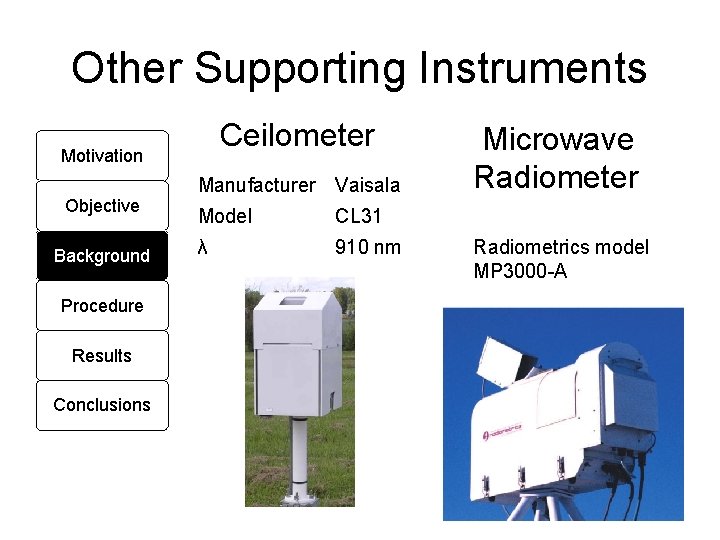
Other Supporting Instruments Ceilometer Motivation Objective Background Procedure Results Conclusions Manufacturer Vaisala Model CL 31 λ 910 nm Microwave Radiometer Radiometrics model MP 3000 -A
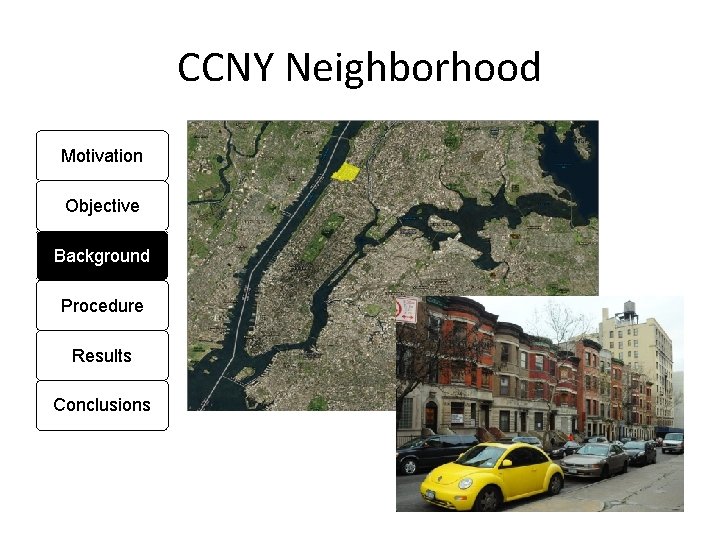
CCNY Neighborhood Motivation Objective Background Procedure Results Conclusions
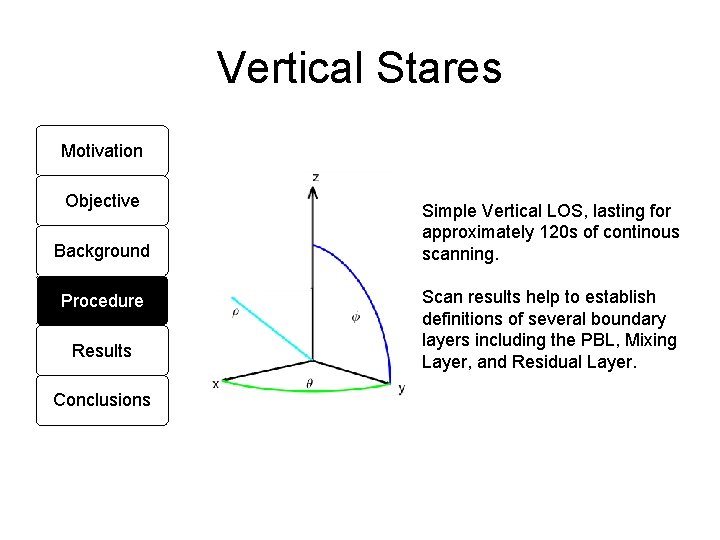
Vertical Stares Motivation Objective Background Procedure Results Conclusions Simple Vertical LOS, lasting for approximately 120 s of continous scanning. Scan results help to establish definitions of several boundary layers including the PBL, Mixing Layer, and Residual Layer.
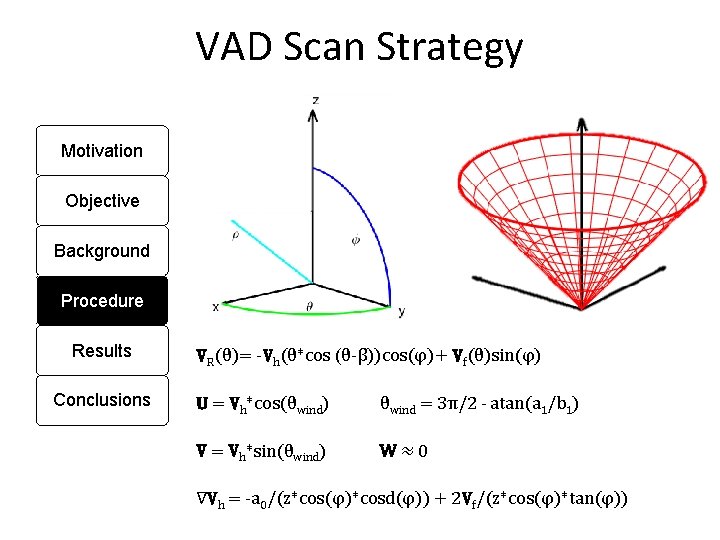
VAD Scan Strategy Motivation Objective Background Procedure Results Conclusions VR(θ)= -Vh(θ*cos (θ-β))cos(φ)+ Vf(θ)sin(φ) U = Vh*cos(θwind) θwind = 3π/2 - atan(a 1/b 1) V = Vh*sin(θwind) W≈0 ∇Vh = -a 0/(z*cos(φ)*cosd(φ)) + 2 Vf/(z*cos(φ)*tan(φ))
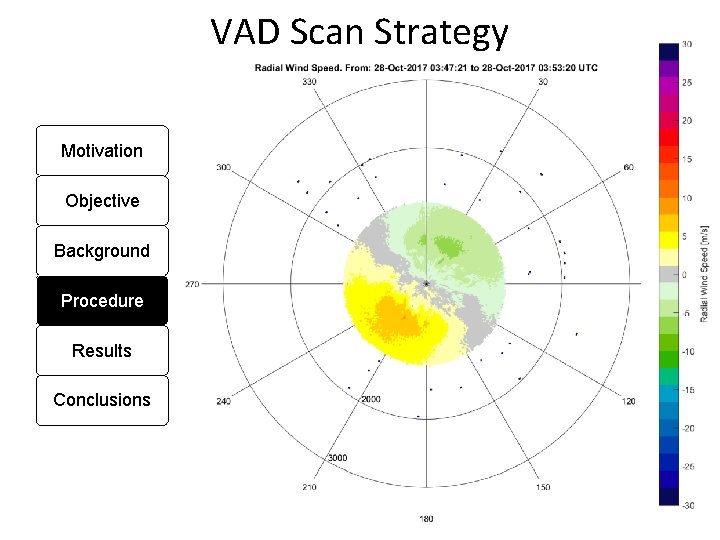
VAD Scan Strategy Motivation Objective Background Procedure Results Conclusions
Heat Wave Event Motivation Objective A heat wave event coinciding with an ozone episode occurred in NYC over the course of a 4 day period 17 -21 July 2017 Background Highest Temperature: 35°C on 20 July Procedure Results Conclusions
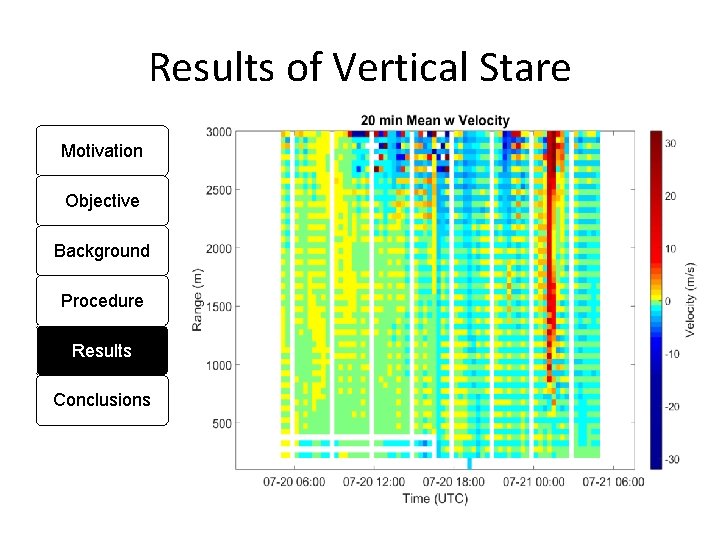
Results of Vertical Stare Motivation Objective Background Procedure Results Conclusions
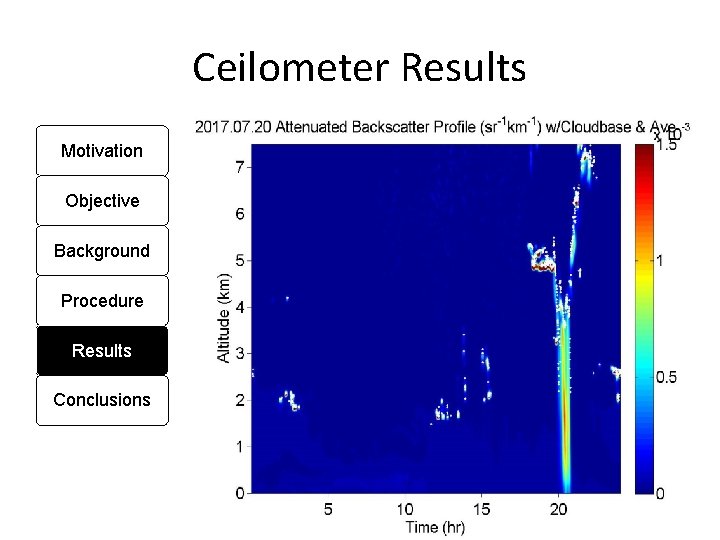
Ceilometer Results Motivation Objective Background Procedure Results Conclusions
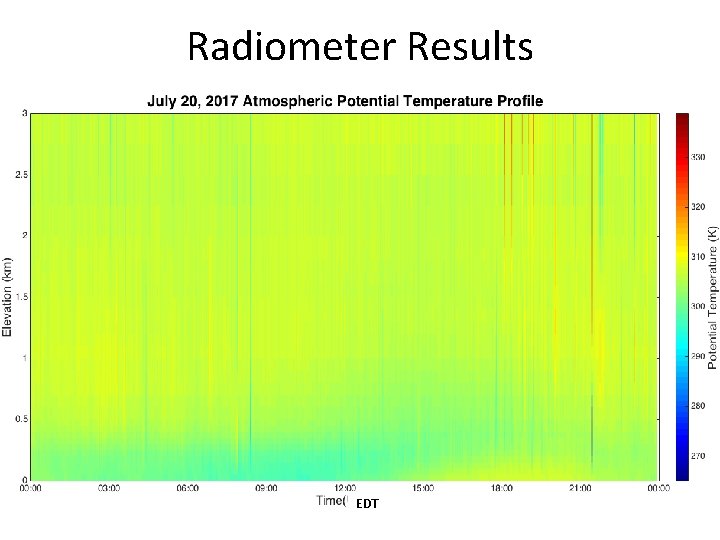
Radiometer Results Motivation Objective Background Procedure Results Conclusions EDT
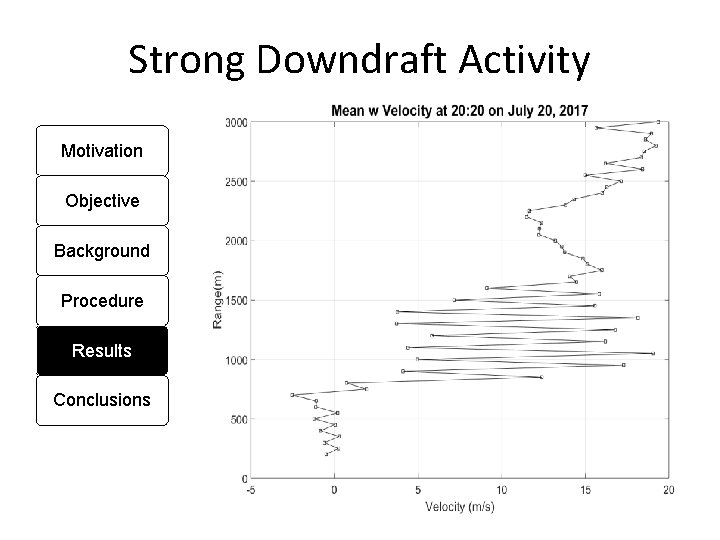
Strong Downdraft Activity Motivation Objective Background Procedure Results Conclusions
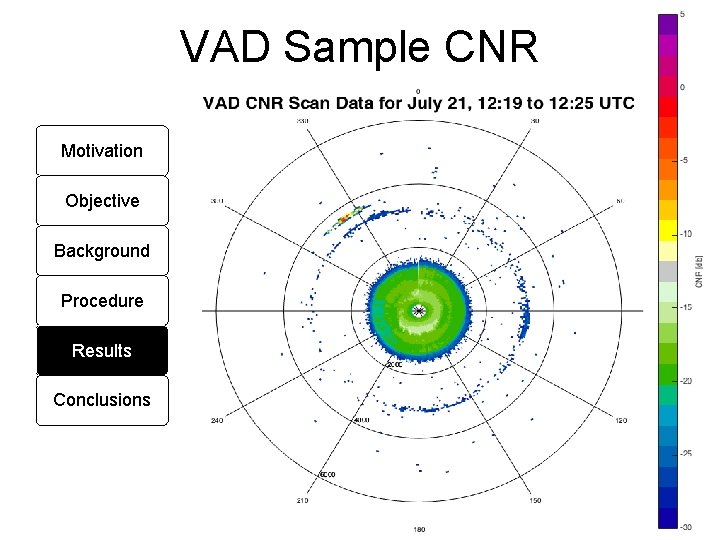
VAD Sample CNR Motivation Objective Background Procedure Results Conclusions
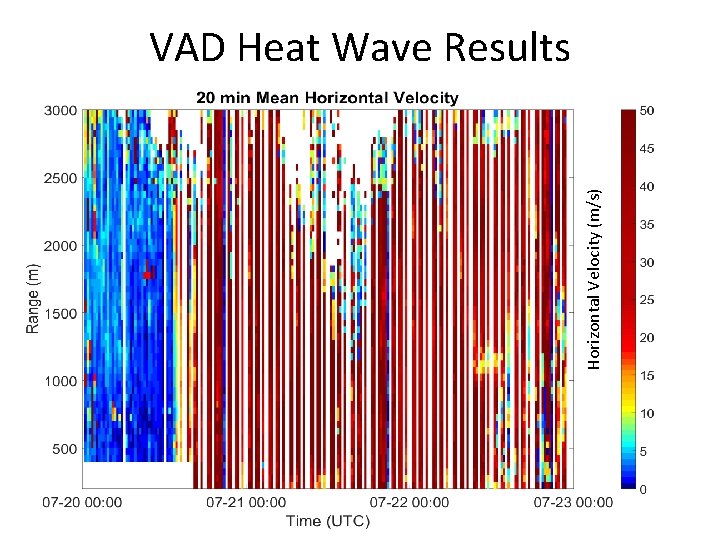
VAD Heat Wave Results Objective Background Procedure Results Conclusions Horizontal Velocity (m/s) Motivation
Conclusions Motivation Objective Background Procedure Results Conclusions 1. Doppler LIDAR, in combination with other instruments, can effectively monitor convective activity and even measure intense downdrafts. 2. Horizontal dispersion of pollutants can be effectively measured, provided atmospheric conditions are stable, and wind fields are homogenous.

Acknowledgements Dr. Fred Moshary Dr. Mark Arend Dr. Yonghua Wu Dr. Yiannis Andreopoulos Dr. Avrom Caplan Tom Eisele Dan Eschenasy, PE
Sources • Browning, K. A. , and R. Wexler. “The Determination of Kinematic Properties of a Wind Field Using Doppler Radar. ” Journal of Applied Meteorology, vol. 7, no. 1, 1968, pp. 105– 113. , doi: 10. 1175/1520 -0450(1968)007<0105: tdokpo>2. 0. co; 2. • Peterson, EW, and JP Gennessey, Jr. "On the use of power laws for estimates of windpower potential. " Journal of Applied Meterology 17 (1978): 390 -94. Web. • Seinfeld, John H. , and Spyros N. Pandis. Atmospheric Chemistry and Physics. 2 nd ed. New York: John Wiley & Sons, Inc. , 2006. Print. • Wallace, John M. , and Peter Victor. Hobbs. Atmospheric Science: an Introductory Survey. Elsevier Acad. Press, 2011. • Choukulkar, Aditya, et al. “A Modified Optimal Interpolation Technique for Vector Retrieval for Coherent Doppler LIDAR. ” IEEE Geoscience and Remote Sensing Letters, Institute of Electrical and Electronics Engineers Inc. , 19 June 2015, asu. pure. elsevier. com/en/publications/a-modified-optimal-interpolation-technique-for-vectorretrieval-f. • “ 7. Estimating Mean Wind Speed. ” Estimating Mean Wind Speeds and Their Profile. , Wind Power Program, www. wind-power-program. com/windestimates. htm.
- Slides: 26