
Vertical Alignment CE 453 Lecture 20 Sources A
- Slides: 56
Vertical Alignment CE 453 Lecture 20 Sources: A Policy on Geometric Design of Highways and Streets (The Green Book). Washington, DC. American Association of State Highway and Transportation Officials, 2001 4 th Edition, and FHWA’s Flexibility in Highway Design 1
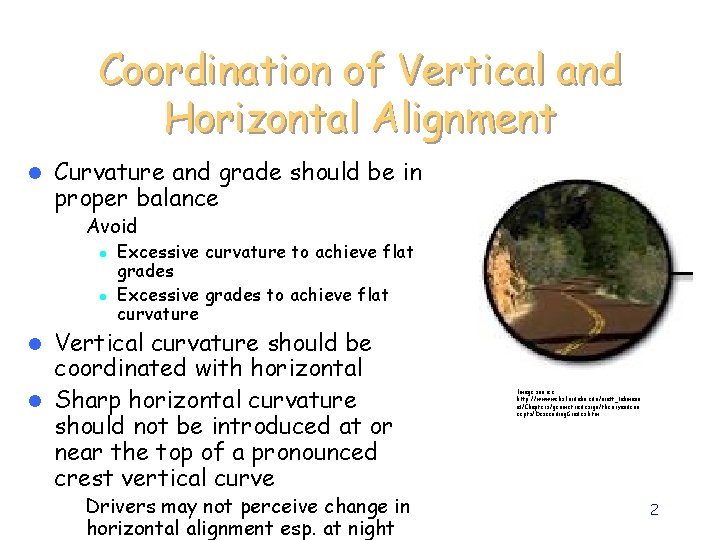
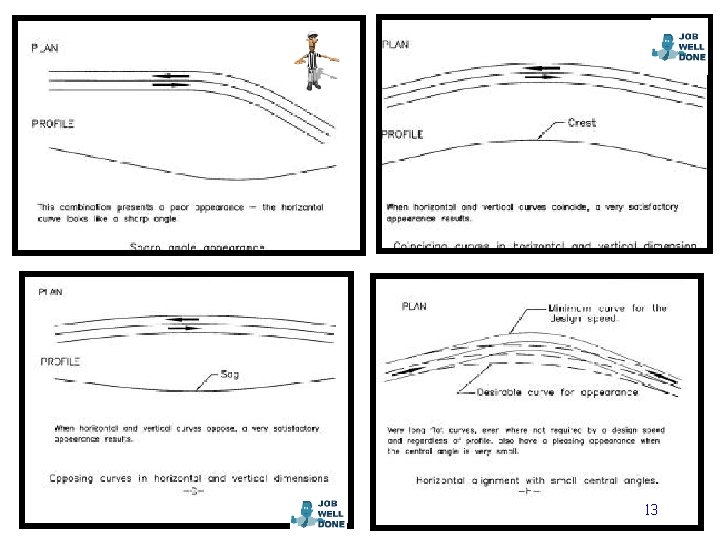
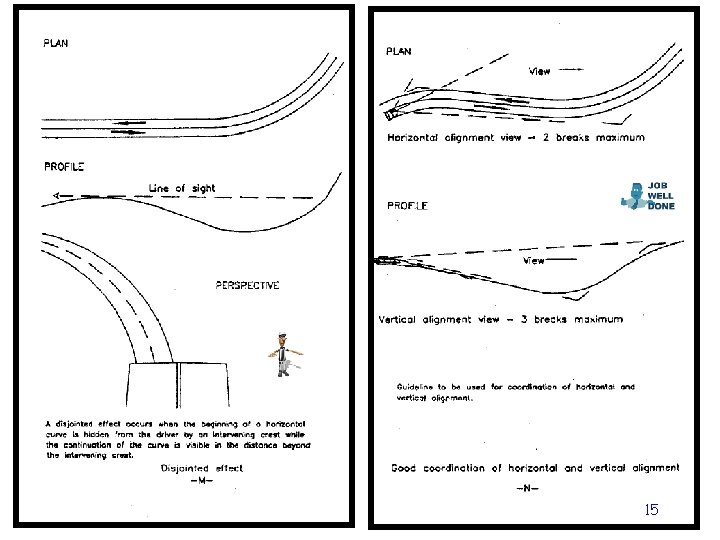
Coordination of Vertical and Horizontal Alignment l Curvature and grade should be in proper balance – Avoid l Excessive curvature to achieve flat grades l Excessive grades to achieve flat curvature Vertical curvature should be coordinated with horizontal l Sharp horizontal curvature should not be introduced at or near the top of a pronounced crest vertical curve l – Drivers may not perceive change in horizontal alignment esp. at night Image source: http: //www. webs 1. uidaho. edu/niatt_labmanu al/Chapters/geometricdesign/theoryandcon cepts/Descending. Grades. htm 2
Coordination of Vertical and Horizontal Alignment l Sharp horizontal curvature should not be introduced near bottom of steep grade near the low point of a pronounced sag vertical curve – Horizontal curves appear distorted – Vehicle speeds (esp. trucks) are highest at the bottom of a sag vertical curve – Can result in erratic motion 3
Coordination of Vertical and Horizontal Alignment l On two-lane roads when passing is allowed, need to consider provision of passing lanes – Difficult to accommodate with certain arrangements of horizontal and vertical curvature – need long tangent sections to assure sufficient passing sight distance 4
Coordination of Vertical and Horizontal Alignment At intersections where sight distance needs to be accommodated, both horizontal and vertical curves should be as flat as practical l In residential areas, alignment should minimize nuisance to neighborhood l – Depressed highways are less visible – Depressed highways produce less noise – Horizontal alignments can increase the buffer zone between roadway and cluster of homes 5
Coordination of Vertical and Horizontal Alignment l When possible alignment should enhance scenic views of the natural and manmade environment – Highway should lead into not away from outstanding views – Fall towards features of interest at low elevation – Rise towards features best seen from below or in silhouette against the sky 6
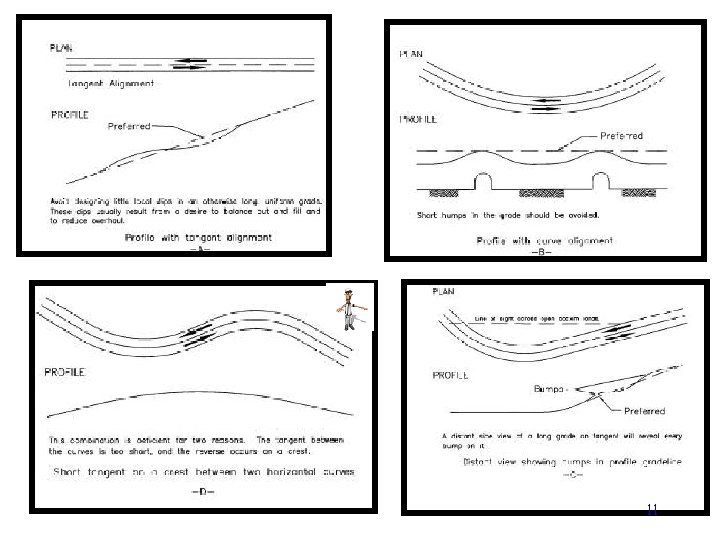
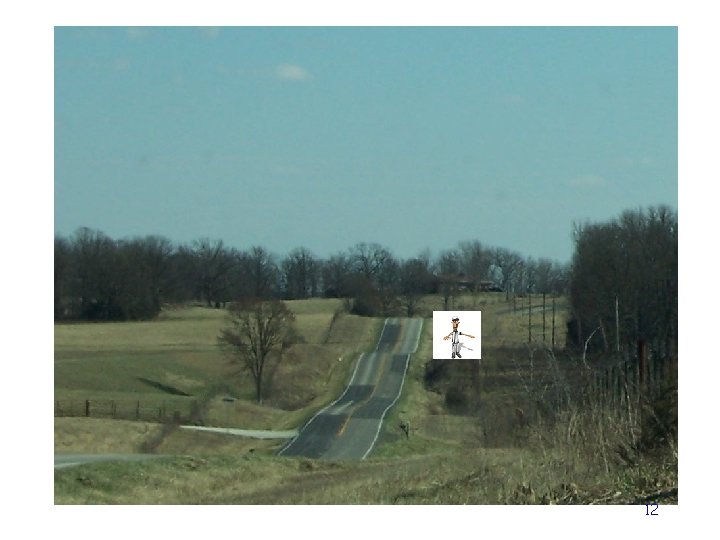
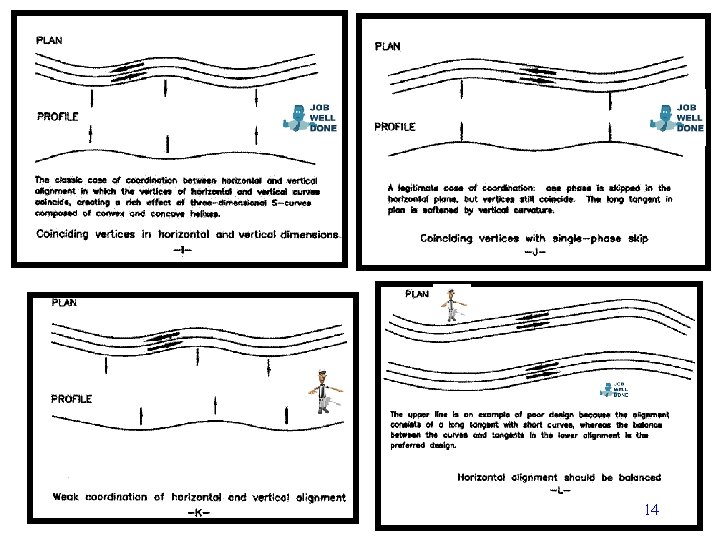
Coordination of Horizontal and Vertical Alignment Coordination of horizontal and vertical alignment should begin with preliminary design l Easier to make adjustments at this stage l Designer should study long, continuous stretches of highway in both plan and profile and visualize the whole in three dimensions l 7
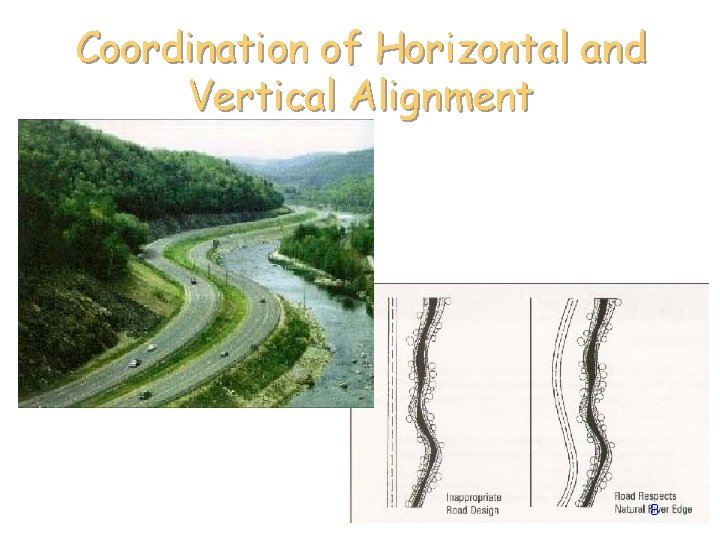
Coordination of Horizontal and Vertical Alignment 8
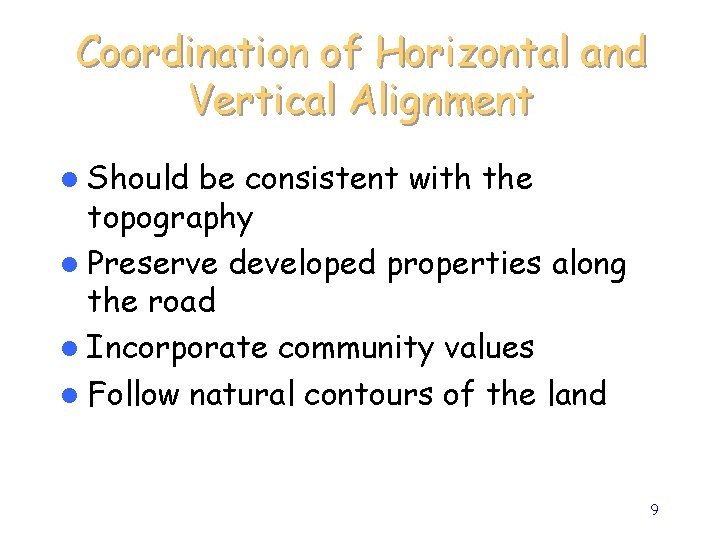
Coordination of Horizontal and Vertical Alignment l Should be consistent with the topography l Preserve developed properties along the road l Incorporate community values l Follow natural contours of the land 9
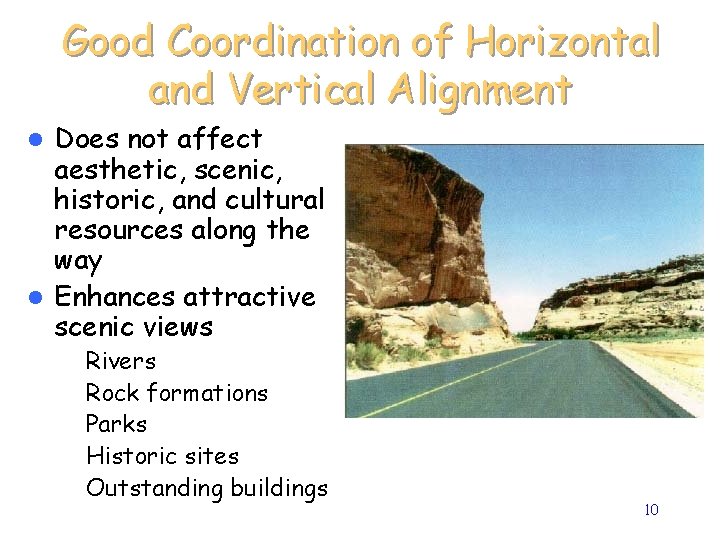
Good Coordination of Horizontal and Vertical Alignment Does not affect aesthetic, scenic, historic, and cultural resources along the way l Enhances attractive scenic views l – – – Rivers Rock formations Parks Historic sites Outstanding buildings 10
11
12
13
14
15
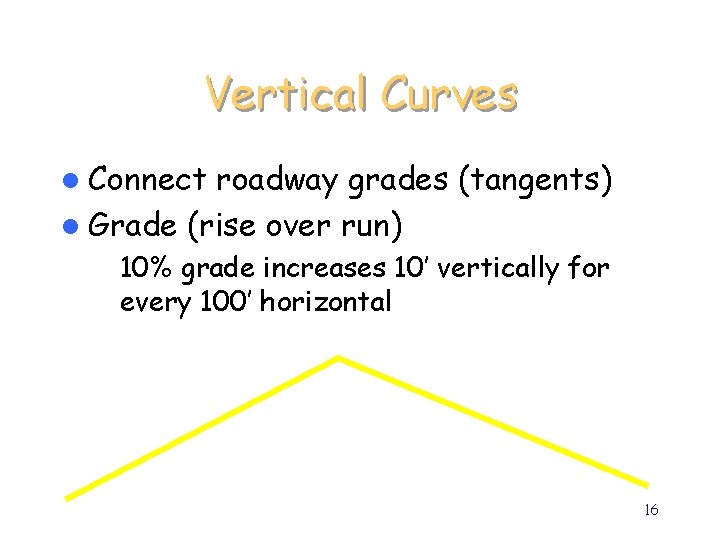
Vertical Curves l Connect roadway grades (tangents) l Grade (rise over run) – 10% grade increases 10’ vertically for every 100’ horizontal 16
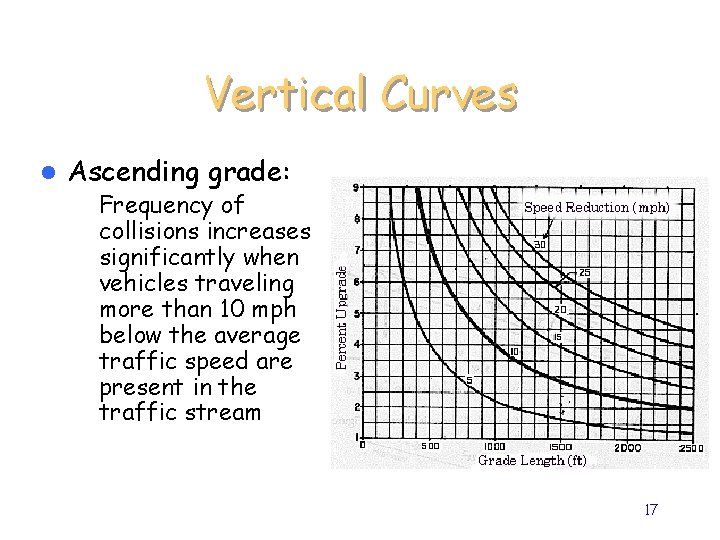
Vertical Curves l Ascending grade: – Frequency of collisions increases significantly when vehicles traveling more than 10 mph below the average traffic speed are present in the traffic stream 17
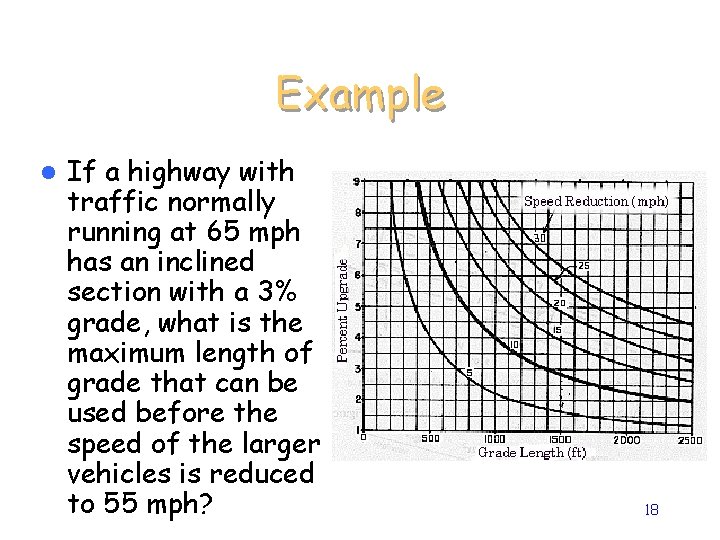
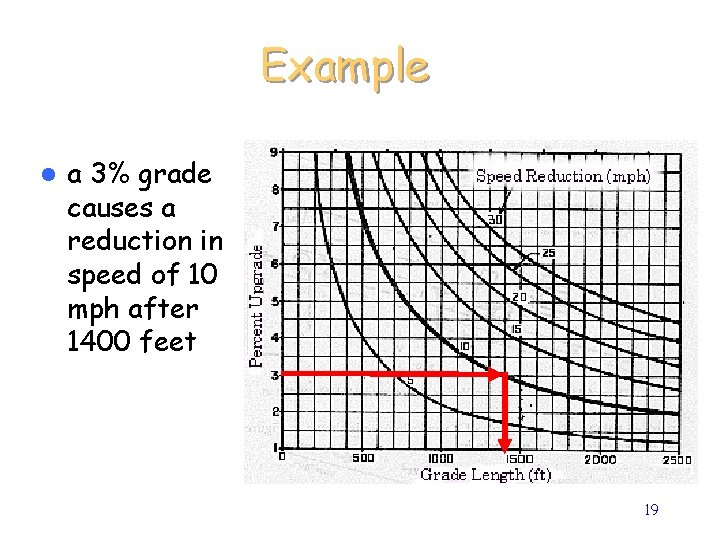
Example l If a highway with traffic normally running at 65 mph has an inclined section with a 3% grade, what is the maximum length of grade that can be used before the speed of the larger vehicles is reduced to 55 mph? 18
Example l a 3% grade causes a reduction in speed of 10 mph after 1400 feet 19
Climbing lanes l When flatter grades cannot be accommodated, consider climbing lane when all 3 of the following criteria are met (AASHTO): – Upgrade traffic flow rate in excess of 200 vehicles per hour. – Upgrade truck flow rate in excess of 20 vehicles per hour. – One of the following conditions exists: l l l A 15 km/h or greater speed reduction is expected for a typical heavy truck. Level-of-service E or F exists on the grade. A reduction of two or more levels of service is experienced when moving from the approach segment 20 to the grade.
Descending Grades l l l Problem is increased speeds and loss of control for heavy trucks Runaway vehicle ramps are often designed and included at critical locations along the grade Ramps placed before each turn that cannot be negotiated at runaway speeds Ramps should also be placed along straight stretches of roadway, wherever unreasonable speeds might be obtained Ramps located on the right side of the road when possible 21
Maximum Grades l Passenger vehicles can easily negotiate 4 to 5% grade without appreciable loss in speed l Upgrades: trucks average 7% decrease in speed l Downgrades: trucks average speed increase 5% 22
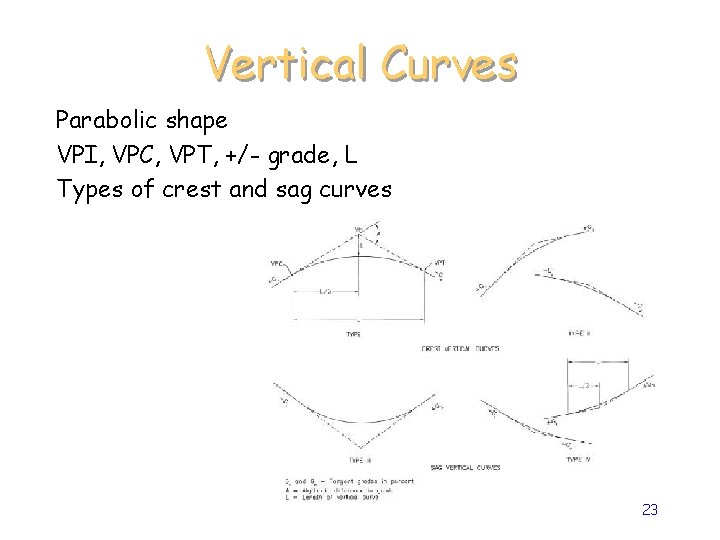
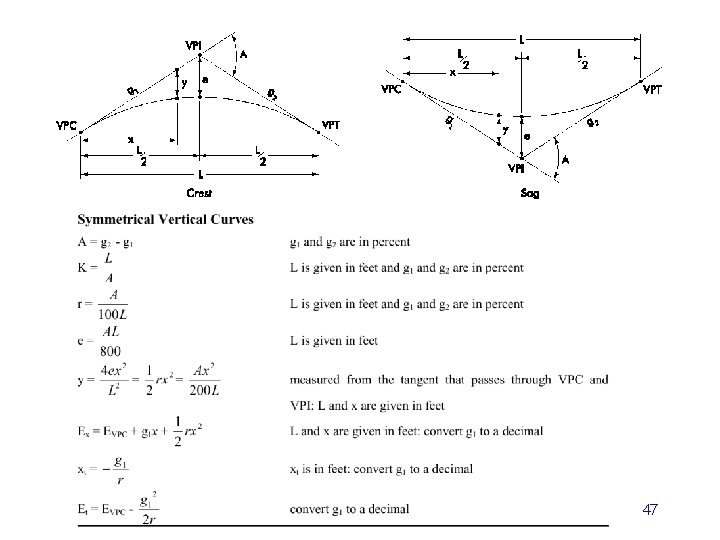
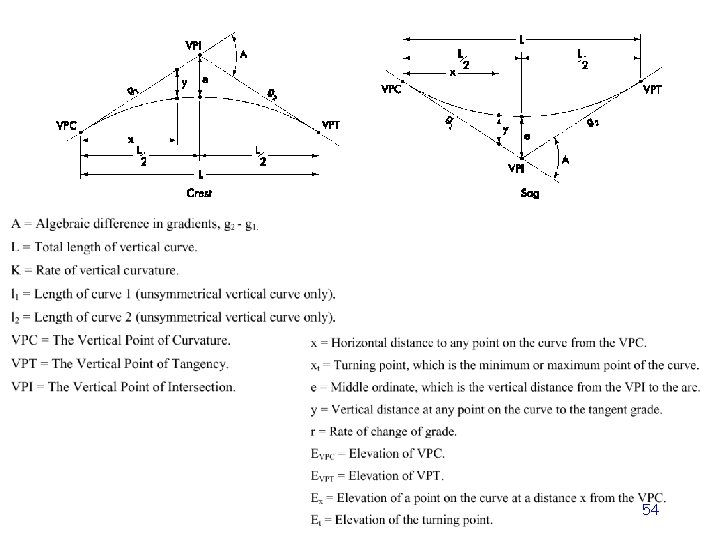
Vertical Curves l l l Parabolic shape VPI, VPC, VPT, +/- grade, L Types of crest and sag curves 23
Vertical Curves l l l Crest – stopping, or passing sight distance controls Sag – headlight/SSD distance, comfort, drainage and appearance control Green Book vertical curves defined by K = L/A = length of vertical curve/difference in grades (in percent) = length to change one percent in grade 24
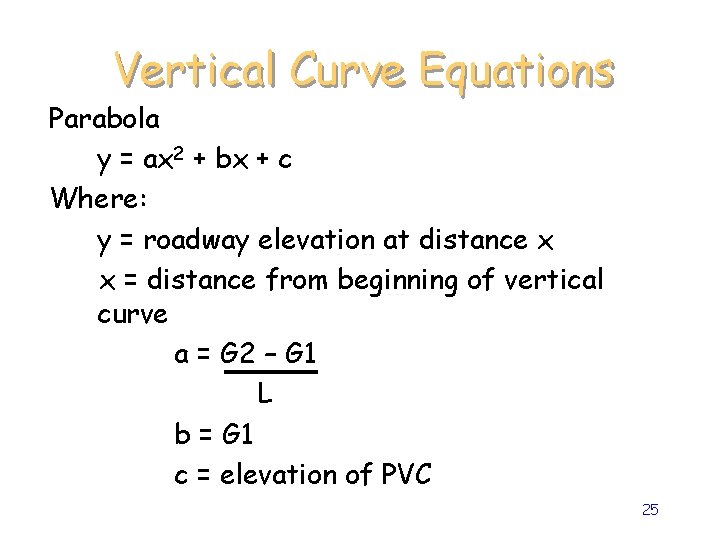
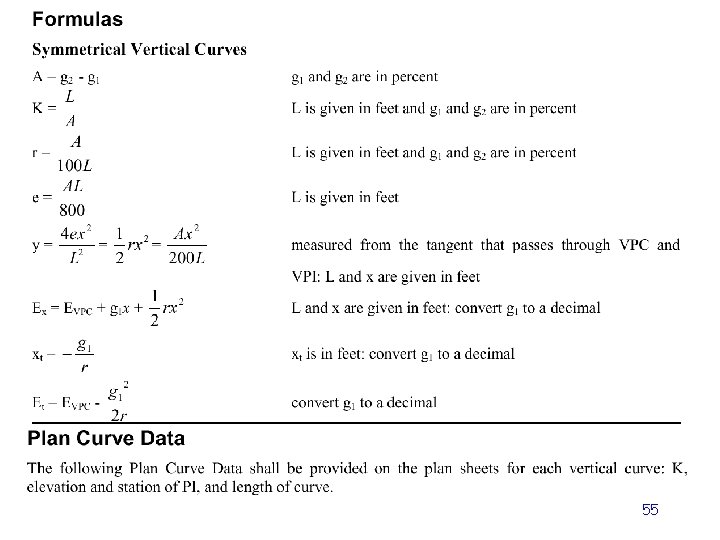
Vertical Curve Equations Parabola y = ax 2 + bx + c Where: y = roadway elevation at distance x x = distance from beginning of vertical curve a = G 2 – G 1 L b = G 1 c = elevation of PVC 25
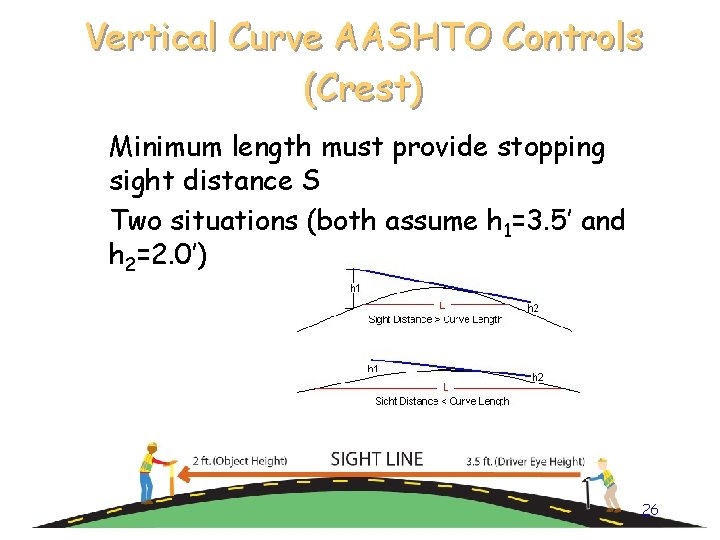
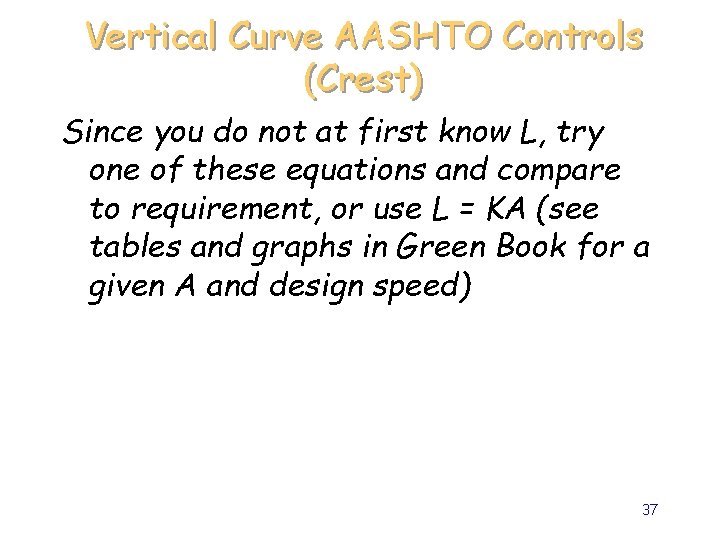
Vertical Curve AASHTO Controls (Crest) l l Minimum length must provide stopping sight distance S Two situations (both assume h 1=3. 5’ and h 2=2. 0’) Source: Transportation Engineering On-line Lab Manual, http: //www. its. uidaho. edu/niatt_labmanual/ 26
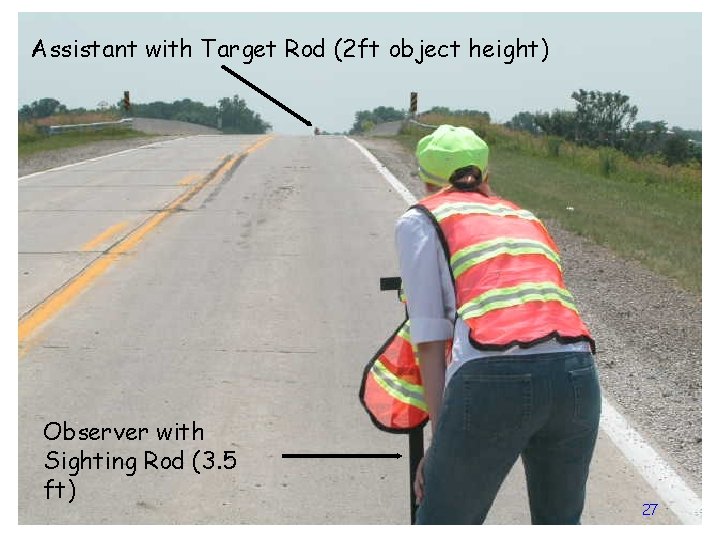
Assistant with Target Rod (2 ft object height) Observer with Sighting Rod (3. 5 ft) 27
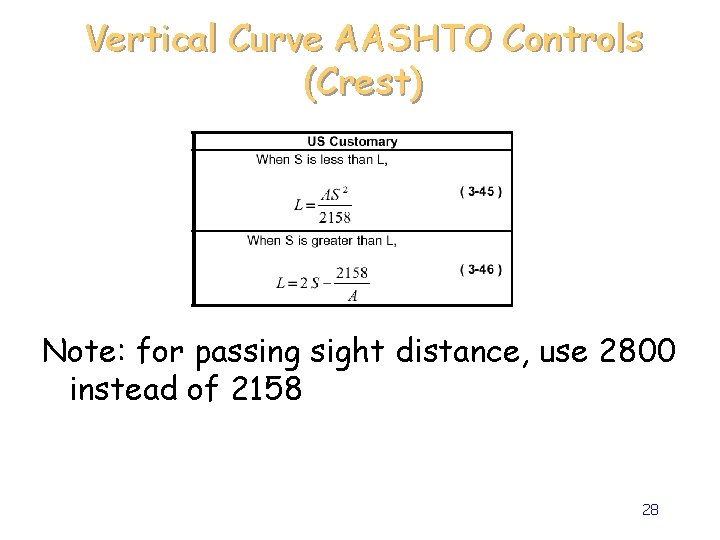
Vertical Curve AASHTO Controls (Crest) Note: for passing sight distance, use 2800 instead of 2158 28
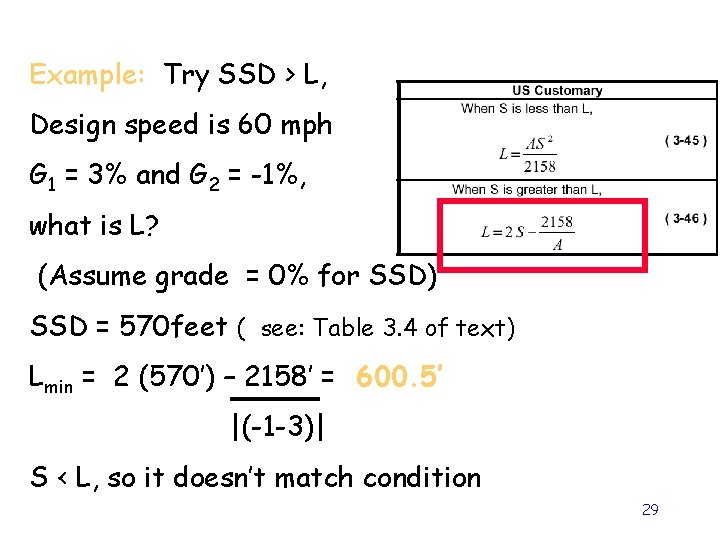
Example: Try SSD > L, Design speed is 60 mph G 1 = 3% and G 2 = -1%, what is L? (Assume grade = 0% for SSD) SSD = 570 feet ( see: Table 3. 4 of text) Lmin = 2 (570’) – 2158’ = 600. 5’ |(-1 -3)| S < L, so it doesn’t match condition 29
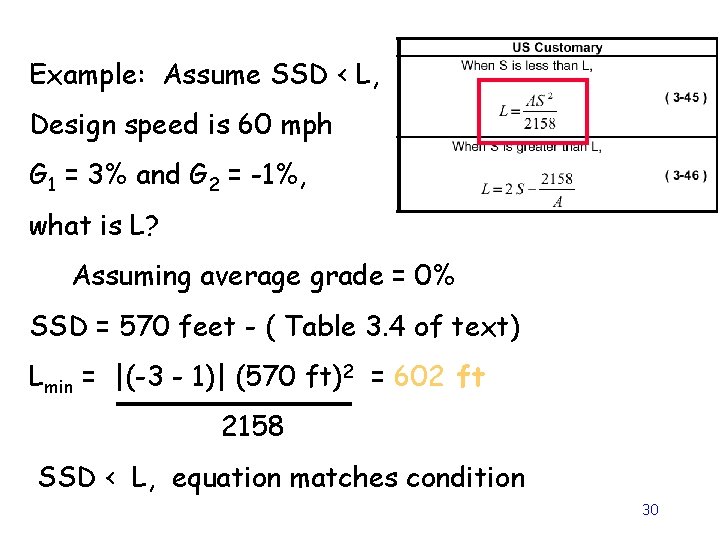
Example: Assume SSD < L, Design speed is 60 mph G 1 = 3% and G 2 = -1%, what is L? Assuming average grade = 0% SSD = 570 feet - ( Table 3. 4 of text) Lmin = |(-3 - 1)| (570 ft)2 = 602 ft 2158 SSD < L, equation matches condition 30
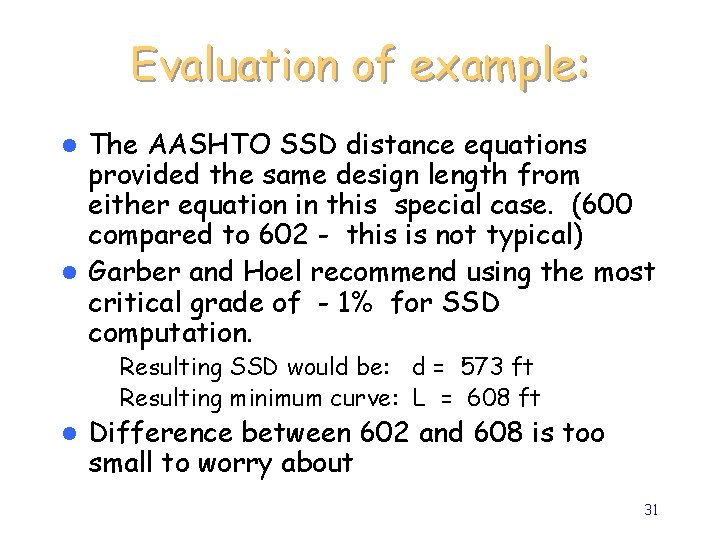
Evaluation of example: The AASHTO SSD distance equations provided the same design length from either equation in this special case. (600 compared to 602 - this is not typical) l Garber and Hoel recommend using the most critical grade of - 1% for SSD computation. l – Resulting SSD would be: d = 573 ft – Resulting minimum curve: L = 608 ft l Difference between 602 and 608 is too small to worry about 31
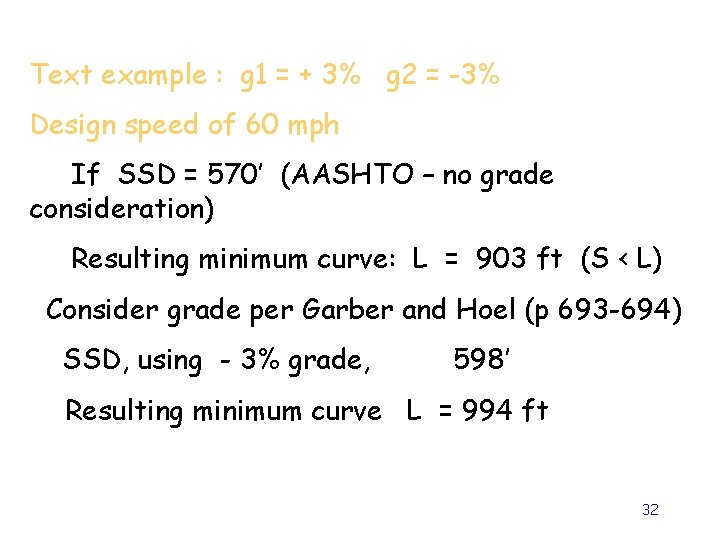
Text example : g 1 = + 3% g 2 = -3% Design speed of 60 mph If SSD = 570’ (AASHTO – no grade consideration) Resulting minimum curve: L = 903 ft (S < L) Consider grade per Garber and Hoel (p 693 -694) SSD, using - 3% grade, 598’ Resulting minimum curve L = 994 ft 32
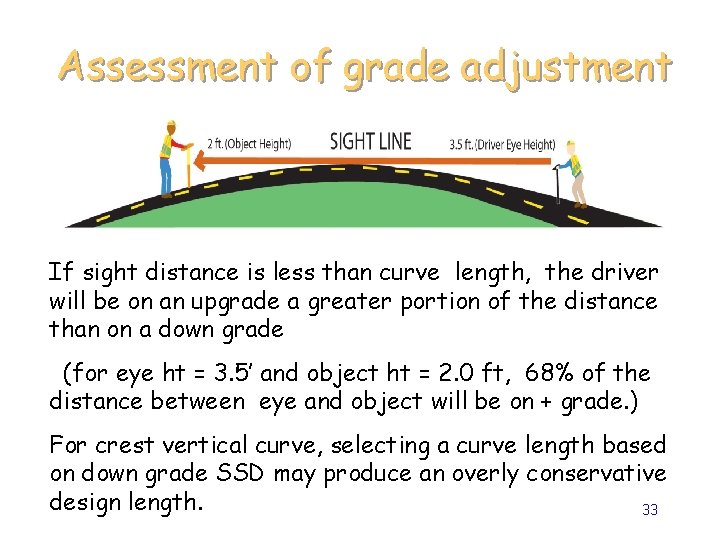
Assessment of grade adjustment If sight distance is less than curve length, the driver will be on an upgrade a greater portion of the distance than on a down grade (for eye ht = 3. 5’ and object ht = 2. 0 ft, 68% of the distance between eye and object will be on + grade. ) For crest vertical curve, selecting a curve length based on down grade SSD may produce an overly conservative design length. 33
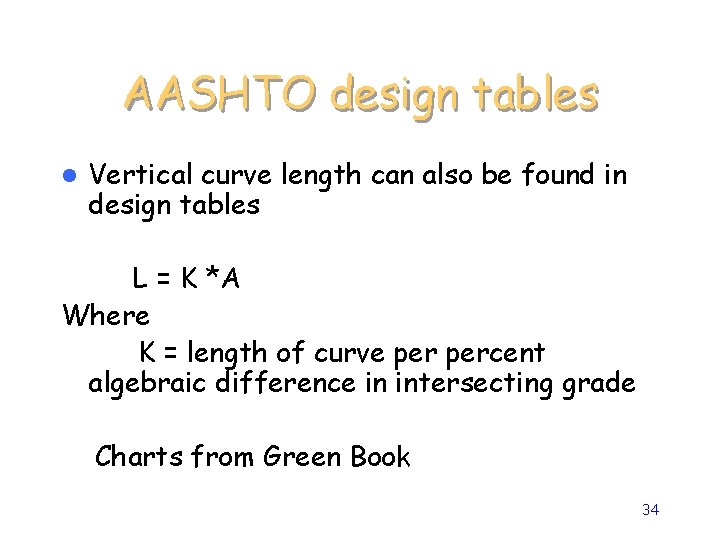
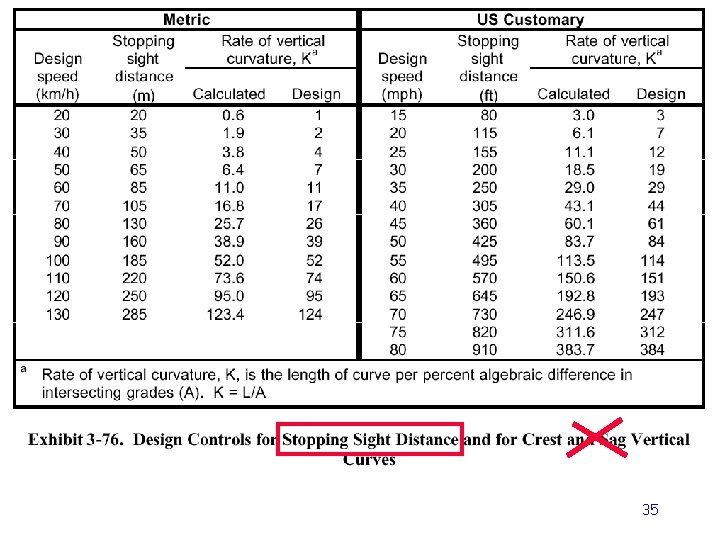
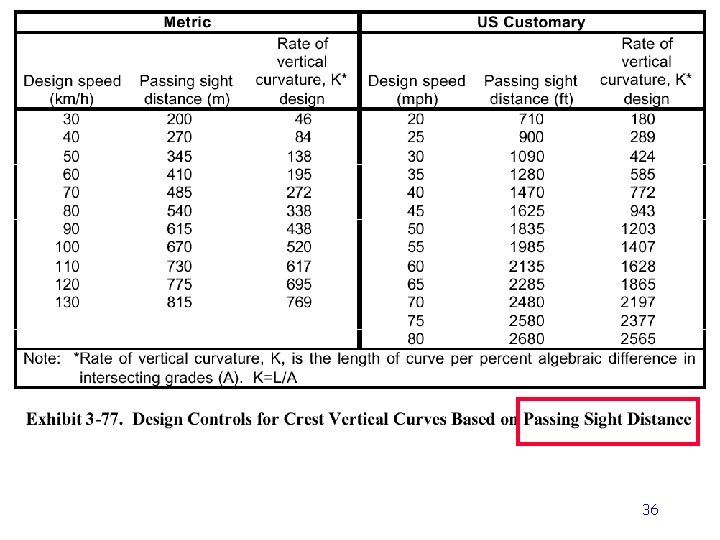
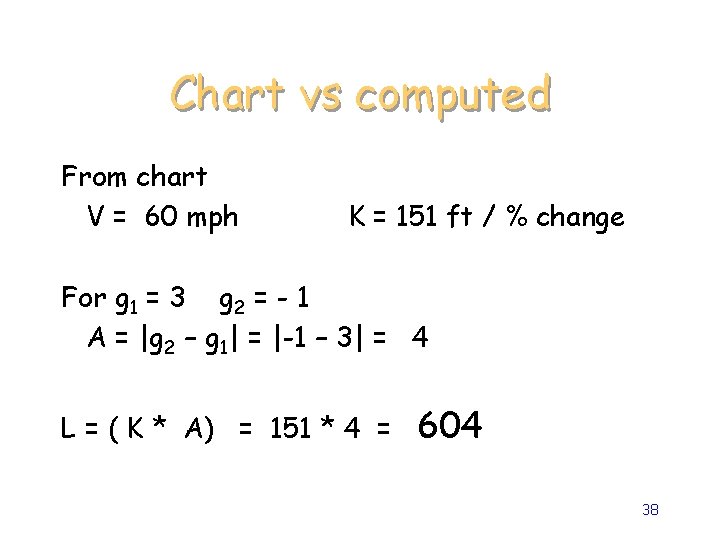
AASHTO design tables l Vertical curve length can also be found in design tables L = K *A Where K = length of curve percent algebraic difference in intersecting grade Charts from Green Book 34
From Green book 35
From Green book 36
Vertical Curve AASHTO Controls (Crest) Since you do not at first know L, try one of these equations and compare to requirement, or use L = KA (see tables and graphs in Green Book for a given A and design speed) 37
Chart vs computed From chart V = 60 mph K = 151 ft / % change For g 1 = 3 g 2 = - 1 A = |g 2 – g 1| = |-1 – 3| = 4 L = ( K * A) = 151 * 4 = 604 38
Sag Vertical Curves l Sight distance is governed by nighttime conditions – Distance on curve illuminated by headlights need to be considered l Driver comfort l Drainage l General appearance 39
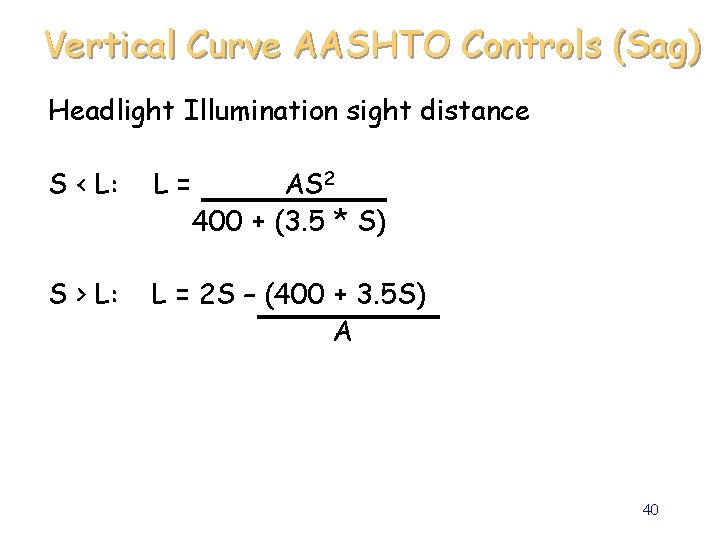
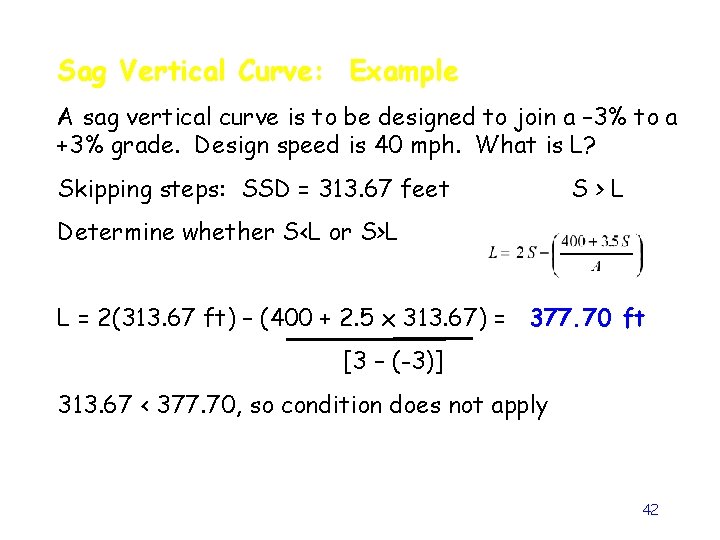
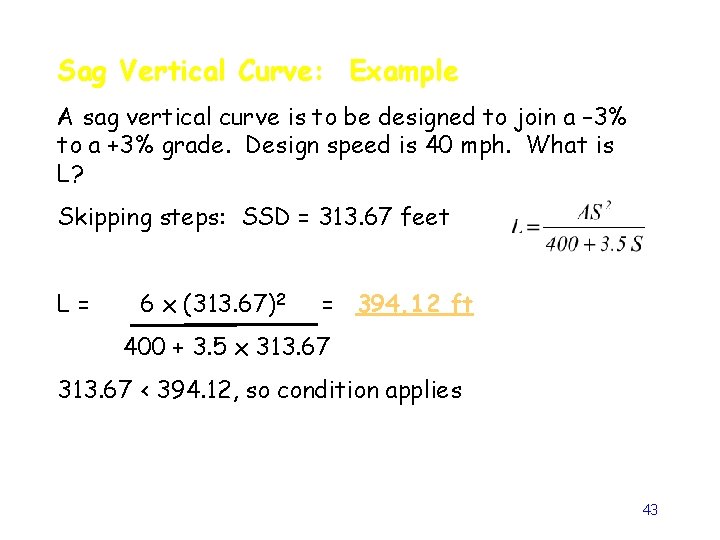
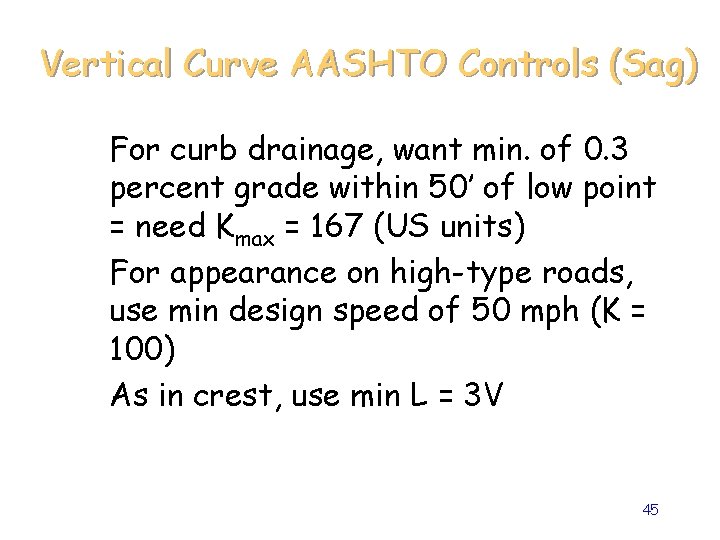
Vertical Curve AASHTO Controls (Sag) Headlight Illumination sight distance S < L: L= AS 2 400 + (3. 5 * S) S > L: L = 2 S – (400 + 3. 5 S) A 40
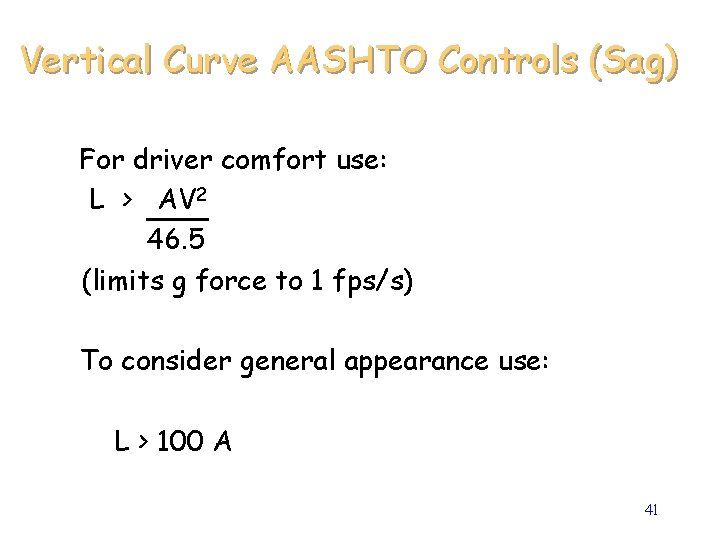
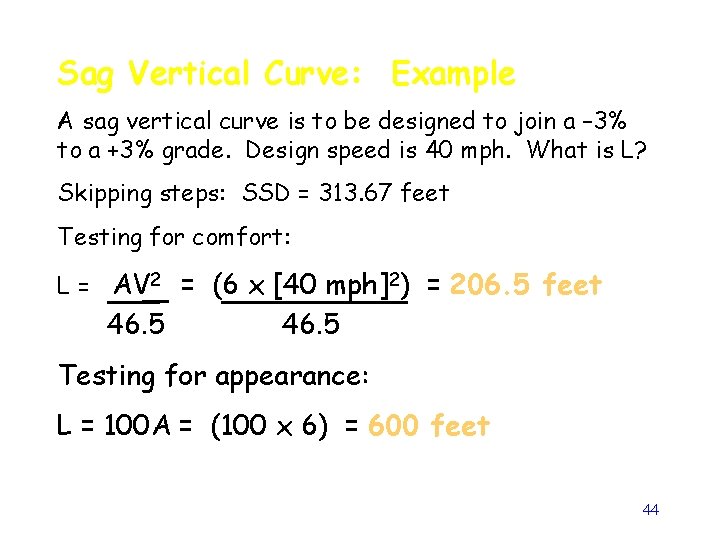
Vertical Curve AASHTO Controls (Sag) l For driver comfort use: L > AV 2 46. 5 (limits g force to 1 fps/s) l To consider general appearance use: L > 100 A 41
Sag Vertical Curve: Example A sag vertical curve is to be designed to join a – 3% to a +3% grade. Design speed is 40 mph. What is L? Skipping steps: SSD = 313. 67 feet S>L Determine whether S<L or S>L L = 2(313. 67 ft) – (400 + 2. 5 x 313. 67) = 377. 70 ft [3 – (-3)] 313. 67 < 377. 70, so condition does not apply 42
Sag Vertical Curve: Example A sag vertical curve is to be designed to join a – 3% to a +3% grade. Design speed is 40 mph. What is L? Skipping steps: SSD = 313. 67 feet L= 6 x (313. 67)2 = 394. 12 ft 400 + 3. 5 x 313. 67 < 394. 12, so condition applies 43
Sag Vertical Curve: Example A sag vertical curve is to be designed to join a – 3% to a +3% grade. Design speed is 40 mph. What is L? Skipping steps: SSD = 313. 67 feet Testing for comfort: L = AV 2 = (6 x [40 mph]2) = 206. 5 feet 46. 5 Testing for appearance: L = 100 A = (100 x 6) = 600 feet 44
Vertical Curve AASHTO Controls (Sag) For curb drainage, want min. of 0. 3 percent grade within 50’ of low point = need Kmax = 167 (US units) l For appearance on high-type roads, use min design speed of 50 mph (K = 100) l As in crest, use min L = 3 V l 45
Other important issues: l Use lighting if need to use shorter L than headlight requirements l Sight distance at under crossings 46
47
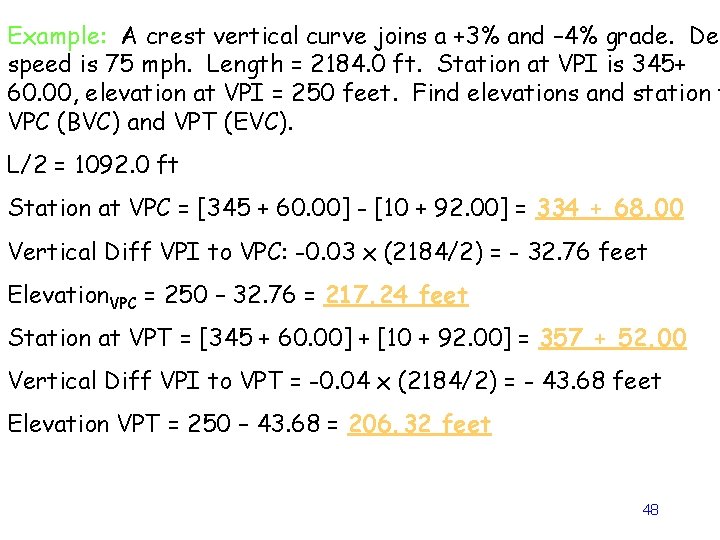
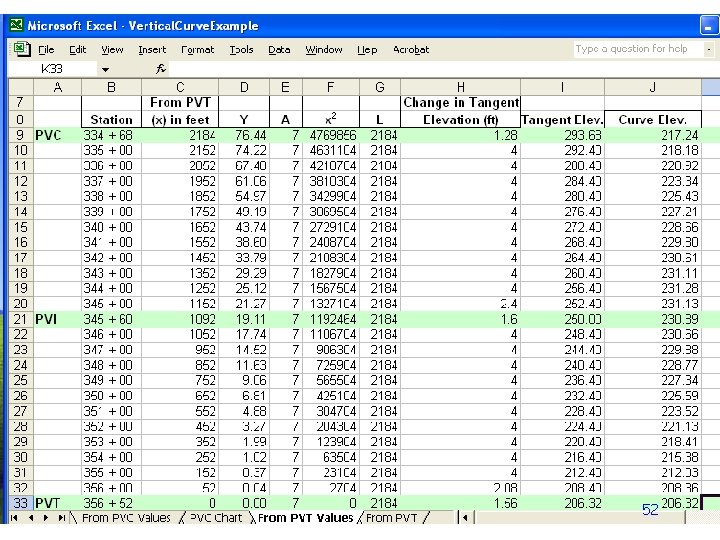
Example: A crest vertical curve joins a +3% and – 4% grade. Des speed is 75 mph. Length = 2184. 0 ft. Station at VPI is 345+ 60. 00, elevation at VPI = 250 feet. Find elevations and station f VPC (BVC) and VPT (EVC). L/2 = 1092. 0 ft Station at VPC = [345 + 60. 00] - [10 + 92. 00] = 334 + 68. 00 Vertical Diff VPI to VPC: -0. 03 x (2184/2) = - 32. 76 feet Elevation. VPC = 250 – 32. 76 = 217. 24 feet Station at VPT = [345 + 60. 00] + [10 + 92. 00] = 357 + 52. 00 Vertical Diff VPI to VPT = -0. 04 x (2184/2) = - 43. 68 feet Elevation VPT = 250 – 43. 68 = 206. 32 feet 48
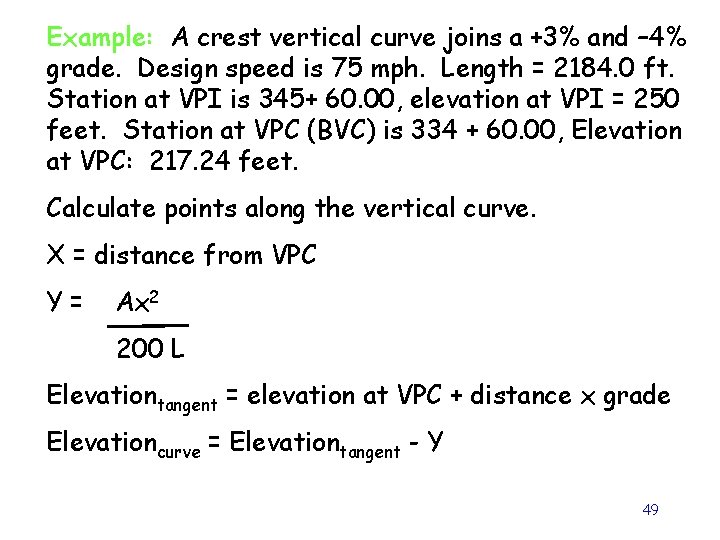
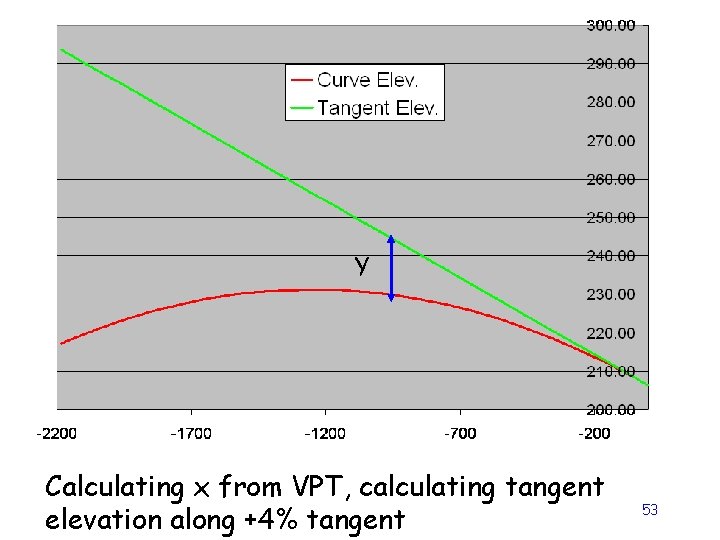
Example: A crest vertical curve joins a +3% and – 4% grade. Design speed is 75 mph. Length = 2184. 0 ft. Station at VPI is 345+ 60. 00, elevation at VPI = 250 feet. Station at VPC (BVC) is 334 + 60. 00, Elevation at VPC: 217. 24 feet. Calculate points along the vertical curve. X = distance from VPC Y= Ax 2 200 L Elevationtangent = elevation at VPC + distance x grade Elevationcurve = Elevationtangent - Y 49
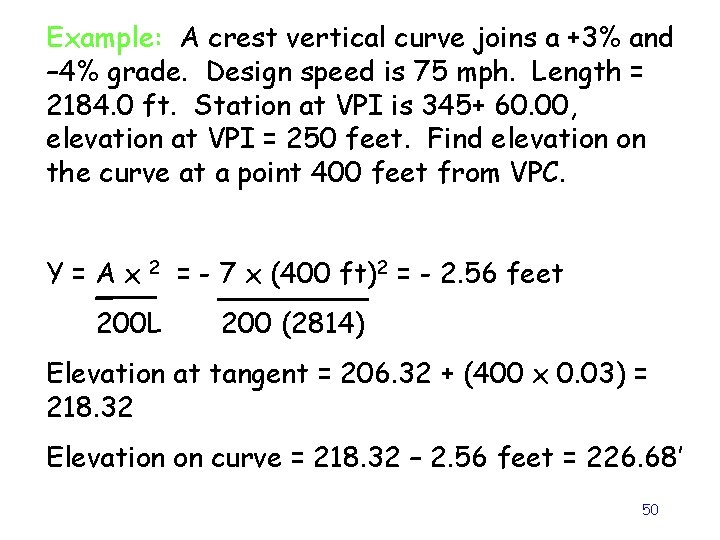
Example: A crest vertical curve joins a +3% and – 4% grade. Design speed is 75 mph. Length = 2184. 0 ft. Station at VPI is 345+ 60. 00, elevation at VPI = 250 feet. Find elevation on the curve at a point 400 feet from VPC. Y=Ax 2 200 L = - 7 x (400 ft)2 = - 2. 56 feet 200 (2814) Elevation at tangent = 206. 32 + (400 x 0. 03) = 218. 32 Elevation on curve = 218. 32 – 2. 56 feet = 226. 68’ 50
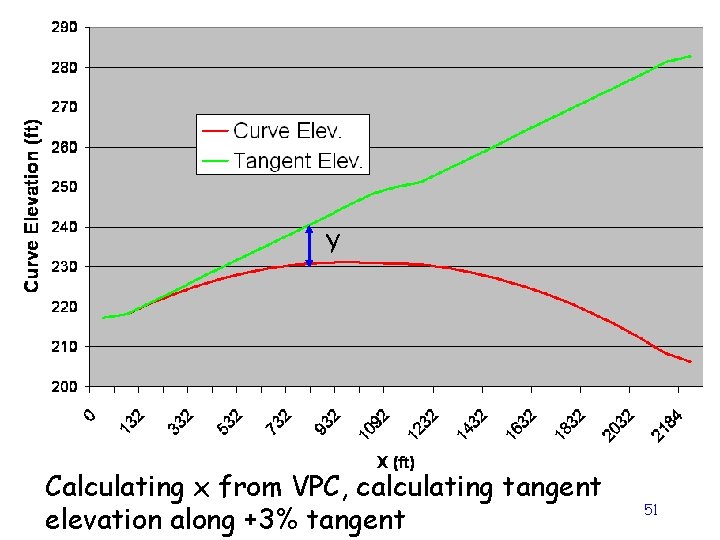
Y Calculating x from VPC, calculating tangent elevation along +3% tangent 51
52
Y Calculating x from VPT, calculating tangent elevation along +4% tangent 53
Source: Iowa DOT Design Manual 54
55 Source: Iowa DOT Design Manual
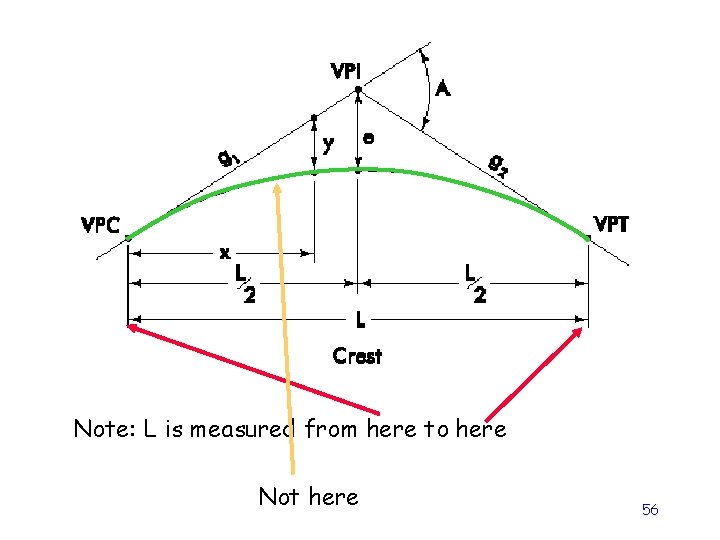
Note: L is measured from here to here Source: Iowa DOT Design Manual Not here 56