
Vertebrates Vertebrates Have a backbone Are all in
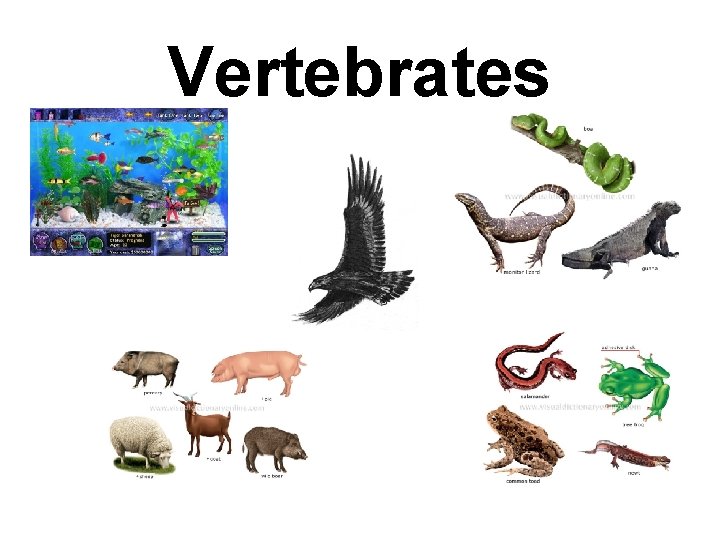
Vertebrates
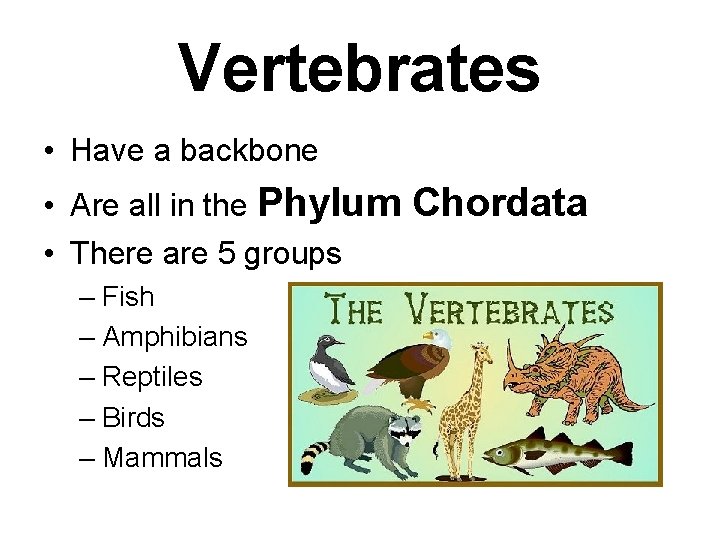
Vertebrates • Have a backbone • Are all in the Phylum • There are 5 groups – Fish – Amphibians – Reptiles – Birds – Mammals Chordata
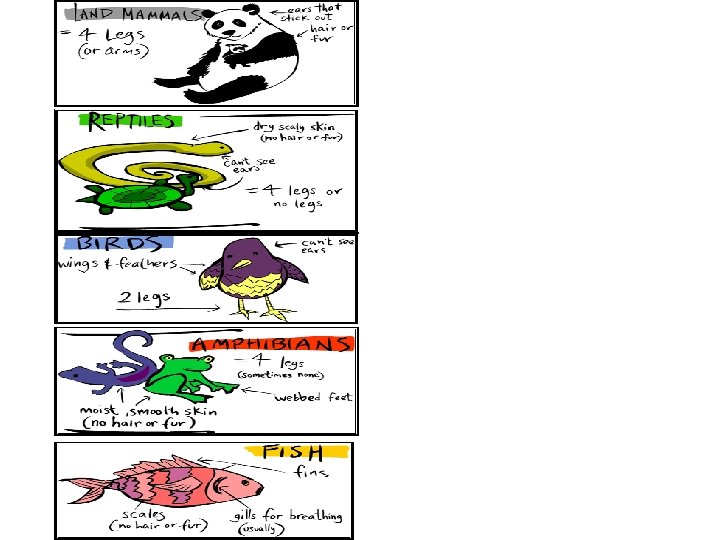
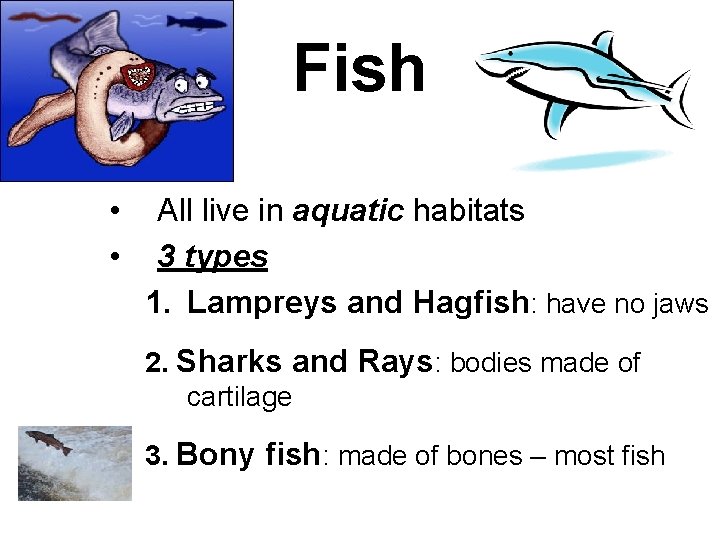
Fish • • All live in aquatic habitats 3 types 1. Lampreys and Hagfish: have no jaws 2. Sharks and Rays: bodies made of cartilage 3. Bony fish: made of bones – most fish
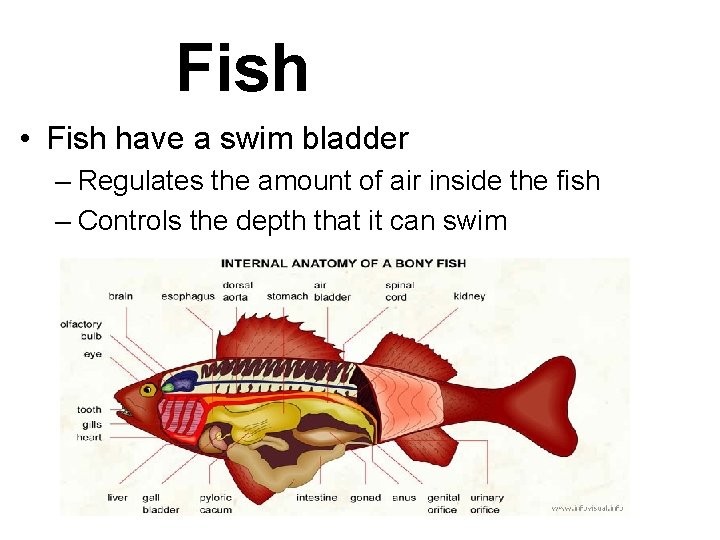
Fish • Fish have a swim bladder – Regulates the amount of air inside the fish – Controls the depth that it can swim

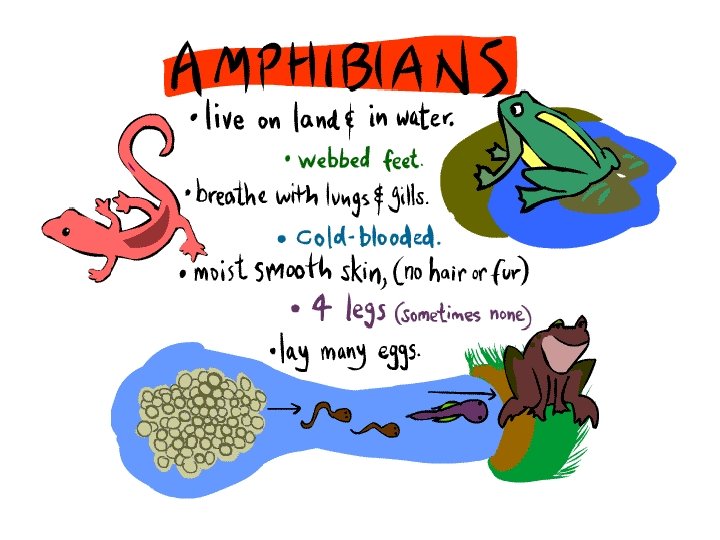
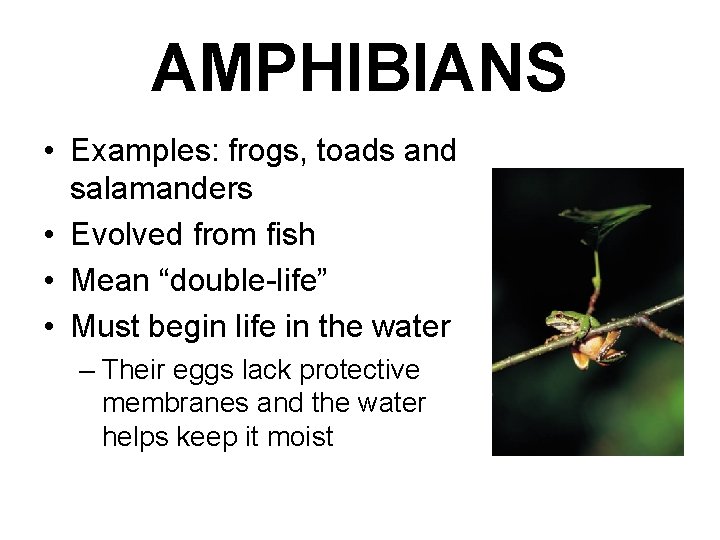
AMPHIBIANS • Examples: frogs, toads and salamanders • Evolved from fish • Mean “double-life” • Must begin life in the water – Their eggs lack protective membranes and the water helps keep it moist
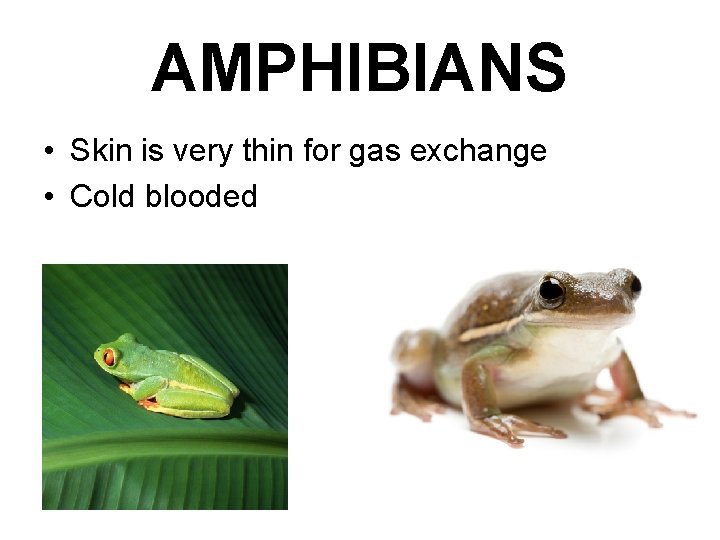
AMPHIBIANS • Skin is very thin for gas exchange • Cold blooded
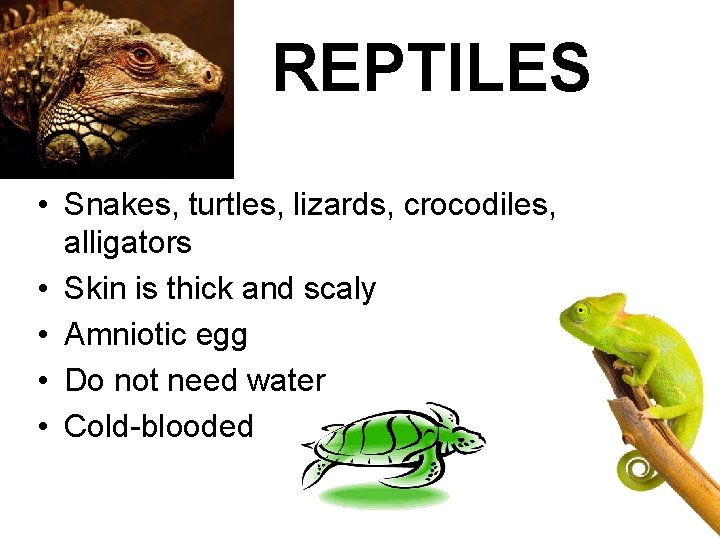
REPTILES • Snakes, turtles, lizards, crocodiles, alligators • Skin is thick and scaly • Amniotic egg • Do not need water • Cold-blooded
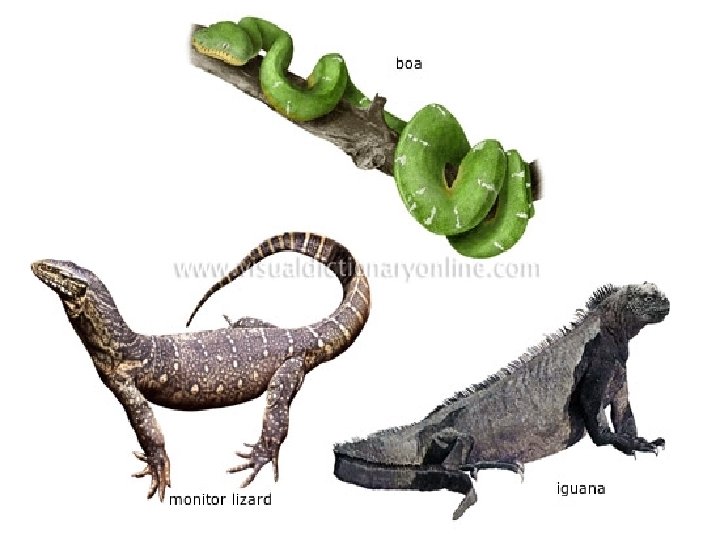
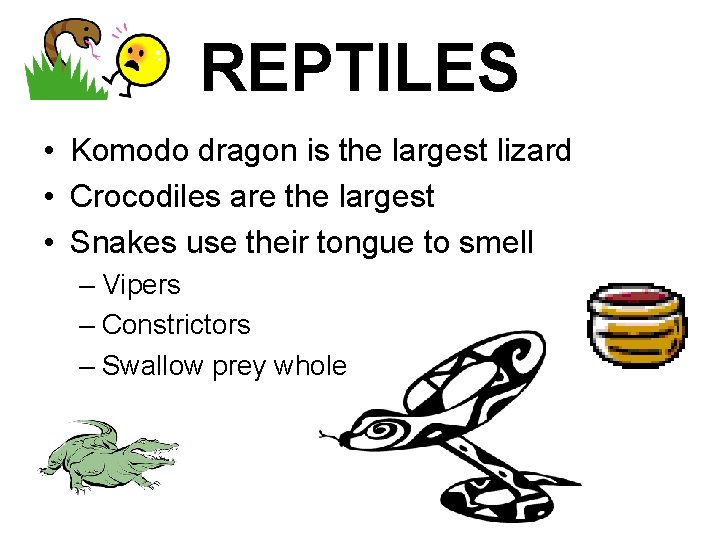
REPTILES • Komodo dragon is the largest lizard • Crocodiles are the largest • Snakes use their tongue to smell – Vipers – Constrictors – Swallow prey whole
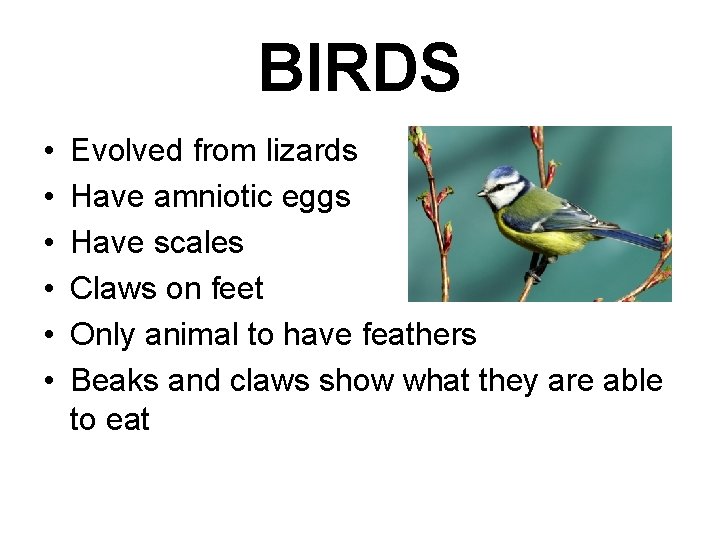
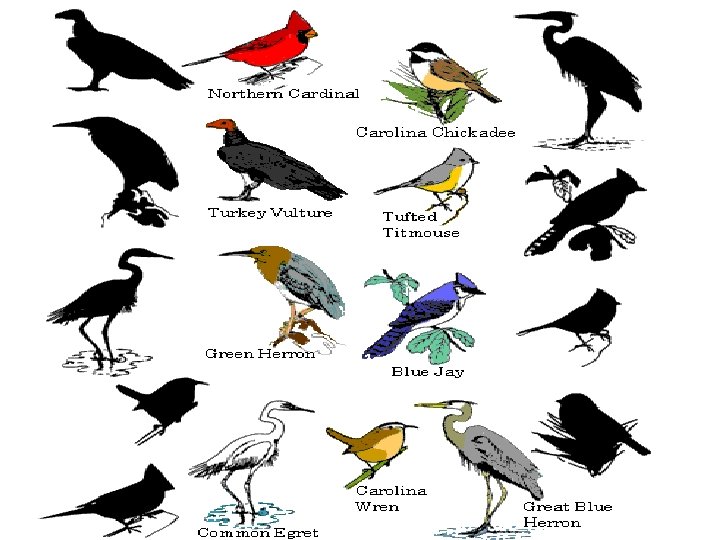
BIRDS • • • Evolved from lizards Have amniotic eggs Have scales Claws on feet Only animal to have feathers Beaks and claws show what they are able to eat
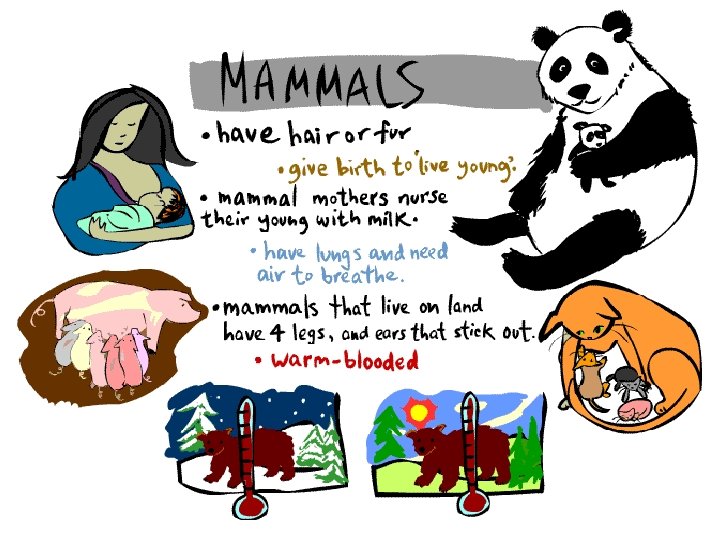
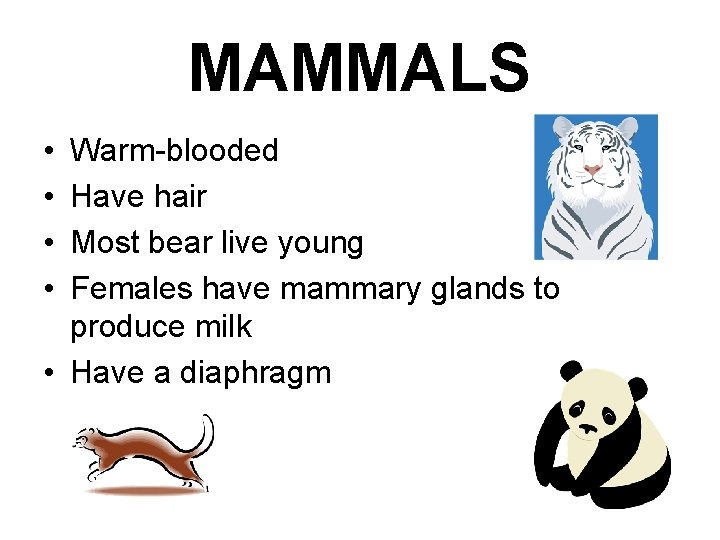
MAMMALS • • Warm-blooded Have hair Most bear live young Females have mammary glands to produce milk • Have a diaphragm
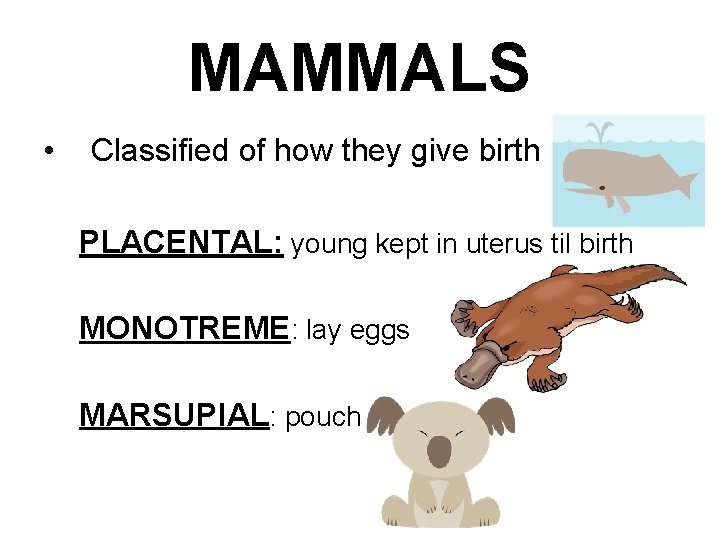
MAMMALS • Classified of how they give birth PLACENTAL: young kept in uterus til birth MONOTREME: lay eggs MARSUPIAL: pouch
- Slides: 17