
Vertebrates Vertebrate Animals with a backbone Belong to
Vertebrates

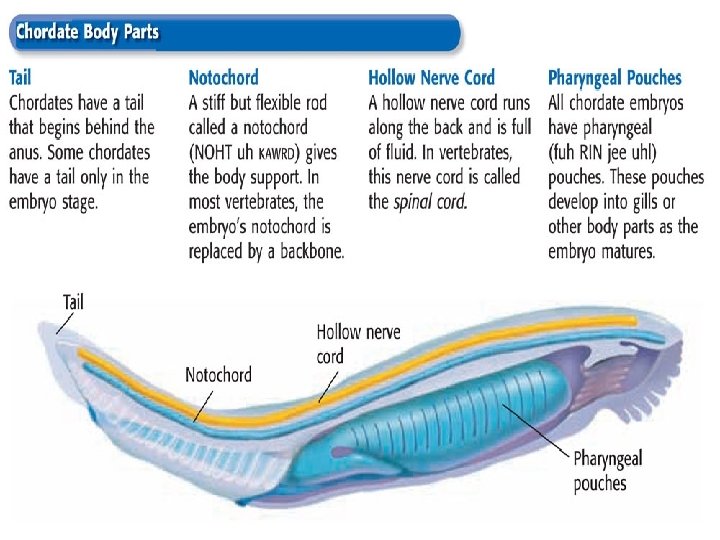
Vertebrate - Animals with a backbone - Belong to phylum chordata - Vertebrates have developed head and skull Four Body Parts of Chordates 1. Tail 2. Notochord (sometimes replaced by backbone) 3. Hollow nerve cord (spinal cord 4. Pharyngeal Pouches (gills)
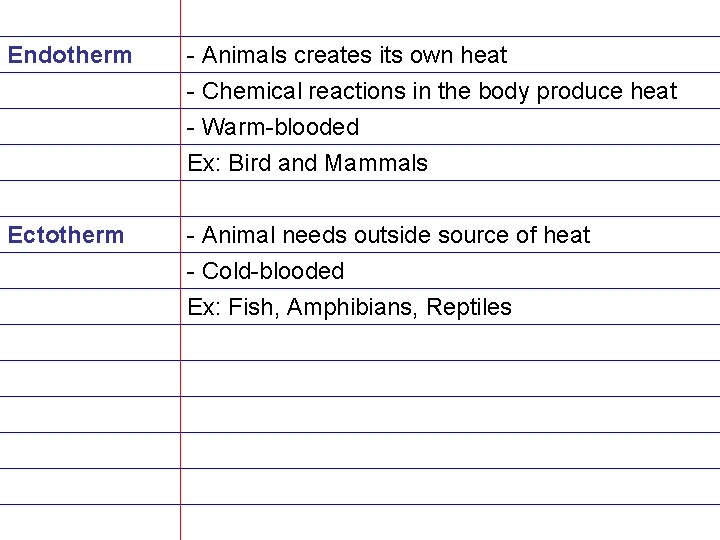
Endotherm - Animals creates its own heat - Chemical reactions in the body produce heat - Warm-blooded Ex: Bird and Mammals Ectotherm - Animal needs outside source of heat - Cold-blooded Ex: Fish, Amphibians, Reptiles
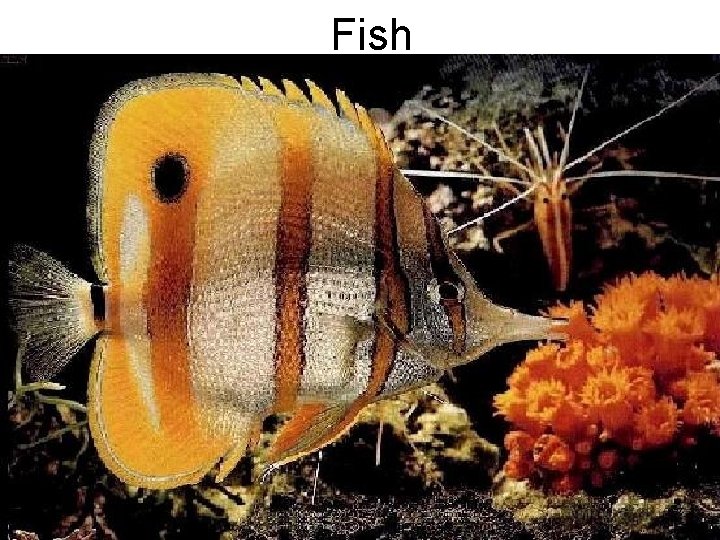
Fish
Gill - Respiratory organ - Exchanges oxygen and carbon dioxide from the water External Fertilization Internal Fertilization - Used by most fish - Female lays eggs, male drops sperm on them - Male deposits sperm inside of female, fertilized eggs are laid. Three Classes of Fish (Still Alive) 1. Jawless Fishes 2. Cartilaginous Fishes 3. Bony Fishes Jawless Fishes - No jaw (suction-cup mouth) - Eel-like Ex: Lamprey and Hagfish
Cartilaginous Fishes - Body contains cartilage instead of bone - Fully functional jaw Ex: Sharks and Rays Bony Fishes - Largest group - Skeleton made of bones - Contain a swim bladder - Ex: goldfish, catfish, tuna Swim Bladder - Gas-filled sac - Helps control floating and sinking
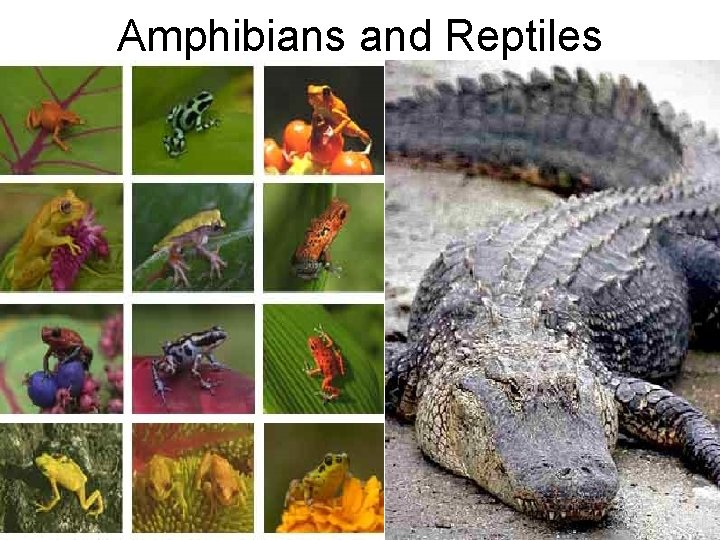
Amphibians and Reptiles
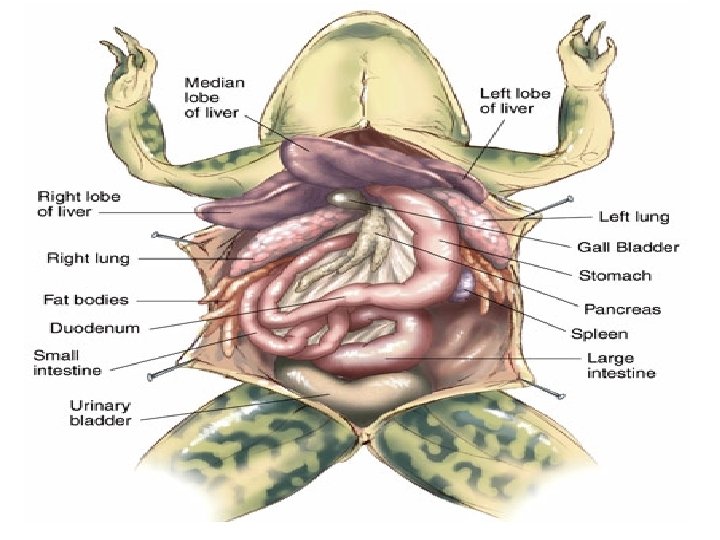
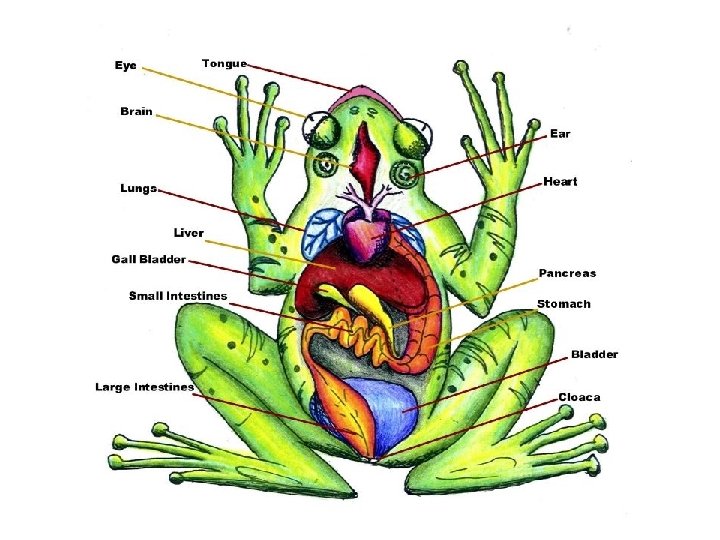
Amphibian Characteristics - Ectotherms - Have lungs and legs - Means “Double Life” - Young live in water and adult live on land - Thin skin to absorb water and oxygen - Complete metamorphosis -Ecological indicators sense changes in Environment with thin skin Ex: Frogs, Toads, and Salamanders Lung - Respiratory organ - Exchanges O 2 and CO 2 with the air
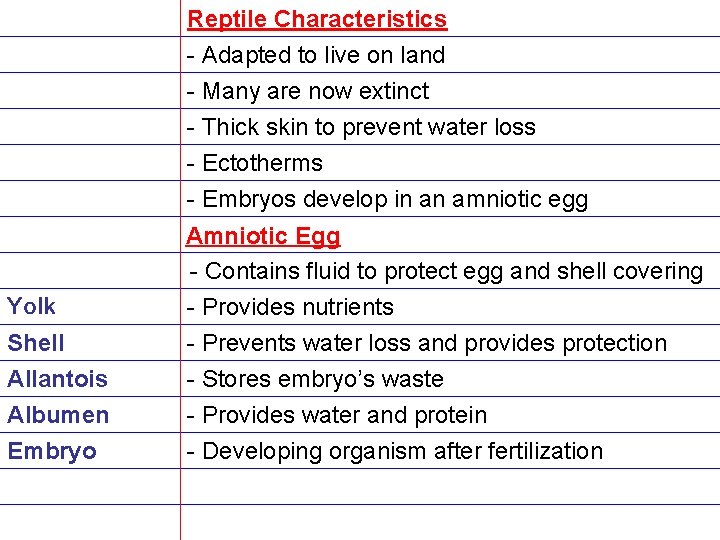
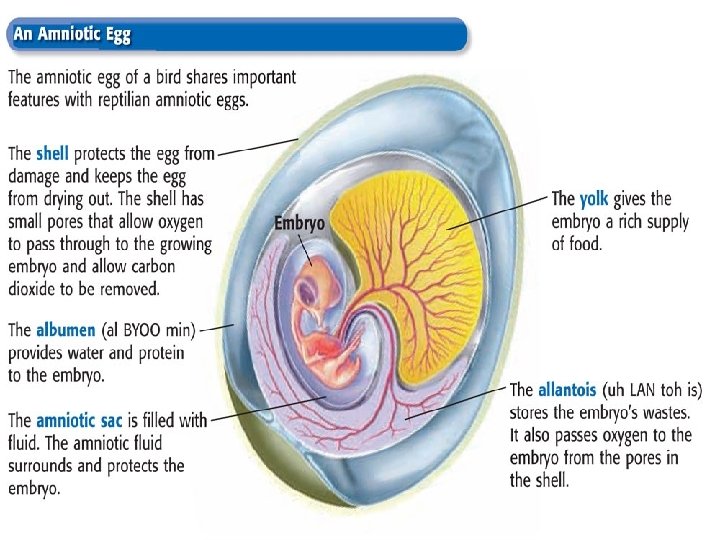
Reptile Characteristics - Adapted to live on land - Many are now extinct - Thick skin to prevent water loss - Ectotherms - Embryos develop in an amniotic egg Amniotic Egg - Contains fluid to protect egg and shell covering Yolk Shell Allantois Albumen Embryo - Provides nutrients - Prevents water loss and provides protection - Stores embryo’s waste - Provides water and protein - Developing organism after fertilization
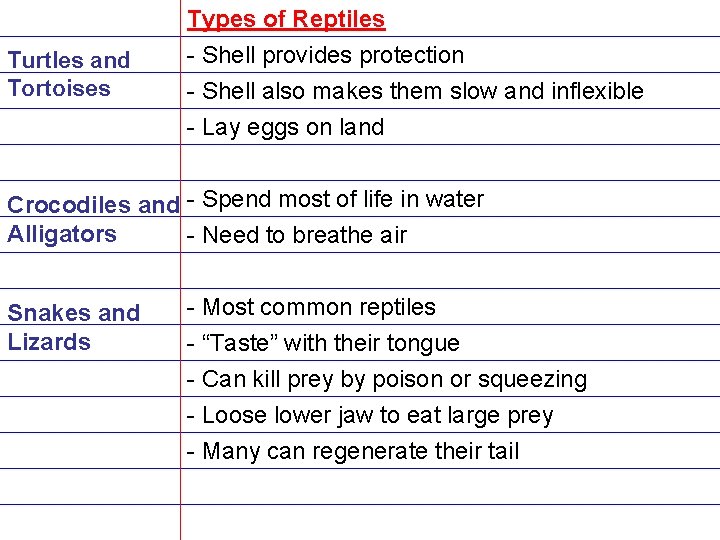
Turtles and Tortoises Types of Reptiles - Shell provides protection - Shell also makes them slow and inflexible - Lay eggs on land Crocodiles and - Spend most of life in water Alligators - Need to breathe air Snakes and Lizards - Most common reptiles - “Taste” with their tongue - Can kill prey by poison or squeezing - Loose lower jaw to eat large prey - Many can regenerate their tail
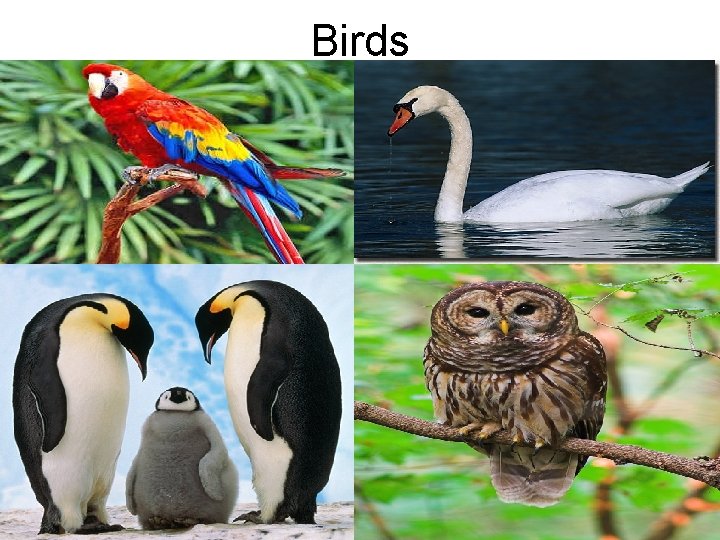
Birds
Characteristics - Closely related to reptiles - Lay amniotic eggs in nests - Feathers and wings - Endotherm - Require a lot of energy for flight—Eat a lot Fast digestion -Preen-spread oil on wings to waterproof feathers -molt-shed old feather and grow new feathers
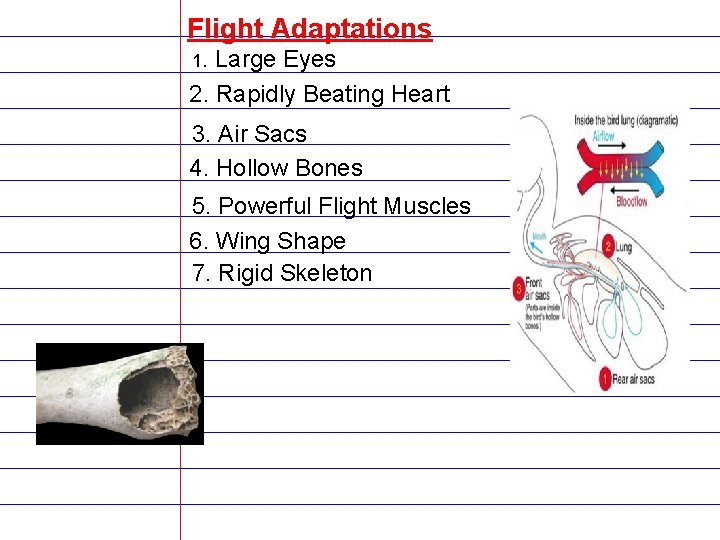
Flight Adaptations 1. Large Eyes 2. Rapidly Beating Heart 3. Air Sacs 4. Hollow Bones 5. Powerful Flight Muscles 6. Wing Shape 7. Rigid Skeleton
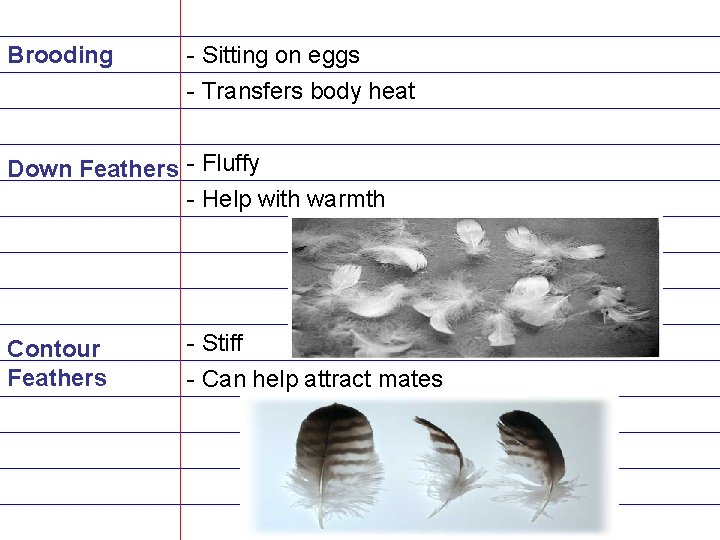
Brooding - Sitting on eggs - Transfers body heat Down Feathers - Fluffy - Help with warmth Contour Feathers - Stiff - Can help attract mates
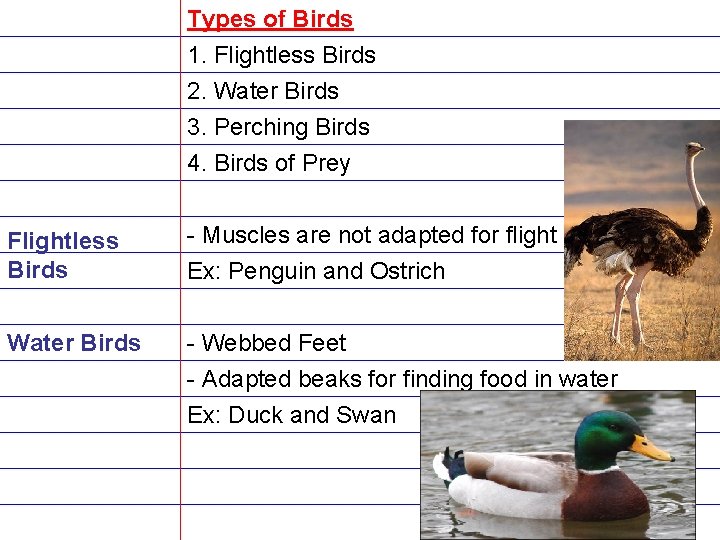
Types of Birds 1. Flightless Birds 2. Water Birds 3. Perching Birds 4. Birds of Prey Flightless Birds - Muscles are not adapted for flight Ex: Penguin and Ostrich Water Birds - Webbed Feet - Adapted beaks for finding food in water Ex: Duck and Swan
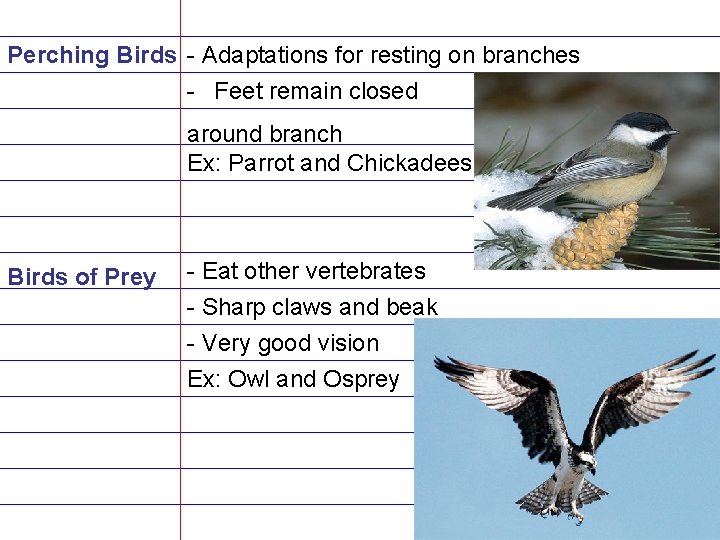
Perching Birds - Adaptations for resting on branches - Feet remain closed around branch Ex: Parrot and Chickadees Birds of Prey - Eat other vertebrates - Sharp claws and beak - Very good vision Ex: Owl and Osprey
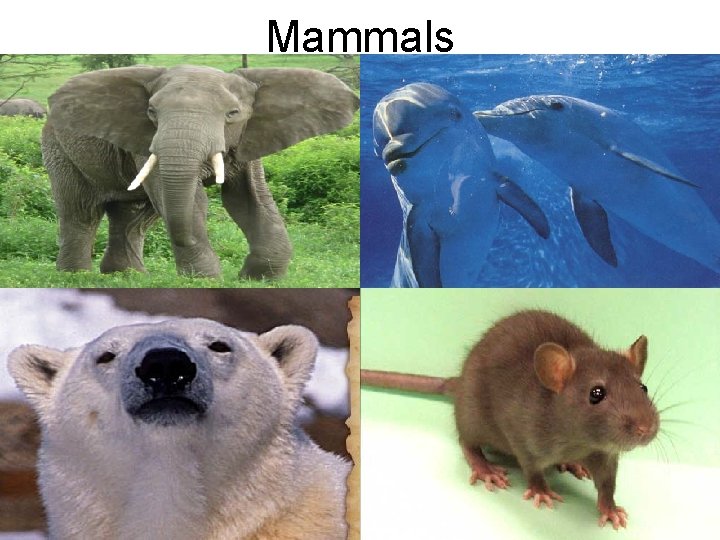
Mammals
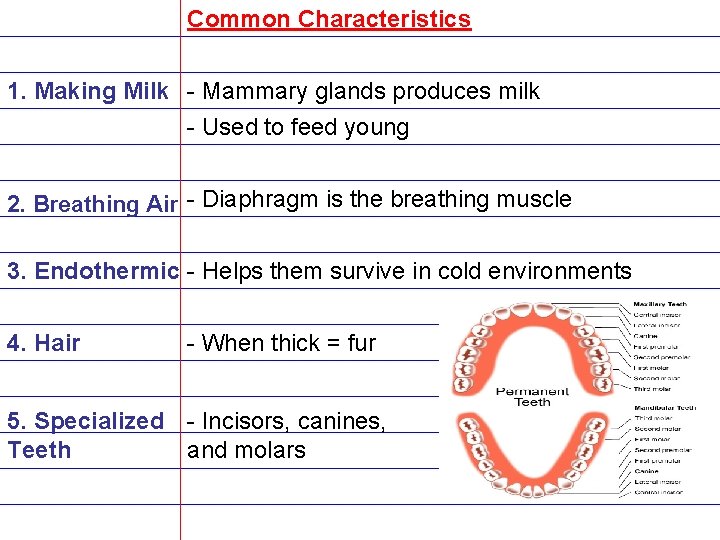
Common Characteristics 1. Making Milk - Mammary glands produces milk - Used to feed young 2. Breathing Air - Diaphragm is the breathing muscle 3. Endothermic - Helps them survive in cold environments 4. Hair - When thick = fur 5. Specialized - Incisors, canines, Teeth and molars
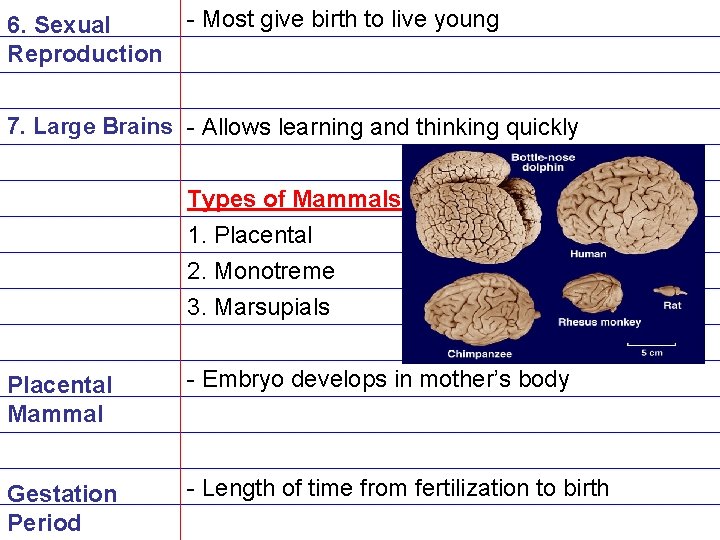
6. Sexual Reproduction - Most give birth to live young 7. Large Brains - Allows learning and thinking quickly Types of Mammals 1. Placental 2. Monotreme 3. Marsupials Placental Mammal - Embryo develops in mother’s body Gestation Period - Length of time from fertilization to birth
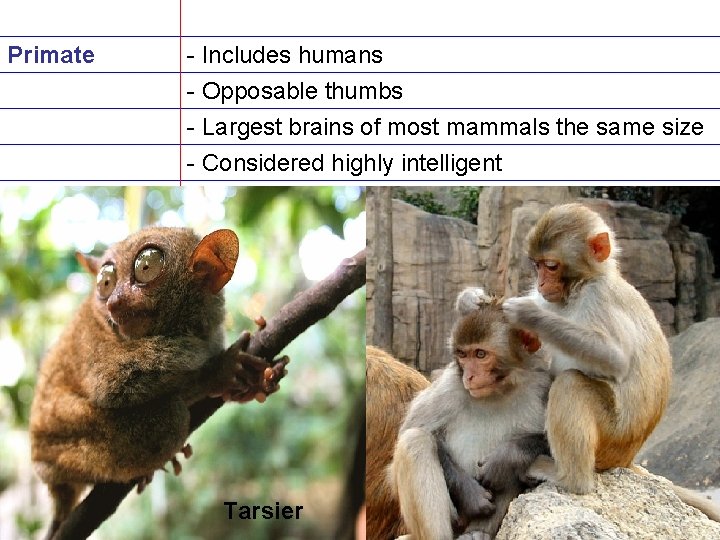
Primate - Includes humans - Opposable thumbs - Largest brains of most mammals the same size - Considered highly intelligent Tarsier
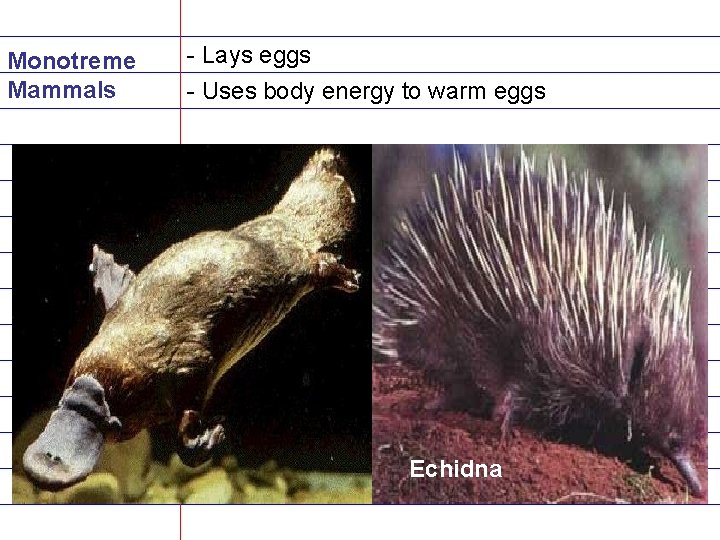
Monotreme Mammals - Lays eggs - Uses body energy to warm eggs Echidna
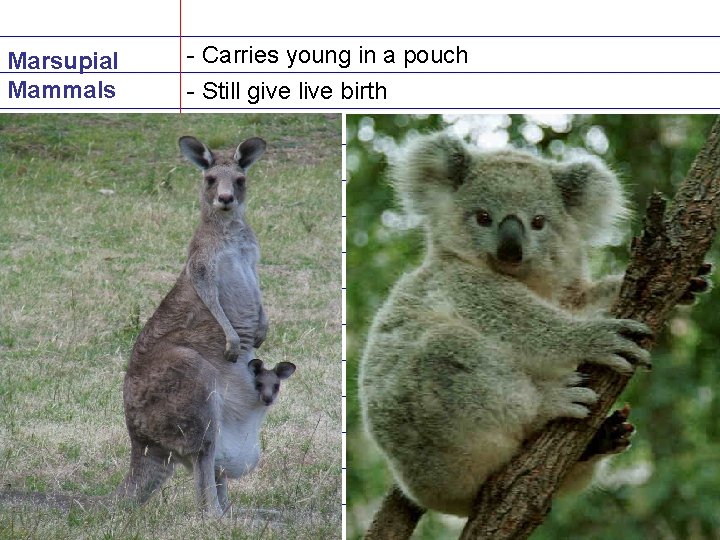
Marsupial Mammals - Carries young in a pouch - Still give live birth
- Slides: 26