
Vertebrates l Amphibians l Reptiles l Mammals not
Vertebrates: l. Amphibians l. Reptiles l. Mammals (not in this show)
• Overview: Half a Billion Years of Backbones • By the end of the Cambrian period, some 540 million years ago –An astonishing variety of animals inhabited Earth’s oceans • One of these types of animals –Gave rise to vertebrates, one of the most successful groups of animals
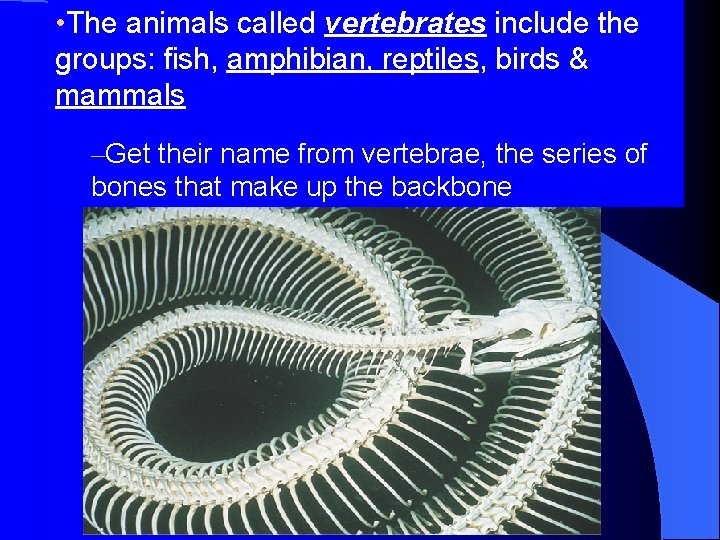
• The animals called vertebrates include the groups: fish, amphibian, reptiles, birds & mammals –Get their name from vertebrae, the series of bones that make up the backbone
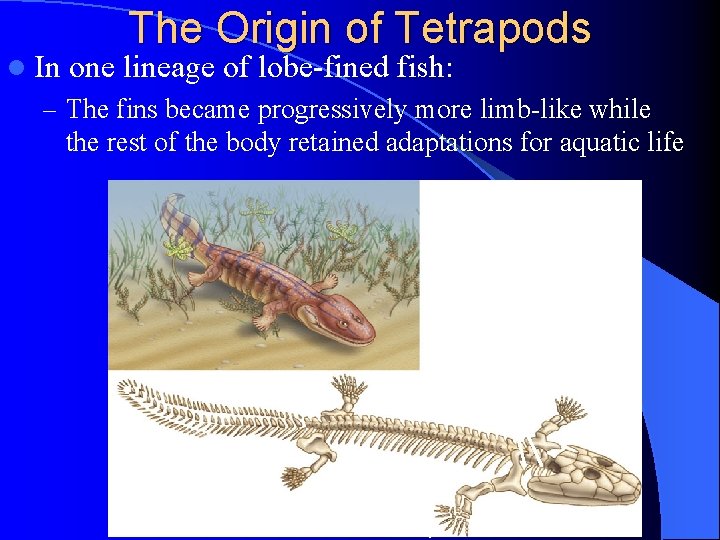
l In The Origin of Tetrapods one lineage of lobe-fined fish: – The fins became progressively more limb-like while the rest of the body retained adaptations for aquatic life Bones supporting gills Figure 34. 19 Tetrapod limb skeleton
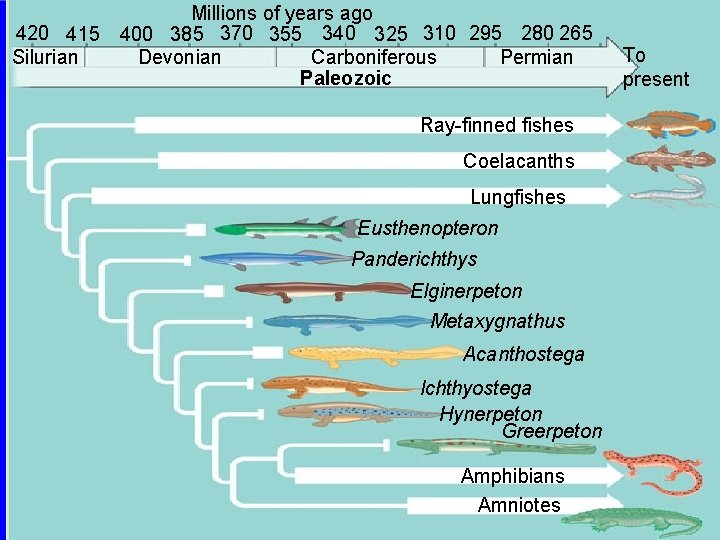
420 415 Silurian Millions of years ago 400 385 370 355 340 325 310 295 280 265 Devonian Carboniferous Permian Paleozoic Ray-finned fishes Coelacanths Lungfishes Eusthenopteron Panderichthys Elginerpeton Metaxygnathus Acanthostega lchthyostega Hynerpeton Greerpeton Amphibians Amniotes To present
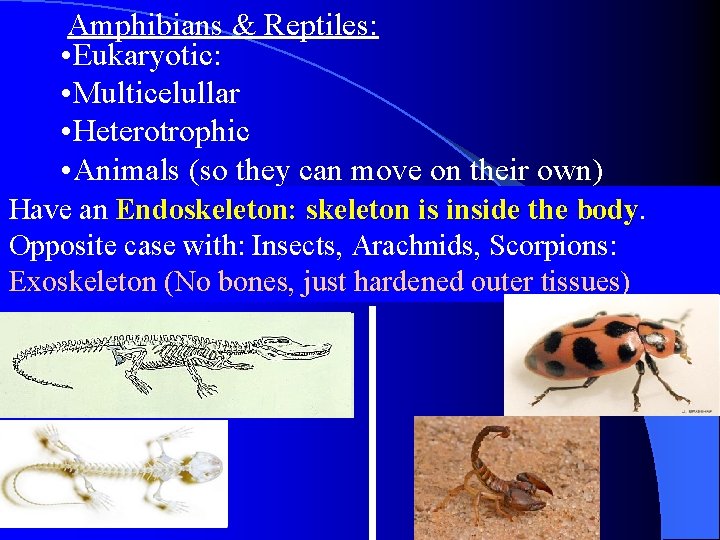
Amphibians & Reptiles: • Eukaryotic: • Multicelullar • Heterotrophic • Animals (so they can move on their own) Have an Endoskeleton: skeleton is inside the body Opposite case with: Insects, Arachnids, Scorpions: Exoskeleton (No bones, just hardened outer tissues)
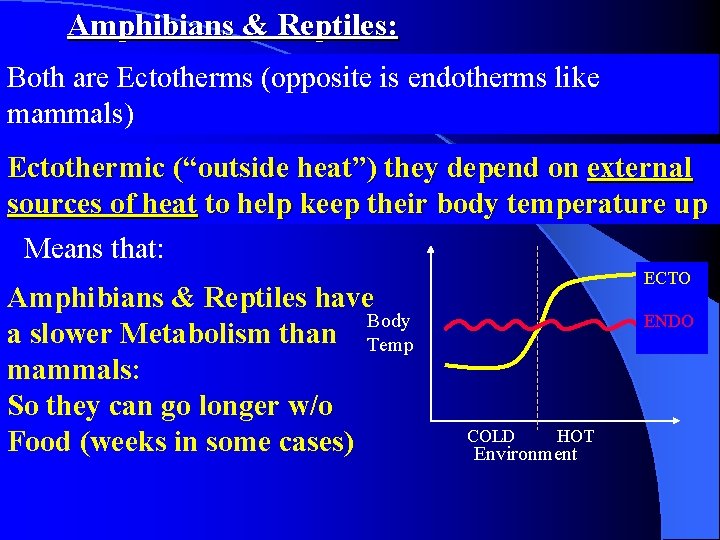
Amphibians & Reptiles: Both are Ectotherms (opposite is endotherms like mammals) Ectothermic (“outside heat”) they depend on external sources of heat to help keep their body temperature up Means that: Amphibians & Reptiles have Body a slower Metabolism than Temp mammals: So they can go longer w/o Food (weeks in some cases) ECTO ENDO COLD HOT Environment
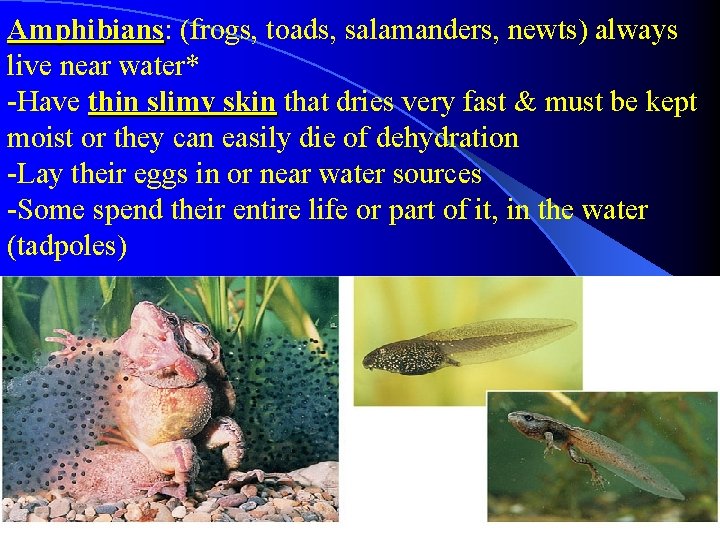
Amphibians: Amphibians (frogs, toads, salamanders, newts) always live near water* -Have thin slimy skin that dries very fast & must be kept moist or they can easily die of dehydration -Lay their eggs in or near water sources -Some spend their entire life or part of it, in the water (tadpoles)
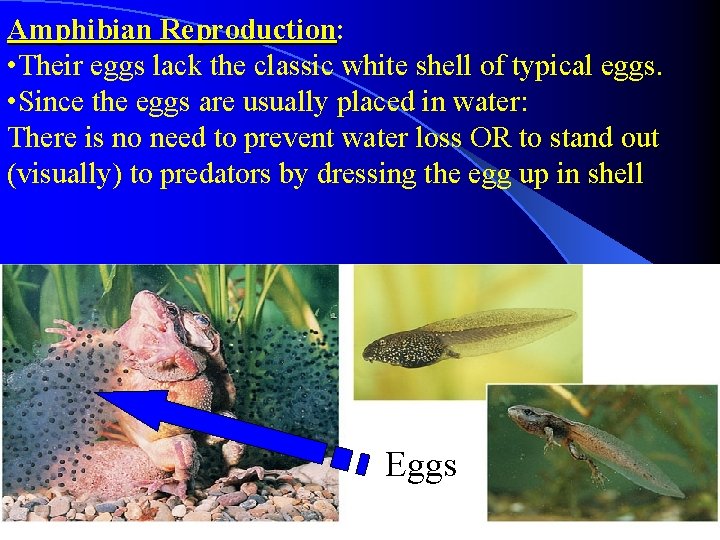
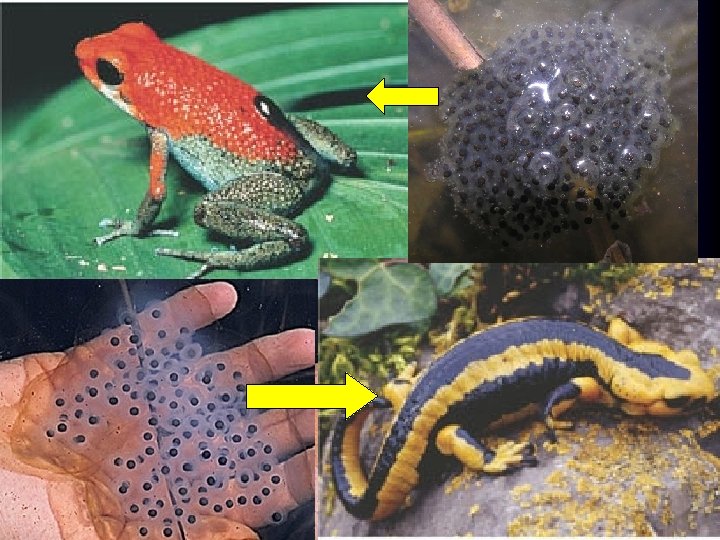
Amphibian Reproduction: Reproduction • Their eggs lack the classic white shell of typical eggs. • Since the eggs are usually placed in water: There is no need to prevent water loss OR to stand out (visually) to predators by dressing the egg up in shell Eggs
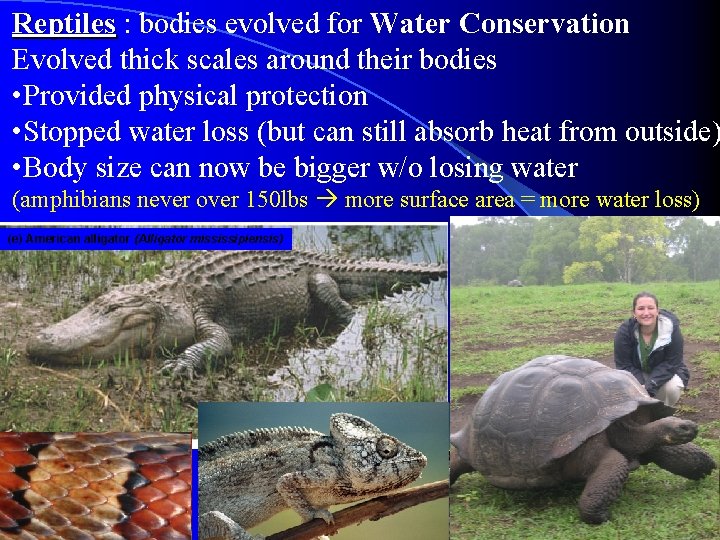
Reptiles : bodies evolved for Water Conservation Evolved thick scales around their bodies • Provided physical protection • Stopped water loss (but can still absorb heat from outside) • Body size can now be bigger w/o losing water (amphibians never over 150 lbs more surface area = more water loss) (e) American alligator (Alligator mississipiensis)
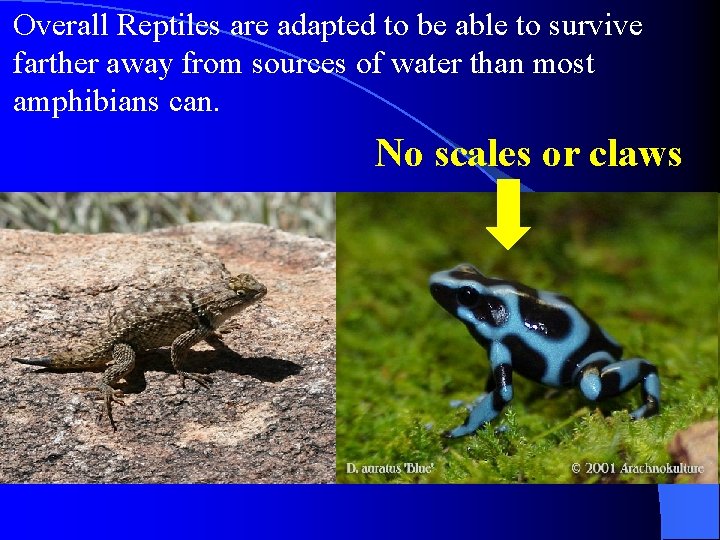
Overall Reptiles are adapted to be able to survive farther away from sources of water than most amphibians can. No scales or claws
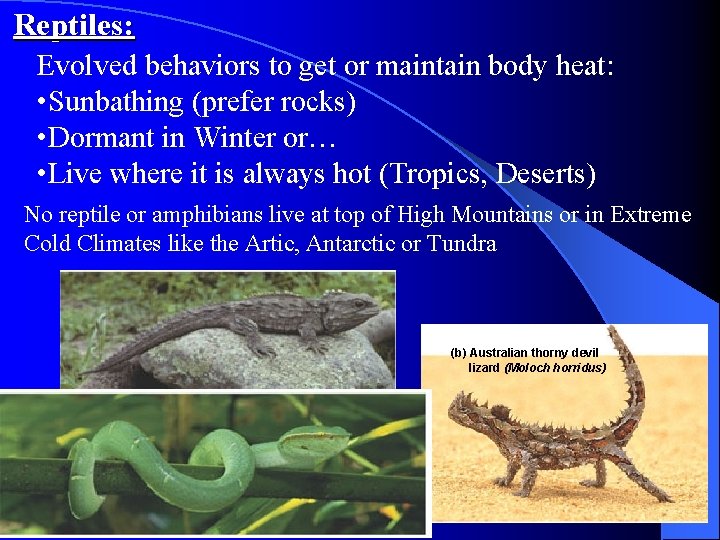
Reptiles: Evolved behaviors to get or maintain body heat: • Sunbathing (prefer rocks) • Dormant in Winter or… • Live where it is always hot (Tropics, Deserts) No reptile or amphibians live at top of High Mountains or in Extreme Cold Climates like the Artic, Antarctic or Tundra (b) Australian thorny devil lizard (Moloch horridus)
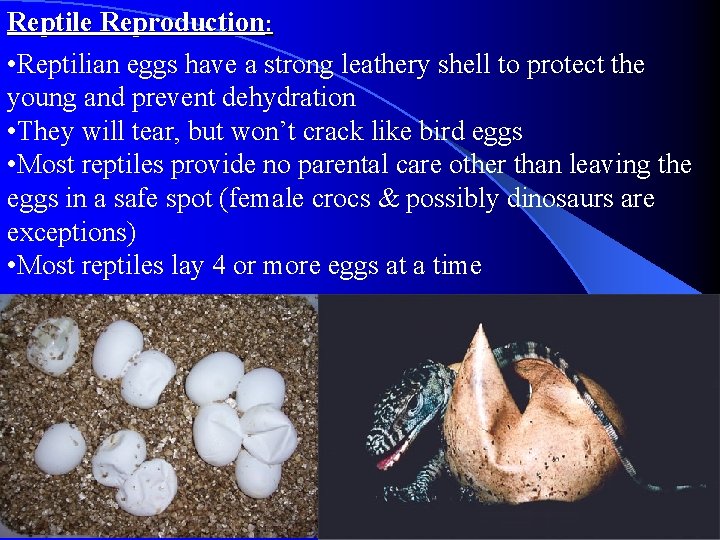
Reptile Reproduction: • Reptilian eggs have a strong leathery shell to protect the young and prevent dehydration • They will tear, but won’t crack like bird eggs • Most reptiles provide no parental care other than leaving the eggs in a safe spot (female crocs & possibly dinosaurs are exceptions) • Most reptiles lay 4 or more eggs at a time
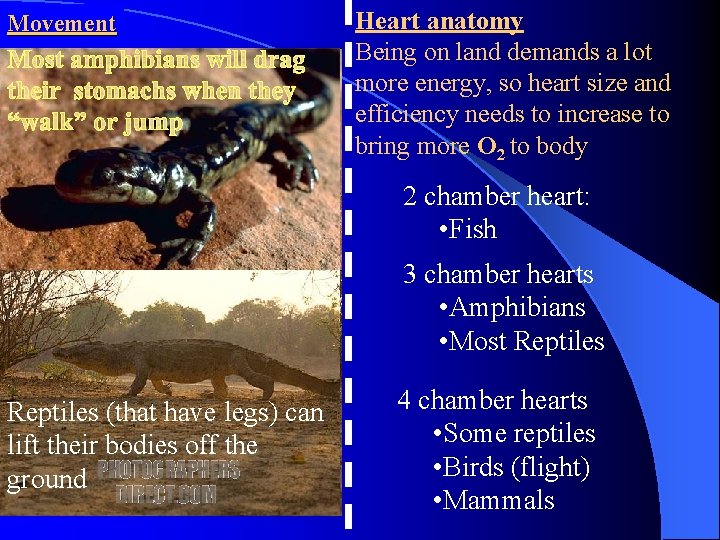
Movement Heart anatomy Being on land demands a lot more energy, so heart size and efficiency needs to increase to bring more O 2 to body 2 chamber heart: • Fish 3 chamber hearts • Amphibians • Most Reptiles (that have legs) can lift their bodies off the ground 4 chamber hearts • Some reptiles • Birds (flight) • Mammals

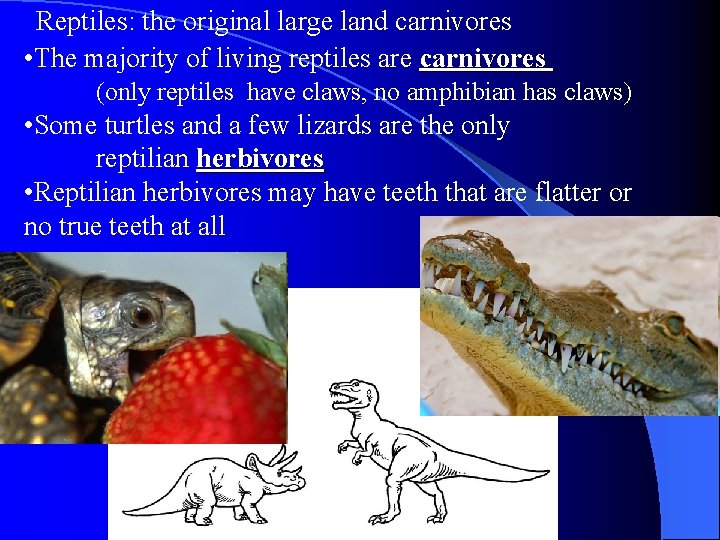
Reptiles: the original large land carnivores • The majority of living reptiles are carnivores (only reptiles have claws, no amphibian has claws) • Some turtles and a few lizards are the only reptilian herbivores • Reptilian herbivores may have teeth that are flatter or no true teeth at all
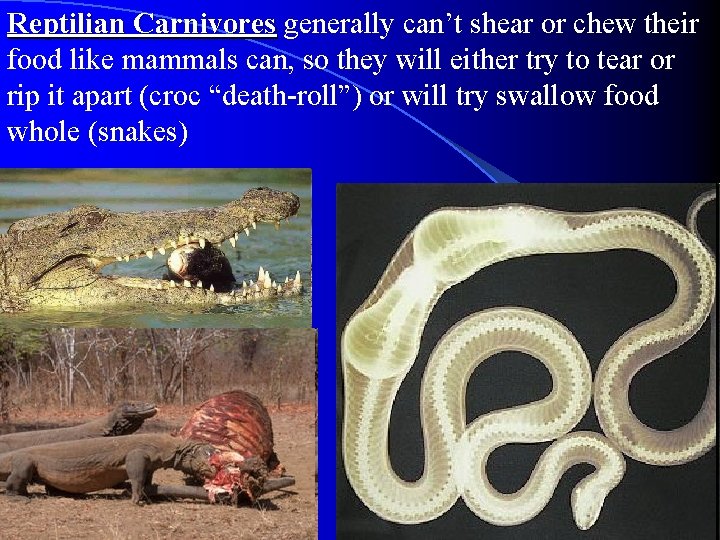
Reptilian Carnivores generally can’t shear or chew their food like mammals can, so they will either try to tear or rip it apart (croc “death-roll”) or will try swallow food whole (snakes)
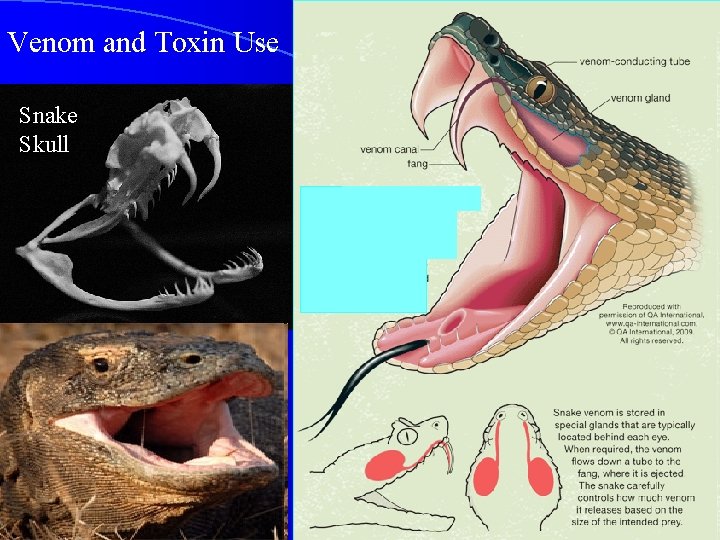
Venom and Toxin Use Snake Skull
- Slides: 20