
Vertebrates Introduction A Classification all belong to Phylum

Vertebrates: Introduction A: Classification – all belong to Phylum Chordata VIDEO
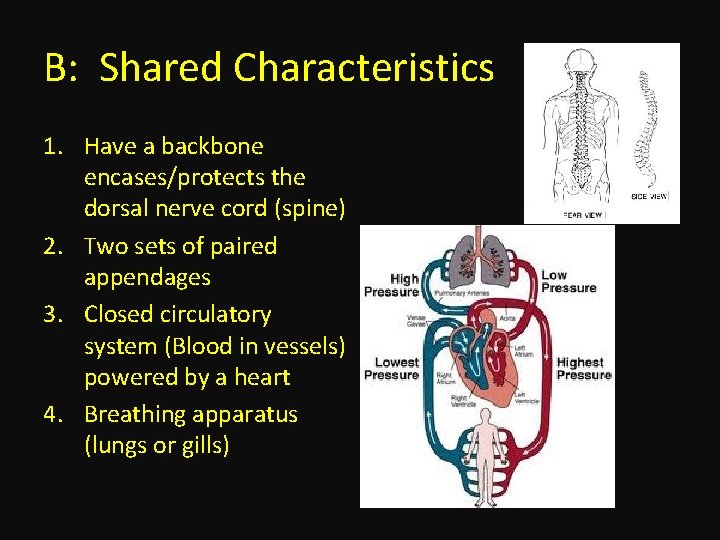
B: Shared Characteristics 1. Have a backbone encases/protects the dorsal nerve cord (spine) 2. Two sets of paired appendages 3. Closed circulatory system (Blood in vessels) powered by a heart 4. Breathing apparatus (lungs or gills)

The Five Groups! 1. Fish 2. Amphibians
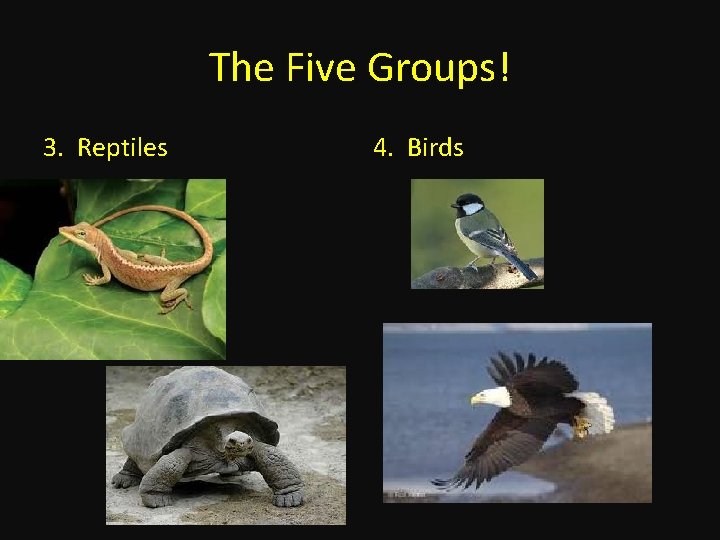
The Five Groups! 3. Reptiles 4. Birds
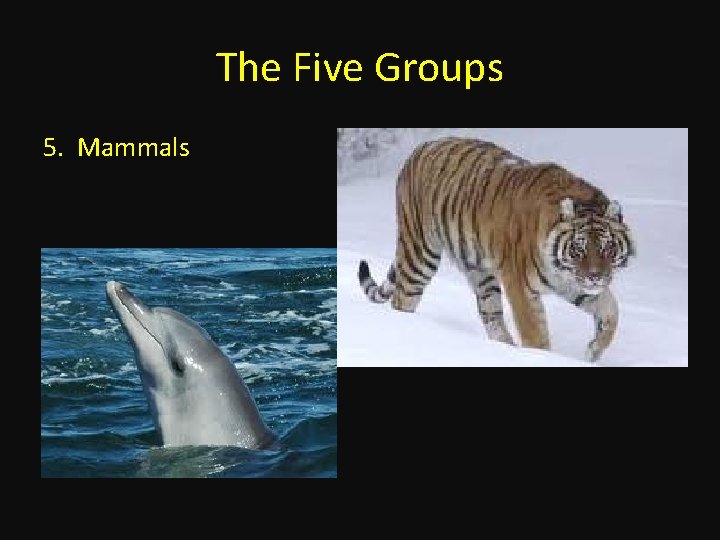
The Five Groups 5. Mammals
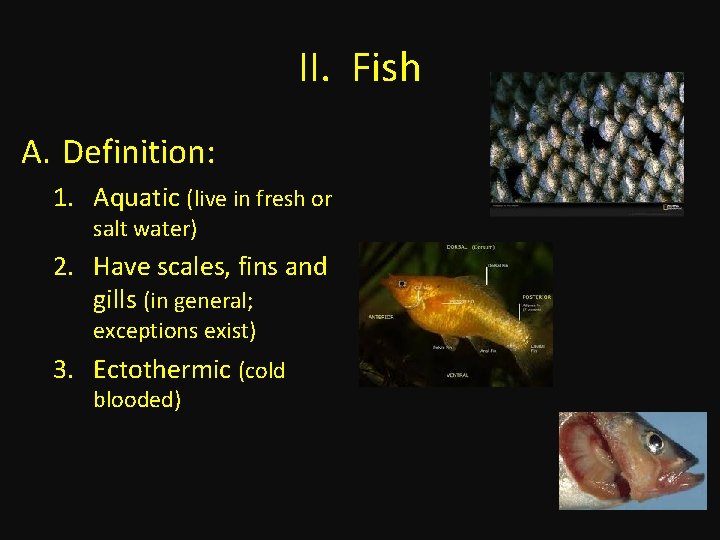
II. Fish A. Definition: 1. Aquatic (live in fresh or salt water) 2. Have scales, fins and gills (in general; exceptions exist) 3. Ectothermic (cold blooded)
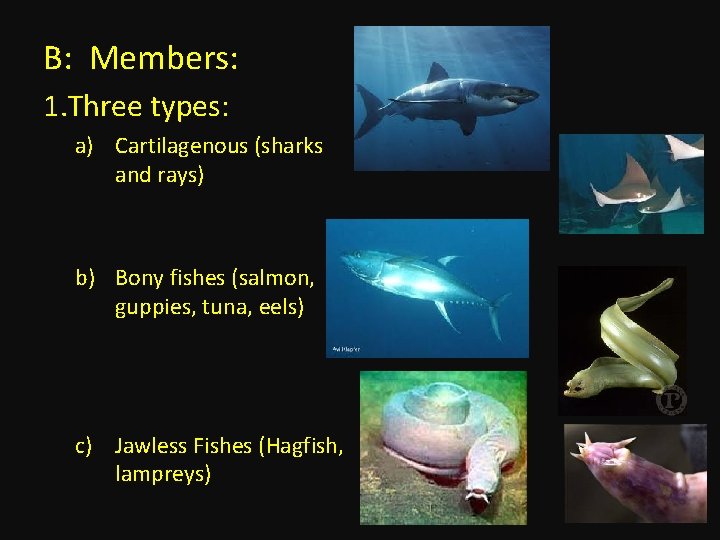
B: Members: 1. Three types: a) Cartilagenous (sharks and rays) b) Bony fishes (salmon, guppies, tuna, eels) c) Jawless Fishes (Hagfish, lampreys)
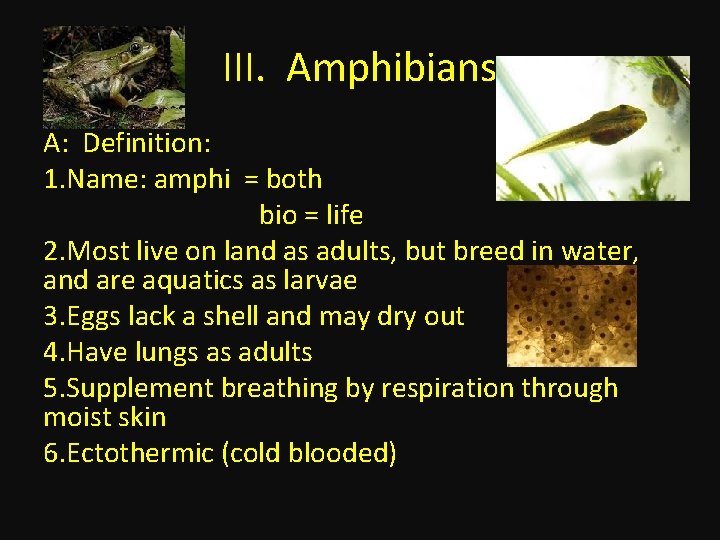
III. Amphibians A: Definition: 1. Name: amphi = both bio = life 2. Most live on land as adults, but breed in water, and are aquatics as larvae 3. Eggs lack a shell and may dry out 4. Have lungs as adults 5. Supplement breathing by respiration through moist skin 6. Ectothermic (cold blooded)
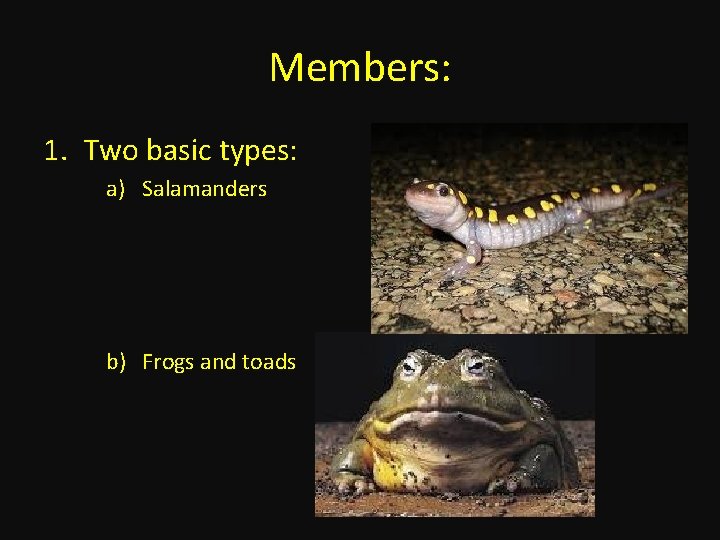
Members: 1. Two basic types: a) Salamanders b) Frogs and toads
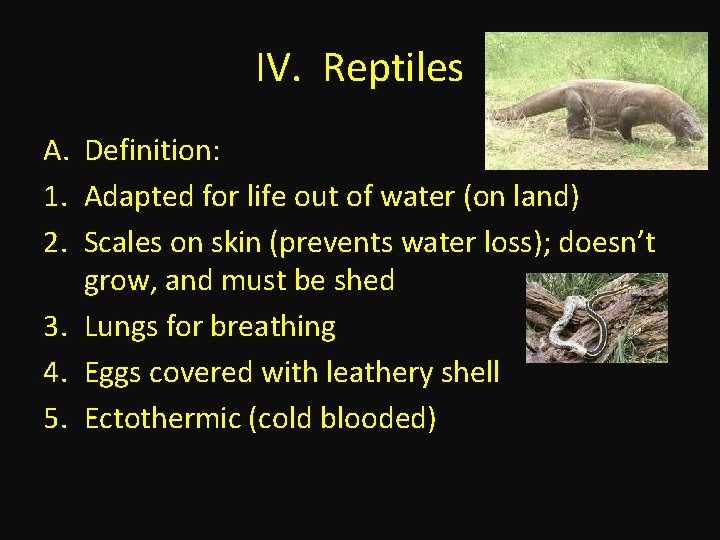
IV. Reptiles A. Definition: 1. Adapted for life out of water (on land) 2. Scales on skin (prevents water loss); doesn’t grow, and must be shed 3. Lungs for breathing 4. Eggs covered with leathery shell 5. Ectothermic (cold blooded)
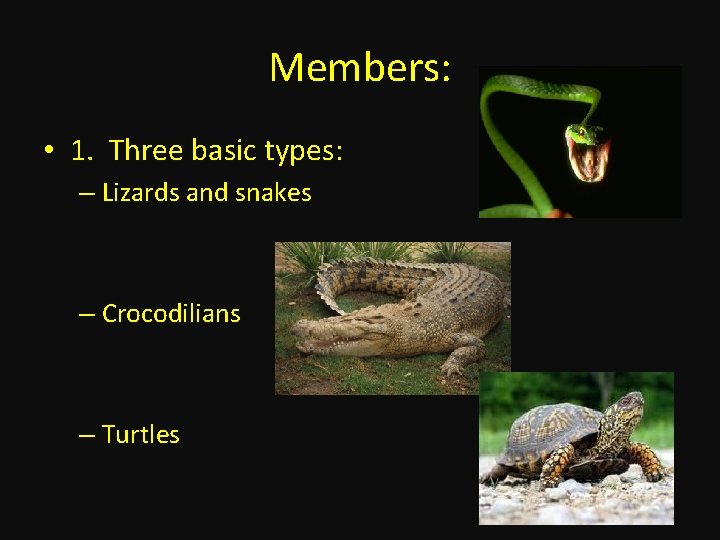
Members: • 1. Three basic types: – Lizards and snakes – Crocodilians – Turtles
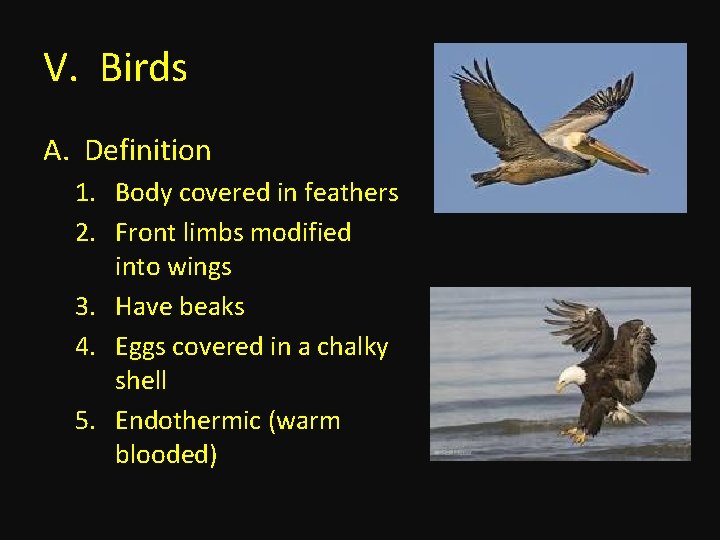
V. Birds A. Definition 1. Body covered in feathers 2. Front limbs modified into wings 3. Have beaks 4. Eggs covered in a chalky shell 5. Endothermic (warm blooded)
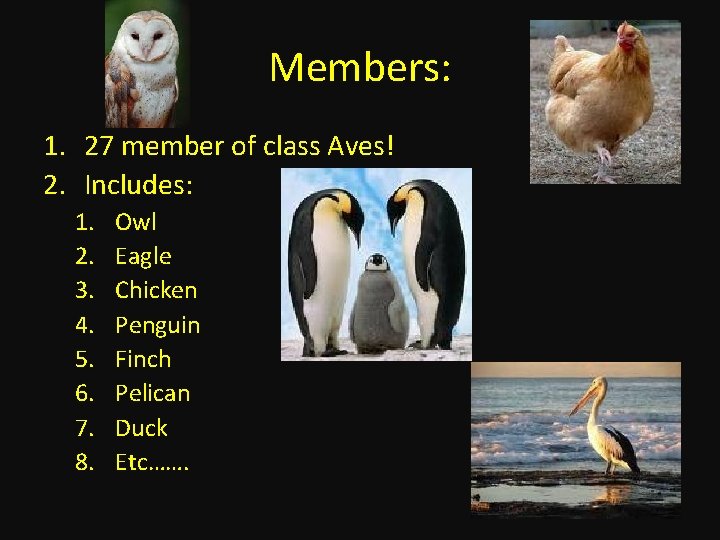
Members: 1. 27 member of class Aves! 2. Includes: 1. 2. 3. 4. 5. 6. 7. 8. Owl Eagle Chicken Penguin Finch Pelican Duck Etc…….
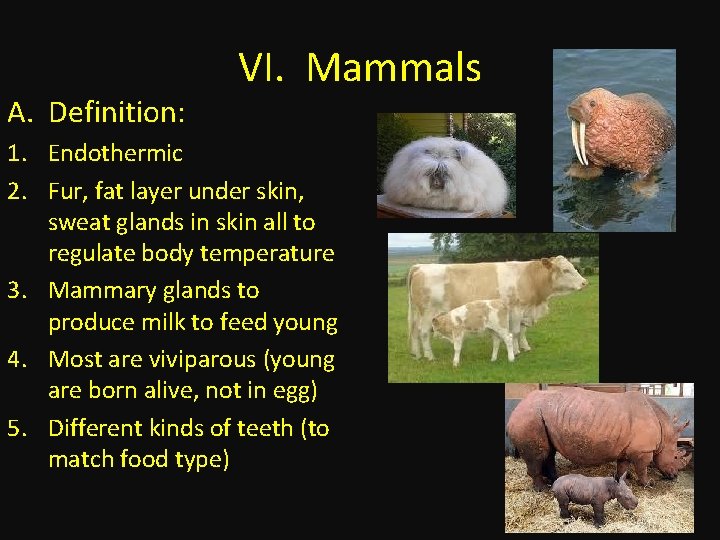
A. Definition: VI. Mammals 1. Endothermic 2. Fur, fat layer under skin, sweat glands in skin all to regulate body temperature 3. Mammary glands to produce milk to feed young 4. Most are viviparous (young are born alive, not in egg) 5. Different kinds of teeth (to match food type)
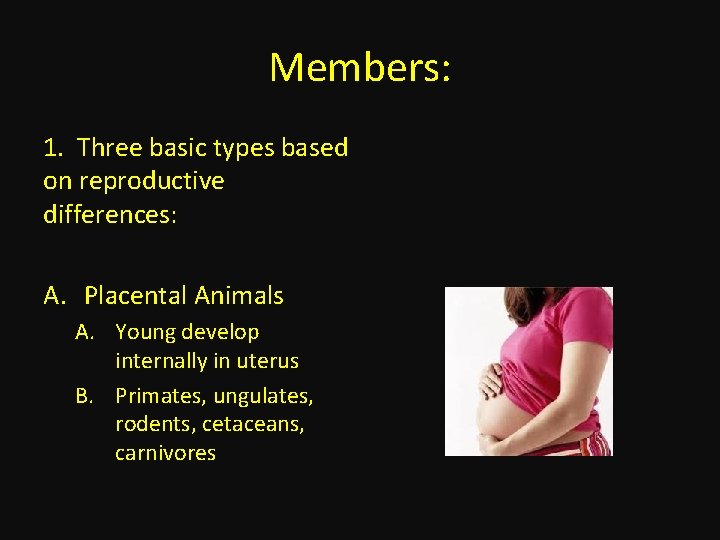
Members: 1. Three basic types based on reproductive differences: A. Placental Animals A. Young develop internally in uterus B. Primates, ungulates, rodents, cetaceans, carnivores
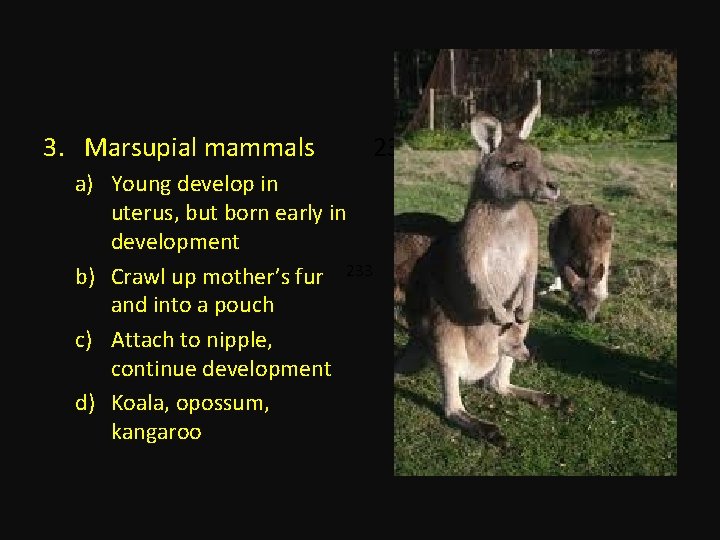
3. Marsupial mammals 2333 a) Young develop in uterus, but born early in development b) Crawl up mother’s fur 233 and into a pouch c) Attach to nipple, continue development d) Koala, opossum, kangaroo
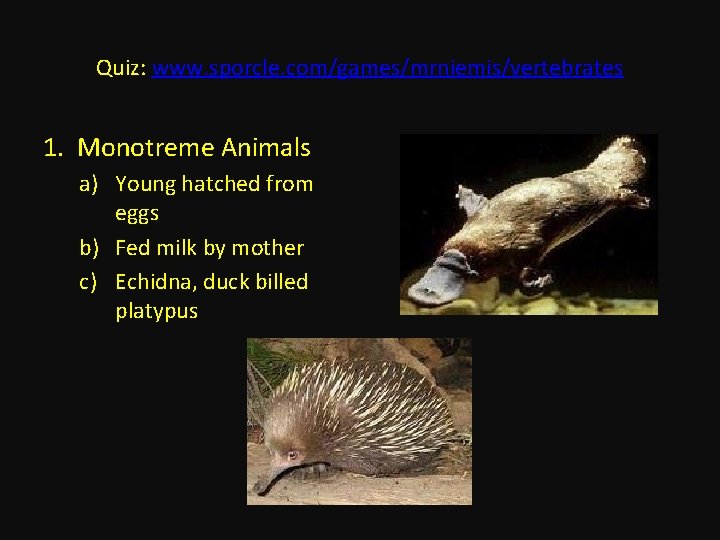
Quiz: www. sporcle. com/games/mrniemis/vertebrates 1. Monotreme Animals a) Young hatched from eggs b) Fed milk by mother c) Echidna, duck billed platypus
17 True Facts Videos about Vertebrates by Ze Frank TED Ed Animations on Vertebrates Why Do Cats act so Weird? How Do schools of Fish swim in Harmony? How Smart are Dolphins? The Game Changing Amniotic Egg. How Did feathers evolve? Eli the eel. A mysterious migration. Poison vs. Venom: What’s the difference? Penguins: Popularity, peril and poop. Disapearing Frogs. How do Geckos defy gravity? I’m Batman. Why elephants never forget. The coelacanth: a living fossil of a fish. How to speak Monkey. The Game Changing Amniotic Egg Why are Sharks so Awesome? Bird Migration. A Perilous Journey Why are Sloths so slow? The Evolution of Animal Genitalia The 3 Different Ways Mammals give Birth Why Do Dogs Smell each Others Butts? Why no Aquarium has a Great White How Smart are Orangutans?
- Slides: 18