
Vertebrates Fish Amphibians Reptiles Birds Mammals Fish most
Vertebrates! • Fish • Amphibians • Reptiles • Birds • Mammals
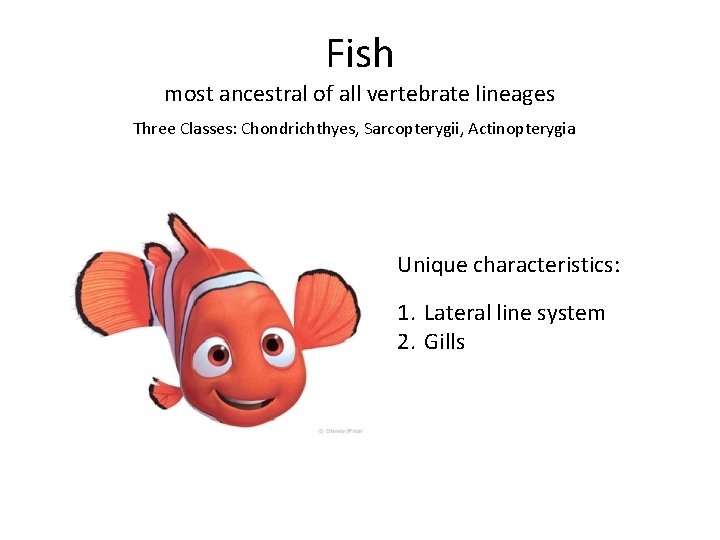
Fish most ancestral of all vertebrate lineages Three Classes: Chondrichthyes, Sarcopterygii, Actinopterygia Unique characteristics: 1. Lateral line system 2. Gills
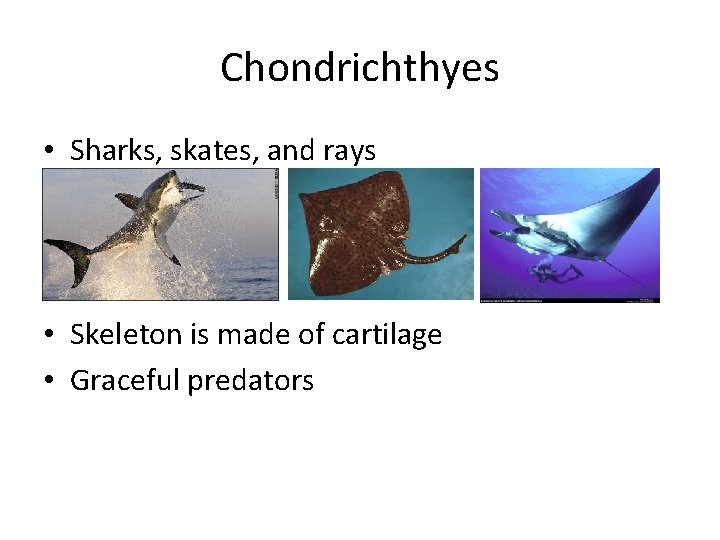
Chondrichthyes • Sharks, skates, and rays • Skeleton is made of cartilage • Graceful predators
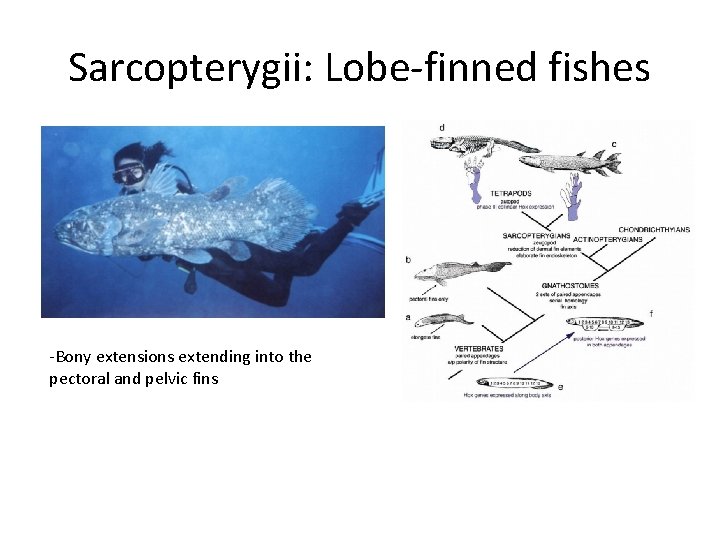
Sarcopterygii: Lobe-finned fishes -Bony extensions extending into the pectoral and pelvic fins
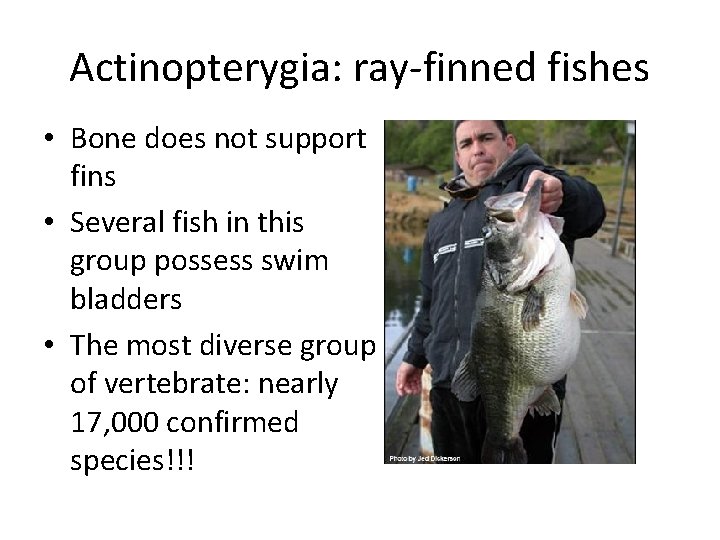
Actinopterygia: ray-finned fishes • Bone does not support fins • Several fish in this group possess swim bladders • The most diverse group of vertebrate: nearly 17, 000 confirmed species!!!
Amphibians • Why crawl up on land? • Transitional problems from water to land – Gravity – Breathing – Dry air • Adaptations that allow amphibians to survive – Tetrapody – Three chambered heart – Lungs • Reproduction
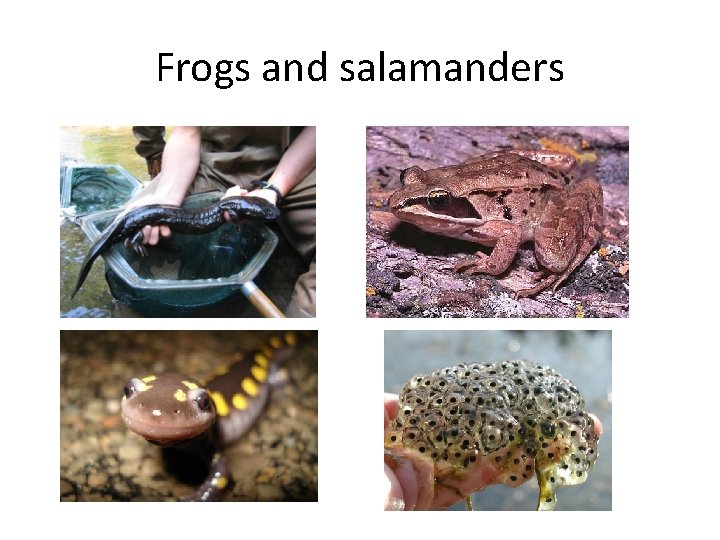
Frogs and salamanders
Reptiles • The amniotic egg! • Developed thick, scaly skin that resists the loss of water • Evolved internal fertilization • More efficient lungs, no need for respiring with skin • Diverse group that contains lizards, snakes, turtles, alligators, and crocodiles
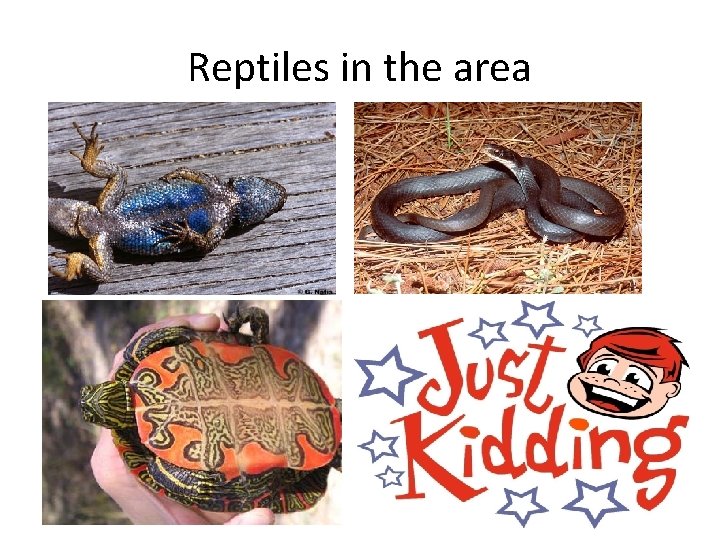
Reptiles in the area
Birds • Reptile/ bird similarities – Skeleton formation – Scales – Nucleated red blood cells – Female is heterogametic • Similarities suggest a common ancestor….
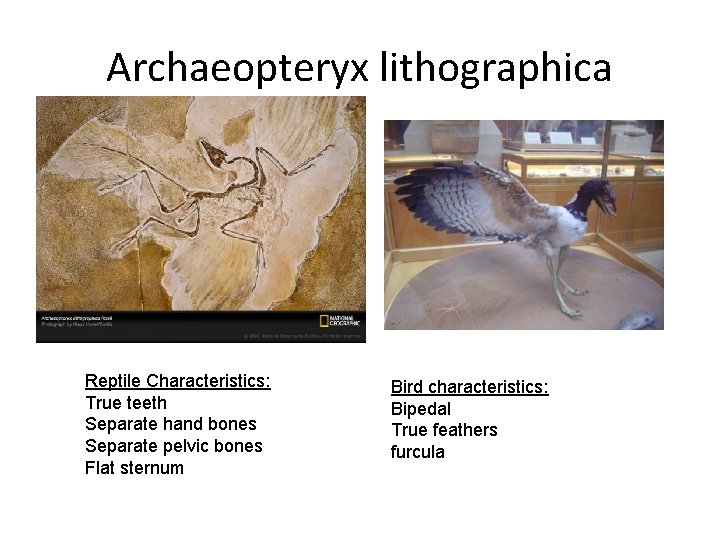
Archaeopteryx lithographica Reptile Characteristics: True teeth Separate hand bones Separate pelvic bones Flat sternum Bird characteristics: Bipedal True feathers furcula
Birds cont. • Specialized for flight – Hollow bones/fused bones – Reproductive orans… – Eggs – Air foil • Endothermy • Respiratory system • Four chambered heart • Sclerotic ossicles • Nictitating membranes • Tetrachromatic color perception
Mammals • • Endothermic Four chambered heart Hair/fur Limbs for fast agile movements Mammary glands that produce milk Have evolved to fill a variety of niches Highly developed brain
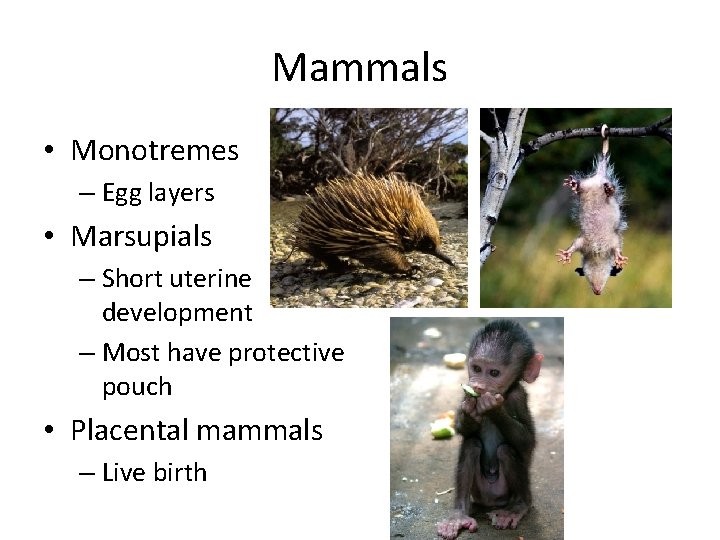
Mammals • Monotremes – Egg layers • Marsupials – Short uterine development – Most have protective pouch • Placental mammals – Live birth
- Slides: 14