
Vertebrates Fish Amphibians Reptiles Birds Mammals By Mrs
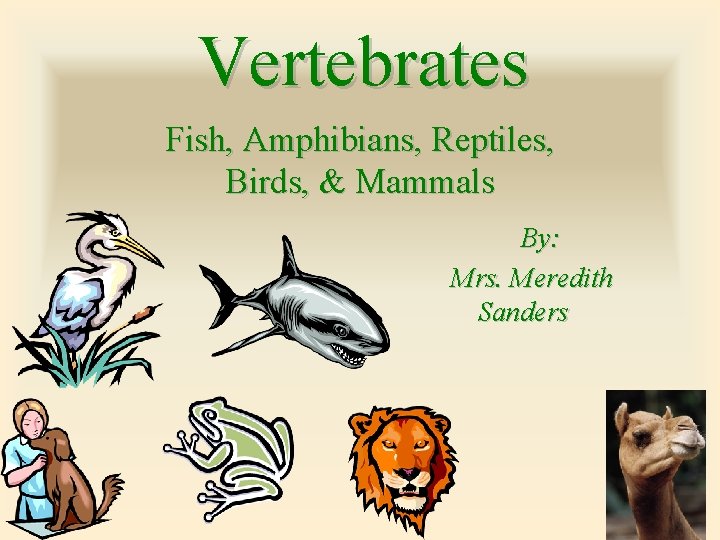
Vertebrates Fish, Amphibians, Reptiles, Birds, & Mammals By: Mrs. Meredith Sanders
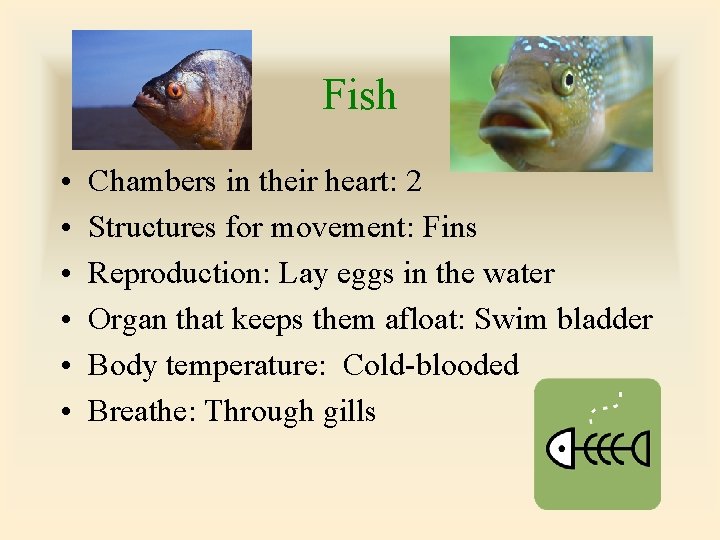
Fish • • • Chambers in their heart: 2 Structures for movement: Fins Reproduction: Lay eggs in the water Organ that keeps them afloat: Swim bladder Body temperature: Cold-blooded Breathe: Through gills
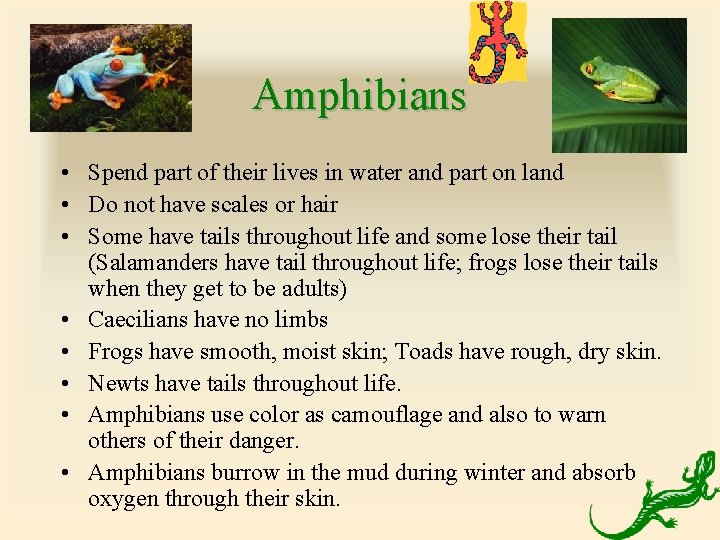
Amphibians • Spend part of their lives in water and part on land • Do not have scales or hair • Some have tails throughout life and some lose their tail (Salamanders have tail throughout life; frogs lose their tails when they get to be adults) • Caecilians have no limbs • Frogs have smooth, moist skin; Toads have rough, dry skin. • Newts have tails throughout life. • Amphibians use color as camouflage and also to warn others of their danger. • Amphibians burrow in the mud during winter and absorb oxygen through their skin.
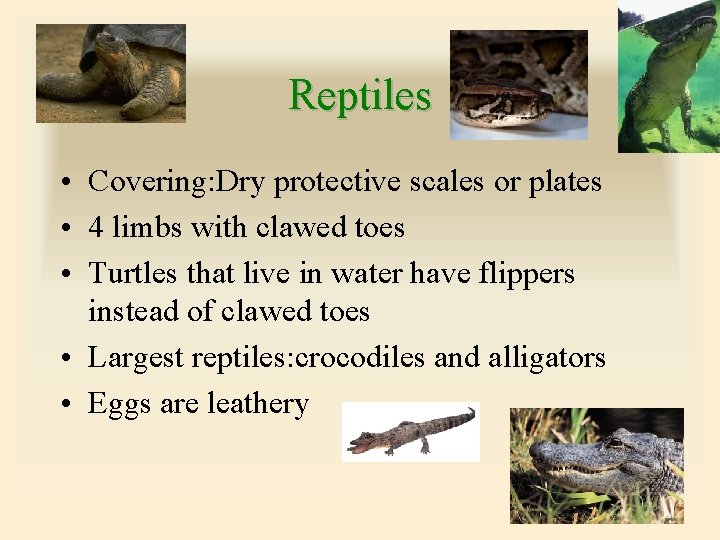
Reptiles • Covering: Dry protective scales or plates • 4 limbs with clawed toes • Turtles that live in water have flippers instead of clawed toes • Largest reptiles: crocodiles and alligators • Eggs are leathery

Birds • • • Body Temperature: warm-blooded Down feathers to keep warm Contour feathers to fly Getting oxygen: though lungs and air sacs Muscles used to fly: Chest muscles Three ways that flying is useful: escape predators, find food, and migrate • Adaptations for flight: tiny holes in bones to make them lighter, streamlined shape, lightweight beak, & no teeth
Mammals • • • Chambers in heart: 4 Have hair Mammary glands to give milk to young Have live birth Monotremes: lay eggs Marsupials: pouched mammals that give live birth and babies crawl into pouches until matured • Placentals: give live birth; baby attached with umbilical cord

This powerpoint was kindly donated to www. worldofteaching. com http: //www. worldofteaching. com is home to over a thousand powerpoints submitted by teachers. This is a completely free site and requires no registration. Please visit and I hope it will help in your teaching.
- Slides: 7