
Vertebrates Chapters 17 18 What is an animal
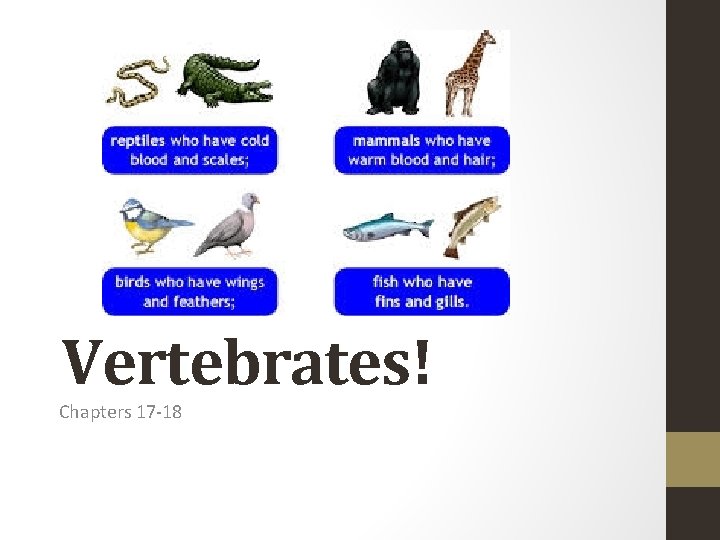
Vertebrates! Chapters 17 -18
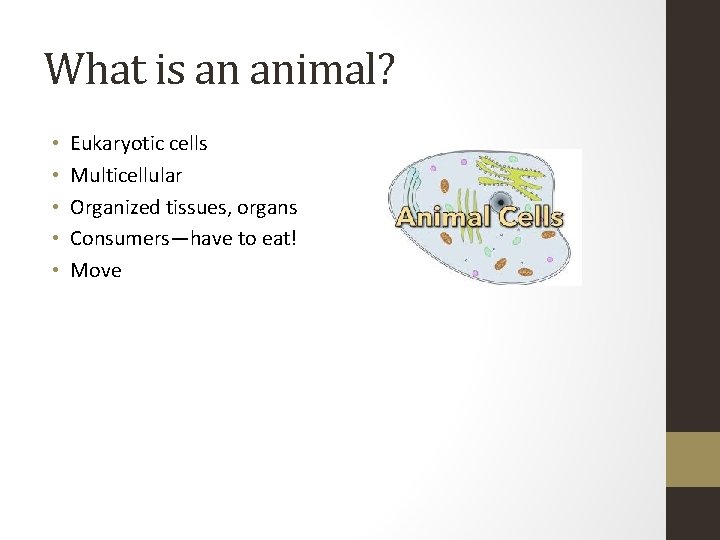
What is an animal? • • • Eukaryotic cells Multicellular Organized tissues, organs Consumers—have to eat! Move
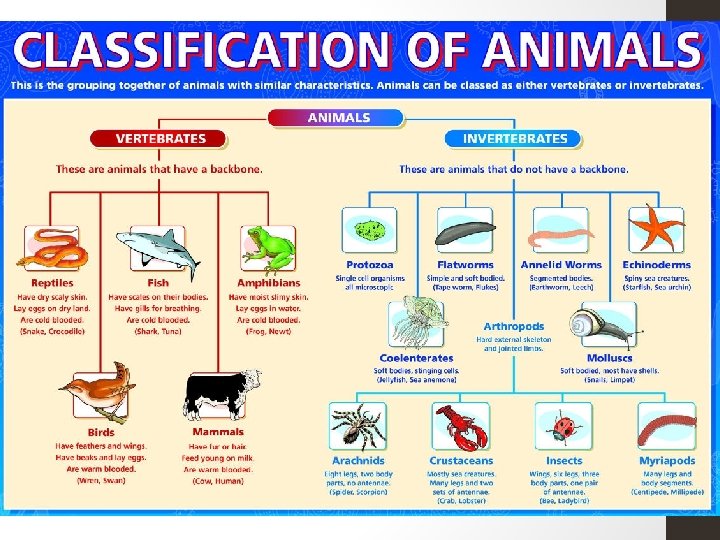
Nine Life Processes • • • Movement Support Protection/Defense Response (Nervous System) Reproduction Respiration Circulation Nutrition (Eating/Digestive Features) Excretion (cleaning blood and lymph)
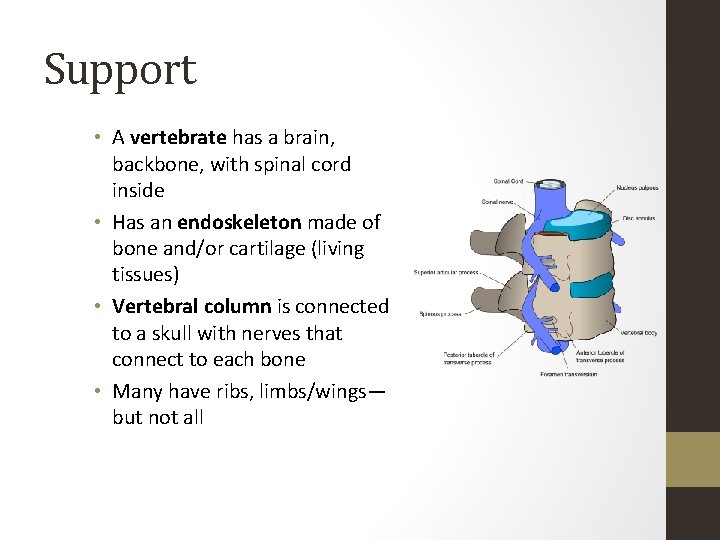
Support • A vertebrate has a brain, backbone, with spinal cord inside • Has an endoskeleton made of bone and/or cartilage (living tissues) • Vertebral column is connected to a skull with nerves that connect to each bone • Many have ribs, limbs/wings— but not all
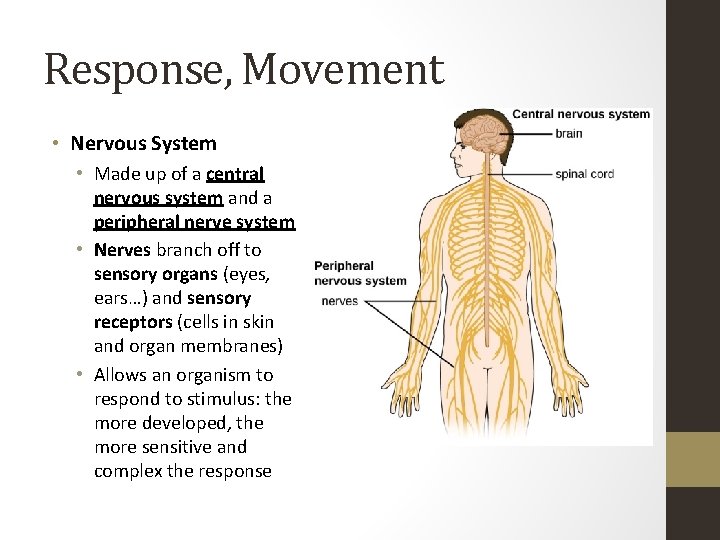
Response, Movement • Nervous System • Made up of a central nervous system and a peripheral nerve system • Nerves branch off to sensory organs (eyes, ears…) and sensory receptors (cells in skin and organ membranes) • Allows an organism to respond to stimulus: the more developed, the more sensitive and complex the response
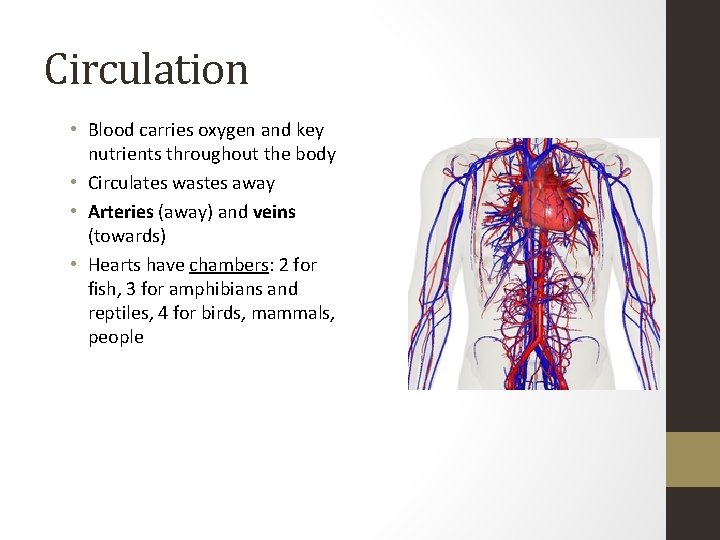
Circulation • Blood carries oxygen and key nutrients throughout the body • Circulates wastes away • Arteries (away) and veins (towards) • Hearts have chambers: 2 for fish, 3 for amphibians and reptiles, 4 for birds, mammals, people
Circulation & Blood • Cold-blooded (fish, amphibians, reptiles) • Ectothermic: Cannot regulate their own body temp; use sun • Warm-blooded (birds, mammals) • Endothermic: Can regulate/stabilize their own temp (using food) • Note: Birds are not on the evolutionary tree!
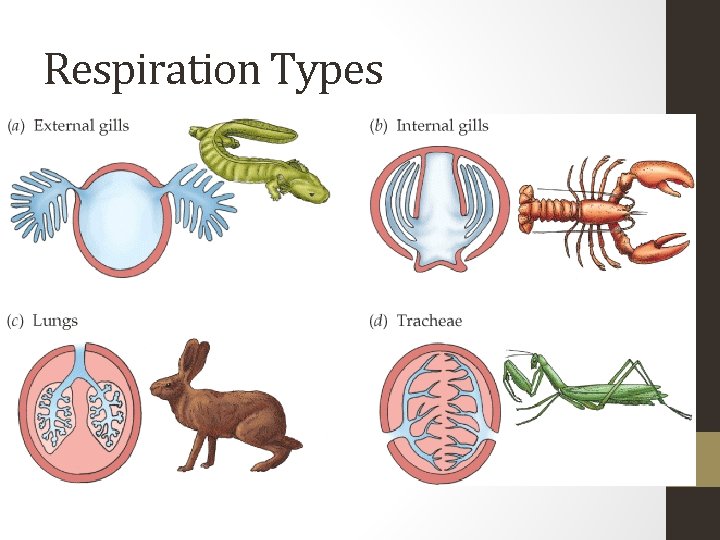
Respiration Types
Respiration • Respiratory system • Gills (water) and lungs (land) • Connected to circulatory system • Gills or lungs must provide (inhale) oxygen and carry away (expel) carbon dioxide • Must separate oxygen from air or water
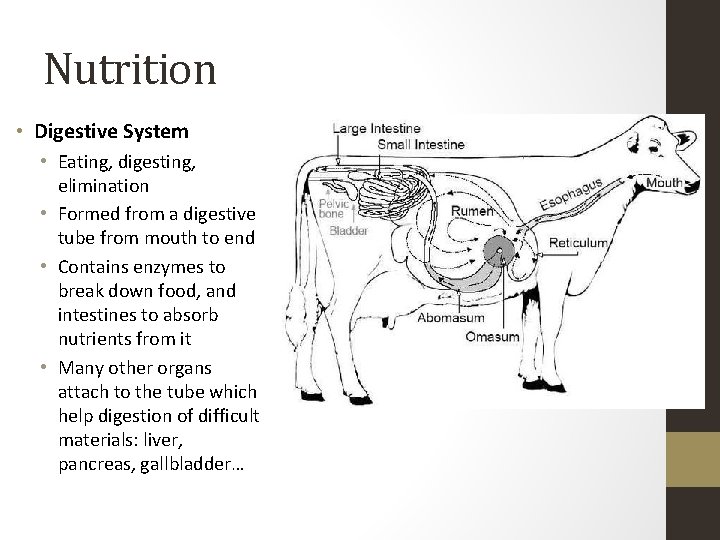
Nutrition • Digestive System • Eating, digesting, elimination • Formed from a digestive tube from mouth to end • Contains enzymes to break down food, and intestines to absorb nutrients from it • Many other organs attach to the tube which help digestion of difficult materials: liver, pancreas, gallbladder…
Nutrition • Methods of eating (and what is eaten) is extremely diverse all throughout the animal kingdom • Carnivores • Omnivores • Herbivores • Ruminants chew the cud and have a special organ (the rumen) to reiterate the digestion of grass/green plants • Teeth and digestive organs reflect the diet
Excretion • Excretory System • Blood and lymph store wastes from cellular respiration, metabolism, immune system, etc. • Kidneys filter out wastes from blood and get rid of them • Wastes are often combined with water to ensure they do not poison the animal • Usually stored in bladder before excreted
Endocrine Systems • Endocrine System • Manufactures and regulates special chemicals (hormones) for all kinds of processes • growth, maturation, appetite, attention, emotions, calming, fight/flight… • Often involved (controller switches: on/off, how much) in many of the 9 Life Processes
Reproduction • Contain organs for maturation, development/birth of offspring • Also extremely diverse throughout the animal kingdom • Some animals can reproduce asexually, but almost all reproduce sexually (require mates for genetic variety, recombination) • Oviparous • Many eggs, versus few • Eggs may be abandoned, eggs may be incubated • Incubation can be done by female or buried • Ovoviparous • Live offspring hatch from eggs inside the female’s body
Reproduction • External Fertilization versus Internal Fertilization • External always occurs in oviparous animals, but usually only water-dwelling animals (i. e. fish); many oviparous animals reproduce by internal fertilization (i. e. birds) • Internal Fertilization • Results in a fertilized egg that may be laid or implanted in a female’s uterus • Gestation (length of pregnancy) results in live birth (Viviparous) • Generally, the more offspring produced at once, the greater the chance they won’t survive, OR the amount of food they provide for predators • Reproductive Balance
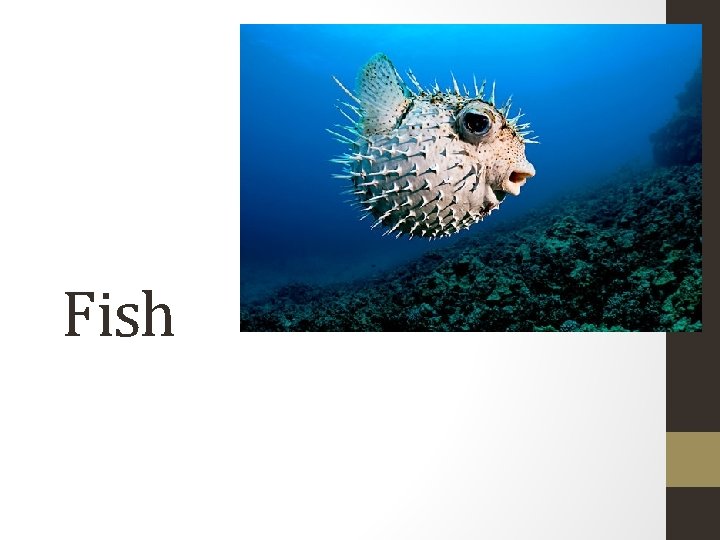
Fish
Characteristics of Fish • • Ectothermic Fins, gills, scales, plates Scales most common but not all—i. e. the catfish Many have countershading or camouflage for protection • Swim bladder helps bony fish float/sink • The lateral line is a sensory canal on each side of the spine. It is sensitive to vibrations and pressure changes in water • Two-chambered hearts
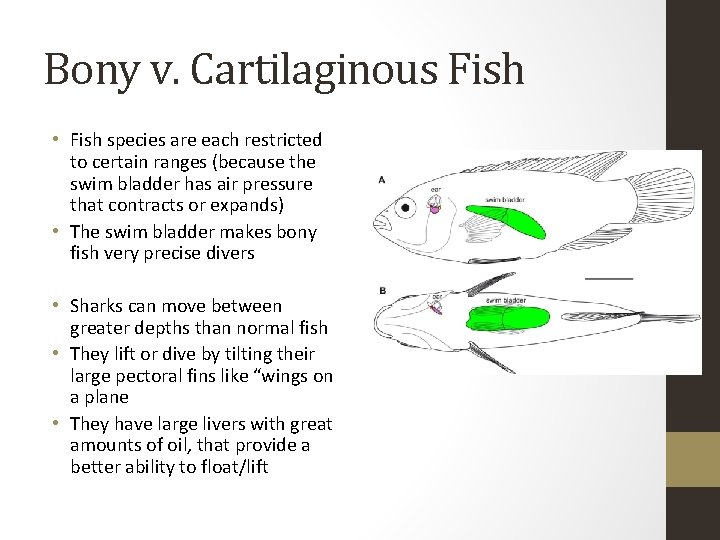
Bony v. Cartilaginous Fish • Fish species are each restricted to certain ranges (because the swim bladder has air pressure that contracts or expands) • The swim bladder makes bony fish very precise divers • Sharks can move between greater depths than normal fish • They lift or dive by tilting their large pectoral fins like “wings on a plane • They have large livers with great amounts of oil, that provide a better ability to float/lift
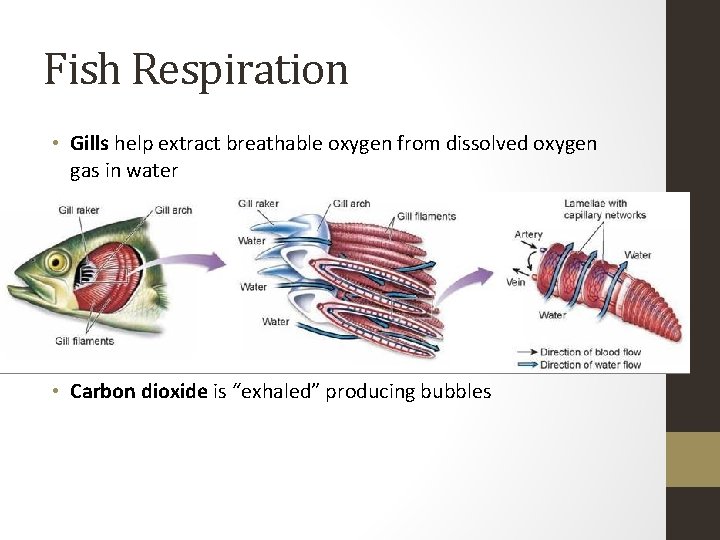
Fish Respiration • Gills help extract breathable oxygen from dissolved oxygen gas in water • Carbon dioxide is “exhaled” producing bubbles
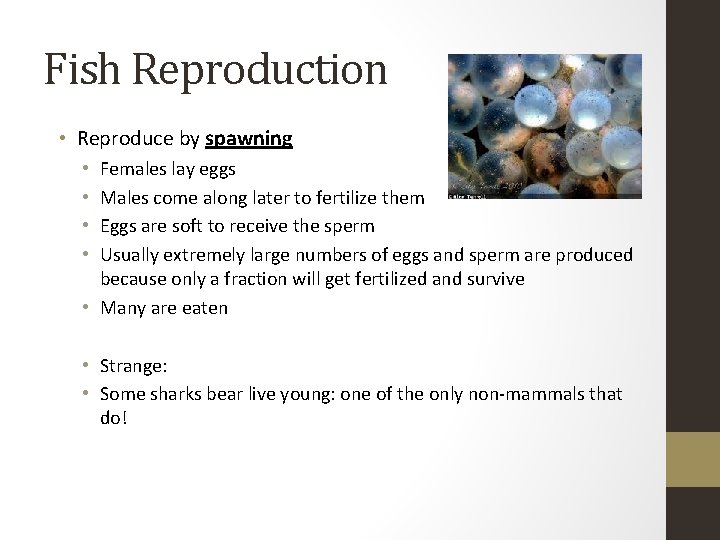
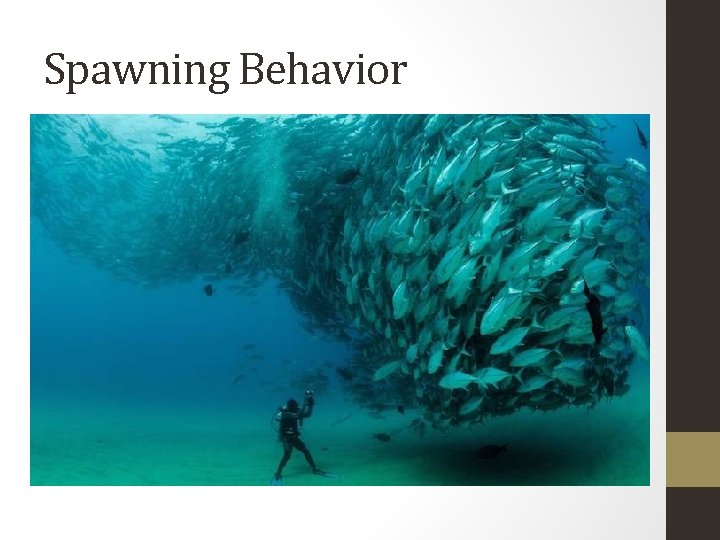
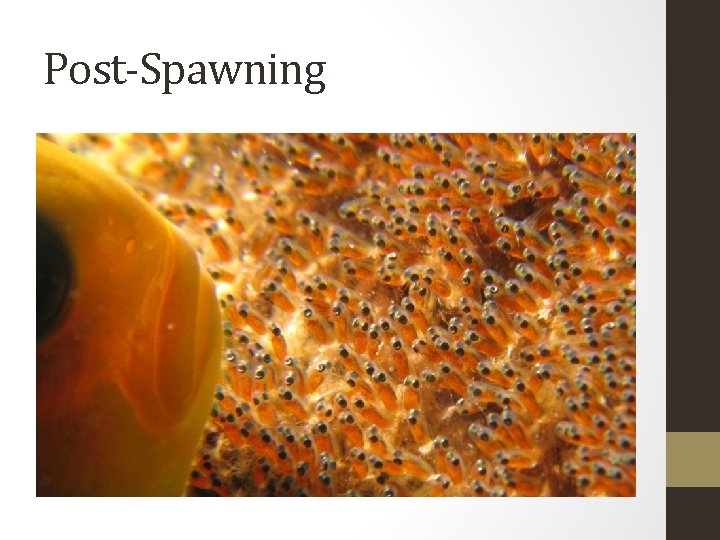
Fish Reproduction • Reproduce by spawning Females lay eggs Males come along later to fertilize them Eggs are soft to receive the sperm Usually extremely large numbers of eggs and sperm are produced because only a fraction will get fertilized and survive • Many are eaten • • • Strange: • Some sharks bear live young: one of the only non-mammals that do!
Spawning Behavior
Post-Spawning
NOT fish! • • • Whales, porpoises, dolphins (mammals; cetaceans) Manatees (mammals; sea cows) Squid, octopus (mollusks) Starfish (echinoderms) Tadpoles (amphibians)
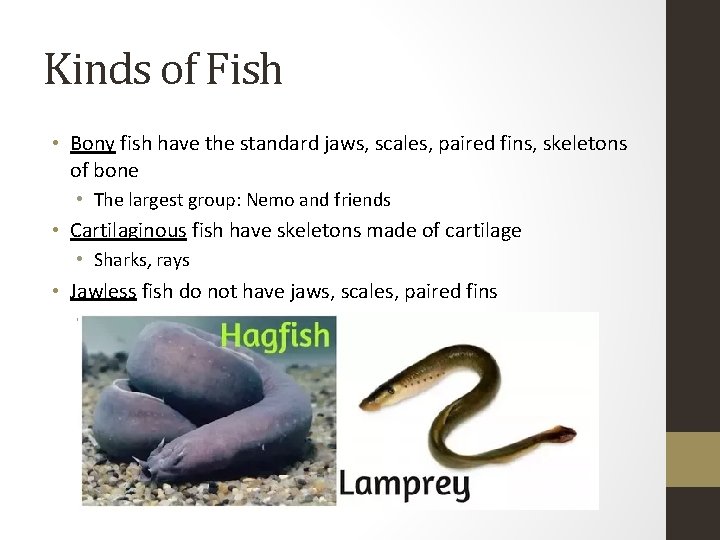
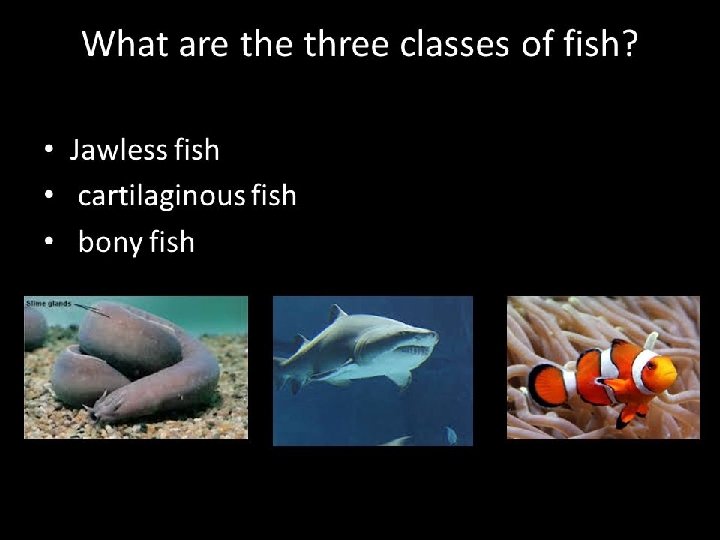
Kinds of Fish • Bony fish have the standard jaws, scales, paired fins, skeletons of bone • The largest group: Nemo and friends • Cartilaginous fish have skeletons made of cartilage • Sharks, rays • Jawless fish do not have jaws, scales, paired fins • Hagfish, lamprey
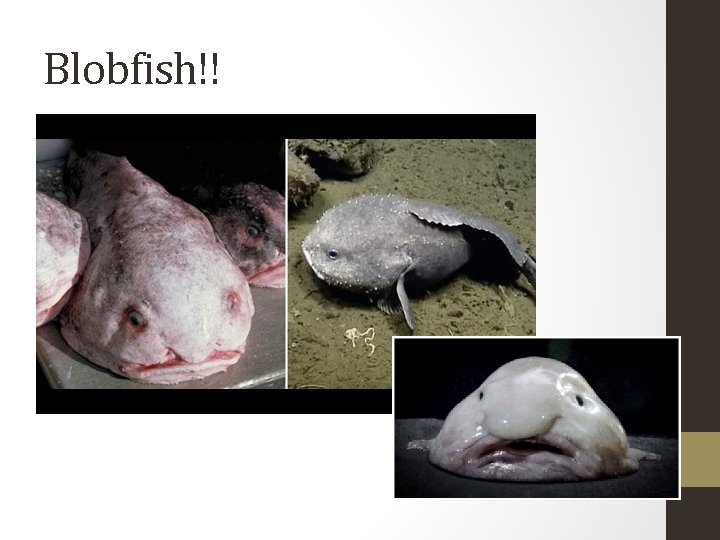
Blobfish!!
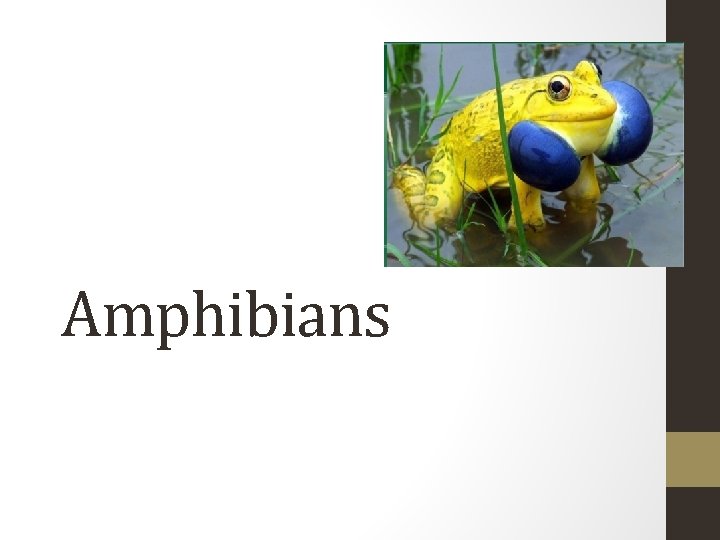
Amphibians
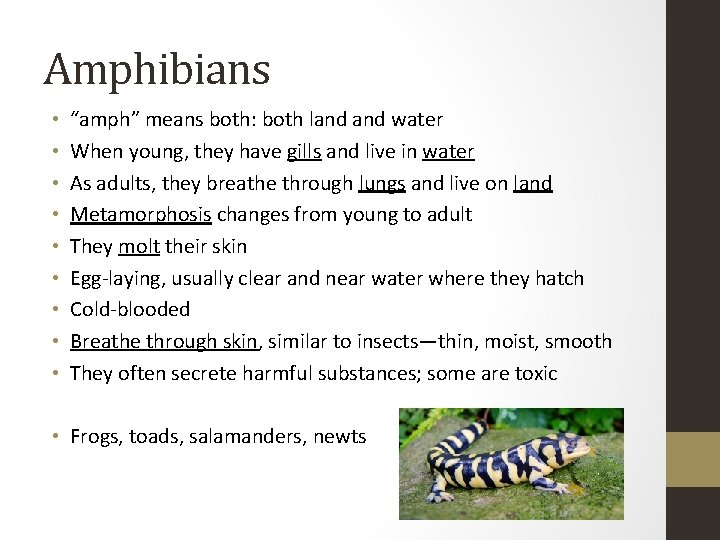
Amphibians • • • “amph” means both: both land water When young, they have gills and live in water As adults, they breathe through lungs and live on land Metamorphosis changes from young to adult They molt their skin Egg-laying, usually clear and near water where they hatch Cold-blooded Breathe through skin, similar to insects—thin, moist, smooth They often secrete harmful substances; some are toxic • Frogs, toads, salamanders, newts
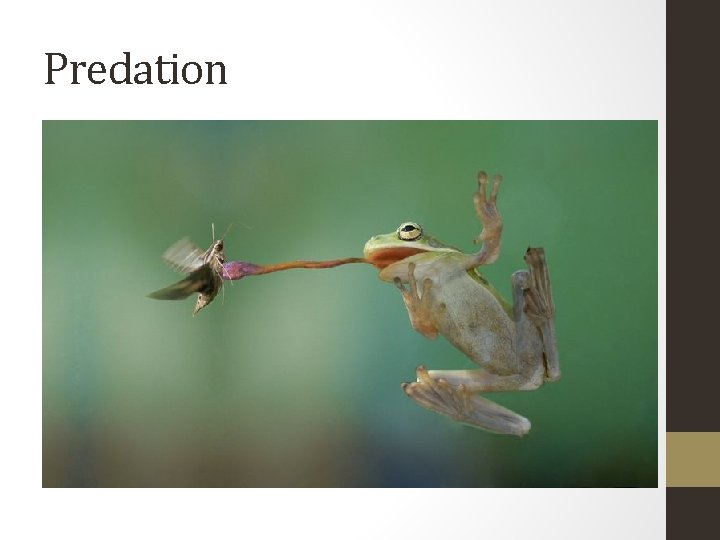
Predation
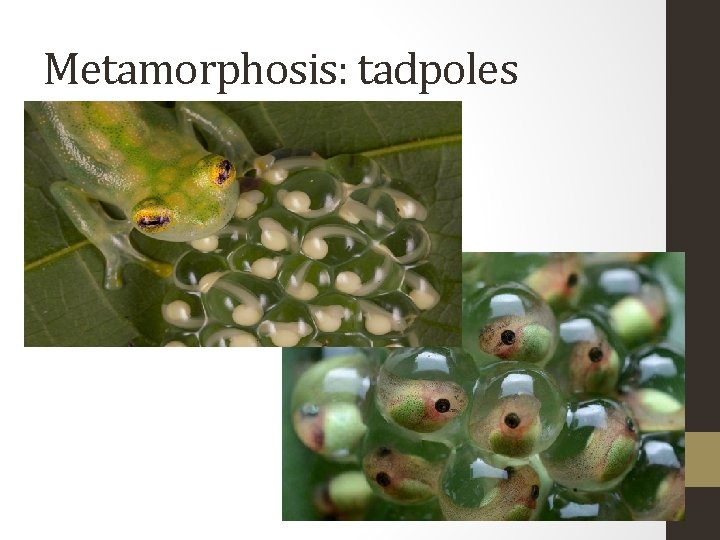
Metamorphosis: tadpoles
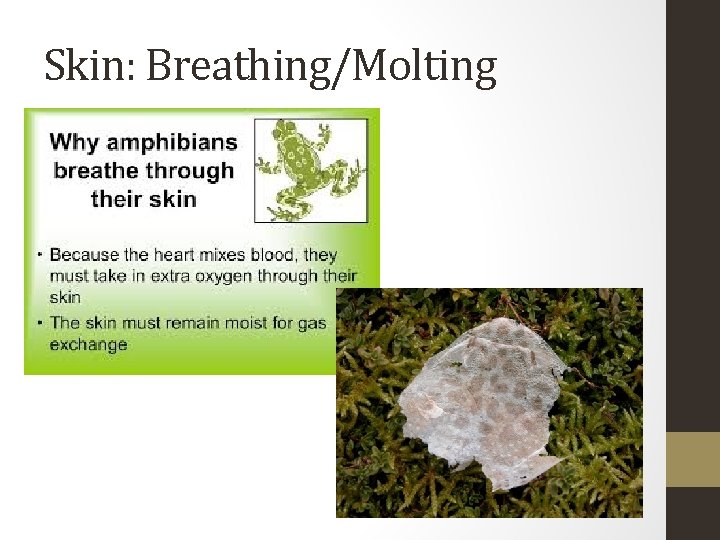
Skin: Breathing/Molting
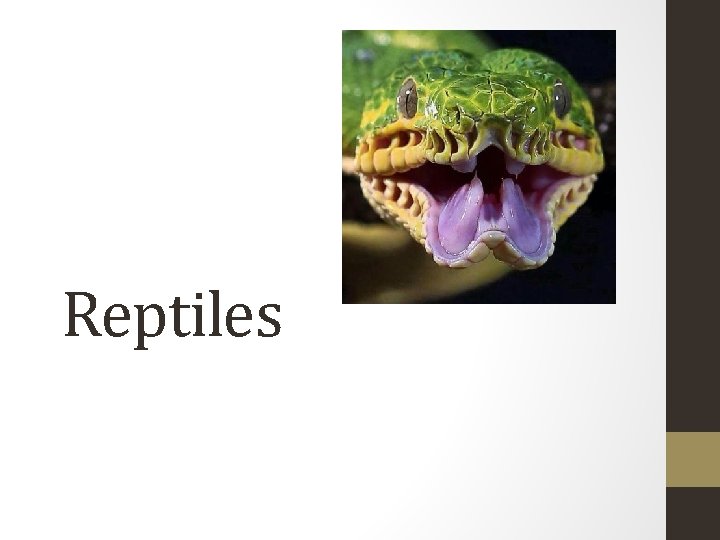
Reptiles
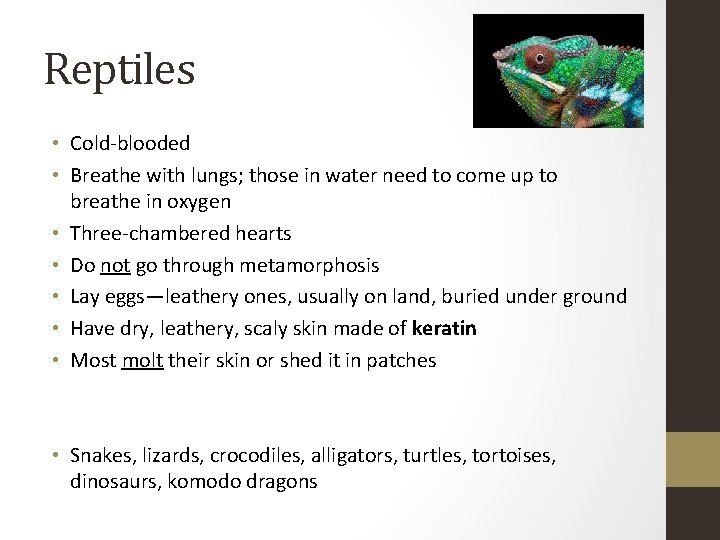
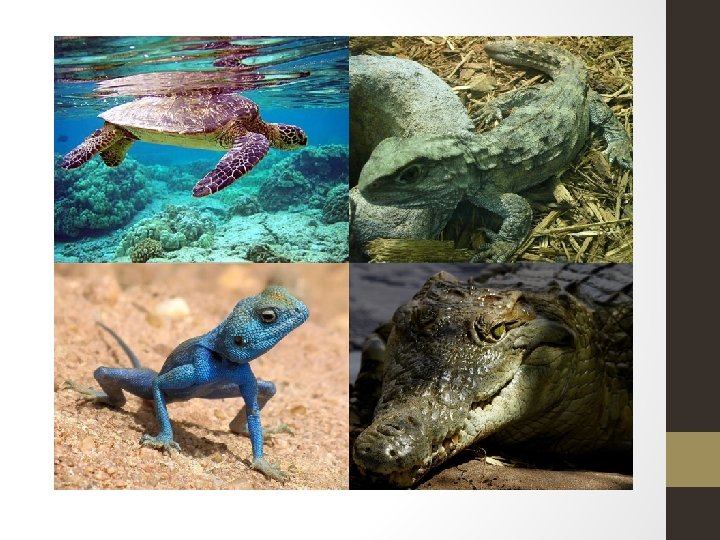
Reptiles • Cold-blooded • Breathe with lungs; those in water need to come up to breathe in oxygen • Three-chambered hearts • Do not go through metamorphosis • Lay eggs—leathery ones, usually on land, buried under ground • Have dry, leathery, scaly skin made of keratin • Most molt their skin or shed it in patches • Snakes, lizards, crocodiles, alligators, turtles, tortoises, dinosaurs, komodo dragons
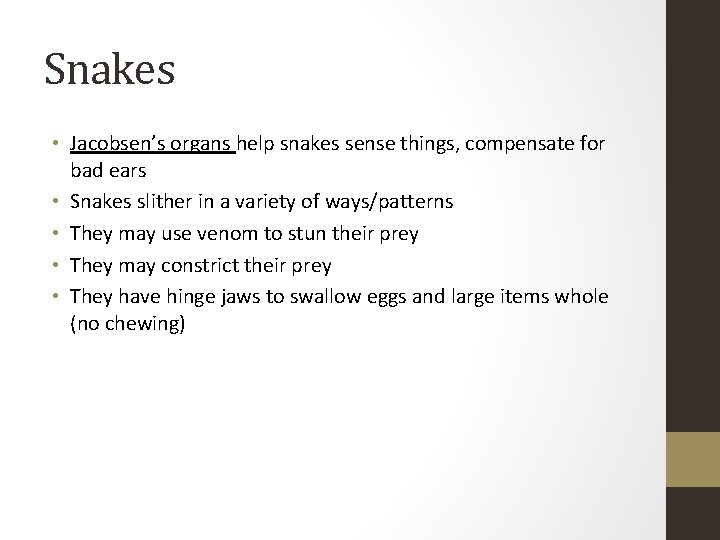
Snakes • Jacobsen’s organs help snakes sense things, compensate for bad ears • Snakes slither in a variety of ways/patterns • They may use venom to stun their prey • They may constrict their prey • They have hinge jaws to swallow eggs and large items whole (no chewing)
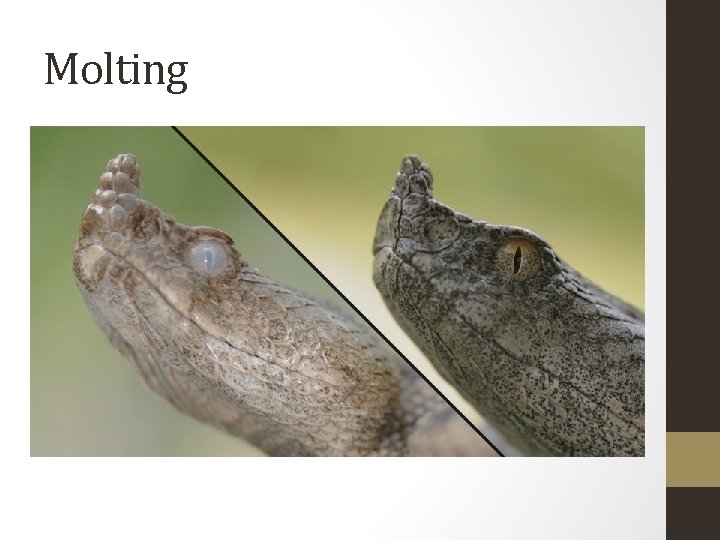
Molting
- Slides: 37