
Vertebrates and Invertebrates The difference between vertebrates and
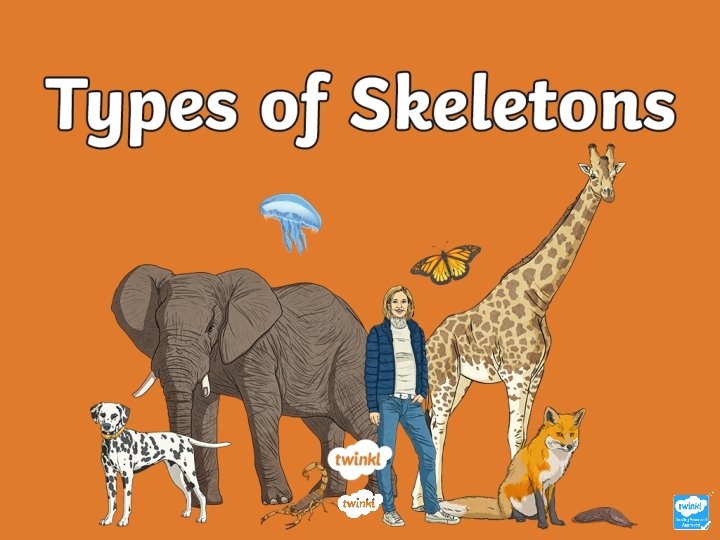
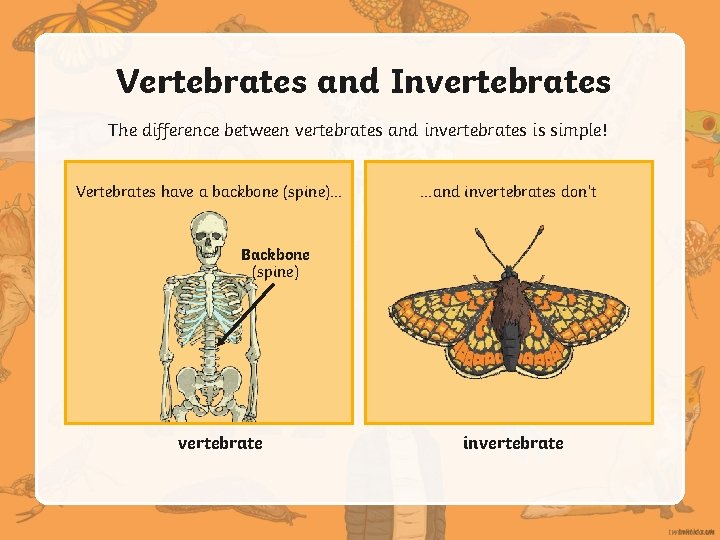
Vertebrates and Invertebrates The difference between vertebrates and invertebrates is simple! Vertebrates have a backbone (spine)… …and invertebrates don’t Backbone (spine) vertebrate invertebrate
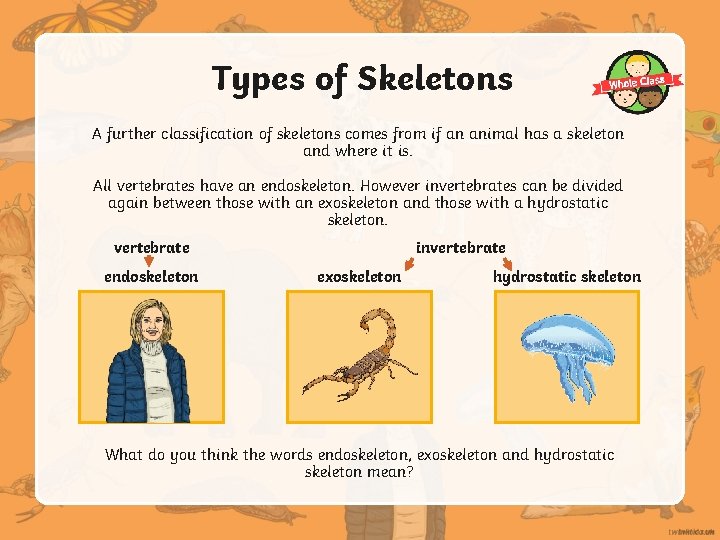
Types of Skeletons A further classification of skeletons comes from if an animal has a skeleton and where it is. All vertebrates have an endoskeleton. However invertebrates can be divided again between those with an exoskeleton and those with a hydrostatic skeleton. vertebrate endoskeleton invertebrate exoskeleton hydrostatic skeleton What do you think the words endoskeleton, exoskeleton and hydrostatic skeleton mean?
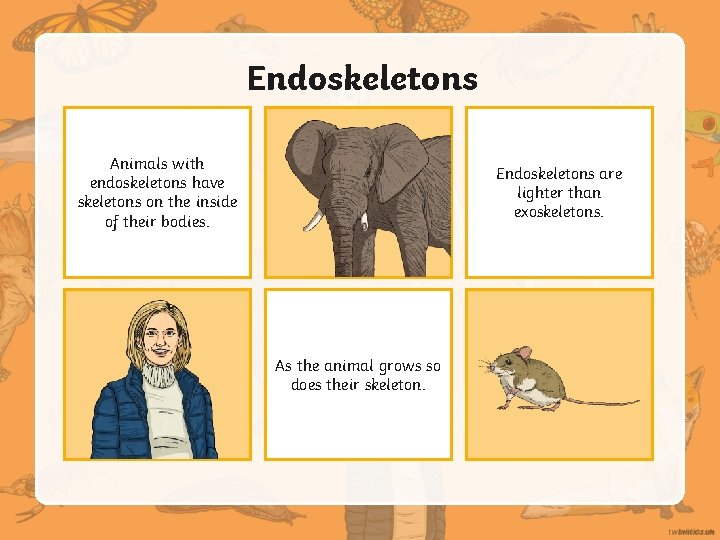
Endoskeletons Animals with endoskeletons have skeletons on the inside of their bodies. Endoskeletons are lighter than exoskeletons. As the animal grows so does their skeleton.
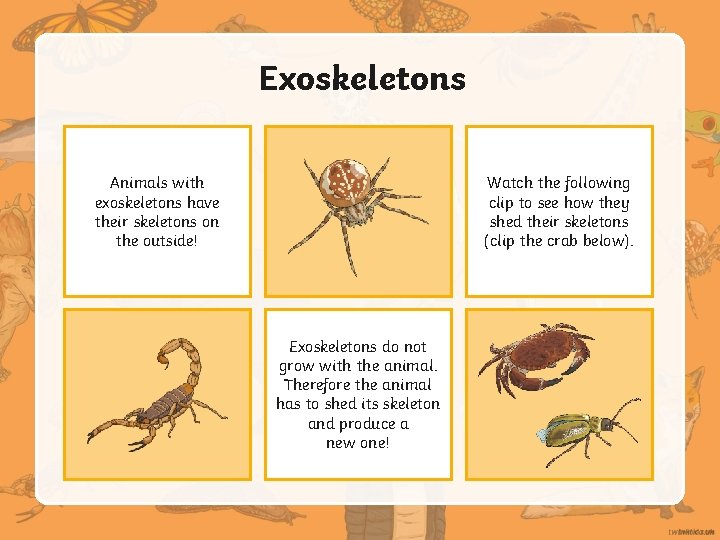
Exoskeletons Animals with exoskeletons have their skeletons on the outside! Watch the following clip to see how they shed their skeletons (clip the crab below). Exoskeletons do not grow with the animal. Therefore the animal has to shed its skeleton and produce a new one!
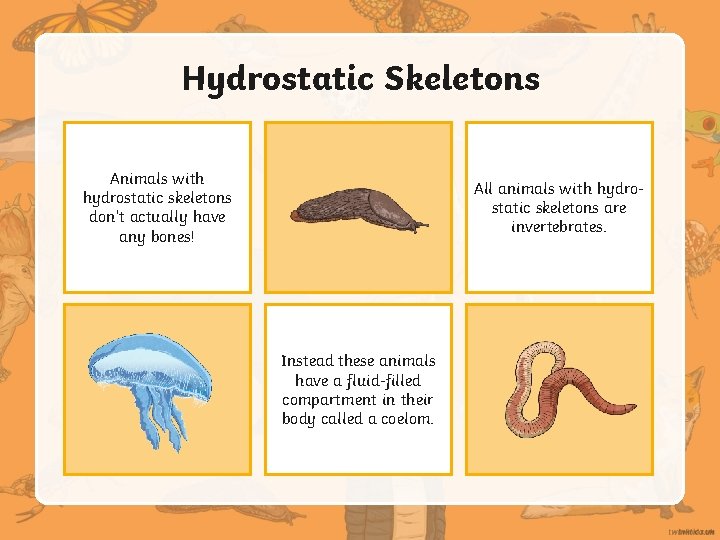
Hydrostatic Skeletons Animals with hydrostatic skeletons don’t actually have any bones! All animals with hydrostatic skeletons are invertebrates. Instead these animals have a fluid-filled compartment in their body called a coelom.
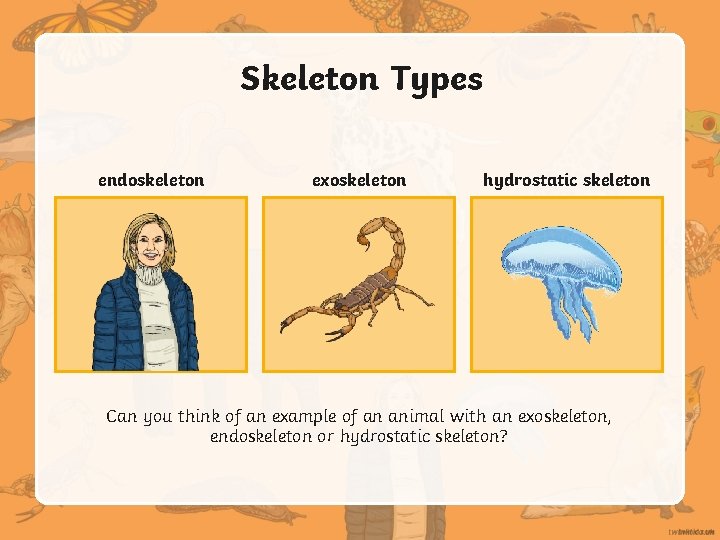
Skeleton Types endoskeleton exoskeleton hydrostatic skeleton Can you think of an example of an animal with an exoskeleton, endoskeleton or hydrostatic skeleton?
- Slides: 7