
Vertebrate Evolution Vertebrate Evolution Steps 1 Vertebral column
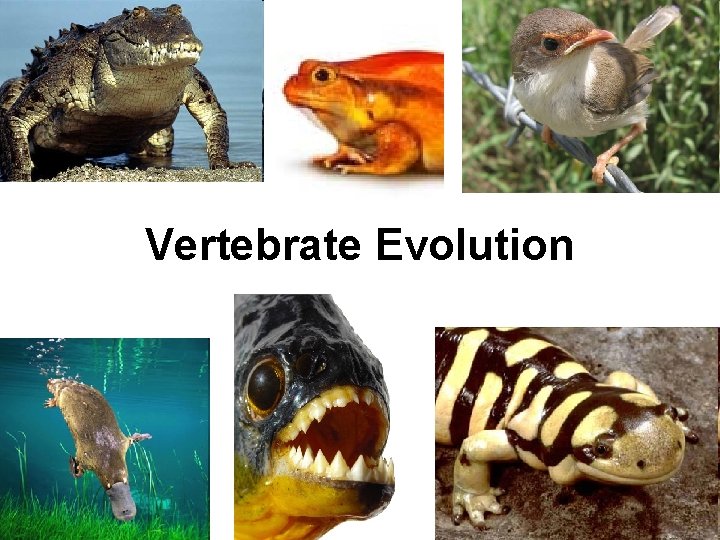
Vertebrate Evolution
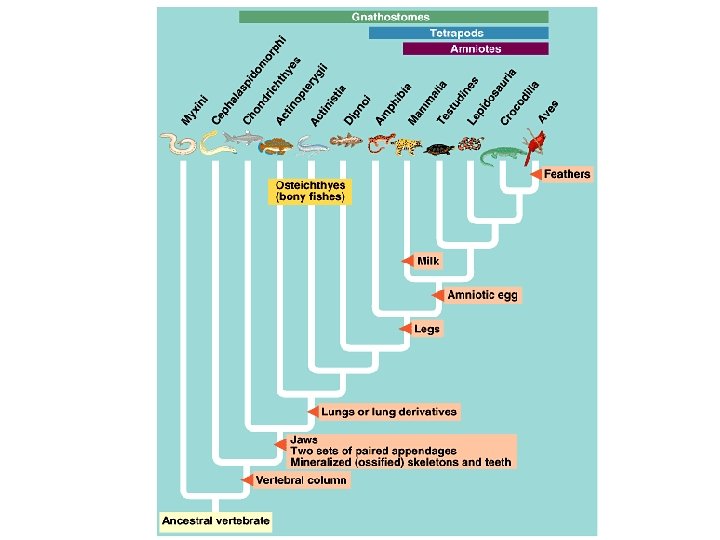
Vertebrate Evolution Steps 1. Vertebral column 2. Jaws, paired appendages (fins), bony skeletons 3. Lungs 4. Legs 5. Amniotic Egg
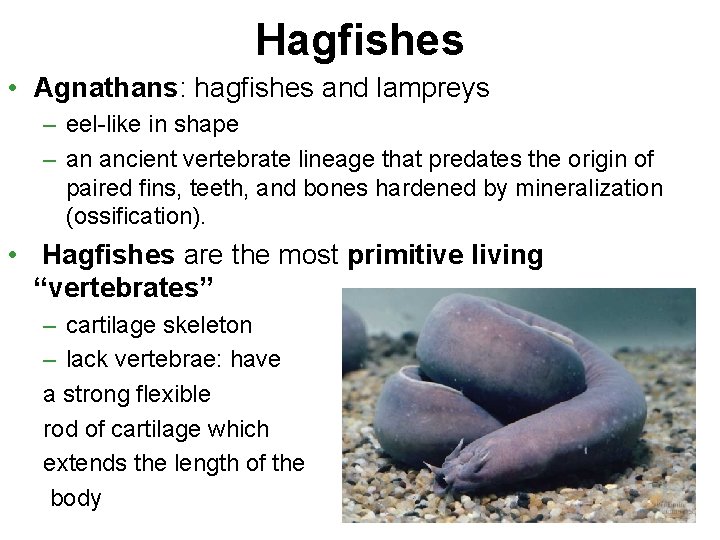
Hagfishes • Agnathans: hagfishes and lampreys – eel-like in shape – an ancient vertebrate lineage that predates the origin of paired fins, teeth, and bones hardened by mineralization (ossification). • Hagfishes are the most primitive living “vertebrates” – cartilage skeleton – lack vertebrae: have a strong flexible rod of cartilage which extends the length of the body
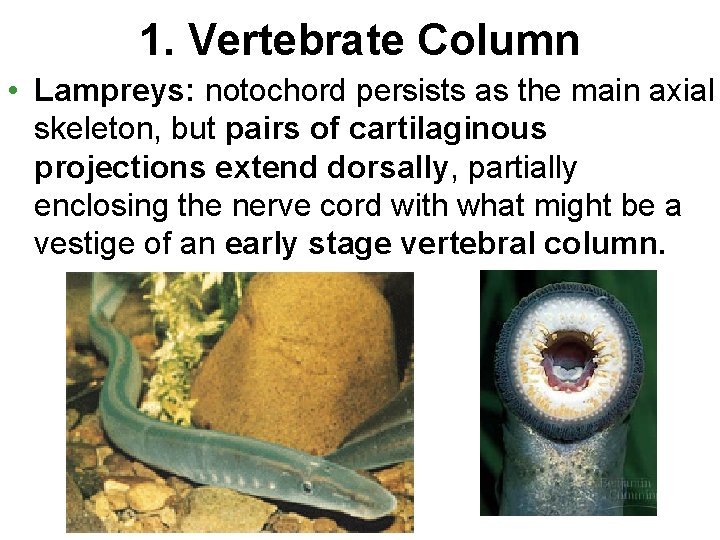
1. Vertebrate Column • Lampreys: notochord persists as the main axial skeleton, but pairs of cartilaginous projections extend dorsally, partially enclosing the nerve cord with what might be a vestige of an early stage vertebral column.
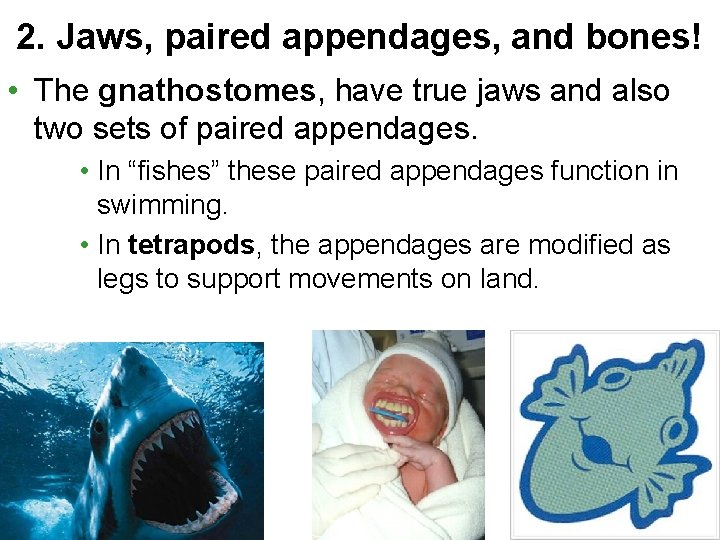
2. Jaws, paired appendages, and bones! • The gnathostomes, have true jaws and also two sets of paired appendages. • In “fishes” these paired appendages function in swimming. • In tetrapods, the appendages are modified as legs to support movements on land.
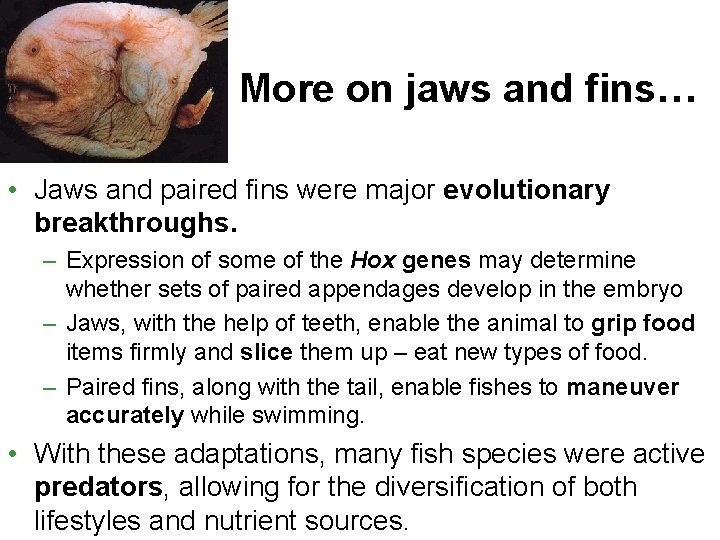
More on jaws and fins… • Jaws and paired fins were major evolutionary breakthroughs. – Expression of some of the Hox genes may determine whether sets of paired appendages develop in the embryo – Jaws, with the help of teeth, enable the animal to grip food items firmly and slice them up – eat new types of food. – Paired fins, along with the tail, enable fishes to maneuver accurately while swimming. • With these adaptations, many fish species were active predators, allowing for the diversification of both lifestyles and nutrient sources.
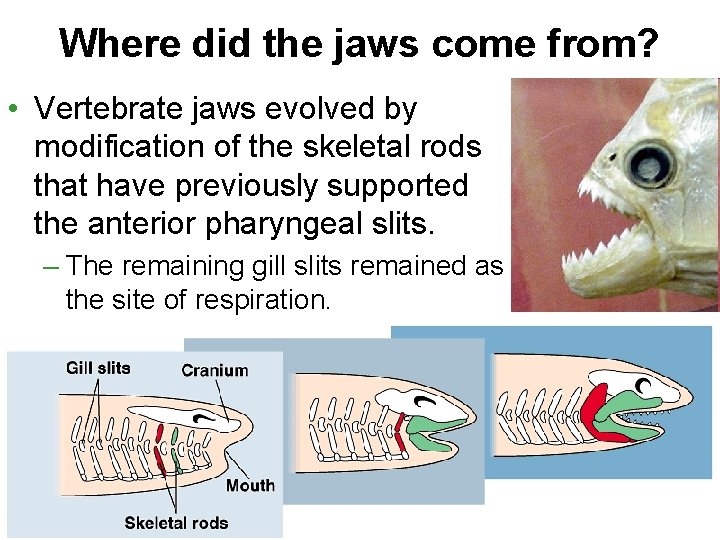
Where did the jaws come from? • Vertebrate jaws evolved by modification of the skeletal rods that have previously supported the anterior pharyngeal slits. – The remaining gill slits remained as the site of respiration.
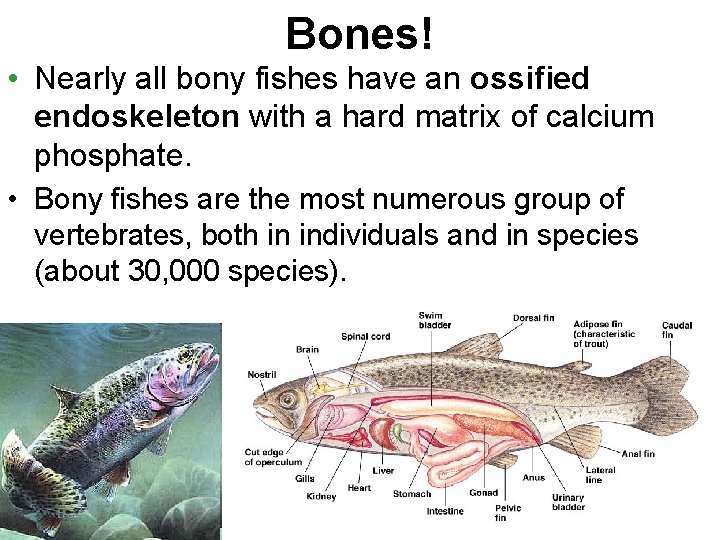
Bones! • Nearly all bony fishes have an ossified endoskeleton with a hard matrix of calcium phosphate. • Bony fishes are the most numerous group of vertebrates, both in individuals and in species (about 30, 000 species).
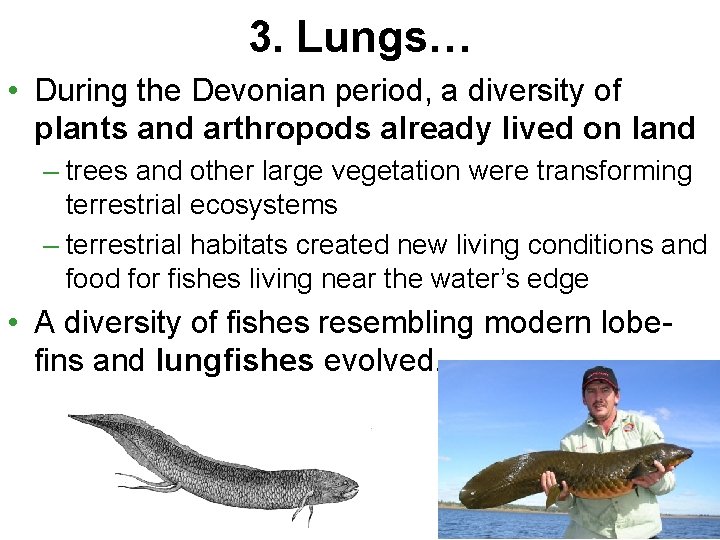
3. Lungs… • During the Devonian period, a diversity of plants and arthropods already lived on land – trees and other large vegetation were transforming terrestrial ecosystems – terrestrial habitats created new living conditions and food for fishes living near the water’s edge • A diversity of fishes resembling modern lobefins and lungfishes evolved.
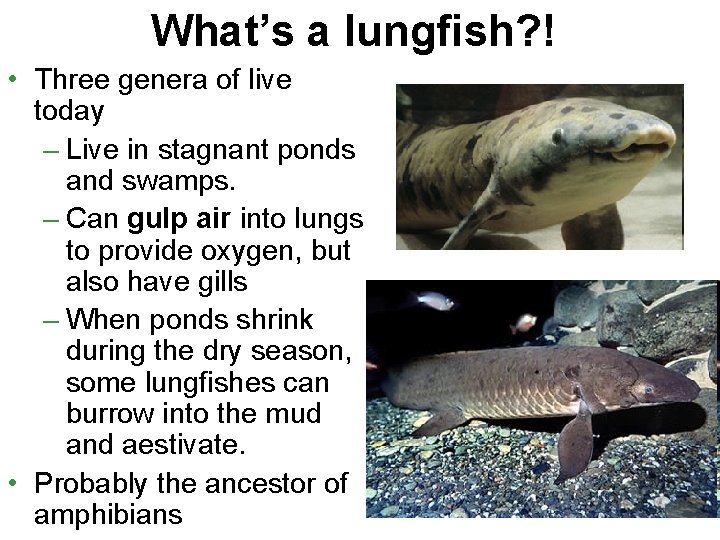
What’s a lungfish? ! • Three genera of live today – Live in stagnant ponds and swamps. – Can gulp air into lungs to provide oxygen, but also have gills – When ponds shrink during the dry season, some lungfishes can burrow into the mud and aestivate. • Probably the ancestor of amphibians
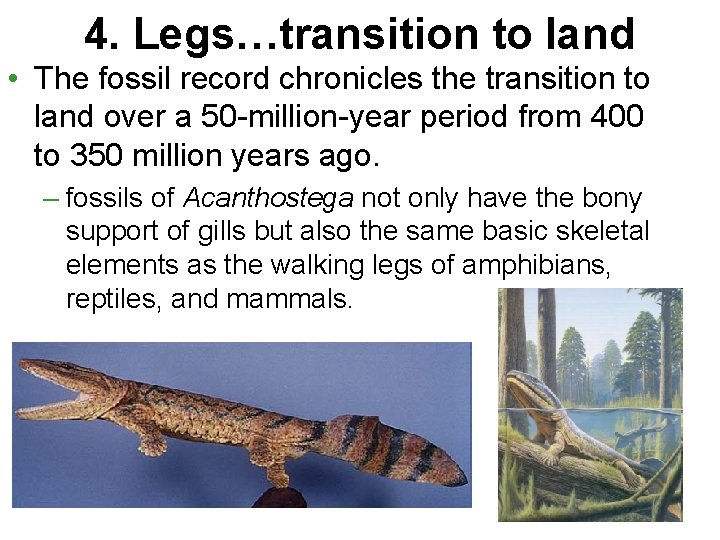
4. Legs…transition to land • The fossil record chronicles the transition to land over a 50 -million-year period from 400 to 350 million years ago. – fossils of Acanthostega not only have the bony support of gills but also the same basic skeletal elements as the walking legs of amphibians, reptiles, and mammals.
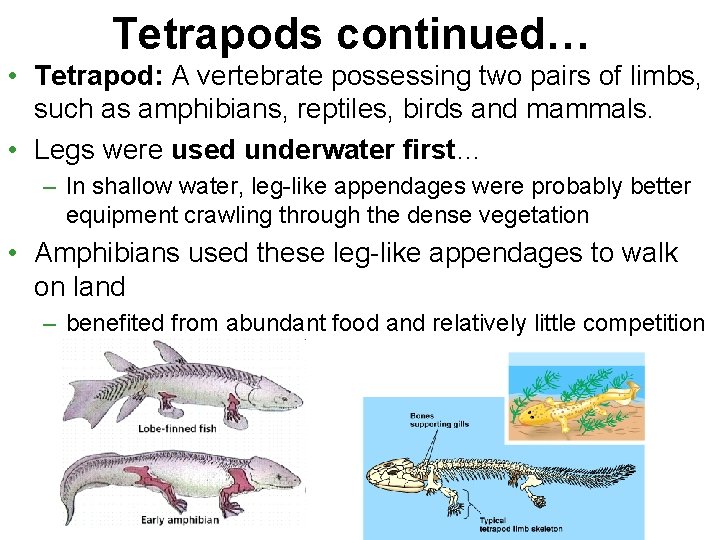
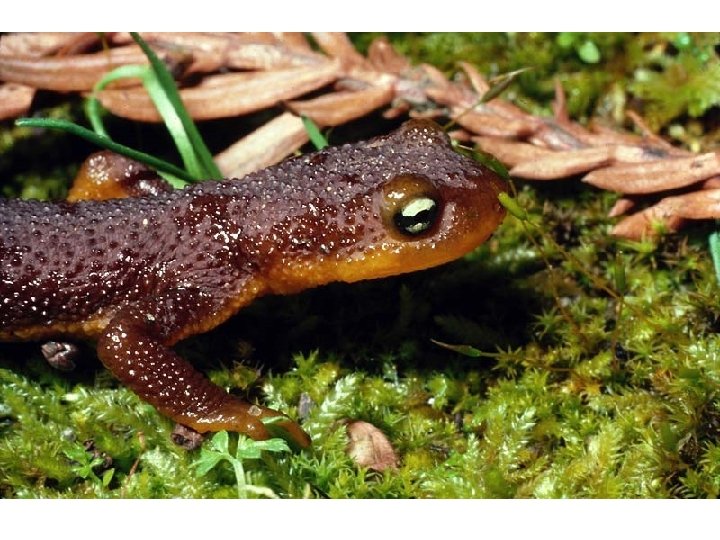
Tetrapods continued… • Tetrapod: A vertebrate possessing two pairs of limbs, such as amphibians, reptiles, birds and mammals. • Legs were used underwater first… – In shallow water, leg-like appendages were probably better equipment crawling through the dense vegetation • Amphibians used these leg-like appendages to walk on land – benefited from abundant food and relatively little competition
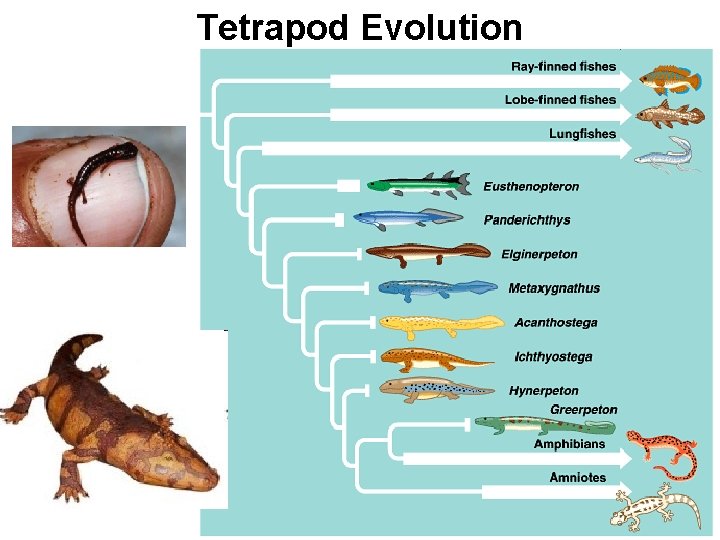
Tetrapod Evolution
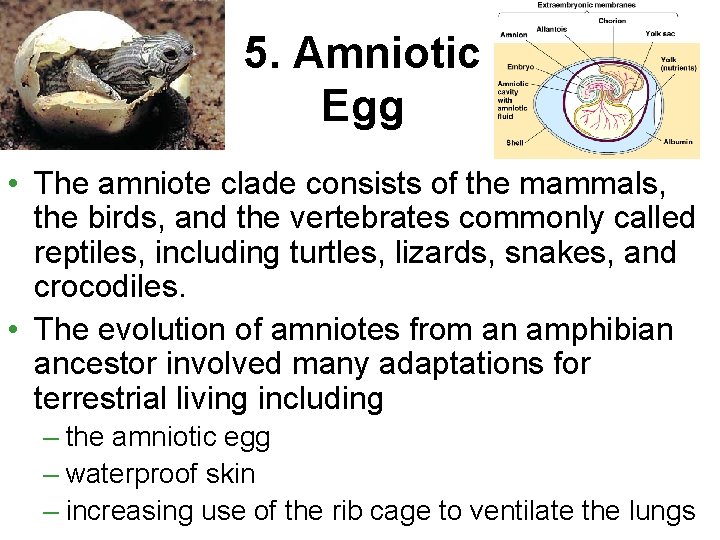
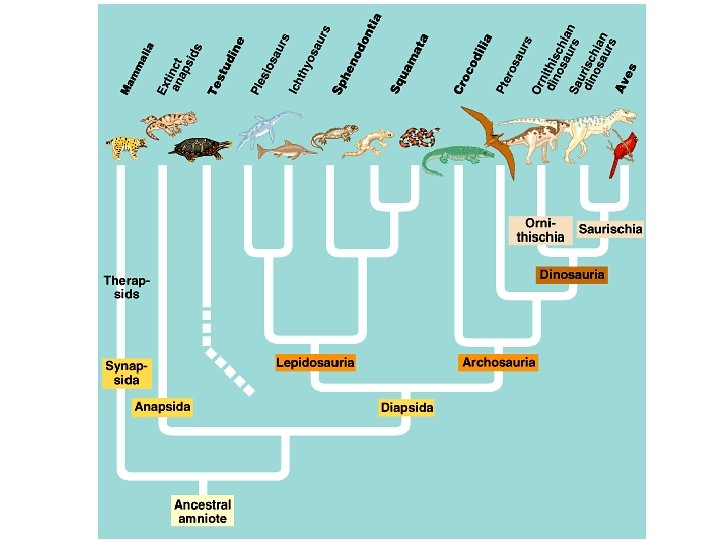
5. Amniotic Egg • The amniote clade consists of the mammals, the birds, and the vertebrates commonly called reptiles, including turtles, lizards, snakes, and crocodiles. • The evolution of amniotes from an amphibian ancestor involved many adaptations for terrestrial living including – the amniotic egg – waterproof skin – increasing use of the rib cage to ventilate the lungs
The incredible egg! • Among tetrapods, most amphibians lay eggs in water or an otherwise moist environment. • The other terrestrial tetrapods are amniotes, producing shelled, water-retaining eggs which allow these organisms to complete their life cycles entirely on land. – While most modern mammals do not lay eggs, they retain many of other key features of the amniotic mode of reproduction.
Homework: Vertebrate Diversity Notes • 1. 2. 3. 4. 5. 6. Directions: Use pages 686 -706 to take notes on the key characteristics and unique evolutionary adaptations of each of these groups: Chondrichthyes Osteichthyes Amphibia Modern Reptiles Birds Mammals (Monotremes, marsupials, and eutherian mammals)
- Slides: 19