
Vertebrate Animals Phylum Chordate Dorsal Nerve Cord Gill
Vertebrate Animals
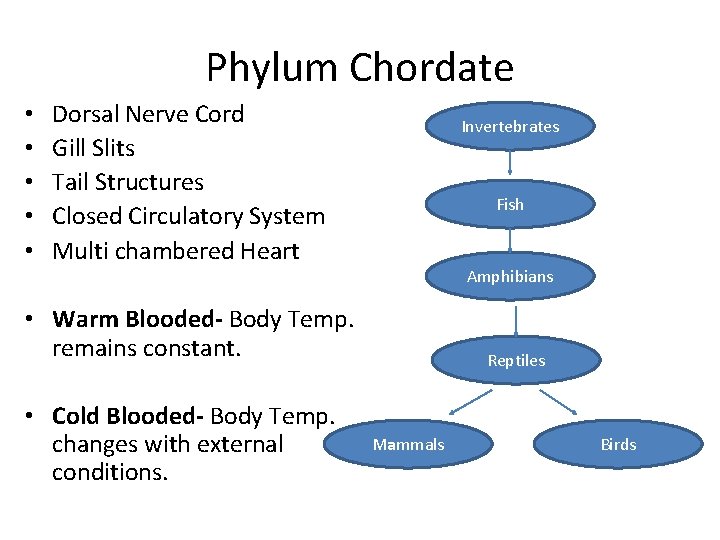
Phylum Chordate • • • Dorsal Nerve Cord Gill Slits Tail Structures Closed Circulatory System Multi chambered Heart Invertebrates Fish Amphibians • Warm Blooded- Body Temp. remains constant. • Cold Blooded- Body Temp. changes with external conditions. Reptiles Mammals Birds
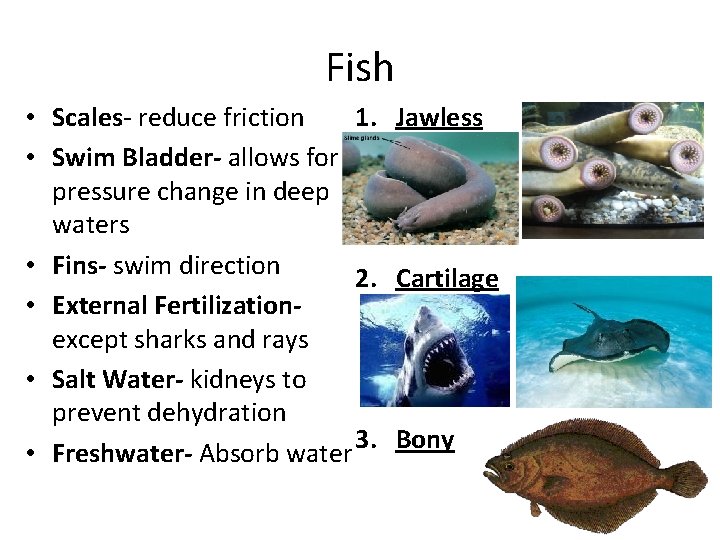
Fish • Scales- reduce friction 1. Jawless • Swim Bladder- allows for pressure change in deep waters • Fins- swim direction 2. Cartilage • External Fertilizationexcept sharks and rays • Salt Water- kidneys to prevent dehydration • Freshwater- Absorb water 3. Bony
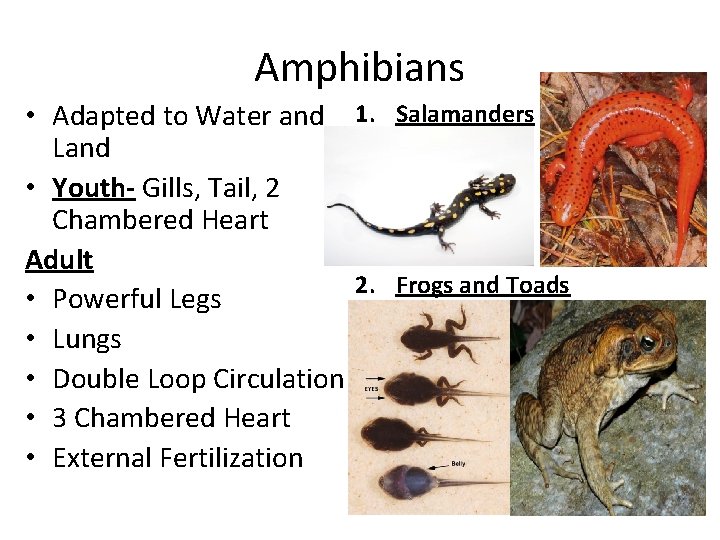
Amphibians • Adapted to Water and 1. Salamanders Land • Youth- Gills, Tail, 2 Chambered Heart Adult 2. Frogs and Toads • Powerful Legs • Lungs • Double Loop Circulation • 3 Chambered Heart • External Fertilization
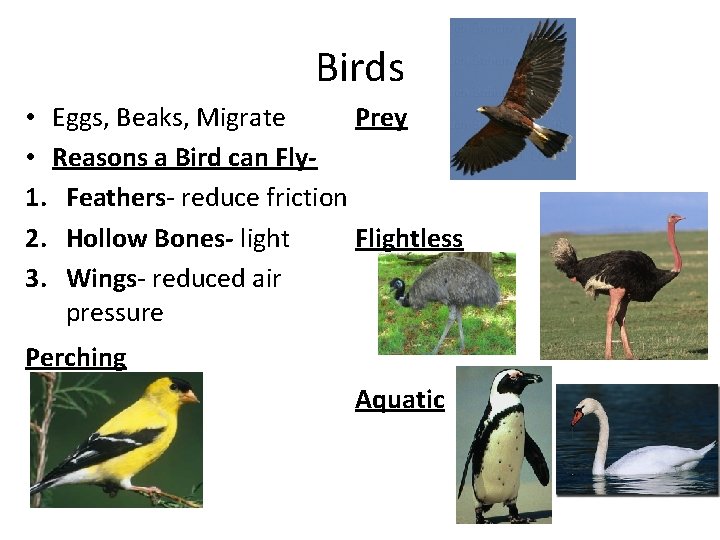
Birds • Eggs, Beaks, Migrate Prey • Reasons a Bird can Fly 1. Feathers- reduce friction 2. Hollow Bones- light Flightless 3. Wings- reduced air pressure Perching Aquatic
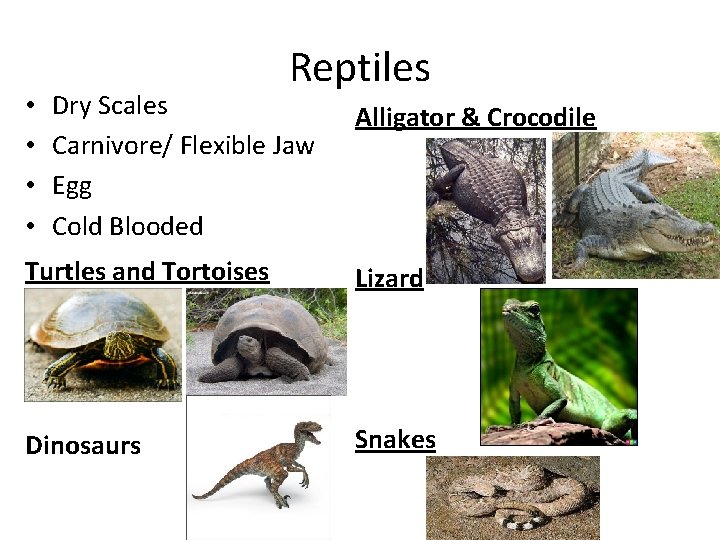
• • Reptiles Dry Scales Carnivore/ Flexible Jaw Egg Cold Blooded Alligator & Crocodile Turtles and Tortoises Lizard Dinosaurs Snakes
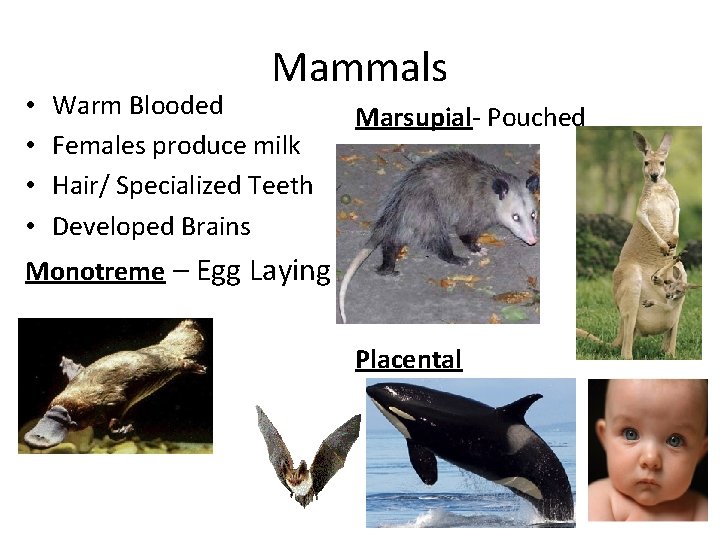
• • Mammals Warm Blooded Females produce milk Hair/ Specialized Teeth Developed Brains Marsupial- Pouched Monotreme – Egg Laying Placental
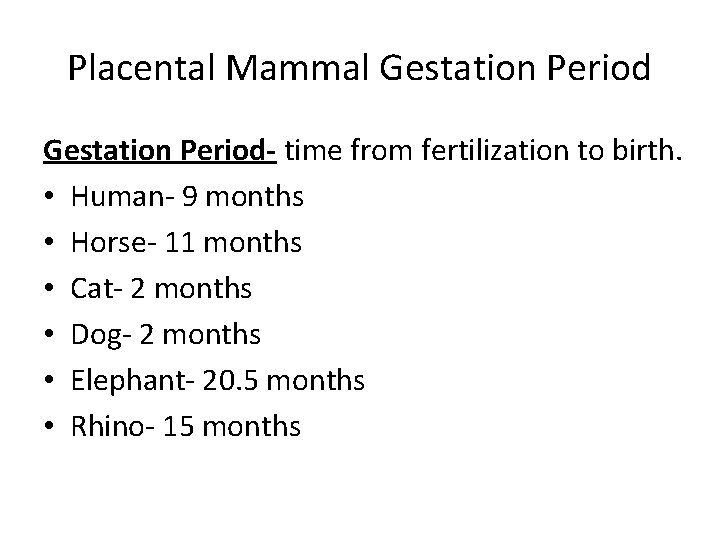
Placental Mammal Gestation Period- time from fertilization to birth. • Human- 9 months • Horse- 11 months • Cat- 2 months • Dog- 2 months • Elephant- 20. 5 months • Rhino- 15 months
- Slides: 8