
Vertebral Column Osteology and Arthrology Osteology l l
Vertebral Column Osteology and Arthrology
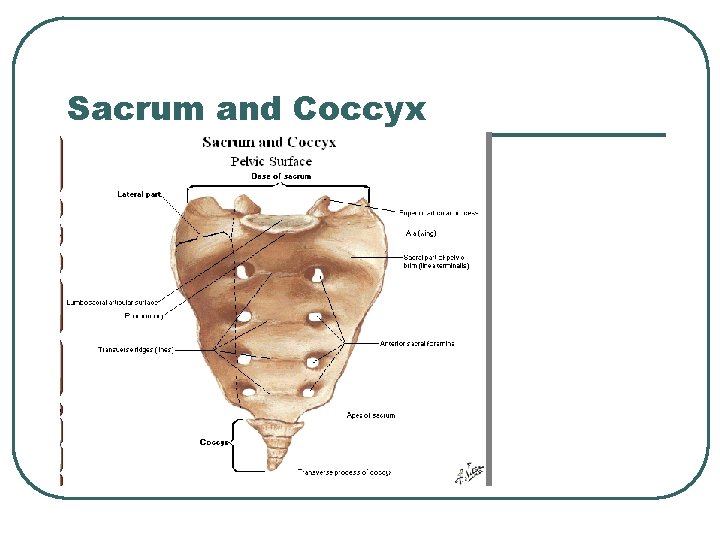
Osteology l l 7 C, 12 T, 5 L, 5 S (Fused as Sacrum), 4 coccygeal Primary Curves Secondary Curves Anterior/Posterior alignment
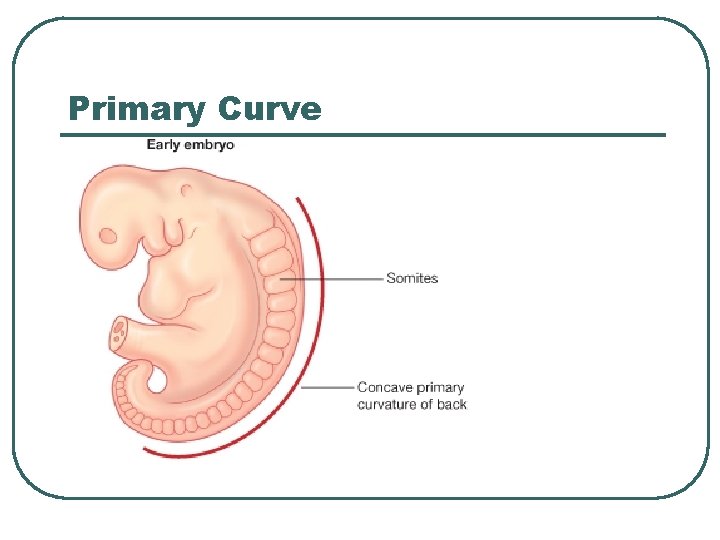
Primary Curve
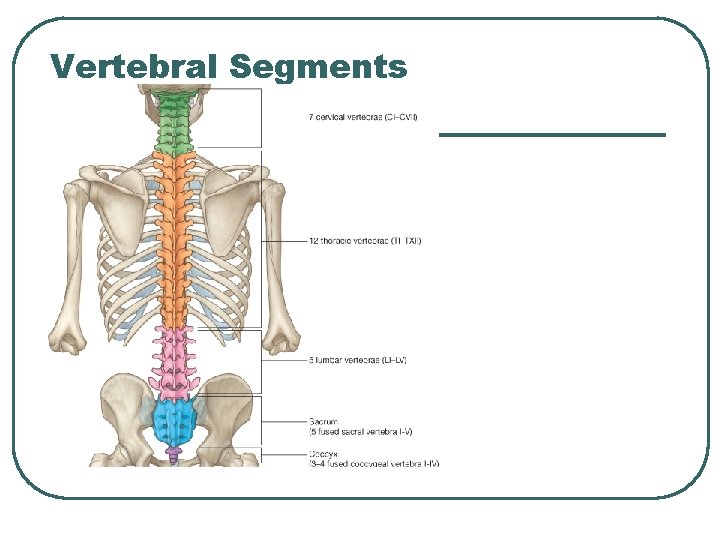
Vertebral Segments
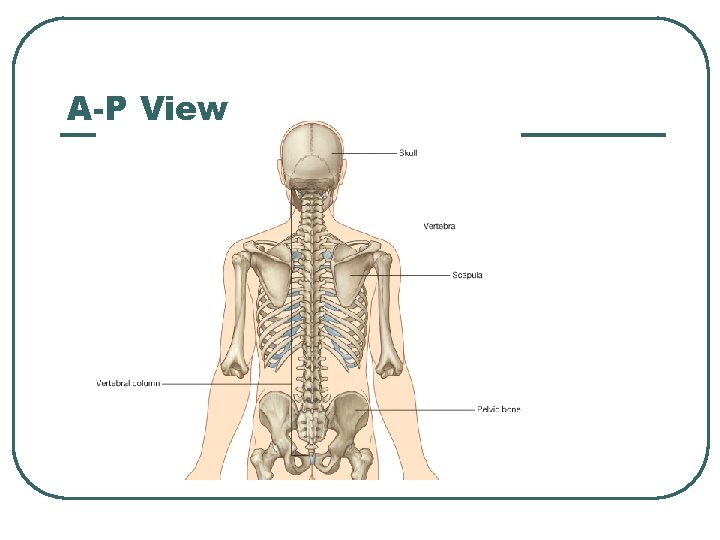
A-P View

Secondary Curves Lateral
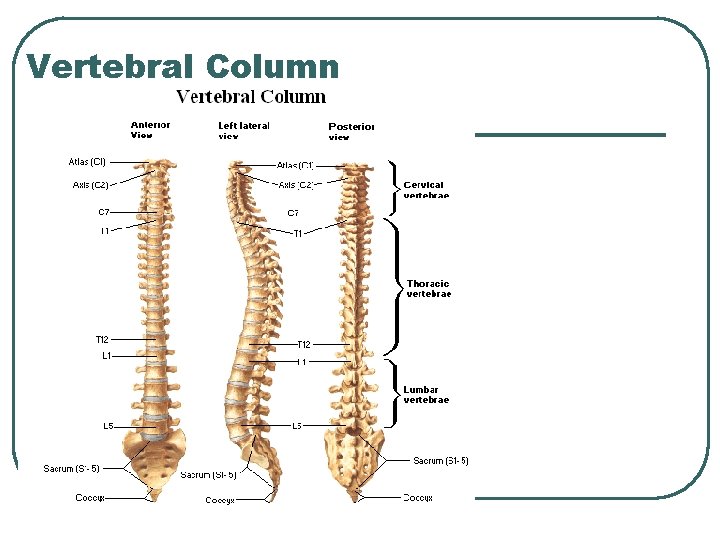
Vertebral Column
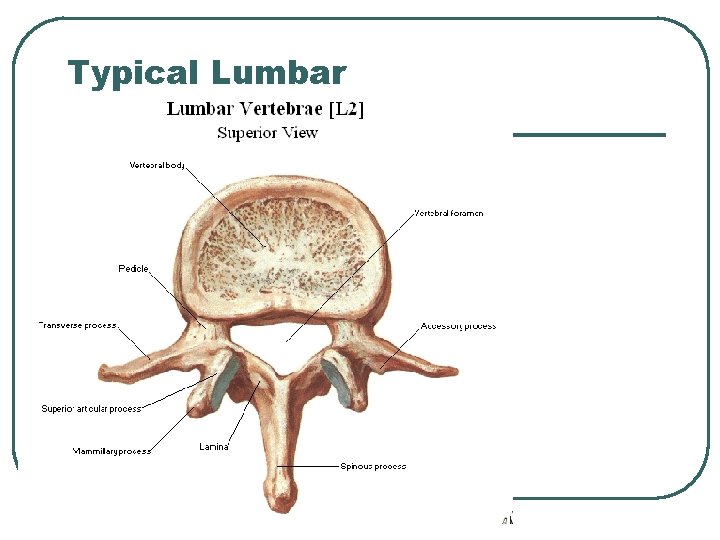
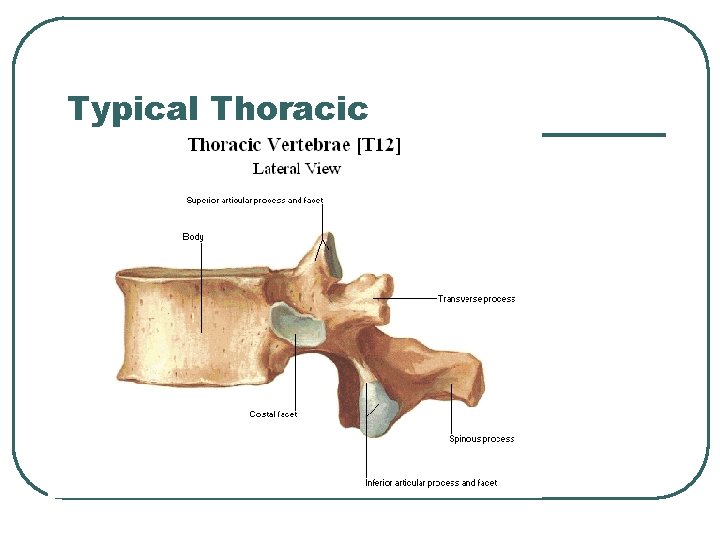
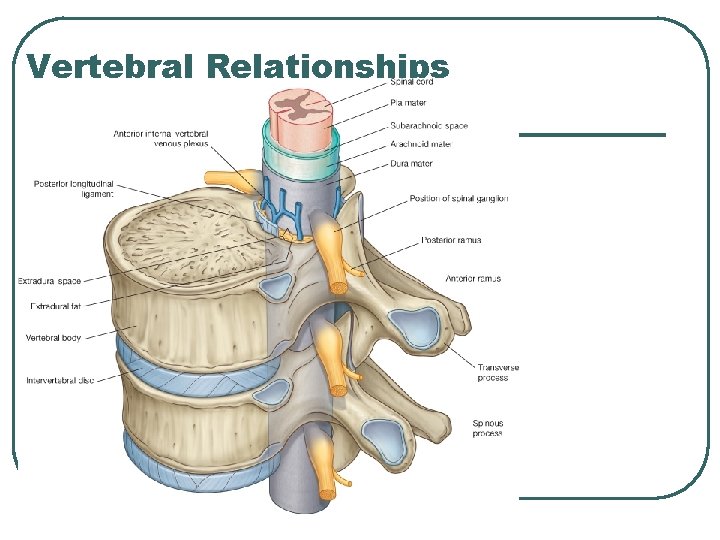
Osteology l l l Typical Vertebrae Body • • • Superior and inferior surfaces of body (plateaus) Thickened around the rim, location of epiphyseal plates Cartilaginous end-plates • • Pedicles, Laminae Transverse Processes Spinous Process Facets – superior articular and inferior articular Vertebral Arch Spinal Foramen Intervertebral Foramen

Typical Vertebrae
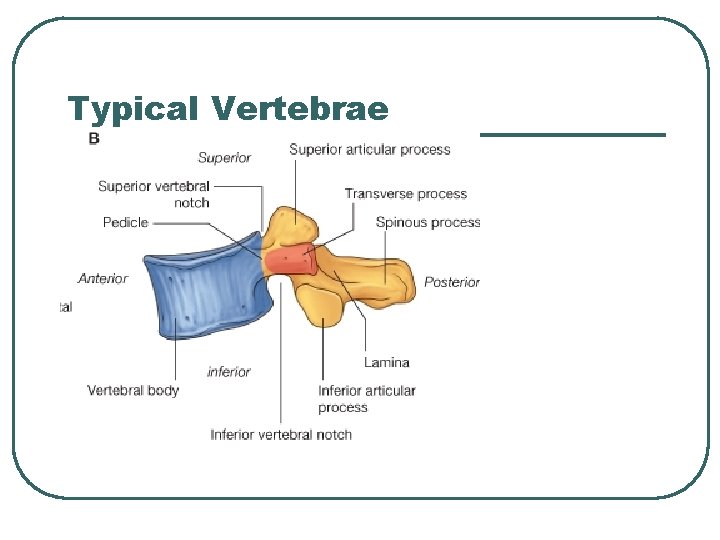
Typical Vertebrae
Typical Lumbar
Typical Thoracic

Typical C
Sacrum and Coccyx
Vertebral Relationships
Arthrology l l l Intervertebral Discs Fibrocartilaginous joints Increase in size from C to L (3 mm to 9 mm) Ratio remains the same Make up 20 -30% of length of column
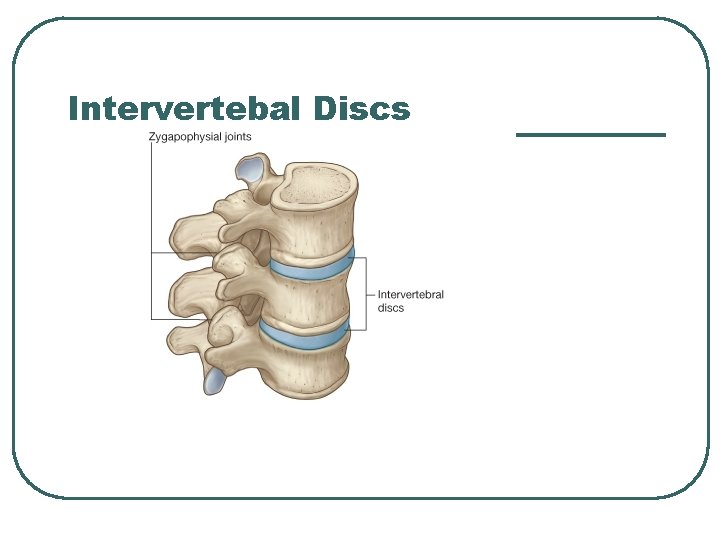
Intervertebal Discs

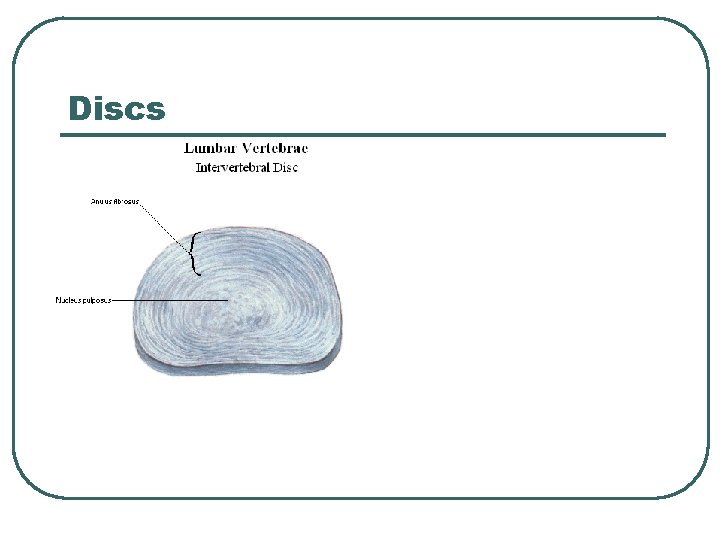
Discs
Discs
Arthrology l l l Two Components Outer rim of fibrocartilage called the anulus fibrosus (attaches to cartilaginous end plate) Connects vertebral bodies in a fibrocartilaginous joint (no capsule, little motion)
Arthrology l l l Anulus encloses a central mass called the nucleus pulposus About 80 -90% water, less with increased age Contains a mucopolysaccharide matrix Changes shape, releases and absorbs water. Thicker in AM than PM Neither blood vessels or nerves penetrate nucleus
Arthrology l l Structure deforms when pressure is put on vertebral column as in weight bearing Acts as a shock absorber Annulus totally encloses the nucleus and keeps it under constant pressure As you get older, the H 2 O content decreases and the nucleus becomes more fibrocartilaginous, therefore less easily deformable and more easily damaged
Arthrology l l Nucleus, when under extreme pressure, can herniate or extrude from the disc in a posterior or posterior-lateral direction Usually occurs in cervical or lumbar region Nucleus can put pressure on spinal nerve causing refereed symptoms (motor and sensory) Can cause pressure on cord itself if true posterior
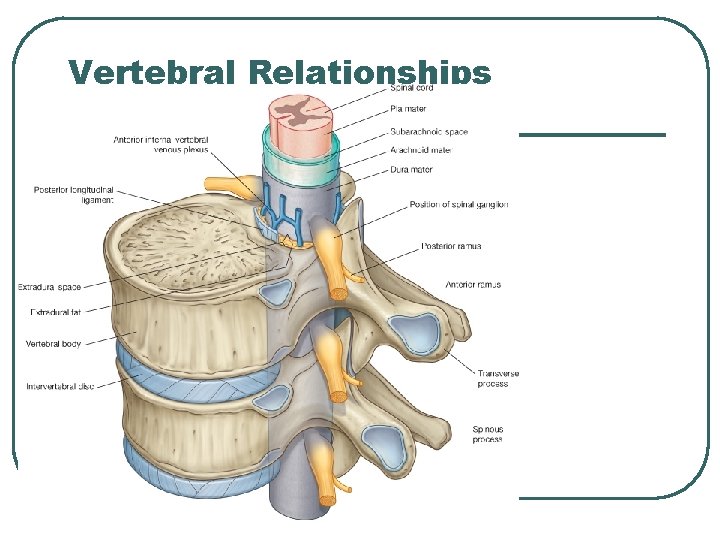
Vertebral Relationships
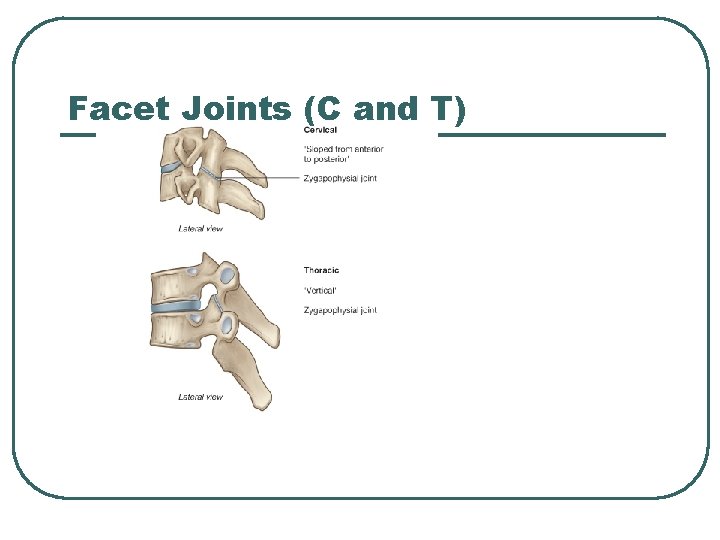
Facet Joints (C and T)
Arthrology l l l Facet Joints (Typical) Superior articular facets of one vertebrae with inferior facets of vertebrae above Synovial gliding joints Surrounded by joint capsule and small capsular ligaments The type and amount of motion in any given part of the spine is dictated by the orientation of the articular facets as well as the fluidity, elasticity and thickness of the intervertebral discs
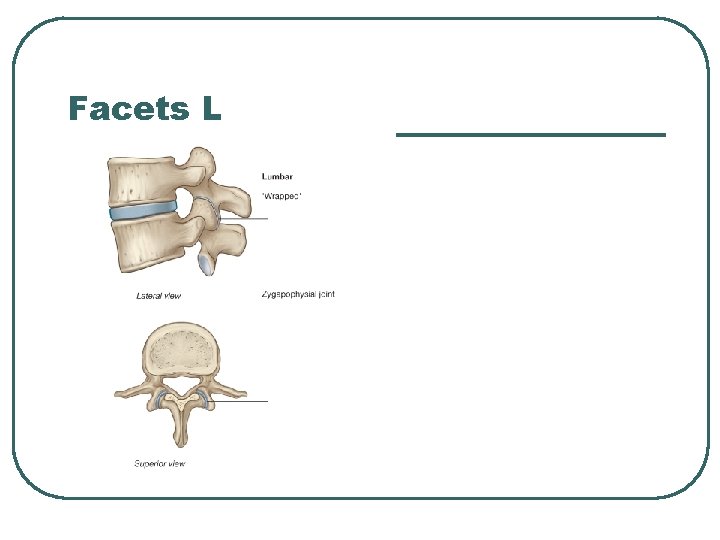
Facets L

Arthrology l l Typical movements in sections of the spine Lumbar Thoracic Cervical
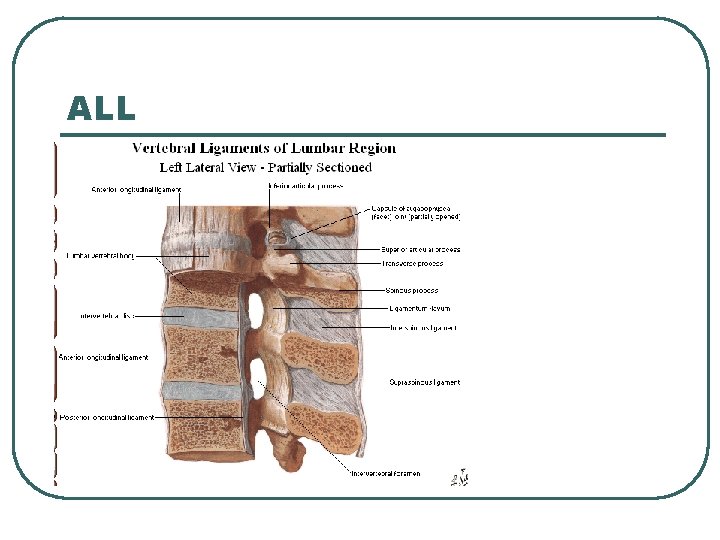
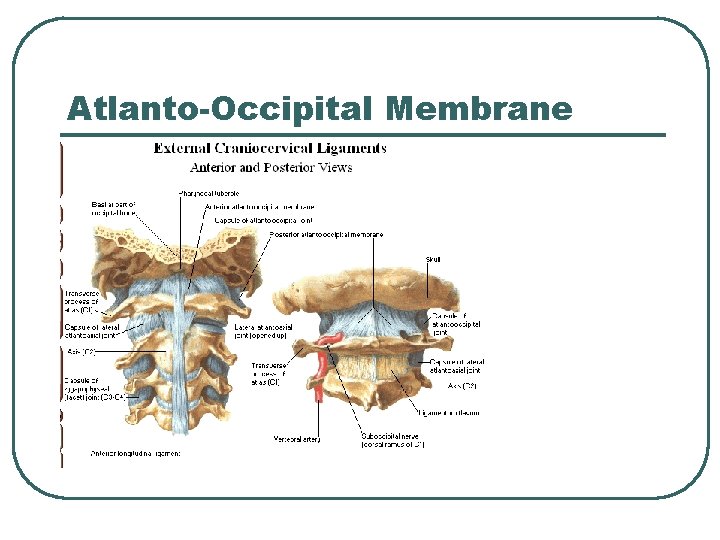
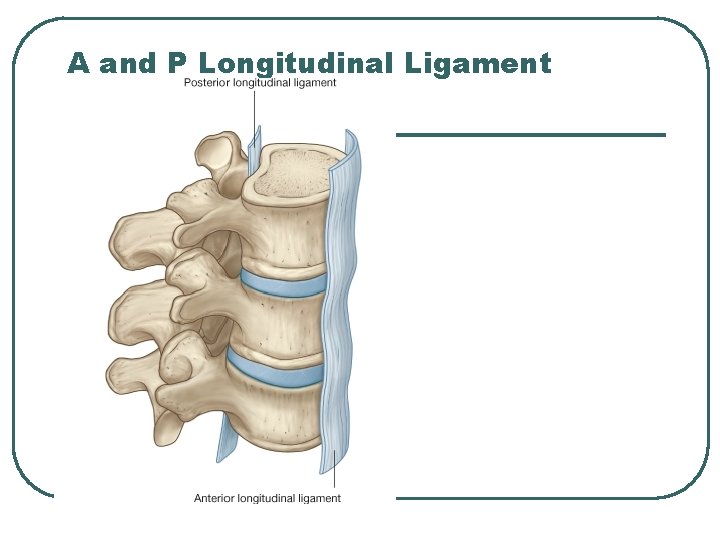
Major Ligaments of the Spine l l Anterior Longitudinal Ligament - ALL Dense band along anterior and lateral surface of the vertebral bodies from C 2 to sacrum • • • l Superficial - bridge several vertebrae Deep – short, run from V to V, blends with fibers of anulus fibrosus Limits extension of V column From C 1 to skull, called Atlanto-Occipital Membrane
ALL
Atlanto-Occipital Membrane
A and P Longitudinal Ligament
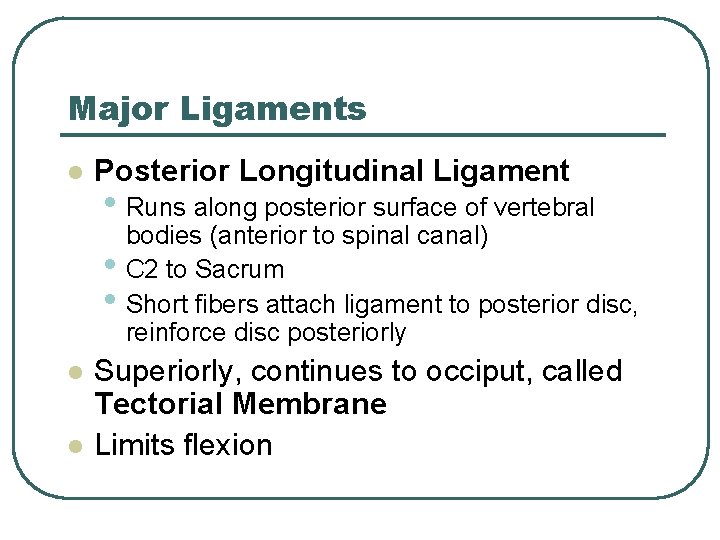
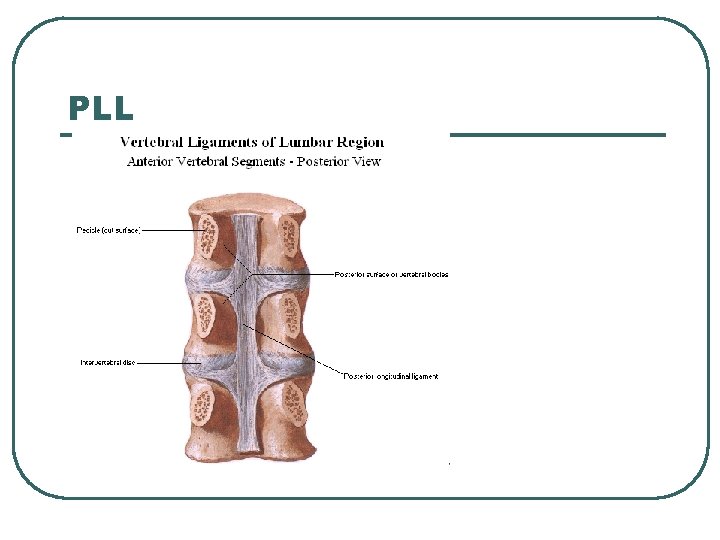
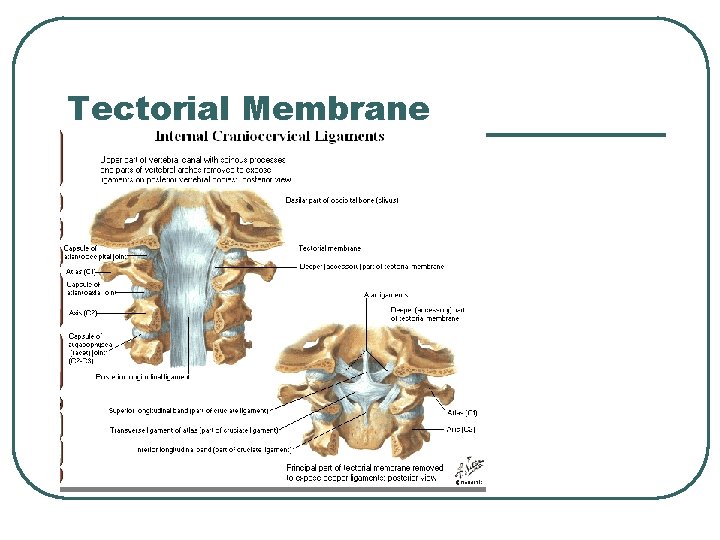
Major Ligaments l Posterior Longitudinal Ligament • Runs along posterior surface of vertebral • • l l bodies (anterior to spinal canal) C 2 to Sacrum Short fibers attach ligament to posterior disc, reinforce disc posteriorly Superiorly, continues to occiput, called Tectorial Membrane Limits flexion
PLL
Tectorial Membrane
Ligaments l Supraspinous • Spinous process to spinous process – tip to • l l l tip C 7 to sacrum Limits flexion In cervical region, becomes much thicker with a greater elastic content Called Ligamentum Nuchae

Supraspinous

Ligamentum Nuchae

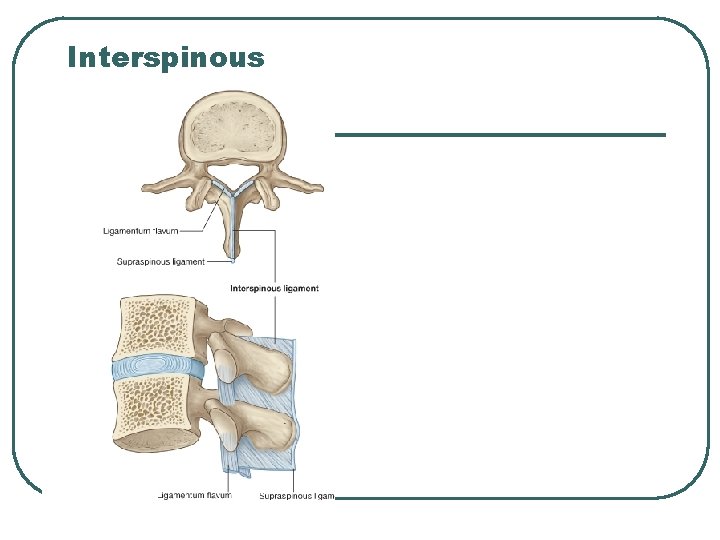
Ligaments l l Interspinous Found between spinous processes Most well developed in lumbar region support

Interspinous
Interspinous
Ligaments l l l Ligamentum Flavum Connects lamina of one to lamina of the other Found from axis to sacrum Limit flexion Continuation to the skull is called Posterior Atlanto-Occipital membrane
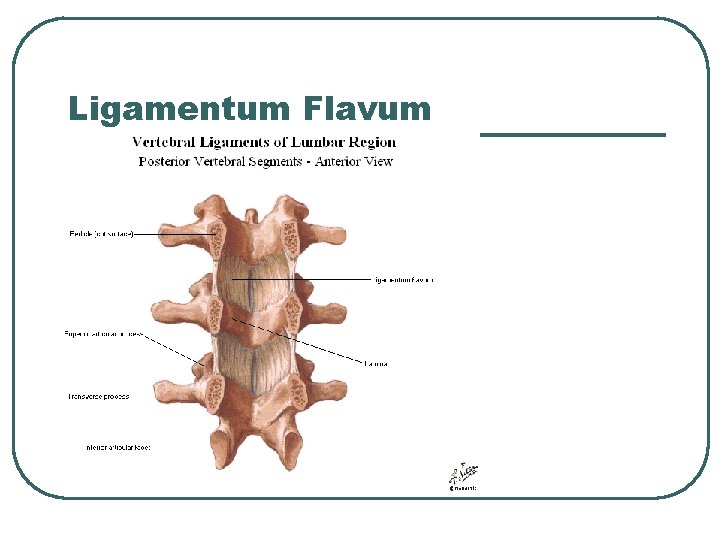
Ligamentum Flavum
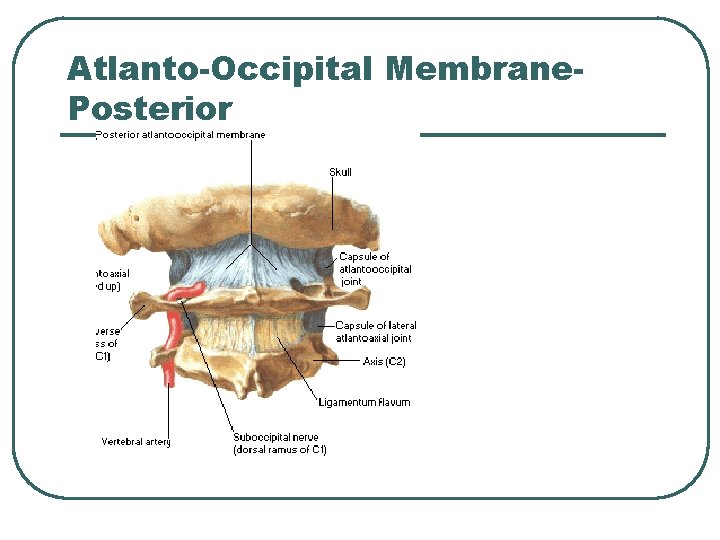
Atlanto-Occipital Membrane. Posterior
Ligaments l l Intertransverse Only well-developed in Lumbar Region Between transverse processes Limit lateral flexion
Special Joints of Spine l l l Lumbo-Sacral • • L 5 and S 1 (or sacrum) Drastic change from lordotic to kyphotic curve Strong “shearing forces” The sacral segment is inclined anteriorly and inferiorly forms an angel with the horizontal called the lumbosacral angle Angle can be increased significantly with an increase in lumbar curve During flexion/extension the greatest mobility of the spine occurs between L 5 and S 1
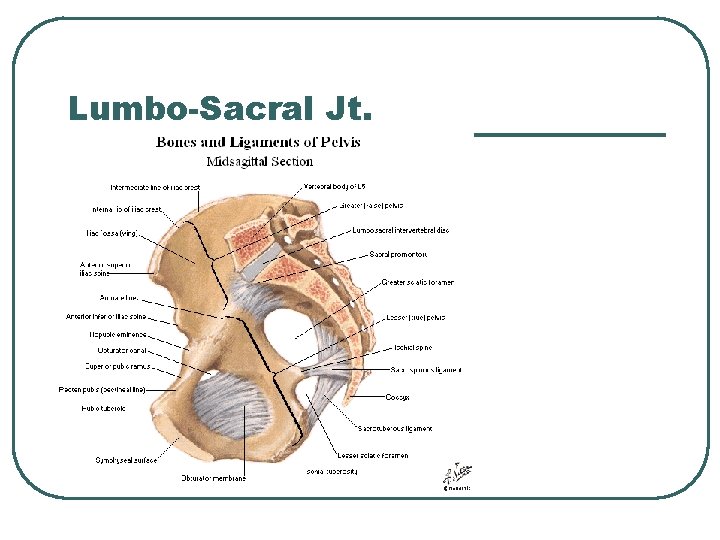
Lumbo-Sacral Jt.
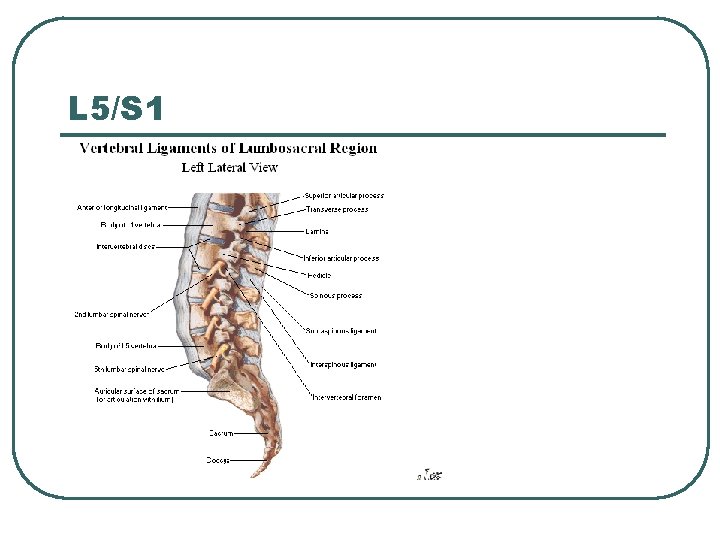
L 5/S 1
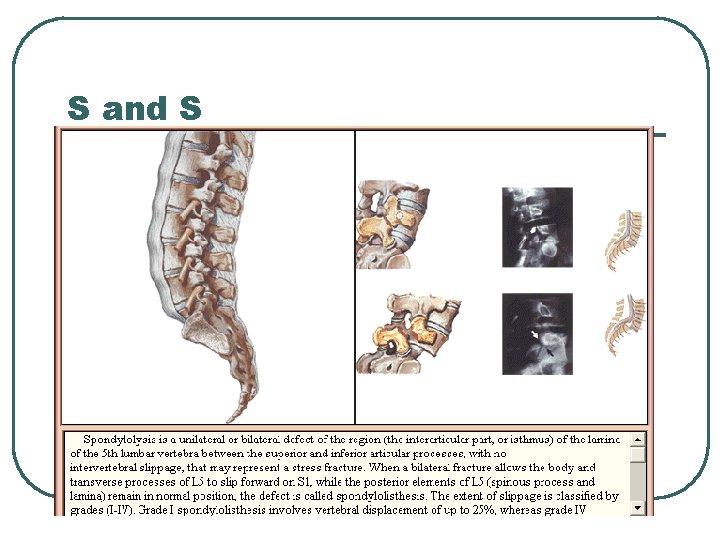
L 5/S 1 l l Spondylolysis – a developmental anomaly of the lamina wherin a bony defect separates the sup. and inf. Articular processes thus separating the post. Part of the neural arch from the ant. Arch and the vertebral body Usually asymptomatic, very common in males
S and S
L 5/S 1 l Spondylolistheses – an anterior movement of the L 5 vertebral body and can cause compression of the cauda equina which rests posteriorly

Sacralization l Where 5 th lumbar vertebrae takes on characteristics of the sacrum and may be partially or completely fused with sacrum
Lumbarization l Superior aspect of the sacrum assumes characteristics of the 5 th lumbar vertebrae
S-I Joint l l l Review Hip Bone AKA Innominate AKA Os Coxae Ilium, Ischium and Pubis Fuse at Puberty Acetabulum Pelvis = 2 coxal bones the sacrum and coccyx

Innominate Bone AKA Hip
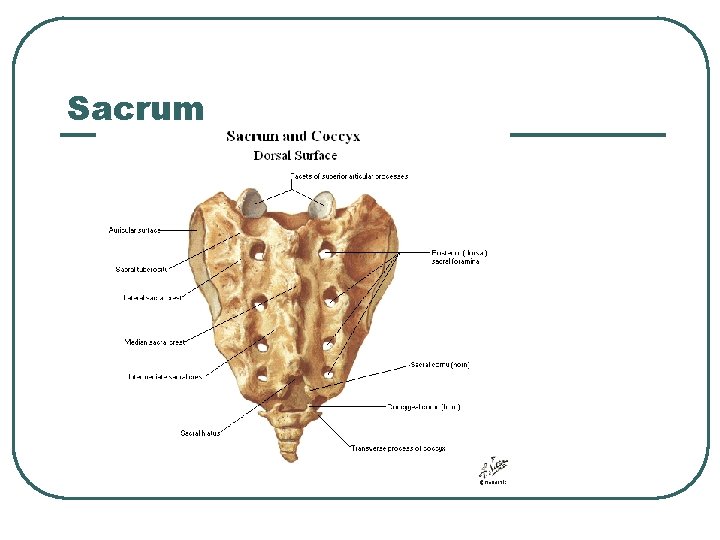
Sacrum
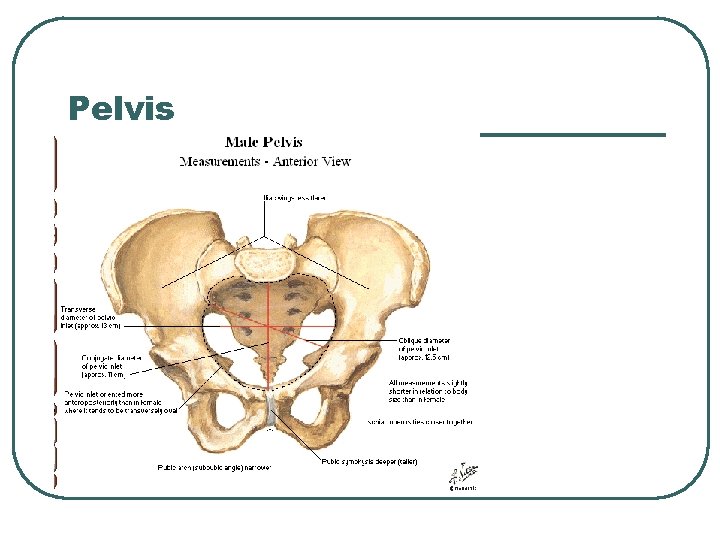
Pelvis
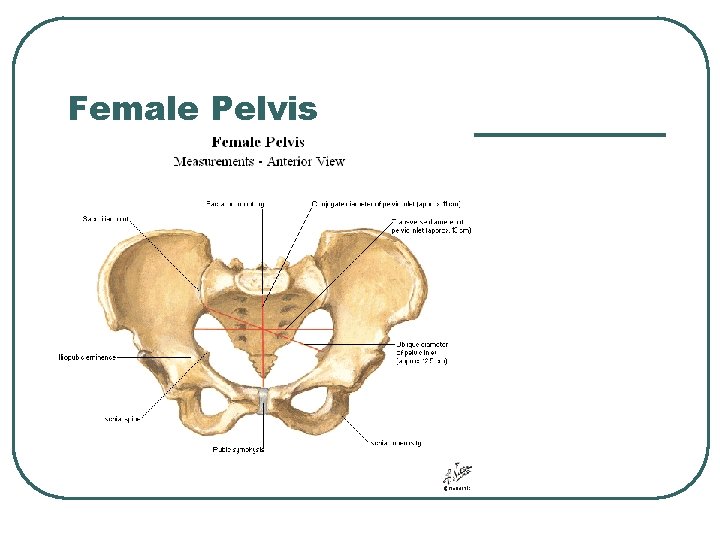
Female Pelvis
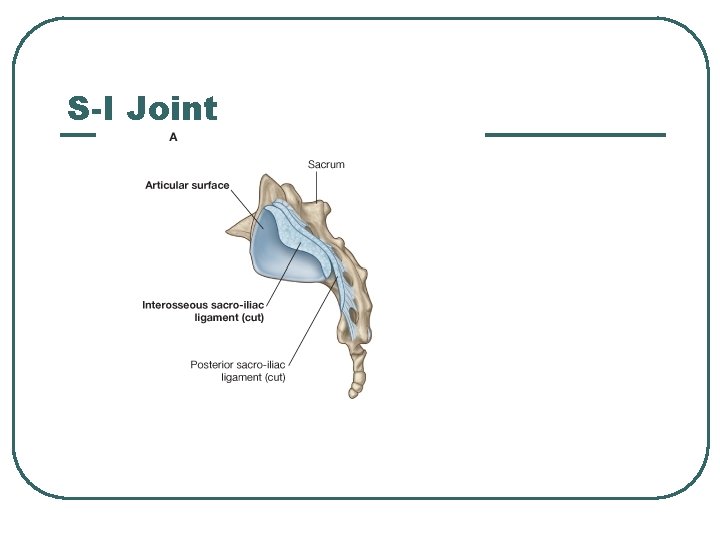
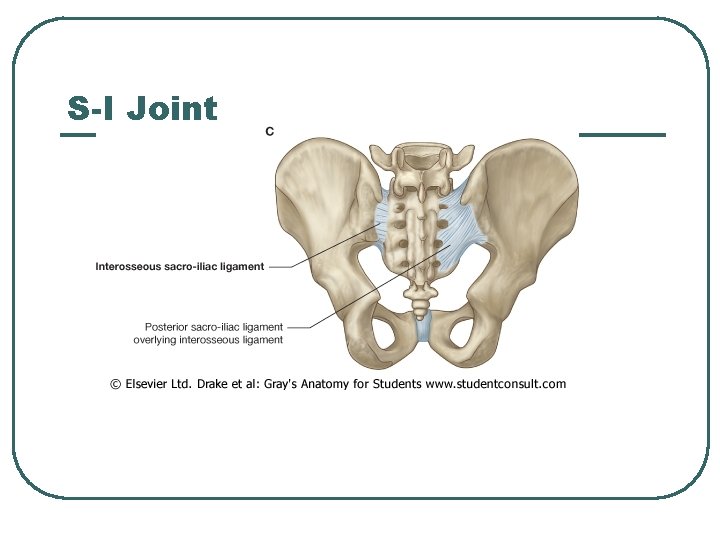
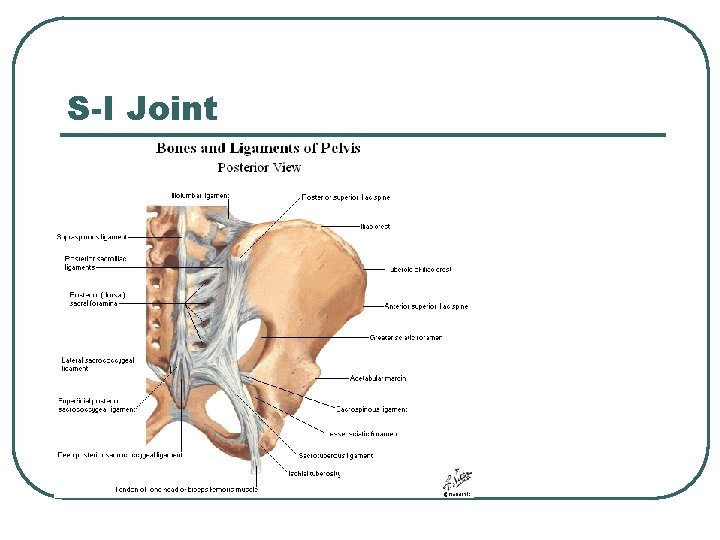
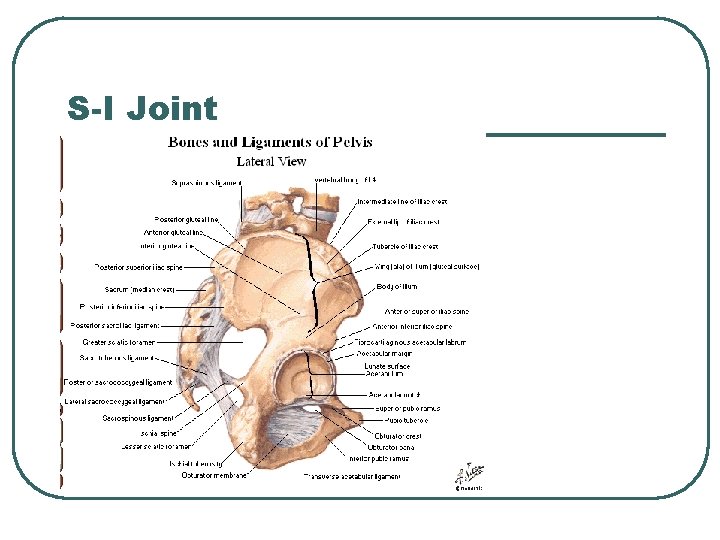
S-I l l l Auricular surface of ilium with auricular surface of sacrum-Little movement Joint under relatively constant pressure to rotate anteriorly based on anatomical design Upper part of joint is not synovial, is fibrous held in place by tough Interrosseous S-I ligaments – helps limit anterior motion
S-I Joint
S-I Joint
S-I Joint
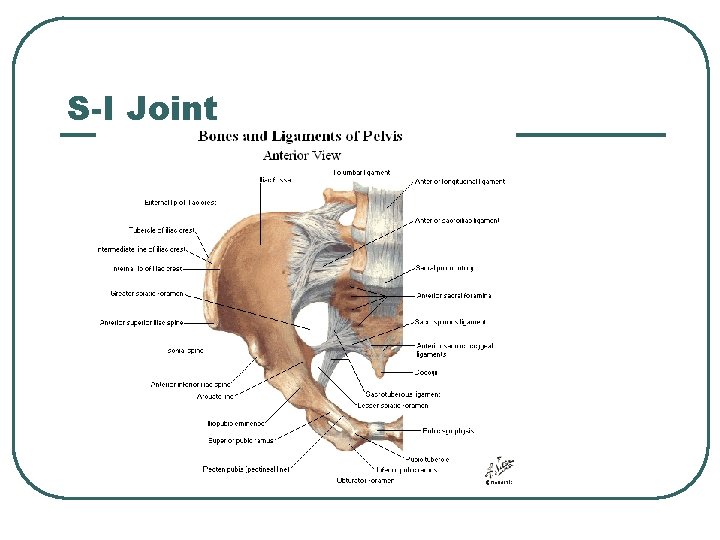
S-I – Synovial Aspect of Joint l l l Major Ligaments – mostly designed to prevent ant. motion Posterior S-I – runs down and medially from ilium to sacrum Iliolumbar – L 4 and 5 transverse processes to posterior iliac crest Anterior S-I – ilium to sacrum Sacrotuberous – iliac tuberosity and post. Surface of lower sacrum to ischial tuberosity Sacrospinous – lateral borders of lower sacrum and coccyx to attach to the spine of ischium
S-I Joint
S-I Joint
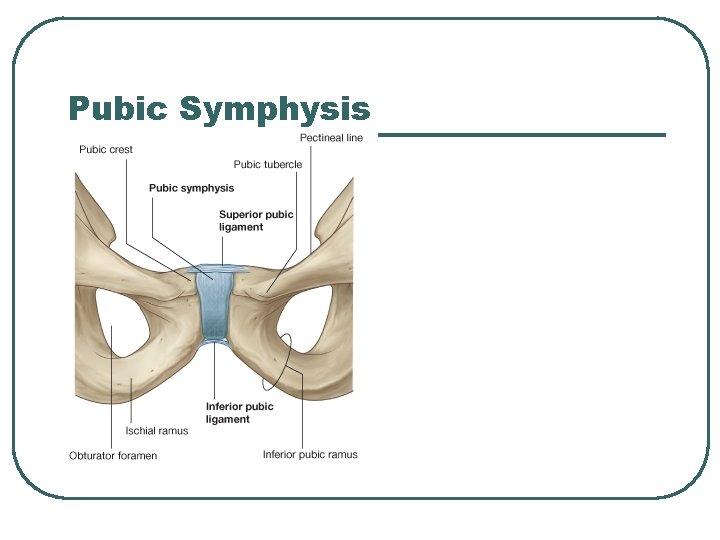
Pubic Symphysis l l l Anterior connection of pelvis Fibrocartilaginous joint Limited motion Motion increase dramatically during pregnancy, especially at the time of birth Similar increase in SI joint mobility at this time Superior and Inferior Pubic Ligaments
Pubic Symphysis
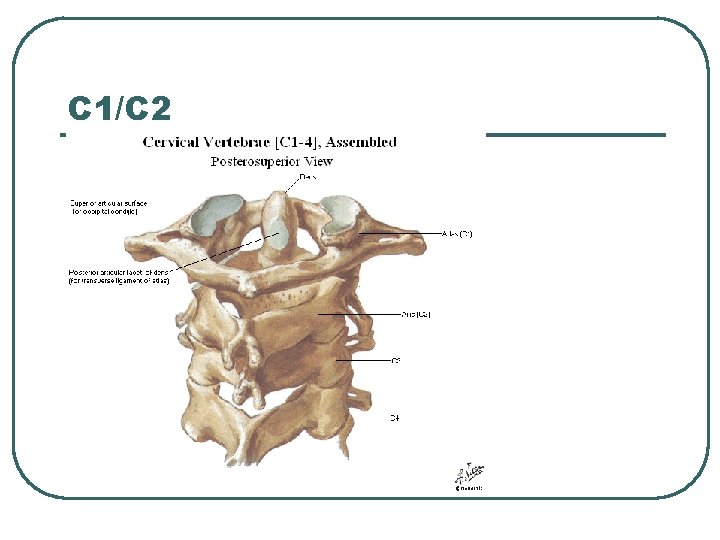
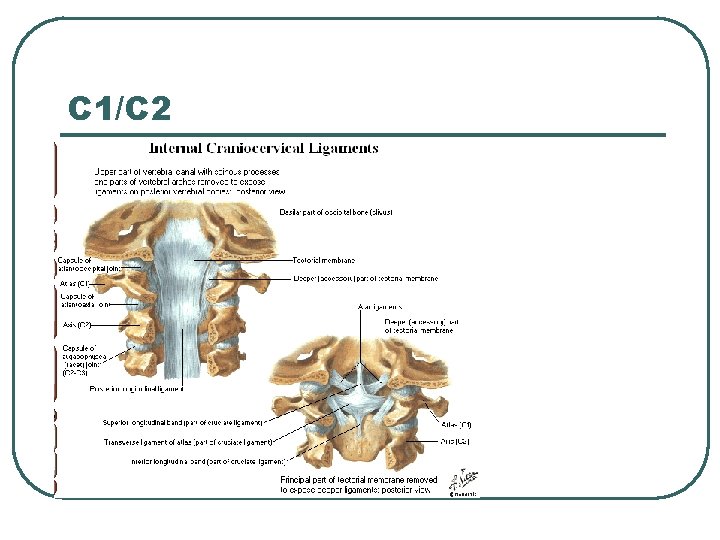
Atlanto-Axial Joint l l l Atlas and Axis Pivot Two convex superior facets of axis with two concave inferior facets of the atlas Atlas also posses a facet on the internal surface of the anterior arch which articulates with the dens of the axis Major ligaments from spine support – Ant. Atlanto-Occipital, Tectorial Membrane, Post. A-O
C 1/C 2
C 1/C 2
C 1/C 2
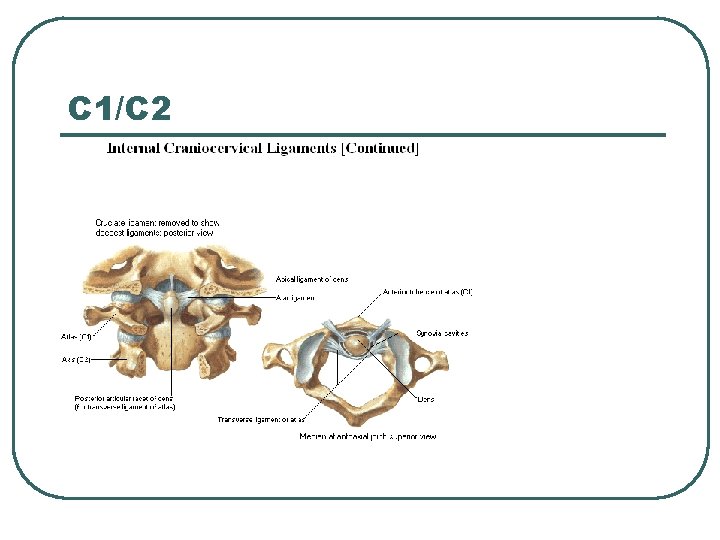
A-A Joint l l l Alar – from dens to occiput Transverse - around dens Cruciate • Sup. Longitudinal Band • Inferior Longitudinal Band • Transverse
Atlanto-Occipital Joint l l Two concave superior facets of atlas articulate with two convex surfaces of occipital condyles of the skull Supported by major ligaments Small saddle joint Very limited motion – nodding type motions in all directions.
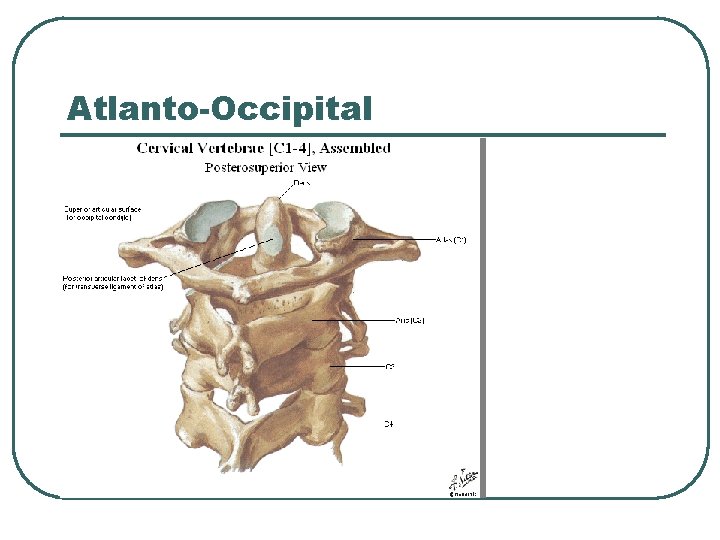
Atlanto-Occipital
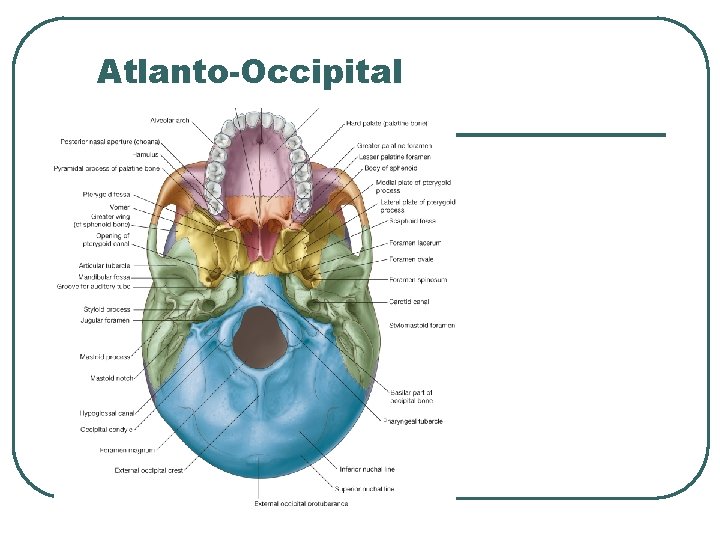
Atlanto-Occipital
- Slides: 75