
Vertebral Body Growth During Growing Rod Instrumentation Growth
Vertebral Body Growth During Growing Rod Instrumentation: Growth preservation or stimulation? Z. Deniz Olgun, Houman Ahmadiadli, Muharrem Yazici Hacettepe University, Ankara Hacettepe Orthopaedics Spine Unit
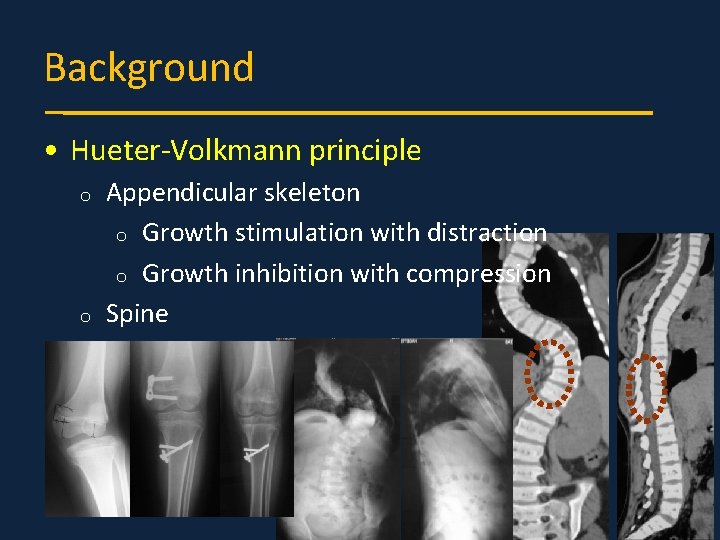
Background • Hueter-Volkmann principle o o Appendicular skeleton o Growth stimulation with distraction o Growth inhibition with compression Spine

Background Growing rod instrumentation and vertebral body growth. A radiological investigation in immature pigs Guney Yilmaz, Gokhan Demirkiran, Cenk Ozkan, Kenan Daglioglu, Gazi Huri, Muharrem Yazici Spine, In press Preop Index L 2 L 3 3 rd L 2 L 3
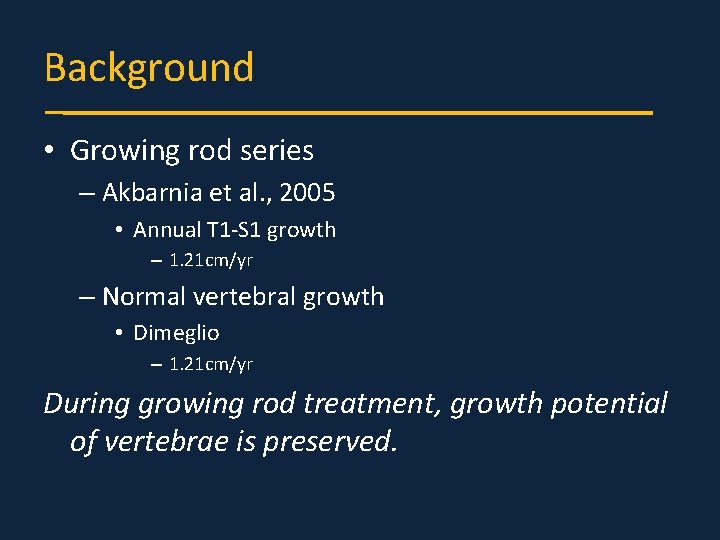
Background • Growing rod series – Akbarnia et al. , 2005 • Annual T 1 -S 1 growth – 1. 21 cm/yr – Normal vertebral growth • Dimeglio – 1. 21 cm/yr During growing rod treatment, growth potential of vertebrae is preserved.
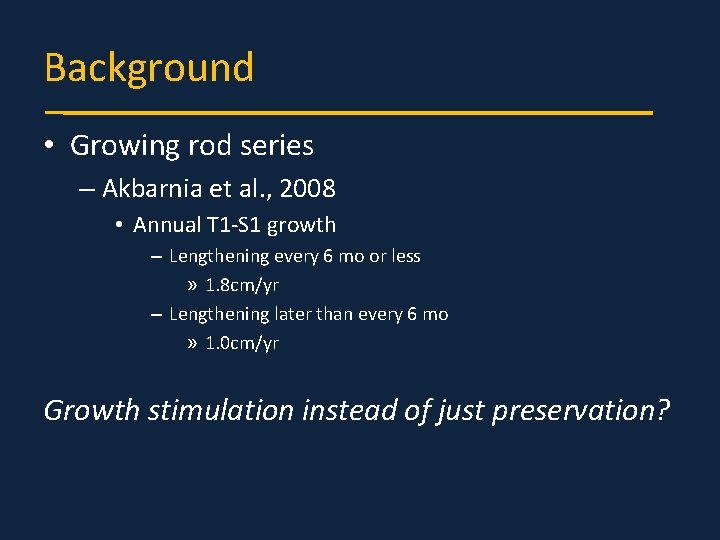
Background • Growing rod series – Akbarnia et al. , 2008 • Annual T 1 -S 1 growth – Lengthening every 6 mo or less » 1. 8 cm/yr – Lengthening later than every 6 mo » 1. 0 cm/yr Growth stimulation instead of just preservation?

Questions • Does routine lengthening every six months using the growing rod technique stimulate vertebral growth? • Is growth different between vertebral segments outside the instrumentation and vertebral segments that are spanned by the instrumentation rods but not instrumented themselves?
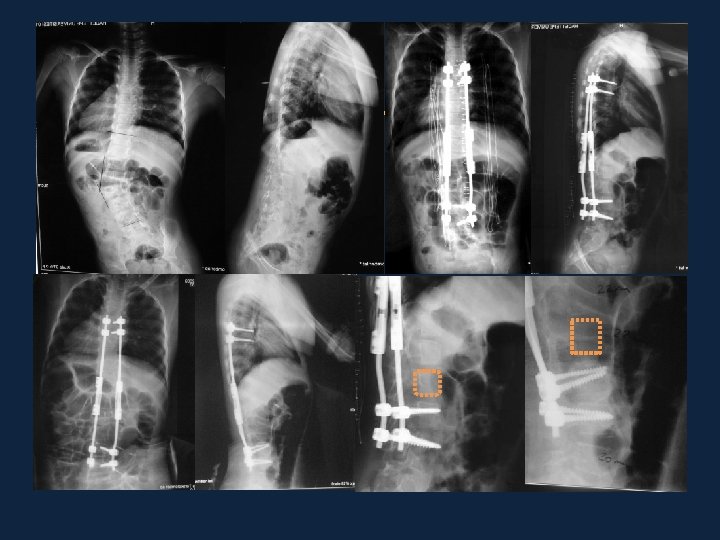
Material and Methods Near normal vertebral anatomy Instrumentation to L 3 -L 4 A minimum of 5 lengthening procedures undergone All lengthenings every six months regularly Only x-ray data which has appropriate scale information and clear digital images of these • Radiologic measurements • • • – Heights of selected vertebrae within instrumentation (WIL) and vertebral segments outside instrumentation (OIL) – Post-index and final follow-up – Difference in height
Results • 17 patients • Age @ index operation – 72. 6 months (38 -105) • # of lengthenings – 6. 6 (5 -9) • Measured levels: – WIL: L 1 (6), T 12(4), T 11 (3), T 7, T 9, T 11 – OIL: L 4 (9), L 2 and L 3 (3 each), L 5 (2)
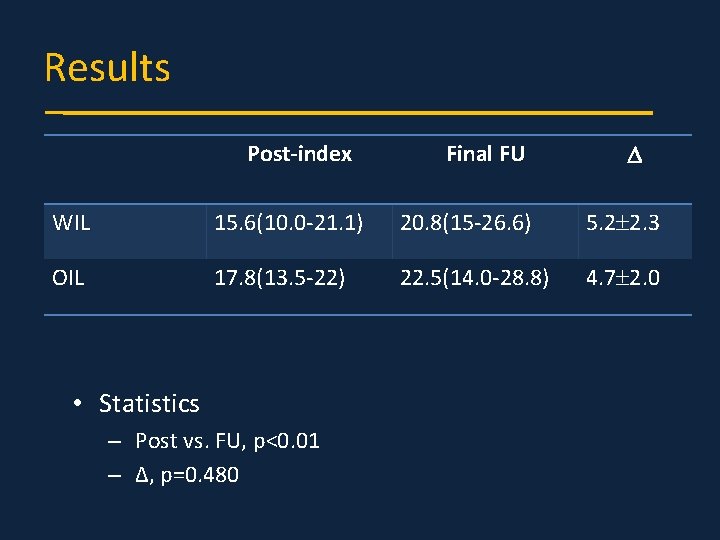
Results Post-index Final FU WIL 15. 6(10. 0 -21. 1) 20. 8(15 -26. 6) 5. 2 2. 3 OIL 17. 8(13. 5 -22) 22. 5(14. 0 -28. 8) 4. 7 2. 0 • Statistics – Post vs. FU, p<0. 01 – ∆, p=0. 480
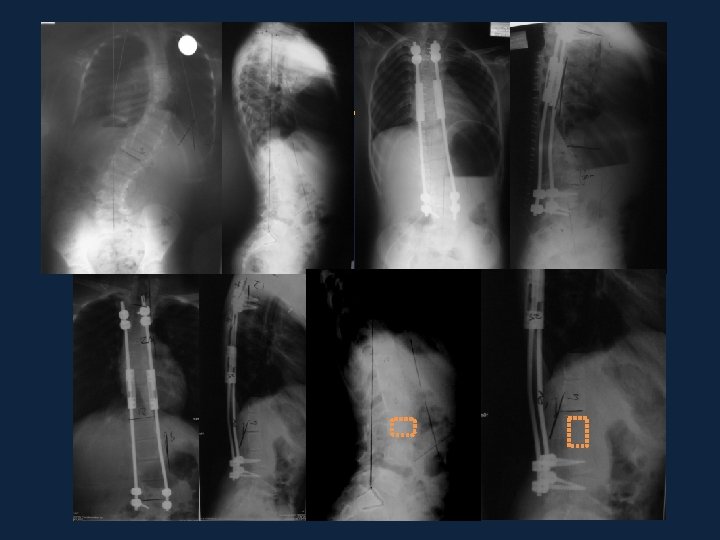
Conclusion • Normal growth – Dimeglio A, in Growing Spine , eds Akbarnia, Yazici, Thompson • Lumbar vertebrae grow faster than thoracic – 2 mm/year – 1 mm/year Lumbar vertebra and disc Thoracic vertebra and disc • Study group – Thoracic (distracted) vertebrae appear to have grown faster than lumbar (control) vertebrae!
Conclusion • Growth preservation – Definitely YES • Growth stimulation – Probably YES – Could not be proven with basic statistics – BUT needs appropriate coefficient • Need longer follow-up and a larger cohort
- Slides: 13