
Vermont Positive Behavior Interventions Supports Sample Staff Presentation
Vermont Positive Behavior Interventions & Supports Sample Staff Presentation
Objectives After this presentation you will have… • Learned about PBIS within a Multi-tiered Framework • Viewed examples of PBIS • Briefly explored PBIS at the Targeted and Intensive Levels • Had the opportunity to vote: –Yes; –Yes, with Reservations; or –No
What is your current knowledge about PBIS? I know a lot I know a little bit I’m just learning
Multi-tiered Systems Framework for Implementing Evidence-based Practices • Prevention-focused continuum of supports; • Data-based decision-making; • Regular universal screening and progress monitoring; • Systems change through effective professional development and coaching; • Effective team leadership; and • Research-validated practices for improving behavior and learning
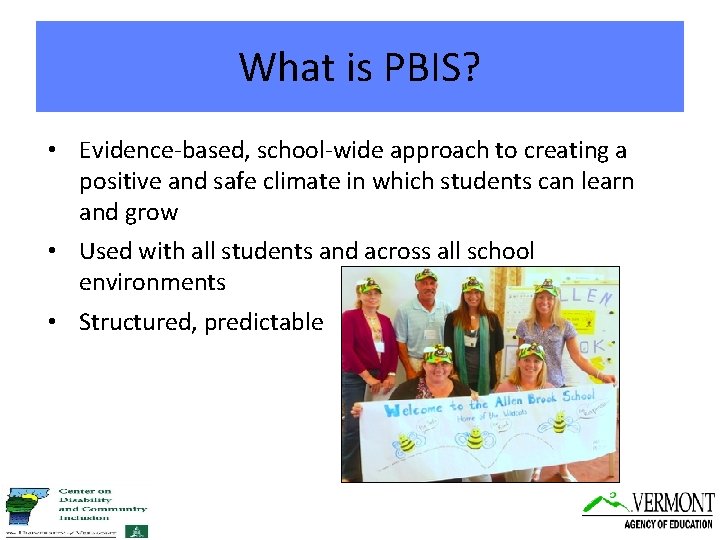
What is PBIS? • Evidence-based, school-wide approach to creating a positive and safe climate in which students can learn and grow • Used with all students and across all school environments • Structured, predictable
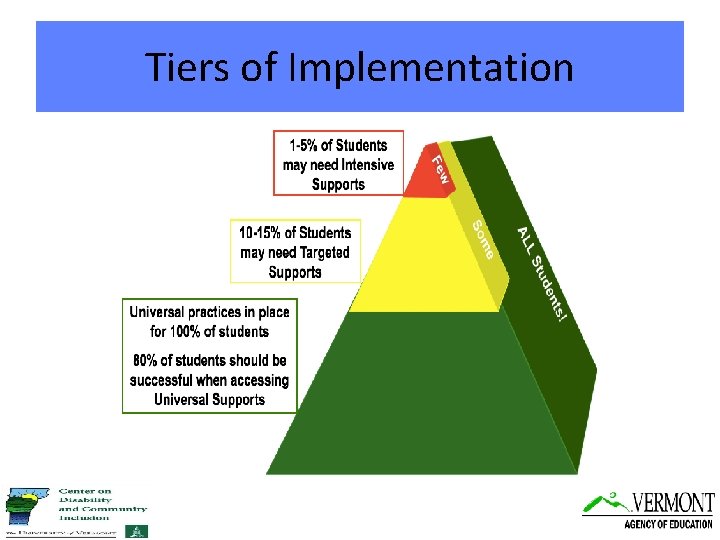
Tiers of Implementation
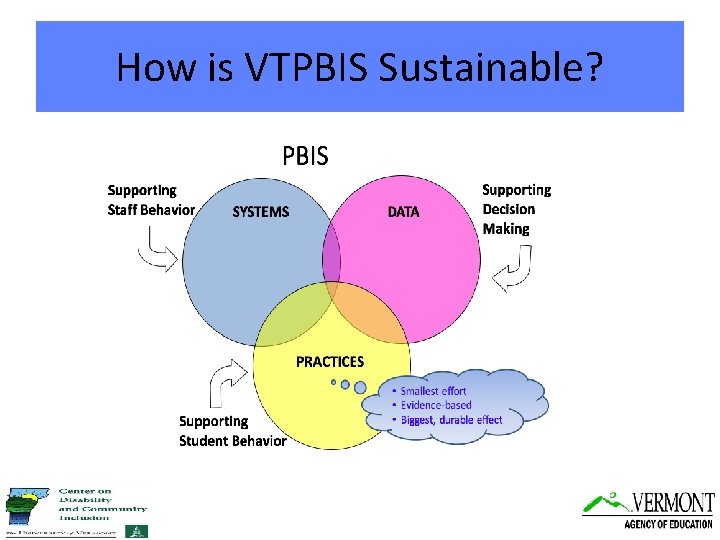
How is VTPBIS Sustainable?
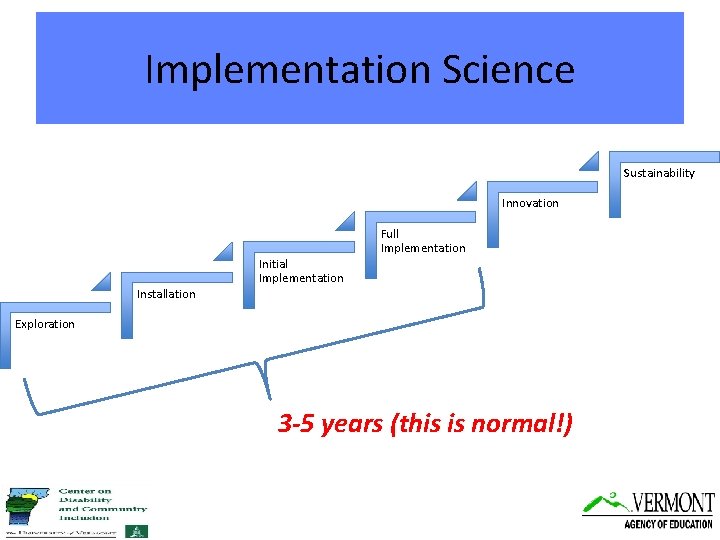
Implementation Science Sustainability Innovation Full Implementation Initial Implementation Installation Exploration 3 -5 years (this is normal!)
Infusing Restorative Principles The Restorative Approach is about: • • Voluntary Participation Exploring Relationships Meaningful Engagement Participatory Decision-Making The VTPBIS State Team is actively working to infuse restorative principles into our PBIS work. We hope you’ll agree they enhance the PBIS work and made it more engaging and meaningful for staff and students.
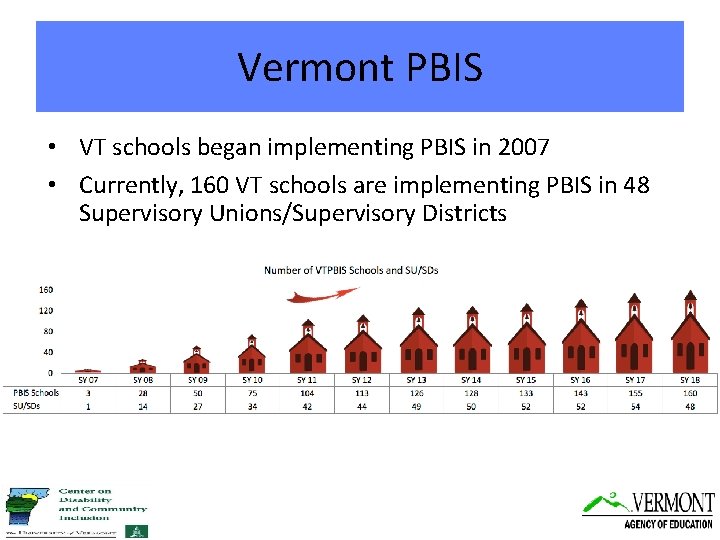
Vermont PBIS • VT schools began implementing PBIS in 2007 • Currently, 160 VT schools are implementing PBIS in 48 Supervisory Unions/Supervisory Districts
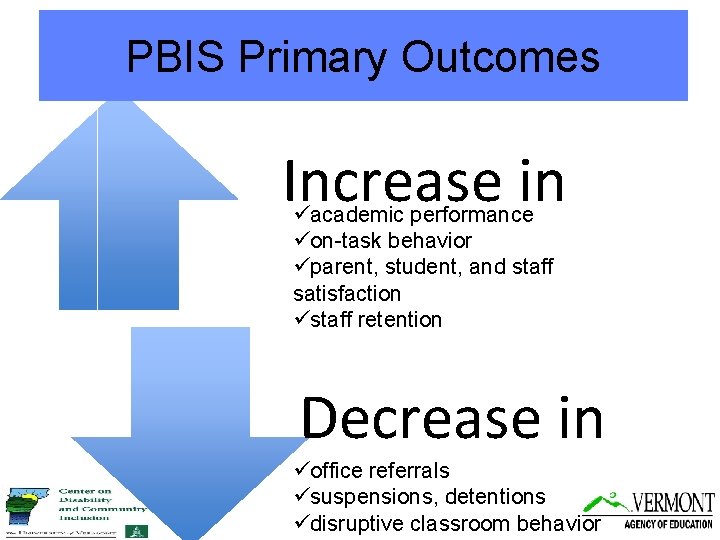
PBIS Primary Outcomes Increase in üacademic performance üon-task behavior üparent, student, and staff satisfaction üstaff retention Decrease in üoffice referrals üsuspensions, detentions üdisruptive classroom behavior
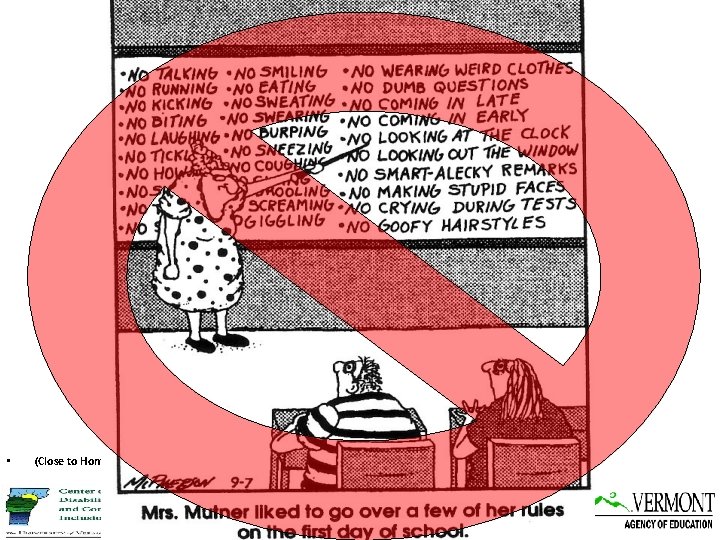
• (Close to Home c Reprinted with permission of Universal Press Syndicate. All rights reserved. )
Why PBIS? When a student. . . • Doesn’t know how to read – what do we do? When a student WE TEACH. doesn’t know how • Doesn’t know how to add – what do we do? to behave – what do we do? WE TEACH. • Doesn’t know how to swim – what do we do? What can we do? WE TEACH. • Doesn’t know how to drive – what do we do? WE TEACH.
Who is responsible for PBIS in Schools? • PBIS team made up of school staff (ex: principal, general educators, special educators, school counselors, cafeteria workers, etc. ) who develop and carry out school-wide PBIS • Schools appoint in-school and district-level PBIS coordinators • Parents may also be members of school-wide team
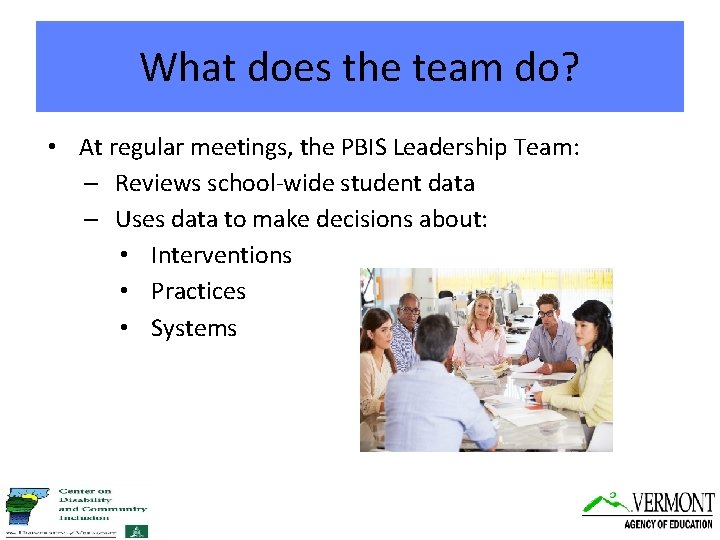
What does the team do? • At regular meetings, the PBIS Leadership Team: – Reviews school-wide student data – Uses data to make decisions about: • Interventions • Practices • Systems
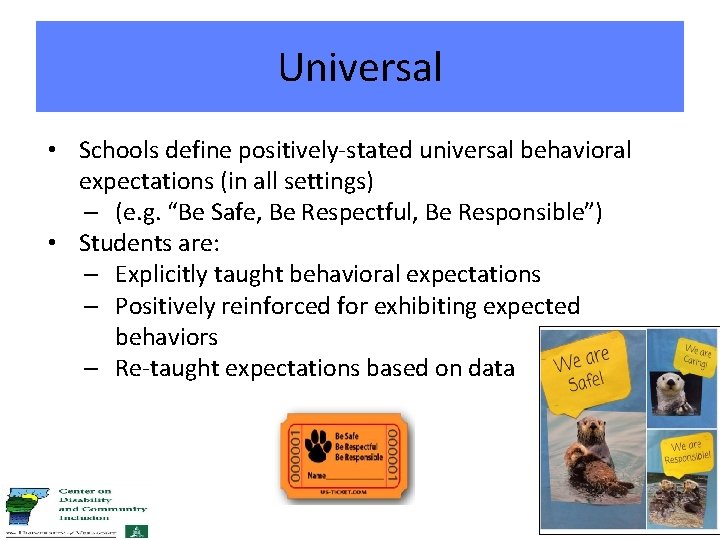
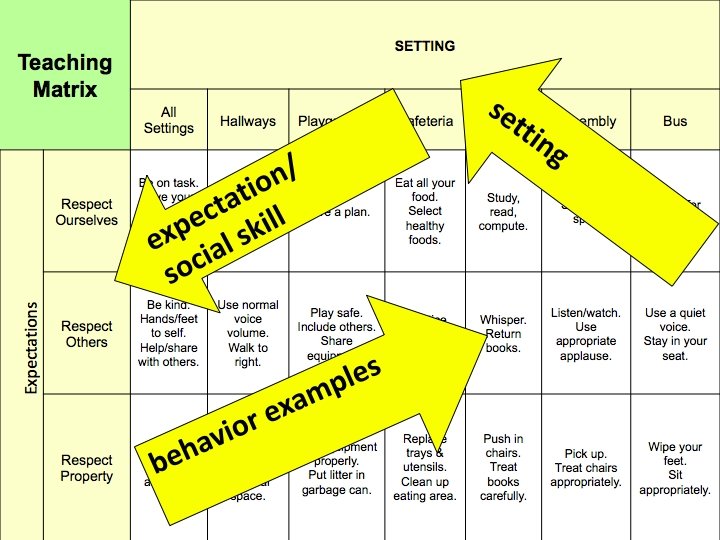
Universal • Schools define positively-stated universal behavioral expectations (in all settings) – (e. g. “Be Safe, Be Respectful, Be Responsible”) • Students are: – Explicitly taught behavioral expectations – Positively reinforced for exhibiting expected behaviors – Re-taught expectations based on data
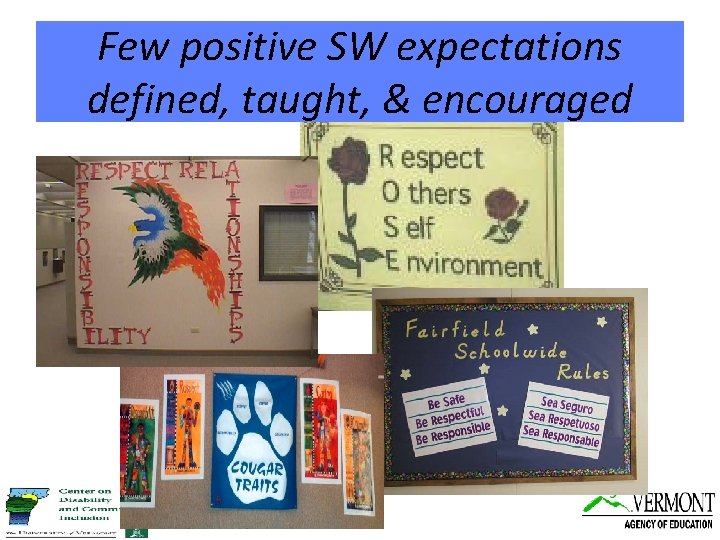
Few positive SW expectations defined, taught, & encouraged
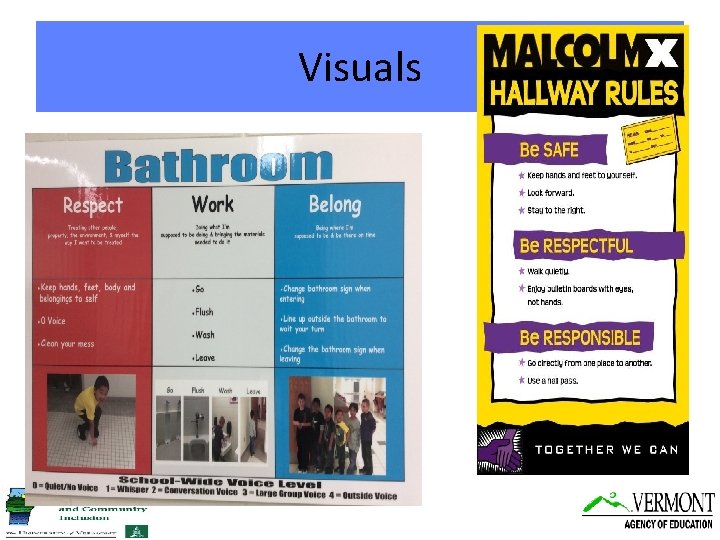
Visuals
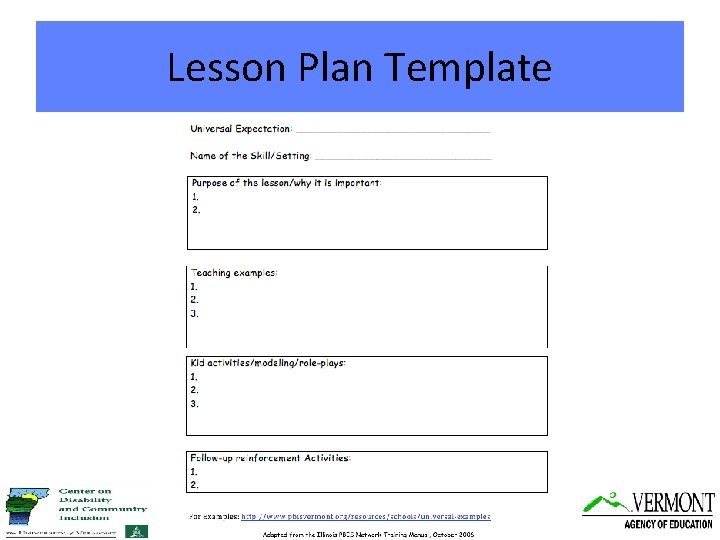
Lesson Plan Template
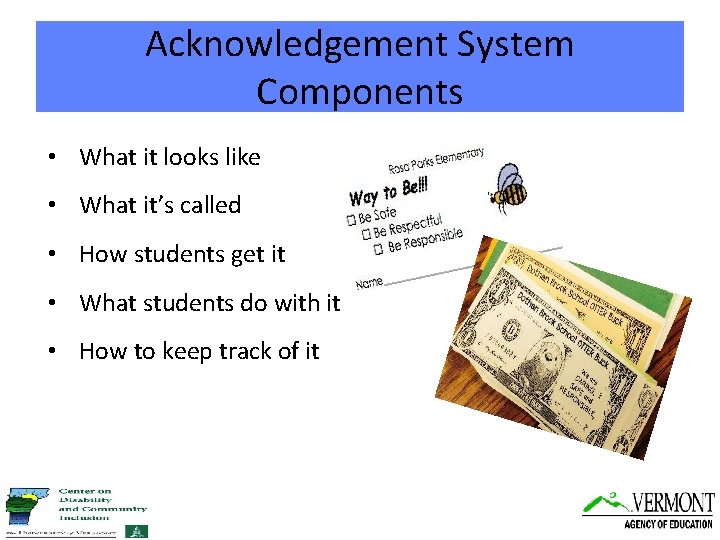
Acknowledgement System Components • What it looks like • What it’s called • How students get it • What students do with it • How to keep track of it
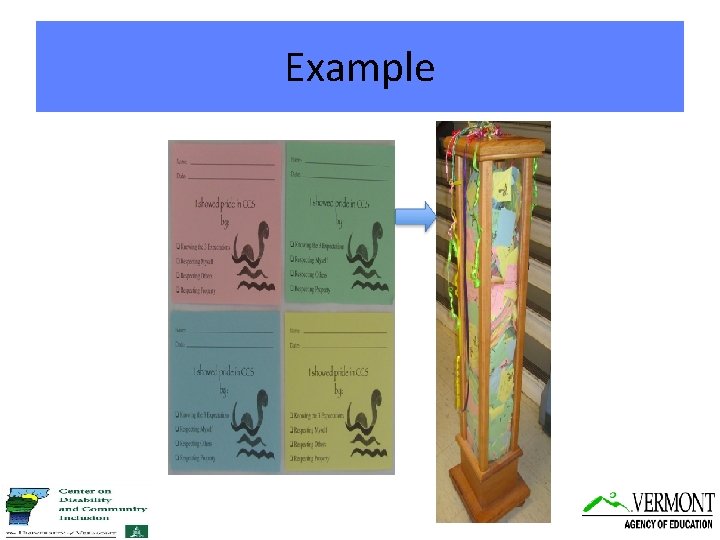
Example
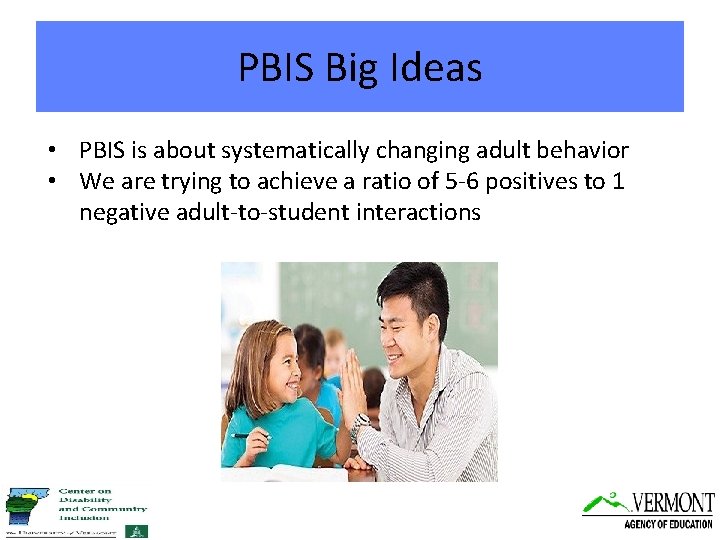
PBIS Big Ideas • PBIS is about systematically changing adult behavior • We are trying to achieve a ratio of 5 -6 positives to 1 negative adult-to-student interactions
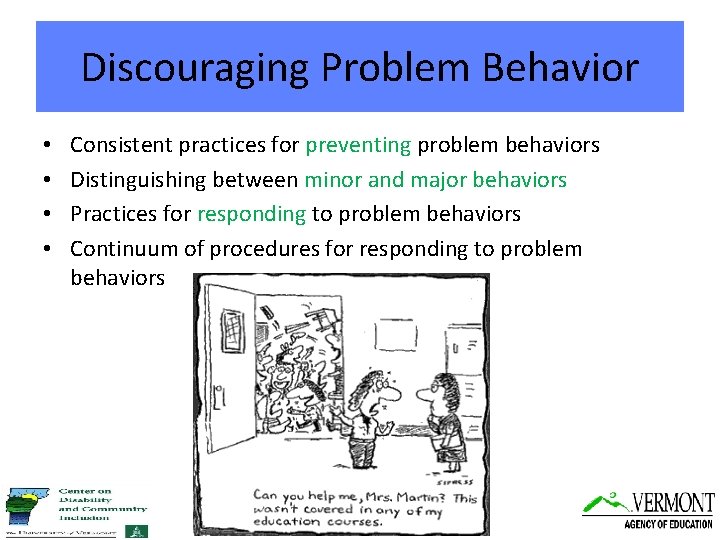
Discouraging Problem Behavior • • Consistent practices for preventing problem behaviors Distinguishing between minor and major behaviors Practices for responding to problem behaviors Continuum of procedures for responding to problem behaviors
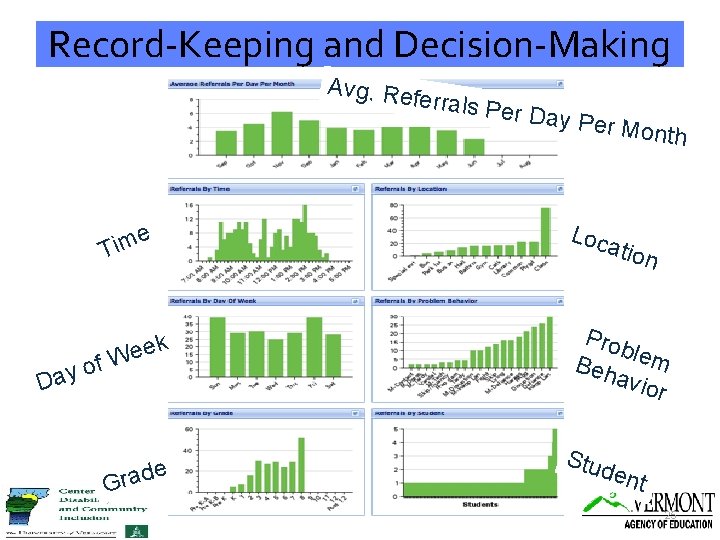
Record-Keeping and Decision-Making Avg. Re ferrals P e m i T f o y Da k Wee G rade er Day P er Month Loc atio n Pro b Beh lem avio r Stud ent 25
What should you expect to hear/see in a PBIS School (at the Universal level)? 80% of students can tell you the school-wide expectations and can say that they have been rewarded for following them 80% of staff can tell you the school-wide expectations and can say they have acknowledged students for following them School staff have taught the school-wide expectations to all students Positive adult-to-student interactions exceed negative
What should you expect to hear/see in a PBIS School? School staff agree on which behaviors involve a referral to the office The school has a leadership team that is representative of school staff and includes an administrator Function based behavior support is foundation for addressing problem behavior Data & team-based action planning & implementation are operating
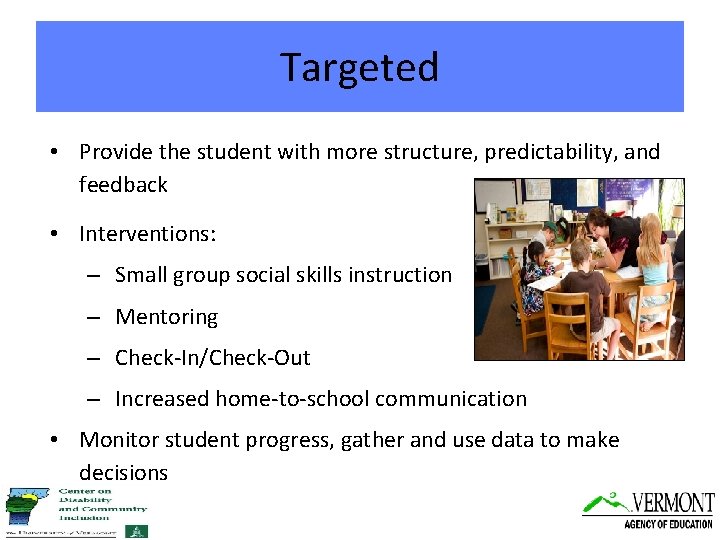
Targeted • Provide the student with more structure, predictability, and feedback • Interventions: – Small group social skills instruction – Mentoring – Check-In/Check-Out – Increased home-to-school communication • Monitor student progress, gather and use data to make decisions
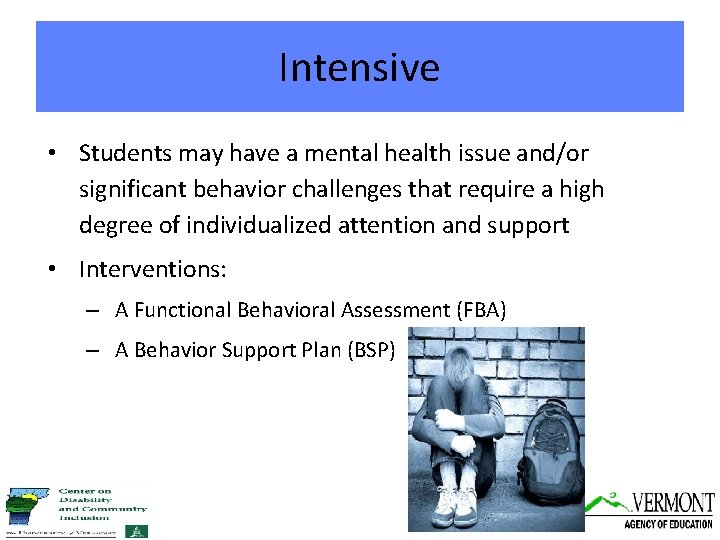
Intensive • Students may have a mental health issue and/or significant behavior challenges that require a high degree of individualized attention and support • Interventions: – A Functional Behavioral Assessment (FBA) – A Behavior Support Plan (BSP)
Voting by Ballot – Yes; – Yes, with Reservations; or – No
Resources • National Center on Positive Behavior Interventions and Supports: http: //www. pbis. org: The Center assists states in implementing schoolwide PBIS to improve problem behavior and enhance learning environments • VTPBIS Leadership Team: http: //www. PBi. Svermont. org: Look here for more information about PBIS in VT schools including steps to getting started and upcoming trainings
Resources • Association for Positive Behavioral Support: http: //www. APBS. org: The Association for Positive Behavior Support is an international organization dedicated to the advancement of positive behavior support • Vermont Family Network (VFN) 1 -800 -4005: http: //www. vermontfamilynetwork. org: VFN is a family support and advocacy organization. Staff can answer questions about your child’s behavior, PBIS, and parent involvement in the PBIS process
- Slides: 32