
Vericrustacea Protura Coneheads Collembola Springtails Diplura Twopronged Bristletails
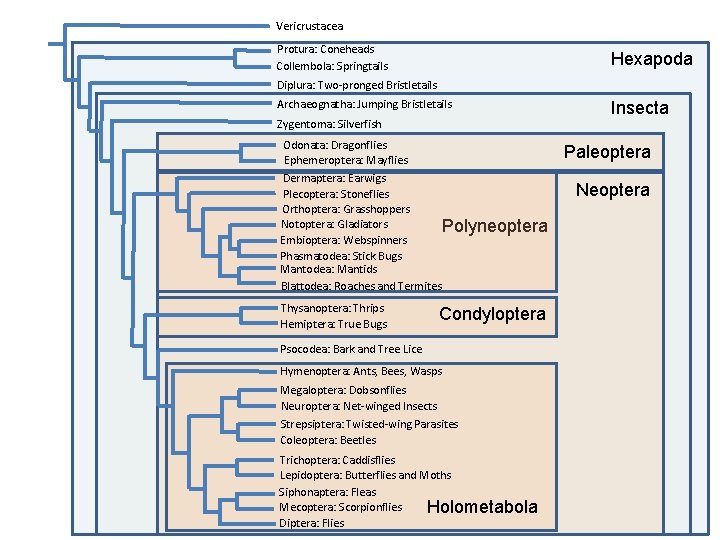
Vericrustacea Protura: Coneheads Collembola: Springtails Diplura: Two-pronged Bristletails Archaeognatha: Jumping Bristletails Zygentoma: Silverfish Odonata: Dragonflies Ephemeroptera: Mayflies Dermaptera: Earwigs Plecoptera: Stoneflies Orthoptera: Grasshoppers Notoptera: Gladiators Polyneoptera Embioptera: Webspinners Phasmatodea: Stick Bugs Mantodea: Mantids Blattodea: Roaches and Termites Thysanoptera: Thrips Condyloptera Hemiptera: True Bugs Psocodea: Bark and Tree Lice Hymenoptera: Ants, Bees, Wasps Megaloptera: Dobsonflies Neuroptera: Net-winged Insects Strepsiptera: Twisted-wing Parasites Coleoptera: Beetles Trichoptera: Caddisflies Lepidoptera: Butterflies and Moths Siphonaptera: Fleas Mecoptera: Scorpionflies Holometabola Diptera: Flies Hexapoda Insecta Paleoptera Neoptera

ORDER: Hemiptera – True Bugs, hoppers, aphids Sucking mouthparts, used to suck plant juices or blood, or to stab prey

ORDER: Hemiptera – True Bugs, Hoppers, Aphids Sucking mouthparts, used to suck plant juices or blood, or to stab prey

ORDER: Hemiptera – True Bugs, Hoppers, Aphids Sucking mouthparts, used to suck plant juices or blood, or to stab prey

ORDER: Hemiptera – True Bugs, Hoppers, Aphids - Suborder: Auchenorrhyncha - antennae on side of head beneath eyes - scale over front wingbase usually present (tegula)

ORDER: Hemiptera – True Bugs, Hoppers, Aphids - Suborder: Auchenorrhyncha - antennae on side of head beneath eyes - scale over front wingbase usually present (tegula) 14. Delphacidae – Plant Hoppers - flattened spur at apex of hind tibia
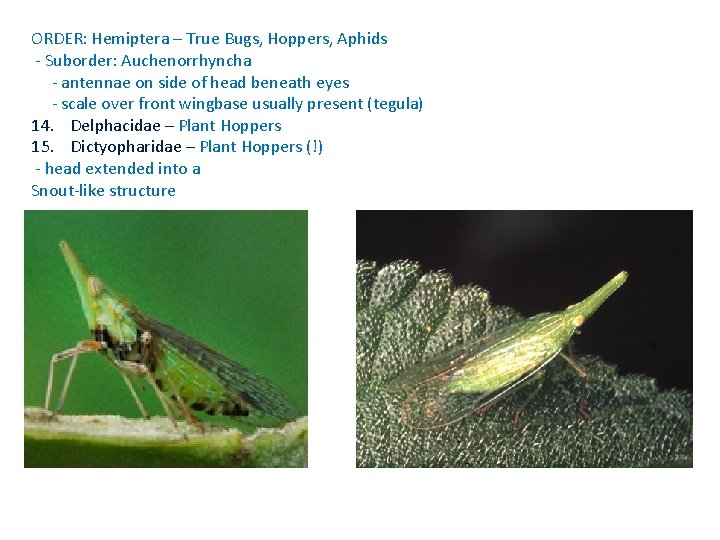
ORDER: Hemiptera – True Bugs, Hoppers, Aphids - Suborder: Auchenorrhyncha - antennae on side of head beneath eyes - scale over front wingbase usually present (tegula) 14. Delphacidae – Plant Hoppers 15. Dictyopharidae – Plant Hoppers (!) - head extended into a Snout-like structure

ORDER: Hemiptera – True Bugs, Hoppers, Aphids - Suborder: Auchenorrhyncha - antennae on side of head beneath eyes - scale over front wingbase usually present (tegula) 14. Delphacidae – Plant Hoppers 15. Dictyopharidae – Plant Hoppers (!) 16. Cicadidae – Cicadas (157) - 3 ocelli - often large, but can be smaller, too song Periodic cicada (Magicicada) ‘dog day’ cicada song

ORDER: Hemiptera – True Bugs, Hoppers, Aphids - Suborder: Auchenorrhyncha - antennae on side of head beneath eyes - scale over front wingbase usually present (tegula) 14. Delphacidae – Plant Hoppers 15. Dictyopharidae – Plant Hoppers (!) 16. Cicadidae – Cicadas 17. Membracidae – Treehoppers - large pronotum that covers the thorax and abdomen


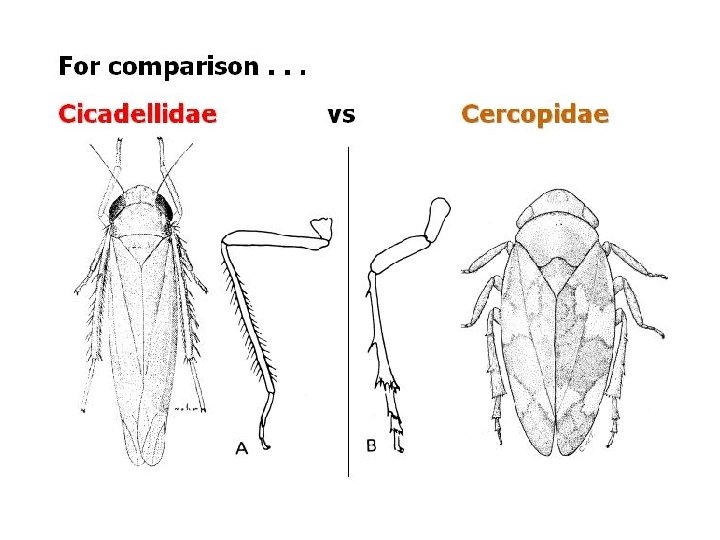
ORDER: Hemiptera – True Bugs, Hoppers, Aphids - Suborder: Auchenorrhyncha - antennae on side of head beneath eyes - scale over front wingbase usually present (tegula) 14. Delphacidae – Plant Hoppers 15. Dictyopharidae – Plant Hoppers (!) - antennae in front of head between eyes 16. Cicadidae – Cicadas 17. Membracidae – Treehoppers 18. Cicadellidae – Leafhoppers (2500) - two rows of spines on hind tibia

ORDER: Hemiptera – True Bugs, Hoppers, Aphids - Suborder: Auchenorrhyncha - antennae on side of head beneath eyes - scale over front wingbase usually present (tegula) 14. Delphacidae – Plant Hoppers 15. Dictyopharidae – Plant Hoppers (!) - antennae in front of head between eyes 16. Cicadidae – Cicadas 17. Membracidae – Treehoppers 18. Cicadellidae – Leafhoppers 19. Cercopidae – Froghoppers / Spittlebugs - hind tibia with a couple spines laterally and short spines at tip
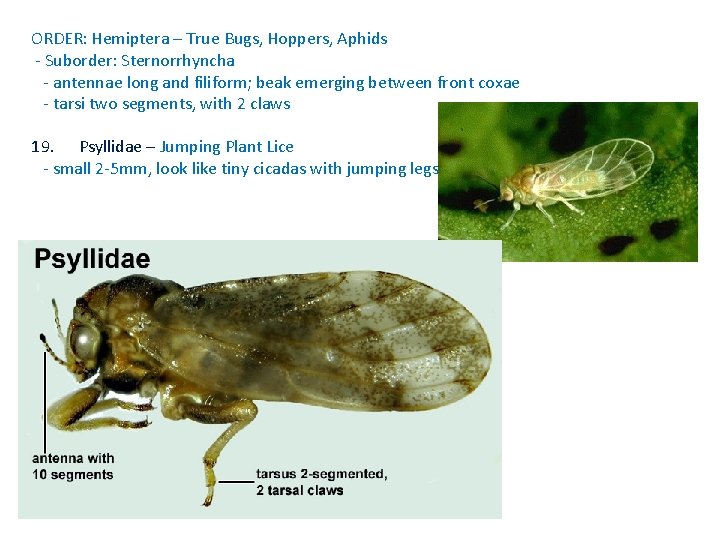
ORDER: Hemiptera – True Bugs, Hoppers, Aphids - Suborder: Sternorrhyncha - antennae long and filiform; beak emerging between front coxae - tarsi two segments, with 2 claws 19. Psyllidae – Jumping Plant Lice - small 2 -5 mm, look like tiny cicadas with jumping legs
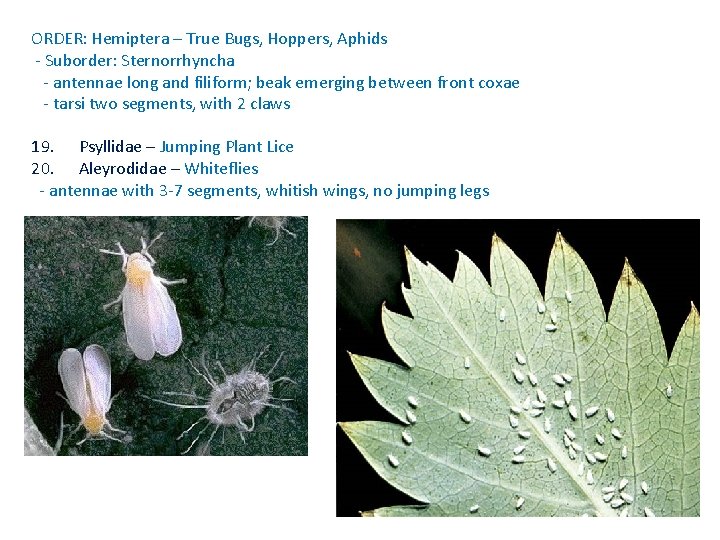
ORDER: Hemiptera – True Bugs, Hoppers, Aphids - Suborder: Sternorrhyncha - antennae long and filiform; beak emerging between front coxae - tarsi two segments, with 2 claws 19. Psyllidae – Jumping Plant Lice 20. Aleyrodidae – Whiteflies - antennae with 3 -7 segments, whitish wings, no jumping legs
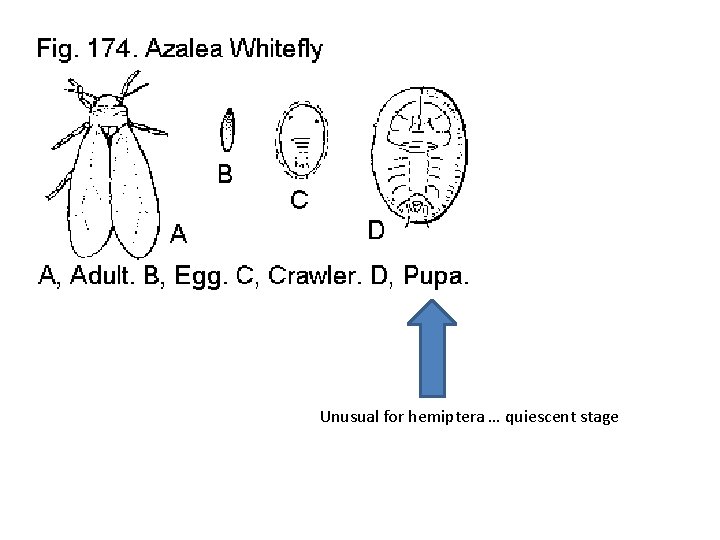
Unusual for hemiptera … quiescent stage
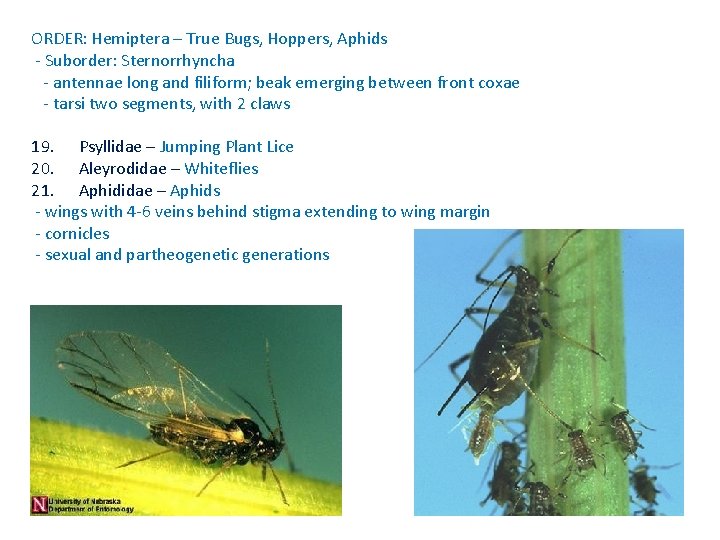
ORDER: Hemiptera – True Bugs, Hoppers, Aphids - Suborder: Sternorrhyncha - antennae long and filiform; beak emerging between front coxae - tarsi two segments, with 2 claws 19. Psyllidae – Jumping Plant Lice 20. Aleyrodidae – Whiteflies 21. Aphididae – Aphids - wings with 4 -6 veins behind stigma extending to wing margin - cornicles - sexual and partheogenetic generations

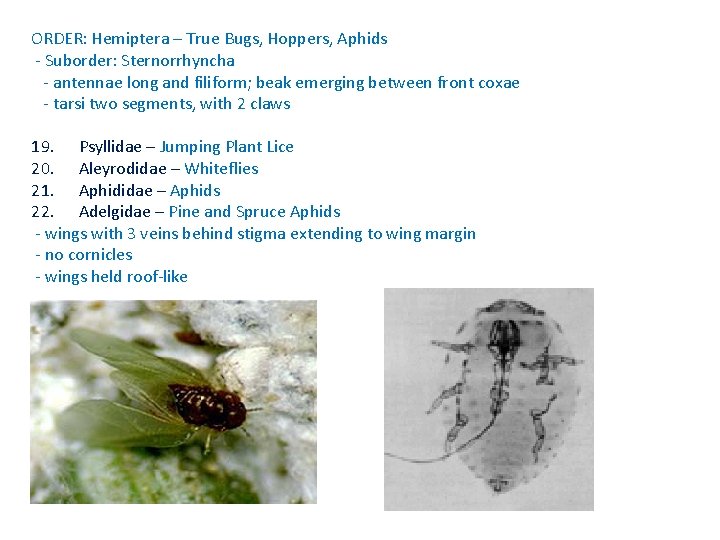
ORDER: Hemiptera – True Bugs, Hoppers, Aphids - Suborder: Sternorrhyncha - antennae long and filiform; beak emerging between front coxae - tarsi two segments, with 2 claws 19. Psyllidae – Jumping Plant Lice 20. Aleyrodidae – Whiteflies 21. Aphididae – Aphids 22. Adelgidae – Pine and Spruce Aphids - wings with 3 veins behind stigma extending to wing margin - no cornicles - wings held roof-like
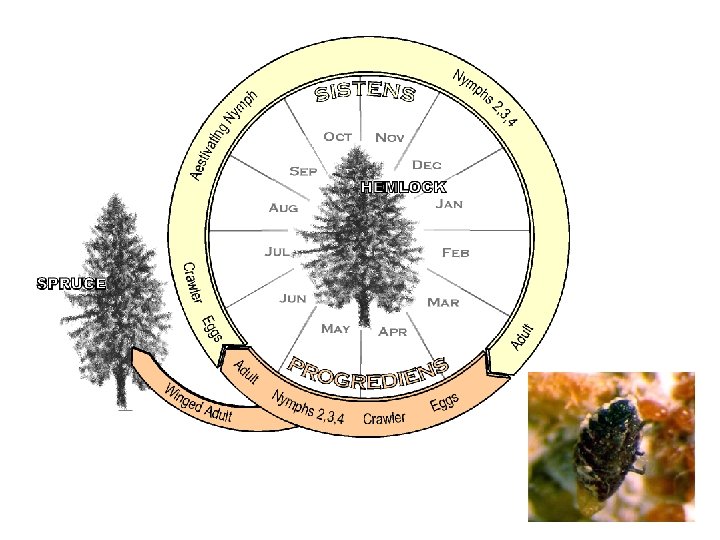
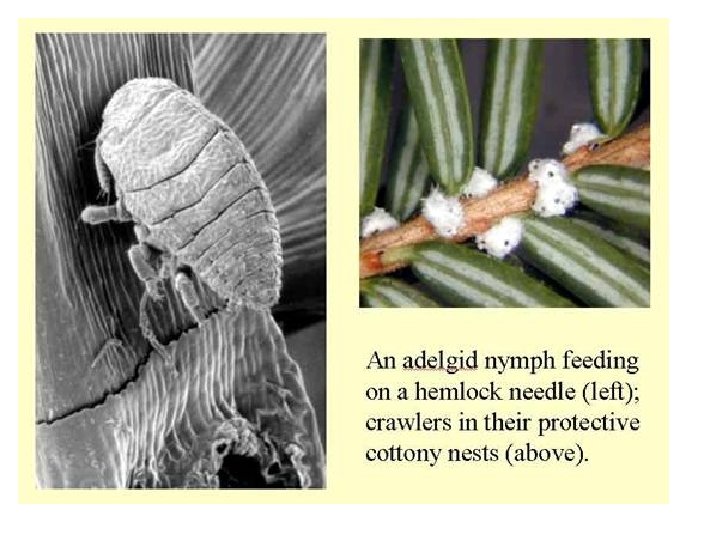
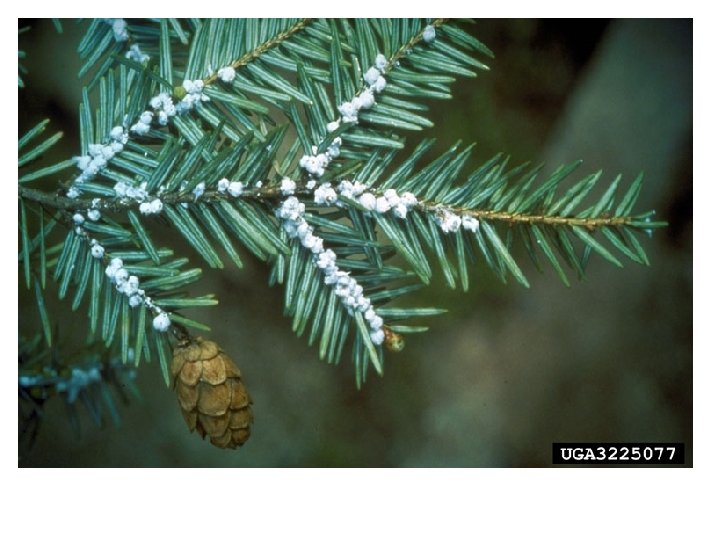
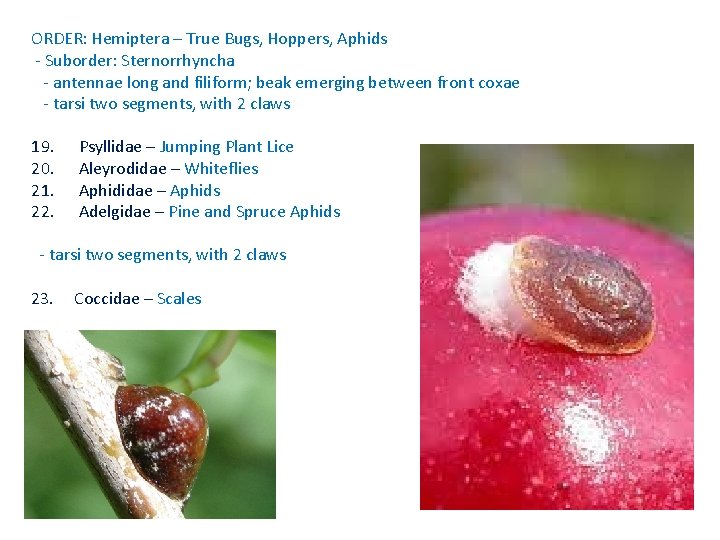
ORDER: Hemiptera – True Bugs, Hoppers, Aphids - Suborder: Sternorrhyncha - antennae long and filiform; beak emerging between front coxae - tarsi two segments, with 2 claws 19. Psyllidae – Jumping Plant Lice 20. Aleyrodidae – Whiteflies 21. Aphididae – Aphids 22. Adelgidae – Pine and Spruce Aphids - tarsi two segments, with 2 claws 23. Coccidae – Scales
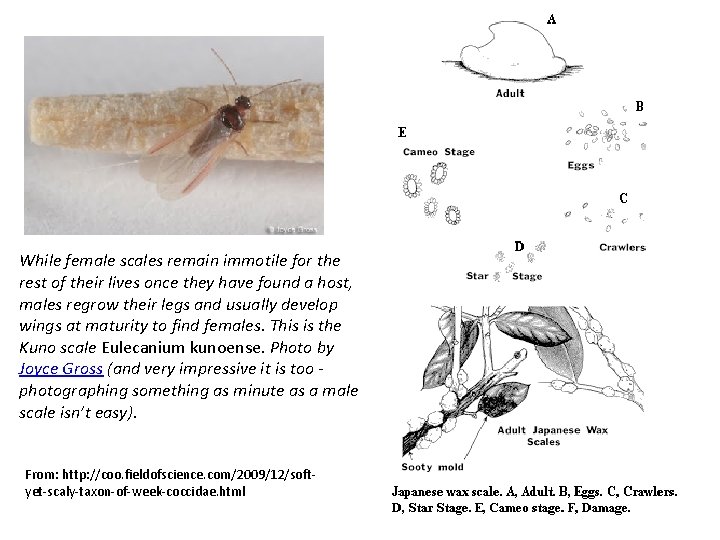
While female scales remain immotile for the rest of their lives once they have found a host, males regrow their legs and usually develop wings at maturity to find females. This is the Kuno scale Eulecanium kunoense. Photo by Joyce Gross (and very impressive it is too photographing something as minute as a male scale isn’t easy). From: http: //coo. fieldofscience. com/2009/12/softyet-scaly-taxon-of-week-coccidae. html
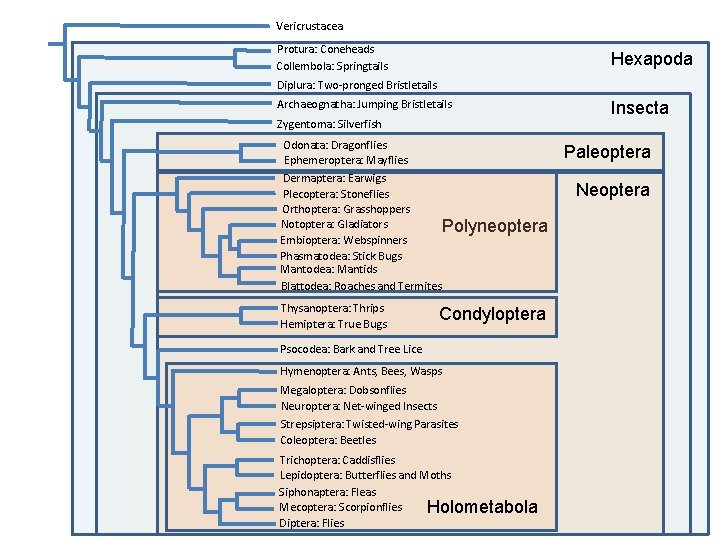
Vericrustacea Protura: Coneheads Collembola: Springtails Diplura: Two-pronged Bristletails Archaeognatha: Jumping Bristletails Zygentoma: Silverfish Odonata: Dragonflies Ephemeroptera: Mayflies Dermaptera: Earwigs Plecoptera: Stoneflies Orthoptera: Grasshoppers Notoptera: Gladiators Polyneoptera Embioptera: Webspinners Phasmatodea: Stick Bugs Mantodea: Mantids Blattodea: Roaches and Termites Thysanoptera: Thrips Condyloptera Hemiptera: True Bugs Psocodea: Bark and Tree Lice Hymenoptera: Ants, Bees, Wasps Megaloptera: Dobsonflies Neuroptera: Net-winged Insects Strepsiptera: Twisted-wing Parasites Coleoptera: Beetles Trichoptera: Caddisflies Lepidoptera: Butterflies and Moths Siphonaptera: Fleas Mecoptera: Scorpionflies Holometabola Diptera: Flies Hexapoda Insecta Paleoptera Neoptera
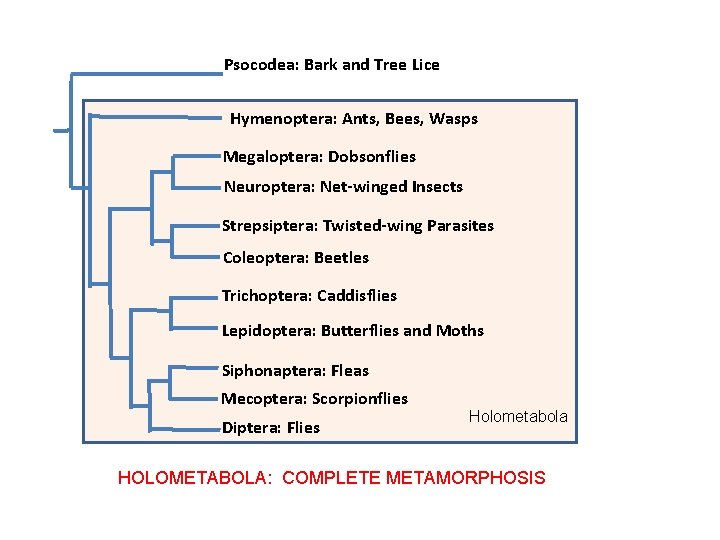
Psocodea: Bark and Tree Lice Hymenoptera: Ants, Bees, Wasps Megaloptera: Dobsonflies Neuroptera: Net-winged Insects Strepsiptera: Twisted-wing Parasites Coleoptera: Beetles Trichoptera: Caddisflies Lepidoptera: Butterflies and Moths Siphonaptera: Fleas Mecoptera: Scorpionflies Diptera: Flies Holometabola HOLOMETABOLA: COMPLETE METAMORPHOSIS
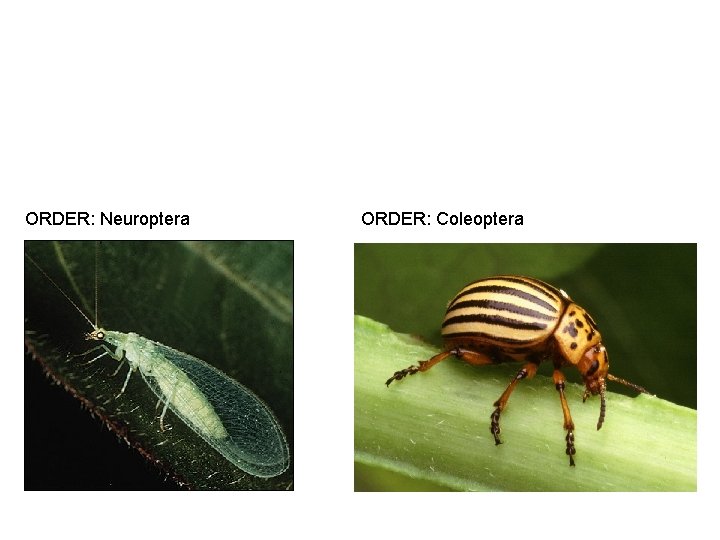
ORDER: Neuroptera ORDER: Coleoptera
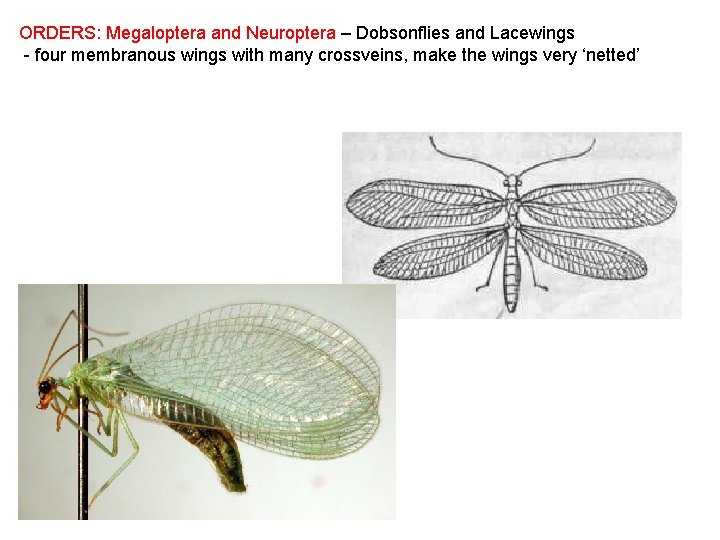
ORDERS: Megaloptera and Neuroptera – Dobsonflies and Lacewings - four membranous wings with many crossveins, make the wings very ‘netted’
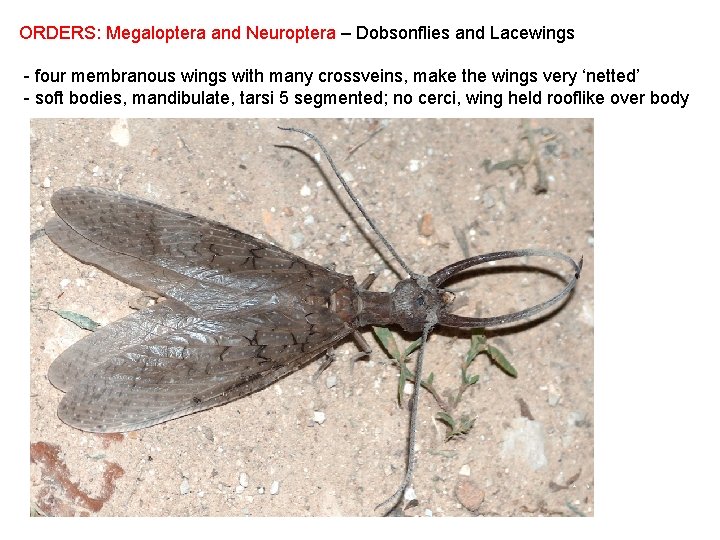
ORDERS: Megaloptera and Neuroptera – Dobsonflies and Lacewings - four membranous wings with many crossveins, make the wings very ‘netted’ - soft bodies, mandibulate, tarsi 5 segmented; no cerci, wing held rooflike over body
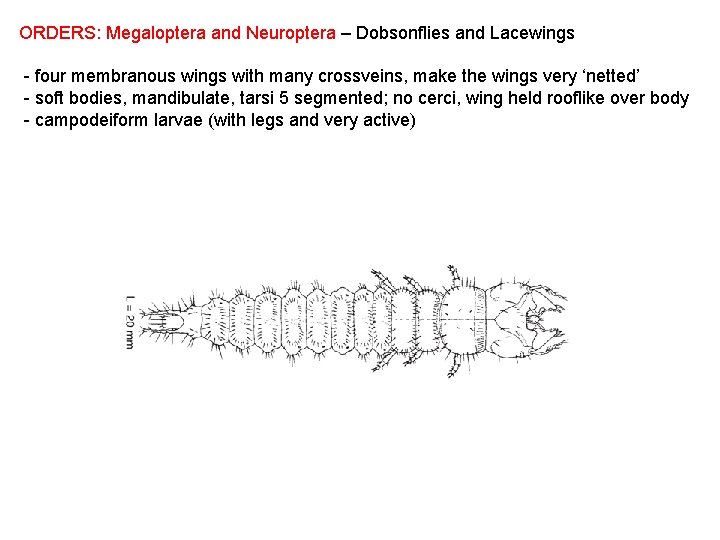
ORDERS: Megaloptera and Neuroptera – Dobsonflies and Lacewings - four membranous wings with many crossveins, make the wings very ‘netted’ - soft bodies, mandibulate, tarsi 5 segmented; no cerci, wing held rooflike over body - campodeiform larvae (with legs and very active)

ORDERS: Megaloptera and Neuroptera – Dobsonflies and Lacewings - four membranous wings with many crossveins, make the wings very ‘netted’ - soft bodies, mandibulate, tarsi 5 segmented; no cerci, wing held rooflike over body - campodeiform larvae (with legs and very active) - pupae naked or in a coccoon

ORDER: Megaloptera: Dobsonflies -Hind wings broader at base the front wings, without forked major veins near wing margin 1. Corydalidae – Dobsonflies: ocelli present. Large
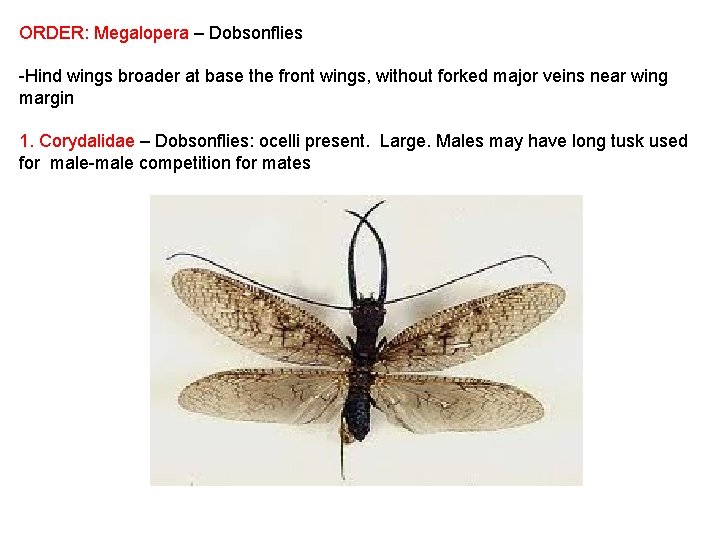
ORDER: Megalopera – Dobsonflies -Hind wings broader at base the front wings, without forked major veins near wing margin 1. Corydalidae – Dobsonflies: ocelli present. Large. Males may have long tusk used for male-male competition for mates
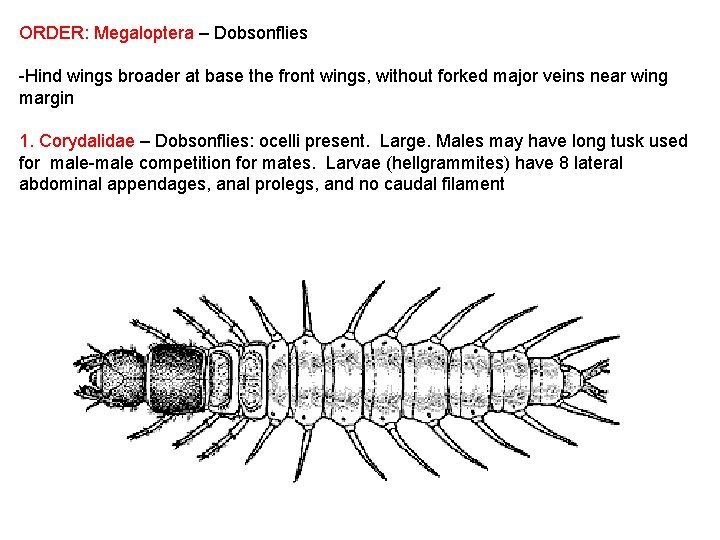
ORDER: Megaloptera – Dobsonflies -Hind wings broader at base the front wings, without forked major veins near wing margin 1. Corydalidae – Dobsonflies: ocelli present. Large. Males may have long tusk used for male-male competition for mates. Larvae (hellgrammites) have 8 lateral abdominal appendages, anal prolegs, and no caudal filament
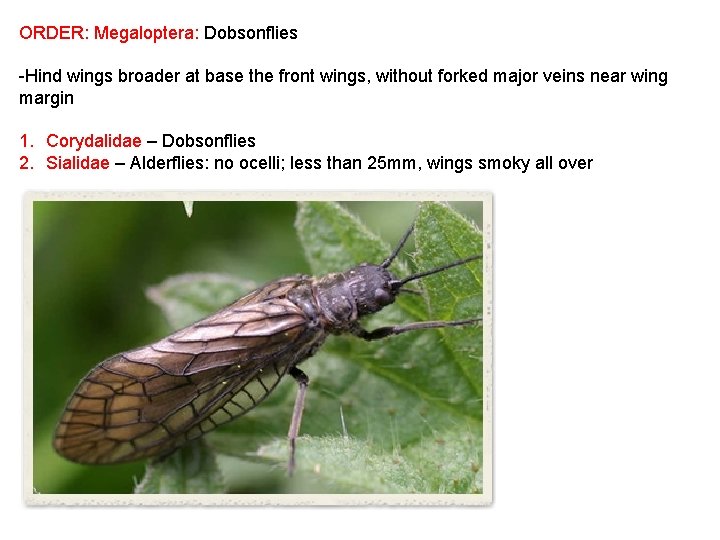
ORDER: Megaloptera: Dobsonflies -Hind wings broader at base the front wings, without forked major veins near wing margin 1. Corydalidae – Dobsonflies 2. Sialidae – Alderflies: no ocelli; less than 25 mm, wings smoky all over
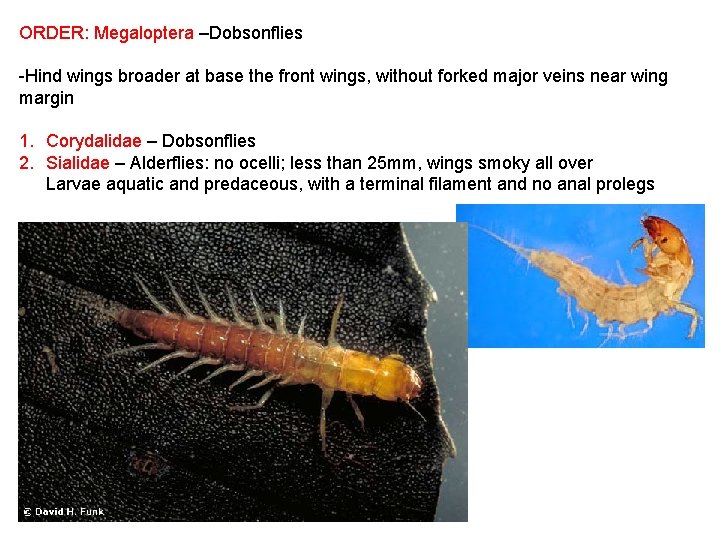
ORDER: Megaloptera –Dobsonflies -Hind wings broader at base the front wings, without forked major veins near wing margin 1. Corydalidae – Dobsonflies 2. Sialidae – Alderflies: no ocelli; less than 25 mm, wings smoky all over Larvae aquatic and predaceous, with a terminal filament and no anal prolegs
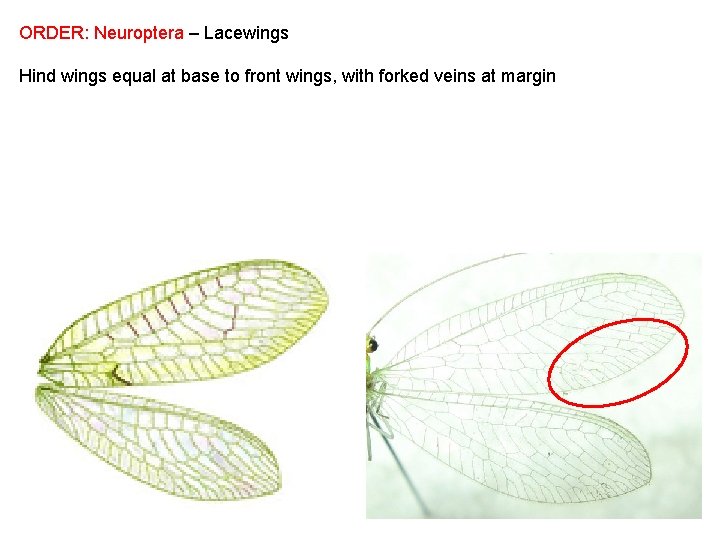
ORDER: Neuroptera – Lacewings Hind wings equal at base to front wings, with forked veins at margin
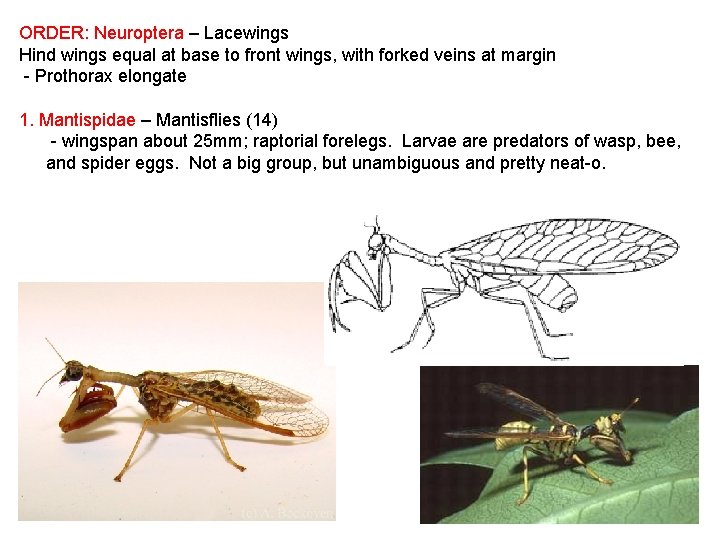
ORDER: Neuroptera – Lacewings Hind wings equal at base to front wings, with forked veins at margin - Prothorax elongate 1. Mantispidae – Mantisflies (14) - wingspan about 25 mm; raptorial forelegs. Larvae are predators of wasp, bee, and spider eggs. Not a big group, but unambiguous and pretty neat-o.
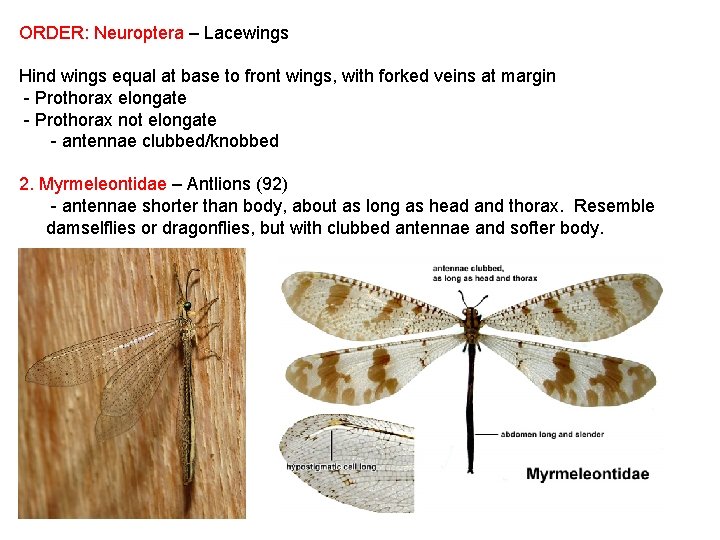
ORDER: Neuroptera – Lacewings Hind wings equal at base to front wings, with forked veins at margin - Prothorax elongate - Prothorax not elongate - antennae clubbed/knobbed 2. Myrmeleontidae – Antlions (92) - antennae shorter than body, about as long as head and thorax. Resemble damselflies or dragonflies, but with clubbed antennae and softer body.

ORDER: Neuroptera – Lacewings Hind wings equal at base to front wings, with forked veins at margin - Prothorax elongate - Prothorax not elongate video - antennae clubbed/knobbed 2. Myrmeleontidae – Antlions (92) - antennae shorter than body, about as long as head and thorax. Resemble damselflies or dragonflies, but with clubbed antennae and softer body. - larvae are ‘doodlebugs’ – prey on ants at bottom of a cone-shaped burrow
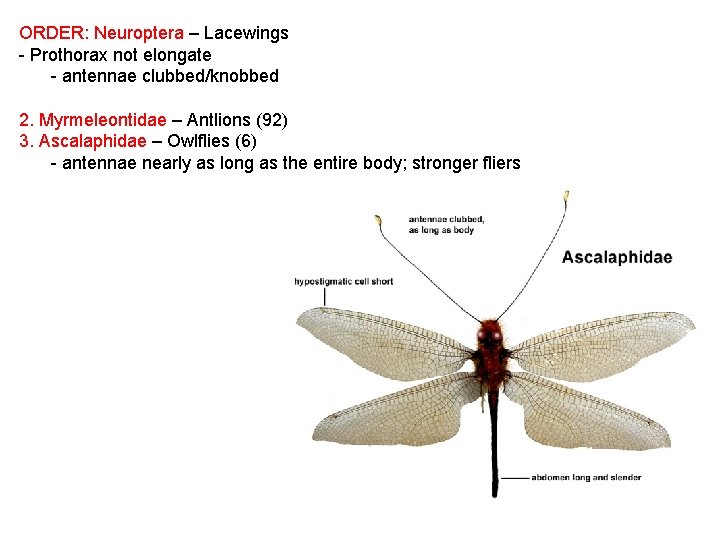
ORDER: Neuroptera – Lacewings - Prothorax not elongate - antennae clubbed/knobbed 2. Myrmeleontidae – Antlions (92) 3. Ascalaphidae – Owlflies (6) - antennae nearly as long as the entire body; stronger fliers
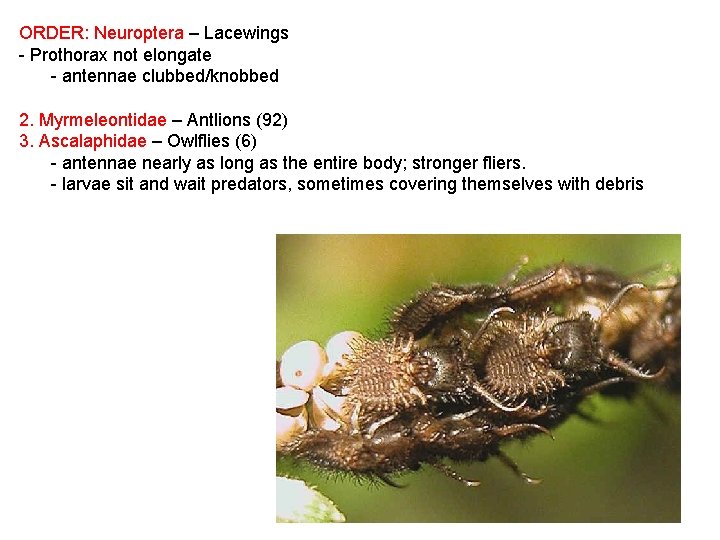
ORDER: Neuroptera – Lacewings - Prothorax not elongate - antennae clubbed/knobbed 2. Myrmeleontidae – Antlions (92) 3. Ascalaphidae – Owlflies (6) - antennae nearly as long as the entire body; stronger fliers. - larvae sit and wait predators, sometimes covering themselves with debris
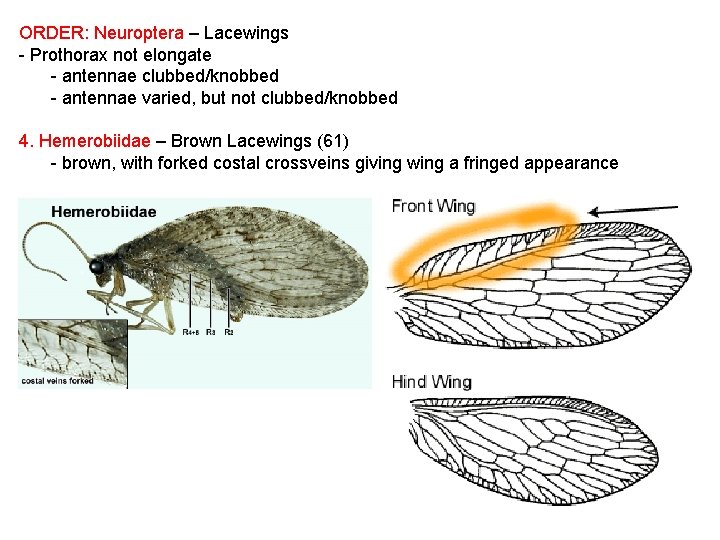
ORDER: Neuroptera – Lacewings - Prothorax not elongate - antennae clubbed/knobbed - antennae varied, but not clubbed/knobbed 4. Hemerobiidae – Brown Lacewings (61) - brown, with forked costal crossveins giving wing a fringed appearance

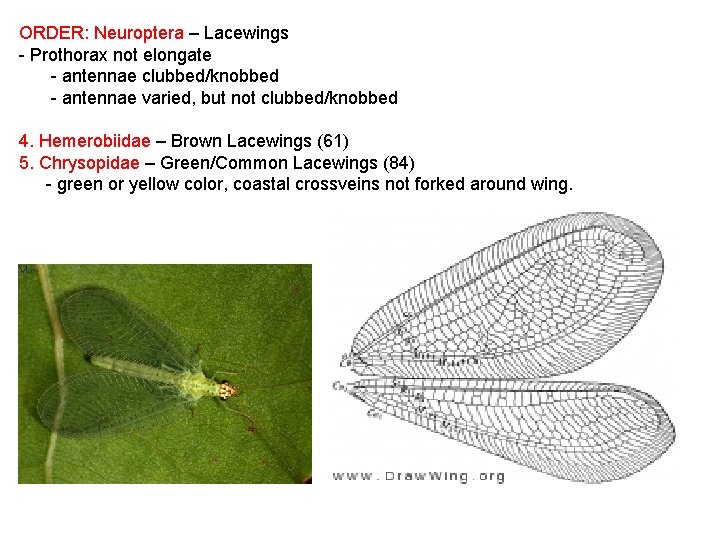
ORDER: Neuroptera – Lacewings - Prothorax not elongate - antennae clubbed/knobbed - antennae varied, but not clubbed/knobbed 4. Hemerobiidae – Brown Lacewings (61) 5. Chrysopidae – Green/Common Lacewings (84) - green or yellow color, coastal crossveins not forked around wing.

Psocodea: Bark and Tree Lice Hymenoptera: Ants, Bees, Wasps Megaloptera: Dobsonflies Neuroptera: Net-winged Insects Strepsiptera: Twisted-wing Parasites Coleoptera: Beetles Trichoptera: Caddisflies Lepidoptera: Butterflies and Moths Siphonaptera: Fleas Mecoptera: Scorpionflies Diptera: Flies Holometabola
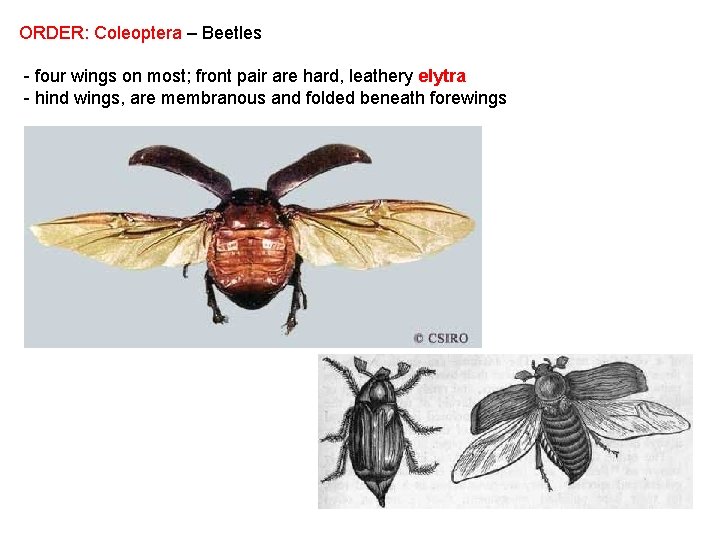
ORDER: Coleoptera – Beetles - four wings on most; front pair are hard, leathery elytra - hind wings, are membranous and folded beneath forewings
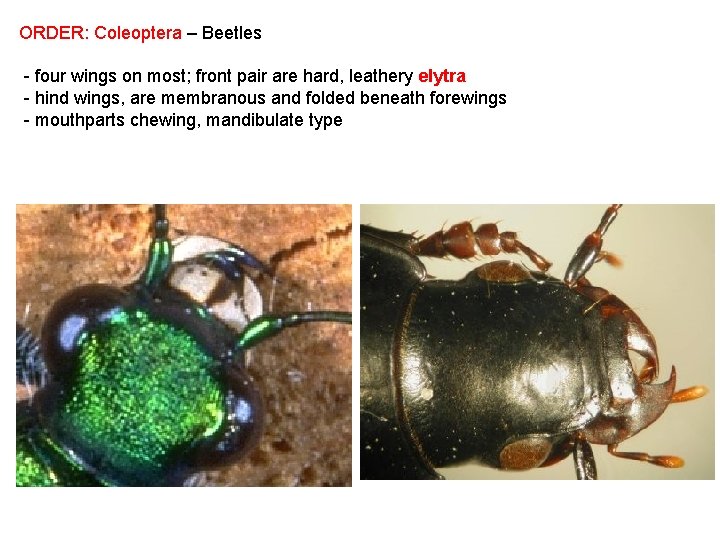
ORDER: Coleoptera – Beetles - four wings on most; front pair are hard, leathery elytra - hind wings, are membranous and folded beneath forewings - mouthparts chewing, mandibulate type
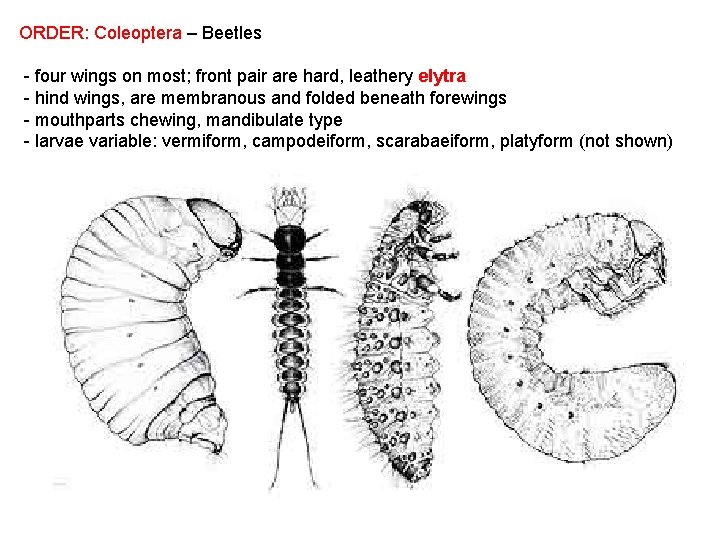
ORDER: Coleoptera – Beetles - four wings on most; front pair are hard, leathery elytra - hind wings, are membranous and folded beneath forewings - mouthparts chewing, mandibulate type - larvae variable: vermiform, campodeiform, scarabaeiform, platyform (not shown)
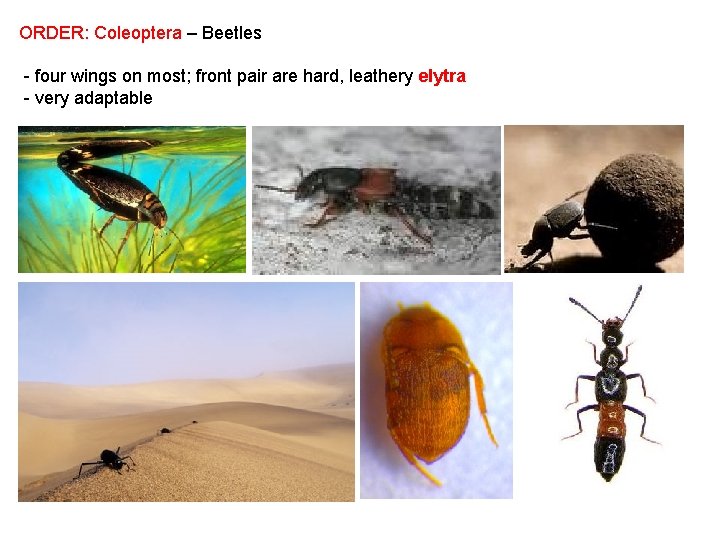
ORDER: Coleoptera – Beetles - four wings on most; front pair are hard, leathery elytra - very adaptable
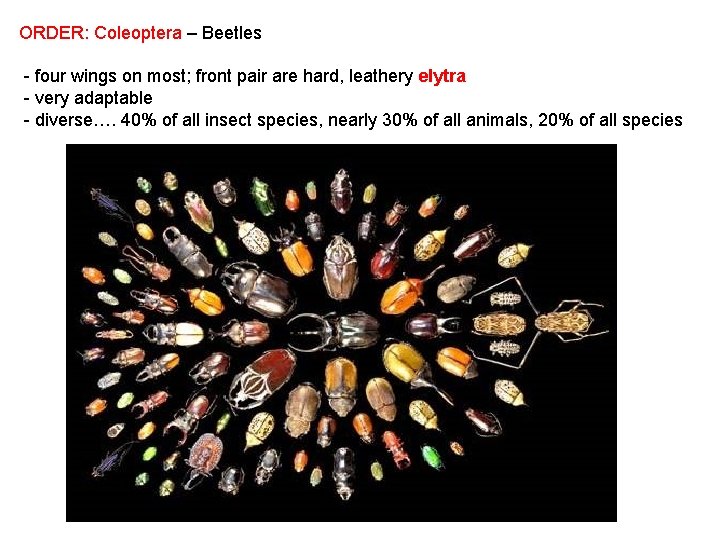
ORDER: Coleoptera – Beetles - four wings on most; front pair are hard, leathery elytra - very adaptable - diverse…. 40% of all insect species, nearly 30% of all animals, 20% of all species
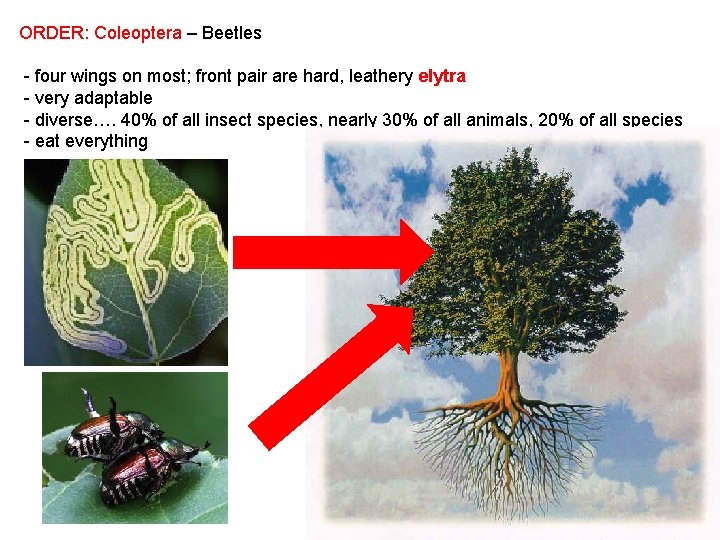
ORDER: Coleoptera – Beetles - four wings on most; front pair are hard, leathery elytra - very adaptable - diverse…. 40% of all insect species, nearly 30% of all animals, 20% of all species - eat everything
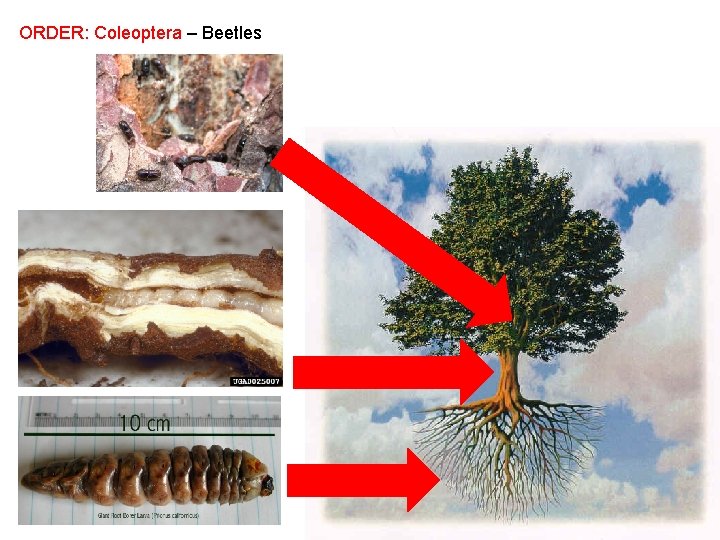
ORDER: Coleoptera – Beetles
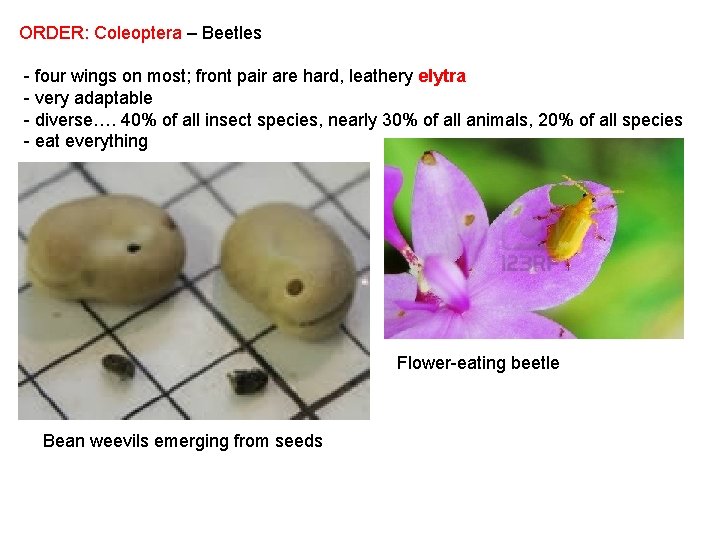
ORDER: Coleoptera – Beetles - four wings on most; front pair are hard, leathery elytra - very adaptable - diverse…. 40% of all insect species, nearly 30% of all animals, 20% of all species - eat everything Flower-eating beetle Bean weevils emerging from seeds
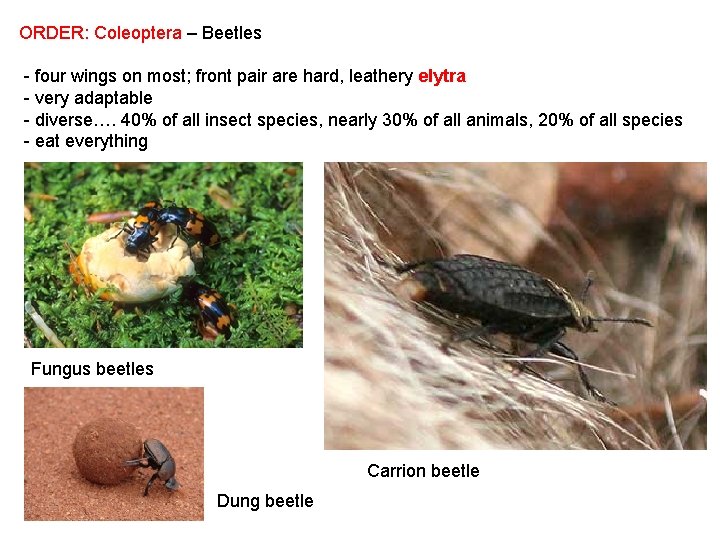
ORDER: Coleoptera – Beetles - four wings on most; front pair are hard, leathery elytra - very adaptable - diverse…. 40% of all insect species, nearly 30% of all animals, 20% of all species - eat everything Fungus beetles Carrion beetle Dung beetle
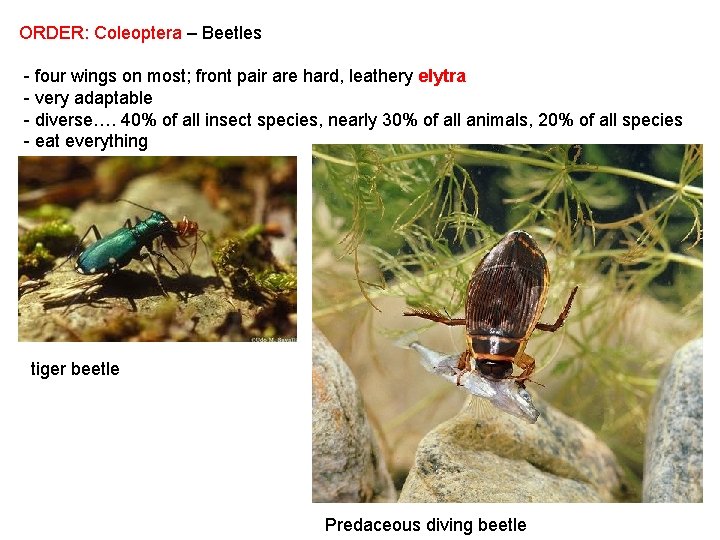
ORDER: Coleoptera – Beetles - four wings on most; front pair are hard, leathery elytra - very adaptable - diverse…. 40% of all insect species, nearly 30% of all animals, 20% of all species - eat everything tiger beetle Predaceous diving beetle
Telephone pole beetles Water scavenger beetles Minute moss beetles Mammal-nest beetles Hide beetles Cicada parasite beetles Wood-boring beetles Cedar beetles Fungus beetles Tooth-necked fungus beetles Pleasing fungus beetles Dry-fungus beetles Wounded tree beetles Skin beetles Branch and twing borer beetles Ship timber beetles etcetera….
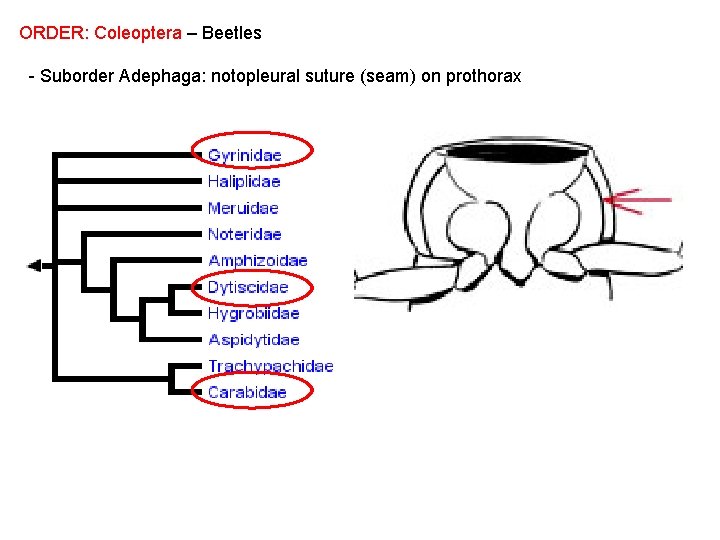
ORDER: Coleoptera – Beetles - Suborder Adephaga: notopleural suture (seam) on prothorax
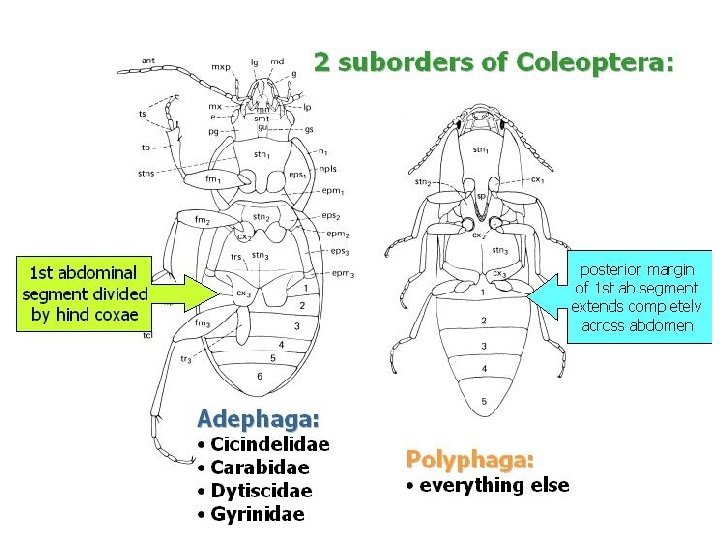
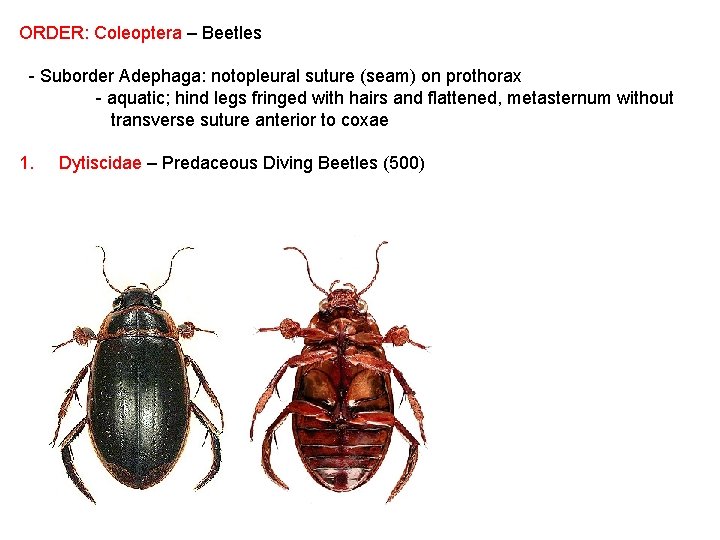
ORDER: Coleoptera – Beetles - Suborder Adephaga: notopleural suture (seam) on prothorax - aquatic; hind legs fringed with hairs and flattened, metasternum without transverse suture anterior to coxae 1. Dytiscidae – Predaceous Diving Beetles (500)
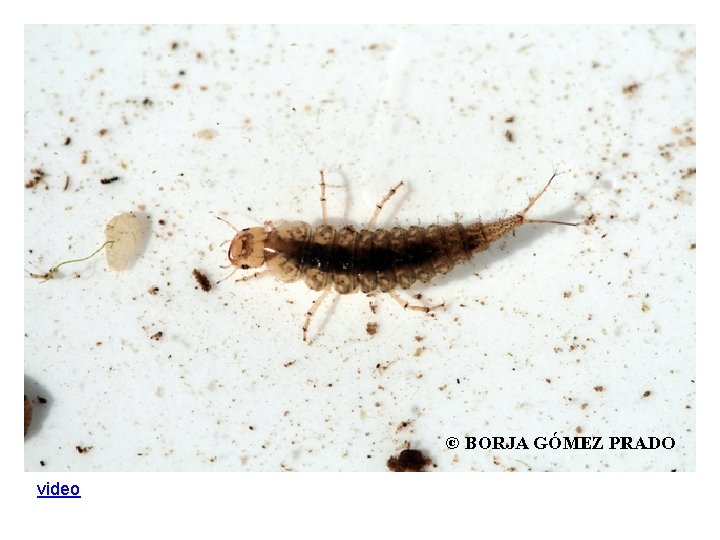
video


ORDER: Coleoptera – Beetles - Suborder Adephaga: notopleural suture (seam) on prothorax - aquatic; hind legs fringed with hairs and flattened, metasternum without transverse suture anterior to coxae 1. Dytiscidae – Predaceous Diving Beetles (500) 2. Gyrinidae – Whirligig Beetles (56) - appear to have two sets of eyes – above and below the water line. - spin around on surface, preying on insects falling on surface
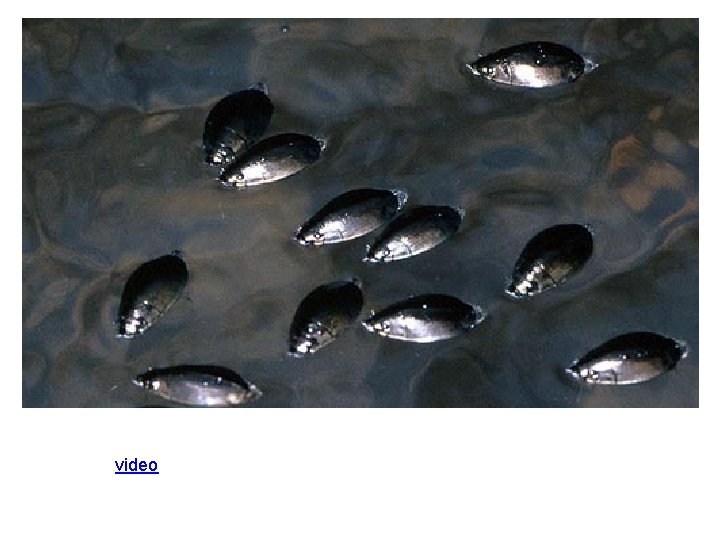
video
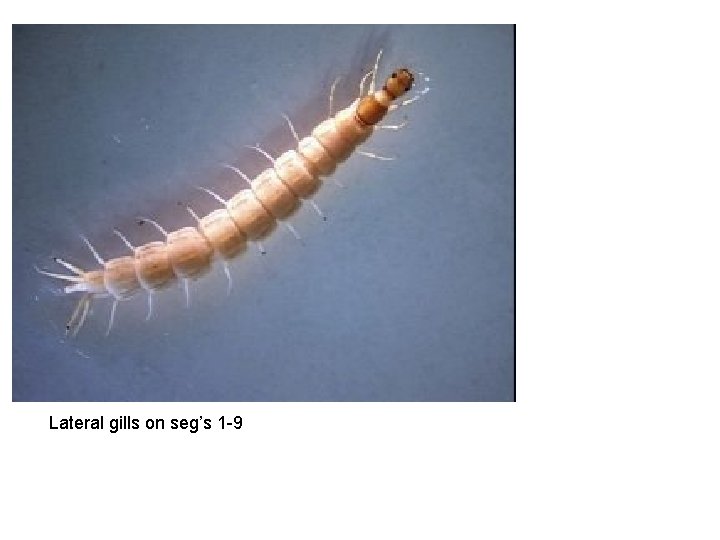
Lateral gills on seg’s 1 -9
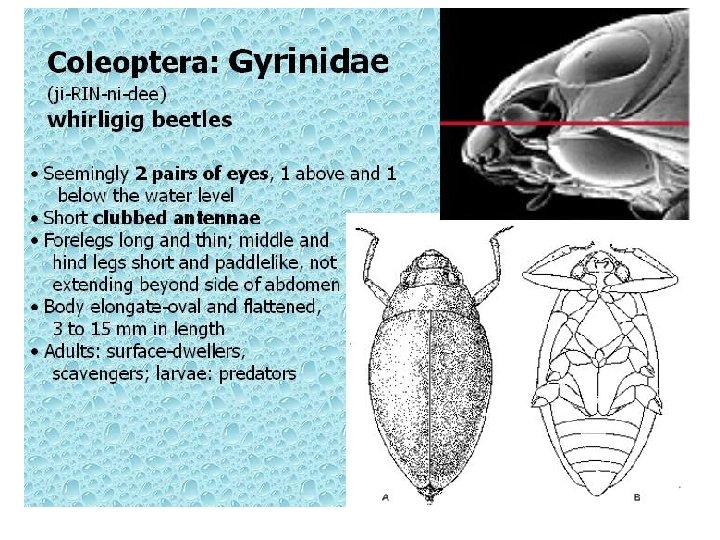
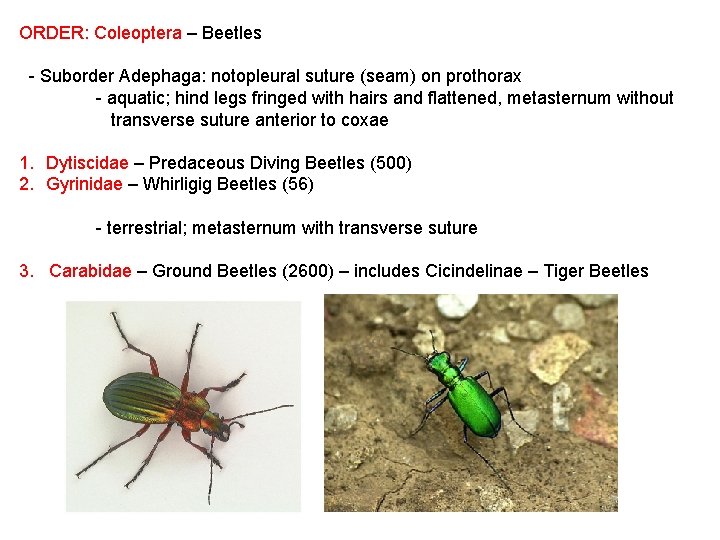
ORDER: Coleoptera – Beetles - Suborder Adephaga: notopleural suture (seam) on prothorax - aquatic; hind legs fringed with hairs and flattened, metasternum without transverse suture anterior to coxae 1. Dytiscidae – Predaceous Diving Beetles (500) 2. Gyrinidae – Whirligig Beetles (56) - terrestrial; metasternum with transverse suture 3. Carabidae – Ground Beetles (2600) – includes Cicindelinae – Tiger Beetles
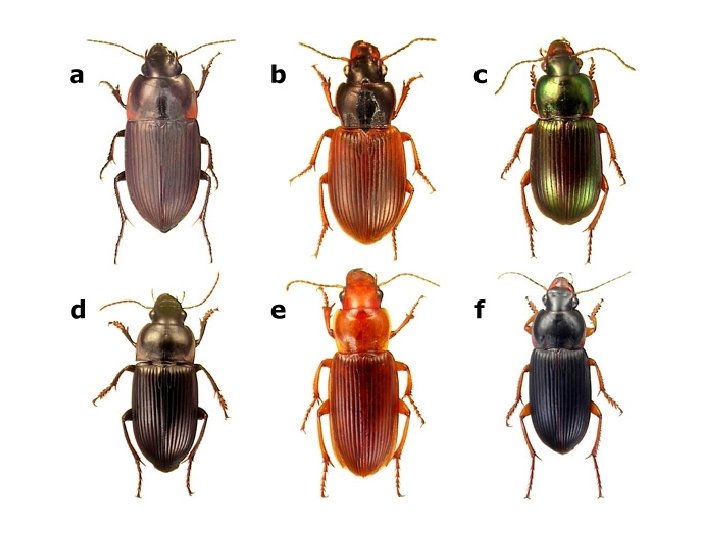

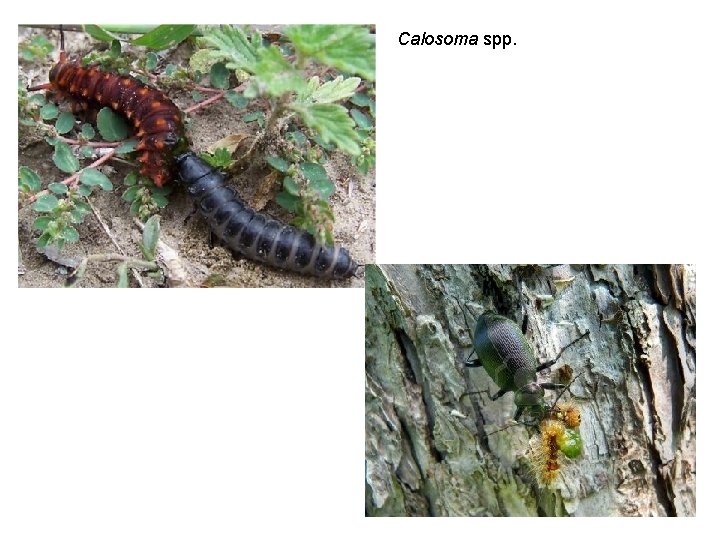
Calosoma spp.
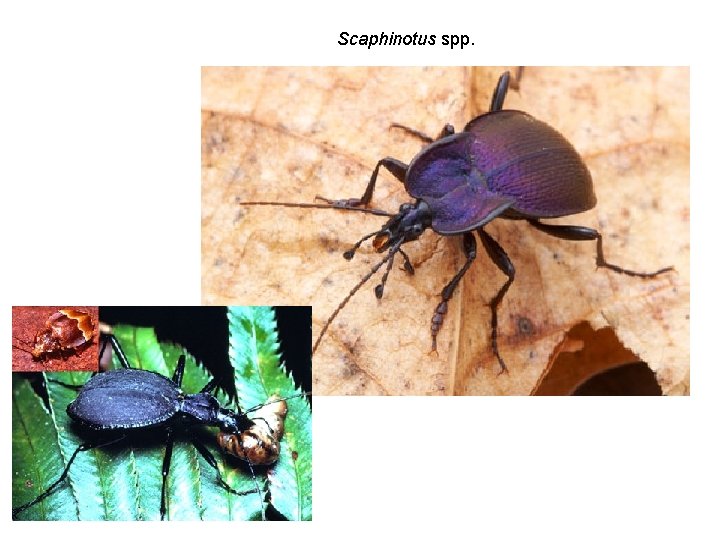
Scaphinotus spp.
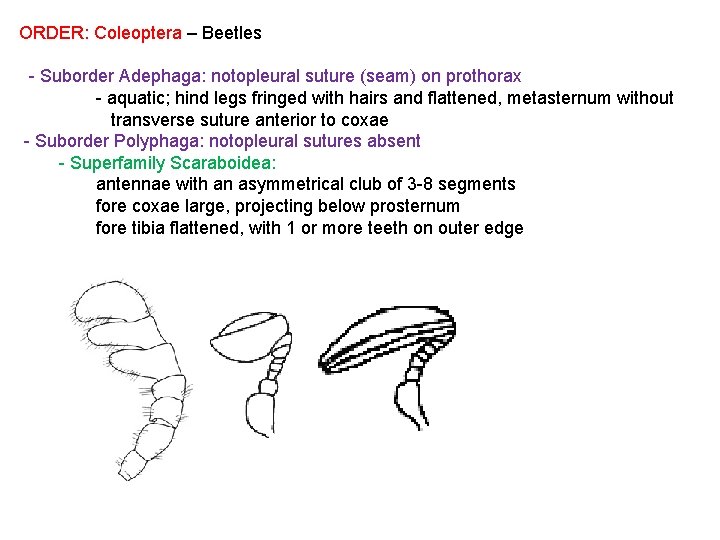
ORDER: Coleoptera – Beetles - Suborder Adephaga: notopleural suture (seam) on prothorax - aquatic; hind legs fringed with hairs and flattened, metasternum without transverse suture anterior to coxae - Suborder Polyphaga: notopleural sutures absent - Superfamily Scaraboidea: antennae with an asymmetrical club of 3 -8 segments fore coxae large, projecting below prosternum fore tibia flattened, with 1 or more teeth on outer edge

ORDER: Coleoptera – Beetles - Suborder Adephaga: notopleural suture (seam) on prothorax - aquatic; hind legs fringed with hairs and flattened, metasternum without transverse suture anterior to coxae - Suborder Polyphaga: notopleural sutures absent - Superfamily Scaraboidea: antennae with an asymmetrical club of 3 -8 segments fore coxae large, projecting below prosternum fore tibia flattened, with 1 or more teeth on outer edge
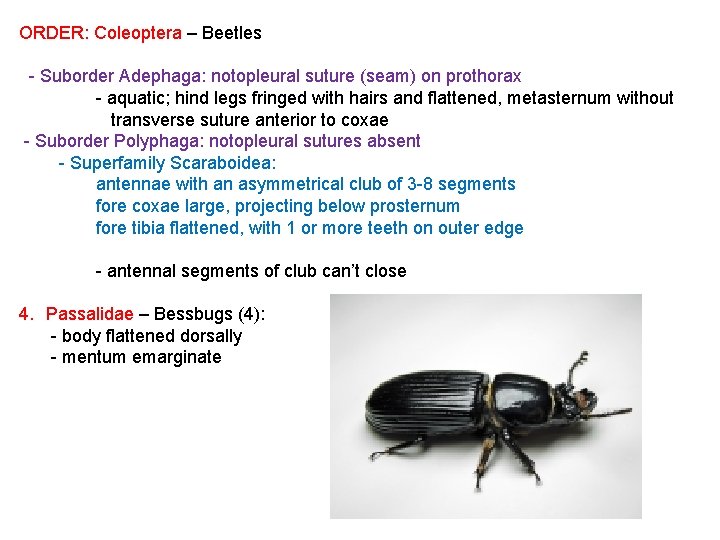
ORDER: Coleoptera – Beetles - Suborder Adephaga: notopleural suture (seam) on prothorax - aquatic; hind legs fringed with hairs and flattened, metasternum without transverse suture anterior to coxae - Suborder Polyphaga: notopleural sutures absent - Superfamily Scaraboidea: antennae with an asymmetrical club of 3 -8 segments fore coxae large, projecting below prosternum fore tibia flattened, with 1 or more teeth on outer edge - antennal segments of club can’t close 4. Passalidae – Bessbugs (4): - body flattened dorsally - mentum emarginate
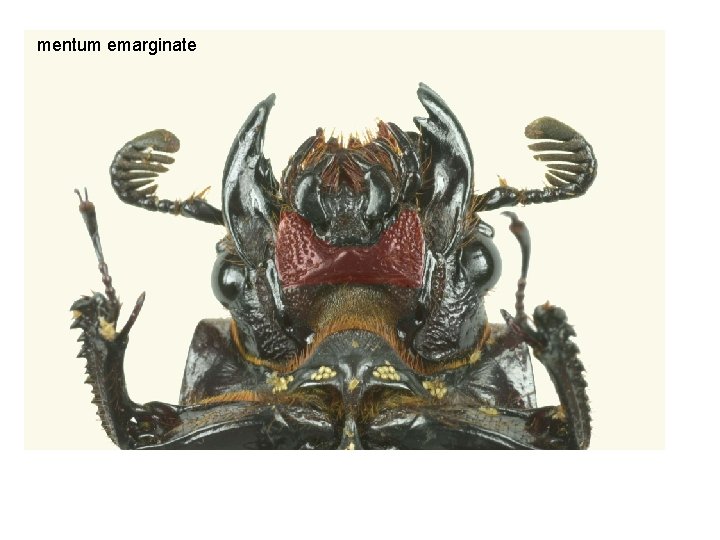
mentum emarginate
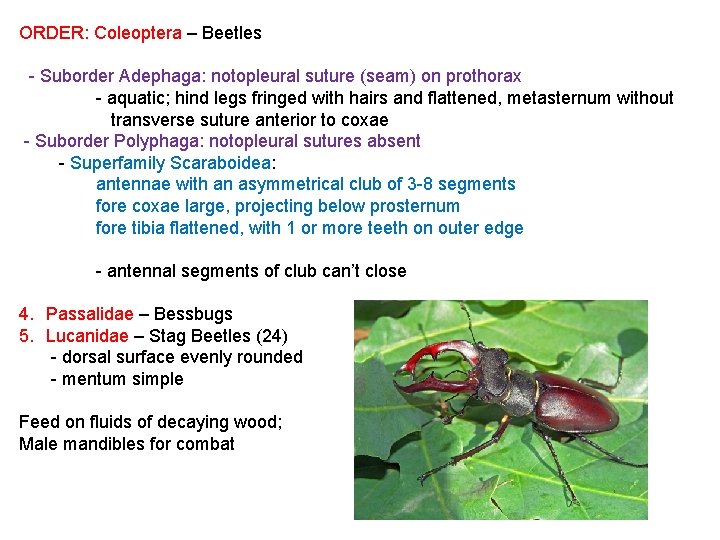
ORDER: Coleoptera – Beetles - Suborder Adephaga: notopleural suture (seam) on prothorax - aquatic; hind legs fringed with hairs and flattened, metasternum without transverse suture anterior to coxae - Suborder Polyphaga: notopleural sutures absent - Superfamily Scaraboidea: antennae with an asymmetrical club of 3 -8 segments fore coxae large, projecting below prosternum fore tibia flattened, with 1 or more teeth on outer edge - antennal segments of club can’t close 4. Passalidae – Bessbugs 5. Lucanidae – Stag Beetles (24) - dorsal surface evenly rounded - mentum simple Feed on fluids of decaying wood; Male mandibles for combat


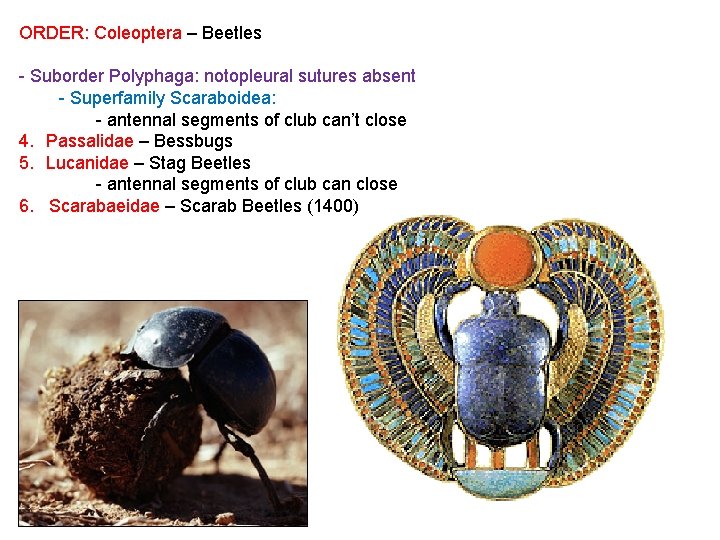
ORDER: Coleoptera – Beetles - Suborder Polyphaga: notopleural sutures absent - Superfamily Scaraboidea: - antennal segments of club can’t close 4. Passalidae – Bessbugs 5. Lucanidae – Stag Beetles - antennal segments of club can close 6. Scarabaeidae – Scarab Beetles (1400)
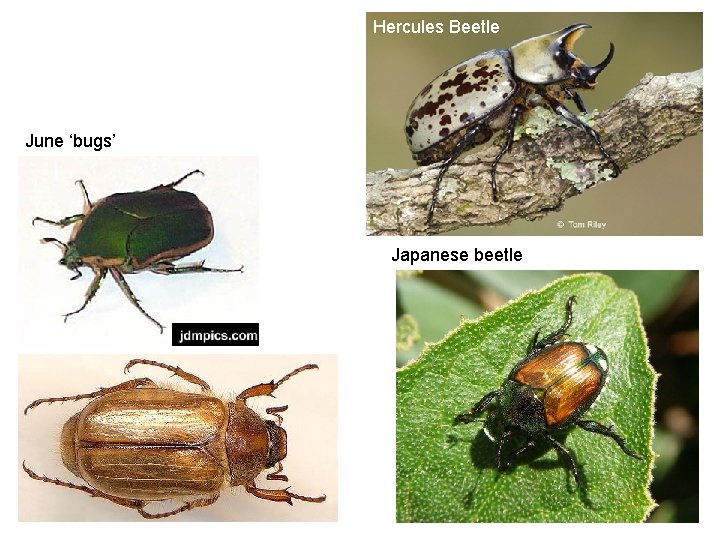
Hercules Beetle June ‘bugs’ Japanese beetle
- Slides: 82