
VERBS Verbs sizzle snap and move A verb

VERBS “Verbs sizzle, snap, and move. A verb may just be the most crucial word in a sentence. Without verbs, nothing would ever happen – nothing could even exist. A well-chosen verb can enliven student writing more than another part of speech. ” - Jeff Anderson

ACTION VERBS An action verb tells what action someone or something is performing. EXAMPLES: Father carries the ladder. The ship chugged into the harbor. I believe it will snow. Sandor remembered to bring his puzzle. *Some actions, such as carries or chugged, can be seen. Some actions, such as believe or remembered, cannot be seen. *
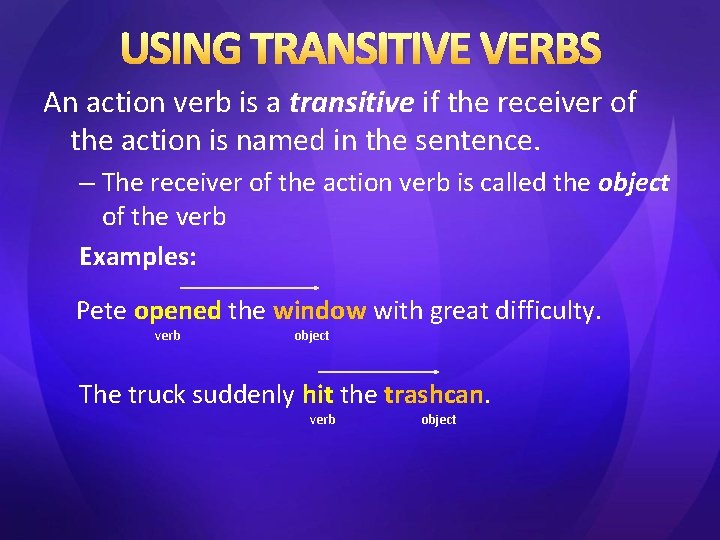
USING TRANSITIVE VERBS An action verb is a transitive if the receiver of the action is named in the sentence. – The receiver of the action verb is called the object of the verb Examples: Pete opened the window with great difficulty. verb object The truck suddenly hit the trashcan. verb object

USING INTRANSITIVE VERBS An action verb is intransitive if there is no receiver of the action named in the sentence. - An intransitive verb does not have an object. Examples: The race began. The bus driver raced through the traffic light. Seventh grade students gathered in the gym. The clock alarm rang at eight o’clock.
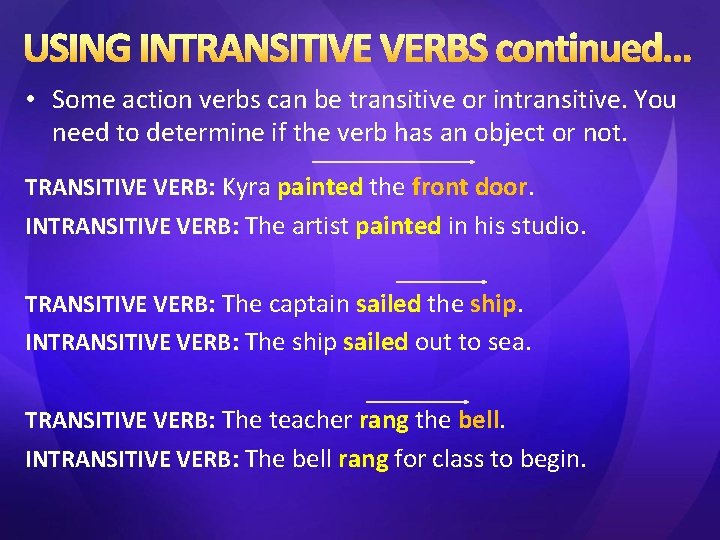
USING INTRANSITIVE VERBS continued… • Some action verbs can be transitive or intransitive. You need to determine if the verb has an object or not. TRANSITIVE VERB: Kyra painted the front door. INTRANSITIVE VERB: The artist painted in his studio. TRANSITIVE VERB: The captain sailed the ship. INTRANSITIVE VERB: The ship sailed out to sea. TRANSITIVE VERB: The teacher rang the bell. INTRANSITIVE VERB: The bell rang for class to begin.

LINKING VERBS A linking verb is a verb that connects a subject with a word that describes or identifies it. IDENTIFIES EXAMPLES: Sheridan was a Union general. subject linking verb predicate nominative IDENTIFIES The winners were Tony and I. subject linking verb predicate nominative DESCRIBES We felt extremely tired after all our running. subject linking verb predicate nominative

Recognizing Forms of Be The most common linking verb is be. This verb has many forms. FORMS OF BE am can be has been are could be have been is may be had been was might be could have been were must be may have been am being shall be might have been are being should be must have been is being will be shall have been was being would be should have been were being will have been would have been
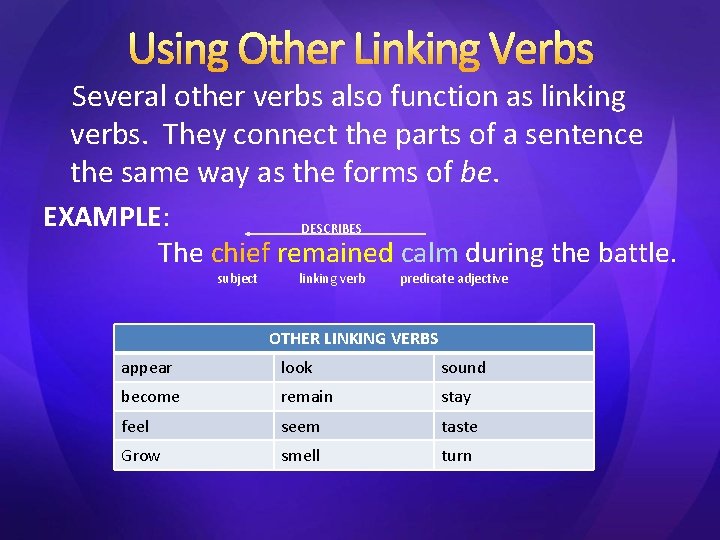
Using Other Linking Verbs Several other verbs also function as linking verbs. They connect the parts of a sentence the same way as the forms of be. EXAMPLE: DESCRIBES The chief remained calm during the battle. subject linking verb predicate adjective OTHER LINKING VERBS appear look sound become remain stay feel seem taste Grow smell turn
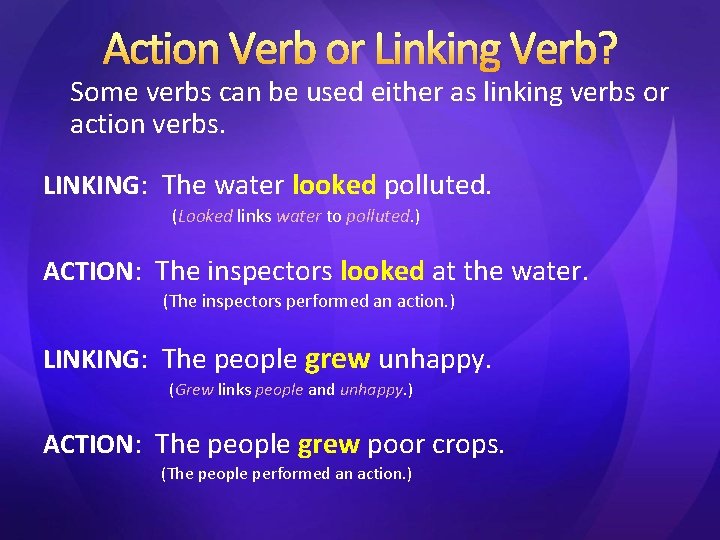
Action Verb or Linking Verb? Some verbs can be used either as linking verbs or action verbs. LINKING: The water looked polluted. (Looked links water to polluted. ) ACTION: The inspectors looked at the water. (The inspectors performed an action. ) LINKING: The people grew unhappy. (Grew links people and unhappy. ) ACTION: The people grew poor crops. (The people performed an action. )
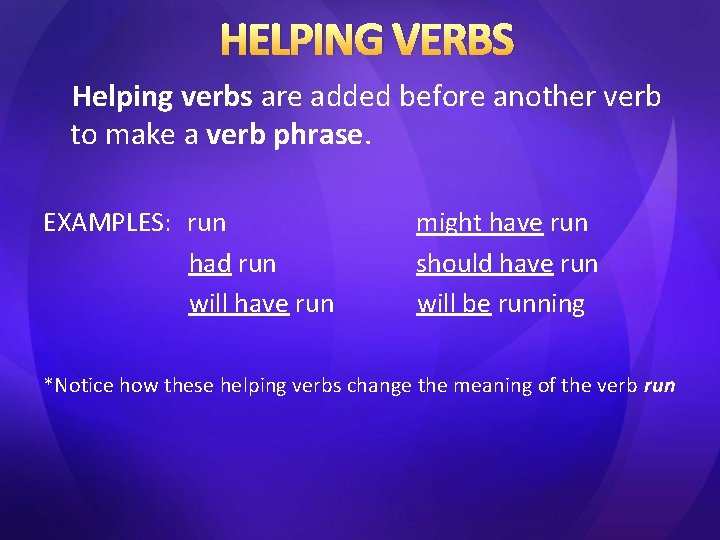
HELPING VERBS Helping verbs are added before another verb to make a verb phrase. EXAMPLES: run had run will have run might have run should have run will be running *Notice how these helping verbs change the meaning of the verb run
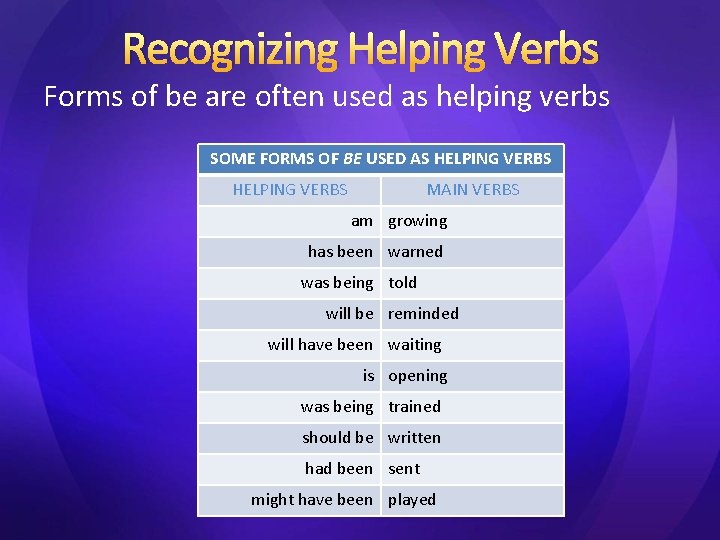
Recognizing Helping Verbs Forms of be are often used as helping verbs SOME FORMS OF BE USED AS HELPING VERBS MAIN VERBS am growing has been warned was being told will be reminded will have been waiting is opening was being trained should be written had been sent might have been played

Other Helping Verbs HELPING VERBS Many different verb phrases can be formed using one or more of these helping verbs. These are just a few. MAIN VERBS VERB PHRASES do remember has written would hope shall see can believe could finish may attempt must have thought should have grown might win will jump have planned does want
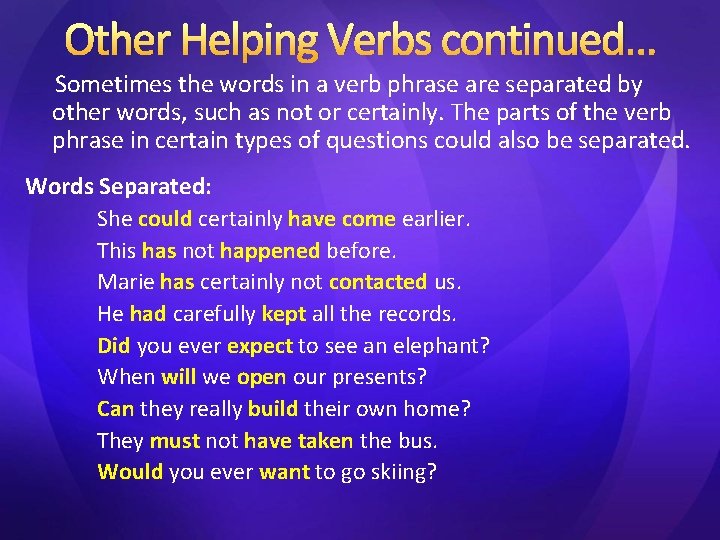
Other Helping Verbs continued… Sometimes the words in a verb phrase are separated by other words, such as not or certainly. The parts of the verb phrase in certain types of questions could also be separated. Words Separated: She could certainly have come earlier. This has not happened before. Marie has certainly not contacted us. He had carefully kept all the records. Did you ever expect to see an elephant? When will we open our presents? Can they really build their own home? They must not have taken the bus. Would you ever want to go skiing?
- Slides: 13