
VERBS Principal Parts Tenses Troublesome Verbs VERBS 4
VERBS Principal Parts Tenses Troublesome Verbs
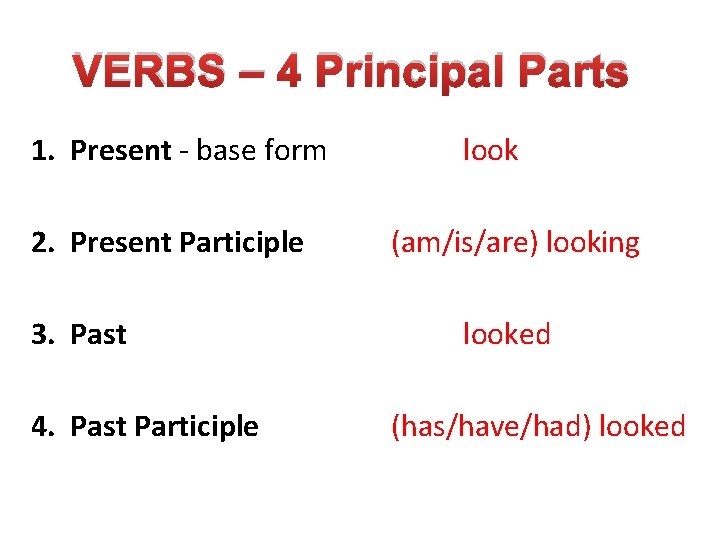
VERBS – 4 Principal Parts 1. Present - base form 2. Present Participle 3. Past 4. Past Participle look (am/is/are) looking looked (has/have/had) looked
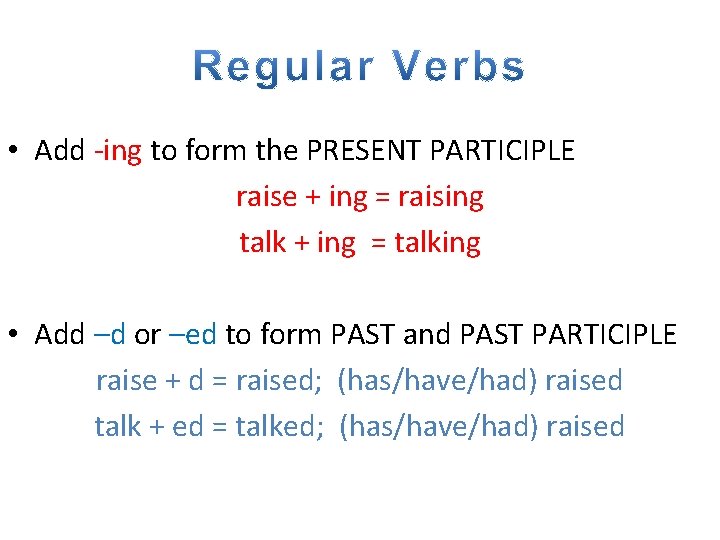
• Add -ing to form the PRESENT PARTICIPLE raise + ing = raising talk + ing = talking • Add –d or –ed to form PAST and PAST PARTICIPLE raise + d = raised; (has/have/had) raised talk + ed = talked; (has/have/had) raised

• • jump (am/is/are) jumping jumped (has/have/had) jumped talk travel Present Participle Past Participle You do: enjoy stop receive argue wish remember
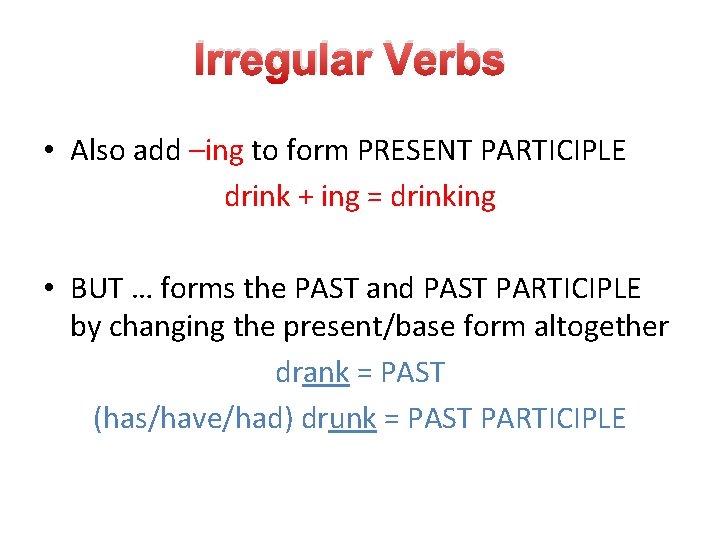
Irregular Verbs • Also add –ing to form PRESENT PARTICIPLE drink + ing = drinking • BUT … forms the PAST and PAST PARTICIPLE by changing the present/base form altogether drank = PAST (has/have/had) drunk = PAST PARTICIPLE

Irregular Verbs – Practice • • break (am/is/are) breaking broke (has/have/had) broken choose catch eat bite Present Participle Past Participle You do: freeze know drive bring
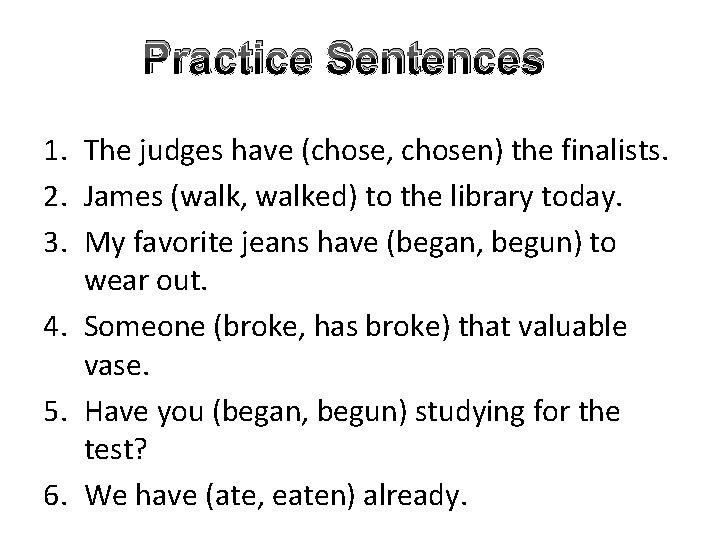
Practice Sentences 1. The judges have (chose, chosen) the finalists. 2. James (walk, walked) to the library today. 3. My favorite jeans have (began, begun) to wear out. 4. Someone (broke, has broke) that valuable vase. 5. Have you (began, begun) studying for the test? 6. We have (ate, eaten) already.
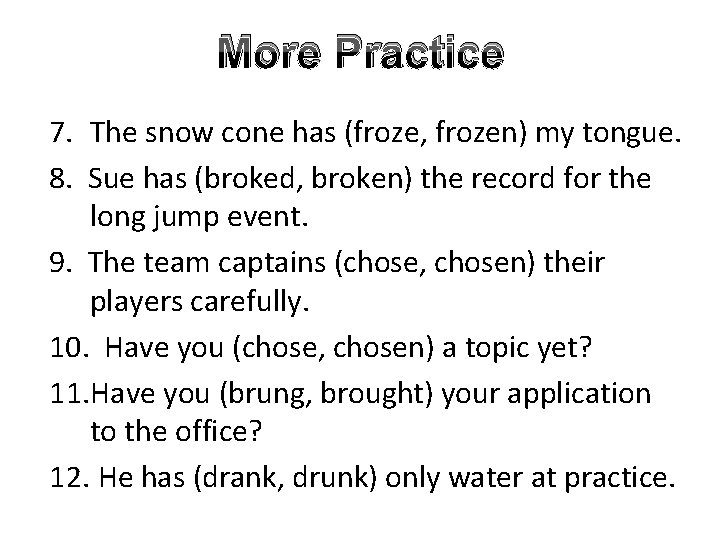
More Practice 7. The snow cone has (froze, frozen) my tongue. 8. Sue has (broked, broken) the record for the long jump event. 9. The team captains (chose, chosen) their players carefully. 10. Have you (chose, chosen) a topic yet? 11. Have you (brung, brought) your application to the office? 12. He has (drank, drunk) only water at practice.
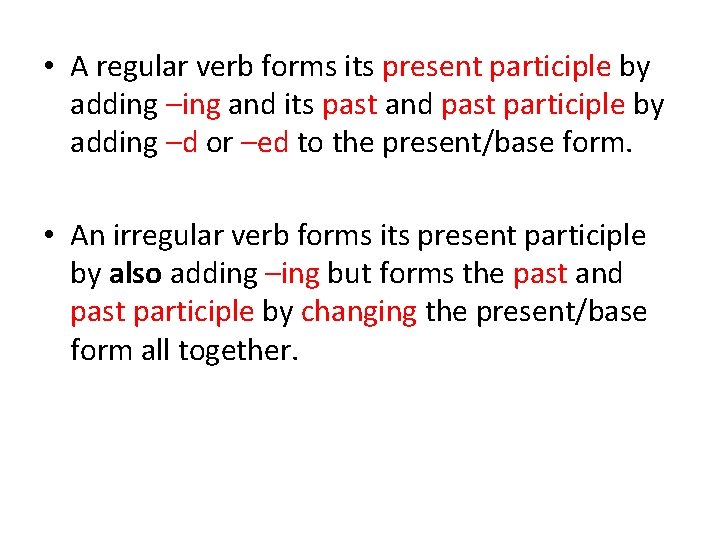
• A regular verb forms its present participle by adding –ing and its past and past participle by adding –d or –ed to the present/base form. • An irregular verb forms its present participle by also adding –ing but forms the past and past participle by changing the present/base form all together.
- Slides: 9