
Verbs Indicative Morphology Stem Augment Connecting vowel Tense
Verbs (Indicative)
Morphology • Stem • Augment • Connecting vowel • Tense formative • Personal endings
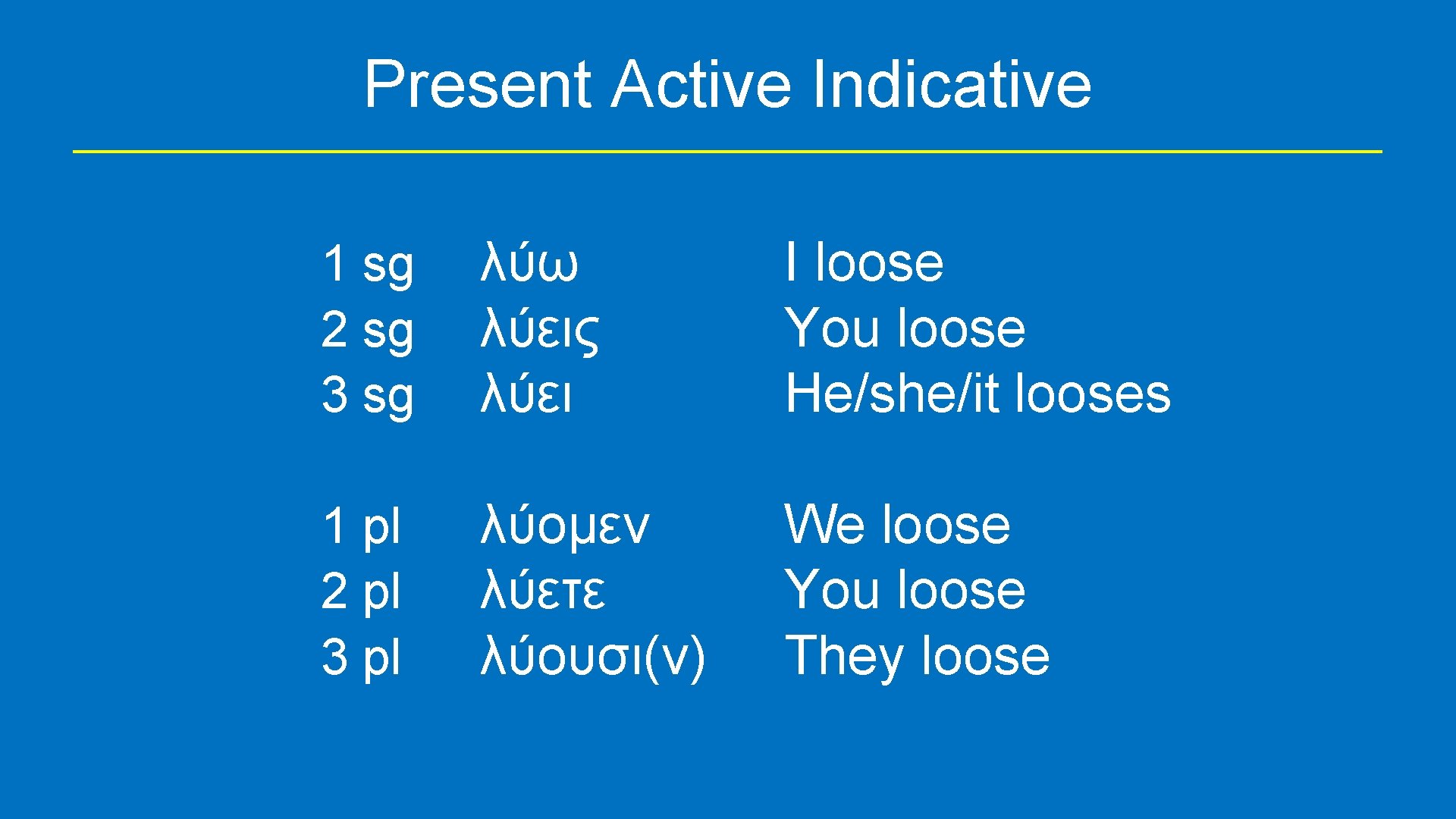
Present Active Indicative 1 sg 2 sg 3 sg λύω λύεις λύει I loose You loose He/she/it looses 1 pl 2 pl 3 pl λύομεν λύετε λύουσι(ν) We loose You loose They loose

Present: Futuristic Rev 22: 20 “He who testifies to these things says, ‘Surely I am coming (ἔρχομαι) soon. ’ Amen. Come, Lord Jesus!”
Future: Gnomic Eph 5: 31 “For this reason a man will leave (καταλείψει) his father and his mother and be joined (προσκολληθήσεται) to his wife, and the two will become (ἔσονται) one flesh. ”
Imperfect • Voluntative: “wished” • Conative: “tried” • Tendential: “almost did”
Imperfect: Conative Acts 26: 11 “I punished them often in all the synagogues and tried to make them blaspheme (ἠνάγκαζον). ”
Imperfect: Tendential Luke 1: 59 “On the eighth day they came to circumcise the child, and they wanted to call (ἐκάλουν) him by the name of his father, Zechariah. ”
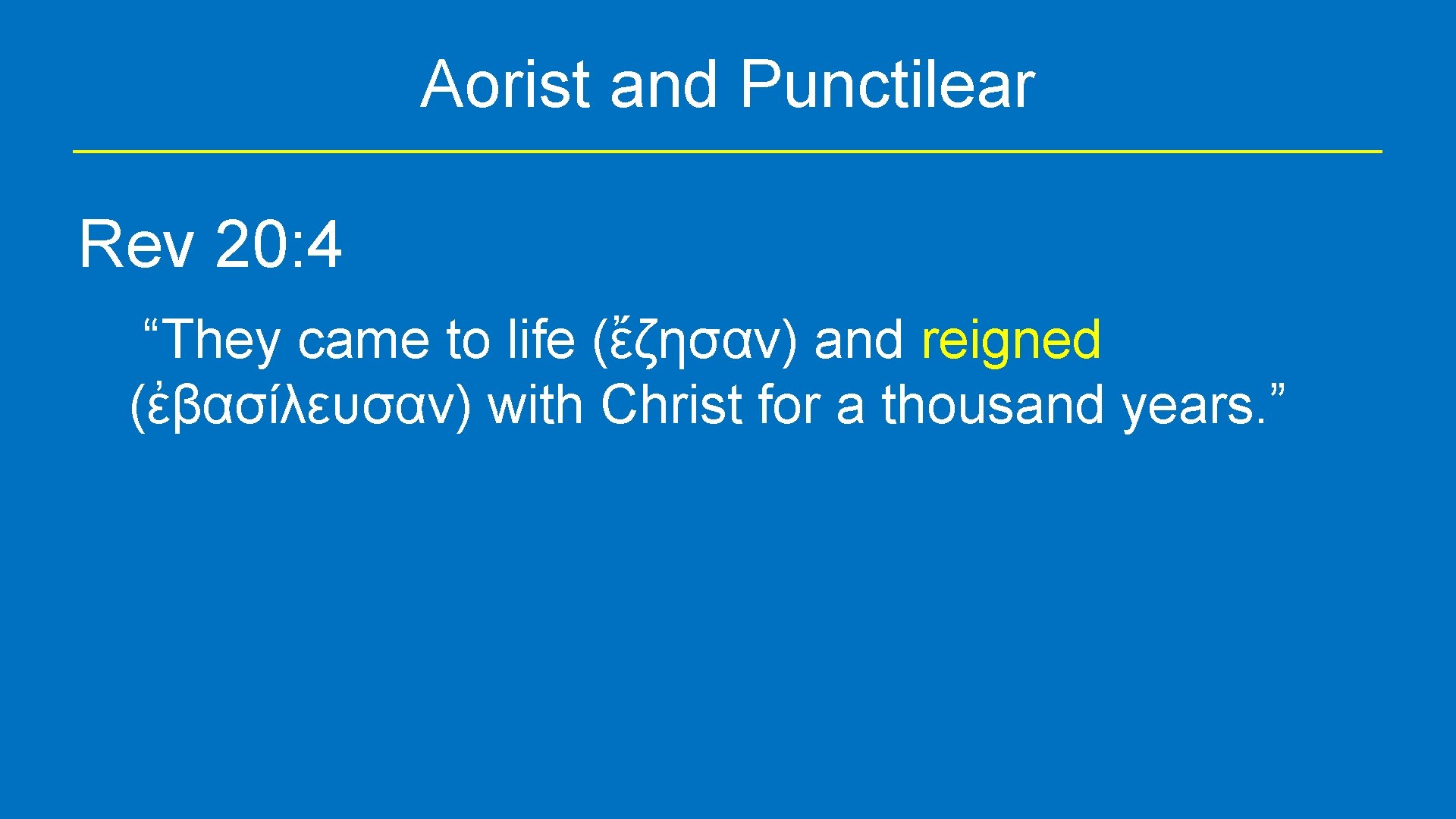
Aorist and Punctilear Rev 20: 4 “They came to life (ἔζησαν) and reigned (ἐβασίλευσαν) with Christ for a thousand years. ”
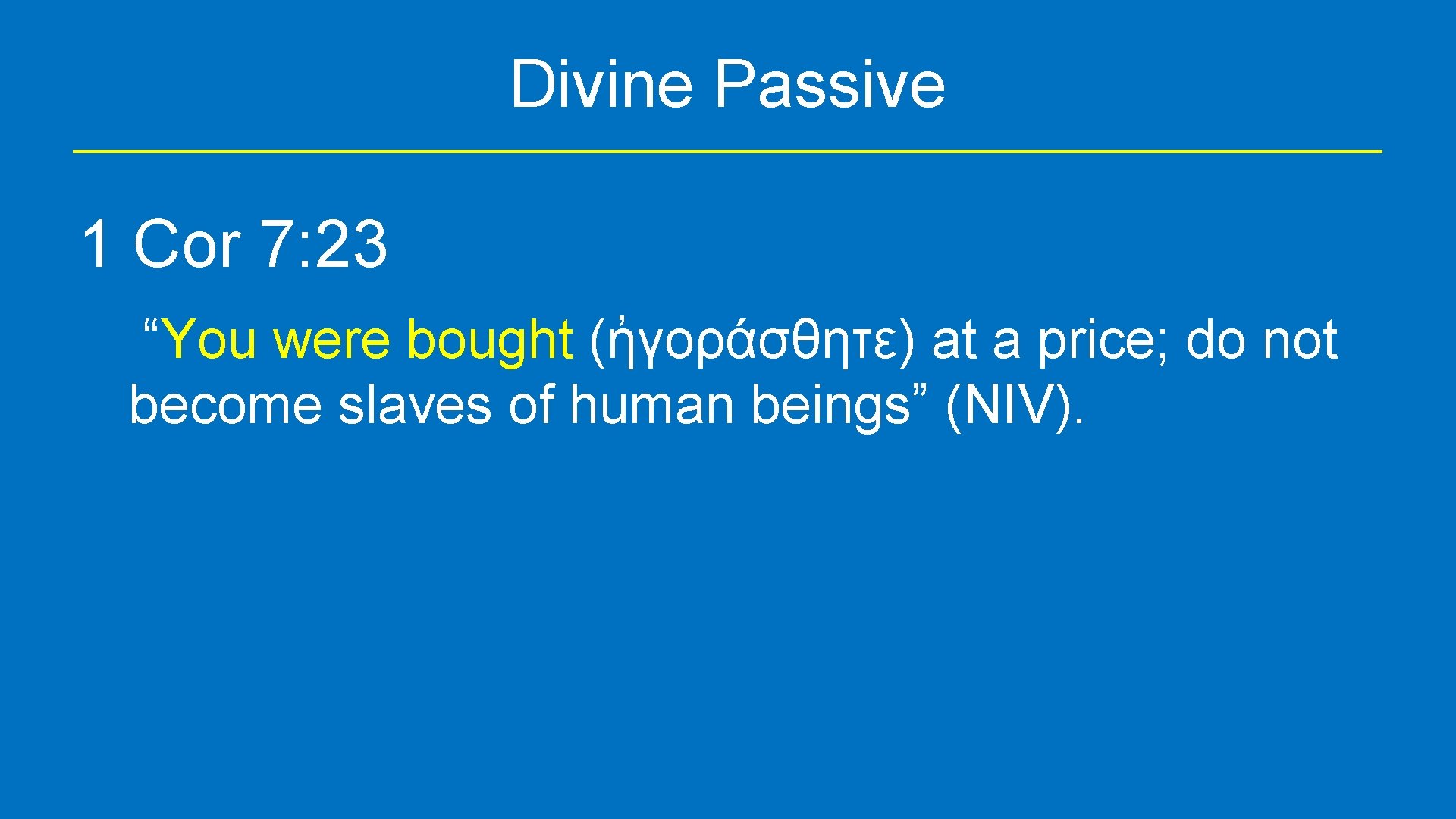
Divine Passive 1 Cor 7: 23 “You were bought (ἠγοράσθητε) at a price; do not become slaves of human beings” (NIV).
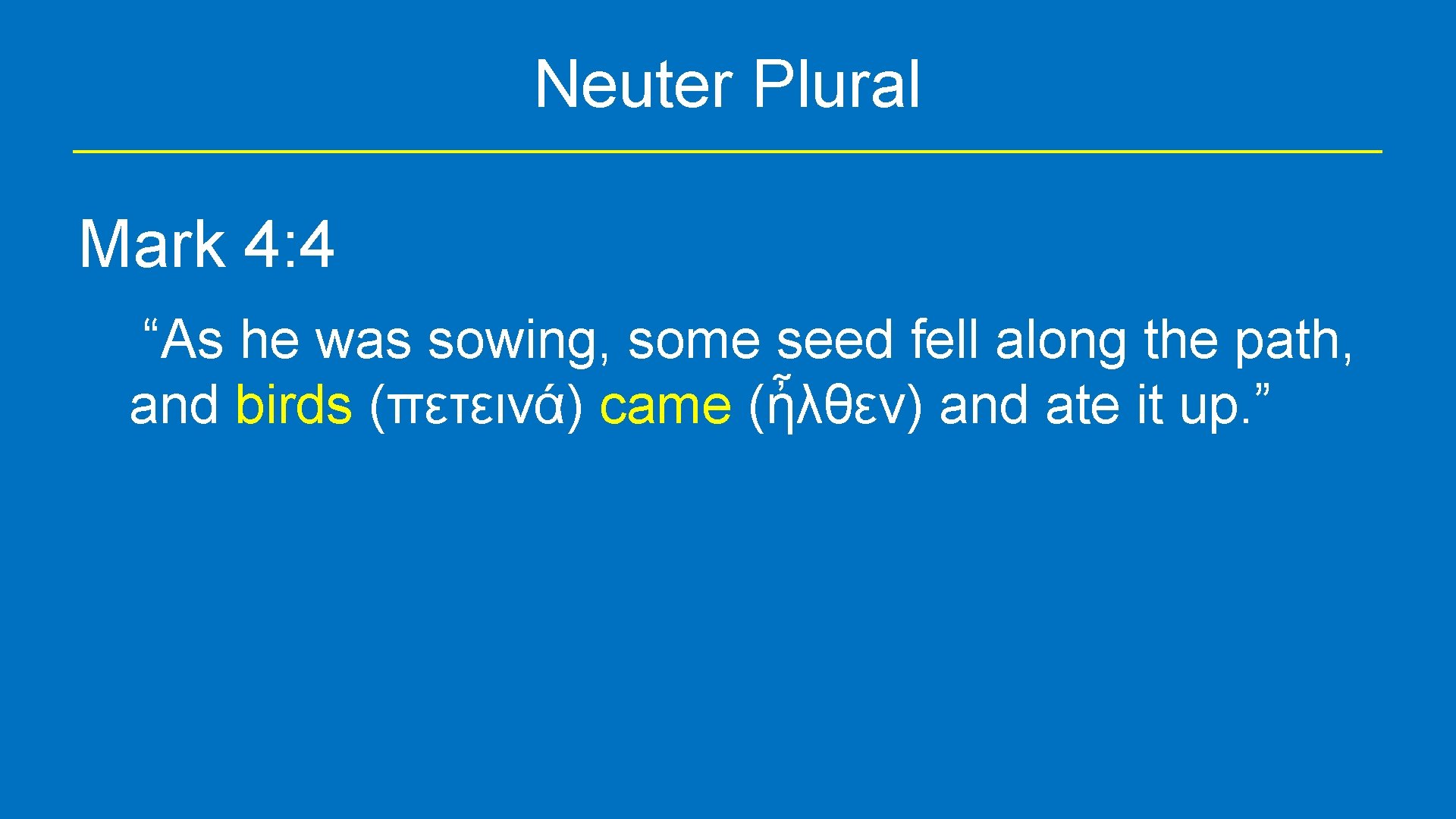
Neuter Plural Mark 4: 4 “As he was sowing, some seed fell along the path, and birds (πετεινά) came (ἦλθεν) and ate it up. ”
- Slides: 12