
Verbs in the Present Tense Los verbos en
Verbs in the Present Tense (Los verbos en el tiempo presente) First conjugation: -ar
The fundamental parts of the Spanish verb The infinitive: The basic, unconjugated form, the one that corresponds to the English “to do” (something). For example, to speak, to work, to sing, etc. The Spanish infinitive always ends in r
The fundamental parts of the Spanish verb The Spanish infinitive always ends in r hablar comer escribir comprar aprender creer salir conocer costar correr finalizar freír
The fundamental parts of the Spanish verb The ending: The last two letters of the infinitive. The ending always consists of two letters.
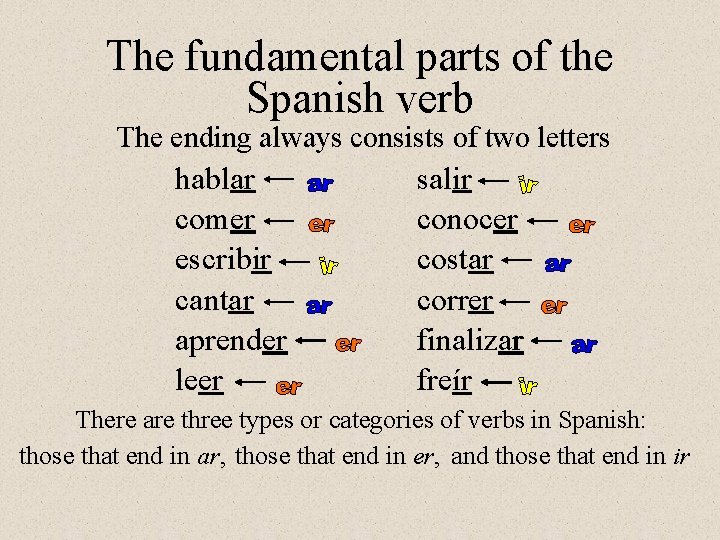
The fundamental parts of the Spanish verb The ending always consists of two letters hablar comer escribir cantar aprender leer salir conocer costar correr finalizar freír There are three types or categories of verbs in Spanish: those that end in ar, those that end in er, and those that end in ir
The fundamental parts of the Spanish verb The stem or root: Whatever is left after removing the ending from the infinitive. The stem can consist of a variable number of letters, depending on the length of the verb in question.
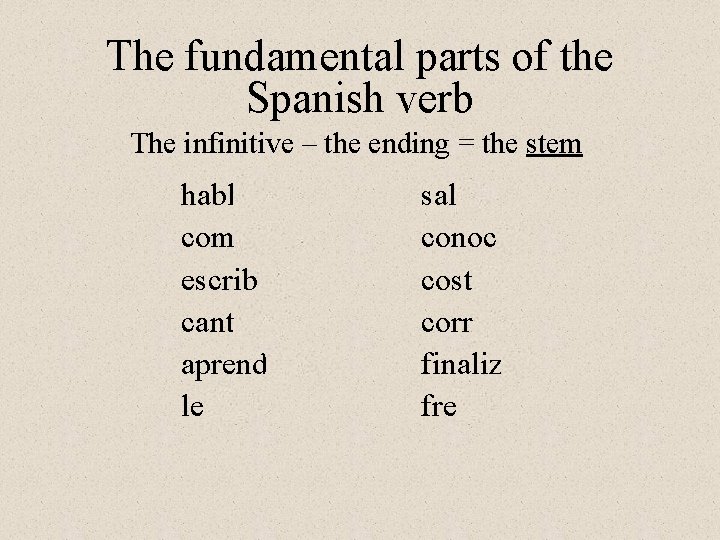
The fundamental parts of the Spanish verb The infinitive – the ending = the stem hablar comer escribir cantar aprender leer salir conocer costar correr finalizar freír
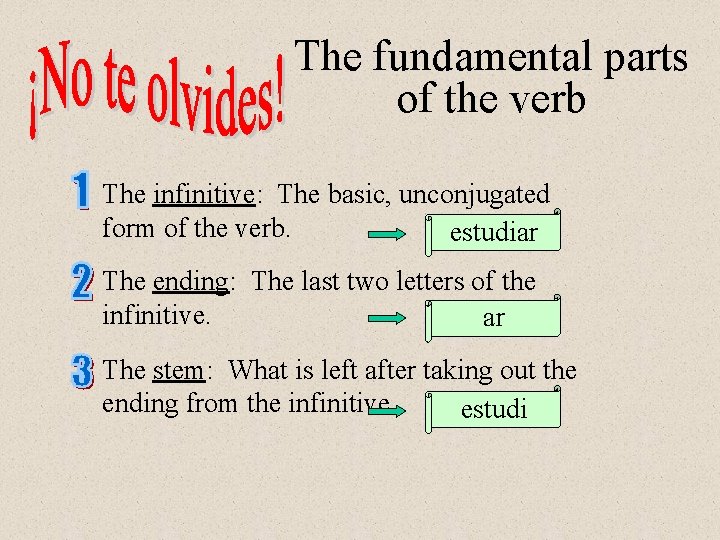
The fundamental parts of the verb The infinitive: The basic, unconjugated form of the verb. estudiar The ending: The last two letters of the infinitive. ar The stem: What is left after taking out the ending from the infinitive. estudi
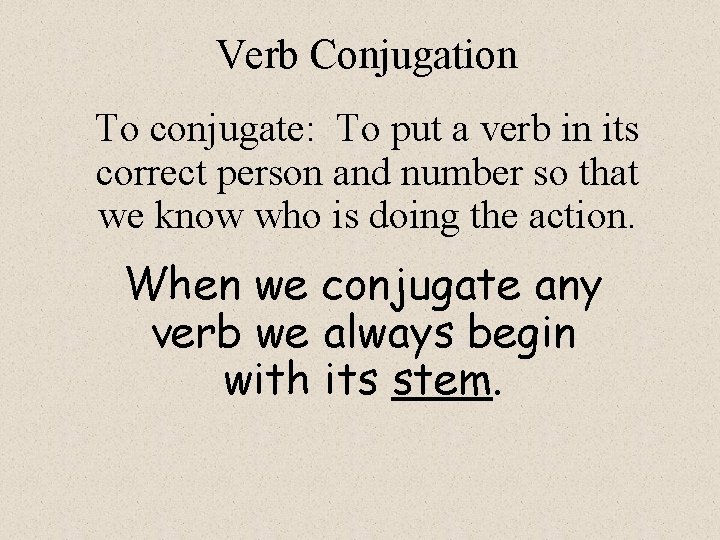
Verb Conjugation To conjugate: To put a verb in its correct person and number so that we know who is doing the action. When we conjugate any verb we always begin with its stem.
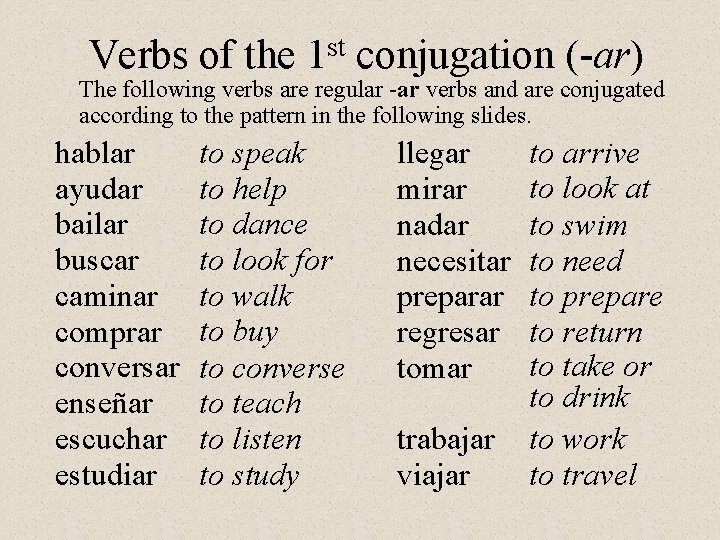
Verbs of the st 1 conjugation (-ar) The following verbs are regular -ar verbs and are conjugated according to the pattern in the following slides. hablar ayudar bailar buscar caminar comprar conversar enseñar escuchar estudiar to speak to help to dance to look for to walk to buy to converse to teach to listen to study llegar mirar nadar necesitar preparar regresar tomar trabajar viajar to arrive to look at to swim to need to prepare to return to take or to drink to work to travel
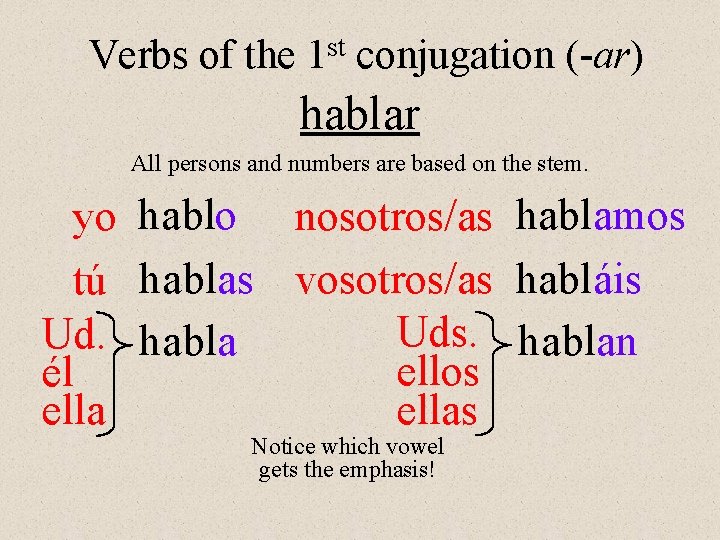
Verbs of the st 1 conjugation (-ar) hablar All persons and numbers are based on the stem. yo hablo nosotros/as hablamos tú hablas vosotros/as habláis Uds. hablan Ud. habla ellos él ellas ella Notice which vowel gets the emphasis!
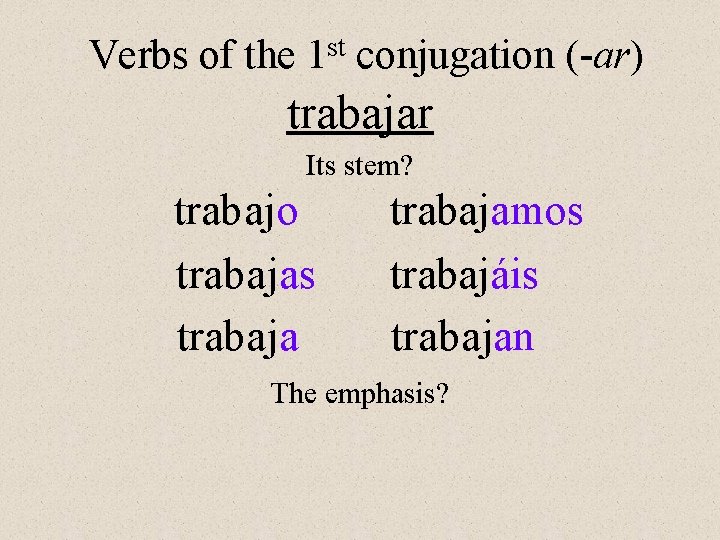
Verbs of the st 1 conjugation (-ar) trabajar Its stem? trab ajo traba jas trabaja mos trabajáis trab ajan The emphasis?

Verbs of the st 1 conjugation (-ar) buscar Its stem? busco buscas bu sca buscamos buscáis bu scan The emphasis?
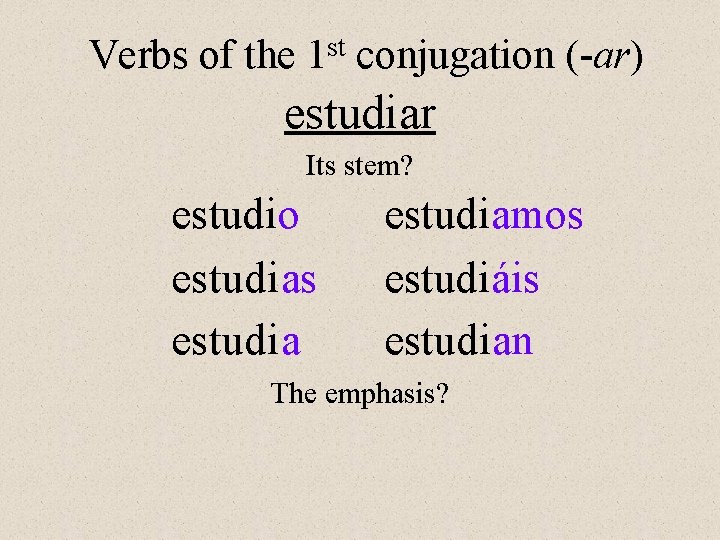
Verbs of the st 1 conjugation (-ar) estudiar Its stem? estudio estudias estudiamos estudiáis estudian The emphasis?
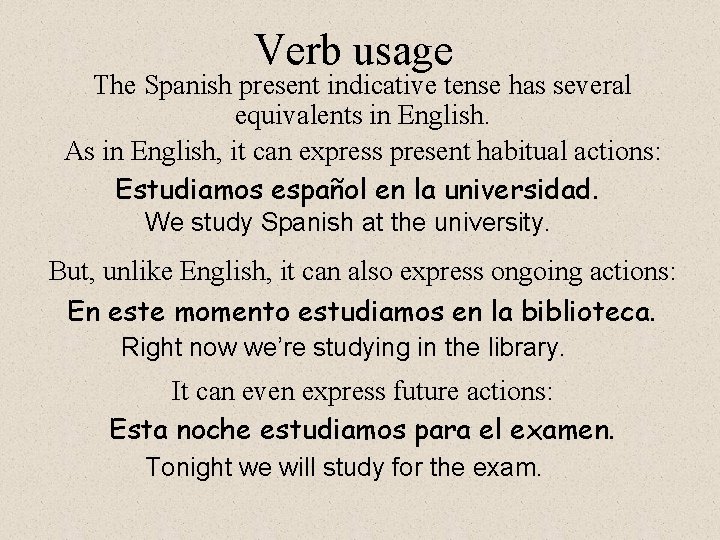
Verb usage The Spanish present indicative tense has several equivalents in English. As in English, it can express present habitual actions: Estudiamos español en la universidad. We study Spanish at the university. But, unlike English, it can also express ongoing actions: En este momento estudiamos en la biblioteca. Right now we’re studying in the library. It can even express future actions: Esta noche estudiamos para el examen. Tonight we will study for the exam.
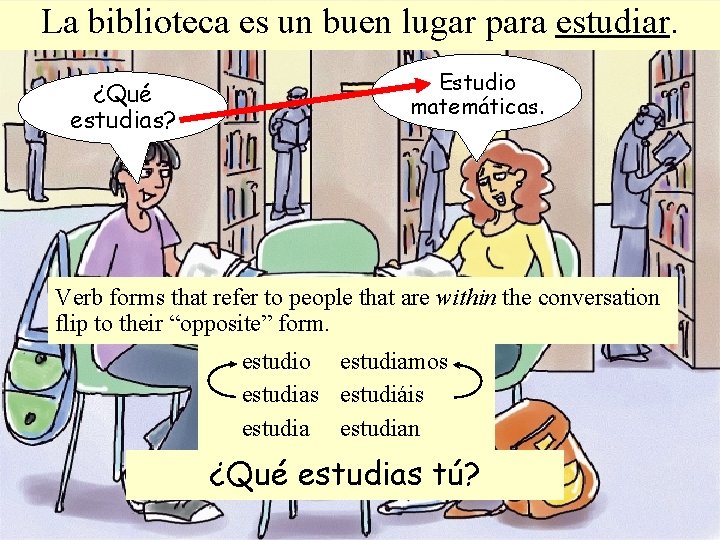
La biblioteca es un buen lugar para estudiar. ¿Qué estudias? Estudio matemáticas. Verb forms that refer to people that are within the conversation flip to their “opposite” form. estudio estudiamos estudias estudiáis estudian ¿Qué estudias tú?
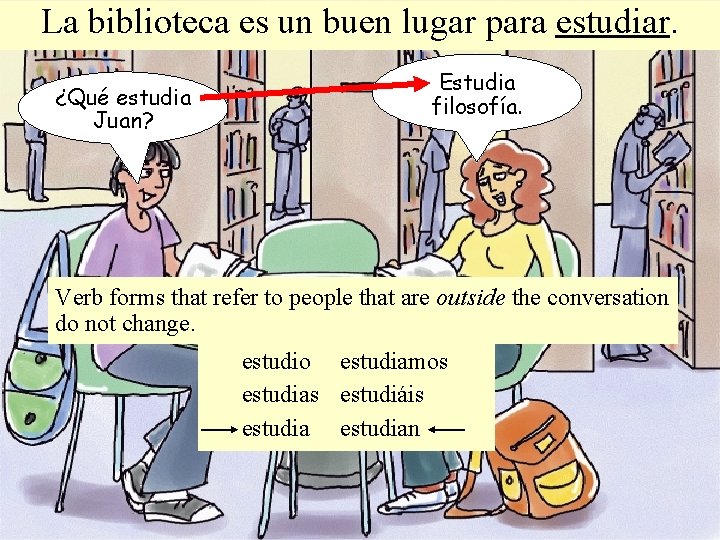
La biblioteca es un buen lugar para estudiar. ¿Qué estudia Juan? Estudia filosofía. Verb forms that refer to people that are outside the conversation do not change. estudio estudiamos estudias estudiáis estudian

FIN
- Slides: 18