
Verbs in the Present Tense Los verbos en
Verbs in the Present Tense (Los verbos en el tiempo presente) First conjugation: -ar
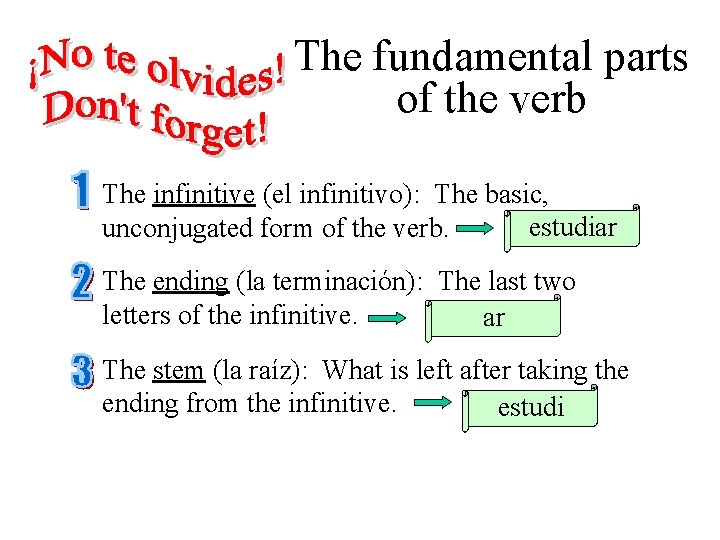
The fundamental parts of the verb The infinitive (el infinitivo): The basic, estudiar unconjugated form of the verb. The ending (la terminación): The last two letters of the infinitive. ar The stem (la raíz): What is left after taking the ending from the infinitive. estudi
Verb Conjugation To conjugate: To put a verb in its correct person and number so that we know who is doing the action. When we conjugate any verb we always begin with its stem.
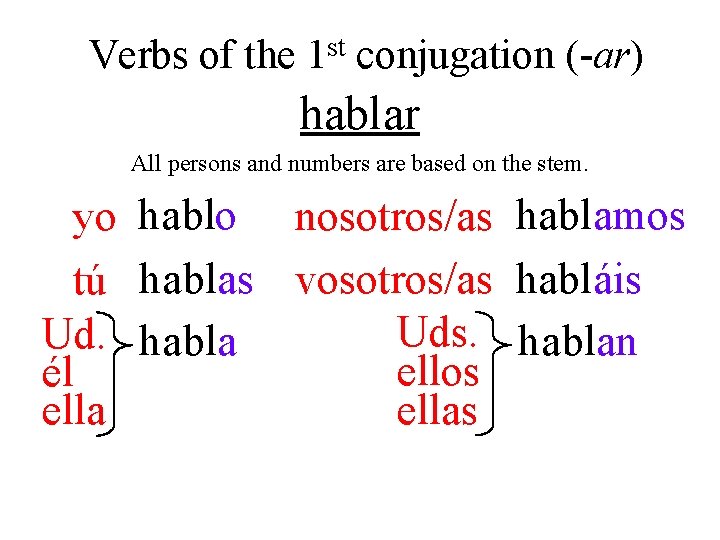
Verbs of the st 1 conjugation (-ar) hablar All persons and numbers are based on the stem. yo hablo nosotros/as hablamos tú hablas vosotros/as habláis Uds. hablan Ud. habla ellos él ellas ella
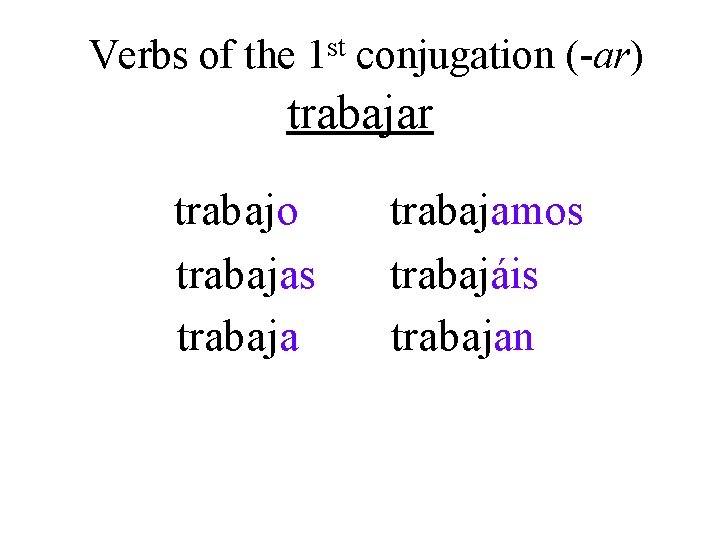
Verbs of the st 1 conjugation (-ar) trabajar trab ajo traba jas trabaja mos trabajáis trab ajan

Verbs of the st 1 conjugation (-ar) buscar busco buscas bu sca buscamos buscáis bu scan
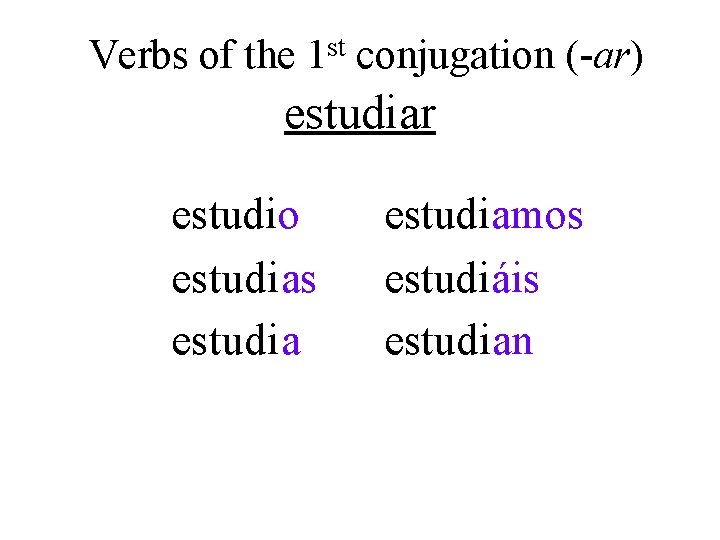
Verbs of the st 1 conjugation (-ar) estudiar estudio estudias estudiamos estudiáis estudian
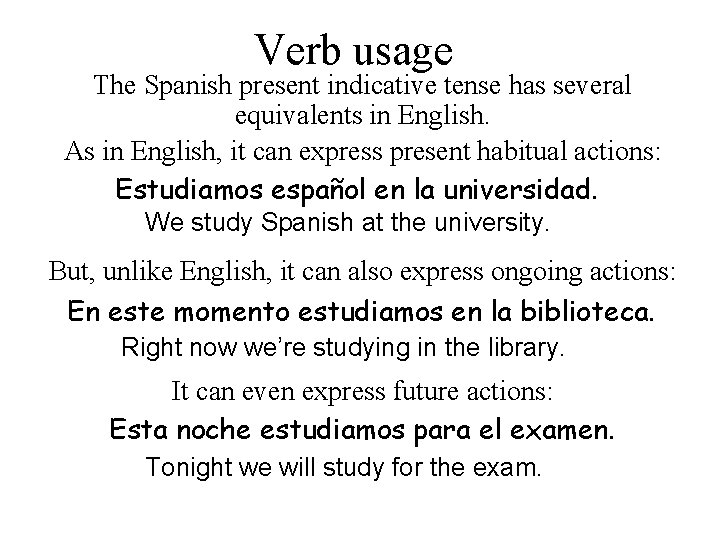
Verb usage The Spanish present indicative tense has several equivalents in English. As in English, it can express present habitual actions: Estudiamos español en la universidad. We study Spanish at the university. But, unlike English, it can also express ongoing actions: En este momento estudiamos en la biblioteca. Right now we’re studying in the library. It can even express future actions: Esta noche estudiamos para el examen. Tonight we will study for the exam.
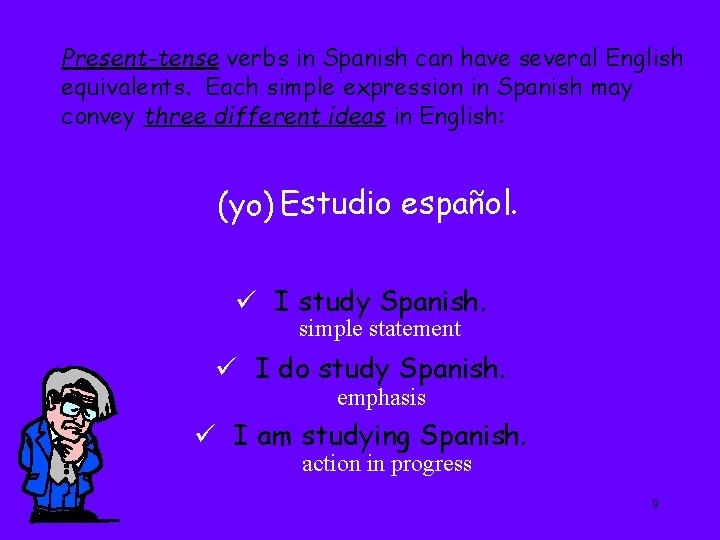
Present-tense verbs in Spanish can have several English equivalents. Each simple expression in Spanish may convey three different ideas in English: (yo) Estudio español. ü I study Spanish. simple statement ü I do study Spanish. emphasis ü I am studying Spanish. action in progress 9
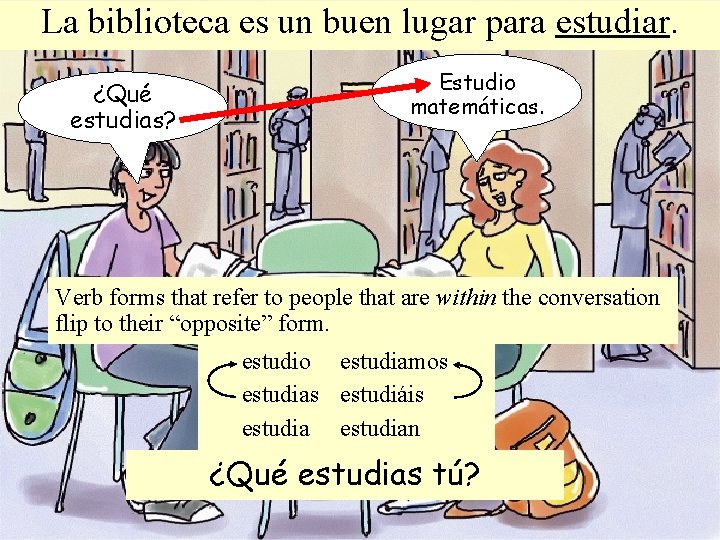
La biblioteca es un buen lugar para estudiar. ¿Qué estudias? Estudio matemáticas. Verb forms that refer to people that are within the conversation flip to their “opposite” form. estudio estudiamos estudias estudiáis estudian ¿Qué estudias tú?
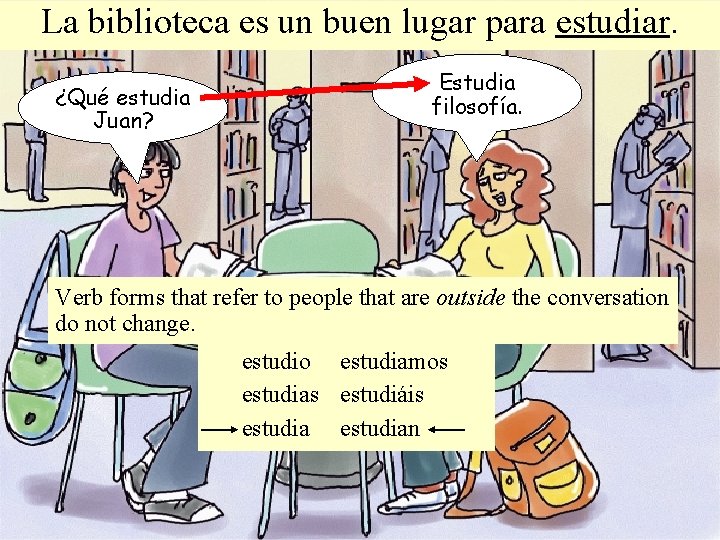
La biblioteca es un buen lugar para estudiar. ¿Qué estudia Juan? Estudia filosofía. Verb forms that refer to people that are outside the conversation do not change. estudio estudiamos estudias estudiáis estudian
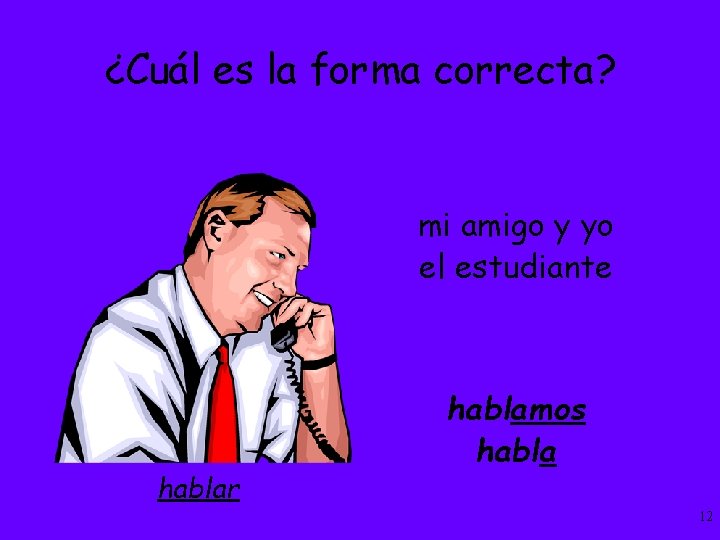
¿Cuál es la forma correcta? mi amigo y yo el estudiante hablar hablamos habla 12
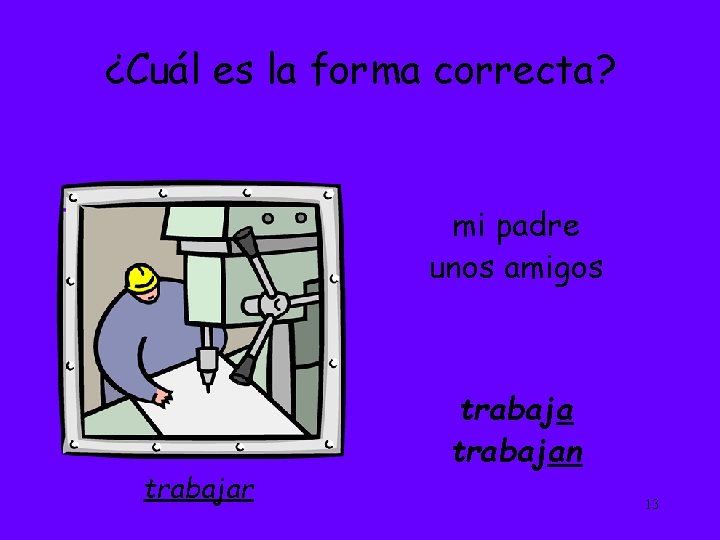
¿Cuál es la forma correcta? mi padre unos amigos trabajar trabajan 13
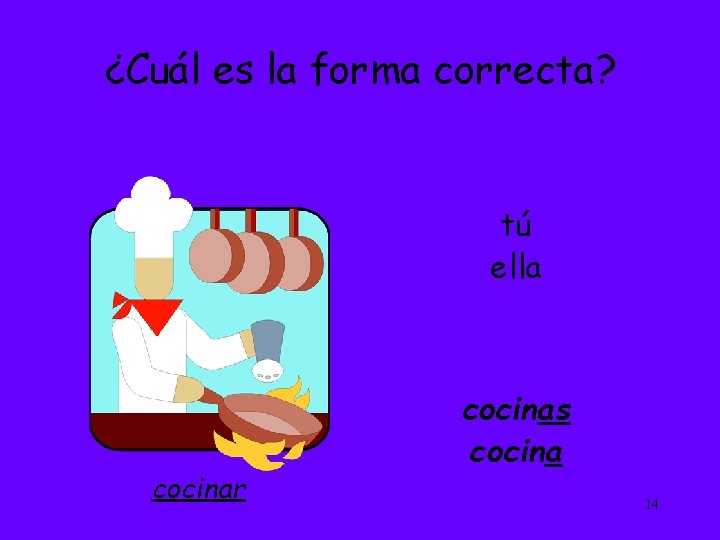
¿Cuál es la forma correcta? tú ella cocinar cocinas cocina 14
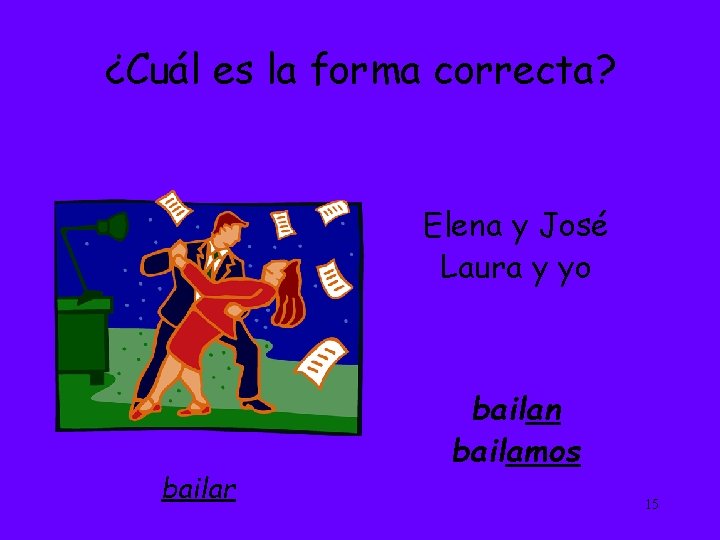
¿Cuál es la forma correcta? Elena y José Laura y yo bailar bailan bailamos 15
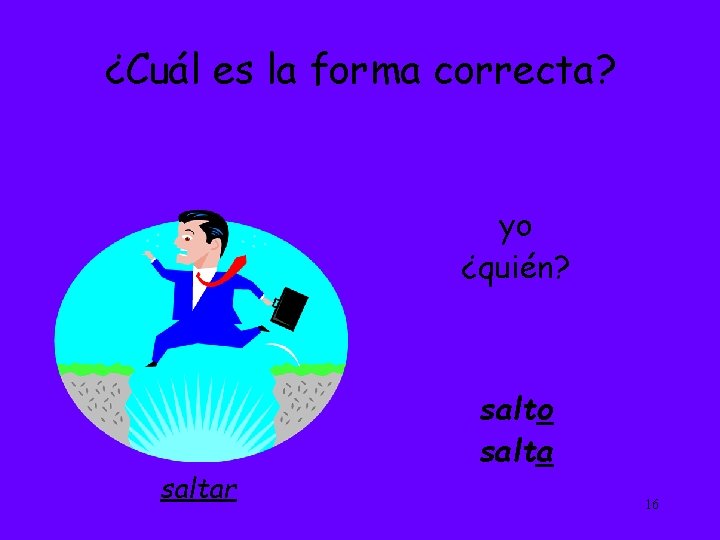
¿Cuál es la forma correcta? yo ¿quién? saltar salto salta 16
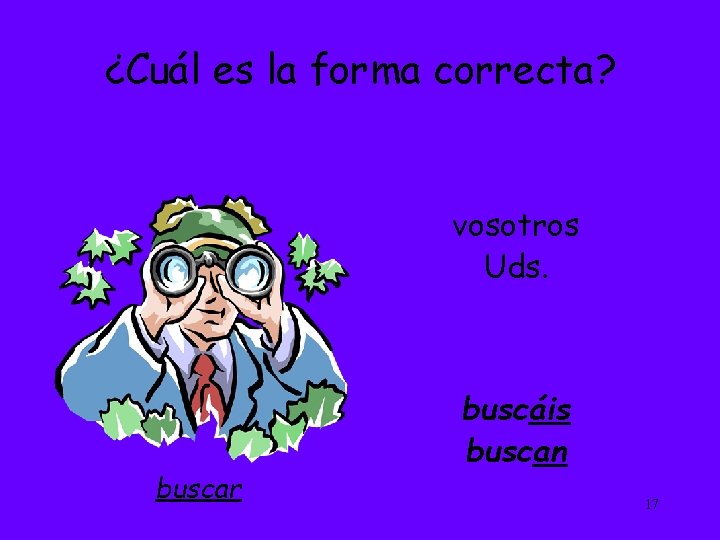
¿Cuál es la forma correcta? vosotros Uds. buscar buscáis buscan 17
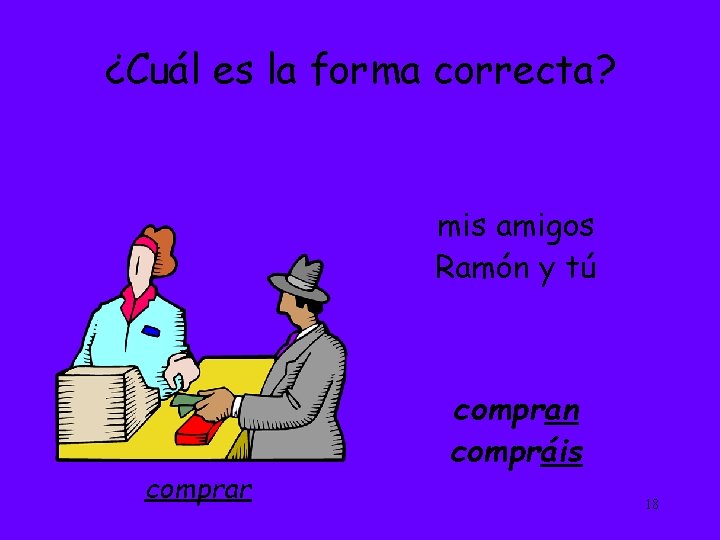
¿Cuál es la forma correcta? mis amigos Ramón y tú comprar compran compráis 18
¿Cuál es la forma correcta? la clase las estudiantes cantar cantan 19
¿Cuál es la forma correcta? ¿quiénes? yo preguntar preguntan pregunto 20
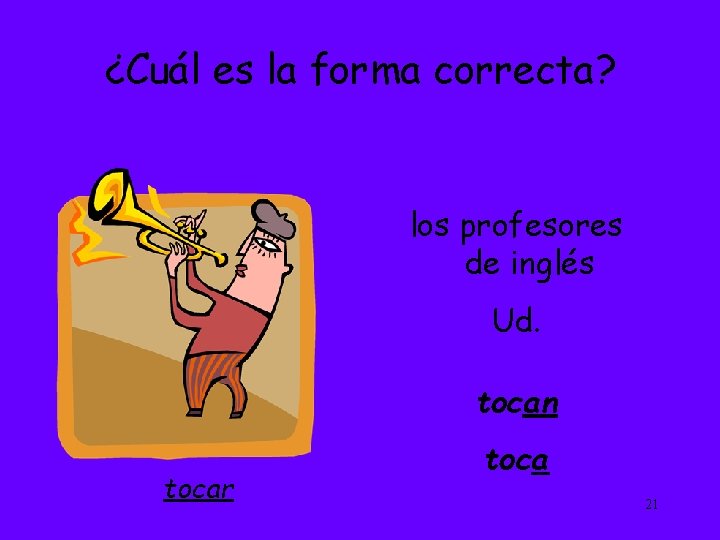
¿Cuál es la forma correcta? los profesores de inglés Ud. tocan tocar toca 21
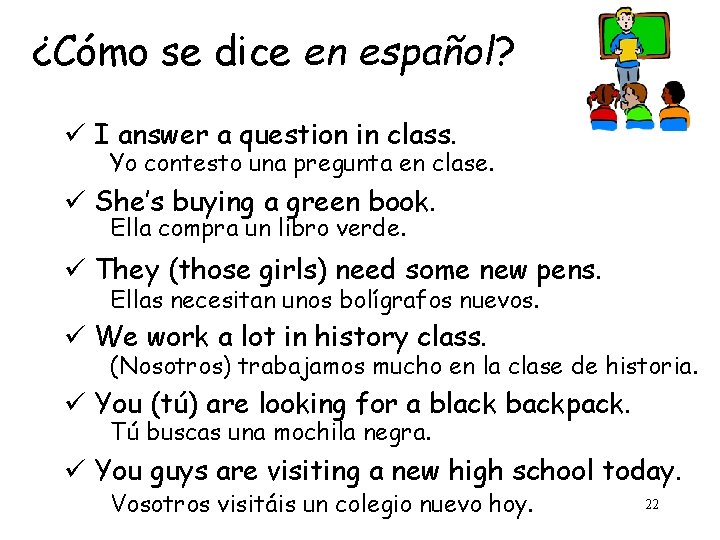
¿Cómo se dice en español? ü I answer a question in class. Yo contesto una pregunta en clase. ü She’s buying a green book. Ella compra un libro verde. ü They (those girls) need some new pens. Ellas necesitan unos bolígrafos nuevos. ü We work a lot in history class. (Nosotros) trabajamos mucho en la clase de historia. ü You (tú) are looking for a black backpack. Tú buscas una mochila negra. ü You guys are visiting a new high school today. Vosotros visitáis un colegio nuevo hoy. 22
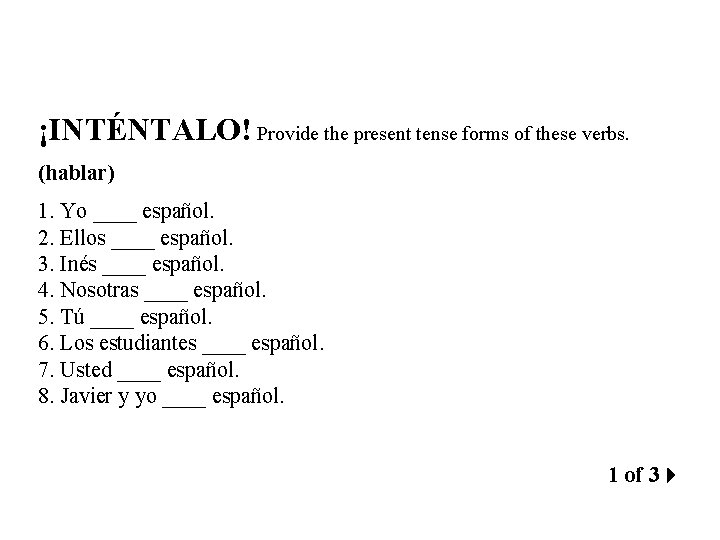
¡INTÉNTALO! Provide the present tense forms of these verbs. (hablar) 1. Yo ____ español. 2. Ellos ____ español. 3. Inés ____ español. 4. Nosotras ____ español. 5. Tú ____ español. 6. Los estudiantes ____ español. 7. Usted ____ español. 8. Javier y yo ____ español. 1 of 3
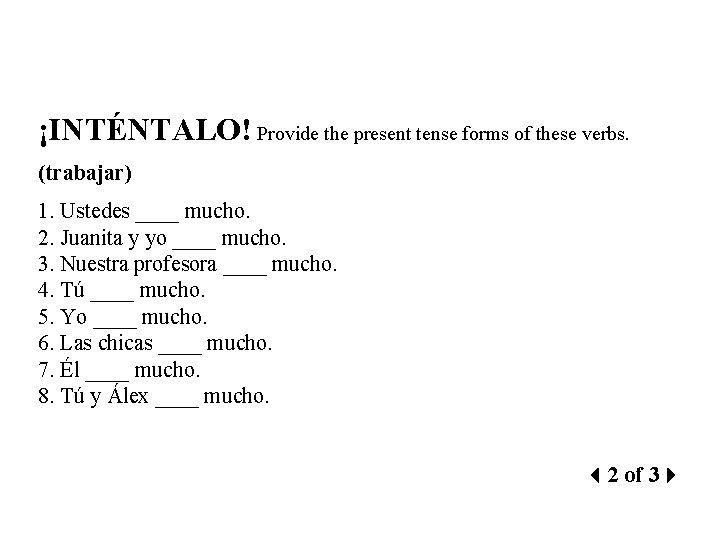
¡INTÉNTALO! Provide the present tense forms of these verbs. (trabajar) 1. Ustedes ____ mucho. 2. Juanita y yo ____ mucho. 3. Nuestra profesora ____ mucho. 4. Tú ____ mucho. 5. Yo ____ mucho. 6. Las chicas ____ mucho. 7. Él ____ mucho. 8. Tú y Álex ____ mucho. 2 of 3
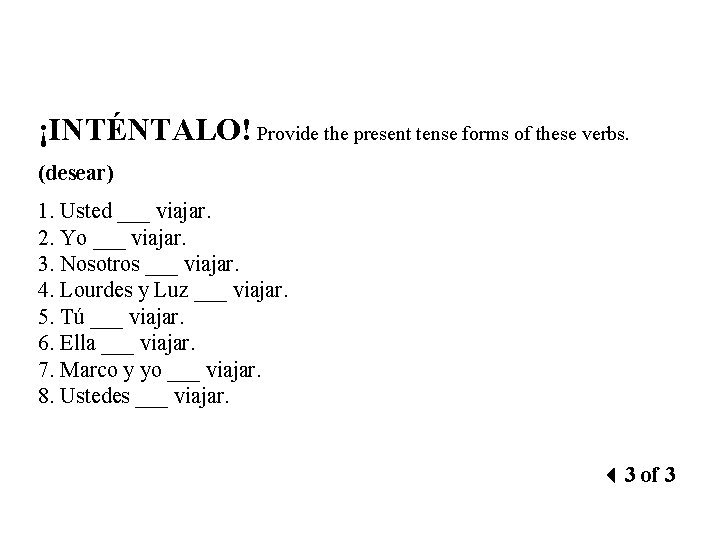
¡INTÉNTALO! Provide the present tense forms of these verbs. (desear) 1. Usted ___ viajar. 2. Yo ___ viajar. 3. Nosotros ___ viajar. 4. Lourdes y Luz ___ viajar. 5. Tú ___ viajar. 6. Ella ___ viajar. 7. Marco y yo ___ viajar. 8. Ustedes ___ viajar. 3 of 3
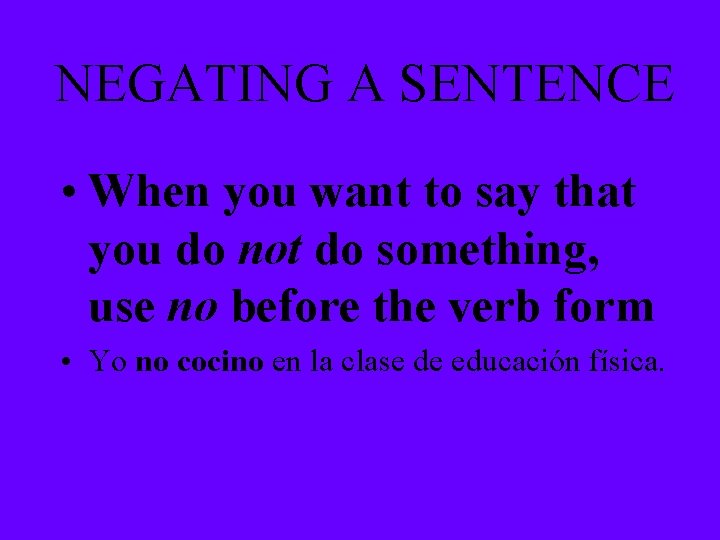
NEGATING A SENTENCE • When you want to say that you do not do something, use no before the verb form • Yo no cocino en la clase de educación física.
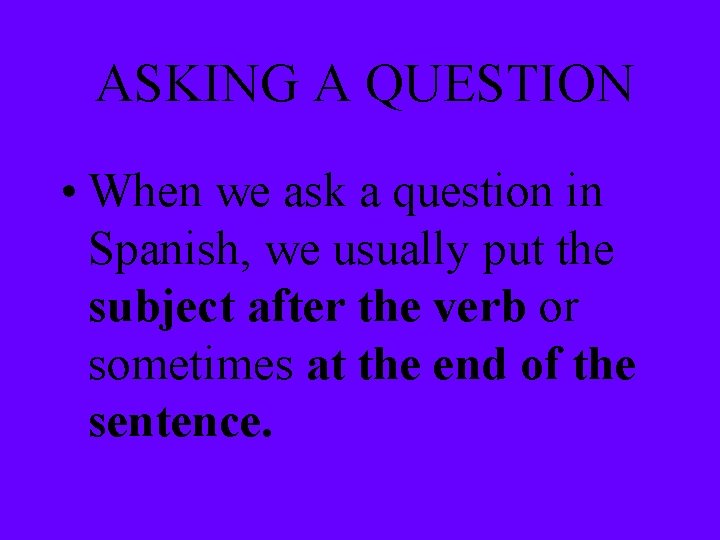
ASKING A QUESTION • When we ask a question in Spanish, we usually put the subject after the verb or sometimes at the end of the sentence.
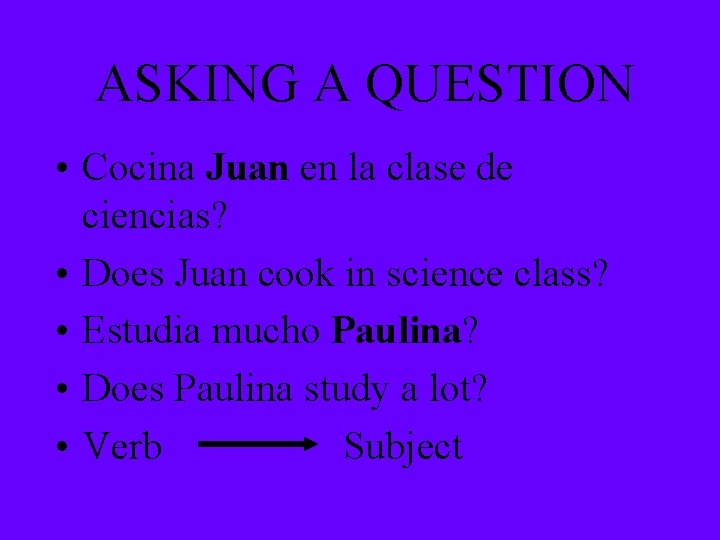
ASKING A QUESTION • Cocina Juan en la clase de ciencias? • Does Juan cook in science class? • Estudia mucho Paulina? • Does Paulina study a lot? • Verb Subject
- Slides: 28